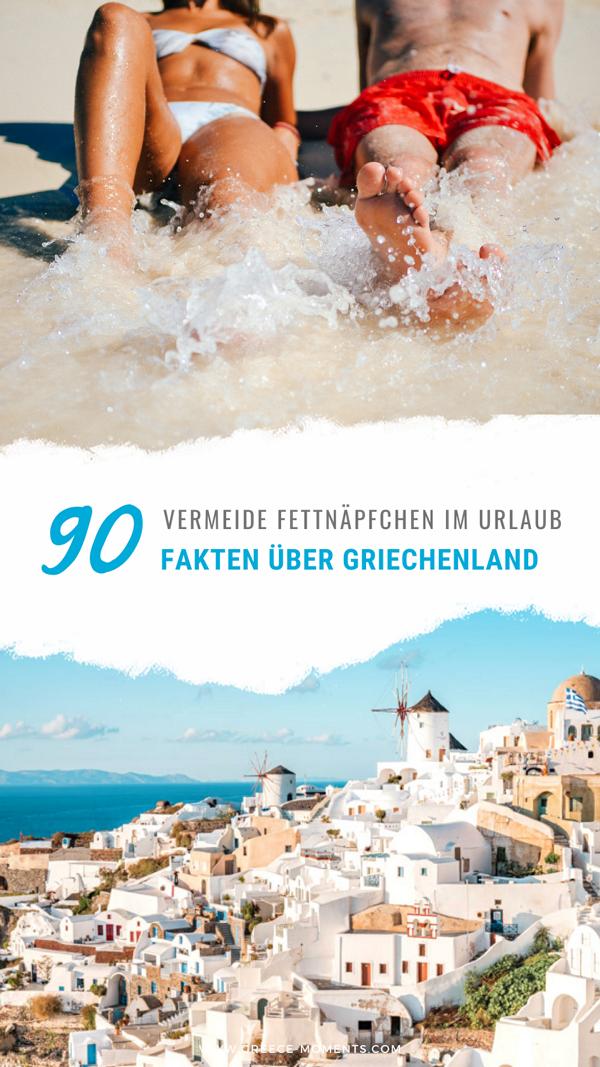

Next Greece Holidays is imminent, so it’s worth taking a closer look at the destination Hellas. Where is the blue and white holiday paradise and how many people live there? What do I have to consider as a tourist and where are bad faux pas lurking? And how safe is Greece anyway?
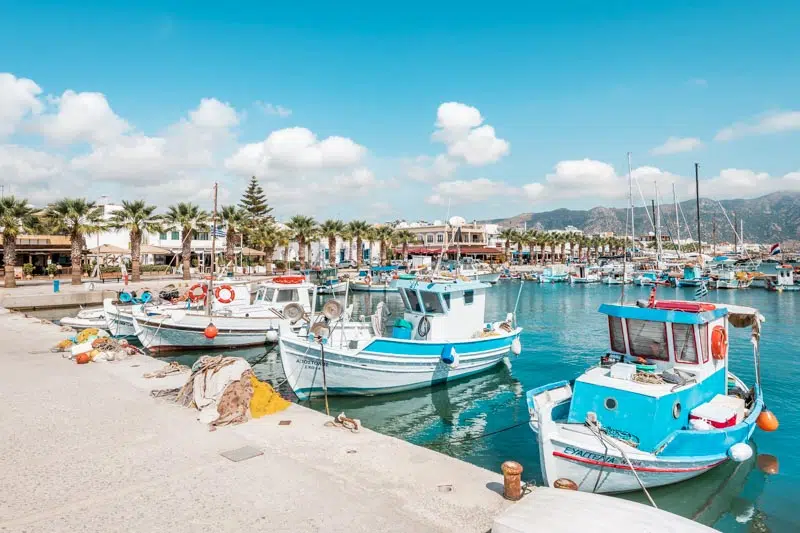
In this Greece Profile we have summarized all kinds of interesting facts for you from A to Z. Enclosed you will find a lot of useful information for your next holiday and at the same time learn the most important points about Greece as a holiday destination.
- Greece Profile at a glance
- A – for Acropolis of Athens
- B – for Evil Eye in Greece
- C – for Camping in Greece
- D – like documents for the Greece vacation
- E – as in Entry to Greece
- F – for Ferries to the Greek Islands
- G – for Hospitality of the Greeks
- H – for Hotels in Greece
- I – like island hopping in Greece
- J – why yes means no in Greece
- K – like coffee from Greece
- M – for Rental Car for the Hellas Vacation
- N – for Name Days in Greece
- O – for Easter in Greece
- P – for Mail from Greece
- Q – like quad biking on the islands
- R – for Religion in Greece
- S – for Security in Greece
- T – for Drinking Water in Greece
- U – for Accommodation in Greece
- V – for Traffic on the Greek Islands
- W – for Hiking in Greece
- X- for Xora on Greek islands
- Z – for Zorbas the Greek
- FAQ about Greece Facts
Greece Profile at a glance
- Location: Southeastern Europe, Balkan Peninsula on the Mediterranean Sea
- Population: approx. 10.7 million inhabitants
- Capital: Athens with approx. 4 million inhabitants
- Second largest city: Thessaloniki with about 1 million inhabitants
- Land area: 132,000 km² (half the size of New Zealand)
- National language: since 1976 Modern Greek
- State name: Hellenic Republic, Hellas for short (Greek: Elláda)
- Currency: Euro/ € since 2002, before that drachma
- National flag: Blue and white stripes with white cross
- Religion: Greek Orthodox Christianity (97% of the population)
- Time zone: CET +1, one hour ahead of Germany
- National holidays: 25.03 (Liberation Day), 28.10 (Ochi Day)
- Number of islands: approx. 3,000, of which approx. 130-150 are inhabited
- Coastline: 13,676 kilometres (almost as much as New Zealand)
- Highest mountain: Mount Olympus 2,917 meters
- Climate: Mediterranean climate, mild winters & dry summers
- Average temperature July: 30.7 degrees
- Average rainy days in July: 1 day
A – for Acropolis of Athens
Acropolis
The word Ἀκρόπολις is composed of acro (upper or highest) and polis (city). Usually, the Acropolis describes the ancient upper part of the city, which was built like a fortress. The best-known examples are the Acropolis of Athens and by Lindos on Rhodes.

Alcohol
Alcohol is often drunk in Greece (10.3 litres per year per inhabitant), but less than in Germany (11.8 litres per year). Very popular among the locals are wine, anise or grape schnapps and beer.
Wine and beer may only be purchased from the age of 18. The purchase and consumption of high-proof alcohol is even only permitted from the age of 20. Unfortunately, the rather strict rules on alcohol consumption are hardly controlled in practice.
Fishing in Greece
Fishing in Greece is becoming more and more popular. What many people don’t know is that even hobby anglers can fish on holiday in Greece without a license. The prerequisite for this is that they fish exclusively from the coast.
So Petri disciples can take their hand fishing rod or a small fishing rod with them in their luggage with a clear conscience. Alternatively, fishing trips are also offered. There are fishing shops on almost every island. More information on the topic can be found in our article: Fishing in Greece
Pharmacies
There are many pharmacies in Greece. Almost every municipality has at least one and you can usually get all common medications. However, individual brands may differ from German products.
The farmakeío (φαρμακείο) even replaces the actual doctor’s office in some places. Pharmacists are highly regarded by the Greeks. Many residents go to the pharmacy for an initial diagnosis before they see a real doctor.
Working in Greece
Almost 30 percent of Greeks are self-employed. This puts the country in 1st place in Europe. With an unemployment rate of about 20 percent, Hellas is unfortunately the negative frontrunner. Young Greeks in particular have great problems finding well-paid work. By the way, the Greeks have the highest hourly output per year (about 2,000 working hours) in all of Europe.
Athos Monastic Republic
On the one hand, Athos refers to the 2,033-metre-high mountain on the eastern finger of the Halkidiki Peninsula. On the other hand, this is also the name of the autonomous monastic republic located there. Over 2,000 monks have lived here for 1,000 years according to strict Orthodox faith. More information about the monastic republic can be found in our article about Athos.

B – for Evil Eye in Greece
Rail travel in Greece
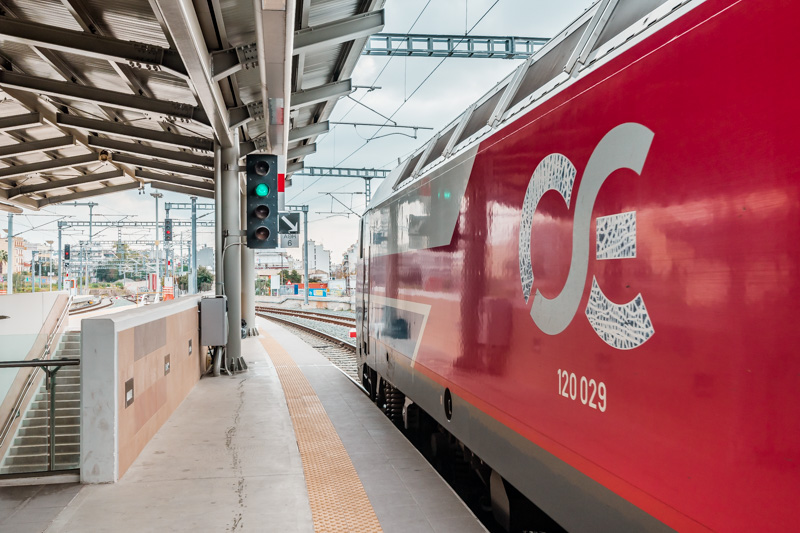
The train network (OSE) in Greece is currently only rudimentarily developed. Journeys from Athens/ Piraeus to Larissa, Trikala (Meteora Monasteries), Florina, Thessaloniki, Volos, Alexandroupoli and Corinth are possible so far. In combination with the bus, however, you can reach all the important regions in Greece.
Blue Zone Ikaria
Blue Zones are regions around the world where people have a particularly high life expectancy in the best health. The Greek island of Ikaria was declared one of the five Blue Zones by scientist Dan Buettner. Almost one in three Ikariots reaches the age of 90.
Working with National Geographic, Buettner and his team found that Ikaria is even the region with the highest percentage of 90-year-olds in the world. Even 100-year-olds are not uncommon on the island. In addition to old age, there are lower cancer rates, few heart diseases and hardly any dementia in old age.
→ Find out what makes the island of Ikaria so special here: Ikaria Highlights
Bougainvillea
Bougainvillea, also known as triplet flower, is probably the best-known plant in Greece. It blooms in many iridescent colours, such as pink, violet, purple, red and white.

With its almost lavish floral splendour, it adorns many white house facades on the Greek islands, as well as the coastal regions of the mainland and is a popular photo motif on holiday. By the way, bougainvillea originally comes from South America.
Evil eye
The evil eye refers to a (superstitious) belief that is present in Greece and many parts of Asia Minor. It is assumed that some people can bring disaster through their gaze. Especially through eye contact with blue eyes, the “evil forces” can be transmitted.
The affected person can therefore be affected by headaches, streaks of bad luck and curses. Amulets and talismans with a turquoise eye are supposed to ward off the evil forces. They are a beautiful decoration and furnishing item and enjoy as a holiday souvenir, or Greece Gift also very popular.

C – for Camping in Greece
Camping
Camping in Greece has become increasingly popular in recent years. Most of the tent and caravan sites are located on the Greek mainland. Above all, the Peloponnese Peninsula (e.g. Mani), the coastal region of the Epirus Parga and Halkidiki are very popular with campers. On Crete there are also some campsites.
Just 30 years ago, Greece was considered a true free camping paradise. Free camping at the Beaches of Paros, Mykonos & Co. was not uncommon at that time. However, this has changed. Officially, free or wild camping is prohibited in Greece. However, it is tolerated in not too touristy regions and even on beaches.

The condition is that all leftovers, especially garbage, are taken back with you! On some of the Cyclades Islands, as well as on Ikaria and Nisyros, many Greeks come to wild camp every summer.
You can find all the important information for your camping holiday in Hellas with a van, motorhome & Co. in our separate article: Camping Greece
D – like documents for the Greece vacation
Diplomacy
Germany and Greece have excellent diplomatic relations. In the event of a loss of an ID card while on vacation, the German embassies or consulates can provide assistance. The following cities and islands provide support in case of problems:
German Embassy Athens, German Consulate General Thessaloniki, German Consulate Komotini, German Consulate in Patras, German Consulate Volos, German Consulate in Chania – Crete, German Consulate in Crete Heraklion – Crete, German Consulate Corfu, German Consulate Rhodes, German Consulate Samos, German Consulate Syros.
→ You can find more information here: Consulate Locator in Greece
Documents for your holiday in Greece
You need the identity card as the most important document for your Greece vacation. A passport is not mandatory, unless you are planning a trip to neighboring non-EU countries (Turkey or Albania). Children under 12 years of age require a children’s passport.
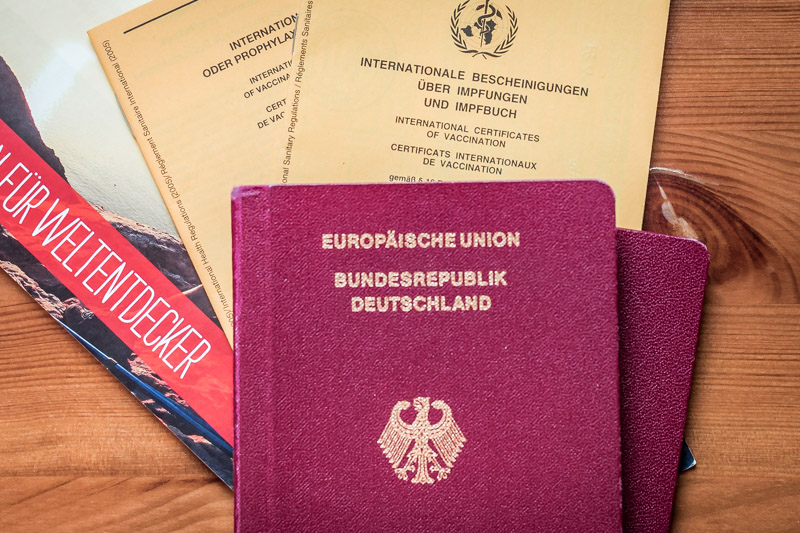
It is also advisable to take the vaccination card with you to Greece. You should not forget your driver’s license if you plan to rent a rental car, scooter or quad. If you enter the country with your own car, you must carry the green insurance card and the registration certificate part 1.
Drones in Greece
Drones are becoming increasingly popular with holidaymakers. Simple drone flights are generally allowed in Greece. The prerequisite is a valid drone liability insurance.
However, if you want to fly the drone further than 50 meters, a permit must be obtained from the Greek Aviation Company (HCAA). You must also register with the local police before the flight.
The privacy of people must be respected in general. In addition, flights over populated areas, private property, hospitals and military installations are prohibited. The eight-kilometre distance to airports must be maintained at all costs!
→ Detailed information can be found on the Drone Camp blog: Drone Laws Greece
E – as in Entry to Greece
Entry
When entering the country by plane from Germany, only boarding control takes place at the point of departure. A valid identity card is required as an entry document. After landing in Greece, there is no further passport control. Unaccompanied minors require a declaration of consent from their legal guardians.

When entering the country by car, e.g. by sea from Italy or by land from Albania or North Macedonia, random trunk checks may occur. The green insurance card of your car must be carried with you.
→ You can find extensive information on the topic in our article: Getting to Greece
Entrance fees
Most archaeological sites and museums charge admission for the preservation and maintenance of the facilities. Entrance fees increase with the popularity of the site, for example, the Acropolis in Athens costs 20 euros per person. Discounts are available for seniors over 65 and free admission for children and young people under 25 years of age from EU countries, upon presentation of an identity card or passport.
Earthquake in Greece
The Mediterranean region is one of the most seismically active areas in the world. From antiquity to the present day, numerous earthquakes have been documented. Our earth’s crust consists of individual plates that move in different directions.
The islands of the South and East Aegean (e.g. Kos), the lower Ionian Islands (e.g. Zakynthos), part of the Peloponnese and the region of Euboea are located on the Aegean and Hellenic Plates, respectively. This microplate is bounded by the Eurasian Plate to the north and the Anatolian Plate to the east. Here, tensions occur again and again due to the plate movements.

The Hellenic Arc is considered the southern boundary of the African Plate and stretches from the Ionian Islands via Crete to Rhodes. It is precisely along these peripheral areas that submarine quakes can occur.
In the event of an earthquake, keep calm! In buildings, people seek shelter under stable tables or door frames. Outdoors, stay away from the sea and seek out elevated undeveloped places.
→ Everything you need to know about the topic can be found in our article: Greece Earthquake
Events in Greece
Greece is definitely one of the countries in Europe where the most celebrations take place. In principle, there are smaller or larger festivals and events several times a month. The most important events are Easter and Assumption Day (15 August). At these times, the whole family meets and celebrates for several days.
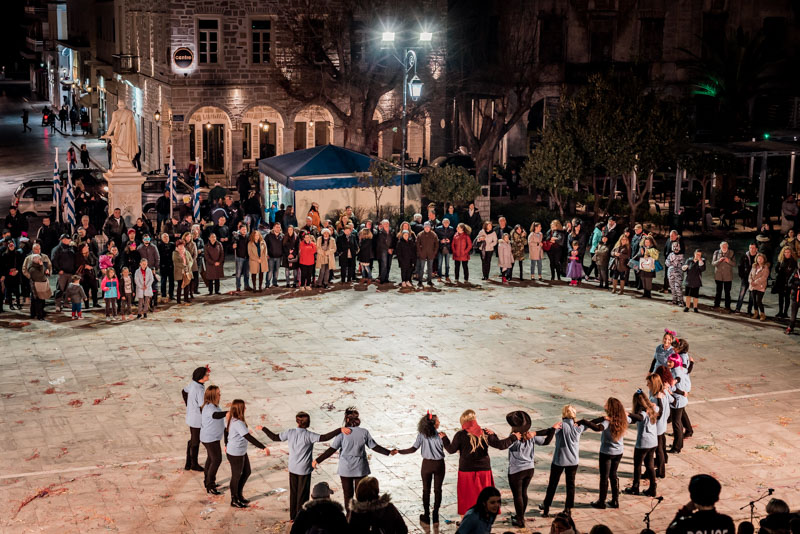
The individual name days of Giorgos, Giannis, Nikos & Co. are also often celebrated extensively by the Greeks. More on this at the point Name days. So almost every holidaymaker has the chance to enjoy a (popular) festival during his stay in Greece. The best thing to do is to ask the Greeks on site what event is coming up in the next few days.
F – for Ferries to the Greek Islands
Ferries
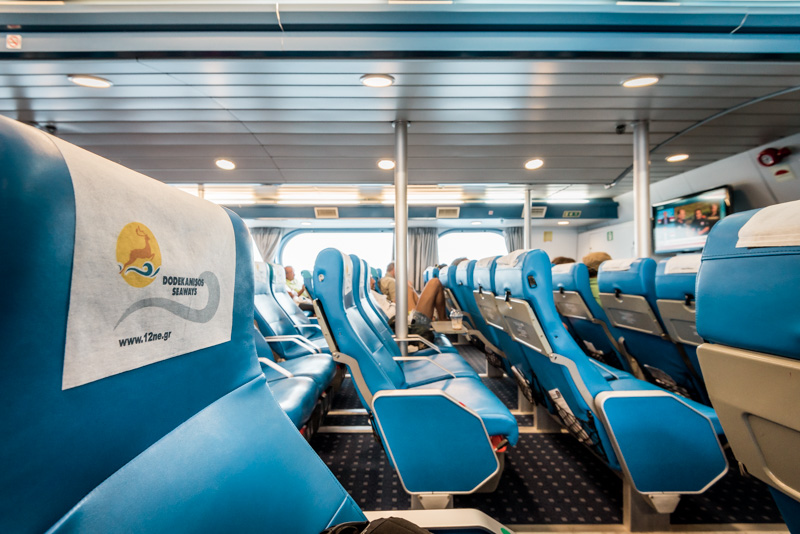
The ferry network in Greece is very well developed. Ferry services provide some Greek Islands without an airport is the only supply option. Especially within a group of islands, such as the Cyclades, Sporades or the Dodecanese, the individual islands are served by ferries almost daily. We use the Ferryhopper* portal for the ferry search:

The major ferry companies that also allow you to take vehicles with you are BlueStar, Hellenic Seaways, Superfast, Minoan Lines and Anek. In addition, there are many small ferries that are used exclusively for passenger transport. The prices for a ferry trip depend on the distance of the island. As a rule of thumb, about 10 euros per hour of travel time.
→ All the necessary information for the arrival by ferry can be found in this article: Ferries in Greece
Cycling in Greece
Cycling is not necessarily one of the favorite pastimes of the Greeks. The car or scooter is the first means of transport. Nevertheless, bicycles are also offered for rent in most holiday regions. The quality ranges from simple bicycles to modern e-bikes.
→ You can find out which island is suitable for cycling here: Which Greek island?

Holidays and festivals
The Orthodox Easter (Pásha) and the Assumption of the Virgin Mary (Kímisi tis Thetókou) are the most important festivals in Greece. Furthermore, the carnival season (Apokries) and Pentecost (Agíou Pnévmatos) are celebrated to varying degrees depending on the region.

Important holidays are: 1 January New Year’s Day (Protochroniá), 6 January Three Kings (Theofánia), Shrove Monday (Kathará Deftéra), 25 March Independence Day and the Annunciation of the Virgin Mary (Evangelismoú), 1 May Labour Day (Protomaiá), 28 October Oxi Day and the Christmas holidays on 25/26 December (Christoúgena).
Holidays in Greece
You would have to be a Greek schoolchild! The students are granted a full four months of vacation. There are Christmas, Easter and summer holidays. The summer holidays last over eight weeks and start every year on the penultimate Friday in June.
On the first Monday in September, the free time is over again. The most important argument for the long duration is of course the high temperatures. During this time, many parents also take their annual leave. That’s why it can get really crowded on many beaches in Greece, especially in August.
Why it is worth traveling to Greece, you will learn in this article: Reasons for a holiday in Greece
Holiday apartments and houses
In recent years, the number of available private accommodations has steadily increased. So you have a wide selection of simple bungalows, comfortable holiday homes and luxurious villas for your holiday in Greece.
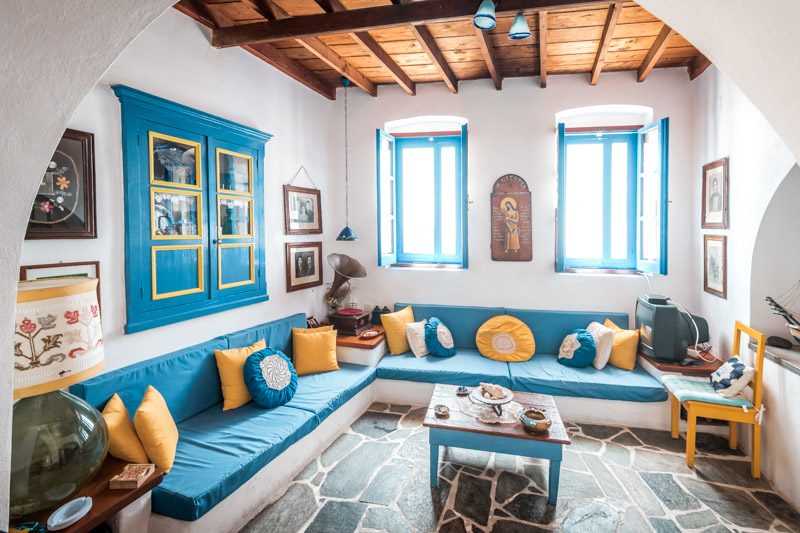
Especially the traditional accommodations are highly recommended. The trend is moving away from prefabricated concrete buildings. Many old house ruins are again being restored piece by piece. A certain minimalist luxury provides a typical Greek flair in these boutique villas. On the platform Booking.com* you will find many great holiday homes:
Mainland
Greece is not a pure island state. 80 percent of the country’s area belongs to the Greek mainland. A large part of it is mountain. Even though the islands have an unmistakable charm, the mainland is in no way inferior to them. Above all, the Epirus Zagori and Western Macedonia are particularly varied.
Many coastal places in Greece also exude the typical island flair and are considered insider tips by Greece connoisseurs. The regions in the hinterland, on the other hand, score with a very varied nature, there are even national parks. Dense forests, high mountain ranges and fertile plains are waiting to be discovered.
→ Here are more travel tips to the Greek mainland: Mainland Greece
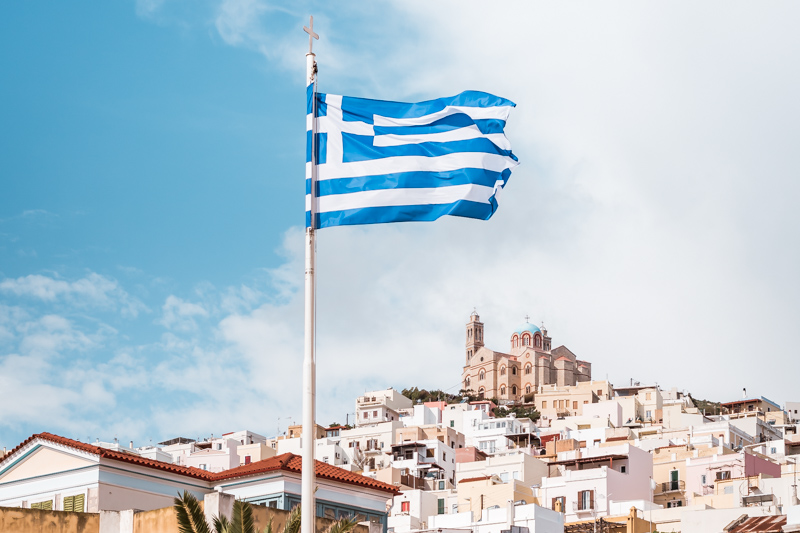
Flag of Greece
The Greek flag is blue and white striped. The blue symbolizes the sea and the sky. The white stripes symbolize the purity of the struggle and the independence of the country. A white cross on the flag symbolizes the Christian Orthodox tradition of the country.
Refugees
Since 2015, more and more refugees have been reaching Greece by boat. Most refugees control the islands of the East Aegean (near Turkey) as well as Lesvos, Kos, Chios, Samos and Leros. During a holiday in Greece, however, there are no restrictions due to the refugee crisis.
→ Here we report on our personal experiences with refugees on the Greek islands: Refugees Greece
Airports in Greece
The easiest way to get to Greece is by plane. Nearly 30 airports are spread across the Greek islands. About half of these airports are served by direct flights from Germany.
The other airports on the island can be reached by open jaw flight from Athens or Thessaloniki. The airports of Frankfurt, Munich, Stuttgart and Berlin fly directly to most Greek destinations.
→ In this article you will learn more about travelling by plane: Flights to Greece
Naturism in Greece
Most Greeks don’t like it at all when you drop your covers as a vacationer. Nudism is officially prohibited in Greece, but is often tolerated on natural beaches. As a nudist, you should definitely avoid frequented beaches with families and children. In lonely, remote bays, on the other hand, nude bathing is usually tolerated.

Photograph
Greece definitely has some of the most impressive photo opportunities in Europe. Most places and Sights in Greece can be photographed without further ado. When photographing locals, you should always politely ask for permission in advance if you can take a photo of them.
Prohibitions on filming near military areas, at ferry stations and airports must be strictly observed. There is a threat of high fines! In museums and archaeological sites, as well as in some churches, filming may be restricted. In churches, you always take pictures without flash.
Frappé, Freddo & Co.
The frappé is the Greek (coffee) national drink! After its accidental discovery at the Thessaloniki International Fair in 1957, the Frappé became increasingly popular. In principle, the drink consists only of shaken instant coffee with ice cubes and a dash of condensed milk.
If you like the “fresher” and more modern version, you should go for the Freddo Cappuccino (freshly sprayed espresso, frothed milk and ice cubes) or Freddo Espresso (black, without milk).

G – for Hospitality of the Greeks
Hospitality
Philoxenia, the Greek hospitality, is probably unique in this world. It has a long tradition and its origins date back to ancient times. Unfortunately, the increasing mass tourism has almost made this hospitality disappear in some places. In remote Regions of Greece and not too touristy places, but you can still experience them today.
If you know a few Greek words, you are often invited to a raki or coffee for a little chat. By the way, rejecting an invitation is considered rude.

Having a guest is considered an honour by the Greeks and, according to old tradition, is said to bring good luck and avert disaster. Unlike in Germany, people in Greece very often inquire about the well-being of their guest.
Money and ATMs
In Greece, as in Germany, there is the EU common currency Euro/€. Unlike in Germany, ATMs can be found in many small towns. You can find real banks in municipalities with 1,000 inhabitants or more. The fees for withdrawing cash are between 2.50 EUR and 5.00 EUR.
Greek cuisine
The Typical Greek cuisine is one of the healthiest diets in the world. It essentially corresponds to the so-called Mediterranean diet, also known as the Crete diet.

The original cuisine consists of many vegetable dishes and only a few meat dishes. The main component of Greek cuisine are different appetizer dishes, the mezedes. Usually everything is ordered at once and served as “Greek meze”.
H – for Hotels in Greece
Hellas
Hellas (Ἑλλάς) is the ancient self-name of the country and is still used in international usage today. The name is derived from the early Christian tribe of the Hellenes. In Greece itself, however, the modern Greek term “Elláda” is usually used for Greece.
Hostels and backpacking in Greece
There are some simple hostels in Greece. In principle, however, they are mostly double or single rooms with minimal equipment. There are currently only a few modern hostels with shared rooms or a dormitory in the country.
They can be found in the metropolises of Athens, Thessaloniki or Patras, as well as on the islands of Crete, Rhodes, Corfu and Mykonos. Especially in the case of a spontaneous Athens Holidays young people spend the cheapest night in youth hostels. You can find an overview of all hostels on Booking.com*:
Hotels in Greece
In Greece there is the right accommodation for every type of holiday. Whether it’s a cozy beach hotel, a chic luxury resort or a simple family hotel, you’ll be spoilt for choice at almost every Greek destination.
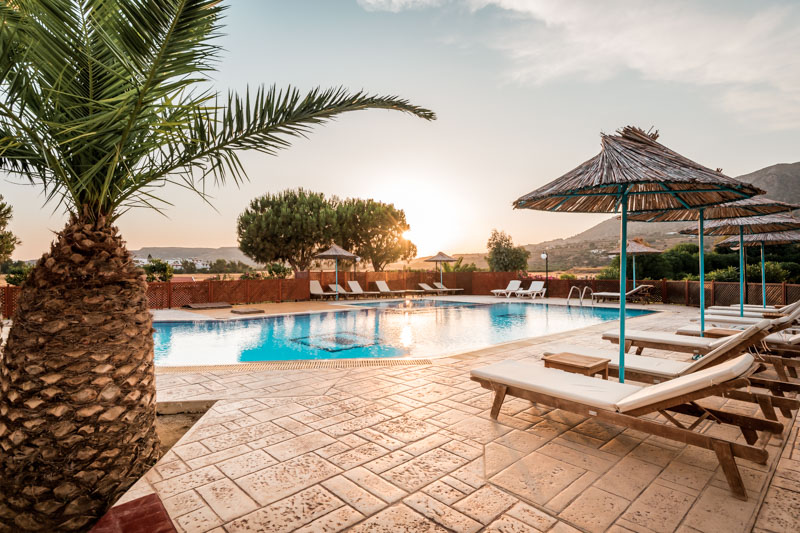
The prices between high and low season fluctuate considerably. In May or October you can get hold of one or two bargains. By the way, the island of Crete has the highest density of hotels and the most overnight stays per year.
→ Here we have listed the best hotels in selected Greek destinations for you:
- Corfu: Best hotels in Corfu
- Kos: The best hotels in Kos
- Crete: Best hotels in Crete
- Rhodes: Best hotels in Rhodes
- Mykonos: Best hotels in Mykonos
- Santorini: Best hotels in Santorini
I – like island hopping in Greece
Island hopping or island hopping
An island hopping refers to a journey in which you visit several islands one after the other. By the Island hopping Greece you head for the individual islands by ferry. The Greek archipelagos are like small archipelagos that are connected to each other by ferries.
The Greek islands are very diverse and you can explore the different microcultures wonderfully. For a two-week stay, we recommend that you plan no more than four islands, as arriving and departing by ferry and constantly moving between accommodations take quite a bit of time. One thing is certain: island hopping can be addictive! Here are our Islandhopping travel guides:
Internet
Free WiFi is now offered in many hotels and holiday accommodations. Free WiFi is also available for guests in most cafes and taverns.
Due to the EU agreement of June 2017, roaming fees in Greece will even be waived in principle. This means that you can use your mobile internet during your vacation in Greece at no additional cost.
You should only watch out for the mobile phone networks of non-EU countries, e.g. near the Turkish coast (including Kos, Rhodes) or in the border area with Albania (including Corfu). Here the smartphone can dial into the non-EU network, expensive fun! It is best to set your smartphone to manual network selection and select one of the Greek providers, such as Vodafone GR, Cosmote or Wind.
J – why yes means no in Greece
Yes in Greek
Beware of faux pas! YES in Greek means ναί, pronounced “nä”. And should not be confused with our “no”. If the dear Greek waiter returns your order with “no”, you know that everything is okay 😉
K – like coffee from Greece
Kafeneio
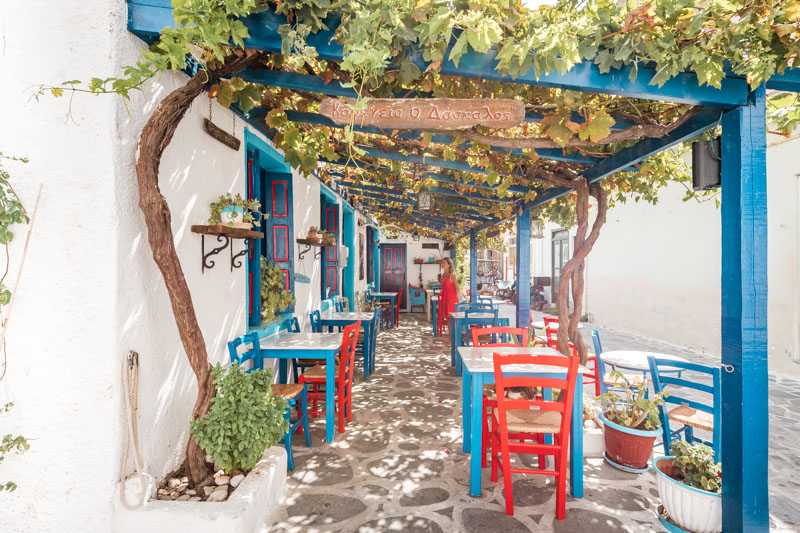
The Kafenion or Kafeneio (Καφενείο) is the traditional coffee house in Greece. In principle, there is at least one of them in almost every Greek town. These are family-run businesses that are an integral part of the Greek community.
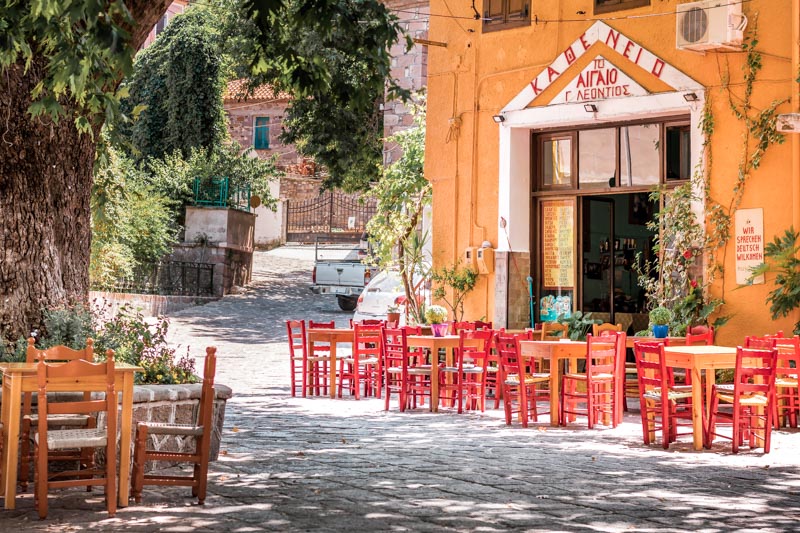
The coffee houses are usually visited by older men (during the day), are furnished with the typical bast wood chairs and are considered the social center of a village. Here you can find out the latest gossip, talk about God and the world or just sit together with coffee and a game of tavli (backgammon).
Coffee
Greek coffee (Ελληνικός καφές, Ellinikós Kafés) is the most popular hot drink in Greece. However, if you expect a classic filter coffee here, you are completely wrong. Greek coffee is similar to an oriental mocha and is brewed in stainless steel or copper pots (briki).

The coffee is finely ground and is served with coffee grounds. The health-promoting effect has already been scientifically proven. It is drunk black with or without sugar, but never with milk. Of course, there are also all other coffee specialties such as cappuccino, espresso & Co. in Greece.
Beware of faux pas: Even though Greek coffee is quite similar to its Turkish counterpart, you should never make a mistake or even use the word Turkish coffee when ordering if you don’t want to incur the wrath of the Greeks.
Maps for hiking
The map material for Greece is very extensive. ADAC, Marco Polo, Freytag & Berndt, as well as Michelin offer Greece cards for both the mainland and the islands.
Detailed hiking maps can usually be found as small excerpts in the travel guides of the regions or the respective island. Alternatively, the german author Dieter Graf (Link to Amazon*) offers very detailed hiking guides for the Greek islands.
Climate of Greece
Greece has a mainly Mediterranean climate. Hot, dry summers and mild winters characterize the country. In the mountains of mainland Greece, there is also heavy rainfall and snow in winter.
→ You can find out more about the weather in Greece in our article: Best time to visit Greece
Komboloi
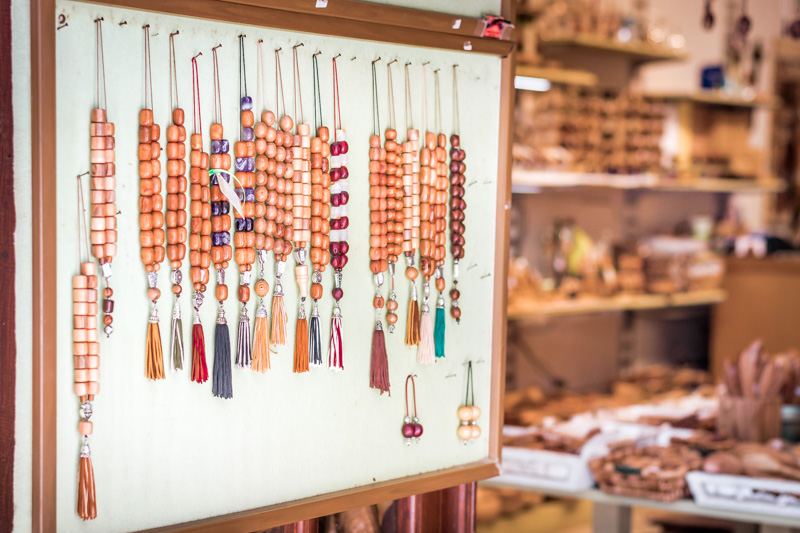
The Komboloi is a pearl necklace that is used by mainly older gentlemen as a finger game and pastime. In Greece, the knotted ribbon with the threaded beads made of plastic, wood, glass or amber has no religious significance. Particularly beautiful komboloi are available in the city of Nafplio on the Peloponnese.
Hospital and emergencies
The Greek health care system is in line with the European average. The European Health Insurance Card ensures basic medical care.
In some of the state hospitals, very simple conditions prevail. The austerity measures taken in recent years as a result of the economic crisis have not exactly improved conditions in Greek hospitals.
Despite these circumstances, many doctors and medical staff are always trying to help holidaymakers in emergencies sufficiently and free of charge. Better medical care is offered by the numerous private health centres. Here, however, the costs usually have to be borne by the owner.
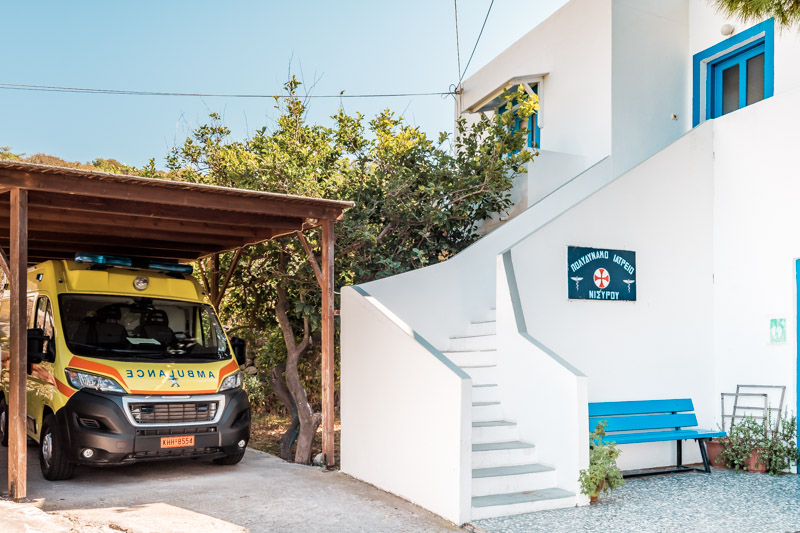
In the case of minor injuries, local doctors’ offices (“Iatreio”) or the many local pharmacies also offer first aid. The well-trained staff makes an initial diagnosis and can also prescribe prescription medication without a doctor.
Health insurance
In the run-up to your Greece Tour you should check with your statutory or private health insurance company to find out how long and to what extent the insurance cover abroad is covered. Most insurance companies offer insurance abroad for up to 6 weeks.
For more extensive services, such as repatriation to your home country, we recommend that you take out a separate international health insurance. The cost of a two-week holiday is hardly more than 20 euros per person.
Crete
Crete is the largest island in Greece. For many Greeks, their “Kriti” is like a country of their own. The climate, culture and lifestyle of the Cretanians are almost distinctive. You can find out more about this Greek island at: Crete Island
Cruises in Greece
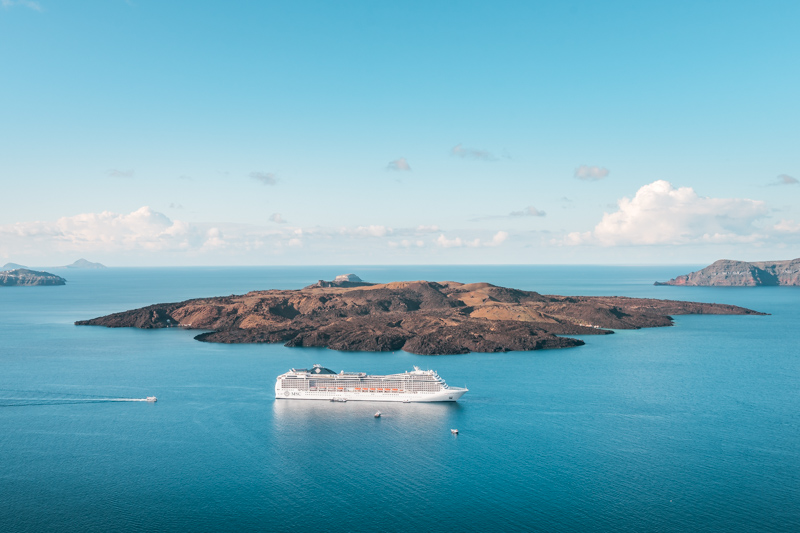
Cruise tourism has increased sharply in recent years. Unfortunately, also at the expense of the environment. Cruises are a convenient way to travel to countries. Different destinations can be reached in a short period of time. We take a critical look at the topic of cruises in Greece and will report on it in a separate article on our blog.
M – for Rental Car for the Hellas Vacation
Metaxa
Metaxa is a Greek brandy invented in 1888 with a secret mixture of herbs. The Greek spirits specialty is stored in oak barrels for several years before bottling.
Car rental in Greece
The most enjoyable way to explore Greece is undoubtedly by rental car. The rental car prices are on a European level. In less touristy regions of the mainland, you can usually get a rental car cheaper than on a popular Greek island.
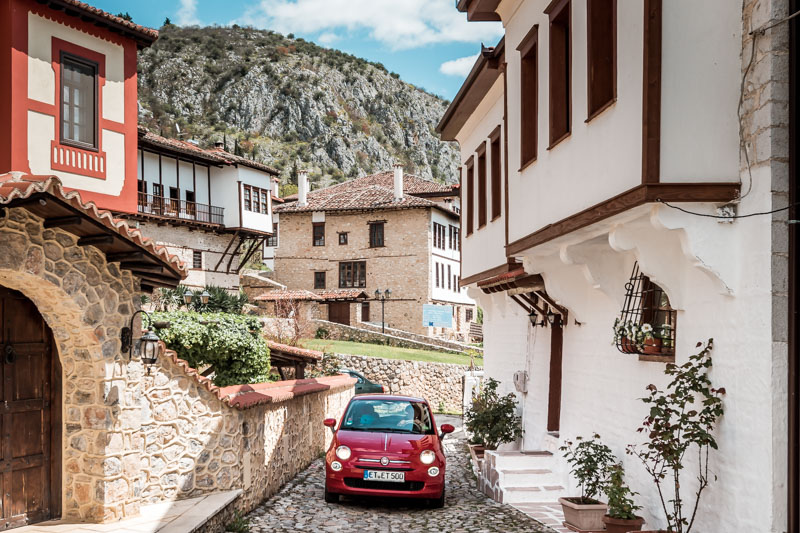
The big companies such as Avis, Sixt and Europcar can be found on every island with an international airport. Otherwise, regional rental car providers usually offer vehicles in different categories at lower prices.
→ You can get more information in our article: Car Rental Greece
Museums
Greece is home to more archaeological museums than any other country in the world. In every village, no matter how tiny, there is usually a small local history museum.
Many large municipalities have an archaeological or art-historical institution that exhibits exhibits from the surrounding region. The National Museum in Athens is the most important museum in Greece.

N – for Name Days in Greece
Name days of the Greeks
The name days (onomastiki giorti), i.e. the days of remembrance of the saints in the church year, have a greater significance in Greece than one’s own birthday. The Greeks celebrate the holiday of their own first name with great enthusiasm. The more Greeks bear the same name, the more extensive the celebrations.

Large festivals are held for St. Ioannis (John the Baptist) on June 24th, Nikos (St. Nicholas) on January 6th and Georgios on April 23rd (St. George). In addition, there are Mary’s important name days on August 15 and November 21.
Emergency numbers
In Greece, the police have the emergency numbers 100 or 112. The rescue service is notified by dialing 166 or 112. Greece is one of the few countries that has a special tourist police force (number 171).
O – for Easter in Greece
Opening hours
The opening hours in Greece are very different from those in Germany. Shops usually open around 8:00 a.m. or 10:00 a.m. in the morning. Around 1:00 p.m. or 3:00 p.m., the siesta is taken, which is an integral part of Mediterranean countries.
With the hot temperatures at lunchtime, work and activities outdoors are avoided. During the siesta, you go to the family, go to the beach or actually take a nap.
In the late afternoon around 5:00 p.m. or 6:00 p.m., most shops open again until late in the evening. Many facilities, boutiques and even pharmacies are open until 11:00 p.m.
Easter in Greece
The Greek Easter is the most important festival in Greece. Due to the Orthodox faith of the Greeks, it usually takes place at a later time than the German Easter. During this time, emigrated Greeks from all parts of the world return to their families on the islands and regions of the mainland.
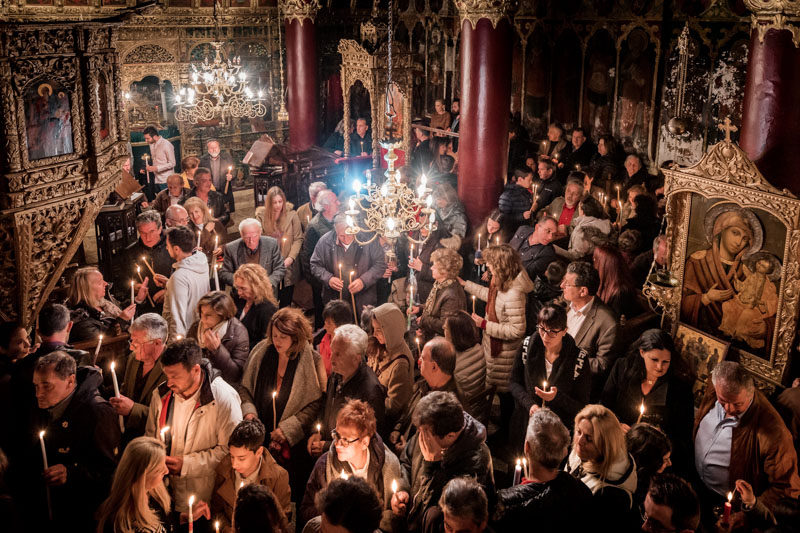
The highlight is the church procession on the evening of Easter Saturday. At midnight, all Greeks are joyfully in each other’s arms and wish each other “Chronia Polla”, which means “All the best” or “Many good years”! On Easter Sunday, the traditional Easter lamb is eaten with the family.
→ You can get more information in our article: Easter in Greece
Ouzo
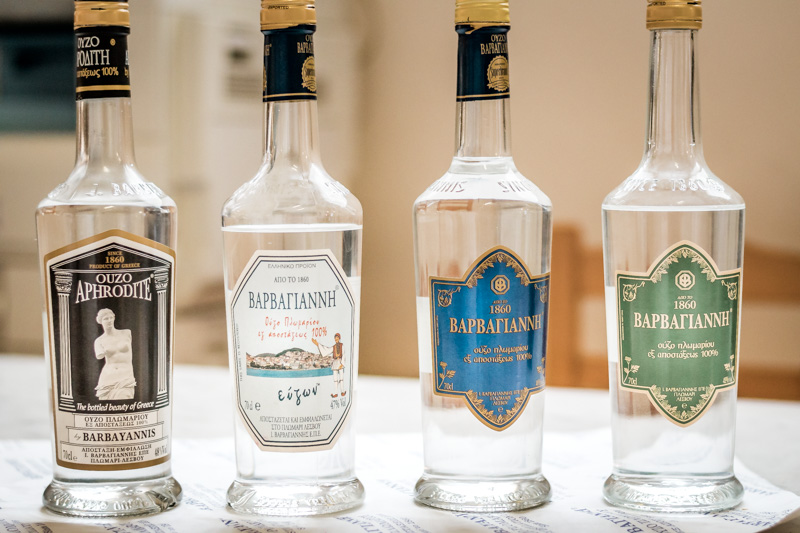
Ouzo is probably the most typical national drink of Greece. It is a distillate made from various herbs, including anise.
Ouzo may only be produced in Greece. The name first appeared in the 15th century. The coastal town of Plomari on the island of Lesbos is considered the most important place of origin of ouzo.
P – for Mail from Greece
Plant
Greece is home to over 6,000 plant species on its islands, mountains and forests. With its many medicinal herbs and medicinal plants, it is one of the most biodiverse countries in the world after Madagascar.
Post from Greece
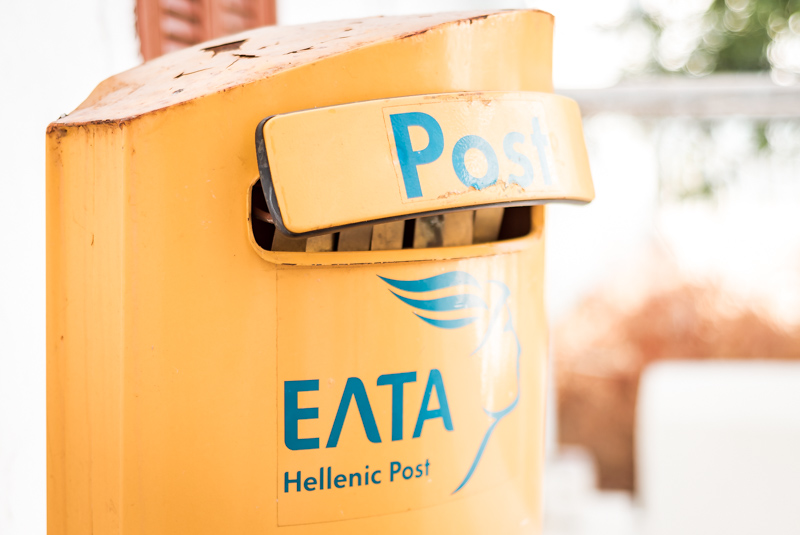
The Greek post office is called ELTA (Ellinika Tachydromia). The partially state-owned company has been operating in Greece as a postal delivery company since 1828. The yellow mailboxes are usually found at the town hall (dimarcheio) of a place.
Priest
The Greek priest “Papas” (Greek: παπάς) is a respected member of the community. He has a special status in society and is a spiritual supporter, family pastor and motivator in everyday life for many Greeks. He is even allowed to marry and have children.
You can often see the dad sitting in the kafenion in exchange with other men. To them with a friendly “Jiasas!” (Greek: Γεια σας for “I greet you”) is part of good manners.
Q – like quad biking on the islands
Quad bike
The quad bike is one of the most popular means of transport on the Greek islands. The off-road capable small four-wheelers (also called ATVs) are ideal for exploring smaller islands. Due to their robustness, they don’t mind gravel roads and you can reach many remote places and beaches with them.
R – for Religion in Greece
Raki
It is a pomace brandy (grape brandy), comparable to Italian grappa. Raki is the national drink of the Cretans. In the rest of Greece, the liquor is known as Tsipouro. In principle, raki can be distilled from any fruit.
Raki is also a well-known spirit in Turkey. There, however, it is usually distilled with anise and differs significantly from the Greek variant in terms of taste.
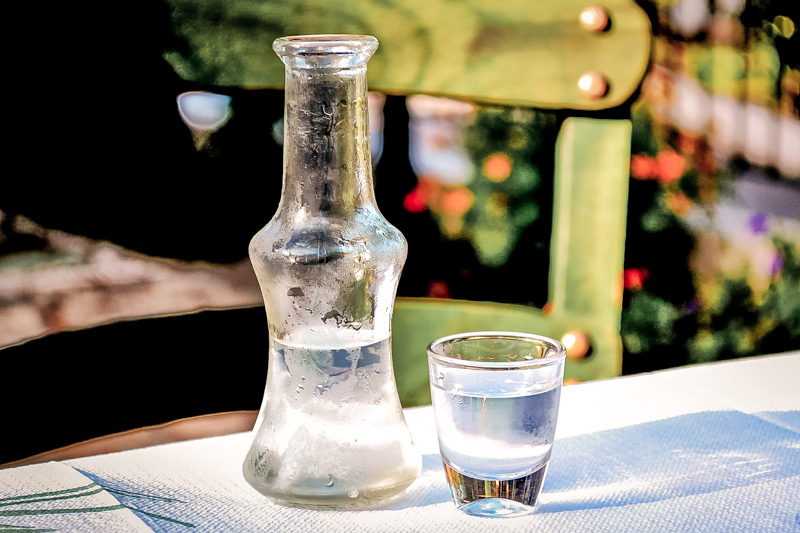
Rakomelo
The “grog” of the Greeks. Originally, the drink comes from Crete. Honey, cinnamon, cloves, anise and cardamom are added to the Raki or Tsipouro schnapps. The whole mix is heated and is the ideal drink for cool autumn and winter evenings in Greece.
Smoke
Smoking has been part of Greek culture for thousands of years. In the past, of course, this was done for medical and healing reasons. The many herbs of Greece were dried 2,000 years ago and inhaled smoking over the fire.
Even today, the country has one of the highest proportions of smokers in Europe. Although there are existing laws and smoking bans in the EU, in some places in Greece they are not quite as strict about their observance. Since the stricter smoking laws in 2019, at least most establishments have been smoke-free.
Invoice
If you order the bill in Greek taverns, restaurants and cafés, you will usually not have an employee waiting for the money next to you. Often you just get the bill on the table and still have enough time for dessert.
It may even be that the bill is already brought to the table in a small glass when the drinks and food are served. Don’t worry, they don’t want you out of the restaurant as soon as possible. This is a measure taken by the government to curb black money and tax fraud by the restaurant owners.
Religion of Greece
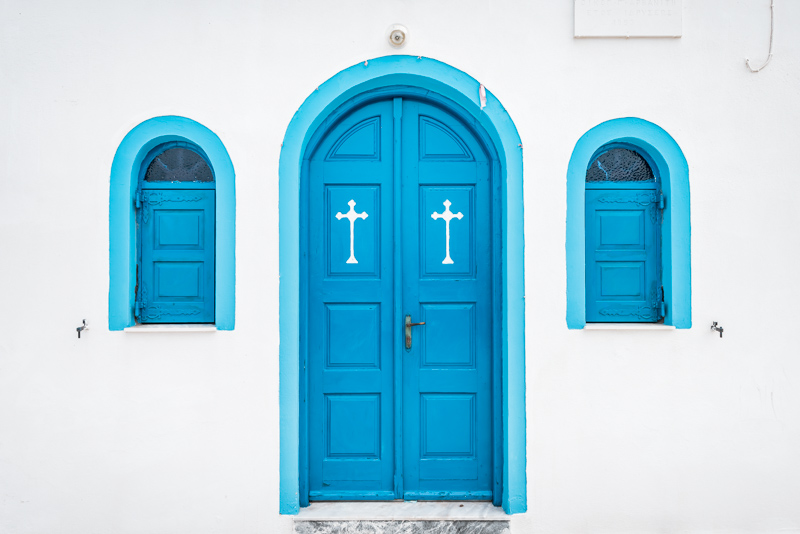
According to the constitution, Greece has Greek Orthodox Christianity as its state religion. Around 97 percent of Greeks profess this. The Orthodox religion is very conservative, but has a high status in the country and is an important identification feature of the Greeks. Above all, many virtues, fundamental values in dealing with people and the importance of the family are conveyed through religion.
Retsina
The resinous wine has a long tradition in Greece. In ancient times, wine barrels were sealed with resin. The tree resin has thus given its typical taste to the wine. Over the centuries, a separate type of wine was established.
Today, winemakers add resins from native pines. The taste takes some getting used to. Properly (ice) cooled, it is definitely recommended. The most famous varieties are Malamatina (green label) and Kourtaki (yellow label).
S – for Security in Greece
Santorini
Santorini is the picture-perfect island of Greece. Their whitewashed houses and blue church domes are representative of the Greek islands and can be found in many travel catalogues and on postcards.
→ Click here for our detailed travel report: Santorini Highlights

Swim
From May to October, Greece has good conditions for swimming in the sea throughout the country. The water temperatures will rise from an initially fresh 18 degrees in May to 25 degrees in August. Even at the beginning of October, the Aegean Sea is warm enough for a beach holiday with a little over 20 degrees.
You should always take local warnings due to dangerous waves and currents seriously. Many an inexperienced holidaymaker has already underestimated the sea currents in Greece and had to pay for it with his life.
Sailing in Greece
Sailing in Greece has always enjoyed great popularity. Whether you are an amateur sailor or a professional, there is something for everyone on the Greek seas. Especially the Ionian Sea and the Aegean Sea around the Cyclades Islands are ideal for sailors.

In the Cyclades, a sailing trip in the form of island hopping is a good idea. You can also charter yachts on many Greek islands. Or you can simply book a sailing holiday through a German travel agency.
Safety in Greece
Greece is one of the safest countries in Europe. Crime statistics have already proven this several times. We have been traveling the country for over ten years and have never experienced a situation in which we had to fear for our safety. The Greeks are a friendly and sincere people. They value the mutual respect and material values of other people.
Especially families with children and women traveling alone are always welcome in Greece and do not have to worry about their safety. In larger cities such as Athens, Thessaloniki or Patras, as everywhere in Europe, you should take care of your valuables.
Sirtaki Dance
Probably the most famous dance in Greece, but not an exclusively traditional dance. The Sirtaki was invented in 1964 for the film Alexis Zorbas with Anthony Quinn. The sirtaki is a modified short form of the Greek folk dance called Syrtos.
Souvlaki
We wouldn’t call souvlaki a Greek national dish, but it is definitely the most popular meat dish. The history of souvlaki meat skewers goes back a long way. The ancient Greeks are said to have prepared them 3,000 years ago.
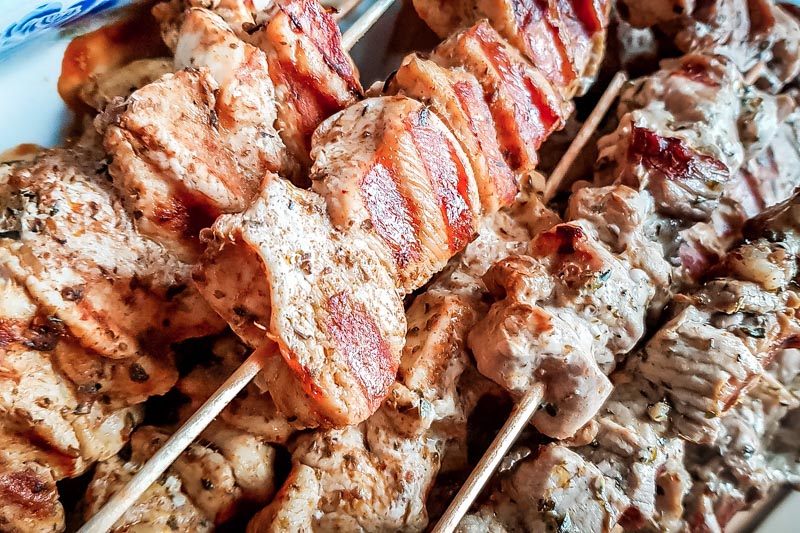
However, the name souvlaki was not coined until the 1960s. The skewers are optionally made with pork, chicken or lamb and with many delicious herbs, such as oregano. The souvlaki taste most delicious freshly grilled. They are usually served with plenty of tzatziki and vegetables in pita bread as souvlaki pita.
Language of Greece
The Greek language is one of the oldest languages in the world and its characters were used as early as 3,000 years ago. Today, Modern Greek is spoken in Hellas. In addition to the official language, most Greeks in the tourist areas almost all speak English.
Even German-speaking Greeks are not uncommon on Crete, Rhodes & Co. In remote regions, such as in the north of mainland Greece, only Greek is spoken. It definitely helps to acquire a small vocabulary for communication.
→ Our (GER-GR short) Greece phrasebook as PDF to download here: Greece Phrasebook
Road network
The road network in Greece is well developed. On the mainland, the motorways for important connections (north-south and west-east) have been modernised in recent years. Here, a toll is payable per section on some routes. As a result, the motorways are in very good condition. Furthermore, there are many federal and country roads of moderate quality.

The more remote the region, the more gravel roads connect the villages with each other. The Greek islands also have a good infrastructure. On the Popular Islands of Greece all main roads are paved. However, only gravel roads or hiking trails usually lead to very remote beaches.
Current
In Greece there are the same sockets as in Germany (220 volts). In most cases, all plugs of technical devices fit. The Greeks are not so fond of screwing down the sockets, so be careful when pulling out the plug. 😉
T – for Drinking Water in Greece
Refueling in Greece
The network of petrol stations in Greece is very well developed. The major operators are EKO, Aegean, ElinOil and Shell. Even on most islands there is at least one gas station.
There are several dozen petrol stations on Rhodes, Corfu and Co. However, petrol prices are among the most expensive in Europe. There is no E10, gasoline “Unleaded 95” or Super 98 is refueled.
Fuel prices on the Greek mainland are between 1.40 and 1.60 euros/litre. On the Greek islands, the prices for gasoline are correspondingly more expensive due to the location. You pay between 1.50 and 1.80 euros/litre for petrol here. As usual, the prices for diesel are somewhat cheaper.
By the way, refueling in Greece is done by a gas station attendant, you don’t refuel yourself. Tipping for the gas station attendant is not customary.
Taverns
The Greek taverns are the hub of the evening get-together of the Greeks and of course the number one culinary retreat for many holidaymakers. What many visitors to Greece don’t know is that they come in a wide variety of forms.
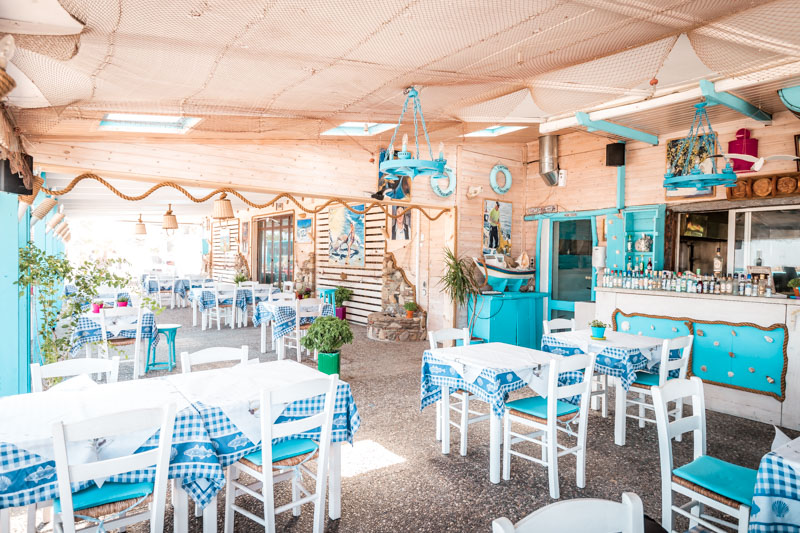
For example, as a classic restaurant (εστιατόριο, Estiatorio), fish tavern (ψαροταβέρνα, Psaro Taverna), ouzo tavern (ουζερί, Ouzeri), appetizer tavern (Μεζεδοπωλείο, Mezedopoleio) or as a small souvlaki snack bar (Σουβλάκια, Souvlakia).
Each restaurant has its own Greek specialties. So you won’t find main courses in a mezedopoleio. In the Ouzeri, ouzo or tsipouro is often served with the food. And the Estiatorio is usually sold as the noblest version of the tavern.
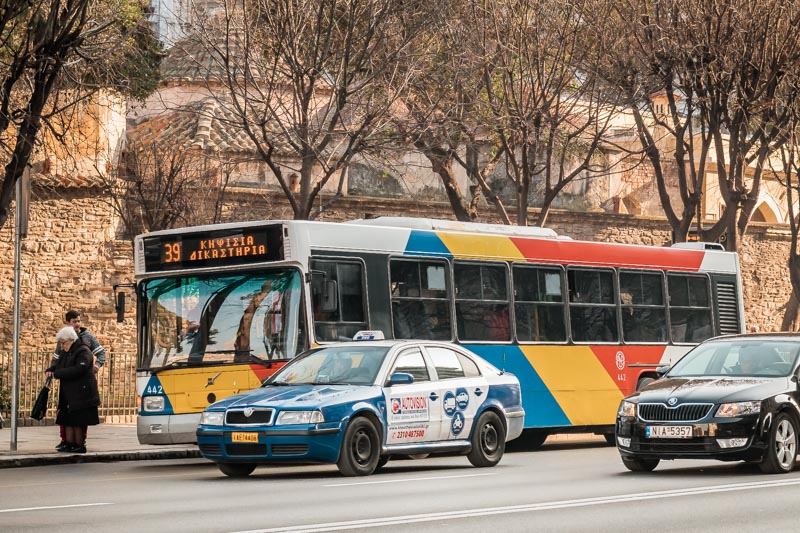
Driving a taxi in Greece
In larger cities and on the popular islands, you will find many taxis. In rural areas, taxis are rather rare in Greece. Fares vary depending on the destination. There are often price lists at airports and taxi ranks.
The taximeter is sometimes used more or less depending on the situation and region. It is best to always negotiate a fixed price with the Greek taxi driver before the trip.
Theodorakis
Mikis Theodorakis (born 29 July 1925) is the most important Greek artist and composer of modern times. He has written over 1,000 works, including the legendary Sirtaki.
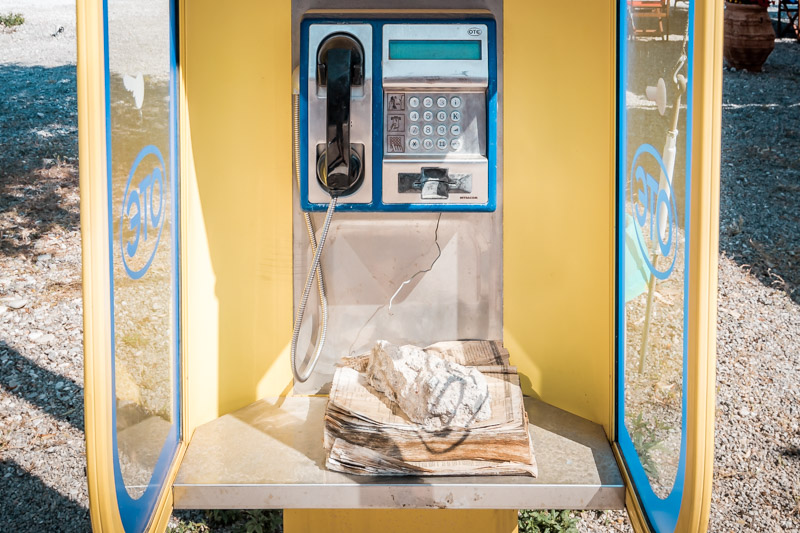
Telephone and mobile
Due to an EU agreement from 2017, roaming fees in Greece are generally waived. Accordingly, you can make calls and use mobile Internet at the same conditions as with your home tariff. See also the point Internet.
A Greek SIM card is hardly worth it for a holiday in Greece. The prices of the Greek mobile phone providers are significantly more expensive than in Germany.
Speed limit
The speed limits in Greece are as follows: inner city 50 km/h, country roads 90 km/h and highways up to 120 km/h. Speed cameras are common on the Greek mainland, but less often on the islands.
Nevertheless, you should definitely stick to the speed limit in Greece. There is a risk of high fines if it is exceeded. A camera sign with the inscription προσοχή (“Prosochi” for caution) announces speed controls.
Animals
Greece is a very biodiverse country. This is not least due to the large climatic differences between mountains, islands and sea. Around 900 animal species are said to be native to Greece. Among them lizards, geckos, tortoises and sea turtles (see Zakynthos Turtles) and snakes, but also deer, foxes, wild boars, even bears and wolves.

The latter is mainly found in the wilderness of northern Greece. And of course, the classic pets, such as dogs and especially the Greek cats, are omnipresent. The Greek islands in particular are a true cat paradise. In addition, Greece has the highest population of goats in all of Europe.
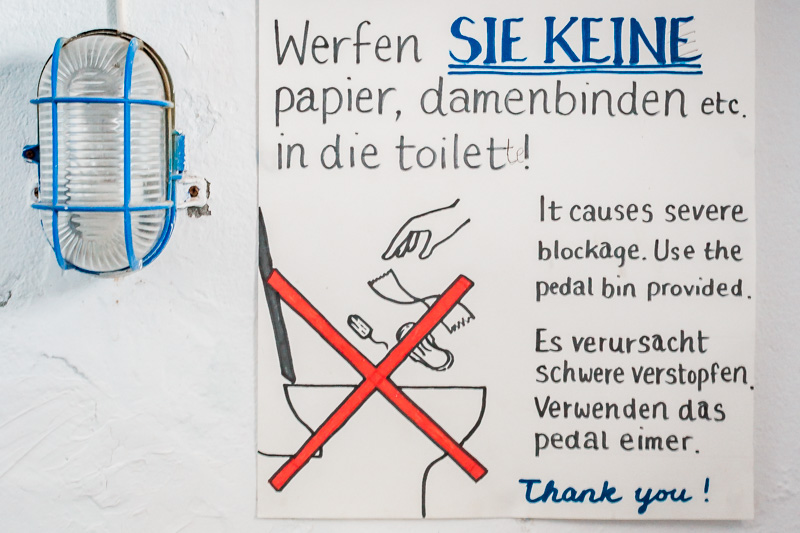
Toilets
If you go to a public toilet for the first time in Greece, you may be prevented from flushing toilet paper by creative signs in various languages. Especially on small islands and in rural areas, toilet paper usually goes into the adjacent waste bin.
This can have several reasons, starting with the drainage pipe being too small, old septic tanks and the complete lack of sewage treatment plants. However, large municipalities and many hotels already have their own sewage treatment plants. Then you can throw the paper back into the bowl.
Tourism
Tourism is considered an important economic sector in Greece. Over 30 million people visited Greece every year. In addition, there are about 5 million cruise tourists.
Tourism has changed regional structures in many places. Some destinations are almost completely dependent on the annual visitors.
Unfortunately, the increase in tourism also has negative aspects. Especially on the Greek islands, there are problems with the water supply and waste recycling also poses a major challenge for some islands.

As a holidaymaker, you can make a contribution to environmental protection. Starting with the choice of a sustainable hotel, to the economical use of water or the avoidance of plastic bags when shopping.
Tipping in Greece
Like almost everywhere else in the world, people in Greece tip for good service. As a rule, this is 10 percent of the invoice amount, but at least 1 euro. In most cases, the change will be paid out to you in full after payment and you can then decide how much of it you leave on the table for the waiter.
Drinking water
Is it safe to drink the water in Greece? Yes and no! On the one hand, it depends on whether the region or the island has its own water supply (springs, groundwater, etc.) and on the other hand, whether it has modern treatment plants for drinking water supply.
For example, the drinking water in Crete is considered excellent. In spring, the meltwater is stored in natural underground reservoirs. However, many of the small Greek islands do not have their own drinking water supply. Occasionally, industrial water is obtained from rainwater cisterns or via a seawater desalination plant.
Furthermore, the water can also be delivered from other larger islands by cargo ship. This water is not suitable for drinking. Many of the big islands such as Crete, Rhodes, Corfu and Kos have their own spring water. According to local authorities, this water can be drunk. Larger hotel complexes and resorts also have modern water treatment plants to ensure the water supply for their guests.
The best thing to do is to check with your hotel or host about the quality of the drinking water. For the preparation of infant formula, you should generally only use packaged water from the supermarket.
Tsipouro
The tsipouro is the most popular spirit of the Greeks, along with ouzo. Originally, the schnapps comes from the region of Macedonia. It is distilled from the press residues of wine processing. In the Thessaly region, it is still flavored with anise and then tastes similar to an ouzo.
U – for Accommodation in Greece
Accident
You can call for help in an emergency via the EU-wide emergency number 112. You can reach the police via the number 100, as in Germany. On every island, no matter how small, there is at least one country doctor and a pharmacy, which can also provide basic medical care.
Accommodations
In Greece there are a variety of accommodations for your trip. Nearly 1.5 million accommodations were available throughout Greece. There is something for every budget. Accommodation ranges from expensive luxury resorts, to family-run hotels, to holiday apartments, to simple hostels and even campsites.
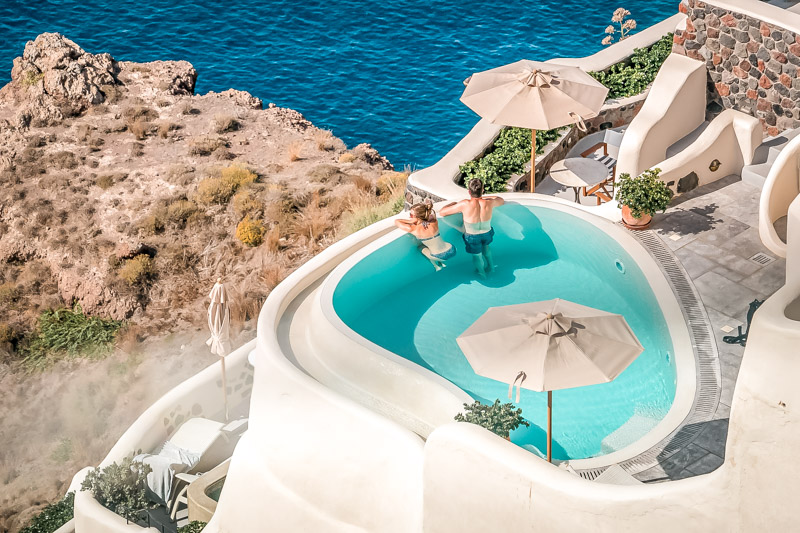
The following always applies: The more touristy the region is, the more expensive the overnight prices. Depending on the accommodation category, a guest tax (climate tax) per night and room is charged by the government. It is usually paid on site and can be between 2.00 euros and 15.00 euros.
V – for Traffic on the Greek Islands
Vegetarians & Vegans
Many readers ask us whether Greek cuisine also has dishes for vegetarians or vegans. The answer is: Yes! Even a lot of Greek dishes are suitable for vegetarians. Starting with the many differently prepared vegetable dishes, meat-free casseroles, such as briam, to the appetizers chorta (wild vegetables), melitzanosalata (eggplant spread), skordalia (garlic cream) or fava (chickpea dip).
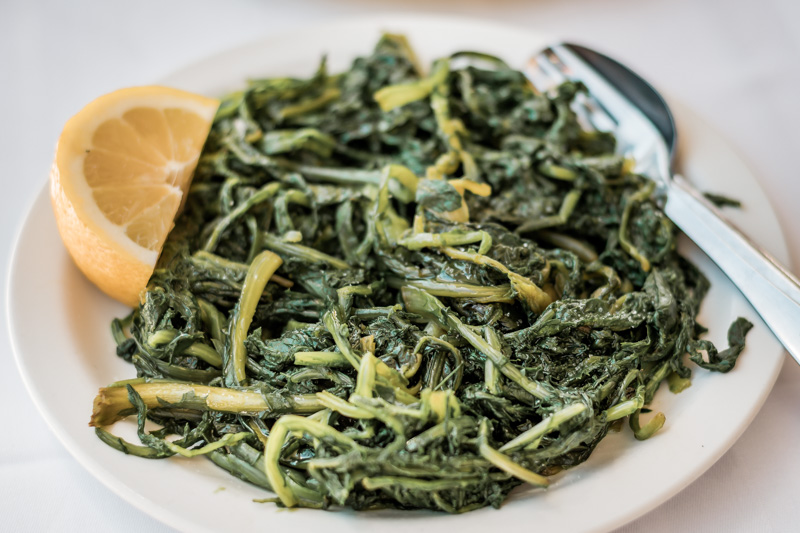
In the supermarket, look for the word νηστίσιμο (Nistisimo). It means fasting and most of the products are exclusively vegan. Especially before Easter, these products are very popular with the Greeks. Traditionally, strict fasting is observed in Orthodox Greece and many meat- and animal-free dishes are served in the taverns.
Traffic in Greece
The everyday life of the Greeks is usually relaxed and comfortable. Only when driving a car do some Greeks have no time. Especially in the big cities, road traffic is quite turbulent. Daring overtaking maneuvers accompanied by loud honking or parking in the second or third row are the order of the day.
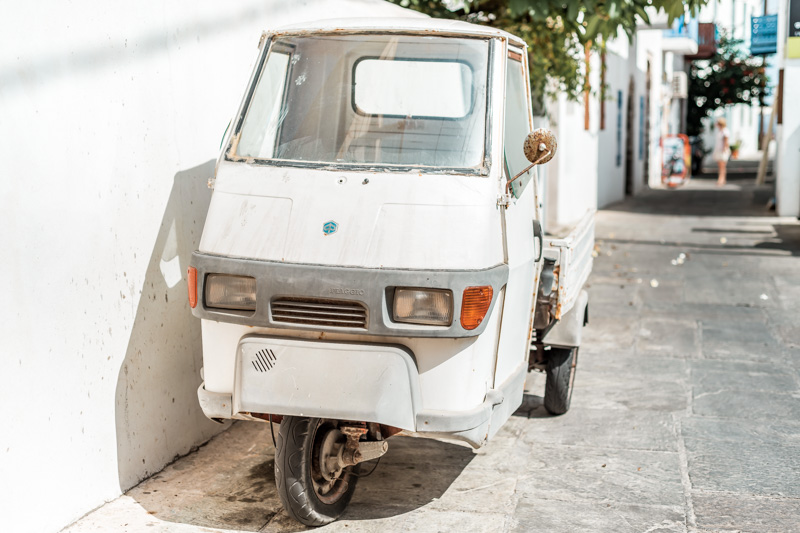
If you want to drive safely, always keep to the right-hand side of the road to ensure sufficient space for overtaking. On the small Greek islands, on the other hand, the streets are quieter. Here you will also meet one or the other APE (tricycle), a classic on the islands.
You should be especially careful in roundabouts. Here, the right of way rules are reversed. Unless otherwise indicated, the road user has no right of way in the roundabout! The person who enters the roundabout has priority. Those in the roundabout have to wait.
Insurance
As for any other holiday abroad, you should also take out international health insurance for your stay in Greece. It is also advisable to take out private liability insurance, which also covers Europe.
W – for Hiking in Greece
Wander
Even if you can’t believe it at first glance, next to all the beautiful bays and beaches, Greece is definitely a hiker’s paradise. Most Greek islands as well as the Greek mainland also have excellent hiking trails to offer due to their charming landscapes.

A popular hiking destination is the Samaria Gorge on Crete. In almost all Greece travel guides, popular hikes on islands and mainland are described. In addition, there is usually local information material with other routes. Only the markings of the hiking trails in some places could be better.
The best time to travel for a hiking holiday in Greece is definitely between April and May, as well as between September and October. Spring is particularly worthwhile because of the blooming and diverse natural and plant world. Popular Greek hiking islands include: Amorgos, Andros, Samos, Naxos or Karpathos.
Forest fires in Greece
Every year, Greece is visited by devastating fires on the mainland and on the islands. Entire areas are destroyed by carelessness or arson. If there is a fire near your holiday destination, the following applies: Keep calm and observe the situation. If the fire spreads in the direction of the wind of your hotel location, it makes sense to pack the most important things for an evacuation as a precaution.
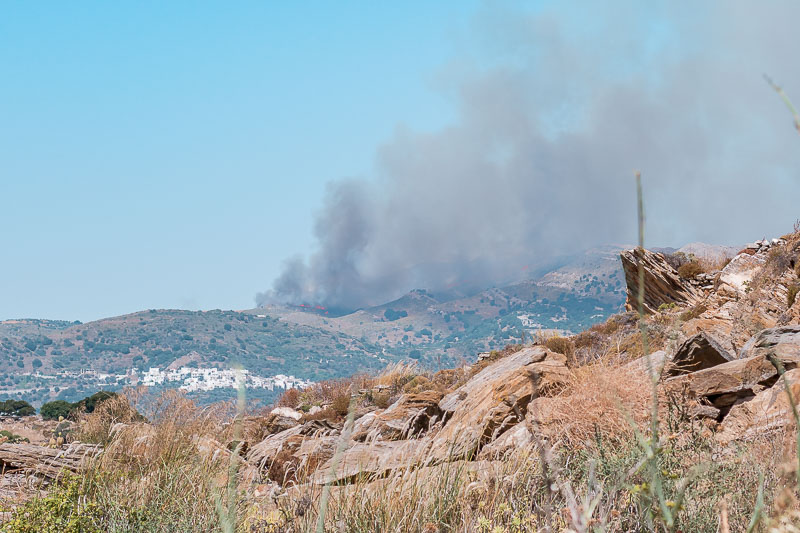
Most forest fires occur in July and August due to the high temperatures and drought. In spring and autumn, fires are much less common. You can find detailed information in our article: Greece Forest fires
Aquatics
Greece is considered a popular destination for water sports of all kinds. There is a lot of fun sports on offer at the tourist resorts, such as water and jet skiing or banana riding and parasailing.
If you like it a little quieter, you will usually find a rental station for pedal boats or a provider for stand up paddling (SUP). Especially on Crete and Rhodes, water rats really get their money’s worth!
Windsurfing in Greece
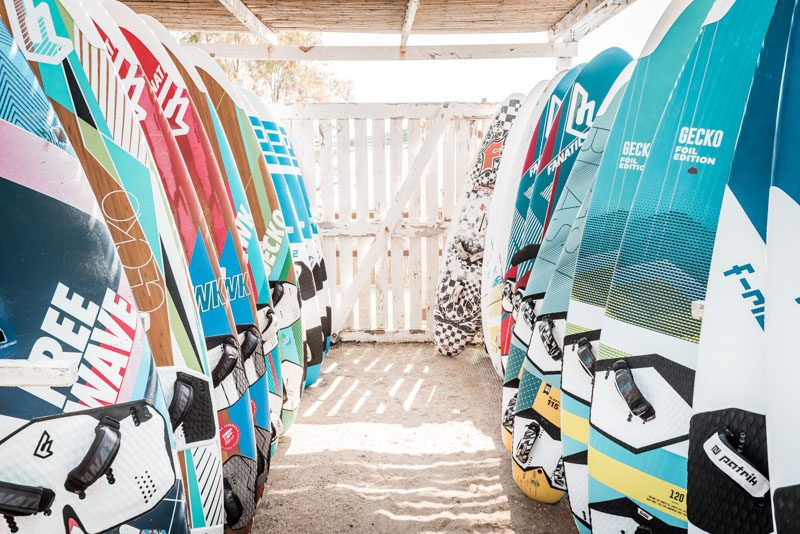
Windsurfers and kitesurfers will also find the best conditions in Greece. There are areas for beginners as well as for professionals. Popular windsurfing and kite centers are located on the islands of Crete, Limnos, Lefkada, Corfu Paros, Naxos, Rhodes, Kos and Karpathos. Karpathos is even considered a windsurfing paradise in Europe. Some of the best winds ever are said to prevail here, say the pros 😉
Economy
While the Greek economy had suffered greatly from the financial crisis in recent years, it has been recording positive results again. Economic growth was about two percent and unemployment fell steadily. In addition to tourism, the food industry with products such as cheese, olive oil, wine and spirits, as well as agriculture play an important role.
X- for Xora on Greek islands
Xora
You will read the name χώρα (Greek “Chora” for central place) again and again in Greece, because many place names are called that. The picturesque main town on Mykonos with its picturesque white streets is called Chora. You can find “Choras” worth seeing on the islands Andros, Asytpalea, Naxos, Patmos, Serifos, Skyros and of course Mykonos.

Z – for Zorbas the Greek
Time difference
In Greece, Eastern European Time (CET + 1 hour) applies, which means you have to put your clock forward one hour. The changeover between summer time and winter time must be carried out as in Germany.
Zeus
Zeus (Ζεύς or Δίας Dias) is the father of the gods of ancient Greek mythology. The Romans later called it Jupiter, just like the largest planet in our solar system. Zeus rules from the Olympus, the highest mountain in Greece and the seat of the gods. On the Pelion godfather Zeus and his troop of gods, by the way, had their summer residence.
Cicada
The insects, which can be up to 11 cm in size, can produce sounds with their drum organs that are also audible to humans and these are not exactly quiet. The powerful chirping of the male cicada, which can be heard during the day and at dusk, reaches up to 120 dB. Most of the time, the perfectly camouflaged animals hide in trees and shrubs, from which they start their singing concert to the chagrin of some holidaymakers.
Customs
As a citizen of the EU, it is possible to take usual goods for your own use with you without restrictions. Tobacco and spirits are limited to certain quantities. The current information about this is written down on the website of the German customs: Customs regulations in the EU
Zorbas
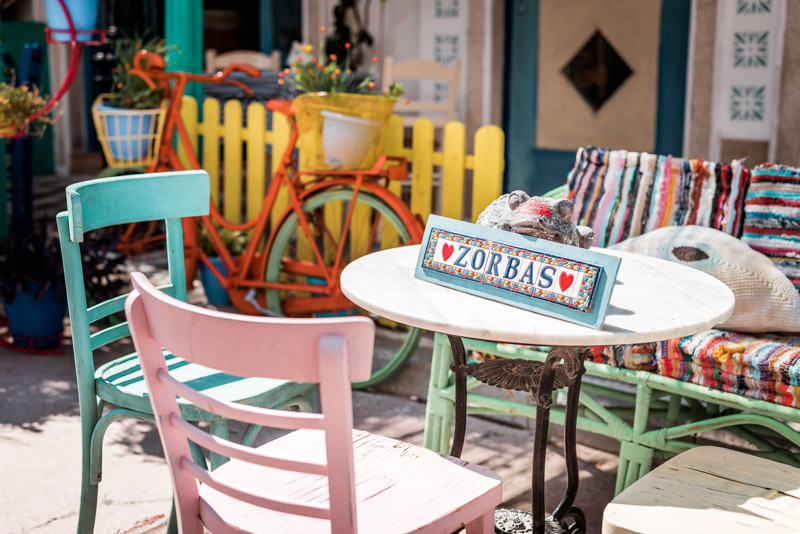
Alexis Zorbas is the protagonist of the film of the same name “Zorba The Greek”, one of the most successful Greek cinema films ever. The film dates from 1964 and became a symbol of the Greek way of life. Even today, you can see many taverns all over Greece and around the world that adorn themselves with the names “Zorbas”, “Zorba the Greek” or “Alexis Zorbas”.
FAQ about Greece Facts
What should you know about Greece?
Greece is located in southeastern Europe on the Balkan Peninsula and is officially called the Hellenic Republic. The capital is Athens, the currency is the euro and the official language is Modern Greek. For travelers, Greece is safe, easy to visit and perfect for islands, road trips and ancient sites.
How many islands does Greece have?
Greece has around 3,000 islands, with about 130 to 150 inhabited. The best-known island groups are the Cyclades, the Dodecanese, the Ionian Islands, the Sporades and the North Aegean. For a first island trip, Crete, Rhodes, Kos, Corfu, Naxos or Paros are good choices.
What documents do you need to travel to Greece?
EU travelers can enter Greece with a valid ID card. A passport is only needed if you plan trips to non-EU countries such as Turkey or Albania. Bring your driving license if you want to rent a car, scooter or quad.
Is Greece safe for tourists?
Yes, Greece is generally a very safe country for tourists. Families, couples and solo female travelers can usually move around comfortably. In bigger cities like Athens, Thessaloniki or Patras, keep an eye on your valuables as you would anywhere in Europe.
Can you drink tap water in Greece?
It depends on the region. On larger islands such as Crete, Rhodes, Corfu or Kos, tap water is often drinkable. On smaller islands, water may come by ship or from desalination plants. The easiest rule: ask your hotel or host when you arrive.
How does island hopping work in Greece?
Island hopping in Greece usually works by ferry. It is easiest within one island group, for example the Cyclades or the Dodecanese. For a two-week trip, we would not plan more than four islands, otherwise you lose too much time packing and moving.
Do you need a rental car in Greece?
You do not need a rental car in Athens. On islands, in the Peloponnese, in Epirus or on Crete, a car is very useful. Many beaches, mountain villages and viewpoints are hard or impossible to reach by bus.
When is the best time to visit Greece?
For a beach holiday, June to September is best. For sightseeing, road trips and hiking, April, May, June, September and October are more comfortable. July and August are hot, busy and often more expensive on popular islands.
*Support our blog Greece-Moments
In this post, you will find affiliate links marked with an asterisk (*). If you book or buy something through one of these links, we receive a small commission. For you, the price remains the same. In this way, you help us continue to provide high-quality content for free. Did you like this post and you would like to say thank you? Then just buy us the next Greek coffee ☕️ To the coffee checkout
Bookmark this post on Pinterest!