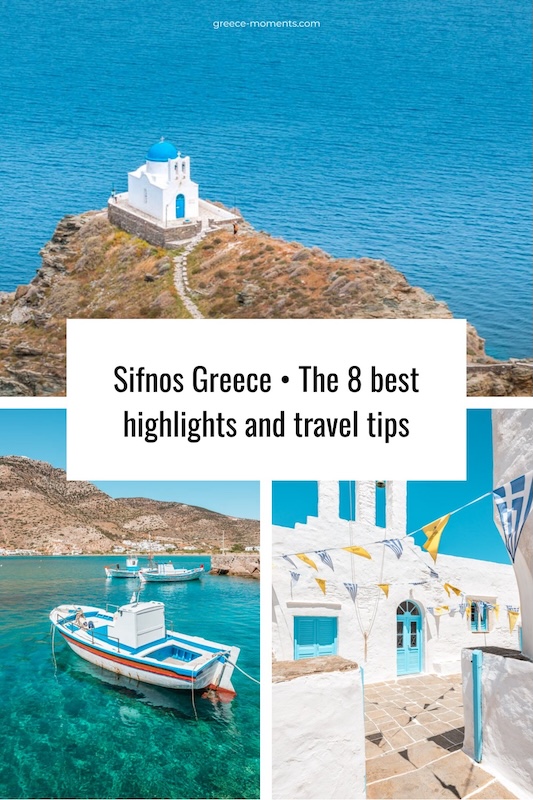

Among the islands of the Western Cyclades, Sifnos has long enjoyed a great reputation among Greek vacationers. We, too, were captivated from the very first moment. A Greek island full of interesting faces, memorable places, and living traditions.
“Sifnos is unique and charming, traditional and modern at the same time. A distinctive island where, even as you say goodbye, you’re already thinking about coming back.”

Sifnos offers everything a traveler’s heart desires: picturesque villages and heavenly churches, magnificent beaches, and a high degree of Greek hospitality. Connoisseurs have long appreciated the island of potters. It remains to be seen how long Sifnos can resist the commercial trends seen on other Cycladic islands like Mykonos, Paros, or Milos.
In this post, we’ll tell you why you absolutely must visit the island, introduce you to the most beautiful sights of Sifnos, and share our personal insider tips with you:
- #1 Agios Andreas: Sifnos from above
- #2 In the alleys of Apollonia and Artemonas
- #3 Kastro: Sifnos’ medieval capital
- #4 Chrysopigi Monastery and the Coastal Town of Faros
- #5 Platis Gialos and the South
- #6 Kamares: Port Town of Sifnos
- #7 Cheronissos: Solitude in the North
- #8 Pottery on Sifnos
- More Sifnos travel tips
#1 Agios Andreas: Sifnos from above
With an area of approximately 74 km², Sifnos is one of the smaller Greek islands. The island’s terrain is rugged, featuring steep slopes in the west and gentle valleys in the east. For a Cycladic island, Sifnos is surprisingly green, which makes it — alongside Milos — the most scenic island in the Western Cyclades in our opinion.


Before you start exploring the island, you can get a good overview from the Agios Andreas archaeological site on a hill. A Mycenaean settlement was established here starting in 1200 BC, and its remains can be visited. Today, the white church of Agios Andreas (1701), which gives the place its name, stands at the highest point.
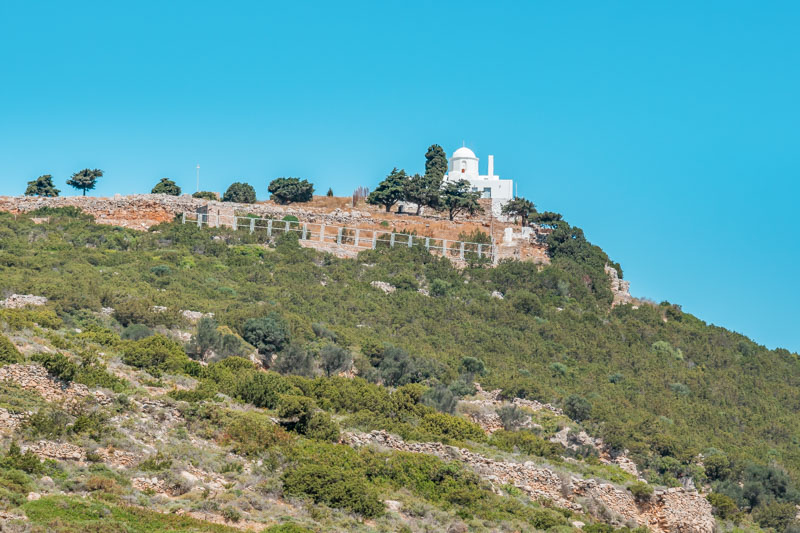
A free parking lot is located about 100 m below the site. A path leads from the entrance to the highest point of the former fortification. The small Agios Andreas museum is worth a visit; it displays artifacts and provides detailed information about the historical site.

From the church forecourt with its restored fountain, you can enjoy a magnificent panoramic view of the main towns of Apollonia and Artemonas, as well as the surrounding villages. On a clear day, the view extends as far as the neighboring islands of Antiparos and Paros to the east, Sikinos and Folegandros to the south, and Syros to the north.
- Agios Andreas Sifnos opening hours: Wed–Mon 8:30 a.m.–3:30 p.m., €3

#2 In the alleys of Apollonia and Artemonas
Although Apollo and Artemis, the twin children of Zeus, the father of the gods, were born on Delos (65 km away) according to Greek mythology, the two largest towns on Sifnos bear their names today. Apollonia and Artemonas feel like one large village, as they have grown together over the years.
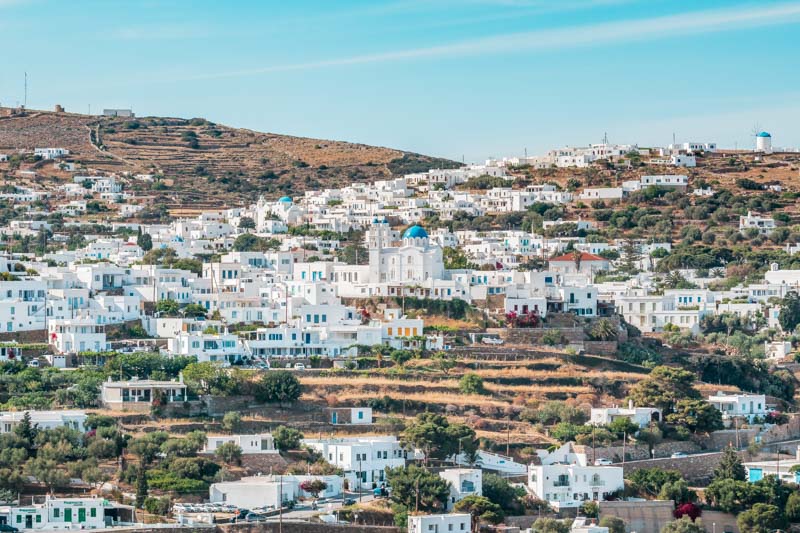
Both towns, with their typical Cycladic charm of narrow alleys, snow-white churches, and houses with colorful doors and shutters, are well worth a leisurely stroll. The large 19th-century mansions with their gardens stand out, appearing like green oases amidst the sea of houses.


Tourism has already taken hold in Apollonia, whereas Artemonas is significantly quieter and feels much more dreamy than its southern twin. In both villages, most restaurants and cafes don’t open until the evening; only a few cafes and taverns are open during the day. You can find our recommendations here: Sifnos Restaurants
A Stroll Through Artemonas
If you’d like to visit Artemonas, you can park your rental car in the free parking lot above the bus stop. Passing the venerable Church of Agiou Konstantinou & Elenis, you enter the car-free pedestrian zone. By the way, Artemonas is home to the island’s best pastry shops.
At the family-run Benioú bakery, we were welcomed very warmly, and they offer everything from bread and cookies to popsicles and delicious Greek sweet breads (tsoureki). From the bakery, follow the alley on your right heading north, past the elementary school, and shortly after, turn left to reach the main street leading to the upper village.

Surrounding the main church of Panagia Konchi, you’ll find numerous cafés (Tip: Cafe Mosaic) and taverns (Tip: Ampati), as well as art galleries, jewelry stores, and other shops, including the ceramics shop Mpairames. It is said that in ancient times, a temple dedicated to the goddess Artemis stood on the site of today’s church.
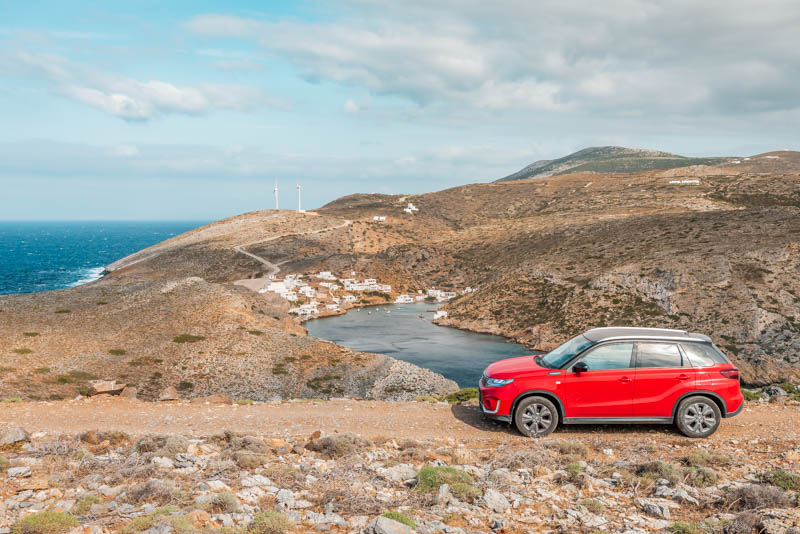
💡 Rental Cars on Sifnos: The best way to explore Sifnos is by rental car. A small car like a Fiat Panda is sufficient, as most roads are paved. Sifnos is very hilly, with many winding roads between the mountain villages and the beaches. To learn everything you need to know about traffic and car rentals on the Greek islands, check out our separate article: Rental Cars in Greece
Side trip to the Panagia Poulati Church
After a stroll through Artemonas, it’s worth taking a detour to the Panagia Poulati Church on the east coast of Sifnos. It is the final destination of the Sifnos Trail hiking route No. 1 (see box) and can be reached via a donkey trail or a bumpy gravel road.
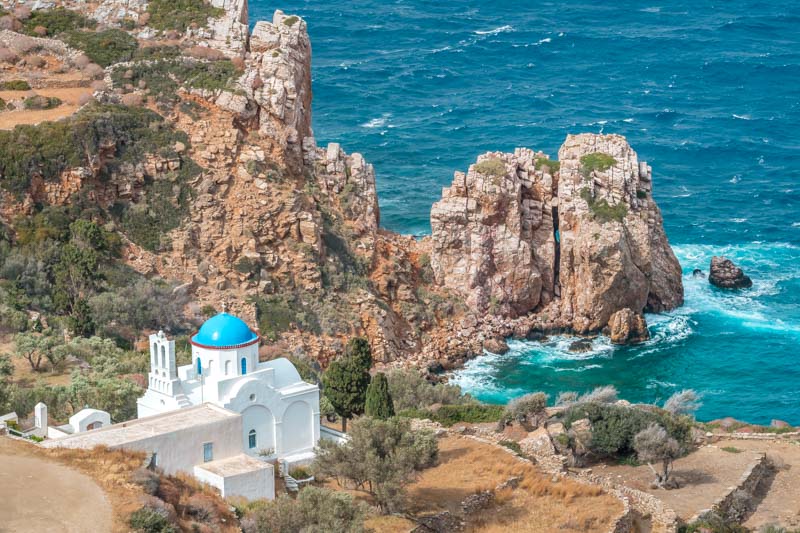
The picturesque church was built in 1875 and stands out in brilliant white, with an imposing bell tower and sky-blue dome typical of Sifnos. Unfortunately, Panagia Poulati is usually closed, but together with the rugged coastline, it makes for a great photo opportunity. From the church, you can also see the old island capital, Kastro (see #3).
💡 Hiking on Sifnos: Through dedicated work, the Municipality of Sifnos, in collaboration with local hiking enthusiasts, has restored part of the island’s old trail network. The trails have been extensively marked and information signs erected in many places. The Sifnos Trails project now includes 10 professionally maintained hiking trails that pass ancient sites and historic churches, mostly offering spectacular views of the sea. An overview map and all information about the routes, including in German, are available on the Sifnostrails website
Apollonia: Capital of Sifnos
Apollonia, built amphitheatrically on a ridge with three hills, has been the capital of Sifnos since 1836. Today, about 800 residents live in the town, which lies directly on the main road and is bisected by it. The road is narrow, and traffic chaos reigns in the mornings. It’s best to park your rental car in the free parking lot at the eastern entrance to town.
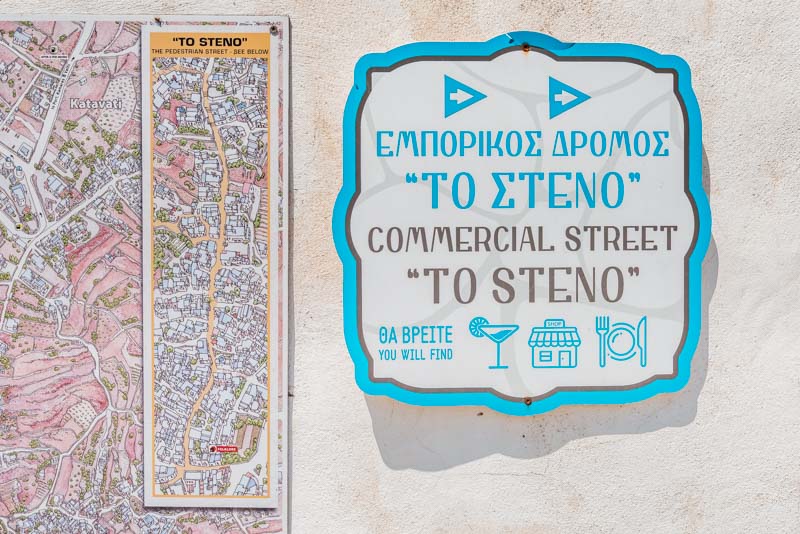
Similar to Artemonas, most shops and restaurants are concentrated along a main street, Steno. Especially in the evenings during the summer months, Steno Street is bustling with activity. Numerous bars (Tip: Mantalou Bar) don’t open until 8 p.m., and then a touch of Mykonos fills the air.


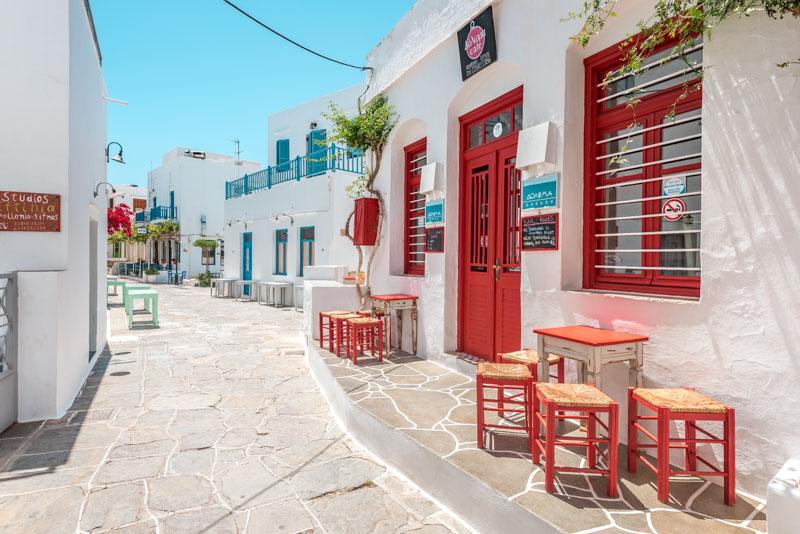
But it’s also fun to stroll through the cobblestone streets of Apollonia during the day; there are great photo opportunities everywhere. Unfortunately, Apollonia felt a little too overrun by tourism for our taste, but at least we found a quaint spot for lunch at Ouzeri Tselementes.
Hike to the highest mountain on Sifnos
An old donkey trail winds its way up countless switchbacks to the island’s highest peak. The hike (Sifnos Trail 6b) up the 682-meter-high Mount Profitis Ilias, crowned by a former monastery dedicated to the Prophet Elias, is one of the most challenging excursions on Sifnos. Be sure to pack plenty of water and provisions in your hiking bag.

After the roughly two-hour hike from Firogia at the outskirts of Apollonia, you’ll be rewarded with a breathtaking panorama of the island and the Aegean Sea, including the surrounding islands. The fortress-like monastery dates back to the 12th century and was inhabited until 1890. Incidentally, the so-called Cycladic viper is native to the valley below the mountain and likes to sunbathe on the asphalt.

#3 Kastro: Sifnos’ medieval capital
The old island capital of Kastro, with its white cube-shaped houses, sits almost unrealistically perched on a steep rocky outcrop above the sea. This picturesque town is just a 5-minute drive from Apollonia. Even on the winding drive there, you’ll enjoy beautiful views of Kastro, which is surrounded by white churches, dovecotes, and windmills.

Below the windmills of Kastro, there is a (small) free parking lot. Passing the Stiadi restaurant, you make your way through the maze of medieval alleys. In the off-season, Kastro is very quiet; during siesta time, you’ll encounter only a few people. Typical Greek photo opportunities, however, can be found around every corner.


In the summer, you can party the night away in the trendy bars lining the alleys. Although the area has been inhabited since the Stone Age, Kastro wasn’t founded until the 14th century. In its heyday, up to 5,000 people lived here, and its castle-like, oval layout offered protection from pirate raids.

Kastro has remained a place for locals — more of a residential neighbourhood than a tourist hub — even though there are now a few souvenir shops. History buffs can visit the Archaeological Museum of Sifnos (8:30 a.m.–3:30 p.m., closed Sun, Tue, and Thu) in the labyrinth of Kastro’s alleys, featuring artifacts from all eras.
Church of the Seven Martyrs
Anyone who thinks the pretty white alleys are Kastro’s only highlight is mistaken. Hidden behind them lies what is arguably the most beautiful chapel in the entire Western Cyclades: Epta Martyres, the Church of the Seven Martyrs. Anyone who has chosen Sifnos as a destination has surely come across this photogenic Cycladic-style church in a photo before.

Believe us, in reality it is 1,000 times more beautiful, and the dramatic backdrop is breathtaking—a must-see for any Greece enthusiast. The shortest route to the Epta Martyres Church leads from the bus stop in the southeast of Kastro, past the Kavos Sunrise Bar, and then follows the signs.


From the first viewpoint of the church, which was built as recently as 1920, a well-maintained pilgrimage path leads down 187 steps. It is especially beautiful around noon, when the sky-blue dome and the turquoise sea sparkle in competition with each other. On windy days (think Meltemi), the wind blows relentlessly here, so caution is advised.
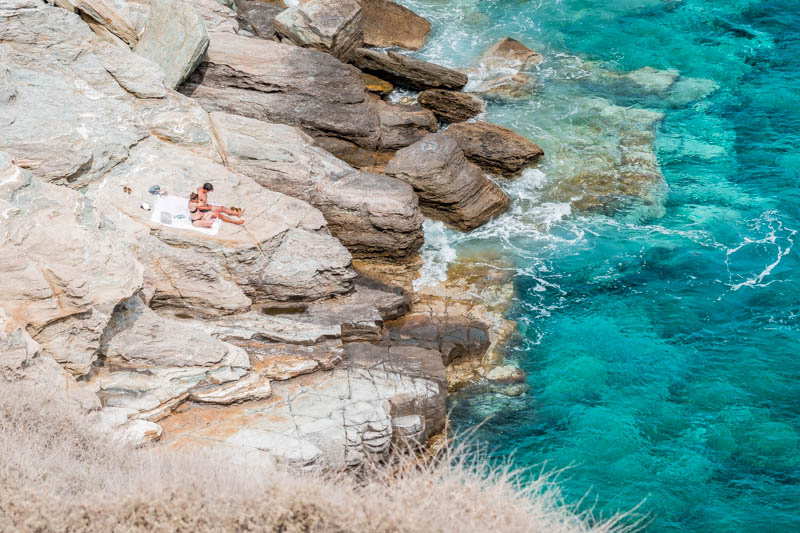
During the summer months, the church often serves as a wedding venue for Greeks; if you’re lucky, you can witness the spectacle, sometimes even accompanied by violin and laouto music. South of the church, a natural stone staircase leads down to the rocky shore, where you can swim in the crystal-clear water when the sea is calm. For lunch, you can stop by Seralia, the port of Kastro, for example at the Captain George fish tavern.
💡 Help with planning your Sifnos vacation: Not sure where to start or how to plan your trip to Sifnos? No problem—take advantage of our years of experience with trips to Greece and let us help you. We’ll advise you on all your questions and concerns, even via video chat. Book your consultation here: Greece Travel Consultation
#4 Chrysopigi Monastery and the Coastal Town of Faros
The Chrysopigi Monastery is another major attraction on Sifnos, located about 8 km from Apollonia on the southeastern tip of the island. Perched on a rocky outcrop right by the sea, this small monastery complex — now uninhabited but lovingly maintained by the locals — is a true postcard-perfect scene.
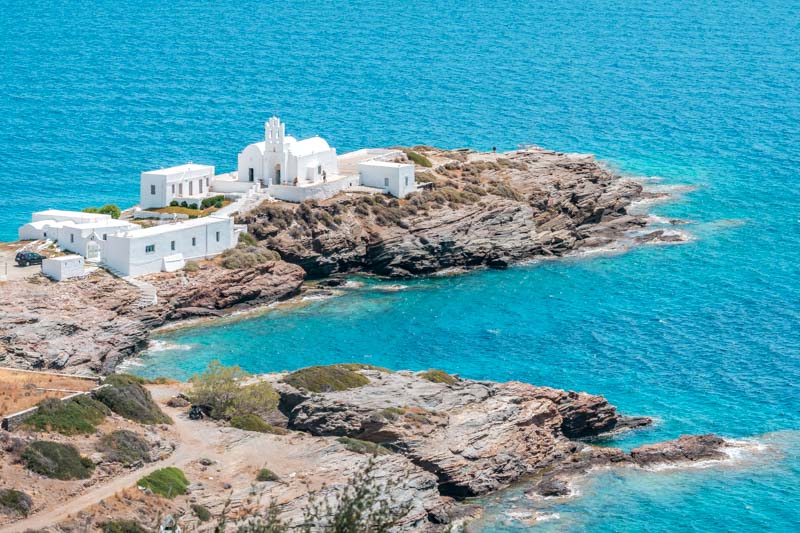
Even as you approach, the magnificent view of the monastery will enchant you. Chrysopigi (also spelled Chrisopigi) was founded in the 16th century, but received its current name only in 1677 from the monk Parthenios, who moved to Sifnos from the Chrissopigi Monastery near Chania on Crete.

In the late Middle Ages, it served as a convent, but was constantly subjected to pirate raids. In her distress, the last remaining nun turned to the icon of the Virgin Mary and prayed for help. A miracle occurred: the monastery rock split open just as the pirates approached, sending them tumbling into the sea. Since then, the rock has been divided by the sea, and a bridge leads to the complex.

The icon depicting Mary and Jesus at the Spring of Life is considered the patron saint of Sifnos due to its miraculous powers. On Orthodox Ascension Day (40 days after Easter), one of Sifnos’s largest church festivals takes place here, where everyone is welcome and the celebrations continue for three days with wine and singing.

A visit to the monastery is brief, yet Chrysopigi is a wonderful place of tranquility with a magnificent view of the sea. A whitewashed staircase leads down to the shore, where you can refresh yourself in the crystal-clear water. Alternatively, the nearby Apokofto Beach is ideal for swimming.
- Chrysopigi Monastery Sifnos opening hours: daily 9 a.m.–1 p.m. and 5–7 p.m., free admission—donations welcome
Faros, the former fishing village flanked by two flat sandy beaches, has developed into a popular vacation spot in recent years. Faros means “lighthouse” in Greek, and it is likely the presence of the island’s most important religious site, Chrysopigi, that makes the town so attractive to investors.
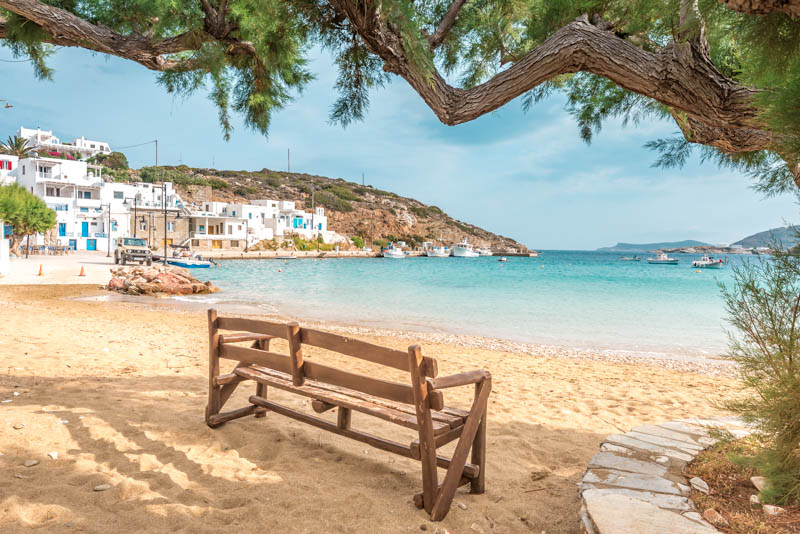
Numerous villas have sprung up on the slopes above Faros, and traditional taverns have been replaced by trendy bars. Unfortunately, this felt a bit contrived to us. It’s a shame, as the town still had a certain idyllic charm, at least during the off-season in early May. The two beaches, Paralia Faros and Vlicho Beach, are great for swimming.


If you’d like, you can even take a stroll from Faros to Chrysopigi along a picturesque coastal trail (1.5 km, approx. 20 min). Right by the old fishing harbor in Faros, it’s worth stopping by Captain George’s for a coffee or a drink. Georgios and his sister Sofia have preserved the old charm of Faros in their Café-Pantopoleio, located right by the sea.

Heavenly silence at the Vryssiani Monastery
On the way back from Faros, you can visit the largest monastery on Sifnos. The Vrysi Monastery (also known as Vrissi or Panagia Vryssiani) is located just outside the village of Exampela, about 2 km south of Apollonia. Whitewashed and surrounded by thick walls, it rises like a fortress above the main road. In fact, it was built in the 17th century to protect against potential pirate attacks.
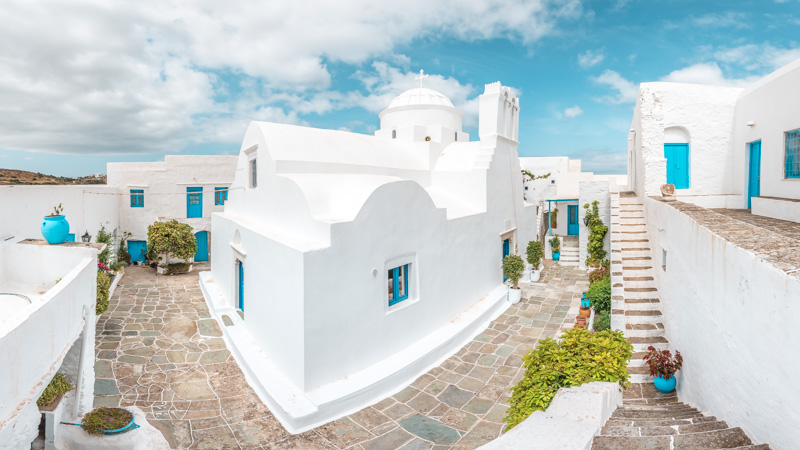
The monastery is dedicated to the Nativity of Mary, in whose honor a patronal feast is held on the grounds on September 8. Panagia Vryssiani is open continuously during the summer, though the katholikon with its wooden iconostasis is closed during siesta. A stroll through the compact grounds is well worth it thanks to the charming design; greenery is everywhere, and all windows and doors are painted blue.

#5 Platis Gialos and the South
The name translates to “Long Sandy Beach,” and indeed it is the longest on the island and, for us, also the most beautiful beach on Sifnos. Platis Gialos can be easily combined with a visit to the Chrisopigi Monastery, just 3 km away. In mid-May, we were greeted by a relaxed atmosphere; although some last-minute work was still being done here and there to prepare for the season, a few restaurants and cafés had already opened.

We enjoyed the calm before the storm at the beach bars (tip: Lost Bay), because things really heat up here in the summer. Platis Gialos, with its row of white houses nestled close to the beach, is the most popular vacation spot for mainland Greeks alongside Kamares. The vacation villas stretch far into the green valley behind.
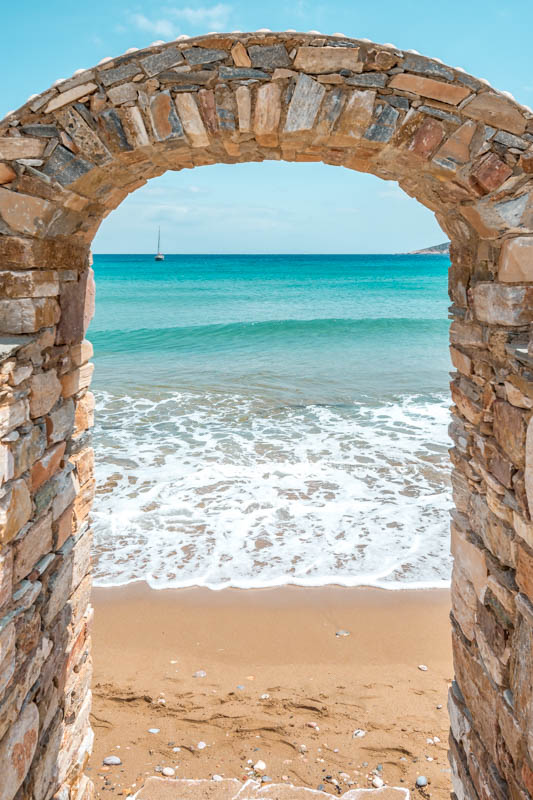

Right by the sea, there are a good dozen cafés and restaurants, interspersed with vacation homes and shops; there are even three pottery workshops still operating in Platis Gialos today. If the beach gets too hectic in the summer, you can hike (4 km) to the secluded Paralia Fikiada at the southern tip of Sifnos.

You can enjoy the most beautiful view of Platis Gialos and the southern part of Sifnos from the gleaming white Panagia tou Vounou Church above the village. An inconspicuous turnoff from the main road leads to this 19th-century church of “Our Lady of the Mountain,” which is well worth a visit.
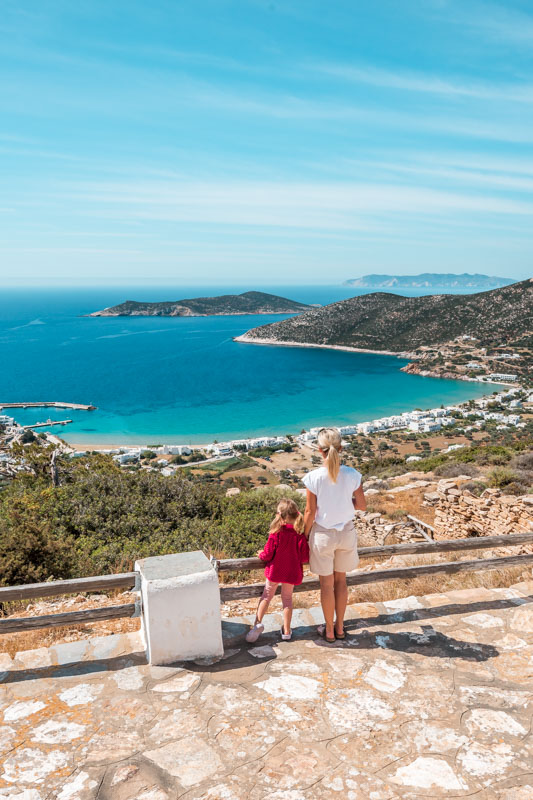
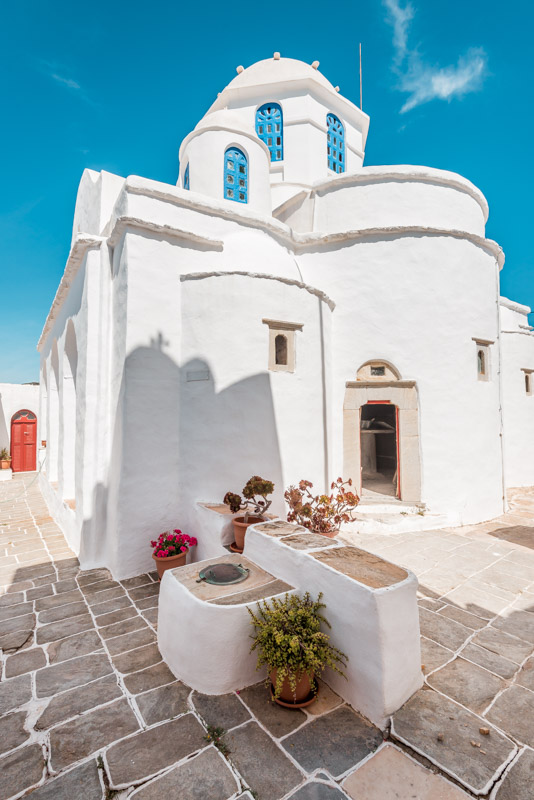
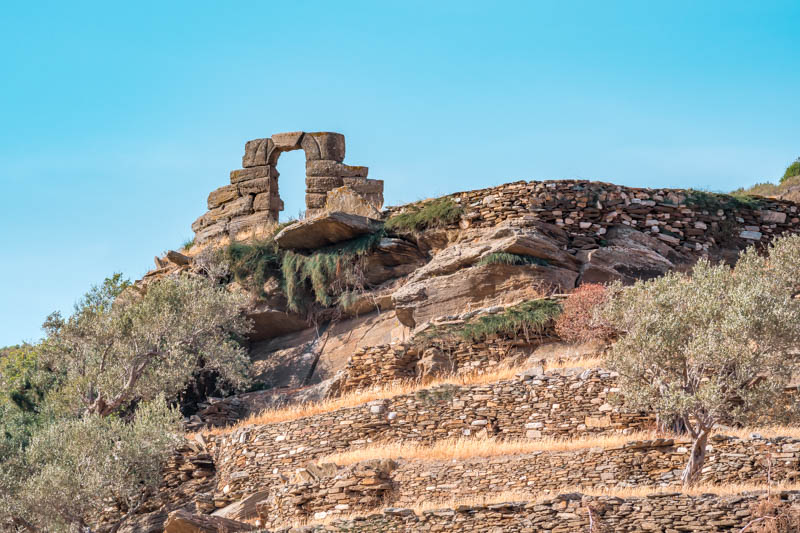
Although the church is currently closed for renovations, the churchyard offers a magnificent view of the Aegean Sea and the islands of Polyegos (uninhabited), Folegandros, and Sikinos. From here, you can also see Aspros Pirgos, an ancient watchtower perched on a rocky outcrop above the marina of Platis Gialos.
💡 Towers of Sifnos: There are said to have once been nearly 80 Hellenistic watchtowers on Sifnos. Scattered throughout the landscape, they served as signal towers in times of danger. None of them survive in their original form today, but remnants of the walls are preserved in many places, including Aspros Pirgos (White Tower) near Platis Gialos and Mavros Pirgos (Black Tower) near Exampela. Other clearly visible towers can be found along the road from Apollonia to Vathi—the Tower of Kade—and above the road from Kamares to Apollonia—the Tower of Kambanario.
A Journey Through Time in Vathi
Vathi—every time we hear the name of this small coastal village, we can’t help but gush. It was our first evening on Sifnos, and we arrived in the late afternoon as the sun bathed the horizon in golden light. No car noise disturbs the idyll; taverna chairs are set comfortably by the sea, and children play boisterously in the shallow, clear water.


When the friendly landlady Anastasia warmly welcomed us and asked about our day on Sifnos, we immediately felt at home. This is how we imagine authentic island life — peaceful, warm, unpretentious, and blessed by the beauty of nature. Anyone who spends their Sifnos vacation in this village of 75 souls will remember it for a long time to come.
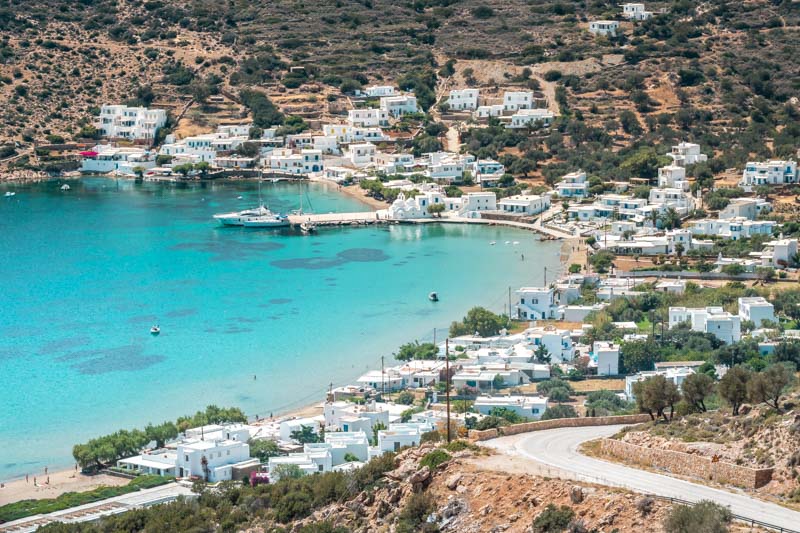
Once you’ve passed the mountain peak after the winding drive from Apollonia, you’ll be welcomed by the pretty bay. The wide, circular natural harbor has offered ships a wind-sheltered anchorage for centuries, and Vathi remains popular with sailors to this day. On a clear day, you can spot the neighboring island of Kimolos on the horizon.
Vathi is a traffic-calmed area; park your rental car under the olive trees at the entrance to the village and explore on foot, following the beach all the way to the venerable Church of the Archangel (17th century) and the small marina. Time has stood still here in a pleasant way — for example, vacationers’ luggage is transported to their accommodations by wheelbarrow.
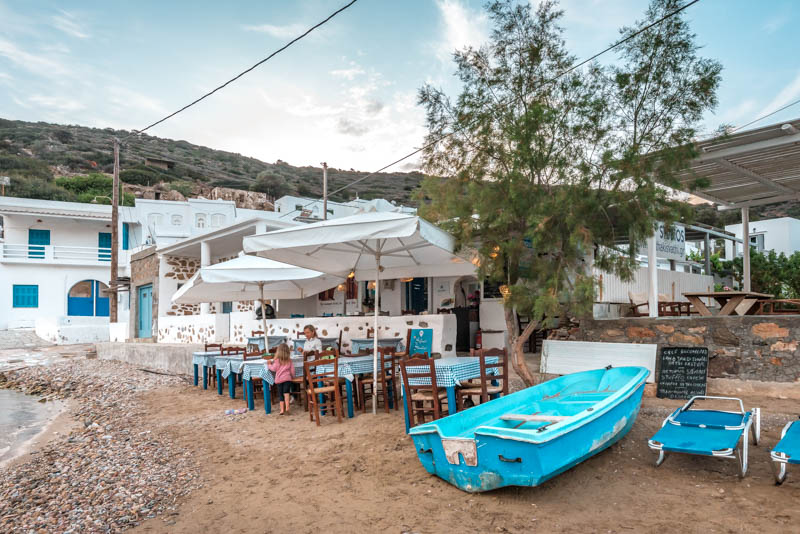
There are no tourist shops in sight, just a small market for basic supplies, plus a handful of rustic taverns (our recommendation: Okeanida) serving tasty island cuisine at reasonable prices. Only the Bola Bar adds a modern touch.
While luxury resorts have already sprung up in the area around Vathi, the village itself hasn’t embraced them yet. Although things get busier in summer, you feel light-years away from the hustle and bustle of other Cycladic islands like Milos, Paros, or Mykonos. Here, a touch of southern Crete blends with the flair of the Cyclades.
#6 Kamares: Port Town of Sifnos
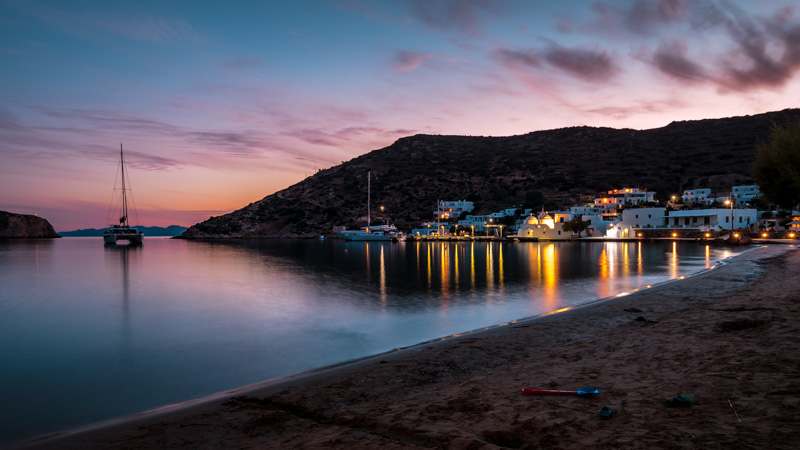
At the end of a long, fertile valley lies the seaside village of Kamares, home to 300 residents. Every visitor sets foot on land for the first time at Sifnos’s main port. In summer, Kamares is a vacation destination for many mainland Greeks. In the off-season, with its long waterfront promenade lined with tavernas, cafés, and small shops, it presents itself as a relaxed getaway.
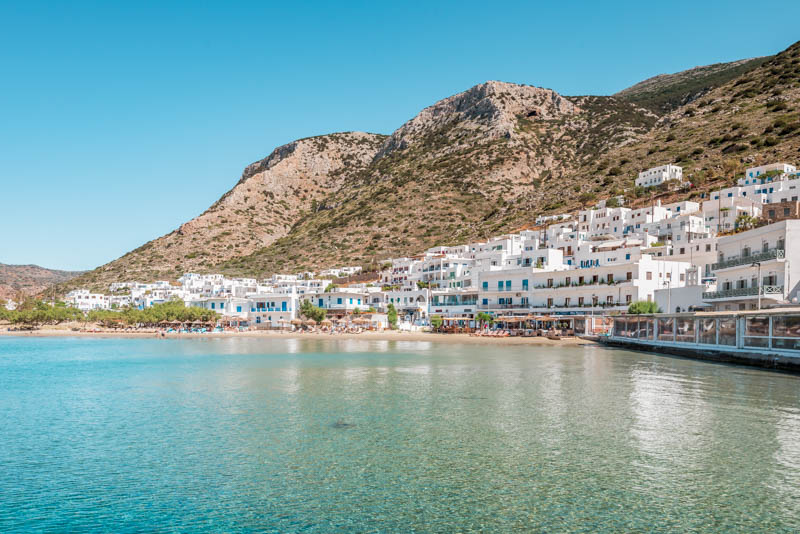
The wide beach at Kamares, with dunes behind it, is perfect for sunbathing, but the heavy ferry traffic put us off going in the water.

We really liked that, unlike other port towns (including Livadi on Serifos), the main road here is reserved for cars only when ferries are arriving or departing. This allows you to stroll through the town in peace.


If you’re looking for an original island souvenir, you’ll find what you’re after at the shops Peristeriοna (ceramics) and Sifanto (delicacies), not far from the free parking lot at the town entrance. Adventurous types can explore Mavri Spilia via a hiking trail (Sifnos Trail 6a) above the town — ore was once mined here.
💡 Camping in the Cyclades: Camping is actually very popular among Greeks; young Greeks in particular are drawn to (wild) camping on the islands in summer, including Sifnos, Serifos, and Kimolos. Although wild camping is officially prohibited, it is still tolerated on some smaller islands. The go-to destination for camping enthusiasts is the excellent Makis Camping site, located right behind the beach. Read more about this topic in our separate article: Camping in Greece
Panoramic View from the Church of Agios Symeon
Small white churches can be found all over the Sifnos countryside. From the island’s many hilltop chapels in particular, you can enjoy breathtaking views of the surroundings; quite a few require a strenuous climb, while others are even accessible by road. Take, for example, the Agios Symeon Church, which sits atop a steep mountain above Kamares.
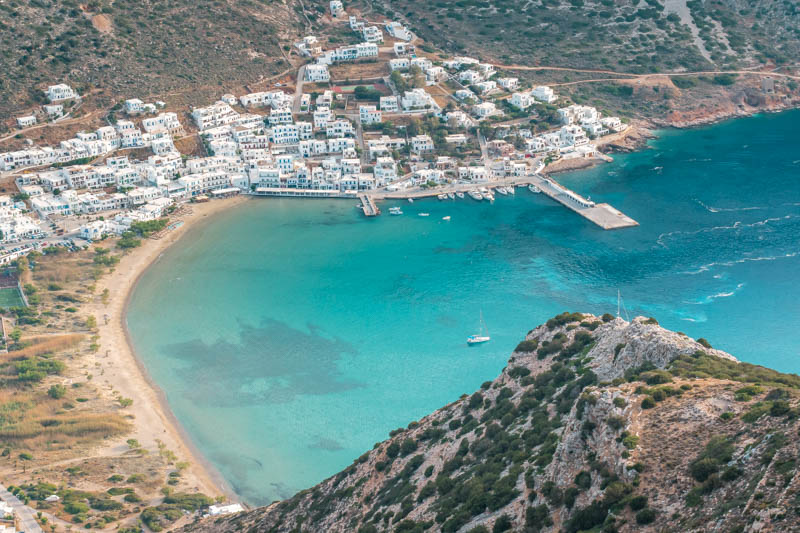
It’s worth making a detour there at any time of day, especially at sunset. You can reach the church in 15 minutes by driving up the paved but very winding road from the Agia Marina neighborhood, located across from the harbor.
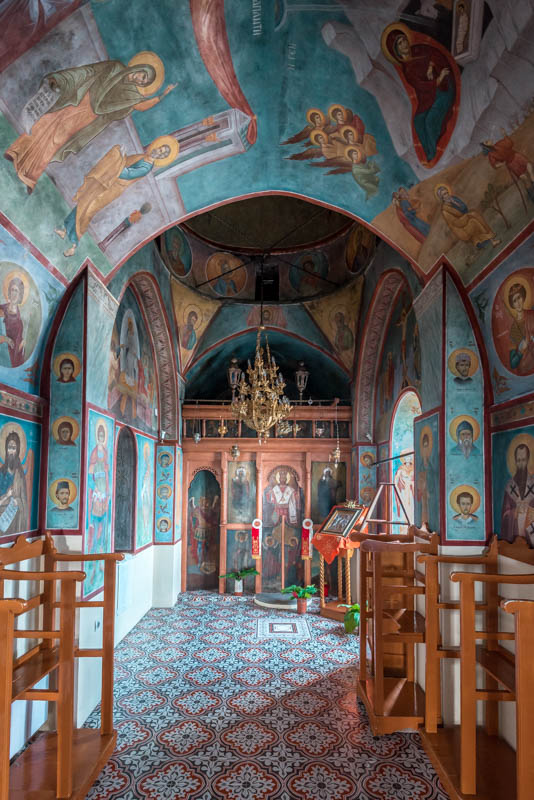

Like many other chapels on Sifnos, it is usually open; light a candle and enjoy the phenomenal view over large parts of Sifnos and the neighboring Cycladic islands. An orientation sign at the highest point was donated by Mastoras Pottery. Incidentally, the Church of the Prophet Elias of Troulaki, located 500 m to the west, can only be reached on foot.
💡 Sifnos Book Recommendation: The Lonely Planet Greek Islands travel guide includes an informative chapter on Sifnos with numerous travel tips and hiking routes: View on Amazon*
#7 Cheronissos: Solitude in the North
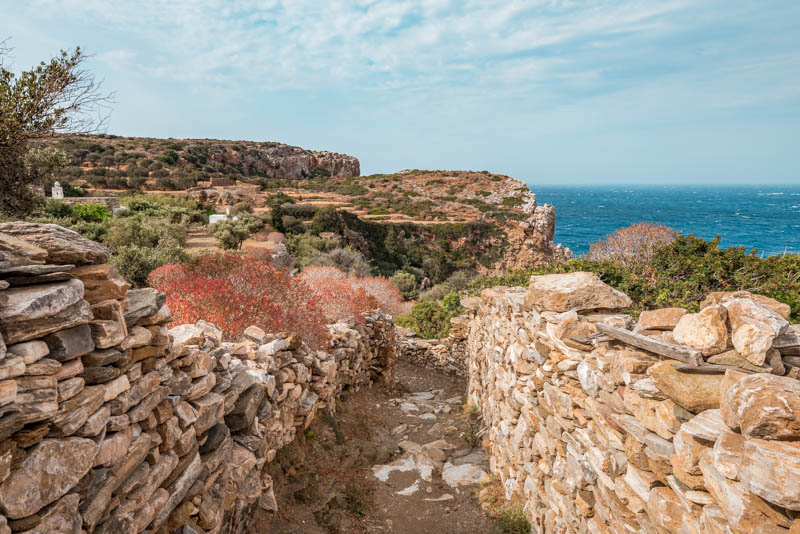
The northern part of Sifnos, above Kamares, is rugged, sparsely populated, and significantly less vegetated than the rest of the island. Aside from the fishing village of Cheronissos at the northern tip and the farming settlement of Troulaki, there are no other settlements, and beaches are also scarce. Hiking enthusiasts will still find plenty to enjoy, however, as hiking trails 9 and 8 (see box) run through this area.
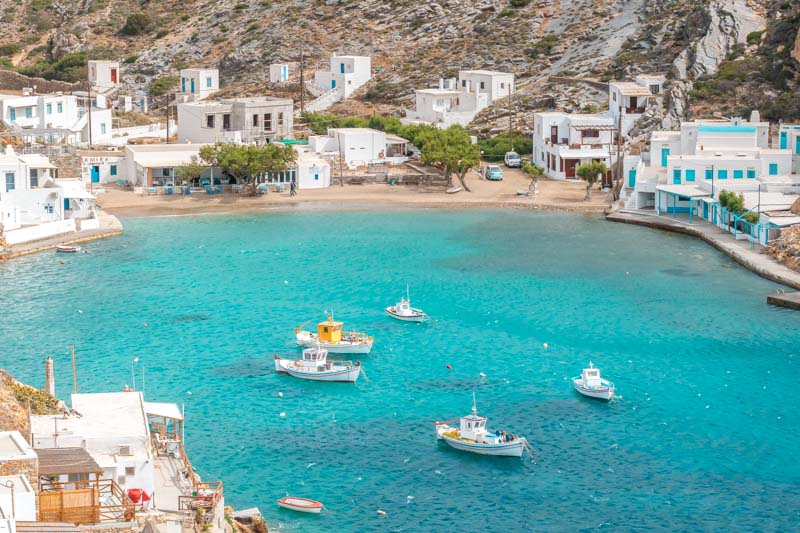
For everyone else, a trip to Cheronissos for lunch or to watch the sunset is well worth it. The sunset here is considered one of the most beautiful on the island. Cheronissos lies 12 km from Artemonas, at the end of a fjord-like, wind-sheltered bay. The few whitewashed houses nestle picturesquely around Cheronissos Beach. Colorful fishing boats bob in the bay, while seagulls circle overhead waiting for the fishermen.

Even in high season, it remains quiet here; only on weekends do the two local tavernas (tip: I Ammoudia) right on the beach fill up with locals and tourists alike. Although some vacation rentals have sprung up in recent years, Cheronissos has managed to retain a certain tranquility. A mini-market provides basic supplies.
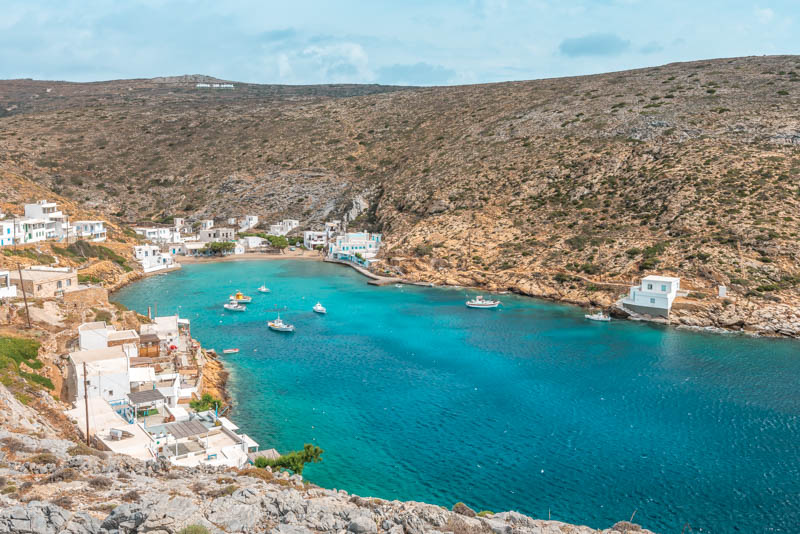
Keramika Depastas is one of the oldest pottery workshops on Sifnos. Master potter Kostas, who is over 80 years old, sits in his rustic workshop and creates his ceramics with great dedication. If you speak Greek, he’ll share some fascinating anecdotes with you. The best view of the village can be had from the gravel road leading to Agios Georgios Church at the northern cape.
💡 Mines of Sifnos: Halfway between Troulaki and Artemonas, a scenic 2-kilometer hike to the ancient mines of Agios Sostis begins. As on other islands in the Western Cyclades, ore was mined here as far back as antiquity. Gold is also said to have been found on Sifnos, which was brought as an offering to the Oracle of Delphi. Along the way, you’ll hike on centuries-old paths leading to the eponymous Agios Sostis Church. Exploring the old mine workings below, which were in use until the 20th century, is at your own risk.
#8 Pottery on Sifnos
Since ancient times, pottery has been the island’s most important craft, and for centuries Sifnos was considered the center of pottery in Greece. At its peak, there were up to 100 pottery workshops. Since the island’s terrain is very mountainous, all workshops were once located directly by the sea. The large clay vessels (tsoukalia) in particular were laboriously loaded onto wooden ships and distributed throughout the Mediterranean region.

The clay from Sifnos is known for its durable properties; among other things, it is highly heat-resistant, which made the large clay pots ideal for cooking. The old clay kilns required high temperatures and a lot of fuel — small shrubs in particular burned very hot, whereas trees burned only moderately. This is one reason why Sifnos appears so green compared to other Cycladic islands.

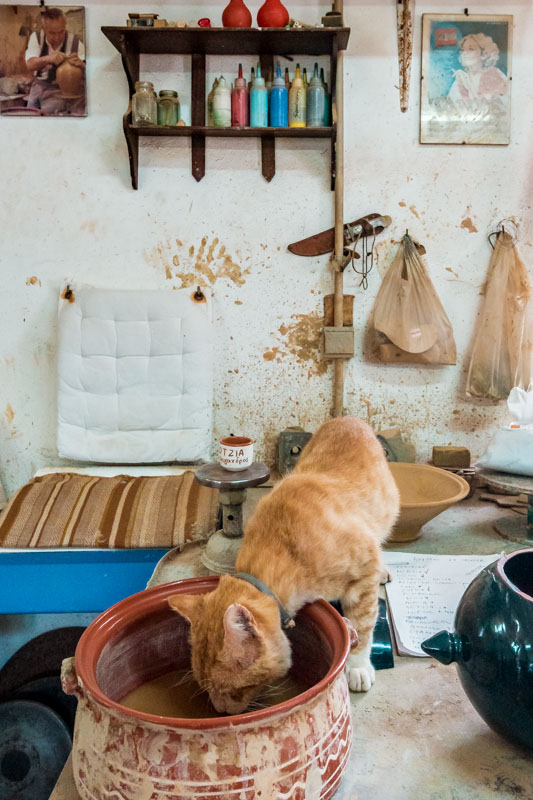
Even today, pottery remains the soul of Sifnos and is considered one of the country’s most traditional crafts. There are still 14 pottery workshops on Sifnos, where master potters craft utilitarian and decorative objects by hand. Today, the pottery is fired in gas kilns, though the old clay kilns (kamini) with their arched shape can still be spotted here and there near the coast.

Although some motifs and products are similar, each pottery workshop has developed its own style. From lanterns to cereal bowls to large casseroles, everything is available, ranging from intricately painted pieces to simple earth-toned ones. Clay stove tops are also a typical specialty of Sifnos.

In many pottery workshops, we were even able to watch the potters work the clay on the wheel right before our eyes. The prices for handmade ceramics from Sifnos are quite reasonable, so we stocked up generously. Here is a selection of pottery workshops we visited on our trip to Sifnos:
Atsonios Ceramics, Vathi
The oldest pottery workshop still in operation on Sifnos is located at Tsopos Beach, across from Vathi. The workshop has been in the Atsonios family for several generations (since 1870) and is now run by Antonis and his son Giannis (who speaks some English), known for their attractive designs featuring subtle colors and precise shapes.

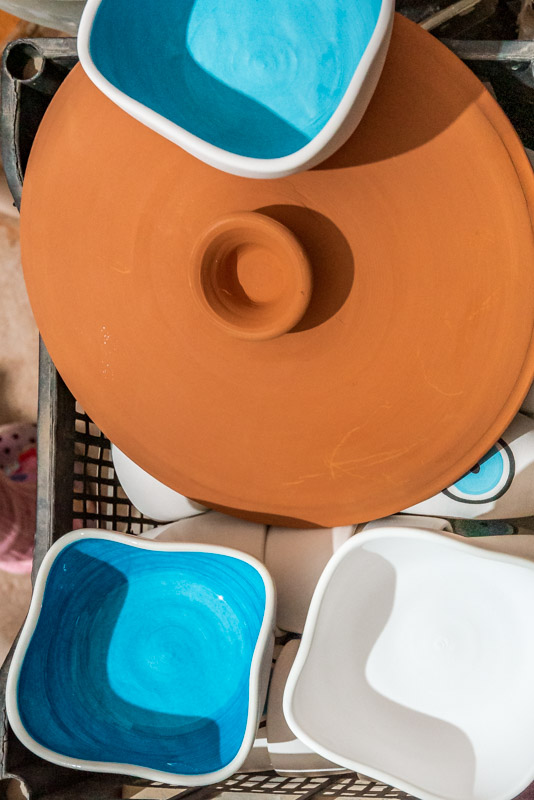
Giannis and his father also produce larger quantities to order. Allow a lead time of at least 3–4 weeks. Workshops are also offered within the historic walls. Behind the pottery is the old clay kiln, which is still in working order. More info at: ceramicart-atsonios

Keramika Apostolidi Pottery, Kamares
This modern pottery studio with a demonstration workshop is located above the road, about 2 km from the town entrance. Owner Gianni and his colleague Konstantinos produce not only traditional pottery but also extravagant decorative pieces and even toys. Orders are accepted (approx. 3 weeks in advance), and workshops are also offered. More info at: apostolidis-ceramics

Lemonis Pottery, Platis Gialos
Right on the beach in Platis Gialos, two pottery workshops run by the Lemonis family are located side by side: Handmade Ceramics Alexandros Lemonis and Frantzeskos Lemonis Pottery Workshop. Both have a demonstration workshop in their sales area, and you can watch the two gentlemen at work almost every day.

From cooking pots and coffee cups to souvenirs like the island’s signature Sifnos lanterns. The designs are similar; personally, we found Frantzeskos’ products slightly more appealing, though Alexandros’ goods are more affordable. A visit to the pottery workshops pairs well with a stroll along Platis Gialos Beach.
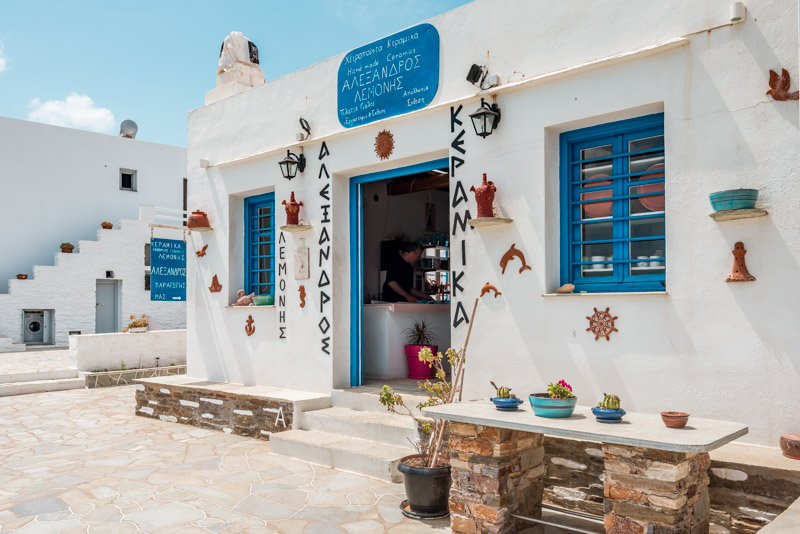
Mpairames, Artemonas
The Mpairames pottery shop is located on the promenade in Artemonas; the workshop is situated between Troulaki and Cheronissos. High-quality ceramics with attractive designs, including the floral motifs featuring pomegranates that are typical of Sifnos.
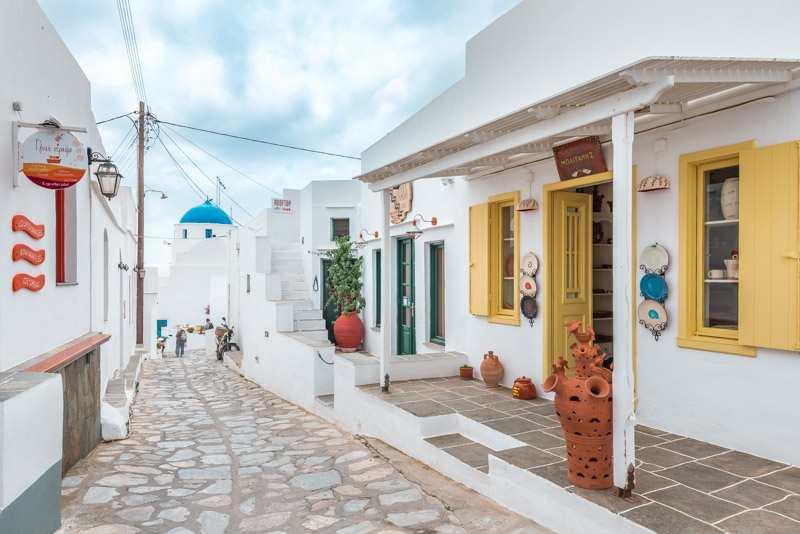
Peristeriοna, Kamares
Shop of another pottery workshop run by the Atsonios family at the entrance to Kamares, offering very original products painted with classic Sifnian motifs. Those looking for an extraordinary island souvenir can purchase the charming dovecotes designed for tea lights. Slightly more expensive, as it is not a direct workshop sale and is located right on the pedestrian zone.

💡 Anthi Farm in Sifnos: In addition to pottery, Sifnos has been primarily shaped by agriculture over the past centuries. If you’d like to get a glimpse into life in days gone by, you’ll find what you’re looking for at Anthi’s small farm outside Apollonia. In a rustic atmosphere, you can milk goats, feed pigs, chickens, and donkeys, and even learn the basics of cheese-making. Anthi also prepares breakfast or dinner upon request. Interested? Then head to the farm! More info at: anthi-farm
More Sifnos travel tips
Beautiful beaches on Sifnos
Sifnos isn’t necessarily a beach paradise, but we really enjoyed the beaches the island has to offer, and most of them seemed quite clean and well-maintained.
Apokofto Beach – A golden sandy beach north of the Chrisopigi Monastery. Ideal for families with children thanks to its shallow shoreline. Unorganized and with shady trees. Two tavernas right on the beach.
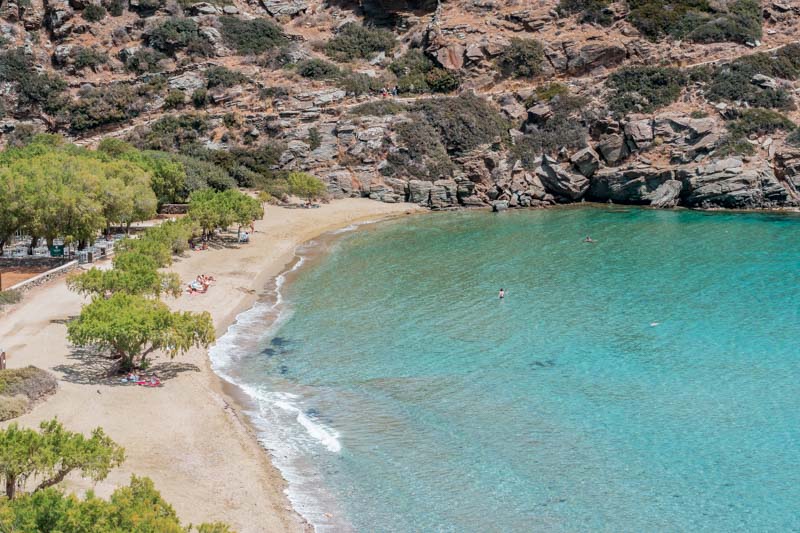
Cheronissos Beach – A small cove in the north of the island. Quiet and unspoiled in the off-season. The sandy beach slopes very gently into the turquoise-blue sea. Further south lies the pebble beach of Vroulidia, which has a particularly romantic atmosphere in the evenings.

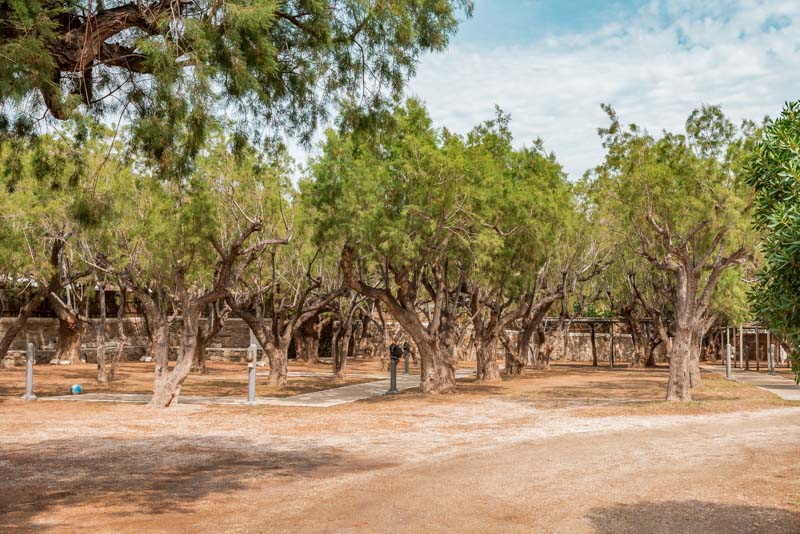
Platis Gialos Beach – The longest and perhaps most beautiful beach on the island. A golden sandy beach that slopes gently into the crystal-clear sea. Tamarisk trees provide ample shade. Free parking is plentiful. Very crowded during the high season; those who prefer a quieter setting can hike to the secluded beach of Fikiada.
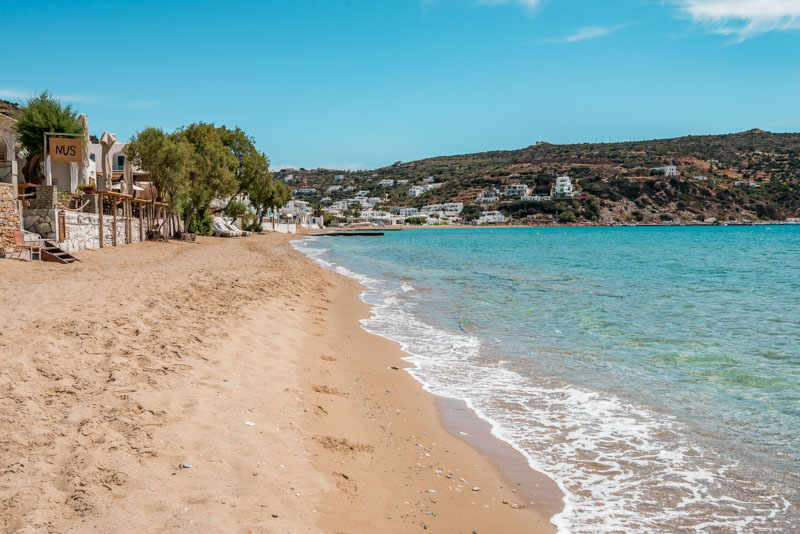
Vathi Beach – A golden sandy beach in Vathi Bay with a very shallow shoreline. A paradise for families with small children. Plenty of shade from tamarisk trees and no car traffic. Taverns and cafés cater to beachgoers. Especially beautiful in the evening!
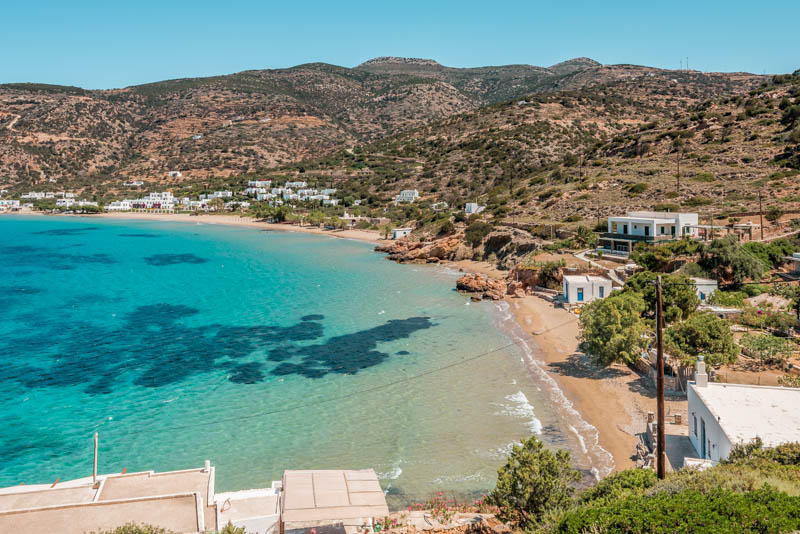
Vlicho (also known as Glyfo Beach) – A beautiful swimming cove west of the coastal town of Faros. A flat sandy beach with stunning water colours. Untouched by development, with a few tamarisk trees. A large parking lot sits behind Faros Beach. Relatively expensive restaurants nearby.

Accommodation on the island of Sifnos
Sifnos is primarily known among Greek tourists and is considered an island insider tip among international visitors. There are no large hotel complexes, as the island is committed to sustainable tourism. Accommodation options are limited and prices are high, so good hotels book up quickly. That said, every town offers tasteful holiday rentals for independent travellers, which can be booked through Airbnb, among other platforms.
→ On Booking.com*, you can compare all available accommodation on a map and check prices:
➲ View accommodations on Booking.com*

This is where we stayed on Sifnos
Sunset Coast House, Vathi
The Sunset Coast House in Vathi is definitely one of the most beautiful accommodations we’ve stayed in so far in Greece. The sunset every evening is a highlight in itself! And every morning, the sparkling blue bay of Vathi greeted us.

Perfectly equipped and thought out down to the smallest detail, the vacation home of the friendly hostess Tereza accommodates up to four people, offers a stunning ocean view, a large terrace with sun loungers, a kitchen, and a washing machine.


Despite its quiet location, it’s just a short walk to the nearest sandy beach directly below the house, and in just five minutes by car you can reach the tranquil coastal village of Vathi with its long beach and excellent dining options.
You can view our stunning accommodation on Booking.com* and book directly if you’d like:

More hotel recommendations for Sifnos
Here are our recommendations for great hotels on Sifnos. Click on the Booking.com* links to check prices and availability:
Restaurants on Sifnos: Our Recommendations
It’s no coincidence that one of Greece’s most famous chefs, Nikolaos Tselementes, was born on Sifnos. Sifnos cuisine enjoys an excellent reputation and offers a variety of culinary delights.
You absolutely must try the revithokeftedes (chickpea balls) and the revithada sifnou on Sifnos—a hearty chickpea soup with wonderful spices that simmers overnight in a wood-fired oven.
We also found the caper salad—which is more like a dip—to be very tasty, fresh, and spicy! If you’re in the mood for something particularly hearty, try mastelo, lamb slow-cooked in a clay pot. Here’s an overview of restaurants and cafés on Sifnos that we’ve tried and found to be good:
Ampati, Artemonas – A modern meze restaurant in the heart of Artemonas. Delicious Greek tapas (meze) at reasonable prices. Friendly service, but only open in the evenings.
Cafe Mosaic, Artemonas – A café, cocktail bar, and meze bar all in one, right next to the main church, Panagia Konchi. Great atmosphere with colorful chairs and mood lighting in the evening. Open from 6 p.m.!

Gerontopoulos, Apollonia – A cozy café with a beautiful courtyard, friendly service, and an attached patisserie offering traditional pastries from Sifnos.
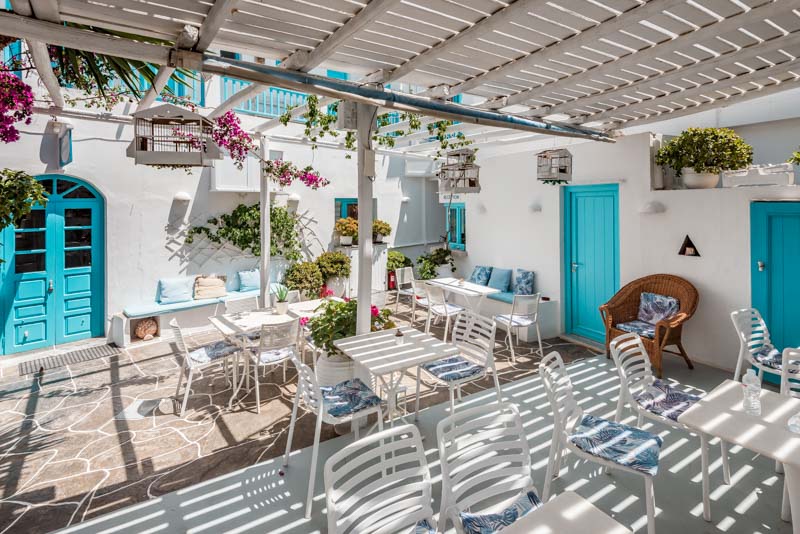
Tselementes, Apollonia – Vassilis and his son Angelos serve excellent Greek cuisine in their green garden oasis next to the Church of Agios Spyridon. As is typical in Apollonia, prices are slightly higher despite the family-run atmosphere.

Passione Italiana, Kamares – Italian cuisine with delicious pizzas and homemade pasta; limited seating right on the harbor bay.
Okeanida, Vathi – Rustic tavern right by the sea. The very friendly owner family, led by hostess Anastasia, serves homemade dishes typical of the island; be sure to try the caper salad and revithokeftedes.
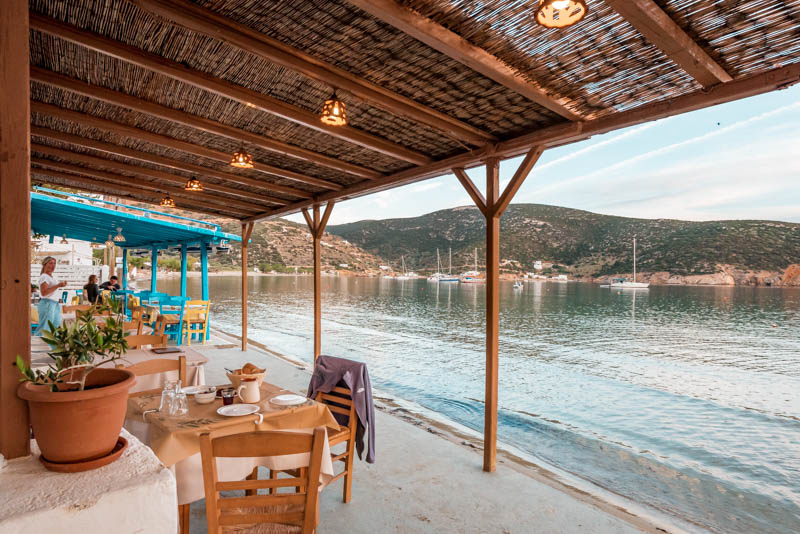
Symposio, Vathi – Family-run tavern at the end of the beach promenade, serving delicious revithada and good mastelo. Probably the most affordable prices on the entire island.
Lost Bay, Platis Gialos – Café-bar and restaurant right on the beach, with a laid-back atmosphere, very tasty salads, and creative finger food at higher prices. Sun loungers are provided.
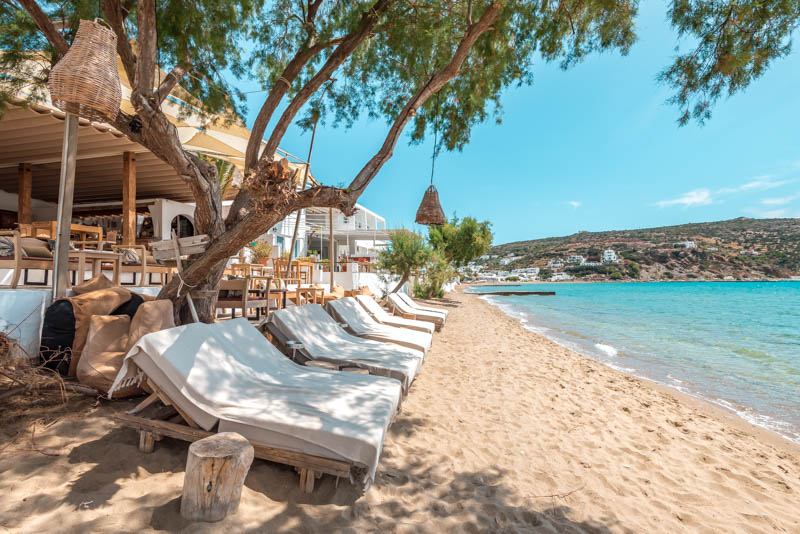
Way Cup Roaster, Chrisopigi – Cozy café run by Konstantinos and Isabella behind Apokofto Beach, with house-roasted coffee and fair prices for snacks.

Car Rental for Sifnos
With an area of 74 km², Sifnos is very compact. The paved road network is limited to connections from Vathi and Platis Gialos in the south, via Apollonia, Artemonas, and Kastro in the center, to the north toward the ferry port of Kamares and the fishing village of Cheronissos.
With a rental car, you can explore Sifnos in no time; alternatively, a scooter will do just fine. Below are our local recommendations for car rentals on Sifnos:
- Sifnos Rent Car – Sifnos Drive
- Loukataris Car & Moto Rental
- Aperent Car Rental
You’ll also find plenty of car and scooter rental companies right in Kamares. We recommend, for example, Suntrail Car and Moto Rental.

Getting Around by Taxi and Bus
The municipality of Sifnos has a good bus network connecting all major towns. The buses serve residents for their daily errands and students travelling from the villages to the capital. Tickets are affordable, and buses run in the morning and afternoon. Buses do not operate on public holidays.
→ You can view the current bus schedules for Sifnos here: Bus timetable
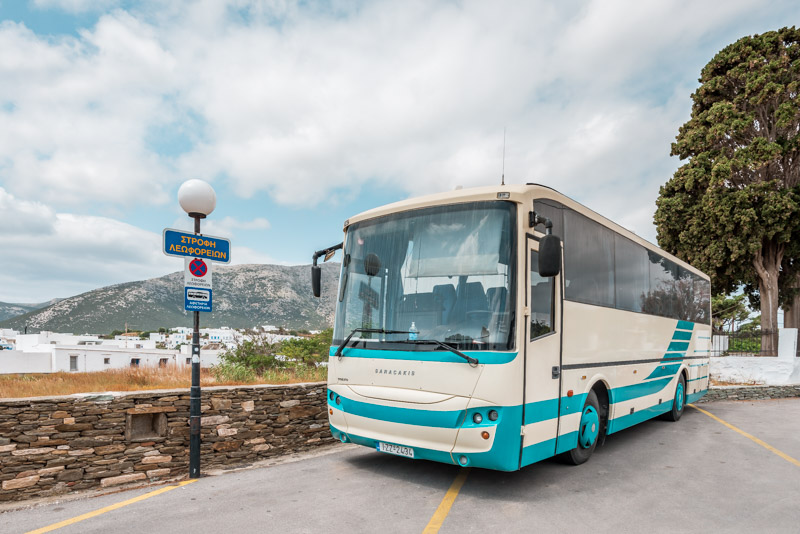
Taking a taxi on Sifnos, as on many small Greek islands, is purely a matter of negotiation — there are no taximeters. Taxis wait at the port of Sifnos as well as in Apollonia. The prices are reasonable; for example, the 15-minute ride from Kamares in the west to Kastro in the east costs between €10 and €15. If you need a ride from the port, it’s best to contact your host in advance.

Getting to Sifnos
Sifnos is accessible only by ferry; there is no airport. So your journey begins with a flight to Athens and the ferry crossing from the port of Piraeus. Along with Patmos and Tinos, however, Sifnos is part of a pilot project by Hellenic Seaplanes, which plans to operate seaplanes from Athens to Sifnos. It is still unclear when the first flights will be offered.
→ You can find affordable flights to Athens through our partner Skyscanner*:
➲ Search for flights on Skyscanner*
Ferry connections to Sifnos
You can reach Sifnos by ferry from Athens year-round; the crossing takes between 2.5 and 5.5 hours. In summer, ferries run daily to Sifnos; during the off-season, they run every 2–3 days. As a direct neighbour of Milos and Serifos, the island can also be easily incorporated into a Greek island-hopping itinerary. At times, there are also connections to Syros or the port of Lavrio (Athens).
→ This article provides all the information you need for travelling to Sifnos by ferry: Ferries in Greece

→ The following ferry companies serve Sifnos from Piraeus (Athens):
- SeaJets (from 2.5 hours)
- Aegean Sea Lines (approx. 5.5 hours)
- Zante Ferries (approx. 5 hours)
- Hellenic Seaways (7 hours from Athens Lavrio)
→ Through our partner Ferryhopper*, you can search for ferry schedules and conveniently book your ferry ticket to Sifnos online:
➲ Search for ferries on Ferryhopper*
🔍 Our conclusion for Sifnos: We were thrilled from the very first minute! Even the drive from the port to our accommodation was filled with raving about the place and taking photos. Compared to other Cycladic islands, Sifnos not only has trees but is generally a bit greener and very scenic! We especially loved the island’s strong identity, shaped by its distinctive pottery tradition. Sifnos doesn’t have many beaches, but the few it has are very beautiful. The tourist infrastructure is well-developed and much of it seems organized; trash is sorted, hiking trails are well-marked, and roadsides and towns are mostly clean. Unlike Milos, we also found a few traditional Greek taverns with reasonable prices on Sifnos, although the trend—similar to Milos—is increasingly moving toward high-end restaurants, luxury tourism, and quick profits. It’s a shame, really, because Sifnos is an authentic island that truly has a lot to offer and doesn’t need this kind of development.
→ You can find more travel reports and tips on the Cyclades on our overview page: Cyclades Islands
*Support our blog Greece-Moments
This post contains affiliate links marked with an asterisk (*). If you book or purchase something through one of these links, we receive a small commission. The price remains the same for you. This helps us continue to provide high-quality content for free. Did you enjoy this post and want to say thank you? Then simply buy us the next Greek coffee ☕️ Go to the coffee fund
Save this post on Pinterest!