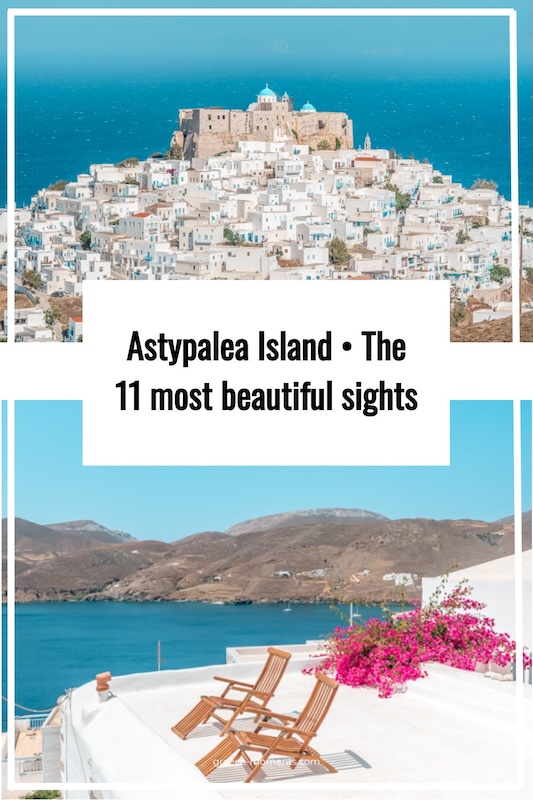

In the middle of the deep blue Aegean Sea lies an island that hardly anyone knows, yet it enchants visitors right away with its rugged beauty and friendly locals! Astypalea Island is almost completely off the radar of international tourism. It even took us four attempts to finally make it to the island.
“Anyone who takes on the arduous journey is welcomed by an island that is more authentic than almost any other. On top of that, Chora, one of the most beautiful villages in Greece, awaits visitors.”
There are no larger islands nearby – Kos to the east and Amorgos to the northwest are both three hours away, and ferry connections are rare. By Greek standards, this is unusual and a key reason why Astypalea receives so few visitors. You can either fly from Athens in an hour or take the eight-hour ferry from Piraeus.
We tried both options: Tom came by ferry from Piraeus to Astypalea. He describes the crossing with a smile as an odyssey of anticipation. Ella arrived relaxed with our daughter on a domestic flight. The view from the airplane window of this small island — just 114.1 km² — with its bright white main town of Chora is indescribably beautiful!
In mid-June, we spent eight days exploring the butterfly island of the Aegean, visiting remote monasteries, picturesque beaches and unspoilt villages. So, what are the best things to do on Astypalea? There is a lot to discover, and below we’ll tell you whether a holiday on Astypalea is worth it for you.
- #1 Chora: Astypalea’s capital
- #2 Kastro of Astypalea
- #3 Astypalea’s Windmills
- #4 Harbour town Pera Gialos
- #5 Kounoupa & Koutsomiti Boat Tour
- #6 Livadi: Green Valley of Astypalea
- #7 Kaminakia Beach
- #8 Agios Ioannis Kastro
- #9 Maltezana (Analipsi)
- #10 Solitude in Vathi
- #11 Beaches of Astypalea
- More travel tips for your Astypalea holiday

🗺️ Astypalea Map: This map includes all Astypalea Highlights, 48 Places to Visit & Insider Tips, 13 Beaches & Bays, as well as personal recommendations for 25 restaurants & cafes. Ideal for holiday planning and getting around on the island. Compatible with smartphones, tablets and PC/Mac. Click here to get started right away: To the Astypalea map
#1 Chora: Astypalea’s capital
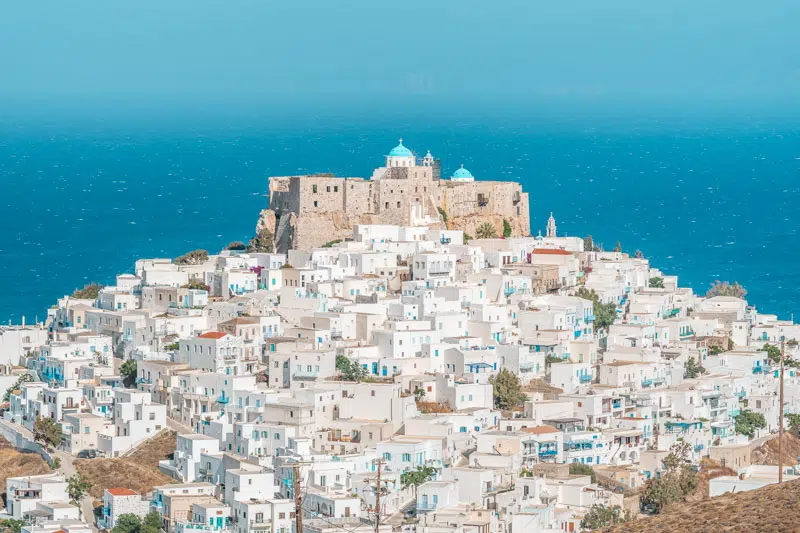
When you see the main town of Astypalea for the first time, your heart will be warmed, because Chora is one of the most beautiful villages in Greece. Like something out of a picture book, the white cube houses are lined up along a steep hill. At the top, a medieval castle crowns the scenery, its partly dilapidated walls framing a blue and white church.

The architecture of Astypalea Chora is undoubtedly reminiscent of the nearby Cycladic islands such as Naxos, Amorgos or Santorini, but Astypalea is administratively one of the Dodecanese Islands. Today, most of the island’s 1,300 inhabitants live in Chora and the port settlement of Pera Gialos (#3) directly below.


Chora was founded in the Middle Ages. To protect against pirates, a castle town was built on the steep rocks. Most of Chora is now traffic-calmed, with only motorcycles barely squeezing through as a noisy means of transport. Parking is available in the municipal car park between the patisserie Zaphora and the Asty Market.
From there, the path leads past the windmills of Astypalea (see #2) and into the maze of alleys. Stroll along the path below the Kastro of Chora and discover many unique photo spots. Best of all, while the alleys of Santorini and Mykonos are already bursting with crowds, in Chora of Astypalea you’ll often have the place all to yourself.

In the upper part of Chora there are now some apartments and studios for rent. However, there are hardly any opportunities for food and drink and no shops. In 2024, the municipality issued a regulation to prevent the over-commercialisation of the island and, above all, to protect the authentic charm of Chora from being sold out.
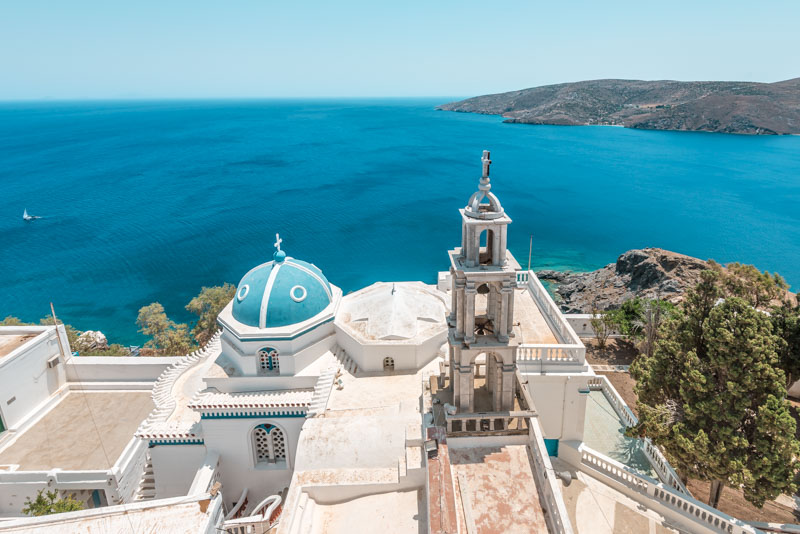
At the southern end is the church of Panagia Portaitissa, which is open every evening. From the churchyard you can enjoy a magnificent view of the deep blue Aegean Sea. In Chora, you should not miss the church complex located near the Apanema Bar. The eight natural stone chapels on the Platia of Chora are all built close together and are a place of worship.


On the western slope of Chora is the Kylindra Children’s Cemetery, dating from the 8th century. More than 3,000 funerary vessels have been discovered at this site, which is unique in size in the Mediterranean. A small part of the collection, along with information about the site, is displayed in the Archaeological Museum in Pera Gialos. Due to ongoing work, the excavation site is not accessible.

If you are looking for an original souvenir from Astypalea, you will definitely find what you are looking for in Chora. From the windmills to the beginning of the Kastro district, some lovely shops have opened up. We recommend the Katsika Boutique (clothes with goat motifs) by designer Maria and the great souvenir shop Riza Astypalaia by the friendly owner Kali.

💡 Butterfly Island of the Aegean: The island of Astypalea is also known as the “Butterfly Island” because it looks like a butterfly when viewed from above. A narrow land bridge at Steno (120 m) in the center of the island connects the two landmasses to the east and west, giving it the appearance of outstretched butterfly wings. Among Greeks, Astypalea is usually simply called Petalouda, which translates as butterfly.
#2 Kastro of Astypalea
“The castle of Astypalea, high above, it touches the light,
and the sea awaits her, beckons her in its waves.
A sailor passes by, time passes, leaves longing behind,
and the gate of the island opens for our first dance.”
This is how the romantic-melancholic folk song To kástro tis Astropaliás (Το κάστρο της Αστροπαλιάς) begins, telling of the island that was still called Astropalaia in Venetian times. If you stand at the top of the Chora Castle Hill and gaze into the infinite expanse of the sea, you are seized by an overwhelming feeling of longing and freedom.

Whether you arrive by air or enter the port by ferry, the Kastro of Astypalea is visible from afar. Even when exploring the island, you will always spot it in the distance. The medieval castle is the crowning glory of Chora and a testament to the centuries-old history of the island.
An acropolis is said to have been located here as far back as ancient times. Presumably, a fortification was already established during the Byzantine era, and over the centuries it served the islanders as a refuge in the event of pirate attacks. From 1413 onwards, the Venetian occupiers, the Querini family, undertook the rebuilding of the fortress, giving it the appearance it has today.


In 1537, the Ottomans under the general Barbarossa conquered the Dodecanese Islands, including Astypalea. The castle was badly damaged in the attacks, but continued to be used. From the 18th century onwards, a ring of houses formed around the Kastro, which unfortunately increasingly fell into disrepair.
In recent years, the fortress has been restored and the walls have been structurally repaired. In the evening, the castle is atmospherically illuminated and is the eye-catcher of Chora. You can reach the Kastro from Plateia Chora by following the signs (Kastro or Castle).

The main entrance is on the west side of the castle, directly below the church of Panagia tou Kastrou. You enter the castle interior through the vaulted corridor below the church, on the walls of which the history of the complex is described in detail. From there you can explore the grounds, which unfortunately look quite desolate.

At the heart of the complex is the church of Agios Georgios, whose sky-blue dome sparkles against the blue sea and sky. It makes for an incredibly stunning photo, but is unfortunately closed. From the wall windows you have interesting views of large parts of the island. Caution: some areas are unsecured!
- Opening hours of the Kastro of Astypalea: open all day and free admission

#3 Astypalea’s Windmills
As if the Kastro of Chora wasn’t picturesque enough, the Windmills of Astypalea are yet another magnet. Unlike on other Greek islands, these historical cultural treasures have not fallen into disrepair, but have been extensively restored. Only the uppermost windmill has not yet been rebuilt.

The whitewashed windmills with the red roofs served the local community until the middle of the 20th century, grinding grain from the surrounding area into flour. Their location is no coincidence: up here on the ridge of Chora, the wind whistles quite mercilessly almost every day. Overall, Astypalea is one of the windiest islands in the South Aegean.
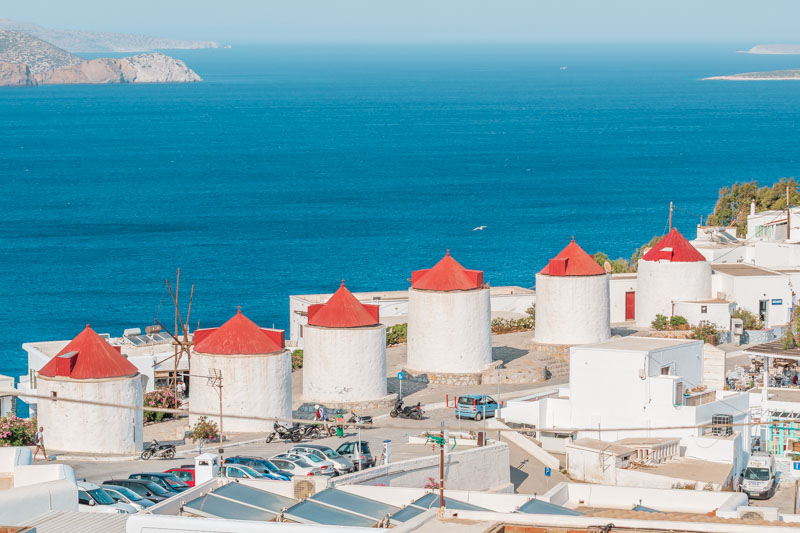
Today, grain is no longer ground in them. Instead, they now house various facilities, including a library, a local history museum and a tourist information office. All the mills are photogenically lined up along the large village square Chora Platia and make for a terrific photo motif both during the day and in the evening.

In the local taverns and cafés (tip: Notos) you can enjoy the view of the cylindrical sailing windmills during the day with a coffee or snack. The bars lure you well into the night with cocktails in a wonderfully atmospheric setting. This is definitely the liveliest spot in Astypalea, though during our visit in June it was still quite tranquil.
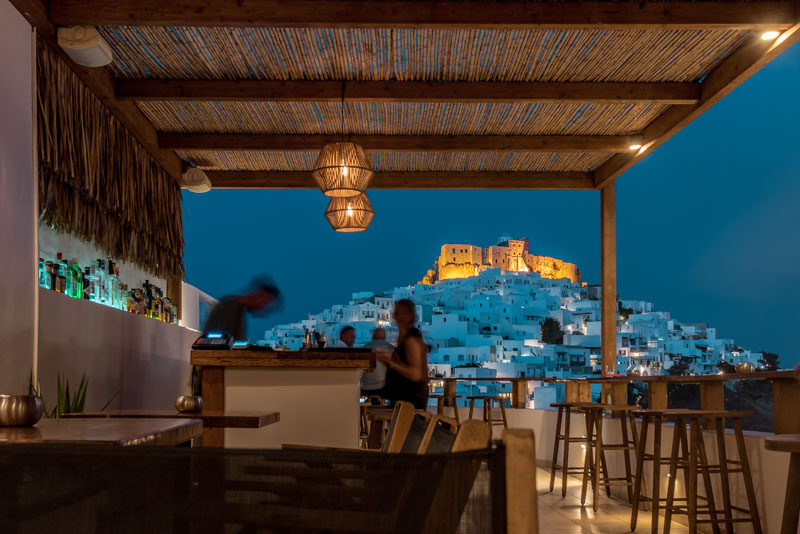
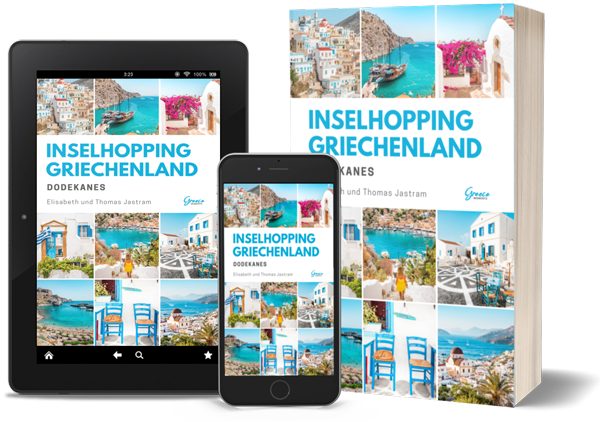
When you climb the long staircase behind the Buka Cocktail Bar, you are rewarded with a magnificent view of the windmills and Chora. By the way, we had our accommodation above the windmills – and what can we say: waking up to this dream view was an absolute highlight! You can find more tips like this in our Dodecanese travel guide, which includes a chapter on Astypalea.
🗺️ 12 Islands with maps
🏖️ Beautiful beaches & swimming spots
🏛️ All top sights & attractions
🔍 Our best planning tips
🍽️ Accommodation, tavernas & cafés
This is where we stayed in Astypalea Chora
Anatoli Luxury Studios & Suites, Chora
We couldn’t have imagined a more beautiful place to stay on the island! Anatoli Luxury Studios is centrally located above the windmills with a fantastic view of Chora. The rooms are modern and the nights are wonderfully quiet.
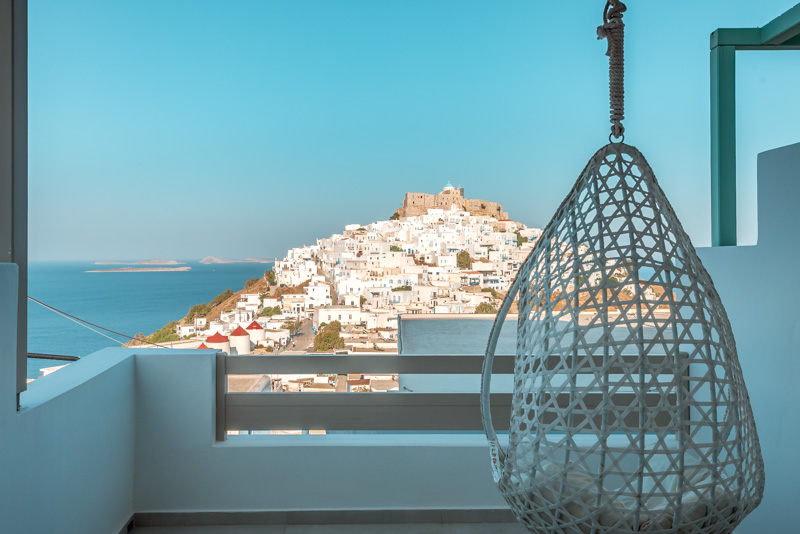
Every day, kitchen fairy Nonna serves a fresh, varied breakfast featuring Greek classics and homemade touches. The warm and welcoming hotel manager Ioanna was always on hand to help us with anything we needed. We felt completely at home here and had a truly relaxing stay in Astypalea – we highly recommend it!
On Booking.com* you can find more information about our accommodation at Anatoli Luxury Suites and check availability and prices:
Palaiomylos Astypalea
North of Chora there are two interesting viewpoints. The easier-to-reach viewpoint is located at the radio mast station above the village. A mostly asphalted road leads from the edge of the village, past Grande Mar Suites, up to the station and the Prophet Elijah Church behind it. Great views – like something out of a drone shot!

If you continue up the gravel road past the church, you will reach the second viewpoint. The path to Palaiomylos (old windmill) is short at just one kilometer, but the road is really very rough. Until a few years ago, there was a trendy bar up here, which has since fallen into disrepair. The view of Chora and Pera Gialos is heavenly!
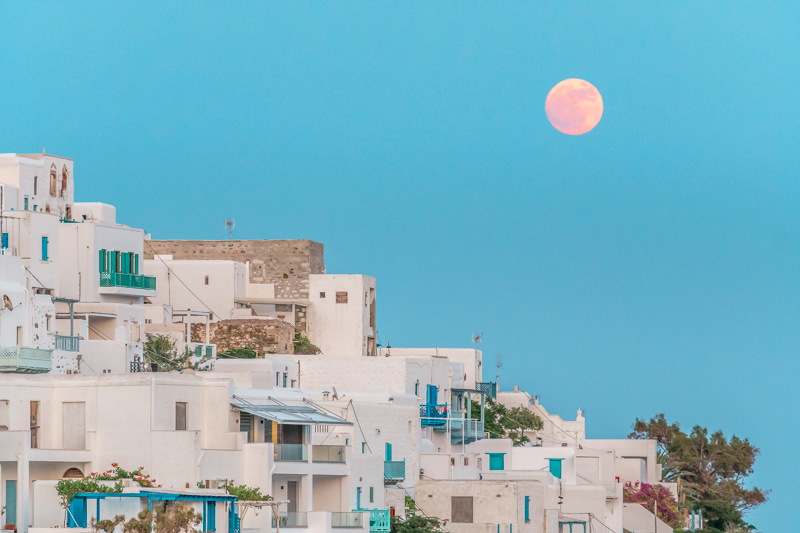
💡 Full moon on Astypalea: The moon often looks red in the Greek summer because many aerosols, including Saharan dust, hang in the atmosphere. We experienced the blood moon on Astypalea. The moon rose behind the Kastro early in the evening and bathed the island in a copper light. Pure magic!
#4 Harbour town Pera Gialos
Most holidaymakers who visit Astypalea first set foot on land in Pera Gialos. Decades ago, it was merely the loading port for the main town of Chora. Today it is a pleasant holiday resort, though it has grown unnaturally fast. Even now, new holiday accommodations are springing up like mushrooms.

Over the years, the two places have grown together. The scenery is nonetheless cohesive: white Cycladic houses with blue windows and doors, narrow streets and many steps that lead up to Chora. Yes, you can walk to the upper village — we did it once and were completely worn out 🙂

Pera Gialos consists of the jetty, a small marina where fishing boats and yachts are moored, a rustic village beach and a small town centre that extends around the Archaeological Museum and the pretty church of Agios Nikolaos. On the left side of the beach, a charming promenade runs along the sea.


Pera Gialos is the islanders’ first port of call for supplies and administrative needs (police station, post office, bank), as well as for holidaymakers, since trips to the neighbouring islands of Kounoupa and Koutsomitis (see #5) and the island’s bus connections all converge here. With its cafés and tavernas, the waterfront promenade invites you to linger.

At the port you can also rent an e-car or an e-scooter, which are very typical for Astypalea (see below for more information). Interesting shops in the village include the honey shop Asty Honey by beekeeper Vlathis, who stocks the finest thyme honey from Astypalea, as well as the pretty boutique Koursaros Store by Sophia and Filippos.
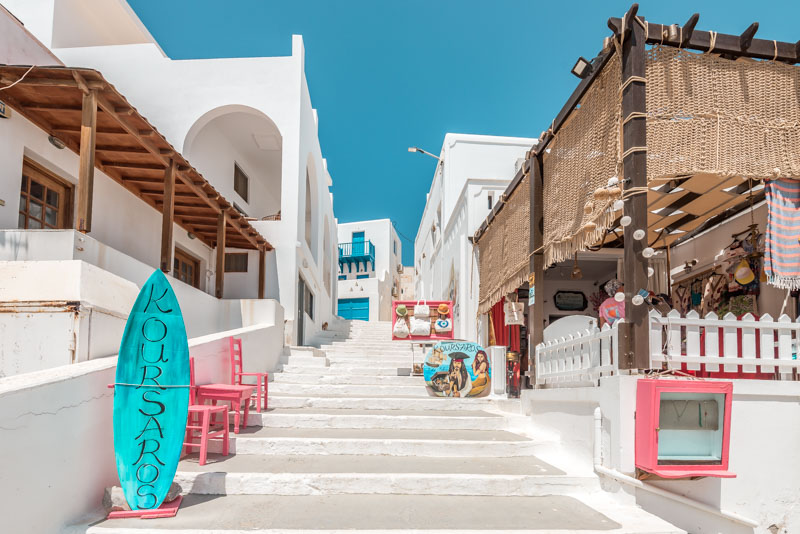
We didn’t find Pera Gialos Beach particularly inviting; it felt a little unkempt. Luckily, there are plenty of bathing alternatives on the island. Amateur archaeologists should not miss the Archaeological Museum in Pera Gialos, where the island’s history spanning over 3,000 years is presented in a compact space with fascinating finds.
- Archaeological Museum of Astypalea: daily 8:30 a.m. – 3 p.m. (closed on Sundays), €3 admission

#5 Kounoupa & Koutsomiti Boat Tour
Kounoupa and Koutsomiti are Astypalea’s paradise dream islands, and they are right on your doorstep. The tiny islands are uninhabited, but captivate with crystal clear, turquoise waters. Several times a week, excursions are offered by different tour operators, and the crossing takes less than an hour.

The sheltered bays of the two islands are perfect for a relaxing swim, extensive snorkeling, or simply enjoying the peace and quiet on the pebble beaches. Tours run from June to September, but may be cancelled in winds above force 6 Beaufort.

Our experience with Avra Cruises
The boat tour with Avra Cruises to the offshore islands of Kounoupa and Koutsomitis was an absolute highlight of our stay on Astypalea. Punctually at 11 o’clock we left the port of Pera Gialos aboard the beautiful ship Avra (Greek for breeze). During the trip we were looked after excellently by the owners Manolis and Frosso.

The route first took us along the south coast of Astypalea. Our first swim stop was the impressive Kokkinos Vrachos (Greek for Red Cliffs), which served as pirate hideouts in the Middle Ages. It was an indescribable feeling to swim in the narrow, turquoise blue bay surrounded by rugged rocks.


We continued on to the dreamy Koutsomiti Beach on the island of the same name. There we had 45 minutes to snorkel and relax. The highlight was definitely Kounoupa with its unique double beach and incredibly blue water. The beach bar there offers decent food at steep prices.

On the way back we passed the rocky islands of Agia Kiryaki, Glino and Xondro. With a bit of luck you can even spot dolphins in these waters – unfortunately, we weren’t so lucky. Nevertheless, we had a full day of adventures, and even our 4-year-old daughter had a lot of fun (thanks to water wings) – absolute recommendation!
- Information about the Kounoupa & Koutsomiti tour: Price from €35 p.p., duration: 11 a.m. to 6 p.m., drinks and snacks on board. More information at: Avra Cruises

#6 Livadi: Green Valley of Astypalea
In addition to Chora and Pera Gialos, there are two other settlements on the island: Livadi and Maltezana. Livadi (also called Livadia) is located just one kilometre south of Chora in the bay of the same name and is the only green spot on the island. Astypalea is extremely barren, similar to Tinos or Halki – something you have to come to terms with at first.

The green valley of Astypalea, with its many citrus trees and lush gardens, winds its way from the sea up to the barren mountains, at the foot of which stands a small dam that helps ease the island’s water scarcity. In summer, you can often find fresh home-grown fruit and vegetables in the tavernas and cafés in Livadi.

In summer, life revolves around the pebble beach of Paralia Livadi, where not a single spot remains empty. No wonder – the view of Chora and the Kastro is immensely impressive. A good dozen cafés and tavernas line the beach. Particularly worth mentioning is Andonis’ gastrobar Trapezakia Exo, which is worth a visit at any time of day!

Thanks to its sheltered location, Livadi Bay is also a great place to drop anchor, so every evening in summer, a mixed crowd of locals, island-hoppers and sailors meets in the restaurants. We only warmed to Livadi at second glance – but all the more so.

#7 Kaminakia Beach
From Livadi, you can explore some of the beaches in the west of Astypalea that are bursting with wild beauty. However, an off-road vehicle is essential for this, as the asphalt road leading out of Livadi turns into a dusty gravel road after a short while.

We can recommend Kaminakia Beach at the western tip of Astypalea. The 30-minute drive down a bumpy dirt road, past Mount Vardia – the highest peak on the island at 482m – is a rattling affair. Already in early summer, everything was completely parched and only a few lonely white chapels added splashes of colour to the barren landscape.

From the last hilltop, you can look out over the deep blue water and the bright beach lined with tamarisk trees. Behind it is a taverna with a lush garden and palm grove – almost like an oasis in the desert. Once down by the sea, goats roam freely and there is absolute silence.

The Kaminakia family takes care of their guests – son Konstantinos runs the beach bar, while his mother Linda has been running the Taverna Linta for years. Good home cooking (using their own vegetables and cheese) and typical island dishes are on the menu. Kaminakia Beach is the perfect spot for all holidaymakers who appreciate solitude and authenticity.
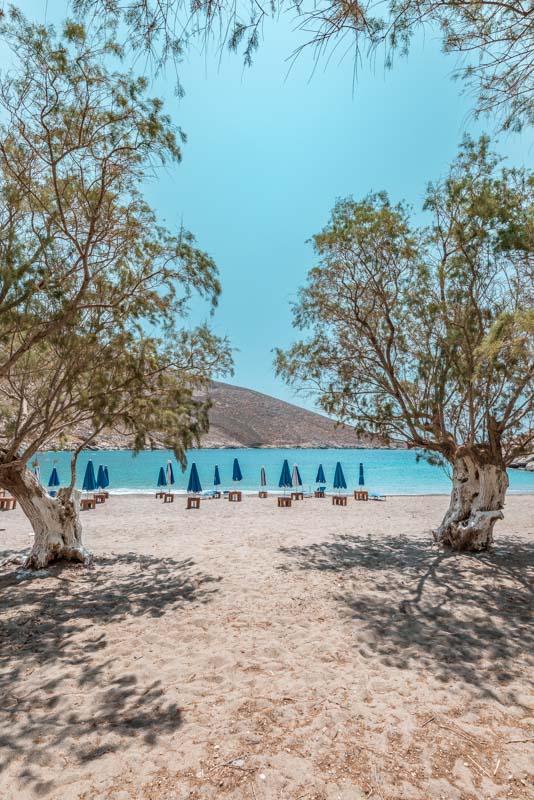

Due to the long journey, it is worth spending at least half a day here. In good weather, boat tours from Pera Gialos are also offered, often in combination with the beaches of Agios Ioannis and Vatses Beach further south.

#8 Agios Ioannis Kastro
We had imagined many of the exploration tours on Astypalea to be easier than they turned out to be. One example is Agios Ioannis Kastro, the remains of a medieval castle or monastery in the northwest. From Kaminakia, a dirt road leads north. The numerous potholes pushed our Suzuki Vitara to its limits, and we eventually had to turn back.

To reach Agios Ioannis Kastro, you’ll need to drive 12 km of adventurous gravel road from Chora via Palaiomylos. But what awaits tireless explorers? Above the raging sea, between steep rocks, stands a snow-white monastery church, and below it lies a blooming garden fed by several mountain springs.
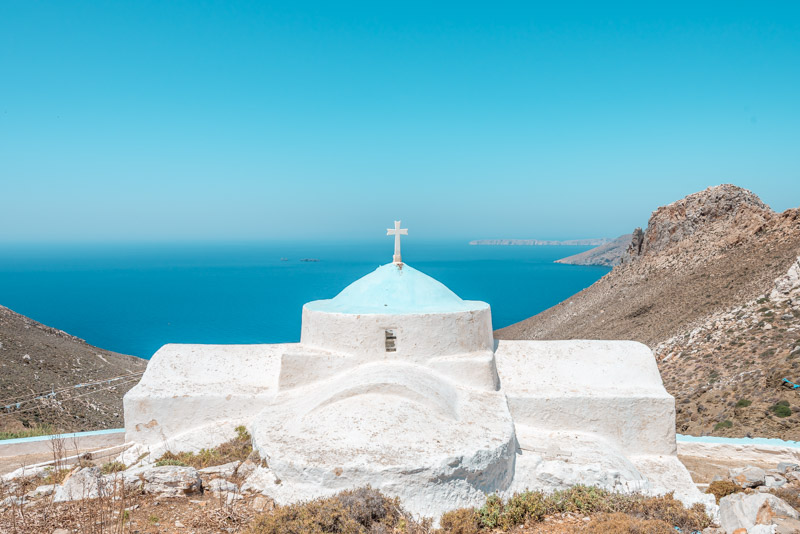
On your way there, you’ll encounter several white houses of worship, most of which are even accessible. There are said to be over 350 churches and chapels on Astypalea – one for every day of the year, so to speak! After the adventurous ride, you can light a candle in the monastery of Agios Ioannis Makri for the journey back.

On clear days, the view from the plateau of the old monastery church stretches all the way to the Cyclades Islands of Anafi and Santorini. On the rugged rock to the right, a Byzantine fortress (Kastro) is said to have once stood, though nothing remains of it today. To the left, a hiking trail leads down along the privately owned garden.

Once you have passed the garden property, an inconspicuous path branches off to the right, leading to a cave. A sign with the inscription Mylonou (Greek for “at the miller”) on a cedar tree indicates that a water mill once stood here. Unfortunately, the mountain spring itself is fenced off and can only be reached with some effort.


During our visit, some keen hikers made their way down to the wild Agios Ioannis Kastro Beach. According to them, the rough descent to the sea takes about an hour. The path is partly marked with sticks and stones and difficult to follow. We preferred to enjoy the view from above and saved our energy.

Panormos Beach
From Agios Ioannis Kastro it is another 30-minute drive to Panormos Beach. From Chora, the total distance is about 17 kilometres and the drive along the rough track takes around an hour. Even if a secluded beach lined with tamarisk trees sounds tempting, it is hardly worth the effort — especially since the beach’s northern orientation means flotsam washes up there regularly.

Monastery Panagia Flevariotissa
The former monastery Panagia Flevariotissa is hidden in the mountains of Astypalea. Even from a distance, this Marian monastery shines in the typical island style, with a blue dome, decorative ornaments, and whitewashed walls. There is a small cave on the grounds where, according to tradition, an icon of the Virgin Mary was once discovered.

We had hoped to be able to enter the area, but unfortunately not. A large, locked gate blocks access well in front of the actual monastery. The church consecration festival is celebrated every year on 2 February. The place comes alive with music and dancing – it’s the biggest winter party on Astypalea. We’ll have to go back there in the cold season. 🙂
#9 Maltezana (Analipsi)
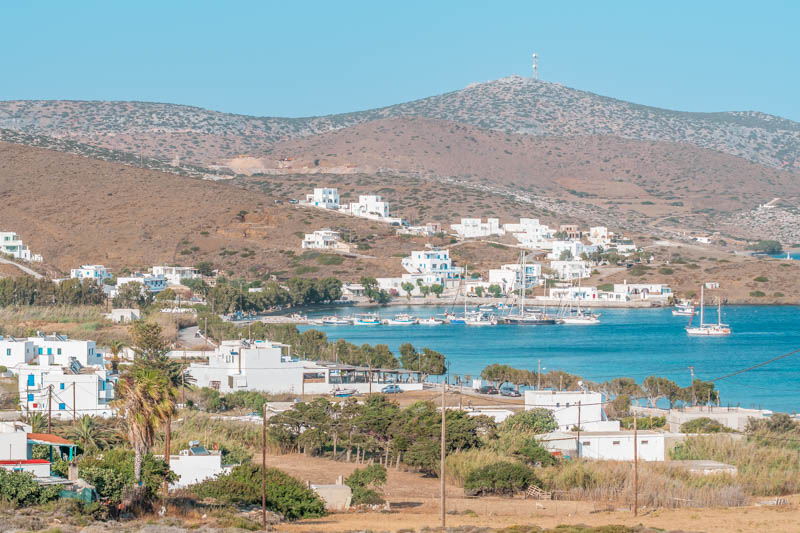
Without great expectations, we made our way to the coastal village of Maltezana and fell in love with it right away. The second largest settlement on Astypalea is laid-back and authentic. It offers everything an (easygoing) holidaymaker’s heart desires: traditional taverns, a great sandy beach and plenty of tranquillity, plus genuine Greek hospitality!


Maltezana (also called Analipsi) is idyllically located in a fertile coastal plain. During a walk through the small town centre around the Agios Dimitrios church, the locals greet you in a friendly way, and two taverns and two kafenia invite you to linger. We tried all of them and were not disappointed: fair prices and a family atmosphere!

The small harbour has a truly Greek feel, and you can quickly strike up a conversation with the local fishermen. Behind Maltezana Beach, a few small hotels and apartment complexes are spread out, but it doesn’t feel overcrowded at all. Further east of Maltezana, beyond a hilltop, lies the second village beach, called Paralia Schinonta.


Maltezana also offers two important archaeological sites: the Basilica of Agia Varvara, located 700 metres north of the town, and the Roman Baths of Tallaras, which are situated near the port. The excavations show that Maltezana and the surrounding region have been inhabited since ancient times and were an important centre during the Archaic period.

However, both historical sites are in poor condition and are only worth a detour for history enthusiasts. In addition, the Basilica of Agia Varvara is not accessible due to a fence with a padlock – unfortunately! Some of the finds from these sites are exhibited in the Archaeological Museum in Pera Gialos.
#10 Solitude in Vathi
If you drive further east from Maltezana (Analipsi), the civilised world of Astypalaia comes to a temporary end. The route leads along lonely bays (including Vrisi and Vai), winds up small hills several times, and views of the sea open up again and again.


100 years ago, the eastern part of Astypalea was still well inhabited. Many old farming villages such as Agios Ioannis Agrilidi below the mountain Kastellanos (a great viewpoint!) have been abandoned in recent decades. A detour to the ghost village with the beautiful Agios Nikolaos church and the nearby old brick factory on the picturesque bay of Agrilidi is well worth it.

Vathy, the most remote settlement of Astypalea, is not yet a ghost village. Its few inhabitants are like a Gallic village holding out against the decay of time. It is 20 kilometres from Chora to Vathy. The new asphalt road ends about three kilometres before the entrance to the village, giving way to a bumpy gravel road typical of Astypalea.

Vathy is located in a natural harbour open only through a narrow strait. The water shimmers in an intense, light turquoise tone, and at the entrance to the bay the church of Agios Nikolaos stands like a sentinel watching over it.

Only a few families live in Vathy, including some elderly people, shepherds and fishermen. The younger generations left years ago. Here you will definitely feel like you’ve stepped back in time! At the entrance to the village there are old ruined houses and dilapidated chapels, while goats and sheep scurry across the path. This is what Greece looked like 50 years ago – and you can still experience it here.

At the small jetty there are some whitewashed houses. The Taverna Galini (Greek for serenity) is the only lively spot in Vathy. The name says it all: there is no classic menu, the opening hours are flexible and the furnishings are rustic. You write your order yourself on a piece of paper – preferably in Greek, to practise the language. 🙂


Long-time lovers of Greece will not be disappointed. Maria, the landlady, serves delicious homemade food as well as fresh fish, if something has been caught. On top of that, the over-70-year-old also looks after her elderly mother. When the food is ready, you are called to the kitchen to pick it up. Where else can you find something like this in Greece today?

The view from the taverna terrace over the fjord-like bay is immensely calming. Surprisingly, you are rarely alone, as there are others who seek out the simple and unspoilt. Sailors especially appreciate the wind-protected natural harbour of Vathy and often anchor here to stop by Maria’s place.

Experienced hikers seek out the Drakontospelio, the Dragon’s Cave of Astypalea. The route heads north via the chapel of Panagia tou Thoma and then partly cross-country to the mystical grotto near the sea. Allow around 1.5 hours each way. Please only attempt this tour with company, as it is an extremely remote area!
#11 Beaches of Astypalea
Astypalea is not a classic bathing island. Although there are a few beaches spread around the island, only the bays around Livadi and Maltezana are easily accessible. The beaches in the north are exposed to strong surf and open sea, with high waves and a lot of flotsam being the order of the day.
Below you will find an overview of the most beautiful beaches of Astypalea:
Agios Konstantinos Beach
This pretty grey sand and pebble beach, about five kilometres from Livadi, is well worth a visit. Tamarisk trees provide shade and the views stretch over to Chora. A highlight is the chapel of the same name above the beach, which makes for a great photo opportunity. The Al Mare Beach Bar on site was still being set up when we visited in mid-June.


Cape Diapori Beach
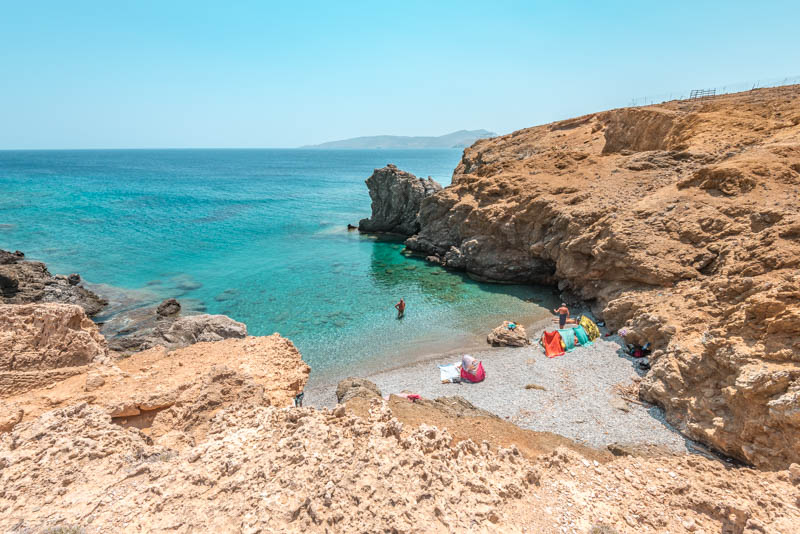
Not far from Maltezana is the striking headland of Cape Diapori, which is home to several small, picturesque bays of red sand and colourful pebbles in its southern section. The beaches face northeast, so there is a light breeze here.

The Mple Limanaki in the west, which is highly praised by many, was not worth more than a quick photo stop for us: it is far too small and even in early summer there were already too many people on the narrow pebble beach.
Chrissi Ammos
A wild beach located about two kilometers north of the airport, reachable via a dirt road. The rough sea meets a stretch of golden sandy beach.

Behind it, weathered dunes and maquis bushes stretch up the hillside. Due to its northern orientation, however, debris is constantly washed ashore. Unfortunately, there is no operator or caretaker responsible for keeping this wonderful beach clean.
Kaminakia Beach
To the west lies a sandy-pebble beach set in an impressive landscape. Although it is quite difficult to access, it is relatively popular and there is a good operator on site. For more information, see #7.
Maltezana Beach
The approximately 400 m long village beach of Maltezana consists mainly of fine, gray sand. Except for the harbour area, the water is quite shallow and therefore ideal for families with children.

To the west there is a taverna and two bars right on the beach. Our favourite is the bar Ear Maltezana Beach. Owner Panos (who speaks German) serves cool drinks, salads and small snacks. The loungers are included with a minimum spend of €15 – great!
Marmari Beach
A relatively unspoiled beach with shady tamarisk trees along the main road, not far from the Astypalea campsite. If you don’t mind the passing cars, you’ll find a cosy spot here. The Mamounia All Day Bar keeps bathers supplied with drinks and small snacks during the summer months.

Steno Beach
One of the most popular beaches of Astypalea is located at the narrowest point (Greek “steno” for isthmus), where the two butterfly wings meet. A canteen in the western part and a beach club in the eastern part take care of the physical well-being.

The middle section of Steno Beach is natural and the shallow entry via a sandbank is ideal for children. Parasols are available from €12 per couple. Even in strong northerly winds, it is still pleasant at Steno Beach.

Tzanakia Beach
A bright pebble beach, about a kilometre outside Livadi. It offers a beautiful backdrop with dark boulders and light gravel. On the other side, Chora rises above the sparkling sea. There is no operator and the beach is only accessible via a trail. By the way: Tzanakia is the unofficial nudist beach of Astypalea.
More travel tips for your Astypalea holiday
To make your trip to the Butterfly Island an unforgettable experience, we have compiled some helpful links for you. Want to find out more about getting there, rental cars, weather, and accommodation on Astypalea? You’ll find everything you need to know in this article: Astypalea travel tips
→ You can find accommodation for Astypalea here: To Booking.com*
→ You can check out ferries for Astypalea here: To Ferryhopper*
→ Our local recommendation for rental cars for Astypalea: Delis Rent a Car, Aggelidis rental services, Analipsi Rent a Car
Astypalea and e-mobility
Astypalea set out to be a pioneer in e-mobility. In 2021, a large pilot project launched with VW as a partner and major investor: it included a bus fleet, rental vehicles and charging stations, along with plenty of PR. The idea was for Astypalea to become a model region for sustainable island mobility – a lighthouse project for the whole of Greece.
Today, the reality looks more sobering: although stations and e-vehicles are available, locals say the app is usually where it all falls apart. The Asty-Go buses (ASTYMove) are used almost exclusively by visitors. Locals still swear by the old diesel bus, which we spotted at least twice a day.

The classic bus is flexible and sometimes waits for passengers, while the AstyBus has to be booked in advance. With the exception of police, taxis, garbage collectors and a few e-scooters and e-rental cars, almost all private vehicles on Astypalea run on gasoline. The purchase costs for e-cars are too high for islanders, and the two months of tourist season bring in too little income.
The electricity powering the e-cars on Astypalea still doesn’t come from the combined heat and power plant as originally planned. Day after day, a diesel generator runs near Camping Astypalaia. A solar power plant was originally supposed to be built on Astypalea in 2023, but construction was pushed back to 2024 and still hadn’t been completed by 2025.

The infrastructure is lagging behind in other ways too: apart from the one asphalt road running from Livadi via Maltezana to the airport and on to Vathi, almost all roads are gravel. For e-cars, these journeys can become a real problem, as energy consumption is higher on rough terrain. On top of that, some providers completely prohibit off-road driving with their expensive electric vehicles.

In summer, the limits of the system become particularly apparent: with the rush of visitors, the limited Asty-Go buses are regularly bursting at the seams. Locals report queues, overcrowded vehicles and frustrated guests. The car rental prices on Astypalea reach Mykonos levels in summertime.
Conclusion on Astypalea E-Mobility: The idea of a largely climate-neutral Greek island is great, but its implementation is still bumpy. An island simply has its own structure – especially in Greece. Being eight hours from the mainland creates some gaps in the supply network. There is still a long way to go before truly sustainable mobility becomes a reality.
🔍 Our conclusion on Astypalea: It took us so many attempts to visit this hard-to-reach island, and we are grateful it finally worked out – what a magical place! Astypalea is an island for dreamers and for all those who are looking for authentic Greece. It is perfect for people who prefer peace and quiet and don’t want to be constantly surrounded by entertainment and tourist services. The heart of the island is the strikingly picturesque main town of Chora, which every visitor falls in love with instantly. A cosmopolitan flair drifts through here in midsummer, yet it somehow manages to stay free of mass tourism. Beyond the three villages of Chora, Livadi and Maltezana, there is not much except a few lonely farms and white chapels scattered across the barren landscape. Here, Greece shows its most authentic side, perhaps as it was 50 years ago: simple, honest and wild. Add to that the endless, unobstructed views of the deep blue sea that work like natural aspirin. But not everything is perfect: the e-mobility concept is lagging behind, supplies are quite modest given the island’s remoteness, and the northern beaches have become veritable rubbish dumps, collecting debris washed in by the rough sea due to a lack of attention. Hopefully, solutions will be found. Anyone who has enjoyed the view from the Kastro of Chora over the wild Aegean Sea, visited the remote fishing village of Vathy, or shared a beach with goats in Kaminakia – and treasures these experiences as something special – will love this rugged island and won’t forget it in a hurry. The warm-hearted Astypaliots and their extraordinary hospitality played a big part in making us feel at home right away. We thoroughly enjoyed our time on this unspoilt and so far uncommercialized island, rough edges and all, and it will definitely not be our last visit!
➝ Find more useful travel tips for the Dodecanese Islands here: Dodecanese Islands Blog
*Support our blog Greece-Moments
In this post, you will find affiliate links marked with an asterisk (*). If you book or buy something through one of these links, we receive a small commission. The price remains the same for you. In this way, you help us continue to provide high-quality content for free. Did you enjoy this post and want to say thank you? Then just buy us a Greek coffee ☕️ To the coffee fund
Did you like this post? Then save it on Pinterest!