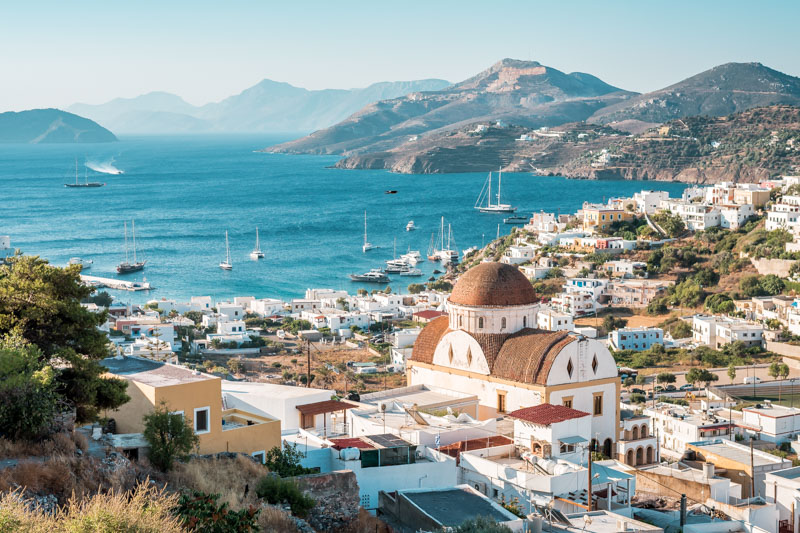

Alonissos is the quietest of the three neighboring Sporades islands and offers a little bit of everything without ever feeling overwhelming. The hustle and bustle of Skiathos is far away, and even some residents of Skopelos rave about this roughly 20-kilometer-long island and its adjacent marine national park.
“Alonissos may be less well-known than its neighboring islands, but that is precisely where its special charm lies. A varied landscape and a picturesque coastline, home to rare Mediterranean monk seals and playful dolphins, give the island a unique appeal.”
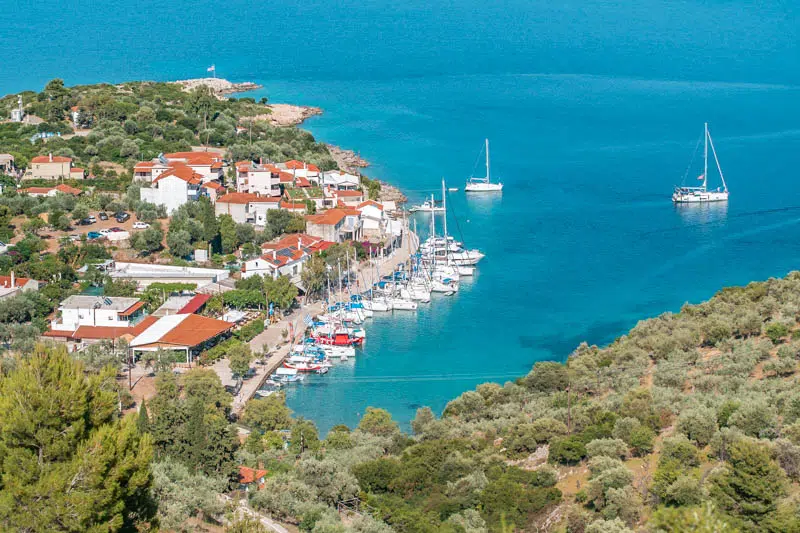
The island of Alonissos is a true hidden gem in Greece and will likely remain so for a long time due to its accessibility. You fly to the mainland to Volos or to the neighboring island of Skiathos. From there, it’s at least an hour’s ferry ride. For most vacationers, that’s too much of a hassle, so the island remains primarily a destination for connoisseurs.
We spent a week on Alonissos (also Alonnisos) in early June and discovered many spots that still exuded a tranquility long since missing elsewhere. Below, we’ll introduce you to the best sights on Alonissos and share our personal highlights and useful travel tips:

Alonissos Map: This map of Alonissos includes all the island’s highlights, 32 must-see spots & hidden gems, 12 beaches & coves, as well as personal recommendations for 22 restaurants & cafés. Ideal for vacation planning and on-site navigation. Compatible with smartphones, tablets, and PCs/Macs. Click here to use it now: Go to the Alonissos Map
#1 Chora – Alonissos’ Most Beautiful Town
The main attraction of the island of Alonissos is undoubtedly Chora, also known as Alonissos Town. With just under 300 residents, Chora is today a sleepy village with a relaxed and friendly atmosphere. Like an amphitheater, the typical white houses with red-tiled roofs climb up two steep hills.

The village was founded in the Middle Ages in the mountains as a refuge from pirate attacks and served as the island’s center for many years until a severe earthquake in 1965 destroyed many buildings, prompting residents to relocate to the coast at Patitiri (see #2). It took decades for Alonissos Chora (also known as Old Village or Chorio) to regain the beauty it possesses today.
Back then, quite a few houses were sold to foreign enthusiasts. As a result, Alonissos is now also known as To Nissi ton Germanon—the Island of the Germans. This is due to the high percentage of real estate purchases by Germans, Austrians, and Swiss people, particularly in Chora.
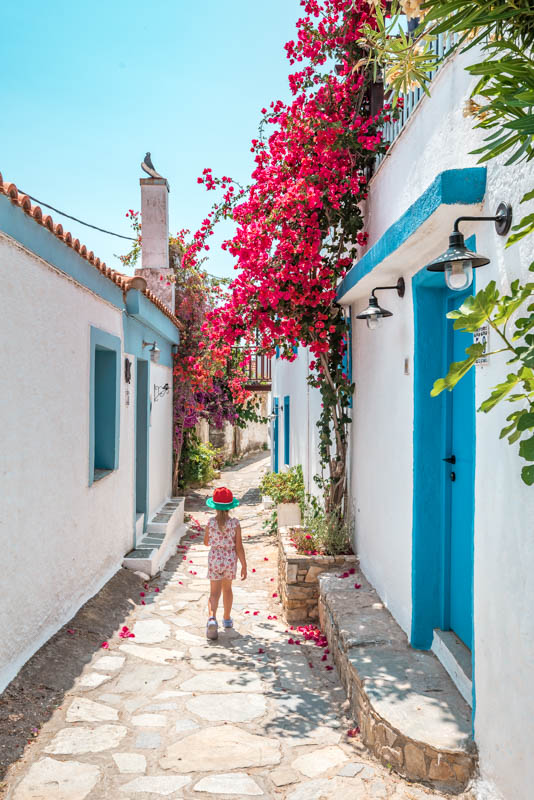
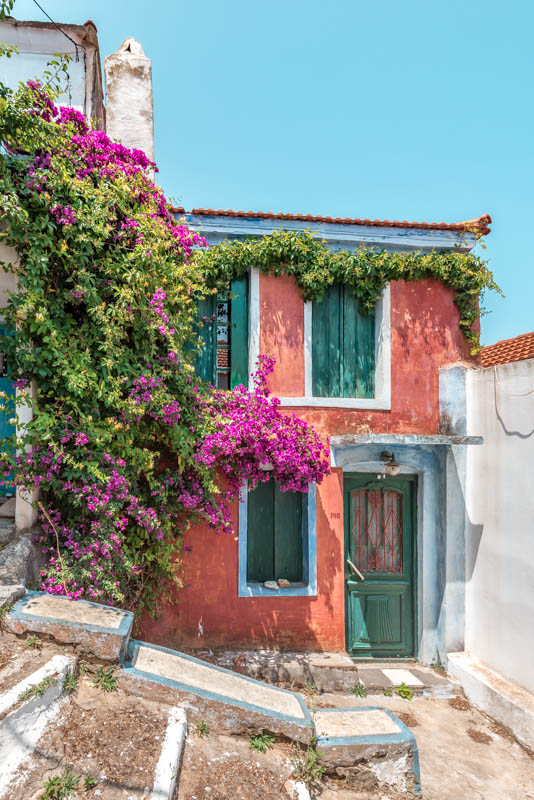
You can park your rental car in the large, free municipal parking lot on the northern edge of town. From there, you can reach the maze of alleys via the Panselinos tavern (recommended!) across from the playground. Along the wide main street, you’ll find several shops and souvenir stores; our recommendation is The Workshop by Vasilis.
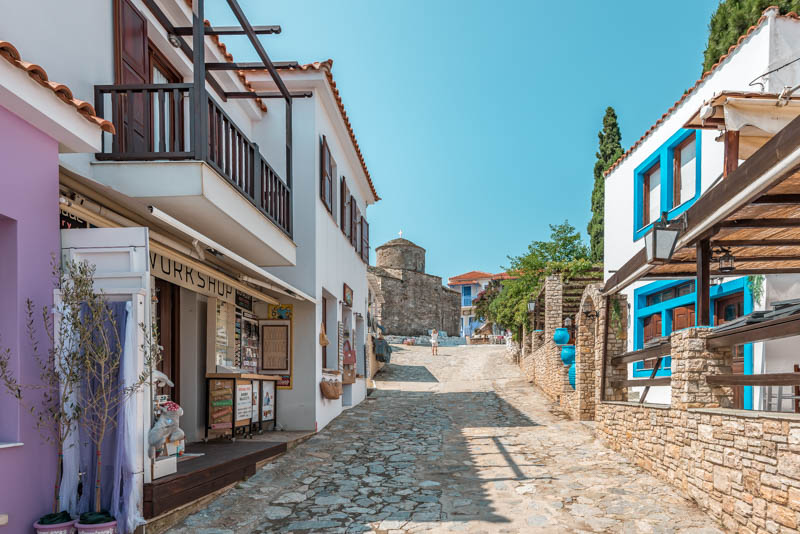
After a few metres, you will reach Chora’s most famous village square, where the medieval church of Genniseos tou Christou is located. It used to be open all the time. Several cafés line the square (tip: Piperi), a great spot to enjoy a cool freddo during the day or a cocktail in the evening. From there, head up a few steps to the Kastro district.

You can pick up a unique island souvenir at Stella’s Taste of Nature shop. If you turn around spontaneously while walking up the hill, you can snap a photo of one of Alonissos-Chora’s classic postcard views. Once you reach the highest point of the village, a phenomenal view of the island and the Aegean Sea opens up before you.
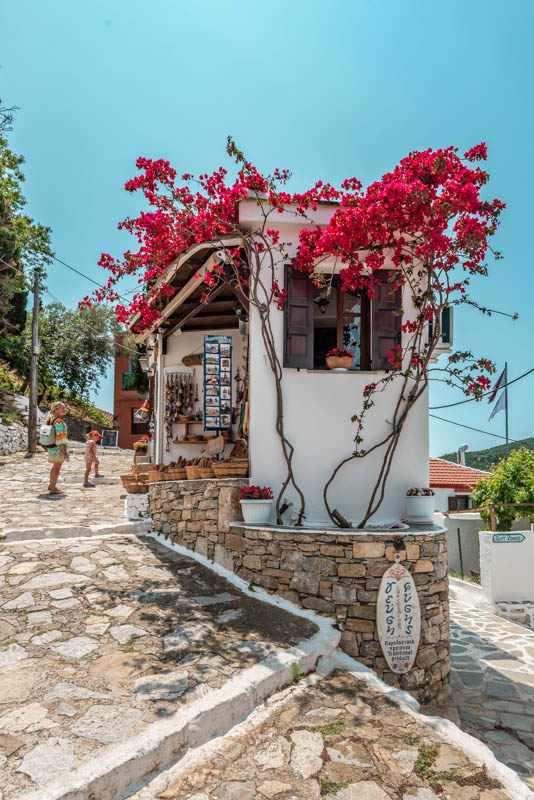

Once upon a time, a Venetian fortress stood here, colloquially known as Kastro, which offered protection against pirate attacks. Only a few walls remain, some of which have been incorporated into residential buildings. In the evenings, Chora’s Kastro is a popular spot to wind down the day in one of the bars or taverns. We enjoyed the sunset view from the steps.
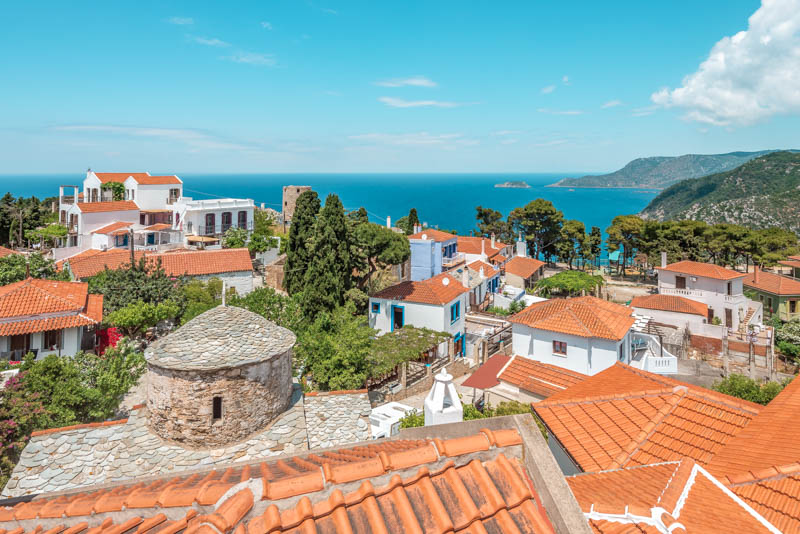
The main street then continues southward. Be sure to look to the right and left into the cobblestone side streets—it’s amazing how lushly green some of the house entrances are planted! The Knowledge Awareness Center on the southern edge of town, which offers insight into the marine world of the Sporades, was unfortunately closed.

Agios Ioannis Prodromos
The most beautiful view of Chora is from the church of Agios Ioannis Prodromos, located about 500 m to the east. A nondescript footpath leads you from the main street up to the little church, whose forecourt is lined by a gnarled oak tree that you can walk under.

Alonissos Sunset
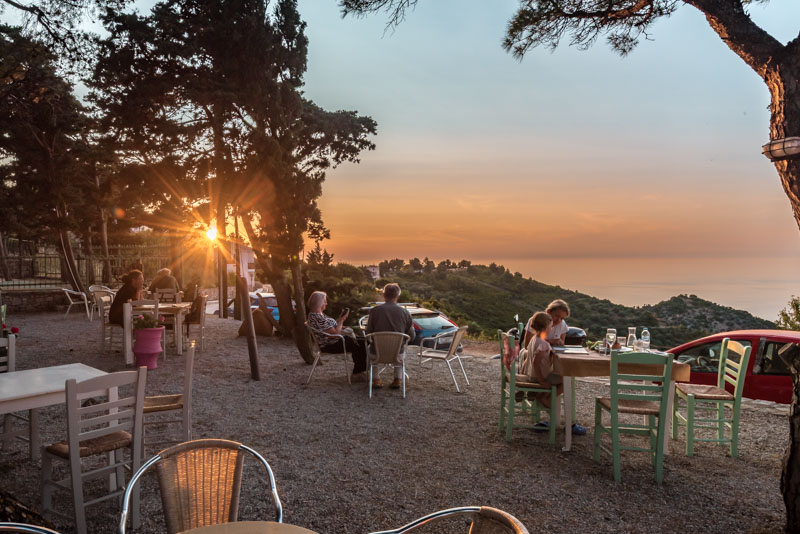
The sunset from the Kastro district is truly picturesque, but according to locals, it’s also very popular in the summer. For an evening drink, the Barbarossa Bar is our favorite. About a kilometer west of the Chora parking lot, a gravel path leads to a magnificent and much quieter spot to enjoy the Alonissos sunset.

Just follow the signs marked Kalovoulos Sunset View Spot (Iliovasilema Kalovoulos). Parking is limited on-site, so walking is recommended. From the wide concrete viewing platform, you can watch the spectacular sunset every evening as the red fireball dips below the horizon behind the neighboring island of Skopelos.
→ Find out more about the neighboring island of Skopelos here: Skopelos Travel Tips

#2 Port Town of Patitiri
With just under 1,400 residents, Patitiri is now the tourist hub of Alonissos. This is where every visitor first sets foot on the island. Architecturally, Patitiri isn’t exactly a feast for the eyes; after the 1965 earthquake, buildings were constructed haphazardly here—unfortunately without adhering to traditional island architectural styles.

The name Patitiri means “grape press,” as this was once the place on Alonissos where all the winemakers brought their grapes to be crushed into wine and later shipped across the country. Unfortunately, phylloxera did not do much good on Alonissos, as there is no longer any commercial wine production there today.

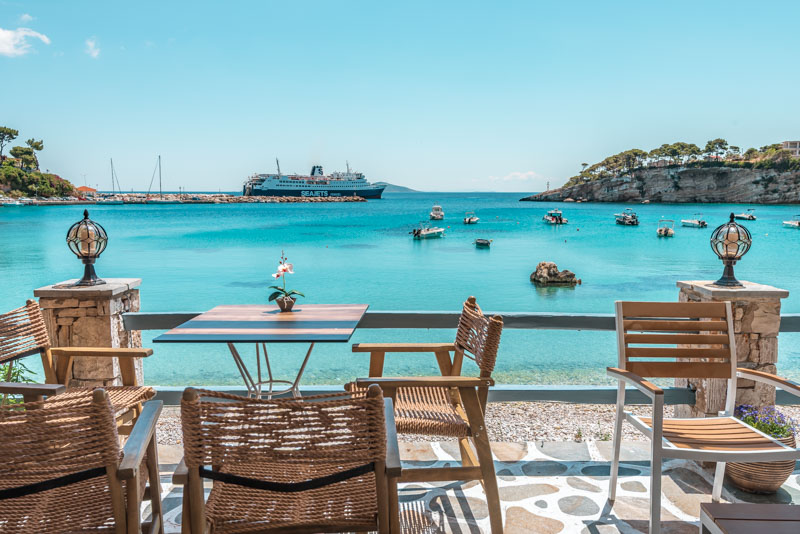
Today, Patitiri is a lively but not overcrowded vacation spot. Fishing boats and tour boats glide along the short promenade, and a dozen taverns and cafés (Tip: Patitiri Cafe) invite you to linger. Only shopping enthusiasts won’t find much to their liking here. Aside from a few simple souvenir shops and stores for daily necessities, there’s hardly anything unique.
Don’t miss the Mediterranean Monk Seal Information Center run by MOm (Hellenic Society for the Study and Protection of the Monk Seal). In a compact space, it offers plenty of information about the endangered Mediterranean monk seals. Since 1980, MOm has been working to preserve this seal species on Alonissos and throughout Greece. You can find more information under point #6.


Alonissos Museum
A visit to the Alonissos Museum of Kostas & Angela Mavrikis is well worth it for history and culture enthusiasts. It is located on the western outskirts of town and houses several exhibitions that provide a comprehensive look at the island’s history. There is even a dedicated section on the legendary world of Mediterranean pirates.

We’ve visited many museums in Greece, but the number of artifacts collected here is remarkable and fully justifies the €5 admission fee. The individual themed sections are also well labeled. From the museum’s upper terrace, you can enjoy a stunning view of Patitiri Bay.


Rousoum Gialos
Patitiri stretches across several sheltered bays that are particularly appealing to sailors but are also suitable for swimming. East of the harbor lies the Rousoum Gialos district, where several apartment complexes and 2–3-star hotels have sprung up around the pebble beach.

Paralia Rousoum Gialos is a pebble beach and, unfortunately, is cluttered with umbrellas. There are two taverns and a bar on site, though only the Cosmos Café Bar is worth recommending. Personally, we weren’t impressed by the haphazardly developed settlement, and there are far more tranquil spots for swimming on Alonnisos.
Votsi
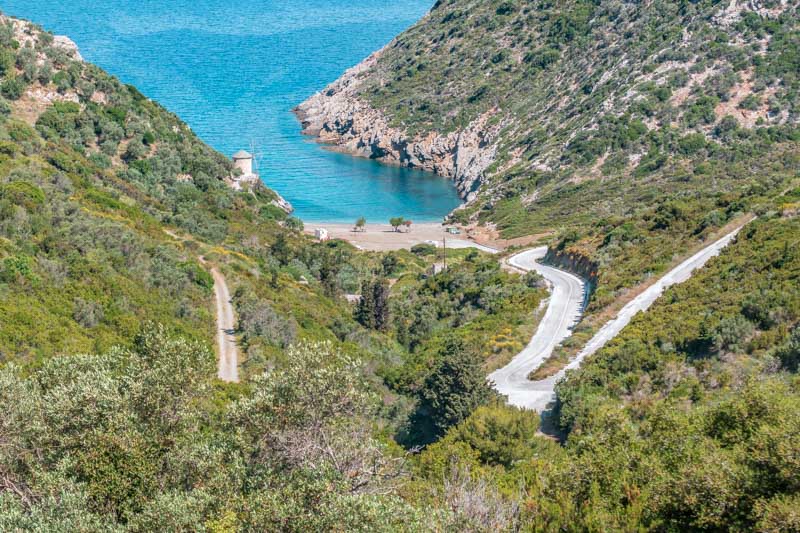
One bay further east lies Votsi, which, with its concrete pier, is a popular stop for sailors. The settlement, home to some 600 people today, is quite winding. The sea can only be reached on foot or via a narrow access road. But the view of the bay from above is phenomenal!
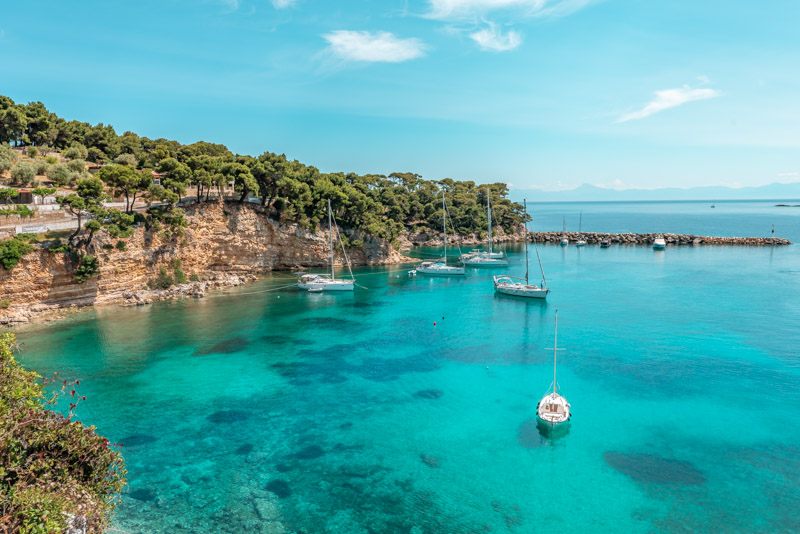
The narrow Votsi Beach is only suitable for swimming to a limited extent. Nevertheless, there are several good small hotels and guesthouses in Votsi. Since there are only a few restaurants, the evenings here are wonderfully peaceful. For a romantic dinner, we recommend the upscale restaurant Dendrolimano, where you can sit idyllically under shady pine trees.

#3 Beaches of Alonissos
You don’t come to Alonissos for a pure beach vacation. Unlike the golden sandy beaches of the Sporades island of Skiathos, the beaches of Alonissos are, with a few exceptions, covered in gravel or stones. However, there are some beautiful swimming coves that are virtually deserted even in summer.
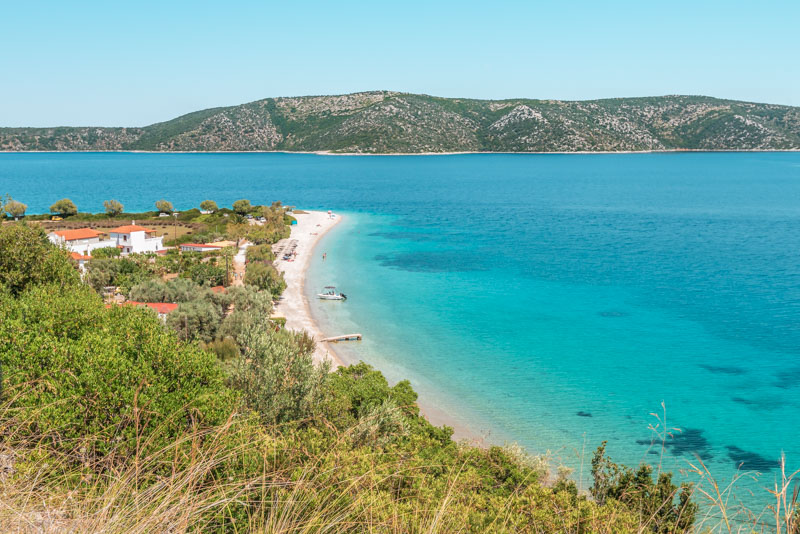
Most beaches are located on the east side of Alonissos and consist of coarse pebbles. If you follow the main road north from Patitiri, one beach follows another, and you can go beach hopping. Below, we present our favorites.
Paralia Spartines
In Patitiri, we advise against swimming near the ferry terminal; most people are drawn to Paralia Rousoum Gialos instead. Consequently, the small town beach gets quite crowded in the summer. In contrast, it’s much quieter at Spartines Beach, located a few hundred meters east of Votsi.
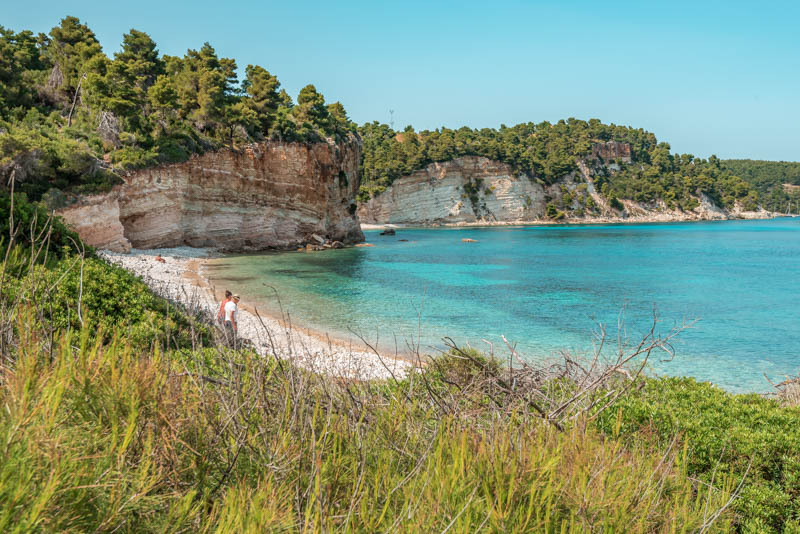
Only a narrow forest path leads down to this unspoiled beach, which consists of coarse, beige-colored pebbles. The beach captivates with its natural beauty: sandstone cliffs rise vertically above the sea, and a pine forest stretches above them. Water shoes are recommended for entering the water. Nude beach enthusiasts also frequent this beach.

Milia Beach
One of Alonissos’s most popular beaches is less than a ten-minute drive from Patitiri. At Milia Beach, the sea shimmers in beautiful shades of turquoise, and the entire bay is framed by a lush pine forest. The shoreline is covered in light-colored pebbles, which can make entering the water a bit tricky.

Two simple beach bars rent out sun loungers and serve refreshments. Parking is available directly behind the beach. For people with limited mobility, a Seatrac is even available.
Chrisi Milia Beach
Without a doubt, Chrisi Milia Beach is the most popular beach on the island. The reason: a gentle slope into the water and plenty of fine golden-brown sand, similar to that found on Skiathos. Although it’s just one bay further north, you can’t drive there directly from Milia Beach. You’ll have to head back to the main road and take a 5-kilometer detour.

When we were there in early June, Chrisi Milia Beach was still pretty laid-back during the week. On the weekend, however, it got noticeably busier, as many Greek families with children come here. The local Chrisi Milia Bar rents out sun loungers (starting at €15) and serves cool drinks and hearty food.
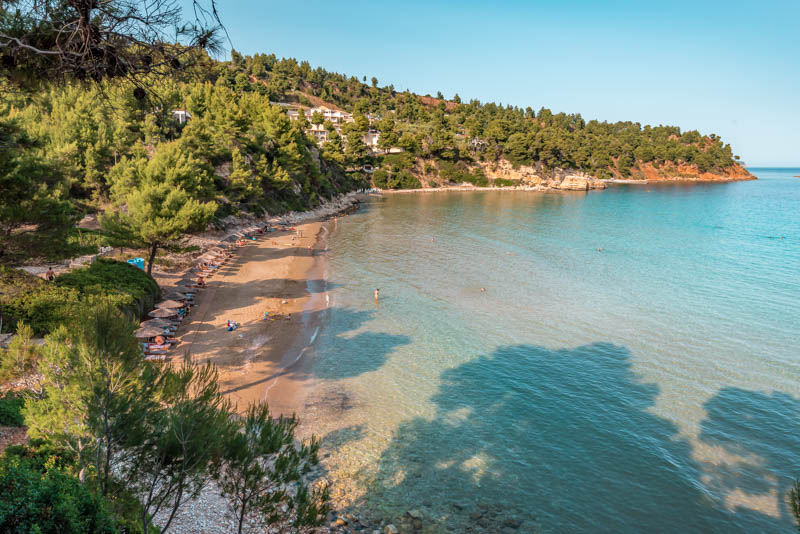
The stretch of pure sand is just under 100 m long, but a sandbar extends a good 50 m into the sea, so the water doesn’t get deeper than knee-deep for quite a distance. It’s a dream for kids, but as an adult, you first have to wade through the shallow water to swim a few laps. 🙂
Kokkinokastro Beach
From Chrisi Milia, you could already see the reddish islet of Kokkinonisi, which belongs to the Kokkinokastro coastline. Parking is available at several spots located about 100 meters above the beach. A stone staircase leads down to Kokkinokastro Beach.
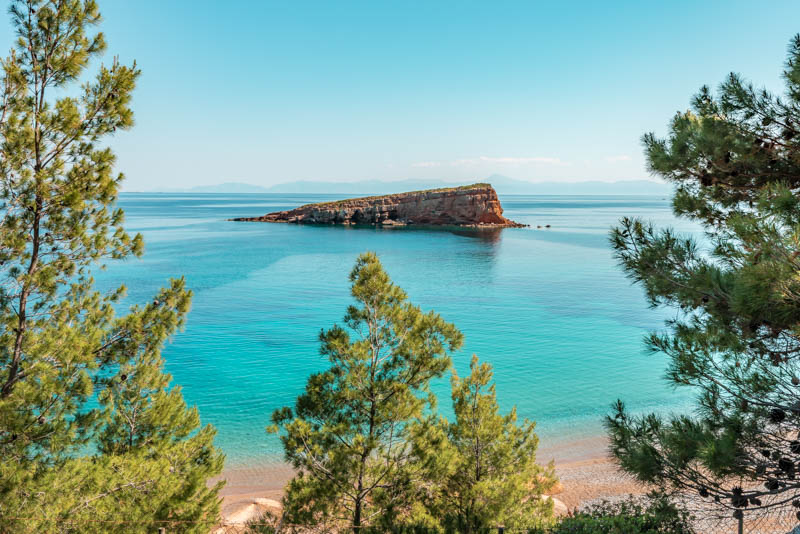
Once you reach the bottom, you’ll be greeted by a bizarre landscape. Rust-colored sandstone cliffs rise out of the sea and lead to a small, unfortunately inaccessible peninsula called Kokkinokastro, where a few pine trees grow. Definitely one of the most impressive beaches on the island! The local beach bar rents out lounge chairs and plays music. If you prefer a quieter spot, head to the western section.

In ancient times, there was a settlement or a fortified castle on the peninsula, as the name Kokkinokastro (kokkino = red, kastro = castle) suggests. Only sparse remains of the walls are left, visible only from the sea. Underwater near the island of Kokkinonisi, archaeologists have also discovered ancient ruins and artifacts from a bygone era.

Leftos Gialos Beach
Leftos Gialos Beach is located four kilometers north of Kokkinokastro and can be reached via a narrow and somewhat bumpy asphalt road. The drive takes you through a pine forest, and time and again, magnificent views of picturesque bays such as Tzortzi Gialos open up.

Unfortunately, the two beach restaurants at Leftos Gialos have taken over the entire beach. Only the edges of the beach remain somewhat untouched. If that doesn’t bother you, you’ll find a great spot here for a day at the beach.
#4 Fishing Village of Steni Vala
About eight kilometers from Leftos Gialos lies one of our personal favorite spots on Alonissos: Steni Vala. It’s worth stopping by one of the local taverns (recommendations: Tassia’s Cooking and To Fanari) for lunch or dinner. Even as you approach, your gaze is drawn to the small, charming settlement right by the sea.

Barely more than a handful of families live in the hamlet year-round. The former fishing village of Alonissos has become a major attraction on the island. It doesn’t take much: a picturesque row of houses, a fjord-like, wind-sheltered bay, and a good dose of tranquility.
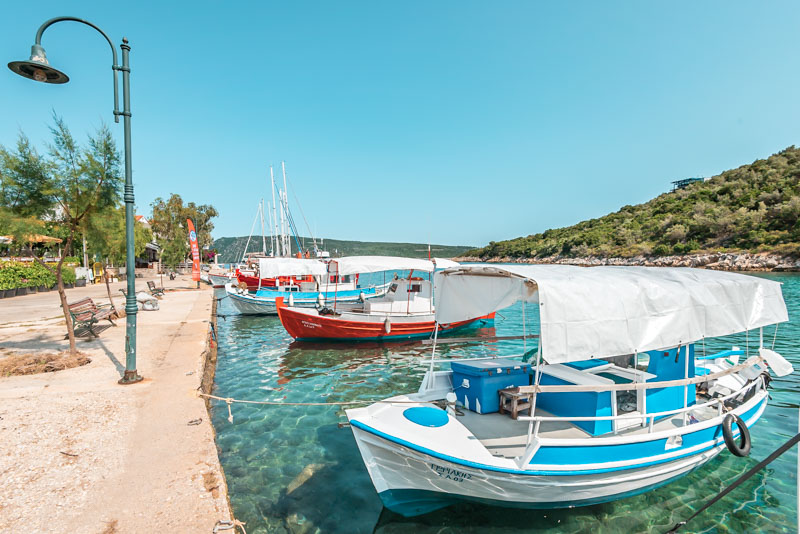
Even if it seems a bit odd at first glance, virtually all the buildings along the pier house restaurants and cafés. The local businesses thrive on the tourist trade, and the prices are all fair. As you stroll along the traffic-calmed waterfront promenade, you’ll be spoiled for choice: along the 150-meter boulevard, there are no fewer than five taverns and two cafés.
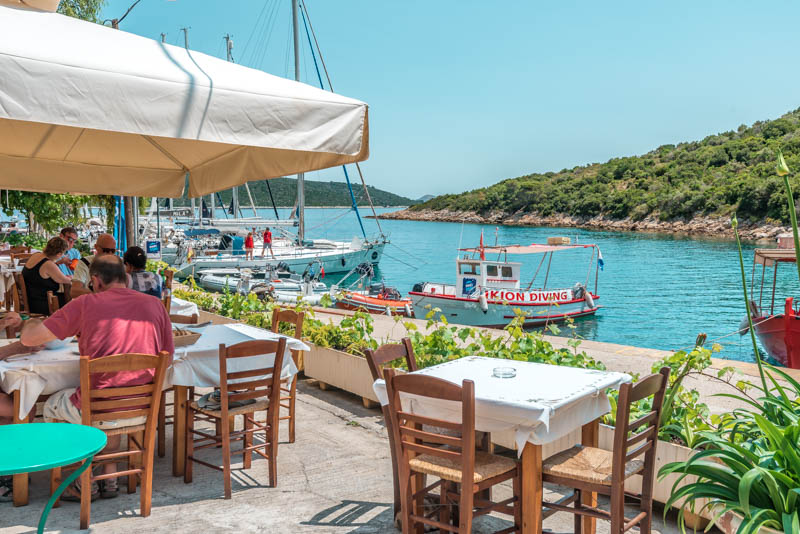
Fishing boats and yachts bob merrily at the pier, and depending on the time of day, local fishermen, divers, or international sailors stop by the local spots. We especially liked the Mavrikis family’s Icarus Café. Here, you’ll quickly strike up a conversation with other vacationers and can leave your everyday life behind over a cool drink—guaranteed!

Despite the many visitors, especially on weekends, the atmosphere in town remains completely relaxed. Both Greeks and international fans of Greece appreciate this. The vibe is especially cozy in the evening: the bars and restaurants are well-attended but not overcrowded. Sailors anchor in the bay, and children play peacefully at the pier. No cars or mopeds disturb the idyll.
We were lucky that our accommodation, Casa Kalypso, was located just outside Steni Vala. On our way home every evening, we were accompanied by the sound of the sea and the chirping of crickets. The nights are dead quiet, which is a rarity for Greece. Steni Vala, you are now one of our favorite places!
Swim break at Paralia Glifa
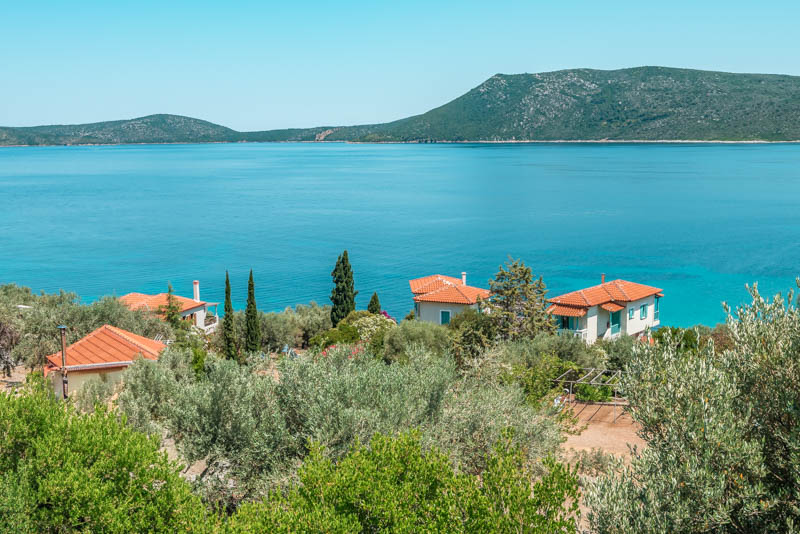
The pebble beach is just a five-minute walk from Steni Vala and is mainly visited by guests from the nearby apartment complexes. Just head over the hill past the village church, and you can cool off in the refreshing water. If you walk north along the shore from Paralia Glifa, you’ll come to the SUELTO Beach Bar.

You can relax and unwind in hammocks under shady olive trees with a view of the uninhabited neighboring island of Peristera. Cool drinks and snacks are available at fair prices. Every now and then, a few ducks come by; they’ve settled here because of the freshwater springs located around Steni Vala.

Kalamakia
Kalamakia is located about two kilometers north of Steni Vala. Fishing boats bob in the harbor, and a small chapel stands at the entrance. We thought it would be similarly traditional there—we were wrong! In short: Three fishing families with no experience in the restaurant business offer simple dishes (some of them frozen) at high prices to earn some extra money in the summer.

Dirk Schönrock, author of the Sporades travel guide published by Michael Müller Verlag, had already described it this way in his book. If only we had listened to him, we would have been spared a mediocre evening and a lot of money spent on mediocre food. The place is okay for a photo stop, but it lacks the authenticity needed for lasting memories.
💡 Alonissos Book Recommendation: The Greek Islands travel guide from Lonely Planet contains plenty of information and useful travel tips about the island of Alonissos, as well as beautiful hiking routes. Order here: View on Amazon*
#5 Agios Dimitrios and the North of Alonissos
Agios Dimitrios is the last inhabited settlement on the northeast coast of Alonissos. The few houses are concentrated around a striking headland that is already impressive as you approach from Steni Vala. Here, light-colored pebbles meet an azure-blue and emerald-green sea. Behind it lies a wetland, though it contained no water in early June.
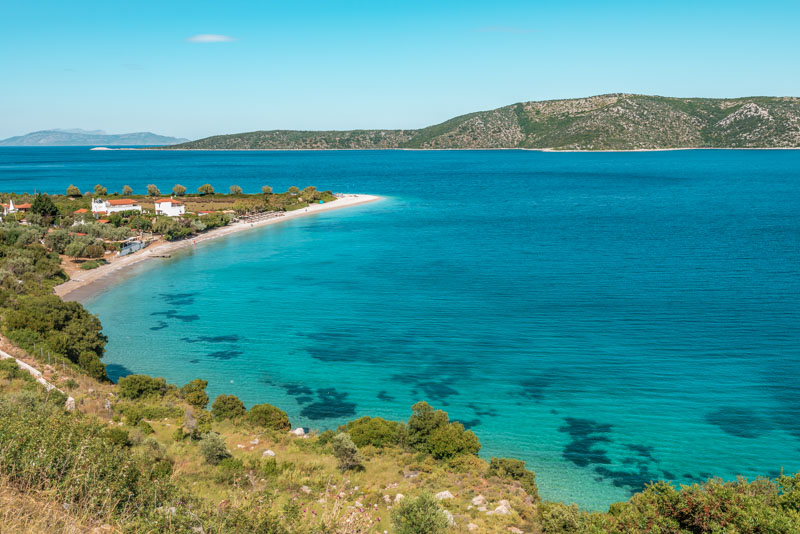
The water gets deep quickly at Agios Dimitrios Beach, making it unsuitable for small children. However, the sea is crystal clear and the colors are Caribbean-like. Two beach bars and the Agios Dimitrios Food Bar cater to your culinary needs. From the shaded terrace, you have a wonderful view of the sea.

Behind Agios Dimitrios, there are a few more great bays, but they are difficult to access. To explore the north of Alonissos, you’ll need to drive back to the main road (Steni Vala turnoff). From Agios Dimitrios, only a bumpy, not-recommended gravel road leads into the mountains. The region is largely deserted and only suitable for tireless explorers.


Kastania Reservoir
Hidden in the mountains directly above Agios Dimitrios in the uninhabited region of Kastania lies the Alonissos Reservoir. It was completed in 2012 to meet the island’s increased water demand in the summer. After all, most vacationers visit in July and August, and natural freshwater sources are scarce on Alonissos.

A total of 12 million euros was invested in the project, including EU funding. However, during construction, the distribution pipes were not installed properly, making it impossible to channel the water southward. Since then, the reservoir has stood idle in the landscape as a monument to mismanagement.
Many songbirds, as well as ravens, seagulls, and falcons, now use the reservoir as a resting place. A magnificent mixed forest grows all around, and absolute silence reigns. You can drive or walk all the way around the reservoir. From here, you also have the option of hiking back to the coast at Agios Dimitrios along a two-kilometer-long trail.

Northern Alonissos: Solitude in Gerakas
It’s 22 km from Patitiri to the remote settlement of Gerakas in the north of Alonissos. However, the drive north along the asphalted mountain road—pockmarked with numerous potholes—is a highlight in itself, as panoramic views of vast stretches of the Marine National Park open up time and again. On a clear day, you can even see as far as the island of Skyros.
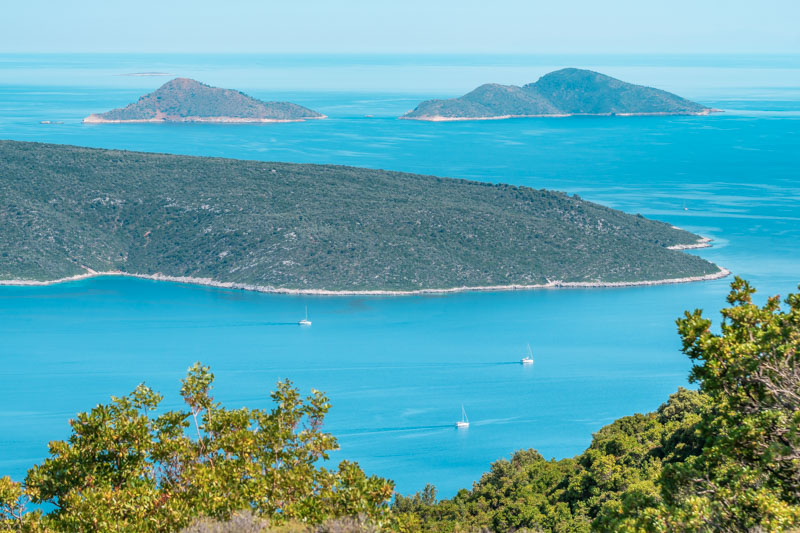
In the spring, the hinterland of Alonissos is great for hiking (see point #7). But there are no places to stop for a bite to eat anywhere in sight, and cell service is spotty at best. No one lives in Gerakas year-round; in the summer, you’ll only encounter a few goat herders and fishermen here.

In the 1980s, efforts to establish a marine protected area off the coast of Alonissos gained momentum—in part due to the efforts of the Monk Seal Conservation Society (MOm). Since Gerakas served as an ideal starting point for expeditions, a marine research station was built above the beach in 1988. Unfortunately, it was never opened and is now falling into disrepair.

In recent years, a seaside canteen opened in Gerakas during the summer. It has since been abandoned, and the pebble beach is visibly neglected. Only at the concrete pier, where small boats and large trawlers are moored, do you still regularly encounter fishermen mending their nets. Those wishing to hike through this remote region can find information here: topoGuide
#6 Alonnisos Marine National Park – Northern Sporades
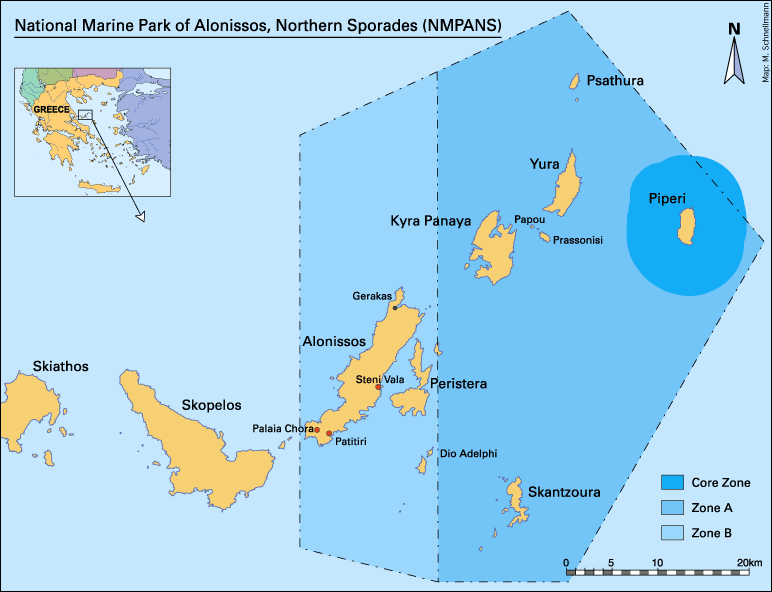
The Alonnisos Marine National Park now covers an area of approximately 2,591.5 km² and includes, in addition to the eponymous island of Alonissos, the islands of Peristera, Kyra Panagia, Gioura, Piperi, Skantzoura, and Adelfi, as well as 22 smaller rocky islets. It was established in 1992 by presidential decree as Greece’s first marine national park.
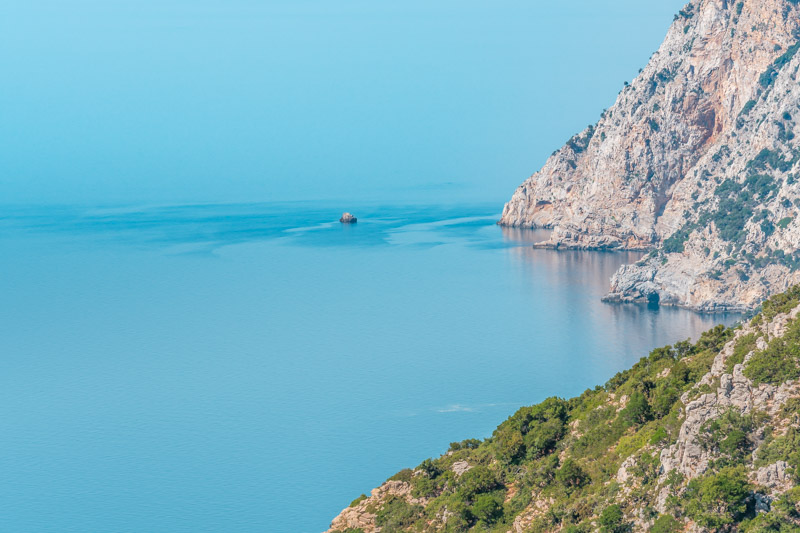
In 1975, filmmaker Giorgos Theodossopoulos had the idea to shoot a documentary about the wild beauty of the Sporades. The focus was originally on the dramatic natural scenery of the unspoiled Greek islands of Kyra Panagia, Gioura, and Piperi.

During filming, the crew learned from local fishermen about the whereabouts of the Mediterranean monk seal (Monachus monachus) in the region, a species already threatened with extinction at the time. Director Theodossopoulos was fanatically determined to capture this rare seal species on camera.
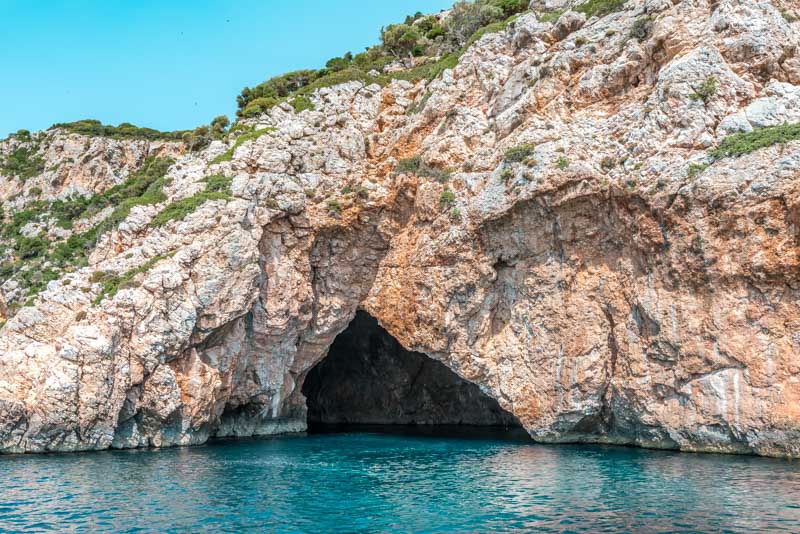
The conditions were extreme: Due to the inaccessibility of the coast, the filmmakers had to resort to tiny boats and sometimes camp near the beach or in sea caves for days on end. Eventually, they succeeded in filming the shy seals in their natural habitat—these were the first recordings of the monk seal in Greece.
Subsequently, the entire project was dedicated to the endangered monk seals of Alonissos. The film, originally titled “The Mediterranean Monk Seal – A Monk in Trouble”, premiered at international film festivals in the summer of 1976.
The elaborate wildlife documentary was also broadcast on television shortly thereafter on the BBC and ARD. It was a success and led to significant public awareness of the endangered species and the island of Alonissos. Activists, politicians, and scientists were thereby encouraged to establish a marine protected area.
Visiting the Sporades Marine National Park
You can explore the Alonissos Marine National Park in various ways, such as snorkeling, kayaking, or taking boat trips. However, this is only permitted in clearly marked zones. In Zone B around Alonissos and Peristera, sailors can dock and explore the secluded bays.
Registration is required for Zone A, as it is strictly protected. No landing, free diving, or snorkeling is permitted here, with the exception of Kyra Panagia. The island of Piperi is considered a core zone and is completely off-limits, as it is the main breeding ground for the rare Mediterranean monk seal. You can find all regulations on the park’s website: Ethniko Parko
Boat Tours in the Alonissos Marine Park
During our time on the island, we took an organized boat tour to the Alonissos National Marine Park. You can find tour operators at the port of Patitiri. You can either approach them directly at the boat or visit one of the travel agencies right at the port.
The excursions to the Alonissos Marine National Park start around 10 a.m. and then head toward the strait between Peristera and Alonissos. Depending on the tour’s itinerary, stops are made at Kokkinokastro Beach, in Kalamakia, or at Agios Dimitrios. A highlight is the Peristera shipwreck, which serves as both a snorkeling and photo spot.
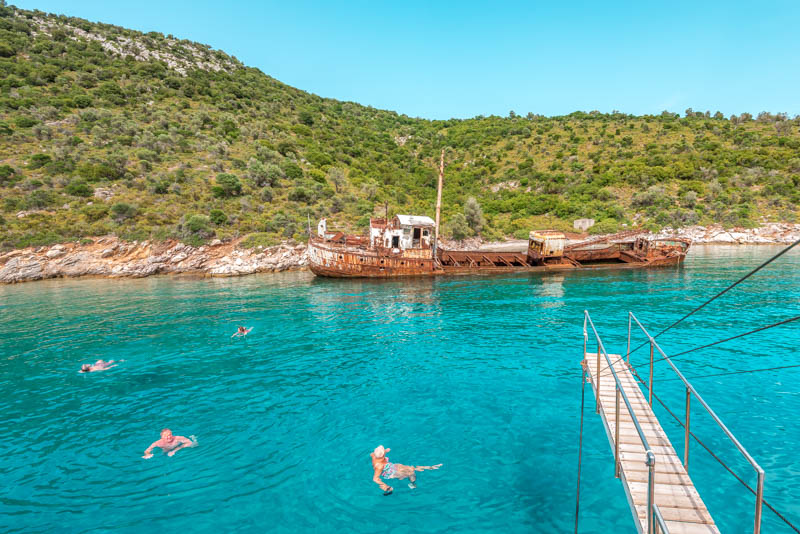
Our boat tour even ventured out into the open sea to the island of Kyra Panagia. On this wild island with its dramatic cliffs stands a monastery belonging to the Monastic Republic of Mount Athos. It has undergone extensive renovations in recent years and can be visited as part of the tour. That was definitely a spiritual highlight for us!


Conclusion on the Alonissos boat tour
Through conversations with MOm staff, we had already learned beforehand that it takes a lot of luck to spot a monk seal. There are fewer than 70 seals in the entire Alonissos Marine National Park. It is much more likely to encounter dolphins around Alonissos, which are abundant in the waters. Unfortunately, we saw neither one nor the other.

So, in the end, it was a nice eight-hour cruise on the sea with a few stops (including at sea caves). This is not recommended with a toddler, as there are hardly any swimming spots with direct access to land. At least the swimmers could jump into the crystal-clear water right from the boat.


If you want to take a boat tour of the Marine National Park, check if lunch is included on board; otherwise, you’ll have to bring everything yourself. The tours cost around €40 to €70 per person, depending on the itinerary.
What should you do if you see a monk seal near Alonissos?
Under no circumstances should you approach the seal. Maintain a minimum distance of 50 meters—even in the water. Don’t make loud noises and don’t try to lure the monk seal. There have already been rough encounters, as the animals can bite hard when they feel threatened. Observe the Mediterranean monk seal calmly and quietly and enjoy the moment. If you spot one, contact MOm, e.g., via their app, phone, or website.

The chance of seeing a monk seal around Alonissos is like winning the lottery, as they are extremely shy and avoid any contact with humans. The monk seal is considered the rarest marine mammal in the world. It is estimated that only 500 to 700 animals remain. Unfortunately, there are no reliable sources. It is assumed that there are about 350 living specimens in Greece.

In the Alonissos Marine Park, about 65 animals are counted annually, but the population has barely grown in years. We personally had no luck seeing a monk seal in the Sporades. However, in November 2019, a monk seal swam past Tom’s nose for about 15 seconds while he was fishing on Nisyros. He is still thrilled by this unique experience today.
→ You can watch a very informative documentary by Erlebnis Erde about monk seals in Greece here: YouTube
#7 Hiking on Alonissos
Alonissos is a great Greek island for hiking. The landscape is varied, there are plenty of trees providing shade, and you’ll be treated to fantastic views of the sea time and again. We also explored the island a bit on foot. The temperatures in the mornings in early June were just about manageable for that.

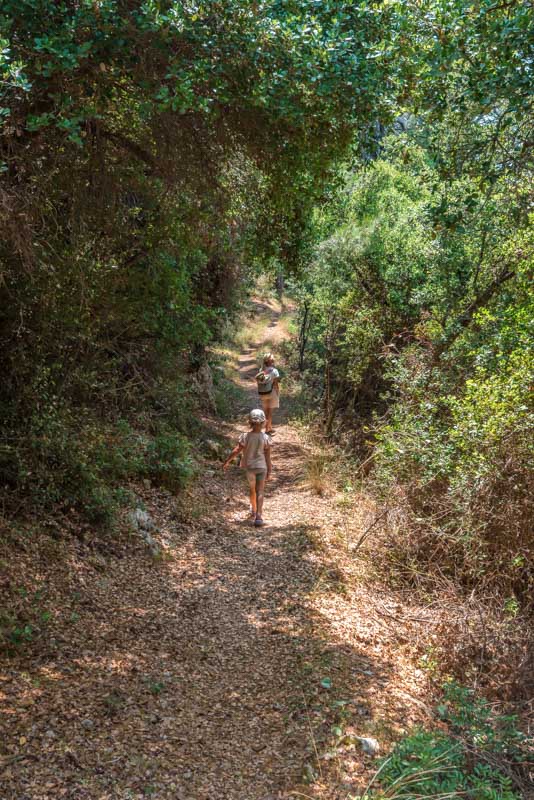
The hiking trails on Alonissos are mostly well-marked and well-maintained. You’ll often hike on ancient paved paths and monopati that once connected the scattered farming settlements. Here and there, a church stands in the landscape, its churchyard inviting you to have a picnic.
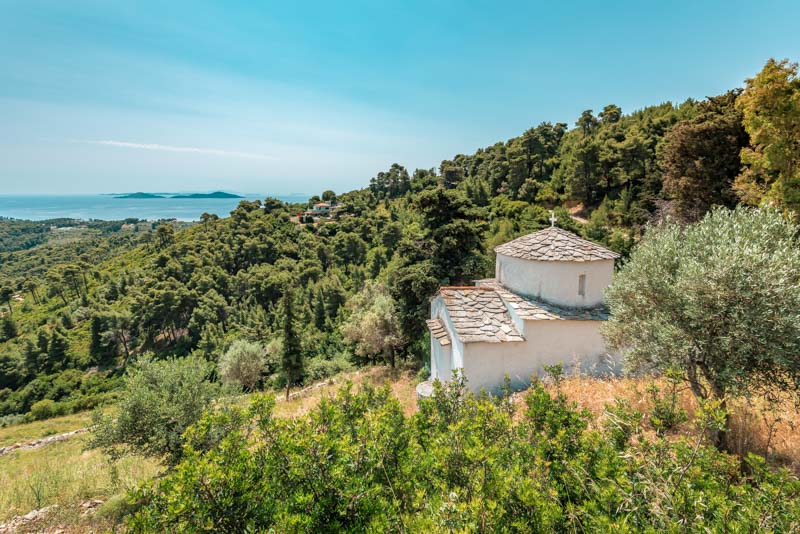
The region around Megalo Chorafi, Psili Rachi, and Agios Konstantinos is particularly mystical. It is deserted but blessed with wild nature. If you want to explore remote areas of Alonissos, keep in mind that there is hardly any cell phone reception there. Let your host, hotel, or family know in advance about your hiking plans and avoid hiking in the height of summer and around noon.
→ Nearly all hikes on Alonissos are listed on the alonnisos at your feet portal, with an online map or as an app: Visit the website
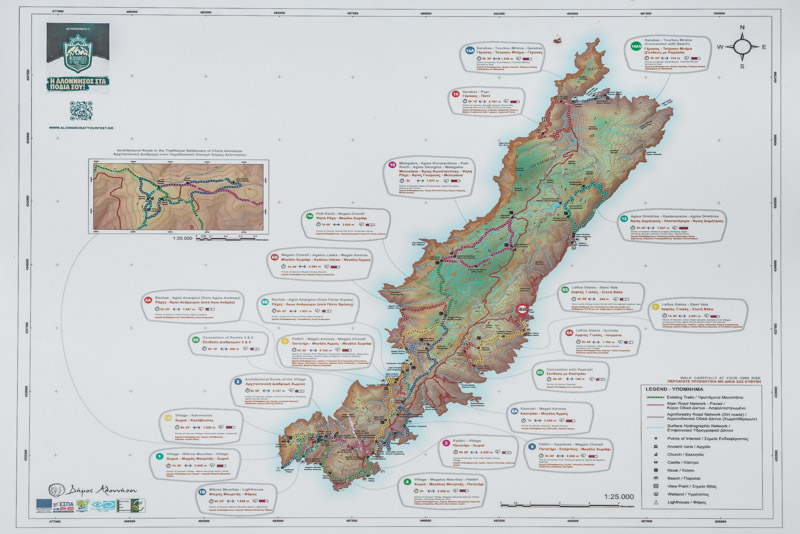
Hike to Agioi Anargyroi
A short but rewarding hike runs along the west coast near Agioi Anargyroi. It begins at the turnoff to Tsoukalia Beach and follows a gravel road for about 1.5 km until it ends at a vacation home. From there, the trail leads along a Monopati through a secluded pine forest, always running along the top of the cliffs.

After a short while, you’ll reach the churches of Agioi Anargyroi—a modern chapel and a traditional one (1872)—dedicated to Saints Cosmas and Damian. From the natural church square, a wonderful view opens up over the North Aegean, across to Skopelos, and on clear days even as far as the Athos Peninsula.


From there, continue north until, after about ten minutes, you leave the forest behind and Paralia Tourkoneri spreads out before you. Its name translates to “Turquoise Water,” and despite the pebbly beach entrance, the sea invites you to take a refreshing dip. From here, you can explore the beaches of Paralia Ochra (5 min. via a footpath) and Paralia Megali Ammos (one hour via a gravel path) further north.

Afterward, you can return via the same path or take a brief detour via the “Pente Vrises” in the dense pine forest, where five springs once flowed from the rock, but today there is only a dry tap.
Hike up Mount Kalovoulos
For those who want to go high up, the short hike (1 to 1.5 km) to the 330-meter-high Mount Kalovoulos west of Chora is well worth it. It begins shortly after the public parking lot in Chora (near the cemetery) at the turnoff to the Sunset Viewpoint. A blue sign marked “Kalovoulos” points the way.

The first few meters lead uphill along a natural stone path. Shortly afterward, the trail winds through a pine forest—always following the red-and-white markings. The higher you climb, the farther you can see, spotting islands in the Marine National Park such as Peristera, the Adelfi Islands, and Skantzoura.

After passing through a pine forest, the vegetation becomes sparser, and a clearing with short-trunked oaks and rocky scree marks the final stretch. After about five minutes, you’ll reach your destination. On the left side, below the summit pillar, there’s a covered panoramic rest area.

Here you can enjoy a wonderful break while taking in the view of Skopelos and the offshore islands of Ag. Georgios and Mikro—don’t forget your picnic! Afterward, head back to Chora via the same route. Energetic hikers looking to cool off can continue on to the beaches of Paralia Mikros Mourtias (1.5 km) or Paralia Giala (3 km) below Chora.
More Alonissos tips for your vacation
Hotel tips for Alonissos
Here’s where we stayed on Alonissos
Casa Kalypso in Steni Vala
Our favorite spot on Alonissos was the lovely Casa Kalypso*, lovingly run by the friendly hostess Katerina. The property offers everything from stylish studios for two to spacious vacation homes for families—nestled in a beautiful garden and just a few steps from the sea.

Just a short walk away lies the tranquil village of Steni Vala, known for its authentic taverns right on the water. For active travelers, there’s a special bonus: free kayaks and SUPs are available at the property to explore the stunning east coast from the water.


We thoroughly enjoyed the tranquility, the sea, and the hospitality at Casa Kalypso and can highly recommend this place as a starting point for exploring the island. All information about the individual room categories is available on the website: Casa Kalypso

Through our partner Booking.com*, you can find more information about our accommodation, Casa Kalypso, and check availability and prices for the studios and vacation homes:
➲ Book Casa Kalypso Suites & Villas*

Our recommendations for Alonissos hotels
Alonissos is a very quiet island that is doing everything it can to maintain sustainable tourism. There are only two dozen hotels on the entire island. Many of them are rather simple guesthouses located in and around Patitiri.
Below, we’ve selected some recommended hotels on Alonissos for you. Click on the Booking.com* links to view details about the accommodations:
→ On Booking.com*, you can view available accommodations on a map and compare prices directly:

Recommendations for Cafés & Restaurants on Alonissos
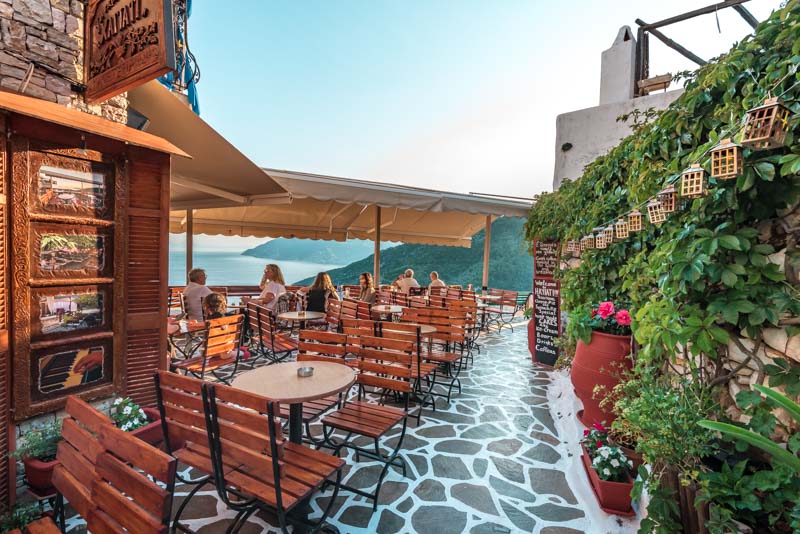
We generally ate quite well on Alonissos, though Skopelos had the edge here. Worth highlighting is the freshly caught Alonissos tuna from the surrounding waters—a local specialty served in salads or pasta, among other dishes. Unfortunately, prices at some taverns are slowly approaching those of Skiathos, though the quality here is slightly better.
In the taverns of the picturesque coastal village of Steni Vala, for example, you can enjoy freshly caught fish and traditionally cooked dishes like moussaka and gemista. Another specialty is the cheese-filled pastries (cheese pie), which are also available on the neighboring island of Skopelos. Here is a small selection of our favorite taverns and cafés on Alonissos:
- Tassia’s Cooking, Steni Vala
- Panselinos, Chora
- Patitiri Cafe, Patitiri
- Chagiati Café-Bar & Pastry Shop, Chora
- …
→ Want more recommendations? You can find all our tips for cafes and restaurants on Alonissos on our Google Map: Go to the Alonissos Map
Car Rental for Alonissos
Alonissos is a compact island where most of the public life takes place in the south. It’s less than 3 km from Patitiri to Chora. Still, it’s worth renting a car on Alonissos for 2–3 days to explore the island. The 20 km drive from the main town of Patitiri to Gerakes in the north takes about 35 minutes.
If you’re looking for an affordable rental car in Alonissos, you can book one right at the harbor. We recommend the following providers:
- Alonissos Travel & More
- Top Cars Alonissos
- Turismo Car Rental Alonissos
Getting around Alonissos by bus
You can travel by bus on Alonissos, although the route network is limited due to the island’s size. There are only two routes: Patitiri–Chora (Old Village) and Patitiri–Steni Vala. Tickets cost €1.80 and cannot be purchased on the bus; they are only available at the island’s mini-markets. All information here: Bus timetable

Getting to the island of Alonissos
Alonissos has no airport; you can only reach this Sporades island by ferry. Most visitors arrive via the port city of Volos or from the neighboring islands of Skopelos and Skiathos. In the summer, a flight to Skiathos is a good option; from there, it’s a one-hour trip to Alonissos. Alonissos can also be reached via Evia (Euboea) from the small port of Mantoudi. Here you’ll find suitable flight connections:
➲ Find cheap flights to Skiathos*
➲ Find cheap flights to Volos*
→ In this post, you’ll learn how to get to the island of Skiathos: Skiathos Travel Tips

Ferry connections to Alonissos
Despite its small size and low-key tourism, Alonissos is well connected to the Sporades ferry network. During the tourist season from early June to mid-September, catamarans and car ferries run daily to Alonissos, most of them from the port of Volos. In the off-season, fewer ferries operate, but the neighboring islands of Skopelos and Skiathos remain accessible daily.
The duration of the crossing varies depending on the departure point and type of vessel, ranging from 1 to 4.5 hours, with Seajets’ catamarans being the fastest. From the port of Mantoudi on Euboea, you can reach the island of Alonissos in just under two hours.
→ The island of Alonissos can be reached regularly during the season via the following ferry companies:
- Seajets
- Aegean Flying Dolphins
- Mantoudi Lines (Zefyros)

Since ferries also run several times a week from the neighboring islands of Skopelos and Skiathos even during the off-season, Alonissos can easily be incorporated into a Greek island-hopping itinerary. In the summer, ferries run daily, allowing for flexible travel planning for island-hopping in the Sporades.
In summer, it’s advisable to book ferry tickets to Alonissos early, as seats can sell out quickly. The easiest way to do this is through our partner Ferryhopper*:
➲ Find affordable ferries to the island*
→ You can find more articles and numerous Sporades travel tips at:
- Sporades Blog – An Overview of the Archipelago
*Support our Greece-Moments blog
This post contains affiliate links marked with an asterisk (*). If you book or purchase something through one of these links, we receive a small commission. The price remains the same for you. This helps us continue to provide high-quality content for free. Did you enjoy this post and want to say thank you? Then simply buy us the next Greek coffee ☕️ Go to the coffee fund
Save this post on Pinterest too!