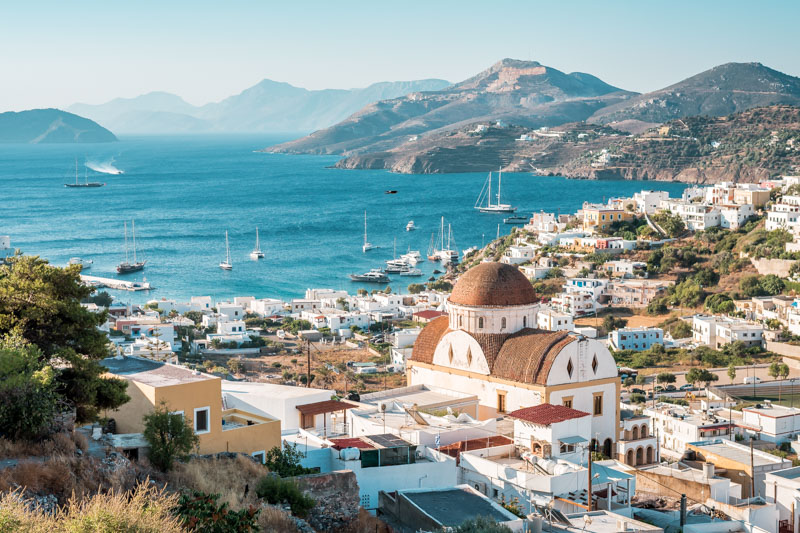

The evening sun bathes the landscape of Limnos Island in a warm glow. Golden ears of wheat sway in the gentle summer breeze, while rolling hills shimmer in the background. A mysterious atmosphere hangs in the air, and one gets the feeling that this sleepy Greek island still holds many treasures.
“The island of Limnos holds unique natural treasures and historical relics just waiting to be discovered.”

Limnos (also known as Lemnos) in the northern Aegean remains in a deep slumber to this day. Once, at its center stood a mighty volcano where Hephaestus, the god of fire and blacksmithing, had his workshop. The mythical traces have faded, yet many secrets remain unsolved.
We spent a week exploring the island, discovering many beautiful spots, and were ultimately surprised to find that this island remains so overshadowed by the other Greek islands. Here are our 12 highlights of Limnos:
- #1 Tour of Myrina
- #2 The Little Sahara of Limnos
- #3 The volcanic rocks of Falakro
- #4 Hike to Panagia Kakaviotissa
- #5 Kontias and the Windmills of Limnos
- #6 Hike up to Profitis Ilias
- #7 The Ancient Treasures of Limnos
- #8 Salt lakes and a surfer’s paradise in the east
- #9 The Oldest City in Europe
- #10 Endless Beaches on Limnos
- #11 Culinary Highlights of the Island
- #12 The Mystery of “Limnia Gi”
- More Limnos travel tips & info
Who is a trip to Limnos best suited for?
The island’s fertile valleys are visible evidence of past volcanic activity. Green vineyards alternate with wheat fields and vegetable farms. In the northwest, you find yourself in a desert-like landscape. Ruins of ancient sites in the east offer a vague glimpse of the significance Limnos once held in pre-Christian times.

Between mid-July and early September, the island truly comes to life and tourists fill the numerous beaches. Those who visit outside of the “Limnos summer” have the island almost to themselves, even if the occasional restaurant remains closed.
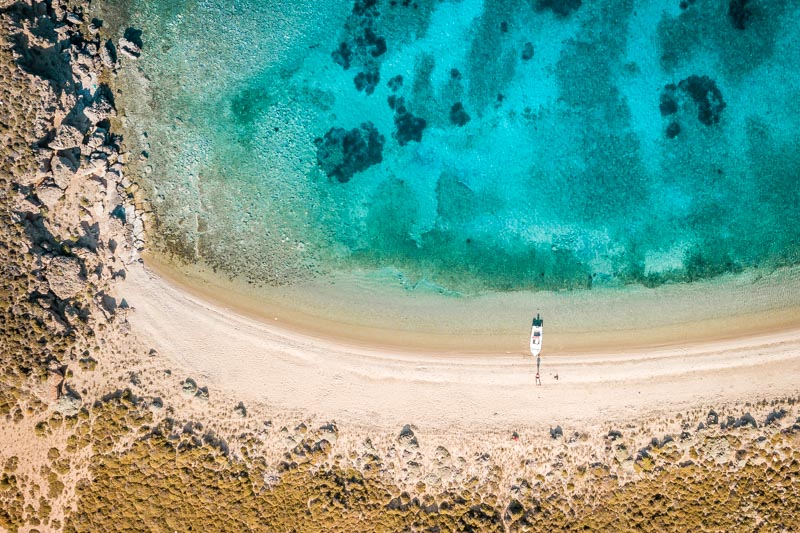
#1 Tour of Myrina
The mighty castle of Myrina immediately catches everyone’s eye, whether you reach the island’s capital by land or sea. The Kastro sits impressively atop a rocky outcrop in the sea and is one of the largest fortresses in the Aegean. It is the symbol of Limnos and offers a breathtaking photo opportunity both day and night.
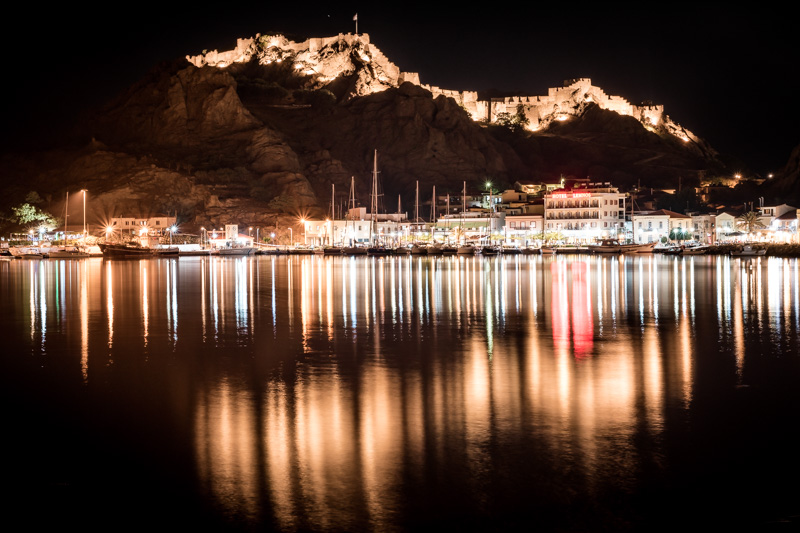
The climb to the fortress ruins is worth it just for the magnificent panorama of Myrina. On a clear day, you can even see Mount Athos, the holy mountain of the monastic republic, to the northwest.

The first settlements on the rock date back to the 3rd millennium BC. You can still see the massive Cyclopean walls today as you climb up to the castle. The complex was subsequently expanded by successive owners, including the Greeks, Byzantines, and Venetians.
Admission to the castle is free, but you enter at your own risk, as the walls are not secured. With a bit of luck, as you look out over the fortress, you might even spot some fallow deer grazing on the rock. They were a gift from Rhodes long ago and still live here today.
Cobbled alleys and mansions
The island’s capital has managed to retain its cozy charm to this day. No wonder—with fewer than 6,000 residents, life in Myrina is rather tranquil. Take the time to explore the town on foot with its cobblestone alleys and old mansions.
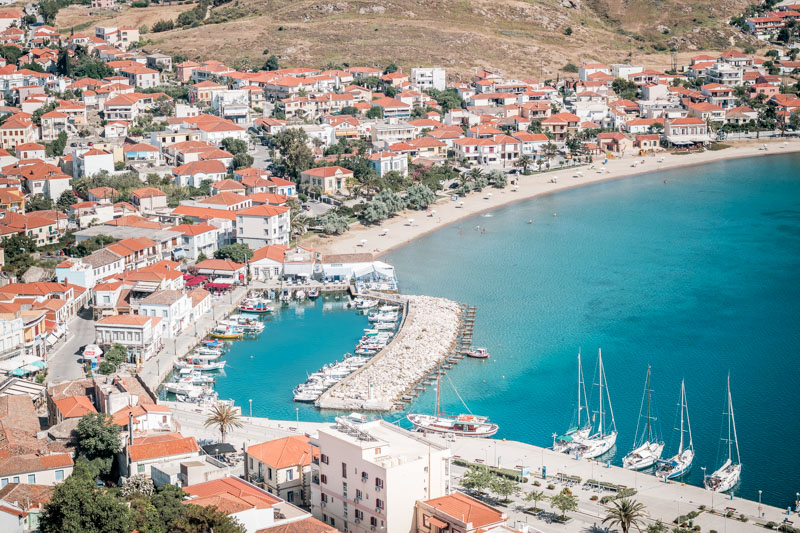
Among the sights worth seeing is the former Turkish quarter with its Limanaki. The small harbor of Myrina is a true postcard scene. Fishing boats bob idyllically at the pier, and the local taverns serve freshly caught fish in the evening.
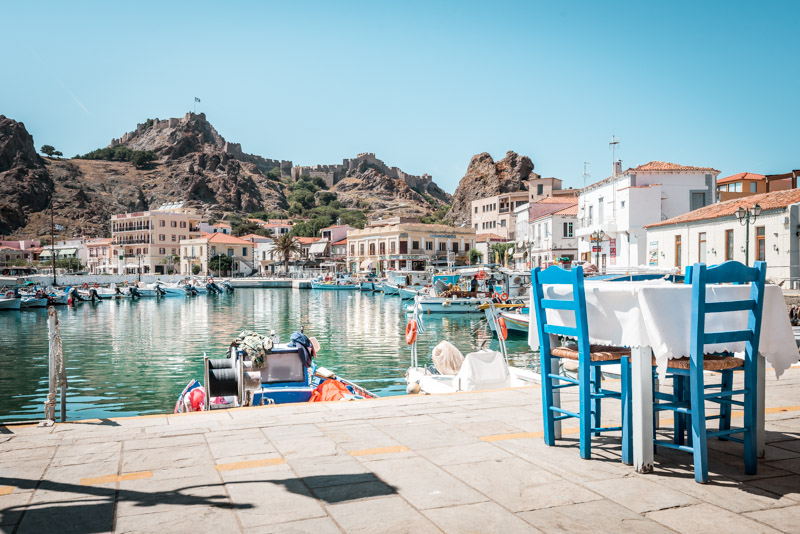
From Limanaki, the route continues along the lively market street to the beautiful residential district of Romeikos Gialos. Here you’ll find plenty of cosy cafés and restaurants, such as the SoKo Restaurant, which serves creative Greek cuisine.
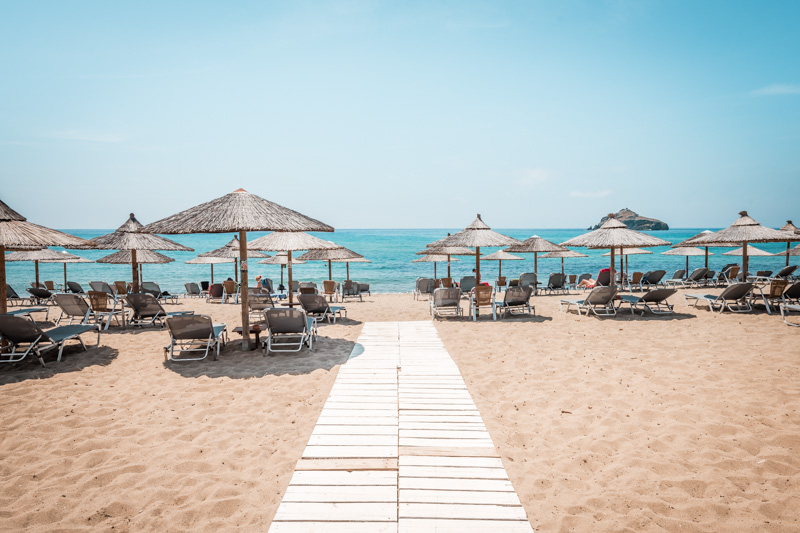
If you continue along the coastal road, you’ll pass the town beaches of Myrina. Richa Nera Beach is perfect for a relaxing afternoon by the sea. The beach bars Aposperos and Manos serve cool drinks and snacks and are the perfect place to linger. The atmosphere is lovely and the view of Kastro from the beach is simply fantastic.
💡 Limnos Book Recommendation: The Greek Islands travel guide from Lonely Planet provides detailed descriptions of the island’s individual towns and sights, as well as many useful travel tips. Order here: View on Amazon*
#2 The Little Sahara of Limnos
A desert on a Greek island! When you stand in front of “Pachies Ammoudies” for the first time, you won’t believe your eyes. The “Sahara of Limnos” is the highlight of the island.

You’ll reach this unique dune landscape in the far northwest near Katalakko. In the hinterland of Gomati Bay, nestled among numerous hills, lies a valley basin. Over millions of years, the finest sand from the sea has accumulated here. The dunes regularly change their shape and height due to wind and weather.
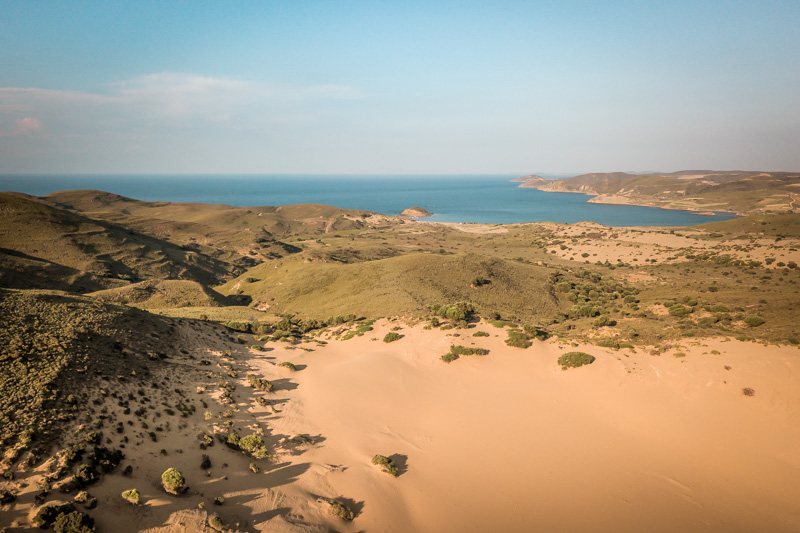
The atmosphere is particularly magical in the evening, when the Sahara of Limnos is bathed in warm light and the sand shimmers reddish. Take your time walking across the dunes and soaking up this unique atmosphere. What a magical moment!
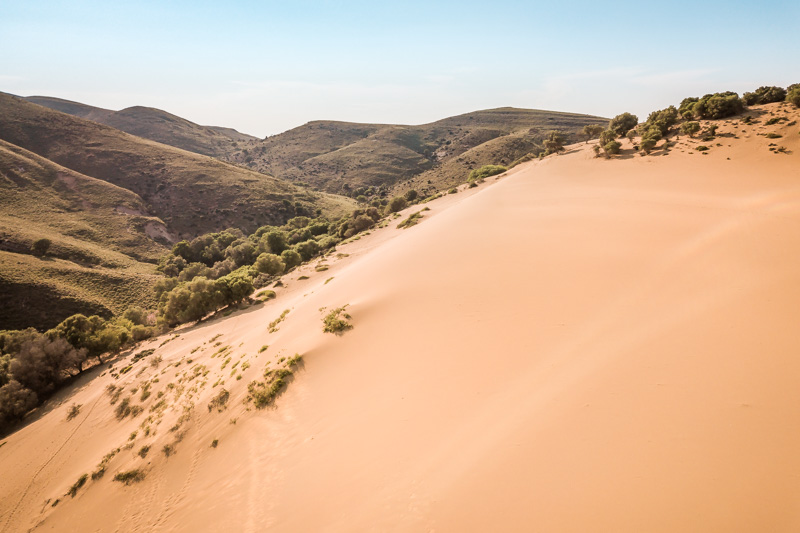
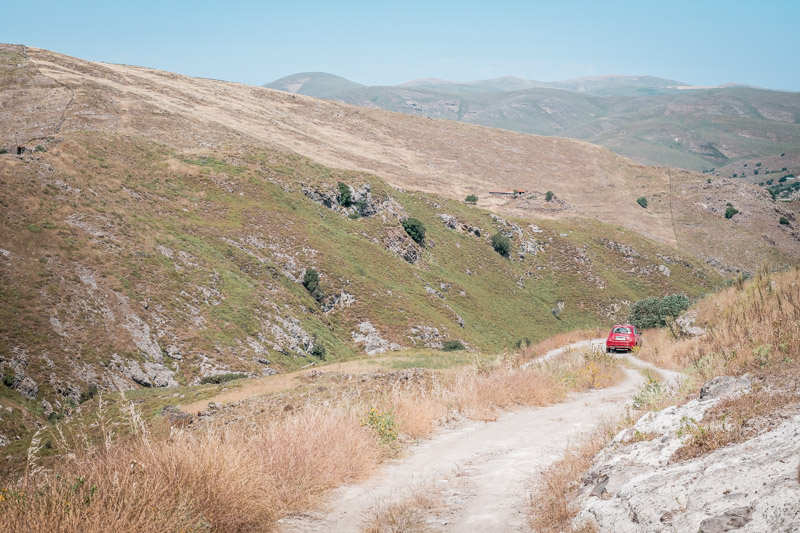
The drive to the viewpoint in front of the dunes is only possible with an off-road vehicle, as the gravel road is in very poor condition. With a small car, you can only drive part of the way and must cover the last kilometer on foot.
✓ Full coverage & unlimited mileage included
✓ Free cancellation until 24h before pickup
✓ Best price guarantee via Discover Cars
#3 The volcanic rocks of Falakro
The island of Limnos is of volcanic origin, and in some places, the activity of these fire-breathing giants has left spectacular traces. Such as the wondrous rock formations made of solidified lava that cover parts of Limnos’s north coast.

A gravel road leads from Propouli to this unique attraction on Limnos. You can park your car at an abandoned hut and follow the signpost to Cape Falakro. Shortly thereafter, you’ll find yourself in a bizarre landscape shaped by nature millions of years ago.
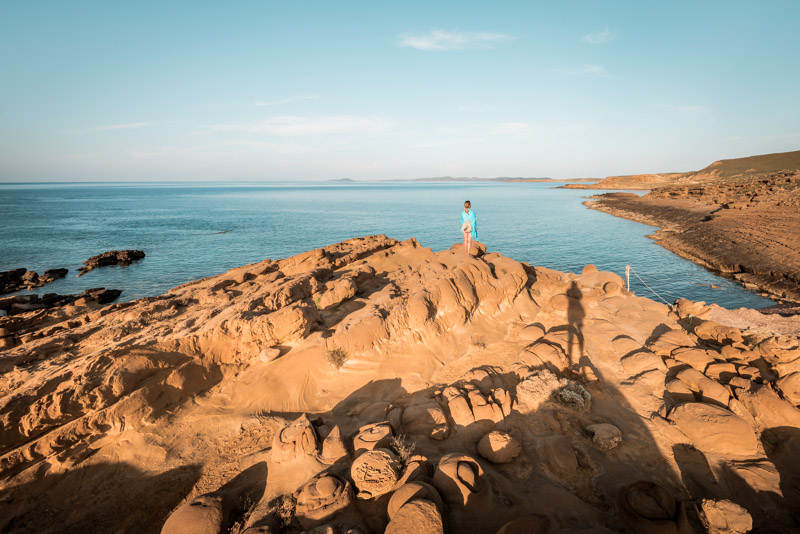
The reddish volcanic rocks of Falakro are best captured in photos in the warm light of evening or morning. There is also a narrow stretch of beach where you can cool off in the summer.
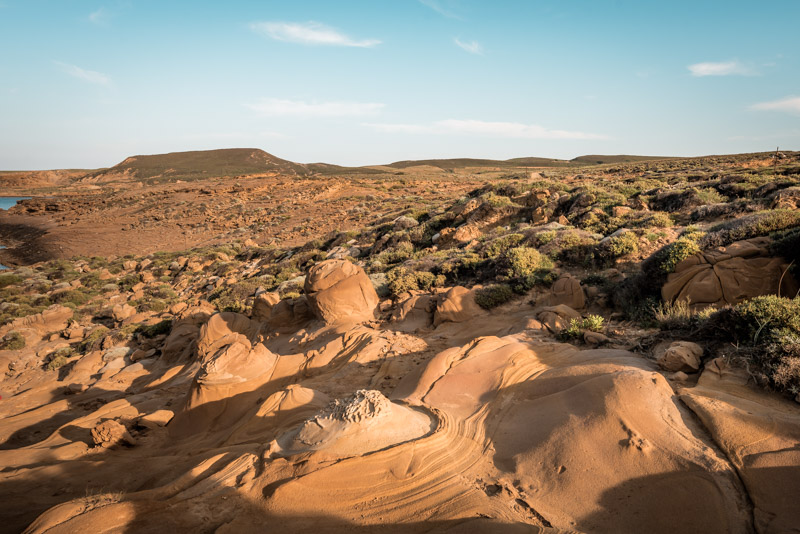
The drive to Falakro is via a bumpy gravel road. Our small car managed the drive, but it’s more comfortable in an off-road vehicle. Sturdy footwear is recommended for exploring the rock formations.

#4 Hike to Panagia Kakaviotissa
An enjoyable hike leads to one of the island’s most significant pilgrimage sites. Nestled in a natural cave in the Kakavos Mountains lies the small chapel of Kakaviotissa. The scenery is breathtaking, and a visit to the cave church is a true highlight of Limnos.
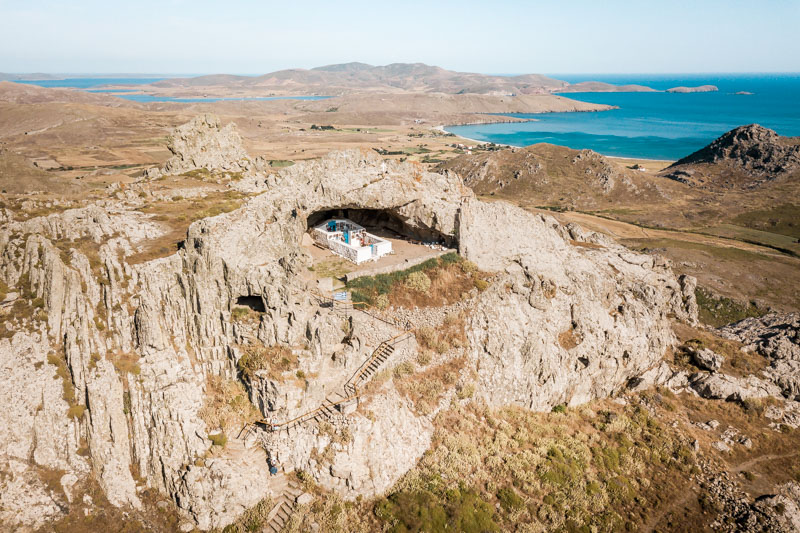
The sanctuary was founded in 1416 and served as a kind of hermitage and refuge for monks. The chapel was built so that it could not be seen from the sea and served as protection against attackers. A visit in the late afternoon is particularly beautiful. Then the sunlight illuminates the opening of the cave and the chapel is beautifully lit.

You can reach the chapel from Myrina via Paradisou Road to the south. Turn left before the village of Plati and follow the signs to the Kakaviotissa Cave Church. An easily navigable gravel road leads to a parking lot with a shelter where you can park your car.
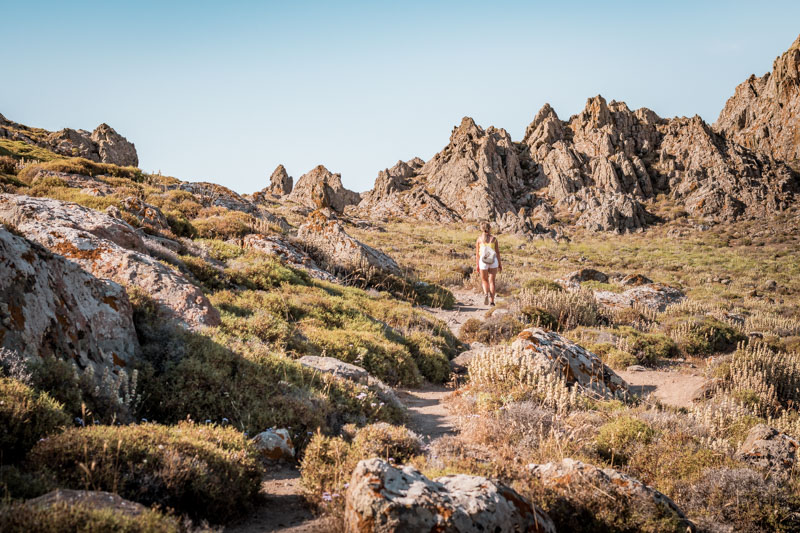
From here, the trail leads up a mountain via steps. At two kilometers, the hike is very enjoyable and takes only about 30–40 minutes. The path through the rock formations alone is a real experience! The route is marked with trail markers and is impossible to miss.
#5 Kontias and the Windmills of Limnos
On Limnos, you’ll find more than 40 villages with architecture typical of the island, which have managed to preserve their original character to this day. Unlike other islands, the villages of Limnos aren’t spruced up for tourists. Village life is authentic, and you’ll get a glimpse into the traditional way of life of the locals.

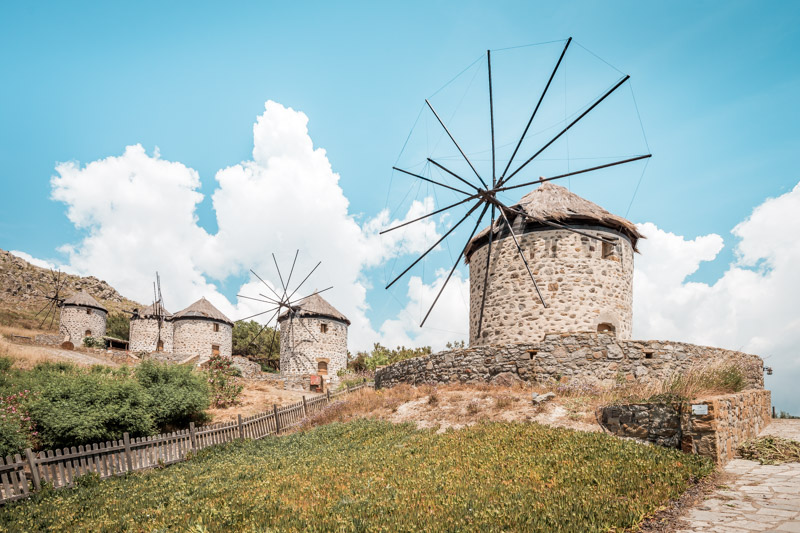
We particularly liked Kontias in the south of the island. The village enchants visitors with its old stone houses and narrow alleys. On a stroll through the village, you’ll pass by quaint kafenia and taverns. Colorful house facades offer beautiful photo opportunities. Above the village stand restored windmills, which now house a hotel and café.
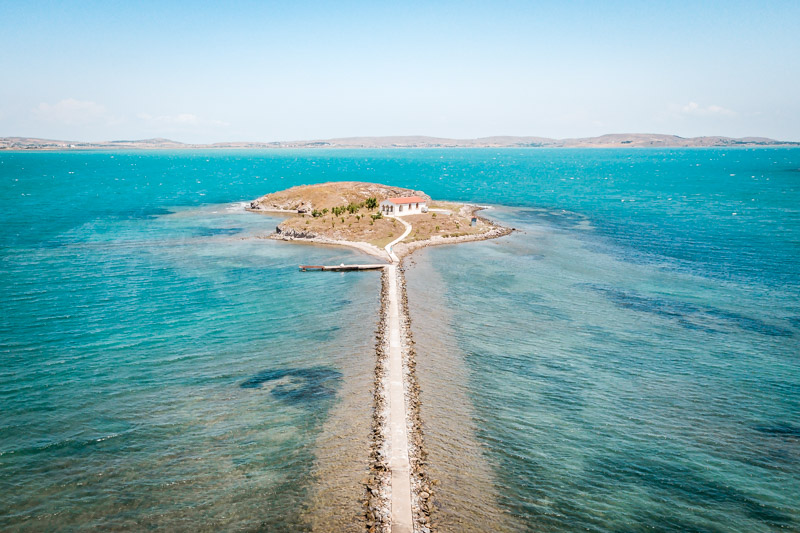
Just outside Kontias, photography enthusiasts should make a detour to the Agios Nikolaos Chapel. The small white church sits on a tiny offshore island connected to the mainland only by a narrow isthmus. The gravel road to the chapel branches off near Pedino; follow the signs to the old Russian cemetery. Turn left shortly after Santa Barbara Beach, and the church will be visible from a distance.
#6 Hike up to Profitis Ilias
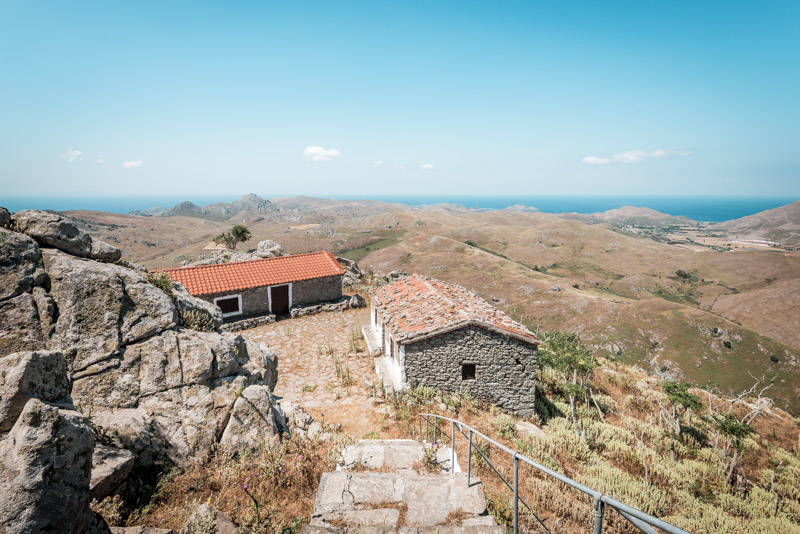
From almost every direction, you can see the small white chapel perched atop Profitis Ilias. The hike to 356 meters above sea level is short, as the mountains on Limnos reach a maximum height of only 430 meters. In return, a unique panorama of the entire island awaits you here.
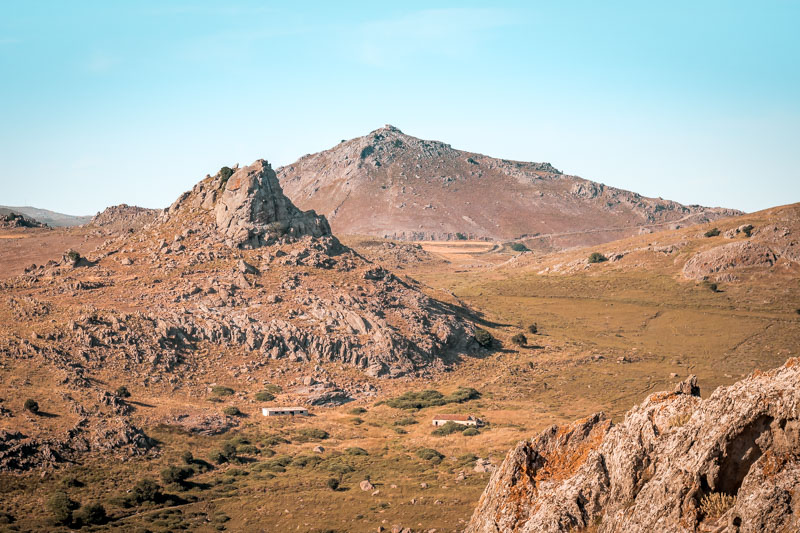
The hike starts near Therma. Unfortunately, the beautiful thermal spa is no longer in operation and is falling into disrepair. A road branches off to the right in front of the building. Follow the gravel road until you reach a fork. Along the way, you’ll come across a goat gate, which you can open and then close again. At the fork, you can park your car and follow the path on the left on foot.
From here, it’s only 1.3 kilometers to the summit, a climb of about 20 minutes. The final stretch leads up over rocks, so sturdy footwear is recommended. A white marker shows you the way to the summit.
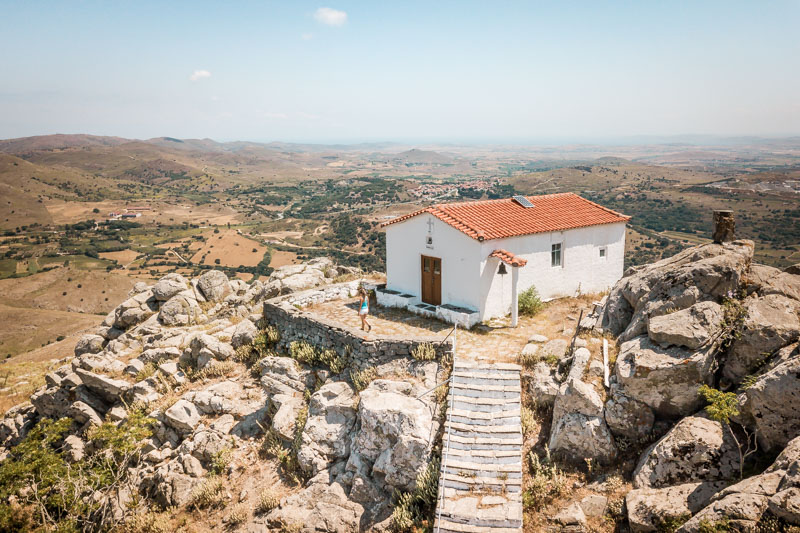
Below the chapel, there is a small festival grounds and two houses used for celebrations. From Profitis Ilias, you can now let your gaze wander over the vast plains of Limnos. In the morning, you have a great panorama to the west all the way to Myrina. On a clear day, you can even see Mount Athos on the horizon. In the afternoon, the light is perfect for a view toward the east coast.
#7 The Ancient Treasures of Limnos
The island of Limnos is a veritable archaeological treasure trove. Even for those who aren’t history buffs, a day trip to the historical highlights in the northeast is well worth it. Excavations are still taking place today, and new discoveries are constantly coming to light. The ancient sites raise many questions even for laypeople, and one can’t shake the feeling that even more secrets are hidden on the island.
The ancient city of Hephaistia
Near the village of Kontopouli lies the ancient site of Hephaistia (also known as Ifestia). It was founded around 1000 BC by the Pelasgians and was one of the most powerful cities in ancient Limnos.
Hephaistia was strategically located on one of the most important trade routes in the Aegean. Today, all that remains of the former metropolis and religious site are ruins and the foundation walls of former houses, bathhouses, temples, and palaces.
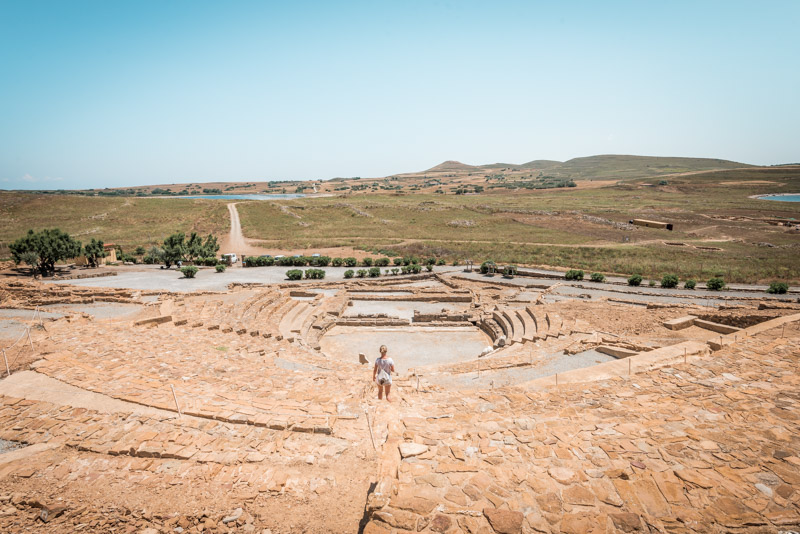
The ancient theater of Hephaistia is particularly well-preserved, sitting impressively on a hillside above the peninsula. It is estimated to have been built in the 5th century BC and was continuously expanded. From the top rows of seats, you have a fantastic view of the sea and the coastal plain.
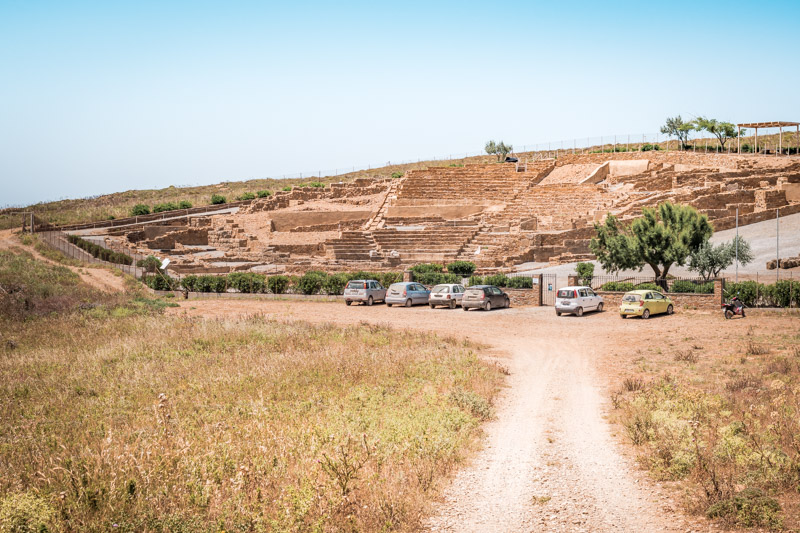
Access to the theater is via a gravel road that is not in the best condition. An off-road vehicle is therefore recommended.
- Hephaistia Opening Hours: 8:30 AM – 3:00 PM | Admission: 2 euros
The Secret of the Cabiri
An Amazon cult on a Greek island? Limnos never ceases to surprise! The Cabiri sanctuary is located north of Hephaistia, right by the sea. The site today consists of two terraces where the remains of temples can be seen. Excavations are still underway at this mysterious complex, as not all the mysteries surrounding the Cabiri have been unraveled by any means.

It is known that the Cabiri must have been deities. They were worshipped by the islanders in early Christian times as goddesses of fertility and life. Rituals took place exclusively at night.
Another myth states that the women of Lemnos once killed all the men on the island and ruled it as a kind of Amazon tribe. When the population declined and no more offspring could be conceived, the women brought the Argonauts, led by the hero Jason, to the island.
The strong sailors were welcomed into the Kabiri sanctuary by the women of Limnos. According to Greek mythology, this was followed by several days of extensive lovemaking in the Kabiri temple of pleasure, thereby ensuring the island’s future.
- Kabiri Opening Hours: 8:30 AM – 3:00 PM, closed on Tuesdays, Admission: 2 euros
The Cave of Philoctetes
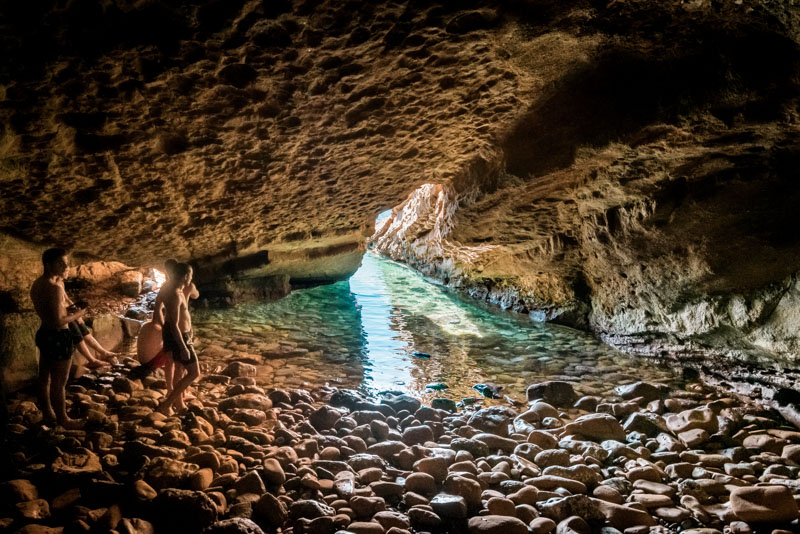
Right next to the Sanctuary of the Cabiri, a path leads down to the rugged coastline. Here, there are two entrances to a sea cave of Limnos. On the left side, you enter through a narrow crevice. The water is about knee-deep, and you can wade to a small rocky beach inside the cave.

The entrance on the right leads into the cave via the sea path. Take the opportunity to cool off a bit and swim into the grotto. The reflections inside are beautiful and also make for a great photo opportunity.
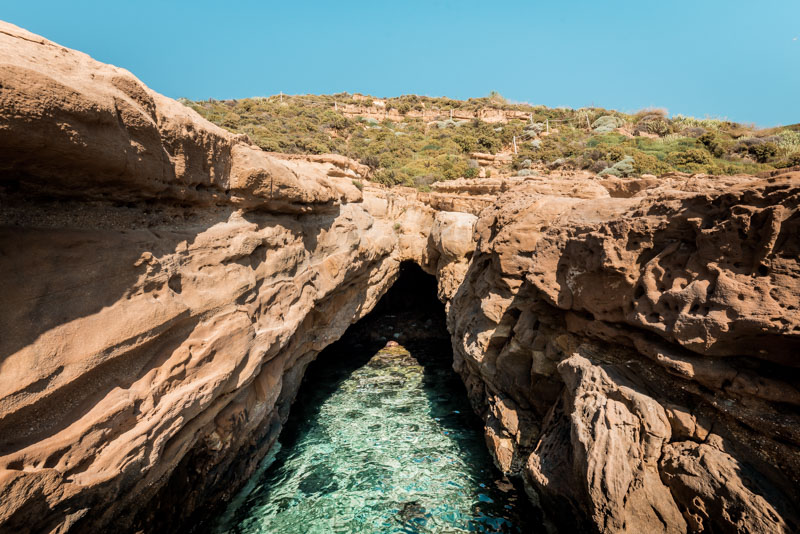
Greek mythology tells us that the hero Philoctetes is said to have lived in the cave for nine years. During this time, he recovered from a snake bite and prepared for the conquest of Troy.
#8 Salt lakes and a surfer’s paradise in the east
Thanks to its strong winds, the east coast is a paradise for windsurfers and kiteboarders. Even from a distance, the water along the miles-long sandy beaches of Aliki and Keros sparkles turquoise blue. The two bays offer everything a water sports enthusiast could wish for.

Beginners and pros alike flock to the surf spots. Beach bars offer cool drinks and a relaxed atmosphere. Right behind them lies a luxury glamping resort, for those with the necessary budget. Behind the endless beaches, white sand dunes stretch inland.
But nature lovers and amateur ornithologists will also find plenty to enjoy in the east of Limnos. The island’s salt lakes are an important nature reserve. They serve as a refuge and food source for migratory birds that nest here. There are observation towers for birdwatchers at all three lakes. About 130 bird species have been spotted, including endangered species.
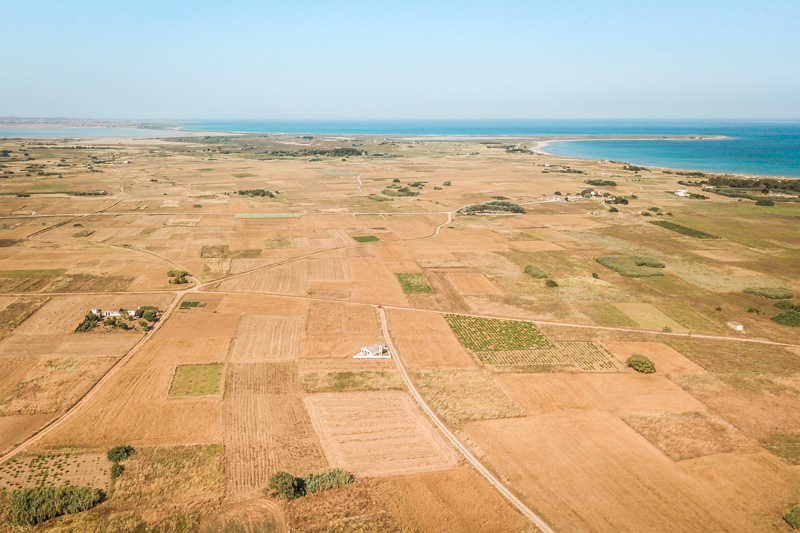
In winter, the salt lakes of Limnos hold a lot of water and become rich in nutrients. These are needed by migratory birds in the spring, as they raise their young in the lagoons. You’ll also be able to spot flamingos on Limnos during this time. In summer, the lakes dry up and are used by locals for salt production.

The Asprolimni salt lake, located directly behind Aliki Beach, is particularly striking due to its milky color. Above it lies Limni Alyki, the island’s largest salt lake, which usually retains some water well into the summer.
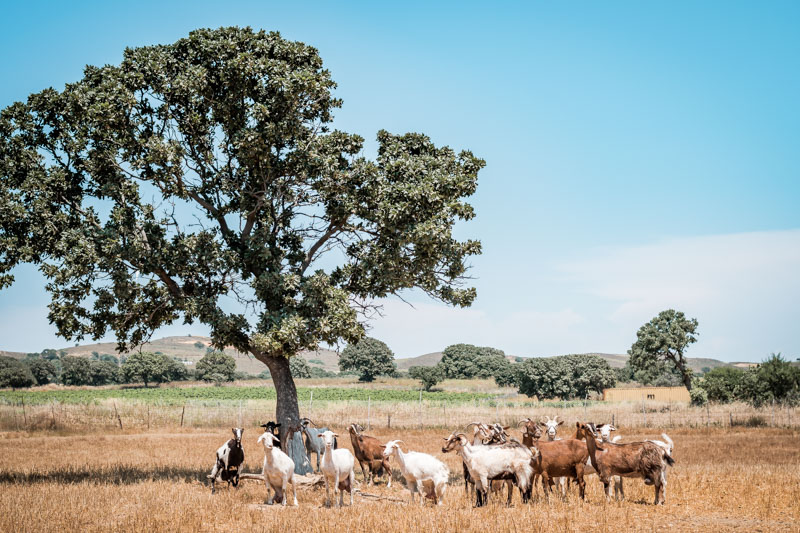
Behind Keros Beach lies the salt lake Chortarolimni. Its green color gives the lake its name, as “chorta” means “greens” in Greek. The best way to reach the salt lakes is on foot or by off-road vehicle. The route starts from the village of Kalliopi.
#9 The Oldest City in Europe
The Stone Age settlement of Poliochni dates back to the 4th to 5th millennium BC. Due to its size at the time—with over 1,000 inhabitants—it is considered the oldest city in Europe. The site was built on a hill above the sea and is located in the east of the island of Limnos.
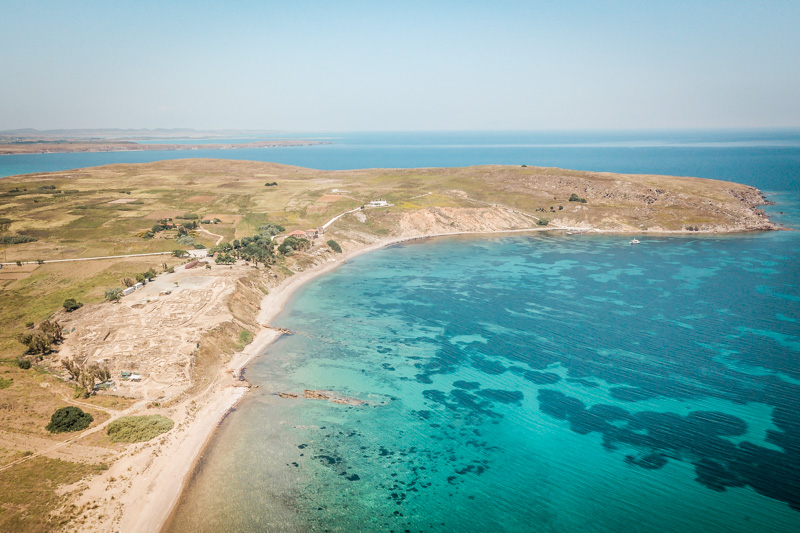
Geographically, it lies opposite the ancient city of Troy, whose archaeological site is now located on the Turkish mainland. At that time, Poliochni was an important strategic hub on the route to Asia Minor.
Unfortunately, only ruins and house foundations remain of Europe’s oldest city today. A small museum right at the entrance explains the layout of the site. Numerous artifacts, such as clay pots and metal objects, are also on display. You can view additional artifacts at the archaeological museum in Myrina.

The complex was built and expanded over several periods. Information boards at the entrance provide detailed information about this. There are no additional information boards at the excavation site itself. Only a few house ruins have been labeled. Among the most recent finds is the Bouleuterion, a large rectangular building with several rows of seats. It is believed to be the oldest parliament in the world.

We recommend visiting Poliochni in the morning, as it can get unbearably hot in the midday heat. Unfortunately, there is no shade anywhere on the excavation site.
- Poliochni opening hours: 8:30 AM – 4:00 PM, closed on Tuesdays | Admission: 2 euros
Lunch break at the Red Rock Bar
Kokkinovrachos Beach begins right next to the archaeological site. Coming from Poliochni, take the road on the left down to the sea. Here you can make a quick stop at the Red Rock Beach Bar.
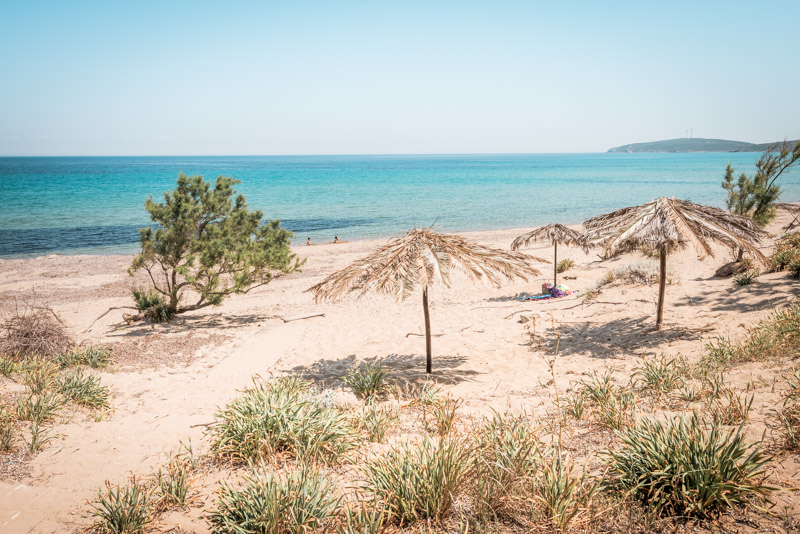
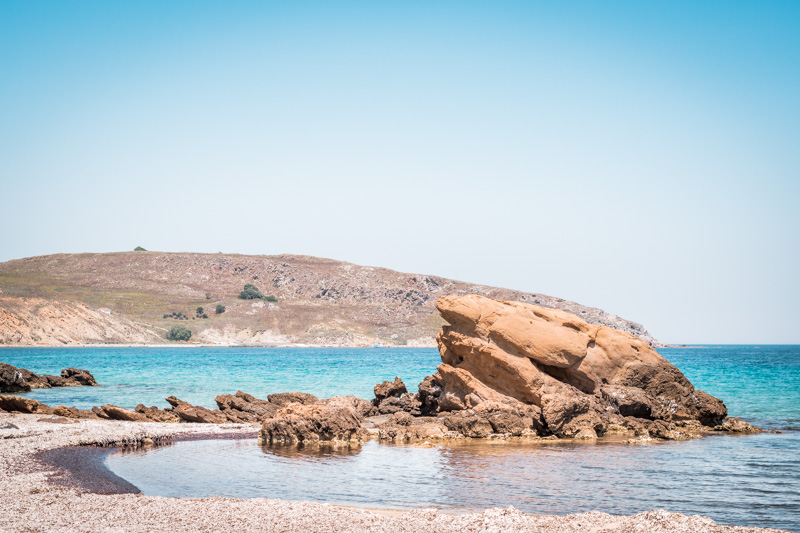
They serve cool drinks and tasty little snacks. Perfect for relaxing a bit after your history lesson. The sandy beach with its red rocks is perfect for swimming. You can use umbrellas and lounge chairs on-site. When we were there in June, the mile-long stretch of beach was deserted.
#10 Endless Beaches on Limnos
The island of Limnos has a real luxury problem—it simply has too many beaches. It’s practically impossible to visit all of Limnos’ beaches in a short time. The coastline of this small island consists almost entirely of beaches, and you’re literally spoiled for choice.
We really liked the Fanaraki beaches south of Moudros in the east of the island. Both offer a beautiful sandy beach and clear turquoise water. The entry into the water, especially at the large Fanaraki Beach (Megalo Fanaraki), is very shallow, making it perfect for children. There is a tavern on site, though it is only open during the height of summer (July/August).
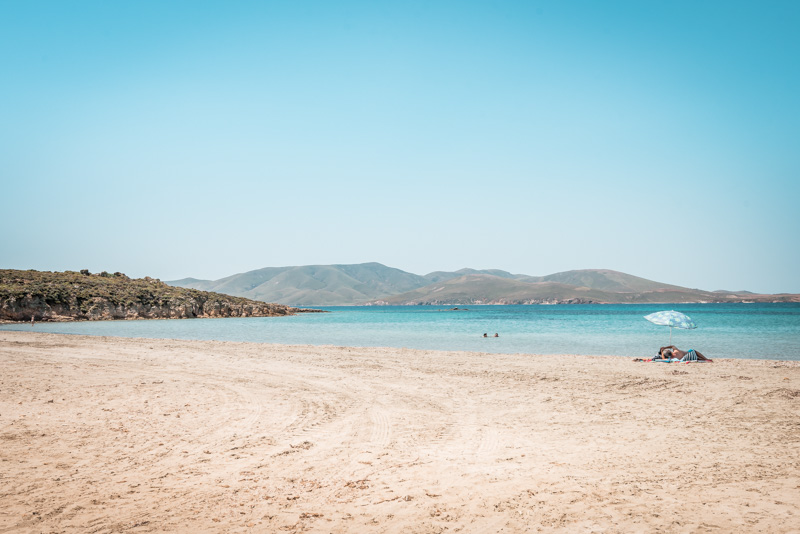
From the Megalo Fanaraki parking lot, a gravel road leads left onto a rocky plateau. From here, a small path takes you to a stretch of coastline featuring bizarre rock formations made of colorful limestone. Until June 2022, the Spilia tis Fokias seal cave was also located here, but it has unfortunately collapsed. Nevertheless, the impressive coastal formations of Cape Aspro Kavos are worth a detour.

The two bays behind the ancient city of Hephaistia are also particularly beautiful. The best way to get here is by off-road vehicle via a dirt road. The two sandy beaches are clean and slope gently into the sea. Outside of peak season, we had the back bay all to ourselves.

Unfortunately, some beaches on Limnos were littered with seaweed and plastic waste during our visit. Let’s hope that something is done during the height of summer to maintain and preserve these gorgeous beaches. Since many beaches lack both trash cans and restroom facilities, every visitor should take their trash and paper with them and dispose of it in the trash bins in the towns.
#11 Culinary Highlights of the Island
Thanks to its volcanic soil, Limnos boasts fertile plains where intensive agriculture is practiced. A variety of delicacies are crafted from grains and grapes, ensuring that gourmets get their money’s worth.

The ancient wheat variety Mavragani, which is still grown on the island, is particularly tasty. Delicious baked goods and pasta are made from this fine grain. Flomari noodles are the best-known product. Served plain with just olive oil or with tender chicken, they taste simply heavenly.

The bread plait with feta is also perfect for a snack. You can buy this at the Aphrodite supermarket in the village of Kontopoulo, among other places.
Fine Wines from Limnos
Limnos is known for its exclusive wines, which are primarily made from Muscat of Alexandria and Kalampaka grapes. Winemaking on the island has a long tradition. Local winemakers produce first-class Limnos wines that are exported all over the world. You can sample these fine wines at the island’s wineries.

During our stay, we visited the Limnos Organic Wines winery. The family produces their wines organically, making them sustainable for both people and the environment. They offer approximately 15 different wines, ranging from dry to sweet. We particularly enjoyed the Ilios & Thalassa varieties and the Moscato Rosé sparkling wine.

The winery is open daily, and wine tasting is free. Prices for a bottle of wine range from about 5 to 15 euros. Unfortunately, the winery isn’t easy to find, as its location isn’t accurately marked on Google Maps. From Myrina, head northeast toward the stadium. The winery is located just a few meters past it.
The best tsipouro on the island
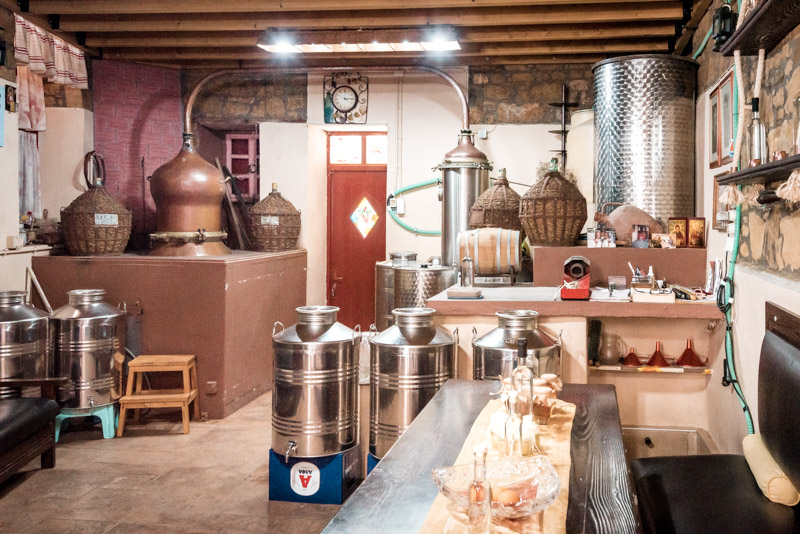
Another special souvenir from Limnos is fine grape marc brandy. It is aged for several months in oak barrels and rivals many single malt whiskies. The lovely Paris produces tsipouro with and without anise from local grapes at his small Leristis distillery in the village of Kontopouli.
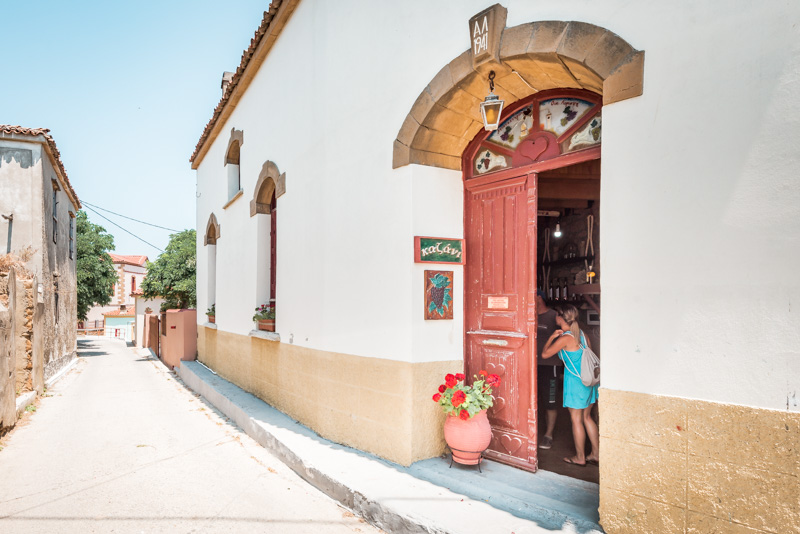
Here, everything is still produced using traditional methods. The whole family helps with the harvest and sales. You can taste his high-proof spirits on site. Paris opens his rustic distillery daily starting in June and sells local honey and other products from the island in addition to his own spirits.
#12 The Mystery of “Limnia Gi”
For thousands of years, the famous healing clay of Limnos has been a valued remedy. “Limnia Gi,” also known as “Terra Lemnia,” was already pressed into tablet form in ancient times and was considered the oldest medicinal product in the world.
It is said to have helped with all kinds of wounds, snake bites, and stomach and intestinal ailments. Limnia Gi was even prescribed against the plague. The hero Philoctetes is also said to have cured his snake bite with the help of the healing clay from Limnos.
From antiquity through the 20th century, the healing clay was mined at the edge of the Mosychlos volcano on Limnos. It was a kind of reddish, soft mass that was brought to the surface via a tunnel. However, the exact location of the Limnia Gi fell into oblivion in modern times.
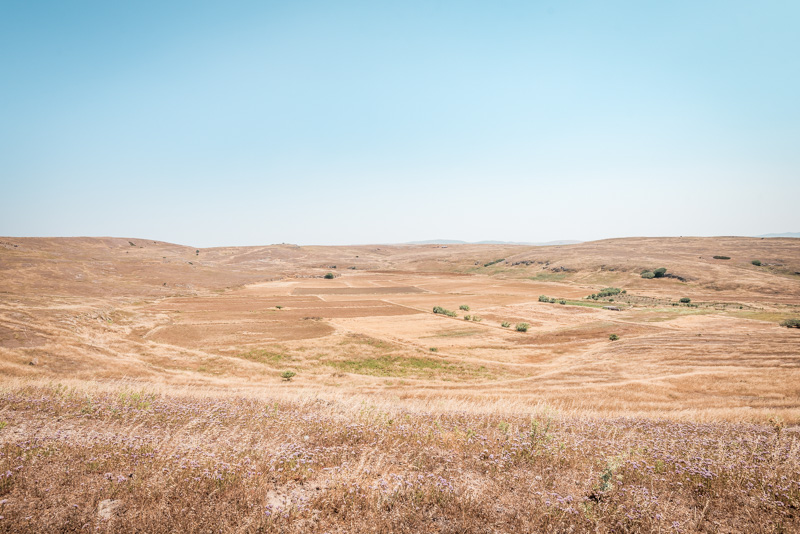
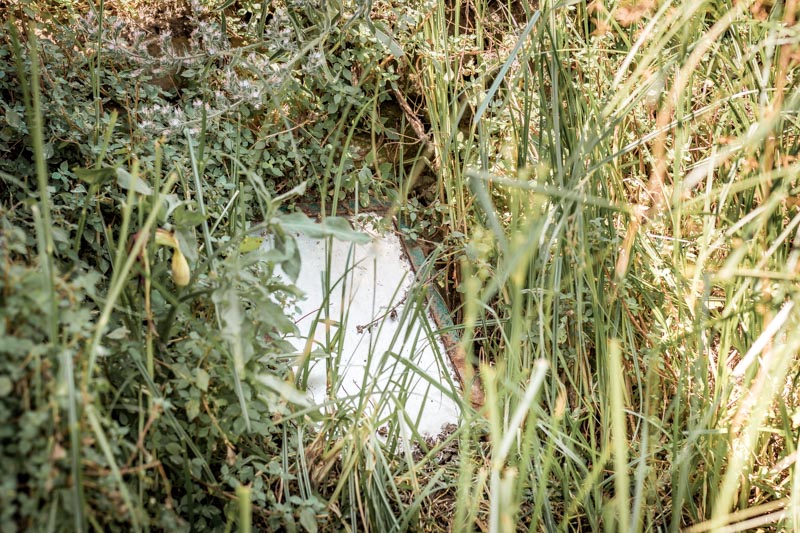
Today, the entrance to the tunnel is buried, and the surrounding area is overgrown with grass. According to locals, there is a lack of financial resources to locate the exact site and make the valuable healing clay usable again. It’s hard to believe that a former miracle cure is barely given any attention in modern times.

You can visit the area where the healing clay was once mined. A few meters past the village of Kotsinas, a dirt road branches off to the right near a church. A sign reading “Terra Lemnia” will guide you to a well. Behind it lies the barely visible former tunnel, inside which the miraculous Limnia Gi was mined.
Limnos is and remains mysterious
Even though the mysterious Limnia Gi no longer holds any significance for the island of Limnos today, people in the quaint fishing village of Kotsinas, near the former mining tunnel, still tell many wondrous stories about the secrets hidden deep beneath the island.
For instance, there is a mysterious tunnel more than 40 meters deep beneath the Church of Zoodochos Pigi, near the Maroula Monument. Adventurous visitors to Limnos venture down the narrow descent into the depths. Once at the bottom, a well with holy spring water awaits them.

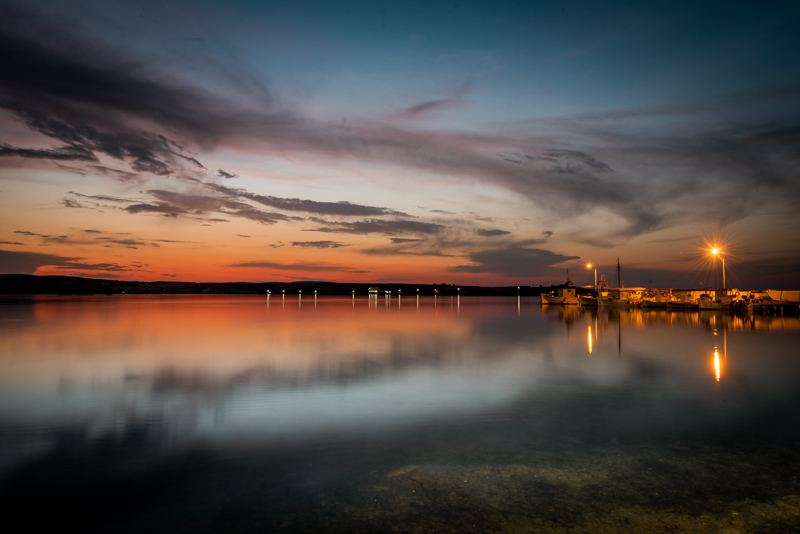
If you speak Greek, you can philosophize with the locals in Kotsinas about the secrets of Lemnos until late into the night, accompanied by freshly caught fish and plenty of tsipouro. A visit to the village is worth it if only for the magnificent sunset along the small waterfront promenade.
More Limnos travel tips & info
Our restaurant recommendations on Lemnos
We had a particularly delicious meal at the Man-Tella tavern in the mountain village of Sardes. This quaint spot in the heart of the village is a family-run business and invites you to linger. Mama still stands behind the stove in the kitchen, conjuring up delicious dishes.

The typical island dish, flomari—pasta with rooster—is a real treat! The food is homemade, and they primarily use local ingredients. By evening, the place had filled up nicely, and the atmosphere was especially lively over a glass of wine.
Our hotel tips for Limnos
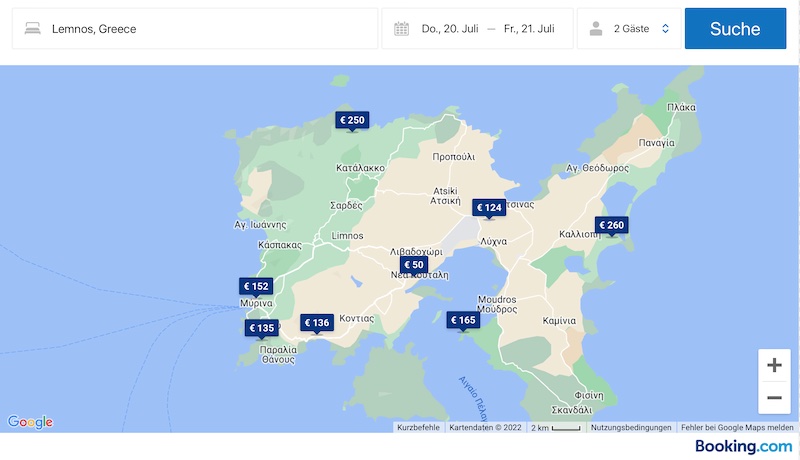
Tourism on Limnos is still very low-key. You won’t find large hotel complexes or all-inclusive vacations here. The island is a true hidden gem and a popular vacation spot for independent travelers. Nevertheless, there are now several solid hotels and tasteful vacation apartments on Limnos. Our recommendations are (links to Booking.com*):
➲ See all hotels on the island*
Via Booking.com*, you can view many accommodations on Limnos on a map:
Advertisement*
This is where we stayed on Limnos
Varos Village Hotel, Varos
The Varos Village Hotel is centrally located in the island’s interior in the village of Varos. The well-maintained property offers everything a vacationer could desire. You can cool off in the large pool and enjoy a drink on the terrace overlooking the coastal plain. Our accommodation was located in the heart of the village in a former mansion that has been extensively restored. The rooms are tastefully furnished in a traditional style.
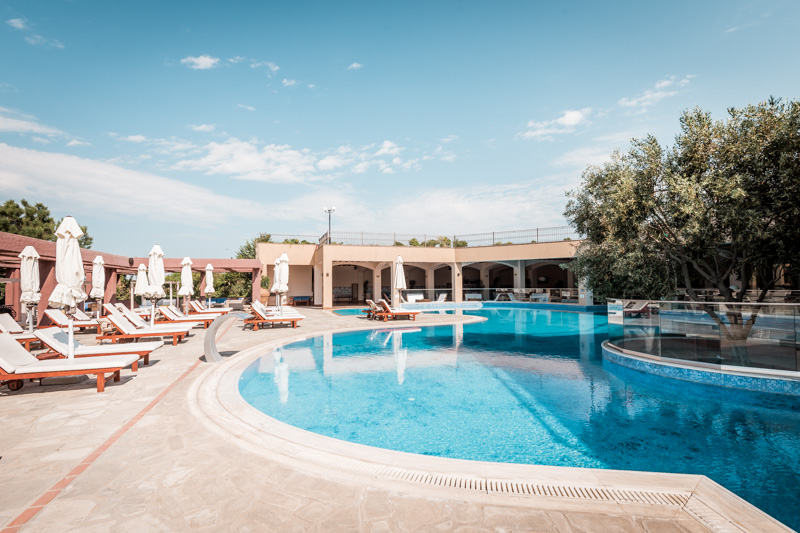
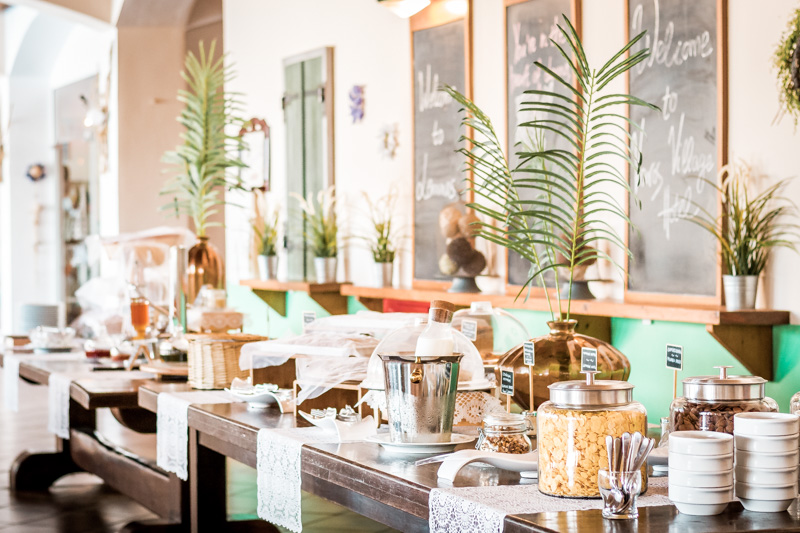
The surroundings are wonderfully peaceful, and we felt right at home in this idyllic village from the very first moment. It’s just an eight-minute walk to the hotel complex above the village. The owner, Stelios, and his friendly team warmly welcome every guest. The extensive breakfast also left nothing to be desired. The Varos Village Hotel is a perfect starting point for exploring the entire island of Lemnos by rental car.
Is renting a car worth it on Limnos?
Limnos itself lacks public transportation. Therefore, we recommend renting a car. Since many roads leading to major attractions are still unpaved, an off-road vehicle is recommended on Limnos, such as a Suzuki Jimny. You can book your rental car for Limnos on the Discover Cars* portal:
➲ Book a rental car on Discover Cars*
Getting to the island of Limnos
The island of Limnos has an airport. Direct flights from Austria have been available since 2022. You can reach Limnos via a stopover in Thessaloniki. From Thessaloniki, small planes operated by Olympic Air or Sky Express will take you to the island in about an hour. You can view suitable flights via the Skyscanner* portal:
➲ Find affordable flights to Thessaloniki*
Alternatively, during the season, you can fly directly to Kavala from cities such as Munich, Düsseldorf, and Frankfurt. The northern Greek port city offers direct ferry connections to Limnos. The ferry crossing from Kavala to Limnos takes approximately 3.5 hours.
➲ Find cheap flights to Kavala*
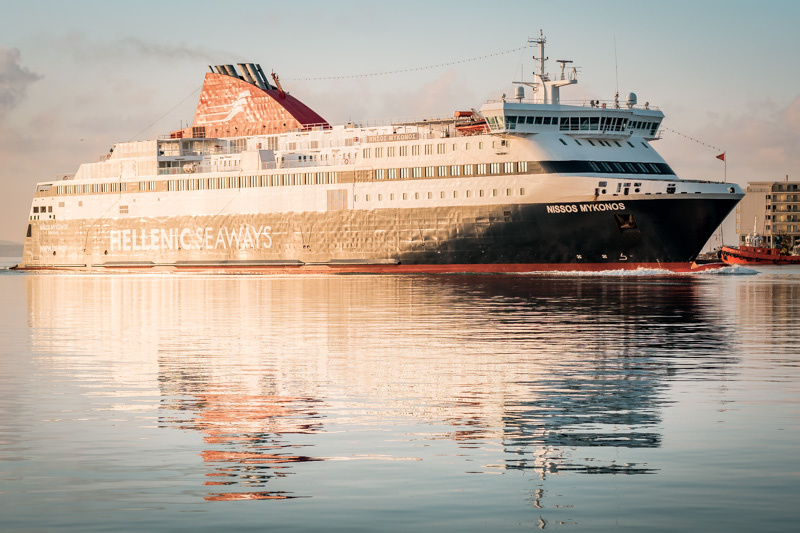
Currently, several ferries a week sail to the island of Limnos. At least one ferry departs daily from the port of Kavala bound for Limnos. On the Ferryhopper* portal, you can find suitable ferries and check prices:
➲ Book a ferry with Ferryhopper*
→ More travel reports about the North Aegean Islands can be found here: Northern Aegean
*Support our blog Greece-Moments
This post contains affiliate links marked with an asterisk (*). If you book or purchase something through one of these links, we receive a small commission. The price remains the same for you. This helps us continue to provide high-quality content for free. Did you enjoy this post and want to say thank you? Then simply buy us the next Greek coffee ☕️ Go to the coffee fund
Save this post on Pinterest too!