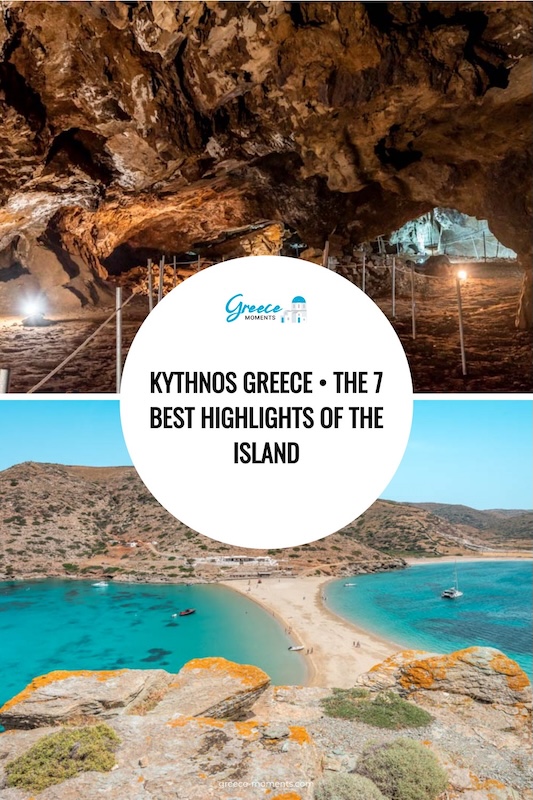

Most of the time, the barren Cycladic island between Athens and Milos is overlooked by international tourists. Wrongly, we think! With no great expectations, we visited Kythnos in mid-May and were pleasantly surprised.
»Kythnos presents itself as an island of simplicity and hospitality and is still a real insider tip with charming villages, countless beaches, and some highlights.«

While Mykonos and Paros are already busy in the low season and the pavements are still rolled up on other Cycladic islands, Kythnos welcomes its guests in a pleasantly calm manner.
Its proximity to the mainland makes this 100 km² island a popular short-break destination for Greeks, and so many restaurants are already open in May. On weekends, things get lively at the port as convoys of cars roll off the ferries. During the week, however, you can enjoy a tranquillity that has been missing on many other Greek islands for years.
Join us on an underrated Greek island and be inspired by our personal favourite places and the most beautiful sights on Kythnos:
- #1 Chora: Walk through Kythnos’ main town
- #2 Kolona Beach: Dream Beach of Kythnos
- #3 Loutra: Kythnos Thermal Springs
- #4 Kythnos’ West: Merichas and Surroundings
- #5 Visiting Dryopida (Chorio)
- #6 Kythnos’ East: Agios Stefanos to Kalo Livadi
- #7 Kanala: Holiday Village in Maria’s Hands
- More Kythnos travel tips
#1 Chora: Walk through Kythnos’ main town
About 1,400 people live on Kythnos, most of them in the port town of Merichas (see #4) and in the hilltop village of Chora. Unlike other Cycladic islands such as Serifos, Milos or Mykonos, which reveal their “main village” to visitors as soon as they arrive by ferry, Chora of Kythnos is hidden in the hilly hinterland.
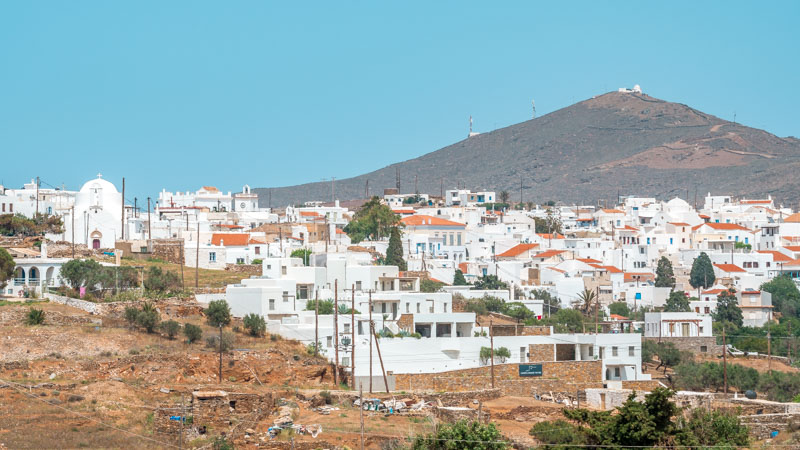
It is about 7 km of winding road from the coast to this village of 600 souls. The locals also call it Messaria. Chora is traffic-free, so you can park your rental vehicle in the free car park below the town hall and head into the maze of alleys.


The main town of Kythnos dazzles with gleaming white houses, some of which are covered with tiled roofs, while several churches rise up among them. During the week, Chora is sleepy, but on weekends numerous day-trippers from the mainland make their way through the alleys of this Greek island.

The picturesque main street of Chora stretches from the town hall square to the other end of the village. Along the way, you’ll find countless cafés and restaurants as well as some souvenir shops, boutiques and jewellers. Worth a visit are: Cat With Hat (cosmetics), Angeioplasteio Georgouli (pottery) and Kozadinos Wood Art (wood carving).

A green oasis is the Park of Antonios and Stamatina Kanellopoulou behind the church of Agia Triada. This prominent wealthy family of Kythnos brought electricity to the island as early as 1932, long before other islands such as the shipping-industry-dominated Syros. Next to the park is the chapel “Panagia tou Kastro”, which is beautifully illuminated in the evening.

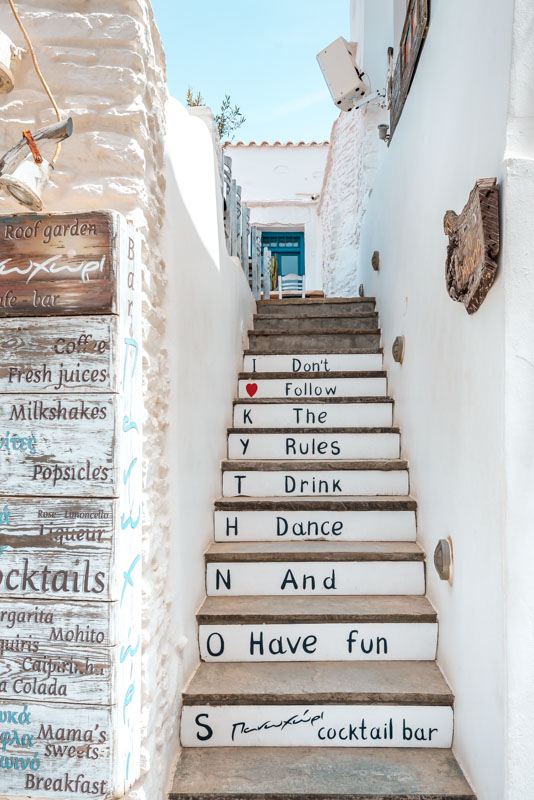
A must-see is the hidden Flora’s Alleyway, where an artist gave free rein to their creativity and transformed a small street in a truly original way. History buffs can visit the Archaeological Museum not far from the town hall. Reopened in 2023, it displays the island’s finds in a compact space, including those from Oria Kastro, Vryokastro and Maroula. The latter site is one of the oldest settlements in the Aegean Sea (8,800 BC).
- Opening hours Kythnos Archaeological Museum: 8:30 a.m. – 3:00 p.m., Tue + Thu closed, free admission

It’s also worth wandering a little off the main street — the floors are lovingly decorated with white patterns and flower pots adorn the houses. You can tell that many locals still live here and that the tourist takeover has not yet happened. In summer, however, Chora comes alive, with some bars opening in the evening where you can easily dance the night away.

Panoramic view from Profitis Ilias
From the mountain Profitis Ilias above the village, you can enjoy a magnificent view of the north of Kythnos as well as the neighbouring islands of Kea (Tzia), Syros and Giaros (uninhabited). A gravel road leads from the eastern exit of the village up to the 326 m high summit, which, despite its modest altitude, is one of the highest mountains on Kythnos.
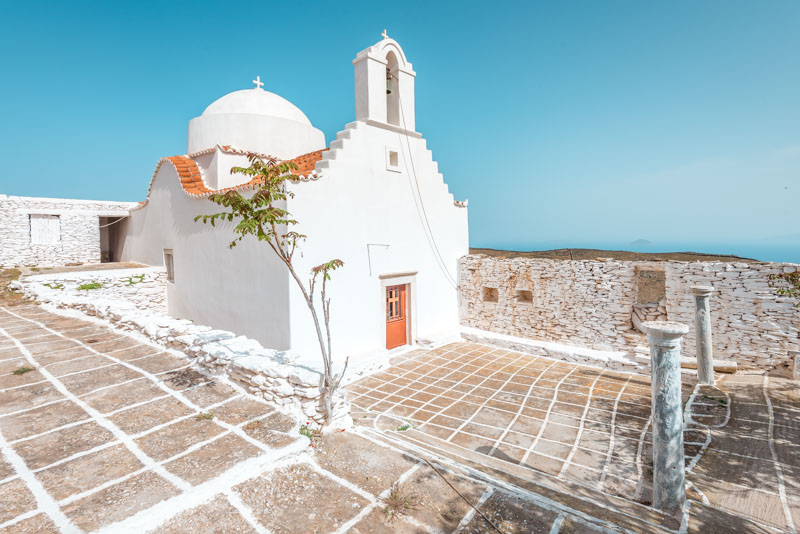
Along the way (3 km) you’ll come across lonely white chapels and the occasional pack animal, such as donkeys or horses, as well as grazing sheep and goats. Otherwise you won’t meet a soul. The Prophet Elijah Summit Church is open, like most places of worship on Kythnos. The only downside of the hike: halfway along the route is the island’s landfill.
💡 Wind turbines on Kythnos: All over Kythnos you can see posters opposing the construction of wind farms. A large part of the population, backed by the island community, is against this alternative form of energy. The reasons may be varied, but negative news from other parts of Greece (including Euboea) has certainly reached the Kythnians. The wind does blow very strongly across the treeless hills, making for enormous wind power potential. Interestingly, the first wind farm in Europe was built on Kythnos in 1982. The last wind mast, which had been out of operation for a long time, stood as a landmark in front of Chora before being demolished in 2023.

#2 Kolona Beach: Dream Beach of Kythnos
About 15 minutes west of Chora is the most beautiful beach of Kythnos. Actually, there are even two beaches, because Kolona Beach consists of a 200-metre-long sandy headland that leads to an offshore islet. To the left and right of the narrow spit, the sea shimmers in the most beautiful shades of blue.

Sailors in particular feel at home in the wind-protected bays, and every evening skippers compete for the best spots at Kolona Beach. On weekends, it’s not uncommon for large luxury yachts to make a detour to the bay. As observers of this boat spectacle, we briefly had the feeling of being on the well-known Ibiza rather than the lesser-known Kythnos.
You can also rent a motorboat in the port of Kythnos (recommendation: Delta Boats Rental Kythnos) and head to Kolona and the surrounding beaches on your own. Otherwise, there is also a road leading there, but the last 2 km are a bumpy gravel track. Due to limited parking, you leave your car at the Paralia Fikiadas stop and walk the last few metres to Kolona Beach.


By the way, there are no shady tamarisks or parasols by the sea. The on-site Kolona Beach Restaurant had already opened in May and we enjoyed our lunch in a relaxed atmosphere above the beach. In the summer months, taxi boats also run several times a day from the harbour in Merichas to Kolona Beach, Monday to Friday. More information at: Larentzakis Sea Taxi

By the way, you have the most beautiful view of the bay from the Church of Agios Lukas on the summit of the offshore rocky island of Vriokastro. A dirt road leads up to the chapel of the Evangelist, dating from 1772, in just 5 minutes — though it is unfortunately closed. Nevertheless, it is an ideal spot for a picnic and to watch the hustle and bustle in the bay.

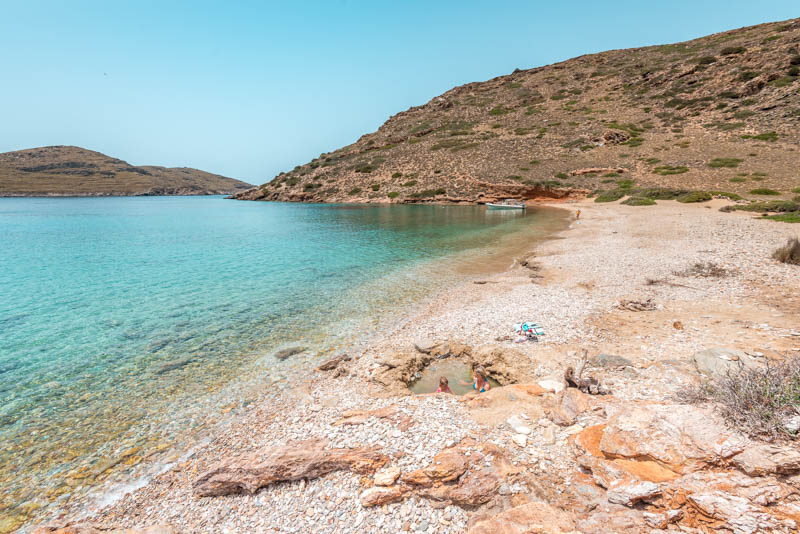
A small highlight awaits you if you follow the goat path behind the restaurant Kolona Experience along the coast to the west. At the last beach, there is a natural hot spring that rises from the mountain into a small pool by the sea. It is a little foretaste of the thermal springs of Loutra (see #3).
Vryokastro: The Ancient Capital of the Island
On a hill opposite Kolona once stood the ancient capital of the island, Vryokastro. From the main road from Merichas to Chora, a path leads to the complex, which is really only worth exploring for history buffs, as little remains of the former acropolis (12th century BC to 6th century AD). That said, the view over the bay from up here is particularly spectacular.

However, the most interesting part of Vryokastro for archaeologists lies below the Acropolis on the Islet of Vryokastraki. Quite unexpectedly, excavations from 2016 onwards uncovered the intact interior of a temple containing numerous votive offerings made of gold, ivory, glass and precious stones, dating from around 700 BC.

It is thought that an earthquake once caused the roof of the temple to collapse, and beneath the rubble the interior remained protected from grave robbers for over 2,700 years — a sensational find! The numerous clay figures point to a Temple of the goddess Demeter having stood at this site. Some of the most important finds are on display in the Chora Museum.
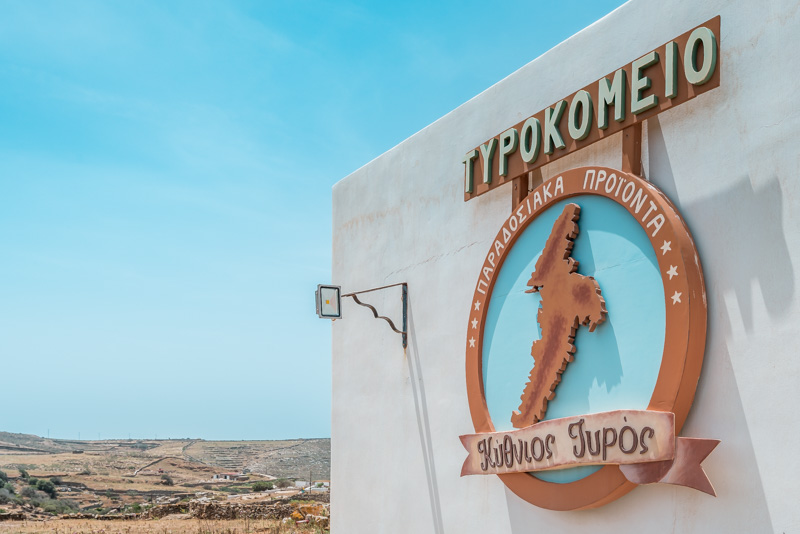
💡 Cheese of Kythnos: Cheese has a long tradition on the island — goats and sheep in particular thrive on the herb-strewn, barren land. At the Kythnos Tyros cheese factory, two sisters, Garifalia and Phillipa, make delicious hard and soft cheeses from goat’s and sheep’s milk. Among them are classics such as Graviera and Myzithra, but also the wine cheese Krasotiri and the Kopanisti known from Mykonos. We thought all the cheeses were delicious! Open Mon–Sat from 8:30 a.m. to 2:30 p.m., located on the main road to Loutra.
#3 Loutra: Kythnos Thermal Springs
In the past, Kythnos was officially called Thermia, and some Greeks still call it that today. True to its name, there is actually a thermal spa in the northernmost village on the island. Hot thermal water bubbles up from the ground right below the village church of Agioi Anargyroi, as if by magic. Channelled through half the village via a canal, it flows into a basin by the sea — and just like that, Loutra’s natural spa is ready.

Various historians have written about the thermal baths of Kythnos since ancient times. Over the centuries, the two existing thermal springs (38 and 52 degrees) have been used for therapeutic purposes. Today, the warmer water flows into a sea basin framed with stones as breakwaters.

The compact thermal pool is free to use, though spaces are limited, and in summer the warm water isn’t exactly refreshing. Loutra itself came across as a laid-back holiday resort, with white houses nestled into the hillside, a narrow waterfront promenade and a modern marina.

Since the 1980s, domestic tourism has been firmly established and Loutra is now the most popular resort on the island. The former spa buildings behind the large parking lot are striking. Next to the vacant Hotel Xenia (1960) is the neoclassical thermal building (1857), designed by the German architect Ernst Ziller, which was still used as a bathing establishment until a few years ago.

Take a walk from Paralia Loutra along the promenade, where you’ll find a good dozen restaurants (tip: MamaDo) and cafés. In May, there was a relaxed atmosphere in Loutra, with a few sailors, locals and independent travellers. At the end of the village, a rusty loading crane still juts out into the sea — a remnant from the days of iron ore mining on Kythnos, including on its highest mountain, Kakovolo (356 m).

Hike to Oria Kastro
If the dark pebble beach of Loutra right by the village parking lot doesn’t tempt you for a swim, you’ll find more bathing options further north. We particularly loved Schinari Beach, just a 5-minute walk from the town centre. Also worth mentioning are the beaches of Potamia and Agios Sostis, about 12 minutes away by car.
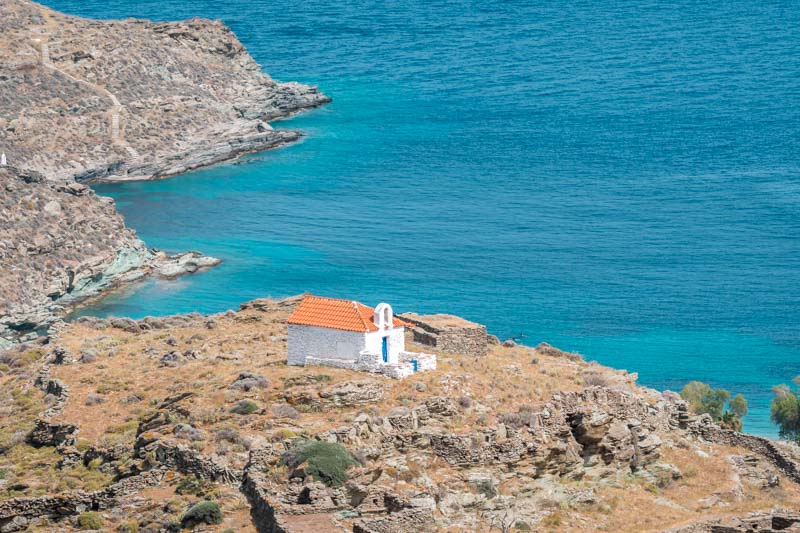
Hiking enthusiasts can visit the remains of the medieval capital of Kythnos, Oria Kastro, also known as the Kastro of Katakefalo. It sits on a rocky outcrop above the sea to the northwest. From Loutra it is about 4 km to the Kastro — allow at least 1.5 hours each way and make sure you carry enough water.

The path first leads north along the asphalt road, then along a gravel track to the remote Katakefalos Plateau. At the chapel of Agios Philippos, keep to the left, past goat stables, and shortly afterwards you’ll spot the Kastro. The final stretch is steep and follows a mule track.

At the top, next to the whitewashed Church of Agia Eleousa, are further ruins of medieval houses. The view of the neighboring island of Kea and the Greek mainland behind it, with Cape Sounion, is breathtaking. Caution: there are no barriers, and some drops are 300 m deep.
💡 Help with Kythnos travel planning: Not sure where to start or how to plan your stay in Kythnos? No problem — benefit from our years of experience traveling to Greece and let us help you. We can advise you on all your questions and concerns, even via video chat. You can book your consultation here: Travel Advice Greece
#4 Kythnos’ West: Merichas and Surroundings
On the central west coast lies the port of Kythnos. Merichas is where every visitor first sets foot on the island. The port was built as early as the 1970s, which allows even larger ships to dock safely. Admittedly, the white row of houses may still exude a little Cycladic charm from a distance, but we haven’t really grown fond of this town of 400 souls.

Many concrete houses built haphazardly next to each other, chaotic traffic flow (especially on weekends), and a difficult parking situation. There are only a few shops in Merichas, among them Azul Boutique. Along the waterfront promenade and the old stone bridge you can take a stroll, and quaint taverns, fine restaurants, and hip cafés invite you to linger — but the place lacks soul.
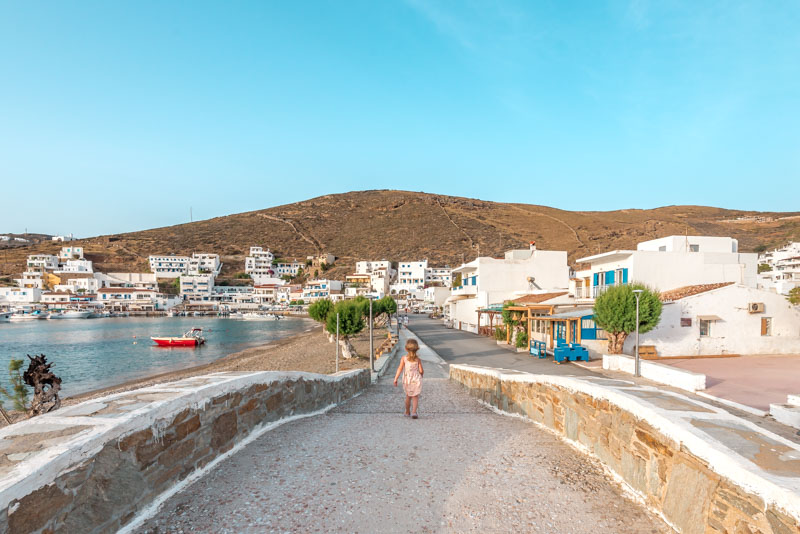
The dark pebble beach also attracts some flotsam due to its orientation and is not ideal for swimming. It’s better to drive three minutes further and take a dip at Episkopi Beach. So Merichas was mostly just a transit stop for us on the way to Dryopida (see #5) and the south of the island.
💡 Kythnos book tip: The Greek Islands travel guide from Lonely Planet contains an extensive chapter about the island of Kythnos with further travel tips: View on Amazon*
Time out in Flampouria
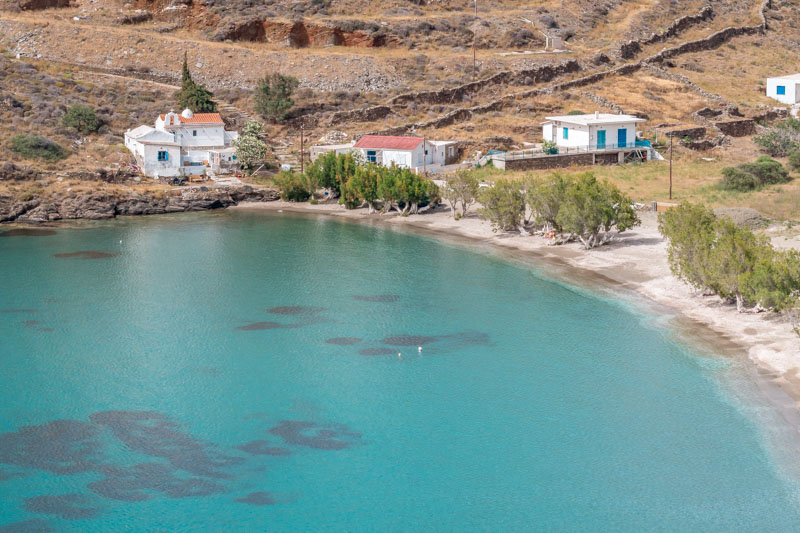
The west is largely deserted, with only a few real villages having established themselves along the rugged coast. Nevertheless, adventurous roads lead down to numerous beaches, where Greek summer houses are often found. One of the most beautiful spots is Flampouria, a small coastal village located 11 km from Merichas.
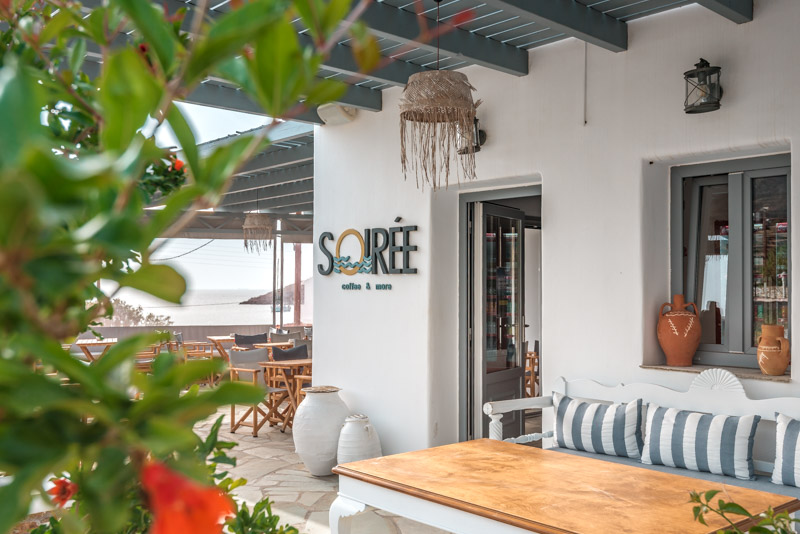
Already on the way there, we were greeted by a fantastic view of the village and the deep blue Aegean Sea behind it. Once at the bottom, we had one of those typical Kythnos moments: although everything seemed deserted, the local café bar Soiree was actually open. After a cool drink and a nice chat with the owners, we refreshed ourselves in the turquoise blue sea, not a soul in sight.
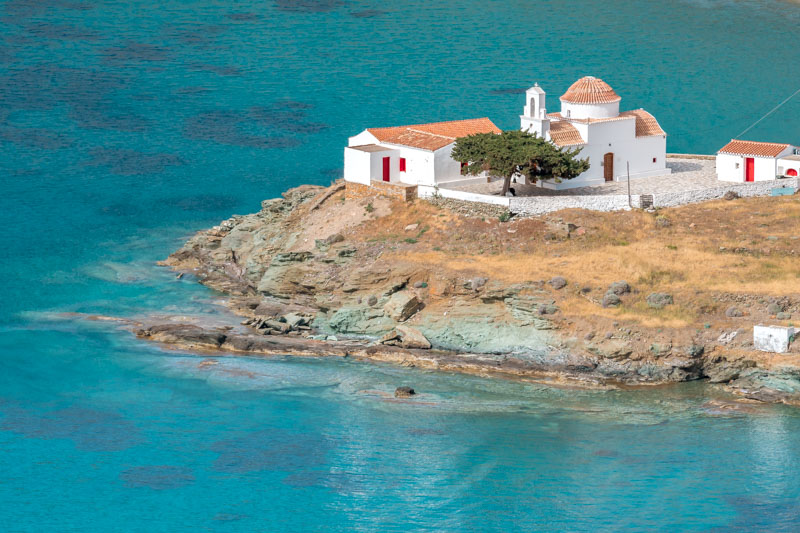
On a small headland at the southern end of the beach stands the village church Panagia Flampouriani (church festival on 23 August), bright white with a red tiled roof. A path lined with oleander leads up to the church. Enjoy the silence here and let your gaze wander out over the sea. Opposite the church, the tavern Phlampouriotes opens in summer, where landlady Joanna prepares delicious home cooking.

#5 Visiting Dryopida (Chorio)
In the heart of the island lies the village of Dryopida, also called Chorio or Syllaka by the locals. You can reach Dryopida either from Chora or via the road that leads through the long green valley of Merichas into the hinterland. Nestled between two barren hills and hidden from the sea, the picturesque cluster of houses lies like an oasis in the arid landscape.
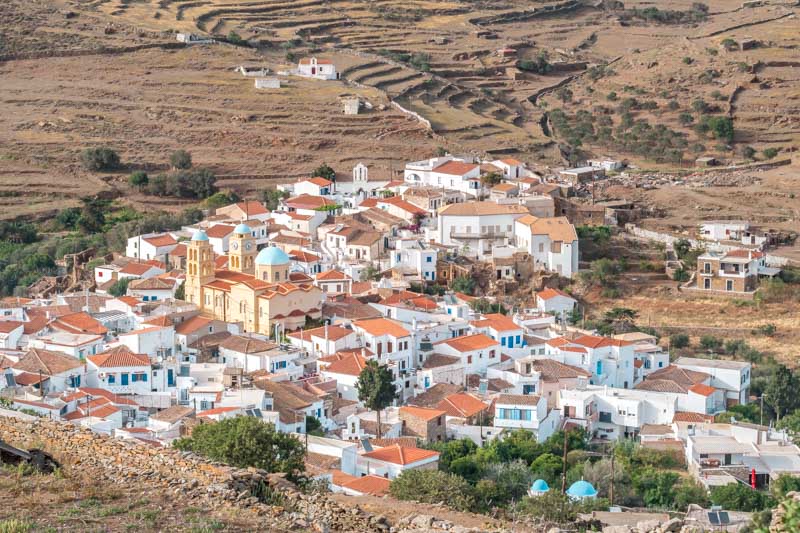
The red-tiled roofs are striking — quite a few Dryopida residents actually work as roofers in the Cyclades and even in Athens. Dryopida is struggling with rural exodus, with only 300 inhabitants still living in the village, which, unlike Chora, sees little tourism. In May, preparations and work were still in full swing everywhere, and only a few restaurants had already opened.
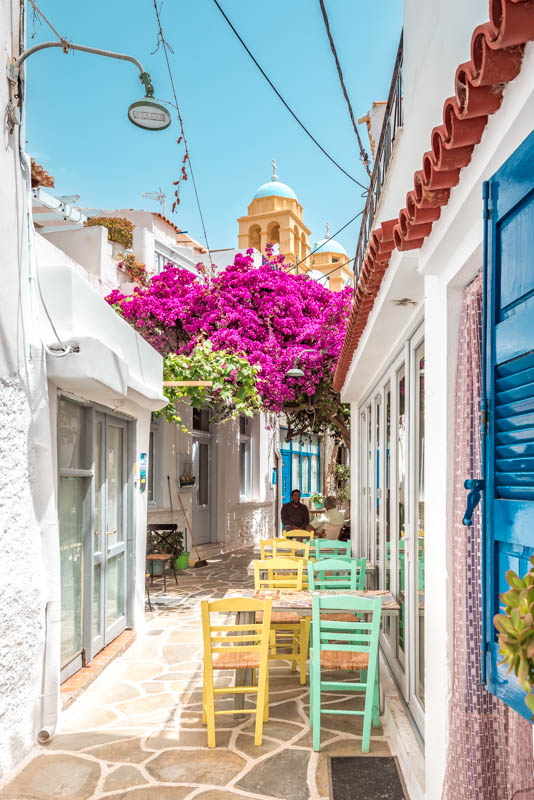
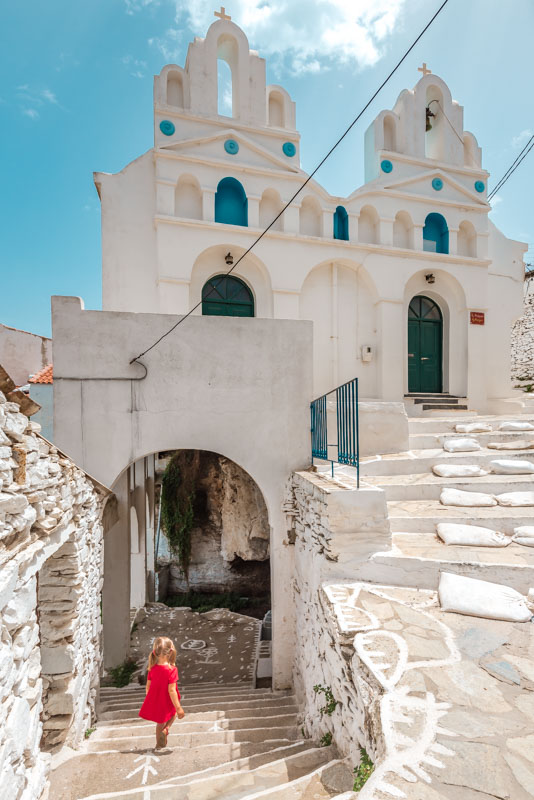
The maze of alleys with a few shops (agora) around the Church of Agion Apostolon invites you to take a stroll. A folklore museum behind the church, well worth a visit, offers insights into life in earlier times. In the southern part of the village there is a park with the village pub To Kamini, a small theatre, and an old, unfortunately neglected aqueduct.

Katafyki Cave
The highlight of the village, however, is undoubtedly Katafyki (also Katafygi), an underground cave system in Dryopida. Since ancient times, it has been used by people in many ways — as an ore mine, as a refuge in times of danger, and as a place of worship for ceremonies. Even today, some Easter events are held here by the locals.
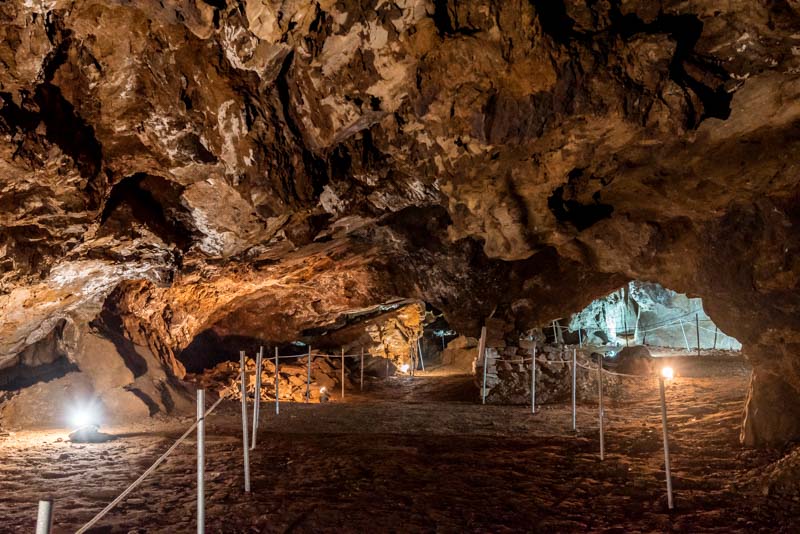
Hard to imagine from the outside, the cave itself is about 1,200 m long and has several natural and artificial passages. The Katafyki Cave maintains a constant temperature of 17 degrees throughout the year. On a 10-minute circular route, you can explore some of the corridors and their interesting rock formations.

Unfortunately, the opening times of the cave are not entirely clear, and this potentially impressive place felt a bit neglected to us. Two attempts were necessary — including a trip to the town hall — to get into the cave, which can theoretically be entered at any time. Maybe you’ll be lucky enough to catch a glimpse of the inside right away during your visit.
- Opening hours Katafyki Cave Kythnos: May, June & September Sat+Sun 9 a.m. – 2 p.m., July & August daily 9 a.m. – 2 p.m., free admission (donations welcome)
Dryopida washhouses
A short hike from Dryopida to the “Plystaria tou Mathia” takes you back in time. The Washhouses of Mathia are located about 1.5 km south of the village and can be reached in a few minutes via a donkey path (GPS 37.375072, 24.437402) from the main road.

Hard to imagine on this barren island, but below the Chapel of Panagia Mathia a mountain spring feeds crystal-clear water into a washhouse, surrounded by a green oasis of fruit and olive trees. The washhouse, with its 12 basins, was built in 1852 in honour of the then mayor Andreas Mazis and was lightly renovated a few years ago.


Until the 1960s, the women of Dryopida would come here to wash the family’s laundry. But it was not only a place of work — it was also a social hub where women gathered to exchange the latest village gossip and share their joys and sorrows.
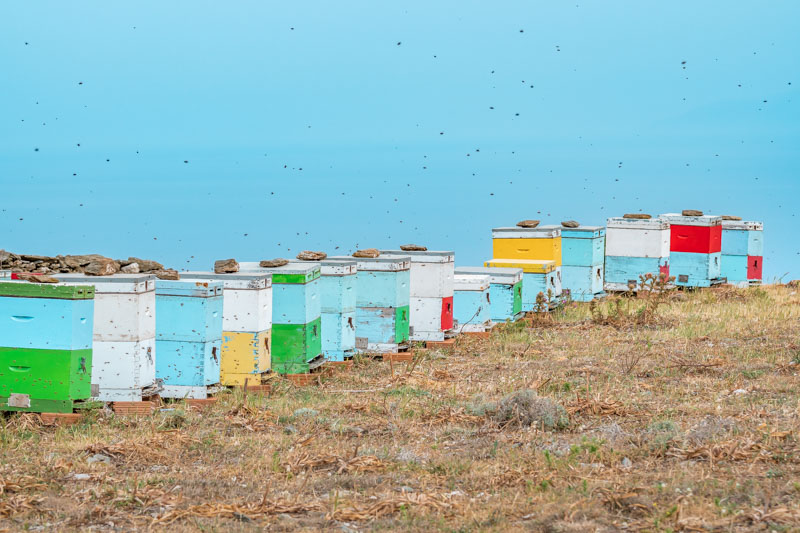
💡 Honey of Kythnos: The treeless island may look like a wasteland to humans, but it is blessed with countless herbs and is a true paradise for bees. Four beekeepers (including Pure Mother Bee) around Dryopida produce the liquid gold of Kythnos commercially, partly to organic standards, and you can taste it at their points of sale. The island’s thyme honey (Thymarisio Meli Kythnou) is particularly popular for its unmistakable taste.
#6 Kythnos’ East: Agios Stefanos to Kalo Livadi
As you cross the hill above Dryopida, you’ll already be greeted by the endless blue of the sea. On clear days, the view stretches east across the Aegean to the nearby neighbouring islands of Syros and Serifos, and all the way to Andros, Tinos, Naxos, Paros, Antiparos and Sifnos. Along the coast of Kythnos, unspoilt natural beaches invite you to enjoy some pure bathing pleasure. Here are some of the most beautiful spots:
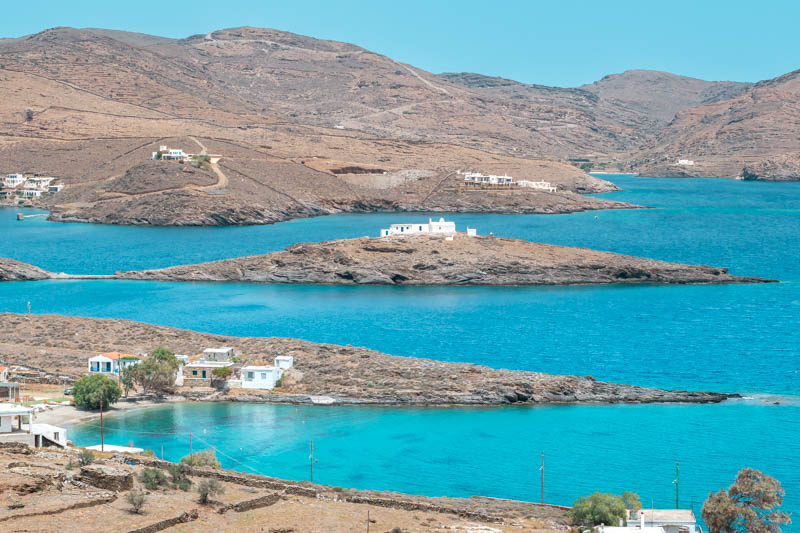
Agios Stefanos
A 10-minute drive from Dryopida brings you to Agios Stefanos, a pretty little village with a lush green valley in the hinterland and a beach lined with tamarisk trees. The water is crystal clear, and ducks and geese also feel right at home on the beach.
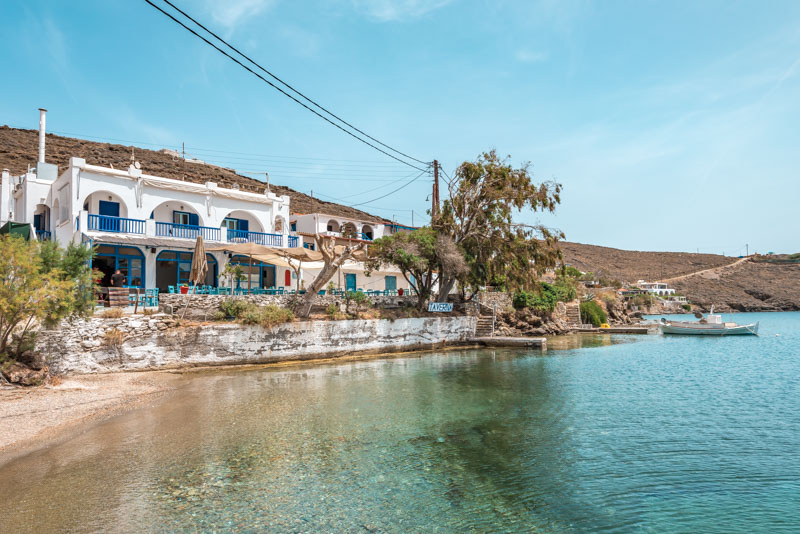
Benches invite you to linger on Agios Stefanos Beach, and two taverns serve tasty home cooking — with Tavern Aroudou (highly recommended!) sitting right by the sea. The wind-protected bay is very popular with sailors, and the eponymous church of Agios Stefanos on the east bank makes for a lovely photo opportunity.
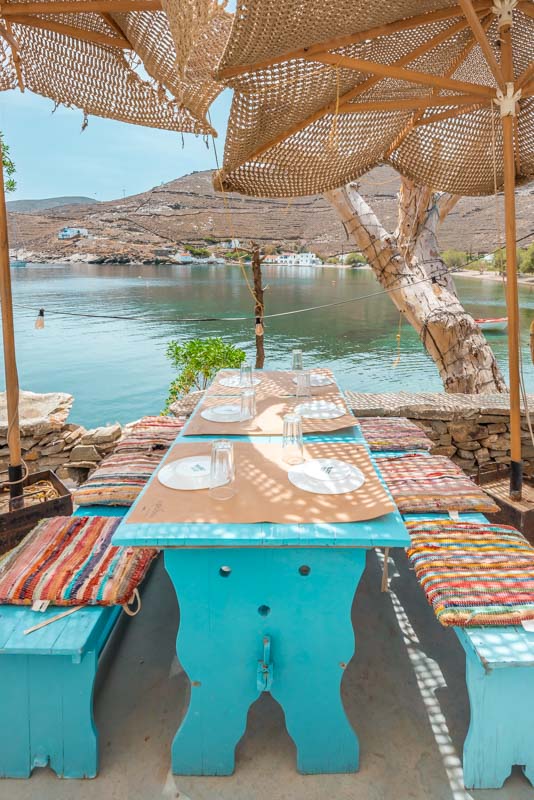

Aosa (Naoussa)
Aosa, also called Naoussa, is the nearest bay south of Agios Stefanos and only a 5-minute drive away. Away from the hustle and bustle, you’ll find just a few Greek summer houses and some holiday apartments. There is no taverna, so the wide grey pebble beach remains completely unspoilt.

A short walk (400 m) from Aosa Beach along the coast leads to the church of Agios Ioannis Eleimonas, which stands on an offshore rocky island at the entrance to the bay. It looks like a simpler version of Chrysopigi on Sifnos and is a wonderful place of tranquillity.

Lefkes
Lefkes looks like a larger settlement from a distance, but has only two permanent residents — the rest are summer houses and holiday villas. In the low season, a paradisiacal peace reigns here. In July and August the tavern Lefkes Estiatorio opens and the beach gets quite busy.
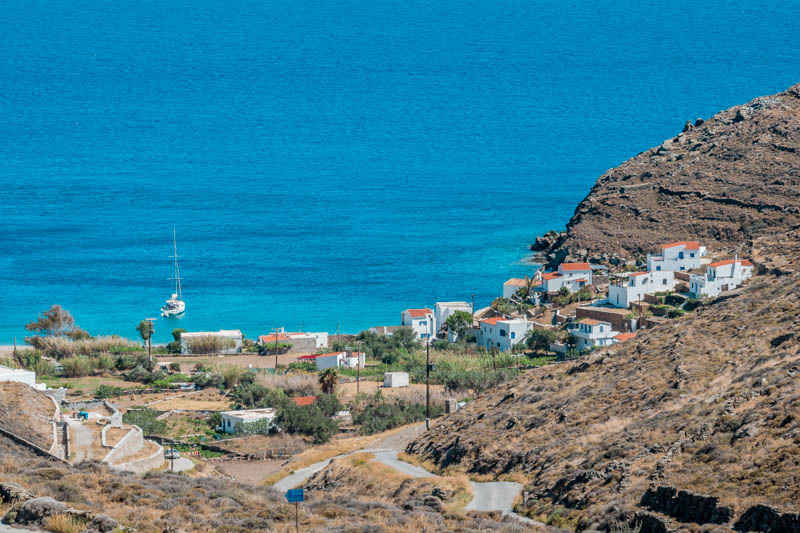
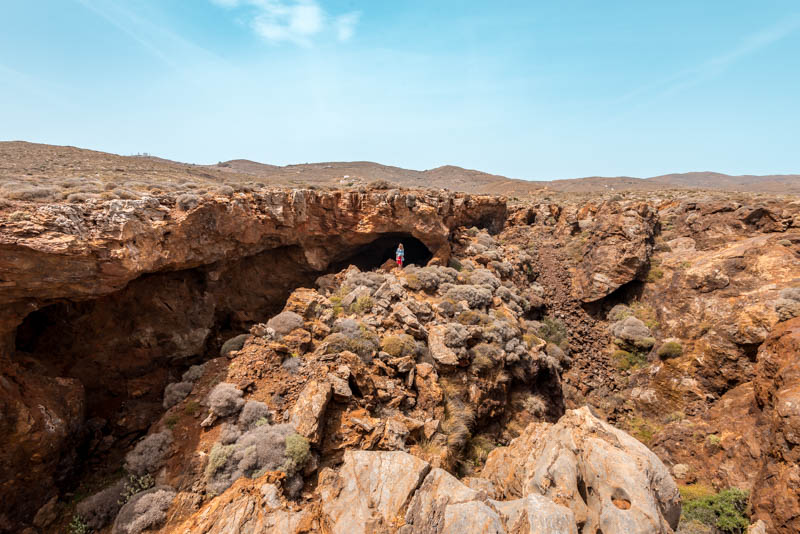
The highlight of Lefkes, however, is undoubtedly the old mines of Kythnos. Copper and iron were mined in the region during the 19th and 20th centuries. The ruins of the mining company’s administrative building are located above the village. A system of tunnels and shafts can be visited at your own risk — some climbing skills are required, as the terrain is quite rough.

The hike to Tourkala is recommended starting from the hamlet of Zogaki, 2 km north of Lefkes. From the parking lot (GPS 37.380811, 24.453201) a path leads to the mines, which resemble a lunar landscape. Through an extensive tunnel system, you can even reach an underground lake, which was probably used as a water supply in ancient times.
Kalo Livadi
A 15-minute drive south of Lefkes is Kalo Livadi, another beautiful bay with a wonderful swimming beach. This spot also consists mainly of summer residences of Greeks and some holiday homes. The beach is not organized, tamarisk trees provide shade, and the spots beneath them are very popular in summer.

A bonus at Kalo Livadi Beach is the Omisu Beach Bar, which offers light snacks, homemade pizza, and cool drinks in a relaxed atmosphere. From the Church of Panagia Kalolivadiani above the beach you can enjoy a fantastic view over the bay.

#7 Kanala: Holiday Village in Maria’s Hands
The main road always runs along the panoramic ridge heading south. To its left and right, numerous terraced fields stretch across the hilly landscape, separated from each other by “Kelia”, the dry stone walls of Kythnos. In the past, intensive agriculture was practiced here, and the cultivation of barley in particular has a long tradition on Kythnos.
💡 Golden Fields of Kythnos: At the beginning of the 20th century, up to 650,000 tons of barley were still produced annually on the island, and the small hamlets of Agios Stefanos, Lefkes & Co. once served as loading ports. The Greek brewery Fix was the main buyer of Kythnos’ barley. Since World War II, production has declined sharply — by the 1970s, only 200 tons were being exported. The many windmills that once ground the grain have since fallen into disrepair. Today, only a few grain fields remain, their ears swaying in the strong wind and shining like gold in the evening sun.

After leaving Dryopida behind, within a few minutes you’ll spot Kanala with its pine forest on a striking headland by the sea. This charming village is both a holiday resort and a pilgrimage centre — its main church is considered the most important pilgrimage site on Kythnos, and a lively summer village has developed around it over recent decades.

The miraculous icon of the Mother of God, which is kept in the village church of Panagia Kanala, was once found by fishermen in the sea between Kythnos and Serifos. In honour of Mary, a new church was built in 1869 on the foundations of an older one. The interior is richly decorated with wall paintings.

You can park your rental car in the car park in front of the church grounds and take a stroll through the fragrant pine forest of Kanala to the church. Forest bathing on a barren Cycladic island — what a highlight! At the southern tip of the headland you’ll also find the chapel of Agia Kalliopi, a popular wedding venue for Greeks and a wonderful photo opportunity.

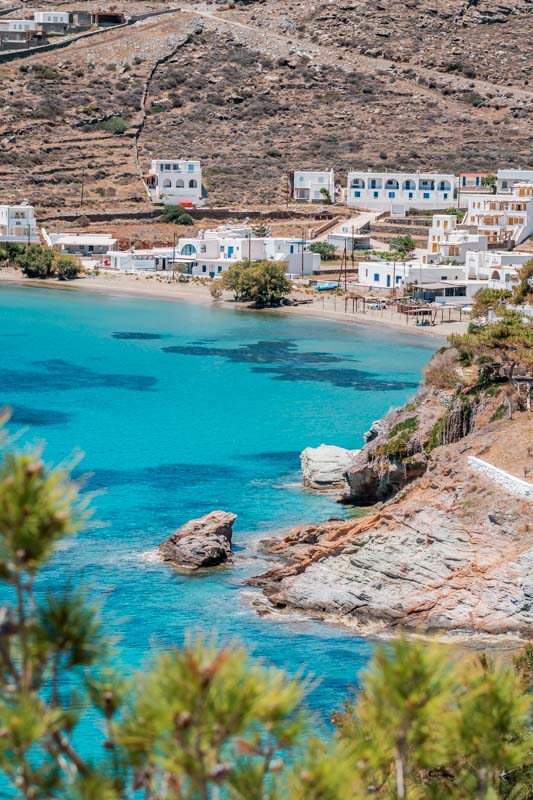
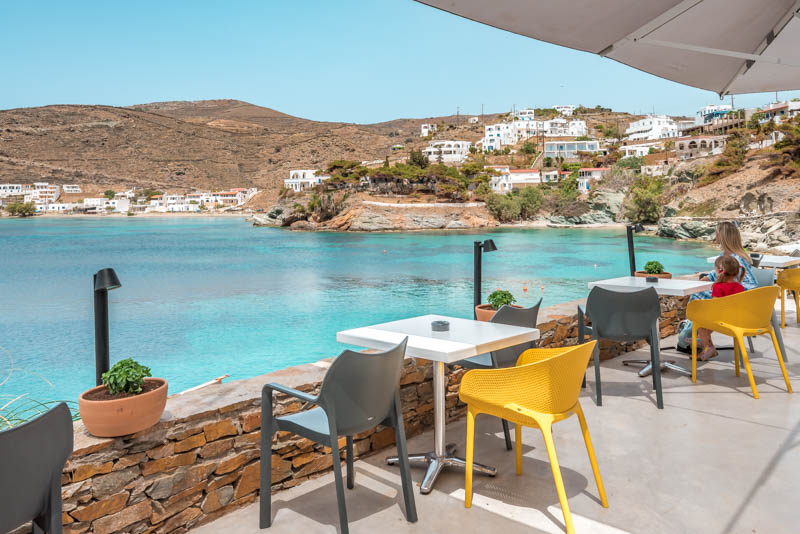
From Panagia Kanala, a staircase leads down to the sea, where you can relax at the Molo all day café and enjoy the view over the Kanala bay and the village beach of Megali Ammos. For us personally, one of the most beautiful spots on the island! In addition to the main beach, there are other bathing spots, e.g. Ammoudaki and Paralia Antonides.
More Kythnos travel tips
Accommodation in Kythnos
International tourism has not yet found its way to the island, so there are no big hotels on Kythnos or luxury resorts. You will find beautiful apartments and studios, small family hotels and also luxurious holiday villas for a relaxing break far away from the crowds.
Compared to the other Western Cyclades, we found the price level on Kythnos to be quite moderate. During the summer months and on weekends, the few available accommodations on the island fill up quickly, as Greeks from the mainland hold the island in high regard as a holiday destination.
→ Via Booking.com* you can compare all available accommodations on a map and check prices:
➲ To the accommodations on Booking.com*
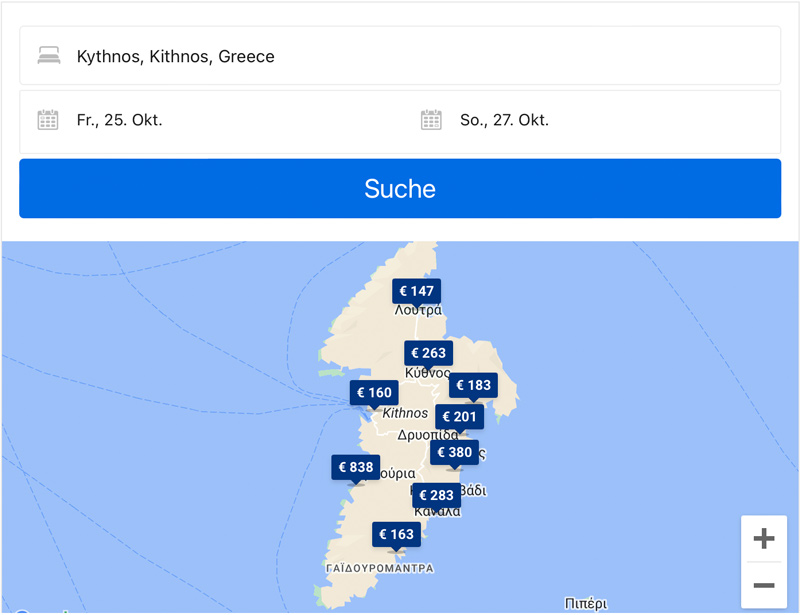
Here we spent the night on Kythnos
Eternal Blue Kythnos, Merichas
Just 5 minutes from the port of Merichas, you will find the beautiful apartment complex Eternal Blue Kythnos. Thanks to its elevated location, you can enjoy a magnificent view of the endless blue sea that lives up to its name. The sunsets from the complex are particularly picturesque!
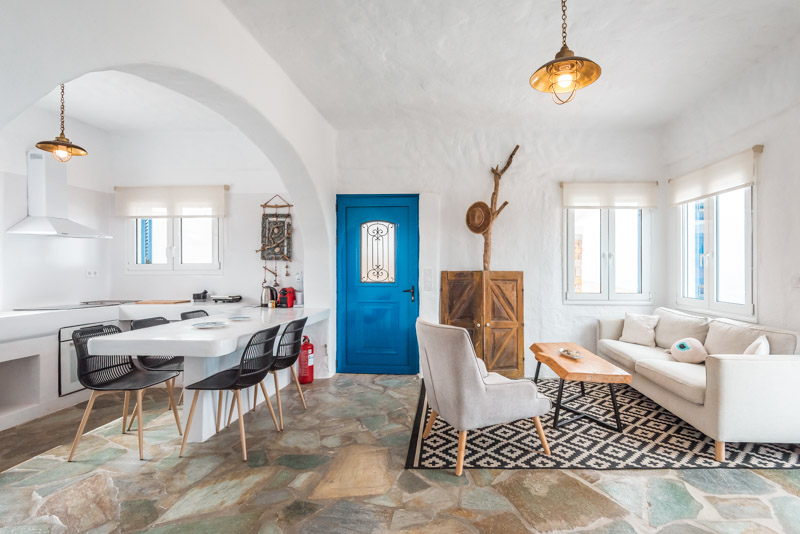
Host Giannis and his wife Margarita rent out several tastefully furnished apartments with well-equipped kitchens and cozy balconies or terraces of various sizes. A stay is therefore suitable for couples as well as families with children.


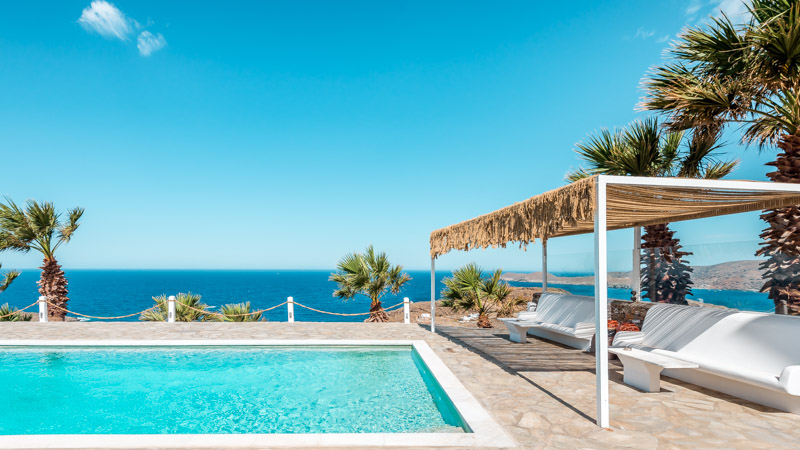
The large pool overlooking the Aegean Sea invites guests of all ages to cool off on hot summer days. A relaxed seating area with a hammock is the perfect spot to unwind. The nearest beach is only a three-minute drive away, and the location is ideal for exploring Kythnos by rental car.
On Booking.com* you can check out our accommodation on Kythnos and see prices and availability for your holiday:

Restaurants in Kythnos: Our Recommendations
So far, the gastronomy here has not been tailored to international tourism as it has on the other Cycladic islands. So you’ll find typical Greek cuisine on the menus, and the prices for tzatziki, Greek salad & Co. are still below the level of the neighbouring islands.
Interestingly, even in small coastal towns there was usually a café or tavern open in the low season, which we appreciated very much on Kythnos — and which is by no means a given on less touristy islands. The largest selection of restaurants can be found in Merichas and Loutra, ranging from souvlaki bars to upscale restaurants.

We had a particularly good dinner at Restaurant Mirra in Merichas. The stylishly furnished restaurant is located at the end of the beach promenade and offers tables directly on the beach as well as on the terrace behind it. The friendly host Nikos and his wife Konstantina serve creative Greek cuisine alongside Mediterranean dishes with a twist.

Both vegetarians and meat lovers will find something to their taste. We particularly enjoyed the homemade pinsa, the lamb burger and the octopus carpaccio. The delicious food is complemented by a wide selection of wines from all over Greece.
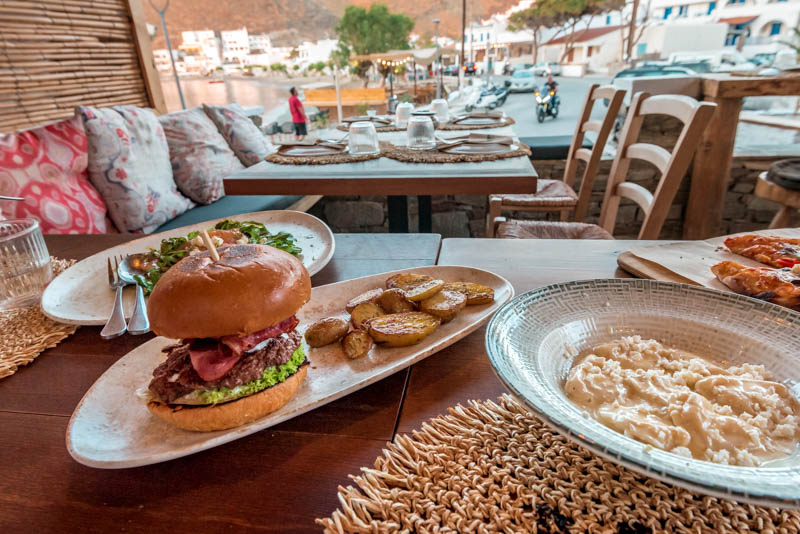
The prices are fair given the high quality of the food — on Milos we would have paid twice as much for many of the same dishes. Mirra is a great spot for a romantic dinner by the sea, but also well worth a visit just for a cocktail (from €10). For us personally, it is the best restaurant on Kythnos.
→ Other recommended cafés and restaurants on the island of Kythnos:
- A Picco Kythnos, Loutra
- MamaDo Food Bar, Loutra
- Kolona Experience, Kolona
- Veggera Café, Merichas
- Byzantio Yalos, Merichas
- Margiora, Chora
- Cibo Pizza, Dryopida
- Arodou Seafood Taverna, Ag. Stefanos
- Molo All Day Café, Kanala
- To Akrogiali, Ag. Dimitrio

Car rental for Kythnos
With a length of about 21 km and a maximum width of 9 km, Kythnos is a compact Cycladic island that you can easily explore on your own. Due to its hilly profile, many roads wind in serpentines from the sea up to the mountains. From the village of Agios Dimitrios in the south to the hamlet of Agios Sostis in the north, the driving time along the main road, which is fully paved, is about 45 minutes.

In the port town of Merichas, as well as in Loutra and Chora, there are several car rental companies offering vehicles in different categories, e.g. Delta Premium Drive Kythnos. A small car is perfectly sufficient to explore the island of Kythnos. It is advisable to check the Google ratings of your chosen provider before renting.
Getting around by bus and taxi
The public buses on Kythnos operate year-round on two routes (#1: Merichas – Chora – Loutra, #2: Merichas – Dryopida – Kanala). This means you can regularly reach the two popular holiday resorts of Loutra in the north and Kanala in the south by bus. It is best to ask your accommodation for the current timetables when you arrive.
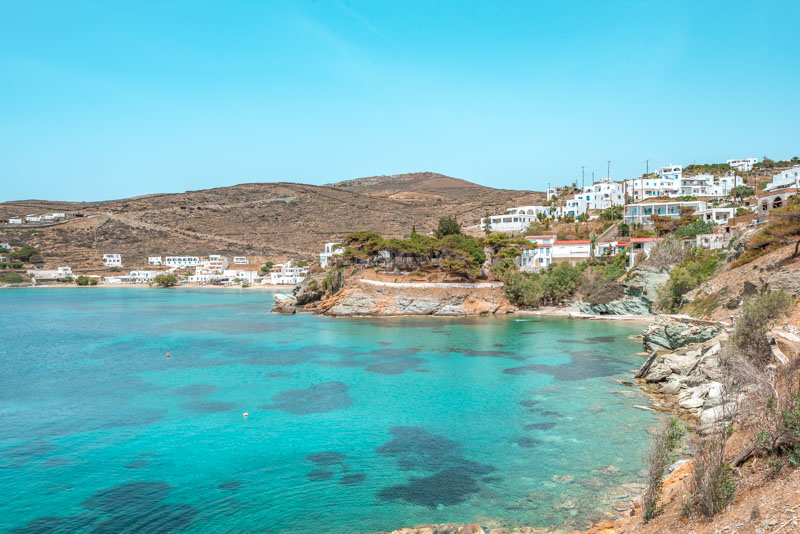
For a more comprehensive exploration, a rental car on Kythnos is recommended, as it also allows you to reach the island’s numerous beaches. Taxis are available at the port as well, and your host will be happy to help arrange your transfer to your accommodation.

How to get to the island of Kythnos
The island of Kythnos can only be reached by ferry from the mainland ports near Athens, as there is no airport. You can find cheap direct flights to Athens via the flight search portal Skyscanner*:
➲ To the flight search on Skyscanner*
Ferries operate year-round from the port of Lavrio, south of Athens. The port of Lavrio is located just 30 minutes from Athens Airport, making it ideal for getting to the island. On weekends, additional excursion ferries operate, including those of the ferry companies Triton, Saos and Goutos. During the season, Kythnos is also served from the port of Piraeus.
→ This article gives you all the information you need for your journey by ferry to Kythnos: Ferries in Greece

The island of Kythnos is served by the following ferry companies from the port of Lavrio (approx. 1 hour 45 minutes) or Piraeus (approx. 3 hours):
- Karystia Lines (from Lavrio)
- Triton Ferries (from Lavrio)
- Saos Ferries (from Lavrio)
- Hellenic Seaways (from Lavrio)
- Goutos Lines (from Lavrio)
- Aegean Sea Lines (from Piraeus)
- Zante Ferries (from Piraeus)
→ Through our partner Ferryhopper* you can check ferry times and book your ferry ticket to Kythnos conveniently online:
➲ To the ferry search on Ferryhopper*
🔍 Our conclusion on Kythnos: What a relaxed and uncomplicated island! You don’t go to Kythnos to visit countless sights, but simply to unwind. We arrived without high expectations and found the low season to be perfect for a stay. The many beaches were empty, but almost all the beach bars were already open. So we enjoyed our Freddo mostly in complete solitude. The peace and quiet was just wonderful! A big plus for the island is its excellent accessibility from the port of Lavrio. There are also numerous apartments and smaller hotels with a great price-to-value ratio. With a rental car, you can reach all corners of the compact island in no time. We would say: Kythnos is still a real insider tip internationally and a haven for anyone looking for peace and relaxation in the low season.
→ More travel reports and tips for the Cyclades can be found on our overview page: Cyclades Islands
*Support our blog Greece-Moments
In this post, you will find affiliate links marked with an asterisk (*). If you book or buy something through one of these links, we receive a small commission. The price stays the same for you. In this way, you help us continue to provide high-quality content for free. Did you enjoy this post and want to say thank you? Then just buy us a Greek coffee ☕️ To the coffee fund
Save this post on Pinterest!