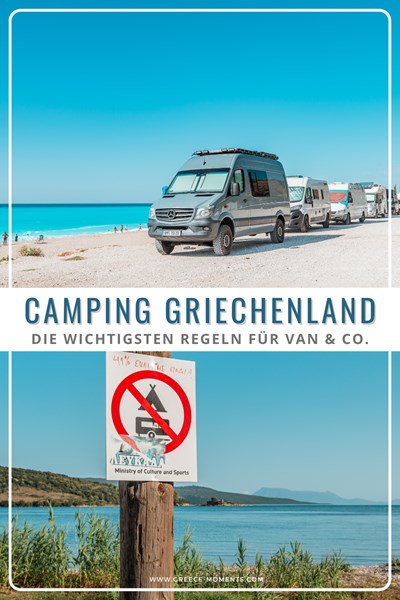

Greece is not only a paradise for package and individual holidaymakers, but also offers an attractive destination for camping enthusiasts, thanks to its varied landscape of mountains and sea. In recent years, camping in Greece has been growing in popularity.
»The Mediterranean climate and the relaxed way of life of the locals make every camping trip to Hellas an unforgettable experience.«
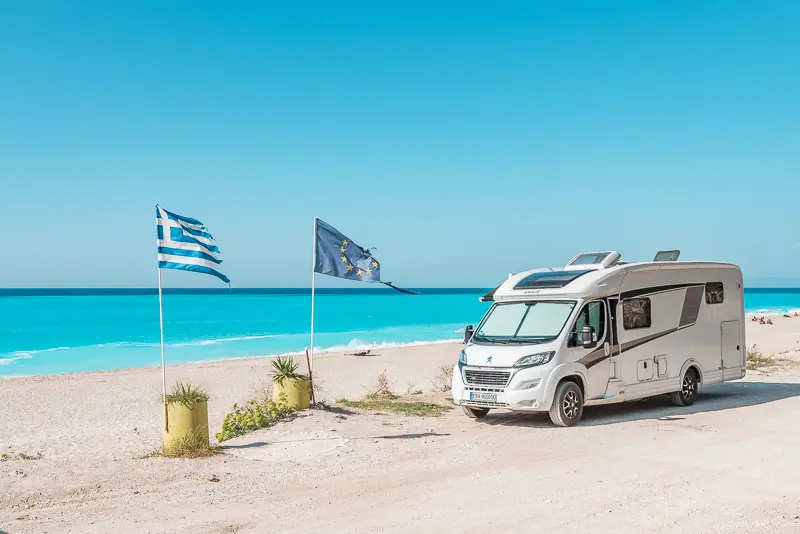
What many people don’t know: the Greeks themselves are also very fond of camping. Even as teenagers, they go to summer camp; wild camping is still popular with young Greeks (although officially forbidden); and camping is generally the cheapest way for Greek families to travel.
So it’s no wonder that campsites can be found everywhere across Greece, from Athens to Zakynthos.
In this article, we give you an overview of what to look out for when camping on the Greek islands and mainland, and show you where you can really pitch up in Greece:

#1 Camping laws in Greece: What you need to know
As anywhere in the world, it pays to familiarise yourself with local laws and regulations before camping in Greece. Greek legislation is strict and very bureaucratic, though enforcement has been somewhat relaxed so far. But the issue of wild camping in Greece is increasingly on the government’s agenda in Athens.
In general, wild camping is prohibited in Greece!

Camping in Greece – New Law 2025
Since 20 January 2025, Greece has introduced Law 5170/2025, which significantly tightens the rules on wild camping and the parking of motorhomes. This particularly affects motorhome travellers, campers and caravan drivers.
Wild camping has technically been illegal in Greece for many years. However, the new law clarifies the regulations and strengthens enforcement. Anyone travelling with a motorhome should be aware of these rules to avoid heavy fines or even criminal penalties.
→ What is prohibited when camping in Greece?
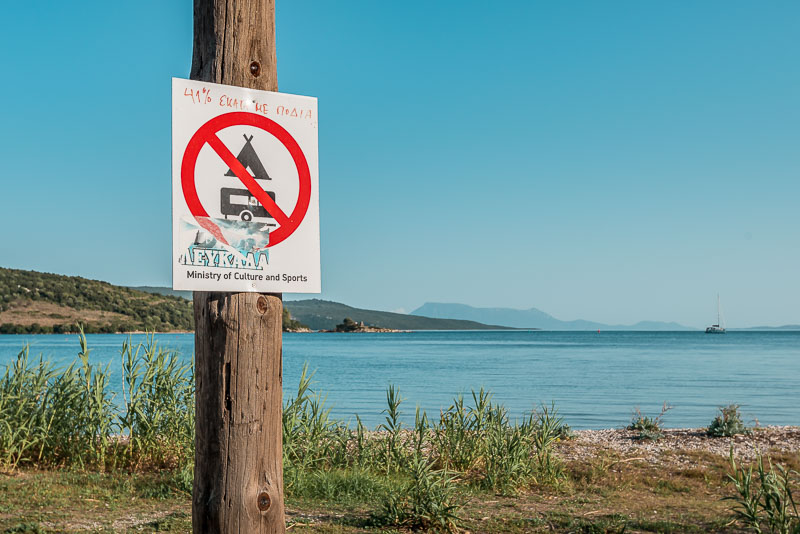
The law explicitly prohibits camping or extended overnight parking of motorhomes, caravans or tents in the following locations:
- at archaeological sites
- directly by the sea or on beaches
- in forests or along the edges of public woodland
- in public squares or other publicly accessible areas
Restrictions also apply on private property: without special permission, only one motorhome or caravan may be hosted. Multiple vehicles may legally be considered a camping business and therefore require an official licence.
→ What penalties apply for wild camping in Greece?
- a fine of €300 per person or vehicle
- possible additional financial penalties in court proceedings
- a prison sentence of up to three months
The fine can be issued directly by the police or the coastguard.
→ Important when parking a motorhome in Greece
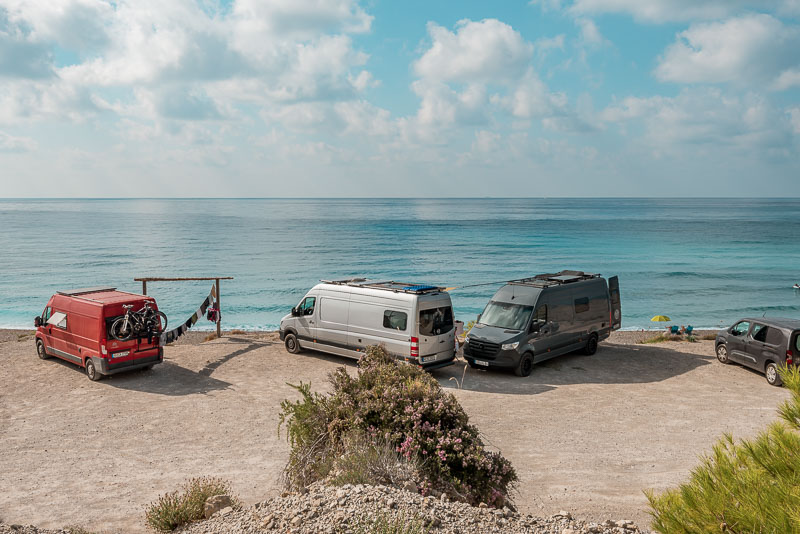
Normal parking with a motorhome may still be permitted if it complies with traffic regulations. However, no camping behaviour may be visible. Setting up tables, chairs, awnings or other camping equipment in public areas is already considered wild camping under Greek law and is therefore prohibited.
ℹ️ Clarification from the Greek Ministry of Tourism (2025)
After criticism from camper associations, the Ministry of Tourism clarified that the new law is not intended to prohibit the normal parking of motorhomes. The key distinction is between parking and camping.
“Parking a motorhome is permitted wherever car parking is allowed – including along the coast or near beaches, provided there are no specific local restrictions.”
However, once camping behaviour becomes visible – tables, chairs, awnings or camping equipment set out – this may be considered wild camping and is prohibited under Law 5170/2025.
To avoid problems and heavy fines, you should only stay overnight at official campsites or designated camper areas (Greek: Κάμπινγκ). During the day, you may park on public parking spaces or along the roadside where permitted by traffic regulations. Camper associations and the Greek motorhome club (ELAT) have criticised parts of the regulation and continue to call for clearer guidelines for the practical implementation of the law.

In general, the following applies: after camping, leave everything as you found it, take all rubbish with you, avoid unnecessary noise, and for bathroom needs – if there is no toilet in the caravan or nearby – use public toilets or visit nearby restaurants or cafés.
💡 Free parking at the taverna: The Greeks are a very friendly people and are generally open to interesting ideas. If you are considering a taverna’s private car park as a potential overnight spot after dining there, it is worth asking the owner. Especially in the low season, you may well be able to secure a free overnight spot, as long as no other motorhome is already parked there.
If you are planning island hopping by motorhome, it is advisable to research thoroughly beforehand whether campsites are available on the islands you want to visit, to avoid ending up with no choice but to rely on wild camping – which is tolerated in practice but officially illegal.
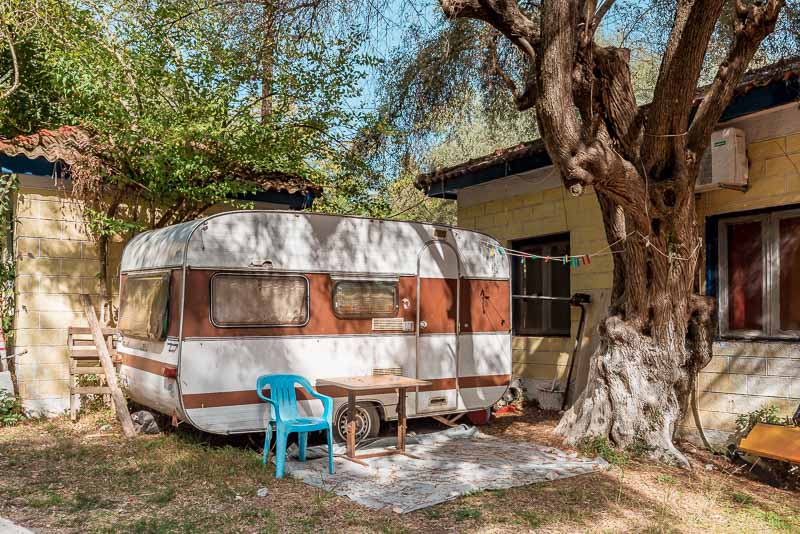
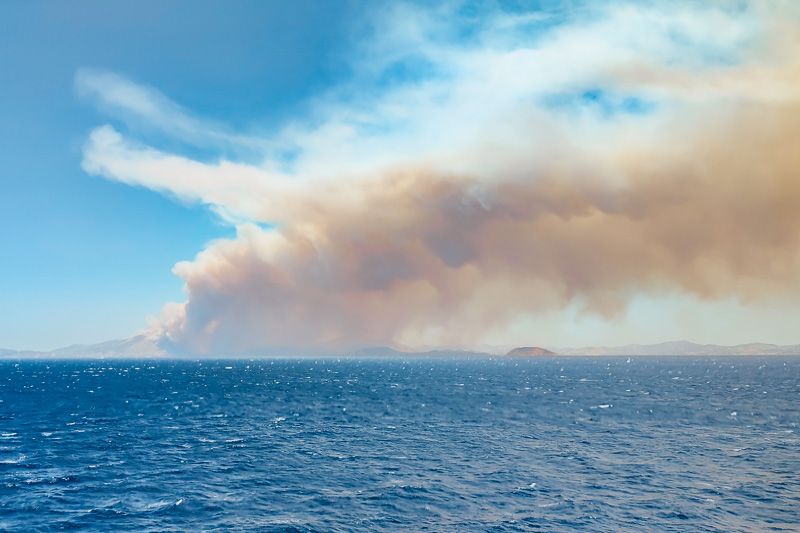
Particular caution is advised around fire and barbecues. In summer the landscape is extremely dry – a single spark can ignite a large-scale fire. In the event of proven negligence, draconian fines can be imposed. On campsites, open fires outside designated areas are not permitted, in order to reduce the risk of wildfires in Greece.
#2 Best time to go camping in Greece
The best time to go camping in Greece is from March to June and from September to November. During these months, temperatures are pleasantly warm and rainfall is limited – ideal conditions for a road trip on the Pelion Peninsula, in Epirus, or for a Peloponnese Road Trip.

Especially in spring, nature is in full bloom. From mid-October you can expect occasional rain showers. November still brings many sunny days, but from the start of December uncomfortable weather sets in, with winter storms and heavy rain commonplace. From the end of February, conditions begin to improve.

In the height of the Greek summer (July–August), we do not recommend a camping trip to Greece. Temperatures are very high for days on end, and even at night rarely drop below 25°C. In addition, many campsites are completely overcrowded, as Greek families also use camping as a budget travel option.
If you prefer a quieter experience, plan your tour for early autumn: school in Greece resumes in September and the campsites begin to empty. More information about the climate on the mainland and islands can be found here: Weather in Greece
💡 Opening hours of tavernas: Between October and April, many restaurants and tavernas in the tourist areas of Greece – both on the islands and on the mainland – are closed. Anyone travelling by motorhome during this period will need to be largely self-sufficient in many areas. In addition, most campsites are only open from 1 April to 31 October.
#3 Getting to Greece with Camper & Caravan
The drive to Greece by campervan or caravan can be a highlight in its own right. However, it should be borne in mind that Greece is around 2,000 km from Germany, depending on your starting point – so it is worth planning sufficient stop-overs along the way.
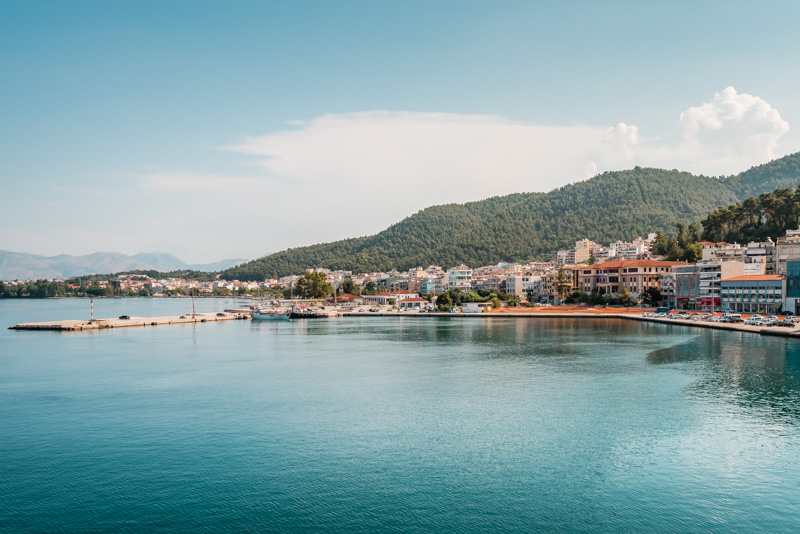
You can travel overland via the Balkans or by sea from Italy. The quickest option is the ferry from Italy to Igoumenitsa or Patras. Camping on board has unfortunately no longer been possible on Anek and Superfast ferries since 2025.
→ All the details for travelling by ferry can be found here: Ferries in Greece
We research and book ferries from Italy using the search portal Ferryhopper*. On this user-friendly portal you can search for your desired route and compare prices from the individual ferry companies, then book your tickets directly:
➲ To the ferry search with Ferryhopper*
Depending on when you are travelling, it is advisable to book the ferry early – as spaces on the Adriatic ferries fill up quickly in high season. Detailed information on getting there by land and sea, as well as toll information, can be found in our separate article: Getting to Greece
💡 Camping Greece Book Tip: The Camper Guide Greece by Marco Polo is packed with useful information for your camping holiday and includes 7 tours taking you to the highlights of the country: View on Amazon*

#4 Little Greece Camping ABC
Apps: Are there camping apps for Greece?
For those who enjoy going with the flow, staying spontaneous and allowing plenty of time, camping apps are a great way to find a suitable overnight spot on the road. You can find campsites and pitches across Greece with the apps Camping.info, ProMobile and the ADAC App.
Facilities: What do campsites in Greece offer?
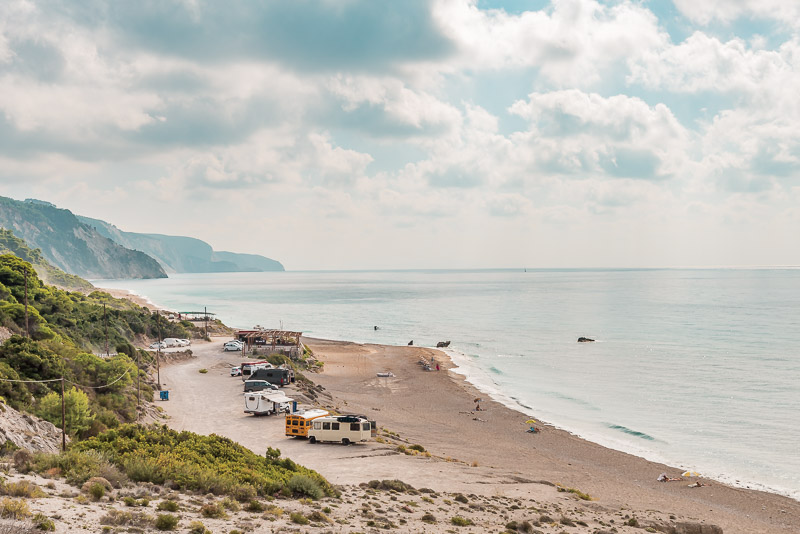
Campsites in Greece are diverse and offer something for every taste – from simple nature campsites inland to well-equipped facilities right on the sea with beach access, pools and restaurants. On average, however, the standard cannot yet be compared with that of northern Europe.

Sanitary facilities are usually well maintained, but simple and sometimes outdated. Many campsites in Greece have electrical hook-ups for motorhomes, washing machines and often even free Wi-Fi. One major advantage of camping in Greece: most campsites are located right by the sea.
It is well worth researching in advance via Google Maps, the ADAC camping guide or the internet (e.g. camping.info) to find which campsite best suits your itinerary. The current ADAC guide can be ordered directly on Amazon*.
Disposal: Where can I find disposal stations in Greece?
Most campsites have disposal facilities for wastewater and chemical toilets. However, Greek campsites are typically only equipped for emptying small cassette toilet waste. Modern disposal machines, as commonly found on northern European campsites, are rare.
In the industrial areas of larger cities, there are specialist disposal stations for grey and black water. It is advisable to bring a long wastewater hose, as there is usually little manoeuvring space near disposal points for large vehicles.
Chemical toilet waste should never be emptied into the natural environment, as the chemicals used in Thetford and similar toilet systems are extremely harmful to the environment and difficult for standard sewage treatment plants to process.
In individual cases, disposal can also be carried out via a standard toilet or a portable toilet. Please check with the site operator beforehand. You are most flexible if you have a dry or eco-toilet on board. BOXIO is the brand we recommend here: View on Amazon*
Camping all year round: Can you spend the winter in Greece?
Only a few campsites in Greece remain open outside the main tourist season (May–October). Popular wintering areas in Greece include the Peloponnese peninsula, the Gulf of Corinth, southern and eastern Crete, and the Athens region (Attica).
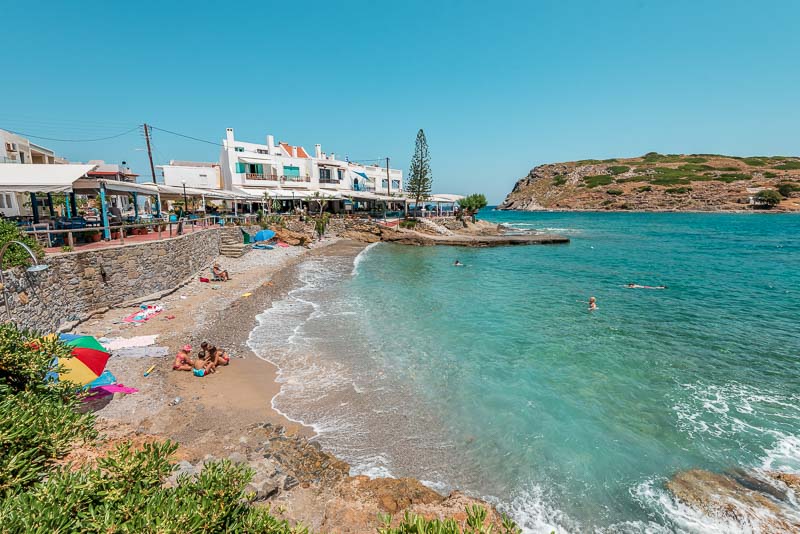
In these regions the winter is relatively mild, with temperatures rarely falling below 10°C, though some days can bring heavy rainfall. The southern Peloponnese in particular is regarded by connoisseurs as an excellent wintering area. Experiences of overwintering in Greece can be found on the forum: in-greece
Gas: Where can I buy or exchange gas cylinders in Greece?
In Greece, large gas cylinders for heaters, water heaters and hobs are available at Praktiker DIY stores (which still exist in Greece), camping shops, and sometimes in household goods, hardware or garden accessory shops.
Many petrol stations also offer gas cylinders (10 kg from around €20). To use Greek gas cylinders, you will need a suitable adaptor. You should get hold of the so-called Euro Gas Cylinder Adaptor (View on Amazon*) before your trip.
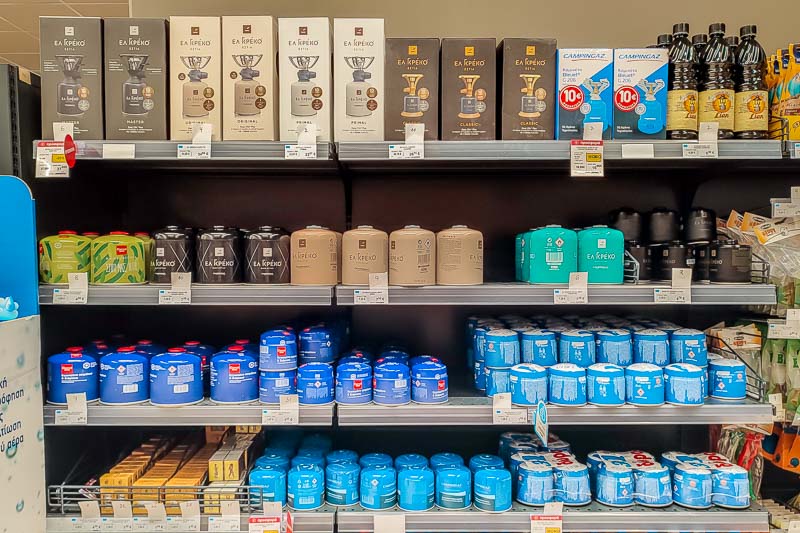
Small camping gas cartridges for gas stoves and portable camping kitchens are available in many supermarkets, e.g. AB Vassilopoulos, Sklavenitis etc. The most well-known brand is El Greco Campingaz.
Fees: How much do campsites cost in Greece?
On our travels through Greece, we stopped at campsites regularly and asked about prices. In high season, they are on a par with northern and central Europe. Pitches for motorhomes start from around €20, and tent-only pitches from €5 per night.
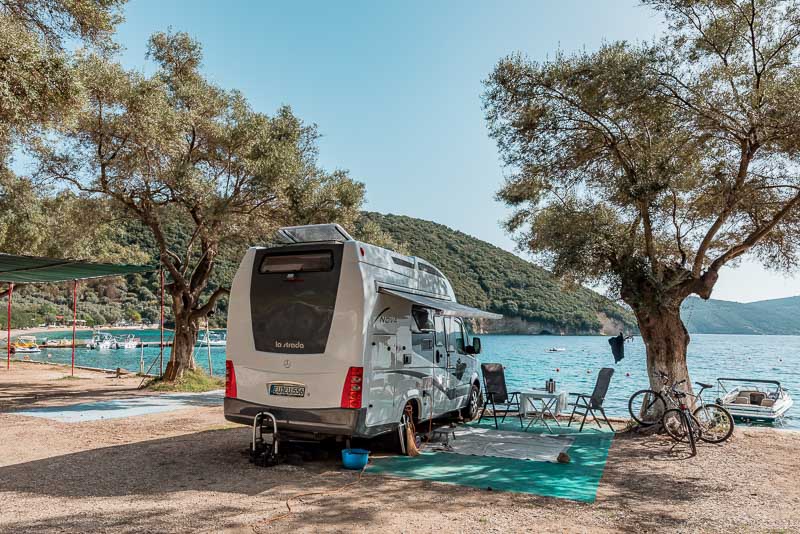
Campsites by the sea can charge €35 or more per night and are in high demand. Bargains are rare, but if you plan a longer stay you can negotiate with the owners – and may well be offered a good deal for a week’s stay.
In Greece, campsite fees are usually calculated on a modular basis – meaning you pay separately for each component: person, vehicle, pitch and electricity connection. If your motorhome is relatively self-sufficient, you can keep costs to a minimum. Here is an example of typical campsite prices:
| Component | Low season (€) | High season (€) |
|---|---|---|
| Per adult | 6 | 8 |
| Children under 4 | free | free |
| Per child (4–10 years) | 3 | 5 |
| Caravan (trailer) | 4 | 6 |
| Pitch | 5 | 7 |
| Small tent (2–3 persons) | 2 | 5 |
| Motorhome | 5 | 9 |
| Car | 3 | 5 |
| Motorcycle | 2 | 3 |
| Scooter | 1 | 2 |
| Minibus (<16 people) | 7 | 8 |
| Bus (>16 people) | 10 | 13 |
| Electricity (2–3 kW) | 3 | 5 |
*Prices are indicative and subject to change
Dogs: Are four-legged friends allowed at Greek campsites?
Dogs are allowed at most campsites in Greece. In some cases, a pet fee may apply. On the website camping.info you will find detailed information on whether your four-legged friend is welcome at a specific campsite. The Greeks are generally very dog-friendly.

Do take care with your dog in rural areas and small towns, where you are likely to encounter stray dogs – particularly on the mainland. In Epirus and northern Peloponnese (Arcadia), we have also repeatedly come across large, free-roaming Greek shepherd dogs that can be fiercely territorial.
Islands: Are there campsites on Greek islands?
There are also campsites on the Greek islands. Most are located in the Ionian Islands – such as Kefalonia, Zakynthos and Corfu – as well as on Crete, the largest Greek island (see #7). But even on smaller islands, there is usually a designated parking area for campervans or tents.
→ Here is a selection of campsites on Greek islands:
- Amorgos – Aegiali Camping (www.aegialicamping.gr)
- Andros – Andros Camping Staties Mpousis (www.campingandros.gr)
- Antiparos – Camping Antiparos (www.camping-antiparos.gr)
- Astypalea – Camping Astypalaia (www.astypalaiacamping.gr)
- Evia – Agia Anna Camping (www.clubagiaanna.gr)
- Milos – Milos Camping Achivadolimni (currently closed)
- Naxos – Maragas Beach Naxos (www.maragasbeachnaxos.com)
- Kefalonia – Camping Karavomilos Beach (www.camping-karavomilos.gr)
- Kos – Sails on Kos (www.sailsonkos.com)
- Leros – Leros Camping and Diving (www.facebook.com/camping.diving.leros)
- Rhodes – Drolma Ling Camping Rhodes (www.ifigeniachalkias.wixsite.com/drolmaling)
- Santorini – Santorini Camping (www.santorinicamping.gr)
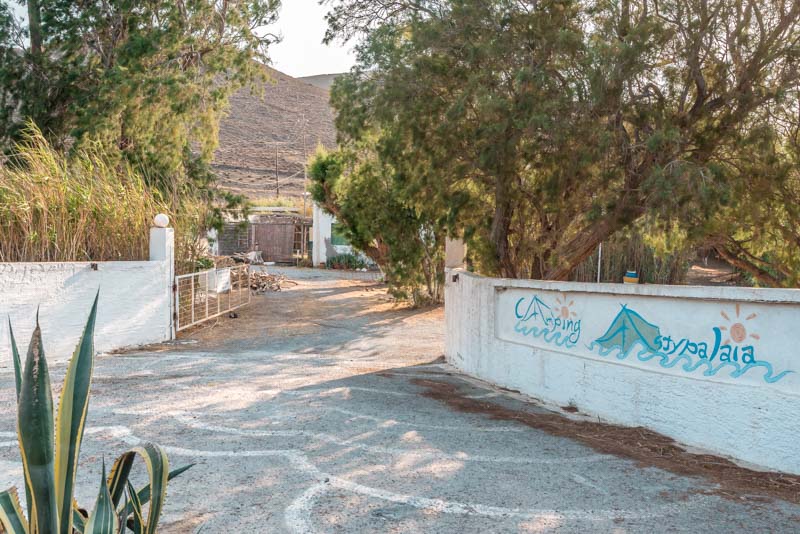
Map: Overview of Greek campsites
A good overview map of campsites in Greece makes navigation on a road trip much easier. On the website of the Panhellenic Camping Association you will find useful information and a map of all campsites in Greece: Greece Map
→ Another useful overview with a map of Greek campsites by region can be found at: campingmap.gr

Discounts: Are camping membership cards accepted in Greece?
Around 39 campsites in Greece are registered with the CampingCard ACSI and offer discounted pitches in low season. The ADAC has listed more than 30 campsites in Greece that accept the CampingCard.
Roads: What are road conditions like in Greece?
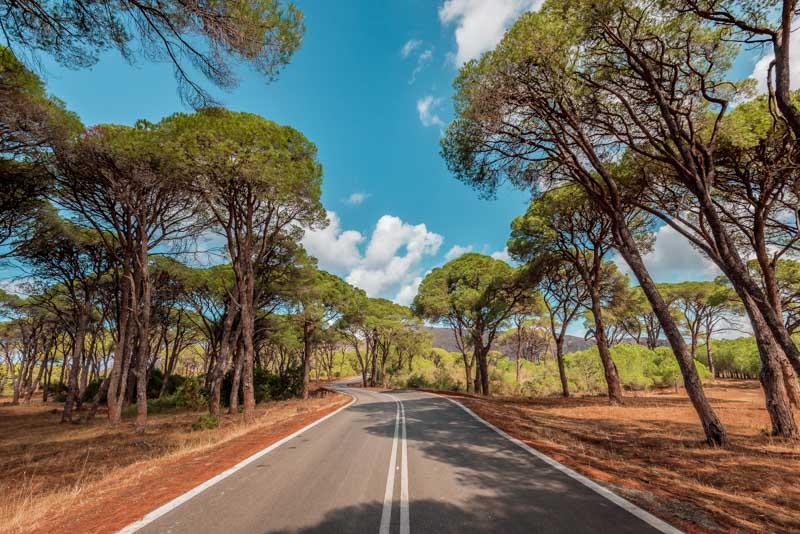
Although Greece has a well-developed road network, most roads outside the motorways are in poor condition and are often narrow and winding due to the country’s hilly terrain (almost 75% mountainous). It is not uncommon for sheep and goats to cross the road.
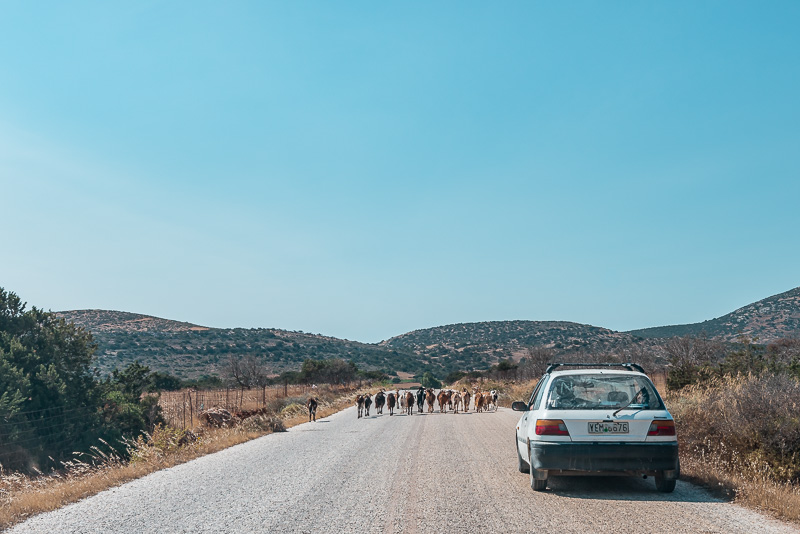
Anyone travelling in a larger motorhome – Knaus, Hymer and the like – should factor this in when planning their route and allow extra travel time. Do not follow route planners such as Google Maps blindly, or you may quickly find yourself on a gravel track or, in the worst case, stuck in a narrow village lane.
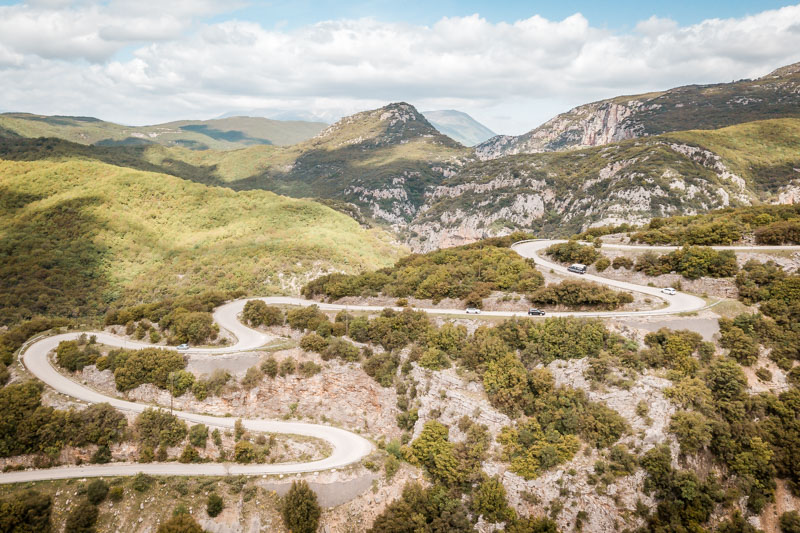
Some coastal roads (e.g. on the Ionian Islands) are so narrow that two cars cannot pass each other, and manoeuvring can be a test of patience. If you are travelling with a caravan, you have an advantage: once parked up, you can explore freely by car.
Water: What water sources are available?
Water is usually readily available in Greece. In many villages and towns there are still utility water taps, and in mountainous regions you will sometimes find roadside wells with fresh spring water.
Since these taps usually have no thread, it is advisable to have a good tap adaptor (sometimes called a ‘water thief’) (View on Amazon*) to hand. This saves the hassle of filling with buckets or canisters.
Combined with a coarse camping sediment filter (View on Amazon*), you get good water quality without clogging the internal pipes and hoses of your motorhome with particles. Most campsites also have water taps on site.
Accessories: Where can I buy camping accessories?
Camping equipment shops can be found in the industrial areas of larger cities such as Athens, Thessaloniki and Patras. There are also some shops selling camping gear in and around the popular camping regions of the Peloponnese and Halkidiki.
Sports shops and supermarkets sometimes carry a small selection of camping equipment too. Here are some recommended Greek camping and outdoor retailers:
- Dimitriadis (Athens, Delphi, Thessaloniki)
- Decathlon (Athens, Corinth)
- Petridi (Thessaloniki)
- Hobbi (Thessaloniki)
- JumpOut (Piraeus)
- Lightgear (Athens)
- Tsianikas (Patras)

#5 The 15 most popular Greek campsites
Campsites can be found all over Greece, with the greatest concentration on the Peloponnese peninsula, along the Ionian coast from Igoumenitsa to Patras, and on the Halkidiki peninsula. Crete also offers the widest selection of pitches among the Greek islands.
After extensive research and careful consideration of Google reviews, here are our Top 15 campsites in Greece:
Camping Sikia – Pelion, Thessaly
Google Rating: 4.7 | Open: all year round | Number of pitches: approx. 120 | Pitch price: from €19 | Website: camping-sikia.gr
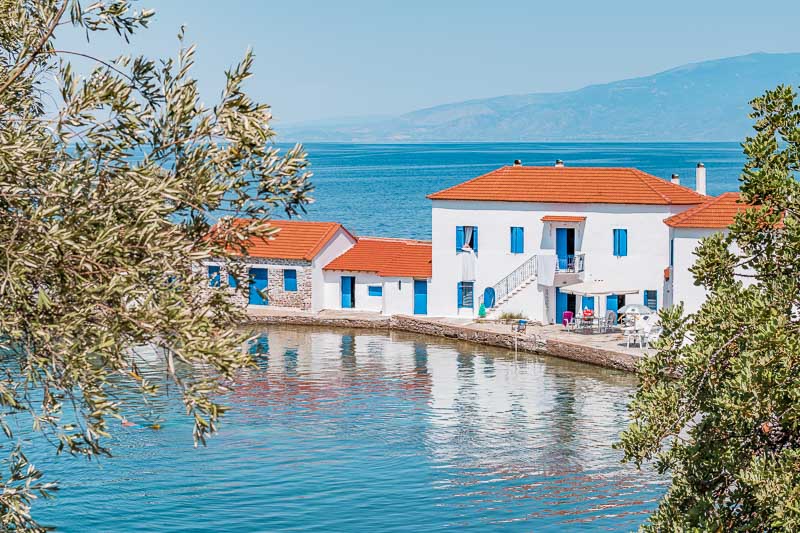
Camping Ionion Beach – Kylini, Peloponnese
Google Rating: 4.7 | Open: all year round | Number of pitches: approx. 225 | Pitch price: from €31 | Website: ionion-camping.gr
Sofas Camping – Syvota, Epirus
Google Rating: 4.7 | Open: 15.04.–15.10. | Number of pitches: approx. 40 | Pitch price: from €21 | Website: campingsofas.gr
Camping Semeli – Argolic Gulf, Peloponnese
Google Rating: 4.7 | Open: all year round | Number of pitches: approx. 44 | Pitch price: from €17 | Website: camping-semeli.gr
Camping Zaritsi – Argolic Gulf, Peloponnese
Google Rating: 4.7 | Open: 01.04.–15.10. | Number of pitches: approx. 120 | Pitch price: from €21 | Website: www.campingzaritsi.gr
Delphi Camping – Delphi, Central Greece
Google Rating: 4.7 | Open: 01.04.–15.10. | Number of pitches: approx. 80 | Pitch price: from €21 | Website: delphicamping.com
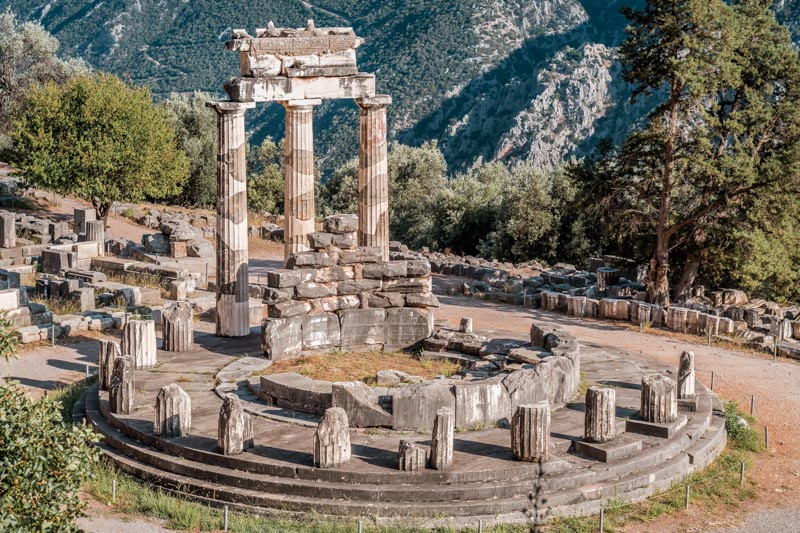
Ouzouni Beach Camping – Kassandra, Halkidiki
Google Rating: 4.7 | Open: 01.05.–20.10. | Number of pitches: approx. 100 | Pitch price: from €29 | Website: ouzounibeach.gr

Camping Melissi – Sithonia, Halkidiki
Google Rating: 4.6 | Open: 01.05.–30.09. | Number of pitches: approx. 100 | Pitch price: from €19 | Website: camping-melissi.gr
Camping Koutsounari – Island of Crete, Ierapetra
Google Rating: 4.6 | Uptime: 01.05. – 31.10. | Number of pitches: approx. 90 | Parking space costs: from 23 € | Website: camping-koutsounari.gr
Camping New Triton – Argolic Gulf, Peloponnese
Google Rating: 4.6 | Uptime: 01.04. – 31.10. | Number of pitches: approx. 50 | Parking space costs: from 21 € | Website: newtriton.gr
Camping No Problem – Crete Island, Agia Galini
Google Rating: 4.5 | Uptime: all year round | Number of pitches: 60 | Parking space costs: from 18 € | Website: gogalini.com/camping
Camping Gythion Bay – Laconia, Peloponnese
Google Rating: 4.6 | Uptime: 1.04. – 31.10. | Number of pitches: approx. 70 | Parking space costs: from 32 € | Website: gythiocamping.gr
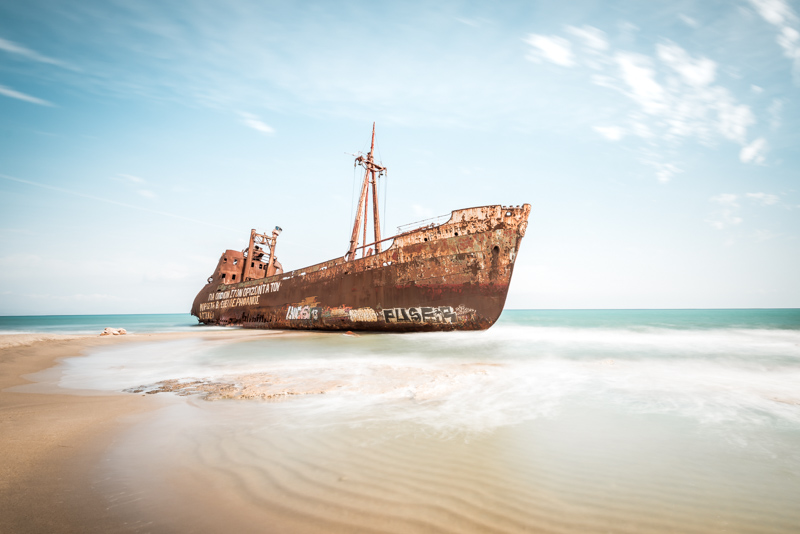
Camping Tsolis – Lampiri, Gulf of Corinth
Google Rating: 4.5 | Uptime: all year round | Number of pitches: approx. 80 | Parking space costs: from 20 € | Website: tsolis.campsaround.com
Camping Alikes Ammouliani – Ammouliani Island, Halkidiki
Google Rating: 4.4 | Uptime: 01.05. – 30.09. | Number of pitches: approx. 80 | Parking space costs: from 25 €

Camping Karavomilos Beach – Kefalonia Island
Google Rating: 4.4 | Uptime: 15.04. – 30.09. | Number of pitches: approx. 243 | Parking space costs: from 23 € | Website: camping-karavomilos.gr
*The pitch cost is based on 2 adults with a camper in low season
#6 Popular regions for camping in Greece
Halkidiki camping: info and popular pitches
The peninsula of Halkidiki with its distinctive three fingers in northern Greece inspires campers with fantastic beaches. Many campsites in Halkidiki offer direct access to the beach and even offers for water sports enthusiasts. Recommended campsites on Halkidiki are:
- Ouranoupoli Camping
- Akti Oneirou Luxury Camping
- Ouzouni Beach Camping
- Tsitreli Camping
- Alikes Camping Ammouliani
→ Our articles about the region at a glance: Halkidiki Blog

Epirus Camping: info and popular pitches
The coastal region of Epirus around Igoumenitsa and Parga on the northwest coast of Greece is becoming increasingly popular with campers. The strategic location of Igoumenitsa to the ferry ports of Italy (Bari, Brindisi and Ancona) allows a travel combination of Greece and Italy. Recommended campsites near Igoumenitsa and Parga are:
- Sofas Camping
- Camping Kalami
- Camping Nissos
- Camping Elenas Beach
→ Our articles about the region: Epirus at a glance
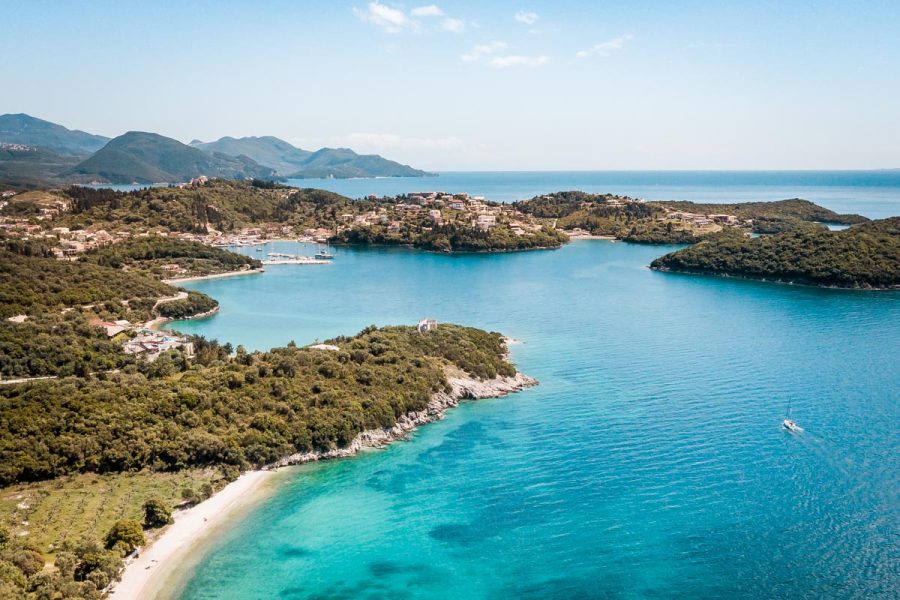
Corfu Camping: info and popular pitches
On the island of Corfu in the Ionian Sea, campers can enjoy lush green nature and beautiful beaches. Some campsites impress with their location directly on the sea and their family atmosphere. The capital Kerkyra is one of the most interesting places in the country. Recommended campsites on Corfu are:
- Camping Village Dionysus
- Camping Paleokastritsa
→ All our posts about the island: Corfu at a glance
Crete camping: info and popular pitches
Crete, the largest Greek island, offers numerous camping options. Almost all over the island you will find campsites of varying quality. The area around Paleochora is the most pleasant. The pitches directly by the sea are particularly popular, and the pitch fees are correspondingly expensive here. Recommended campsites on Crete are:
- Campsite Grammeno
- Camping Koutsounari
- Campsite Agia Galini
- Campsite Mithimna
- Campsite Paleochora
→ All our posts about the island: Crete at a glance
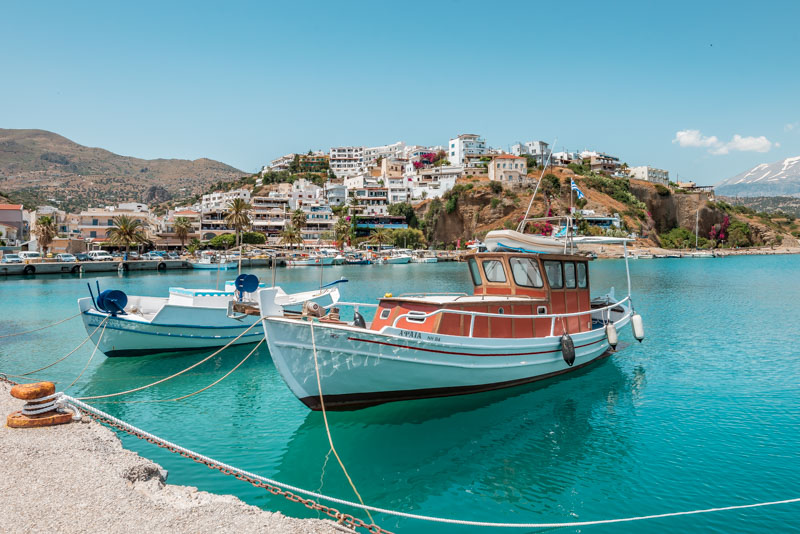
Lefkada Camping: info and popular pitches
The island of Lefkada is located between Corfu and Kefalonia in the Ionian Sea. The big advantage of the island is that you can do without the ferry, as Lefkada can be reached via a (floating) bridge.
With campers, Lefkada has experienced a real run in the last 3 years. Freestanding on the island’s beautiful beaches is (still) tolerated in the off-season. Recommended campsites on Lefkada are:
- Camping Desimi Beach
- Poros Beach Camping
→ Our contribution to the island: Lefkada Highlights
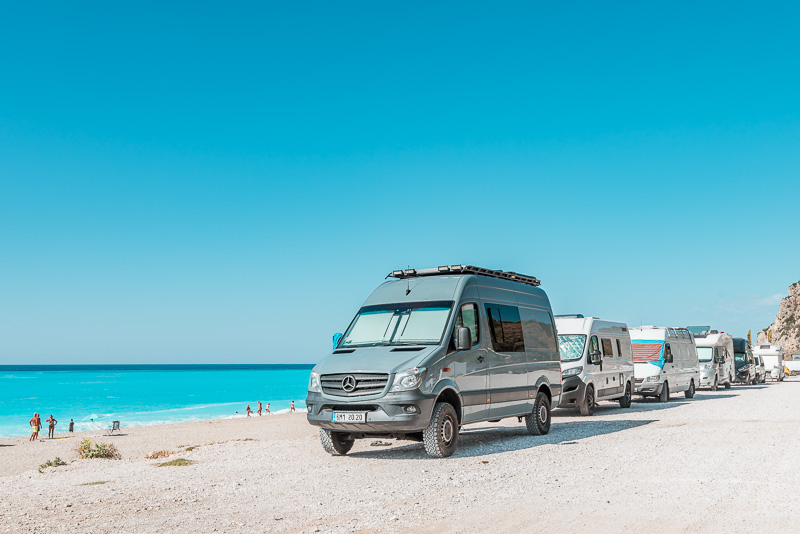
Peloponnese camping: info and popular pitches
The Peloponnese peninsula in the south of mainland Greece has been a popular camping area for connoisseurs for decades. Nature lovers will get their money’s worth here, the beaches are varied and the mountainous hinterland invites you to explore. The region on the Argolic Gulf near Nafplio is particularly popular. Recommended campsites on the Peloponnese are:
- Camping Gython Bay
- Camping Erodios
- Camping Semeli
- Camping Meltemi
- Thines Camping
→ All our posts about the Peloponnese: Peloponnese Blog
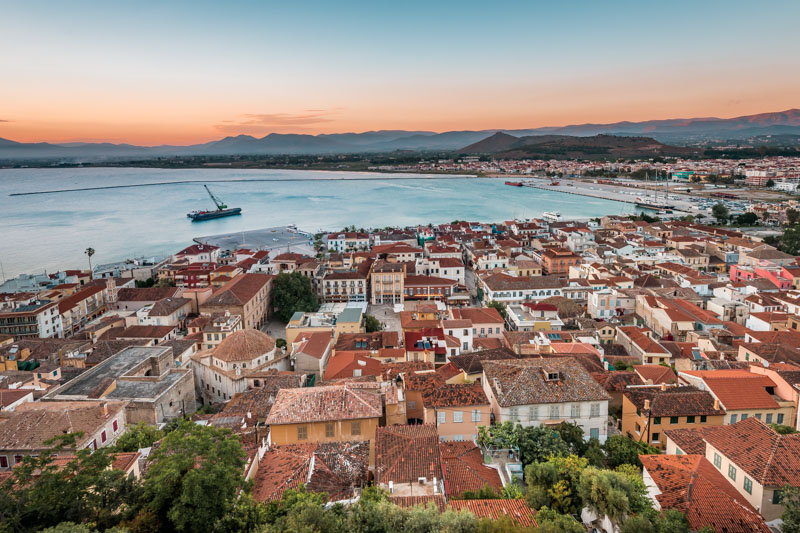
Pelion Camping: info and popular pitches
Pelion near the port city of Volos is considered a green mainland paradise on the Aegean Sea. Nature lovers in particular feel at home on the densely forested peninsula. The region is still one of the insider tips in Greece and even offers the possibility to spend the winter on some campgrounds. Recommended campsites in Pelion are:
- Camping Sikia
- Camping Kastri Beach
→ Our contribution to the peninsula: Pelion Highlights

Thassos Camping: info and popular pitches
The island of Thassos in northeastern Greece, near the coastal town of Kavala, is very suitable for a camping holiday in Greece due to its extremely short distance to the mainland. In the meantime, almost ten campsites and tent camps have been established, and even wild camping is still tolerated in many places on the island in the off-season. Recommended campsites on Thassos are:
- Golden Village Camping Thassos
- Camping Prinou
- Camping Pefkari
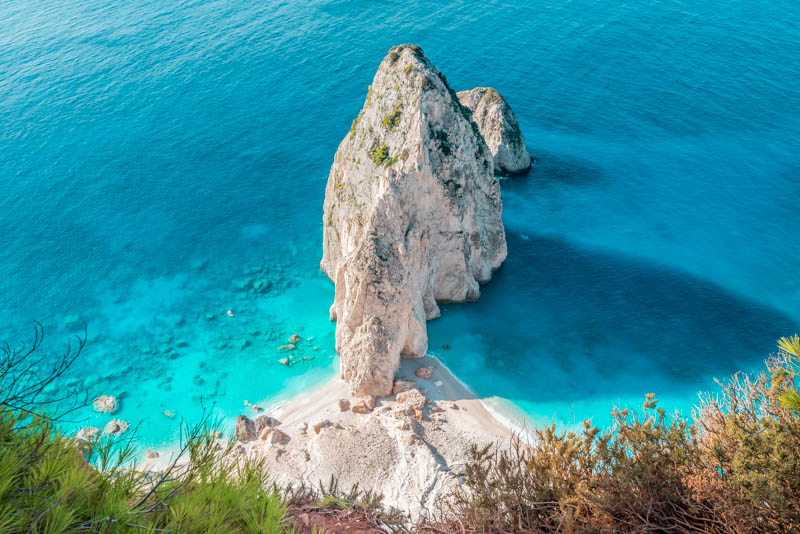
Zakynthos Camping: info and popular pitches
Zakynthos is not only a popular island for a beach holiday, but also very suitable for a camping stay due to its interesting location to the Peloponnese peninsula and the short ferry crossing from Kylini. There are a handful of solid campsites in Zakynthos, almost all of which are located directly on the beach. Recommended campsites on Zakynthos are:
- Camping Zante
- Alykes Camping
- Tartaruga Camping
→ Our contribution to the island: Zakynthos Highlights
#7 Renting a campervan in Greece
Not everyone wants to drive all the way to Greece in their own motorhome. Renting a campervan in Greece is a popular alternative and it has its advantages: no long drive, no wear and tear on your own vehicle, and you can simply fly in and pick up your motorhome on the spot.
The most popular starting points for motorhome rentals in Greece are Athens (Eleftherios Venizelos Airport), Thessaloniki and Heraklion (Crete). Several reliable rental companies operate in these cities. We recommend booking well in advance, especially for the high season.
A good starting point for comparing motorhome rentals in Greece is the platform Campanda or Indie Campers. Both platforms aggregate offers from numerous providers and allow you to filter by vehicle type, location and price.
→ You can find more travel reports and tips about the Greek islands here: Greek Islands Overview
*Support our blog Greece-Moments
In this post, you will find affiliate links marked with an asterisk (*). If you book or buy something through one of these links, we receive a small commission. For you, the price remains the same. In this way, you help us continue to provide high-quality content for free. Did you like this post and you would like to say thank you? Then just buy us the next Greek coffee ☕️ To the coffee fund
Bookmark this post on Pinterest!