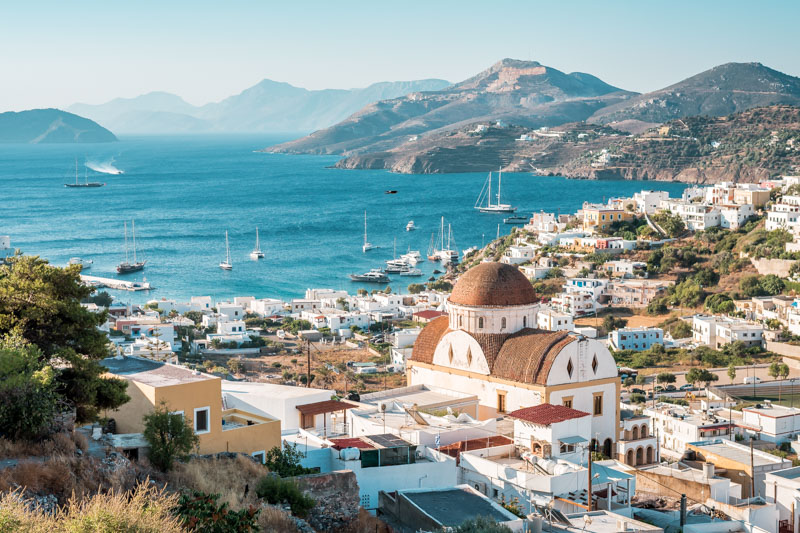

Amorgos—an island whose very name evokes love—has the power to instantly enchant every visitor. If you tell Greeks that you’re going to Amorgos, they look at you longingly and start raving about the island’s beauty.
“Amorgos has an aura that is difficult to put into words. The island is of wild, rugged beauty. For us, she is the goddess of the Cyclades.”
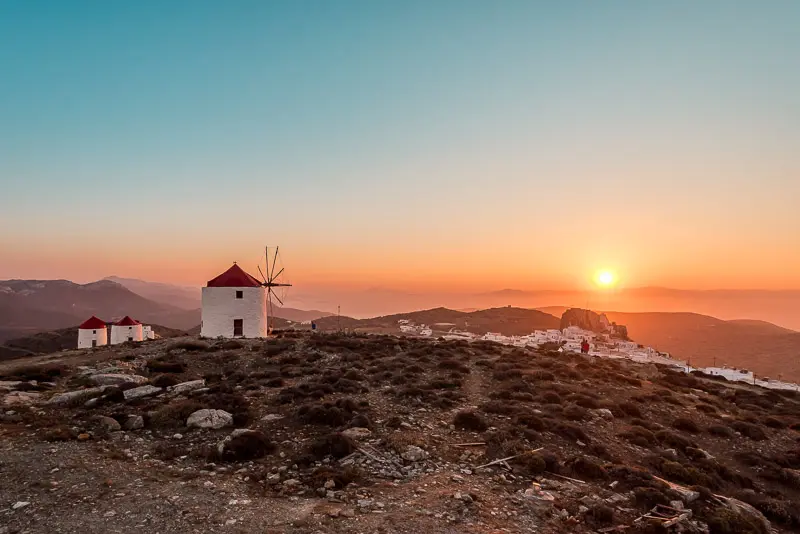
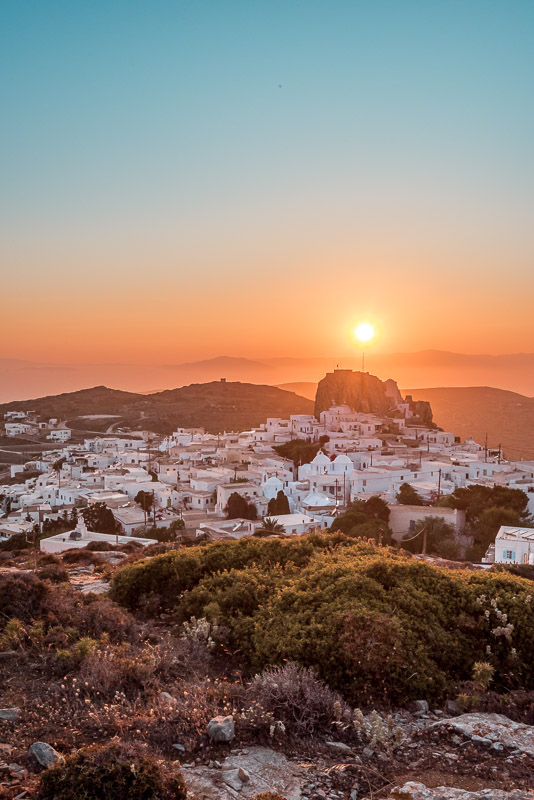
Anyone who drives along the coastal road from Aegiali to Chora at sunset knows exactly what we mean by these words. The 33-kilometer-long island on the eastern edge of the Cyclades offers quintessential Greek charm, incredibly hospitable people, unspoiled nature, and a high degree of authenticity.
Whether this beautiful Cycladic island can also capture your heart and why Amorgos immediately made it into the top 5 of our favorite Greek islands, you’ll find out in this article:
- #1 Walk through Chora
- #2 Amorgos Chozoviotissa Monastery
- #3 Hike to Profitis Ilias
- #4 Port town Katapola
- #5 In the footsteps of ancient Arkesini
- #6 Kalotaritissa and Gramvousa Island
- #7 Bay of Aegiali
- #8 Amorgos Mountain Villages in the North
- #9 Hike to Agios Ioannis Monastery
- #10 Day trip to the Lesser Cyclades
- More Amorgos travel tips

Amorgos Map: This map includes all Amorgos highlights, 47 places to visit & insider tips, 13 beaches & bays, as well as personal recommendations for 24 restaurants & cafes. Ideal for vacation planning and getting around locally. Can be used on smartphones, tablets, and PCs/Macs. Click here and start using it right away: To the Amorgos Map
#1 Walk through Chora
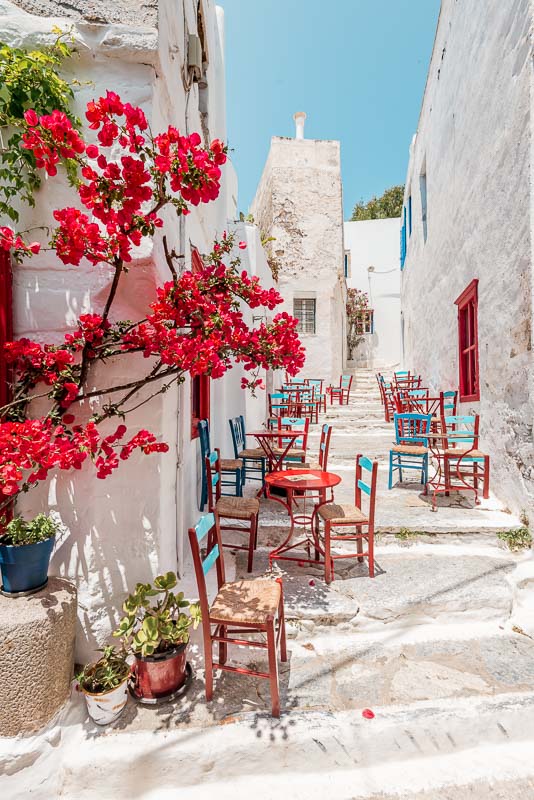
The capital of Amorgos is somewhat hidden on a mountain ridge above the port city of Katapola. Chora is a Cycladic dream come true—narrow, whitewashed streets with cube-shaped houses, small chapels and snow-white churches, pretty little shops, and traditional taverns.

Chora was founded in Byzantine times as a refuge from pirate attacks. Take a day to explore the medieval labyrinth of alleys in Chora. Outside the traffic-calmed town center, there are free parking spaces in the west and east, or in Unterdorf and Oberdorf.
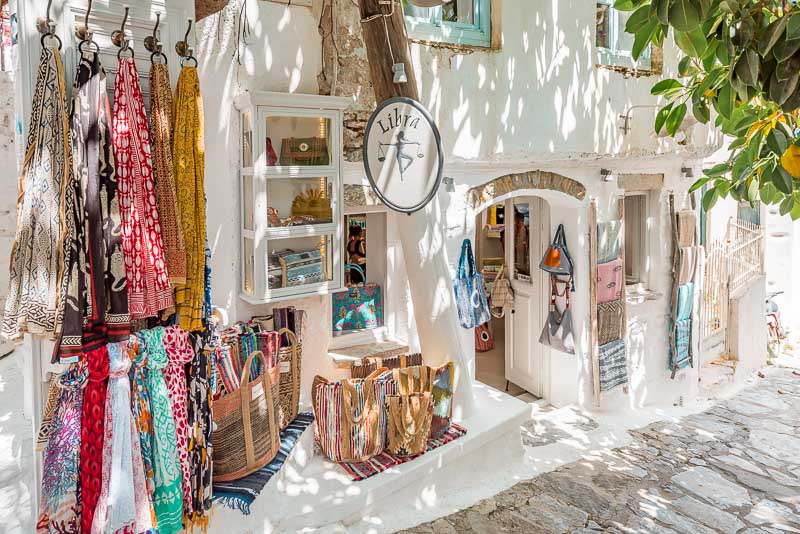
From Platia Agios Panton, where the bus stop and town hall are also located, you’ll reach the main alley. A stroll takes you past small, tasteful jewelry, ceramics, and textile shops, as well as inviting taverns and cafés (see Amorgos Restaurants for our recommendations).
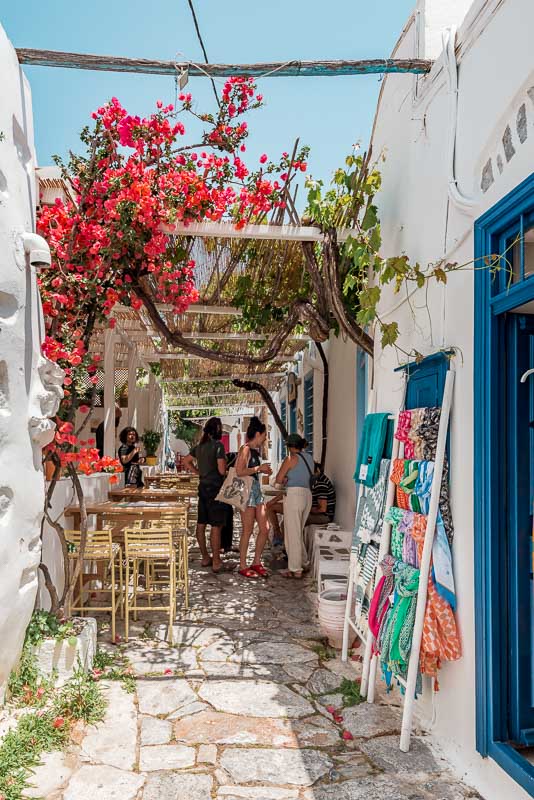
We found the shops Katoi Amorgos (soaps), Transistoraki (delicacies), Ola Berdevontai Glyka (souvenirs), and Harroto (boutique) particularly interesting. After the Botilia Bar, turn left into a narrow alley that leads to Platia Loza and its Metropolitan Church. The tree-shaded main square is the perfect spot for a coffee break.
Kastro of Chora
At the Loza Cafe Bar, you’ll also receive the key to access the Kastro of Chora, a 13th-century Venetian castle perched on a sheer rock in the center of the village. An inconspicuous alley branches off west of the square at Café To Katofili, leading up to the castle rock.
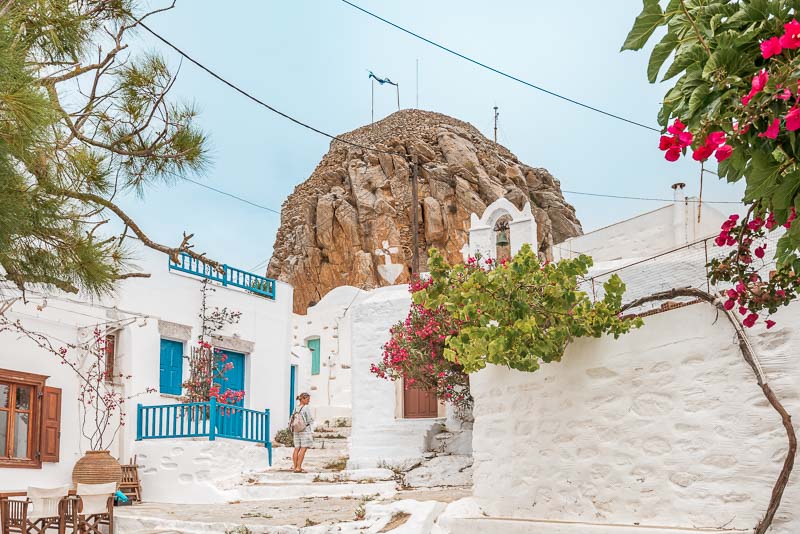
Above the white Chapel of Agios Konstantinos, narrow steps lead to the entrance of the Kastro. Compared to forts on other islands, it is almost tiny, and apart from the remains of walls, hardly anything has been preserved. Up here, the wind whistles mercilessly, but the view from the plateau of the surrounding area is magnificent.
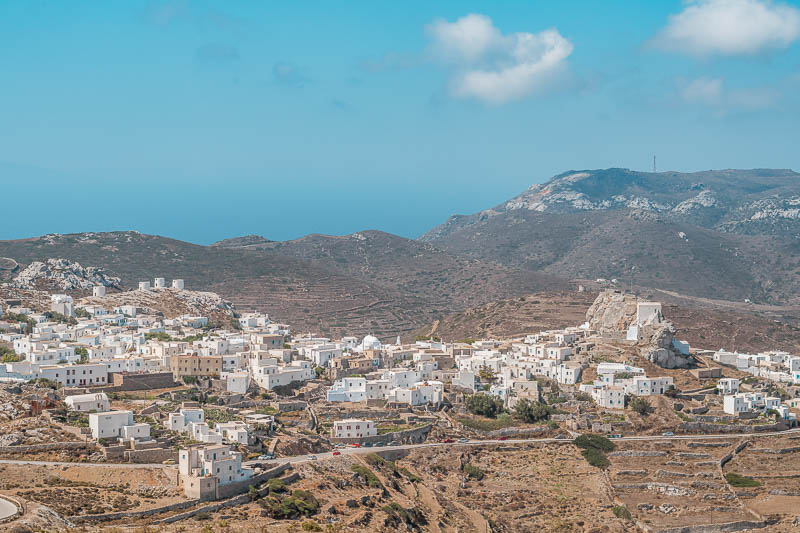
In the evening, it’s worth taking a detour to the windmill hill above the village. At sunset, there’s a magical atmosphere that draws many people every evening. The Windmills of Chora are partially accessible (at your own risk) and offer interesting photo opportunities through their windows.

#2 Amorgos Chozoviotissa Monastery
The most famous sight on Amorgos is hidden on a steep slope along the east coast. Like a mirage, the gleaming white Chozoviotissa Monastery seems to cling to a steep rock face 300 meters above the sea.
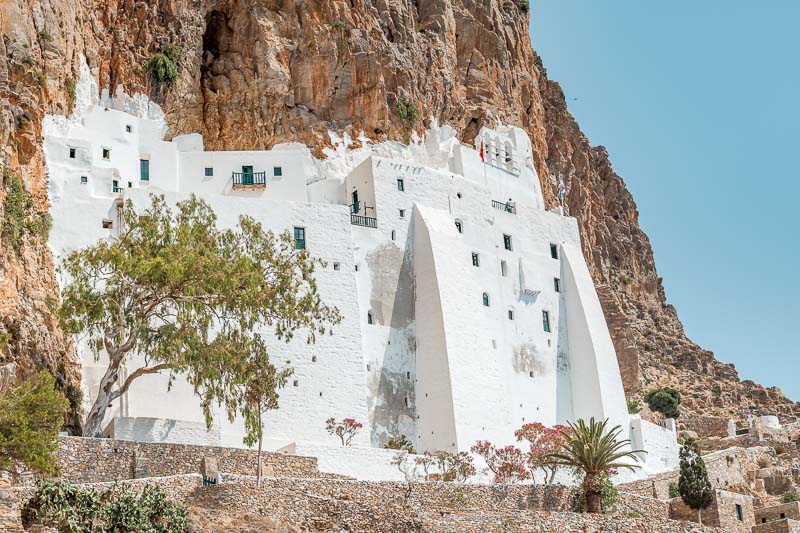
The Orthodox monastery complex is not only architecturally impressive. The climb to the holy site and the view from the living room window alone are highlights you’ll never forget. (Daily 8 a.m. to 1 p.m., 5 p.m. to 7 p.m.)
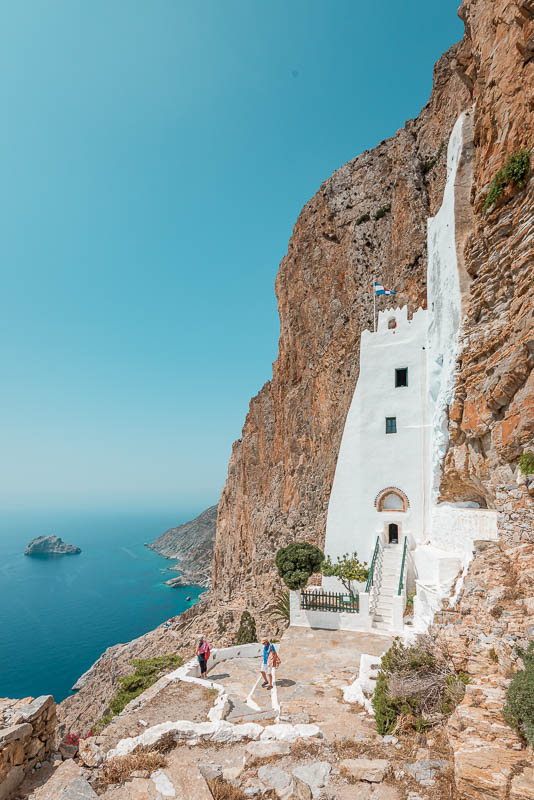

We’ll provide detailed information about the history and origin of the monastery, as well as tips for visiting the complex, in our separate article: Chozoviotissa Monastery
The Bay of Agia Anna
After watching the movie “The Big Blue – In the Rush of the Deep” (see box), we know about the magic of this place. The turquoise blue of the Aegean Sea sparkles here alongside the bright white of the chapel of Agia Anna.
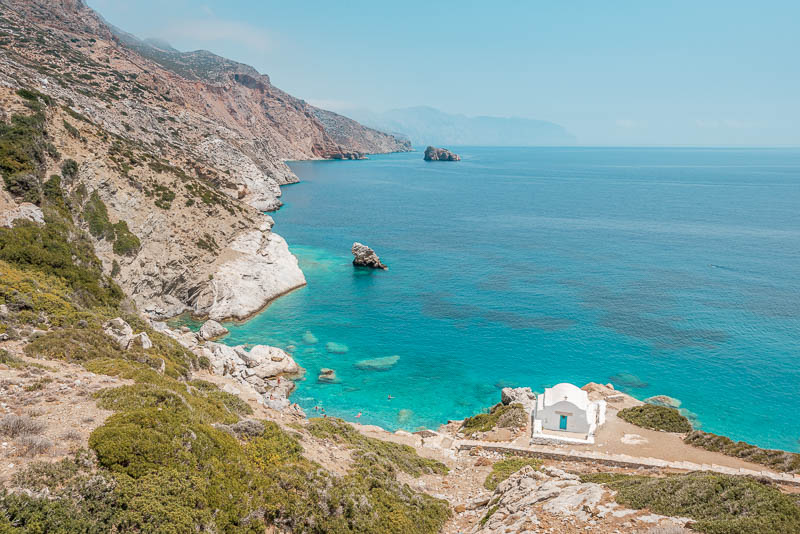
The rugged rocky coast below the Chozoviotissa Monastery exudes wild beauty, and the narrow bays with their gray pebble beaches invite you to take a dip. From the parking lot above, the Chapel of Agia Anna offers the most beautiful photo opportunity of this unique landscape.
💡 In the Rush of the Deep: “Le Grand Bleu” is the original title of the 1988 French diving film by cult director Luc Besson. The profound drama about the two protagonists, Jacques and Enzo, is based on a true story and takes place largely on Amorgos. If you watch the film beforehand, you’ll recognize some of the locations when visiting the island. Further information and streaming options are available on Amazon*: Le Grand Bleu Film*
#3 Hike to Profitis Ilias
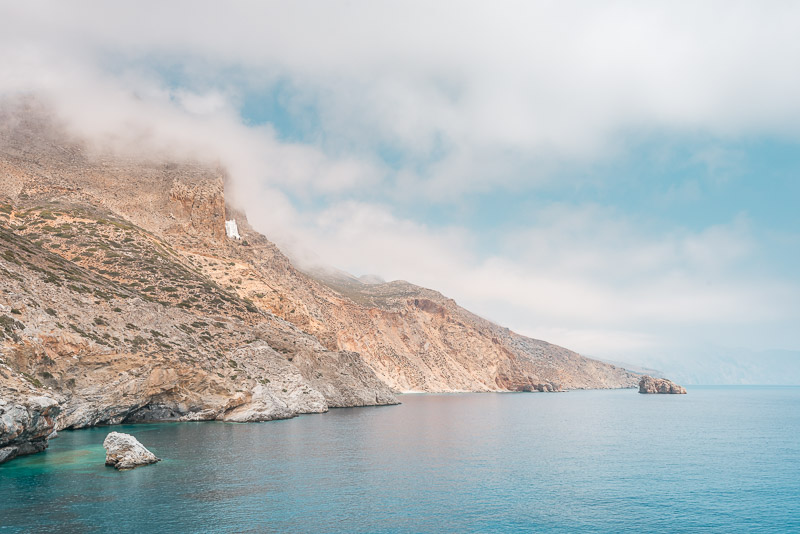
Amorgos has a good network of attractive hiking trails and is considered a hiker’s paradise by connoisseurs. A nearly one-hour hike leads to one of the highest peaks on the island. Mount Profitis Ilias is located above Chora on a steep cliff and offers a 360-degree panoramic view of the island at nearly 700 meters above sea level.
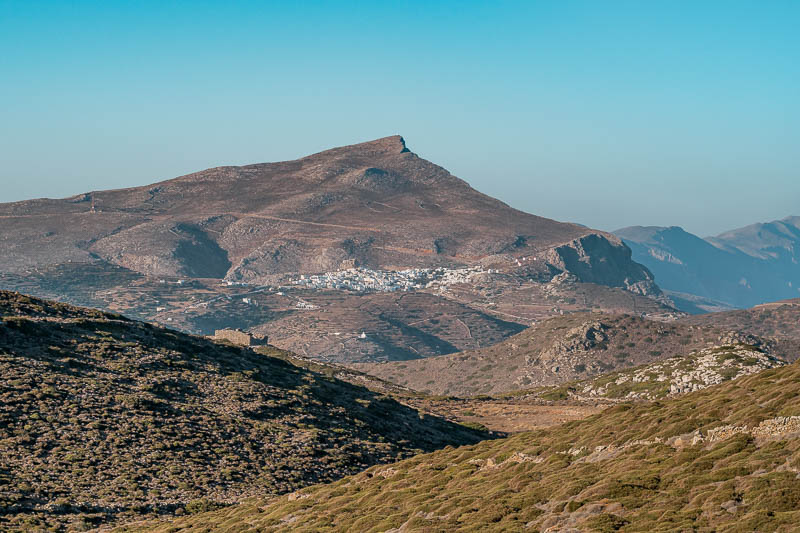
The hike is especially recommended when the sun is shining, visibility is clear, and there is no wind, as strong gusts can occur up here, making it much more difficult to navigate. In spring and fall, the weather in Amorgos can change quickly, so be sure to pack a rain jacket.
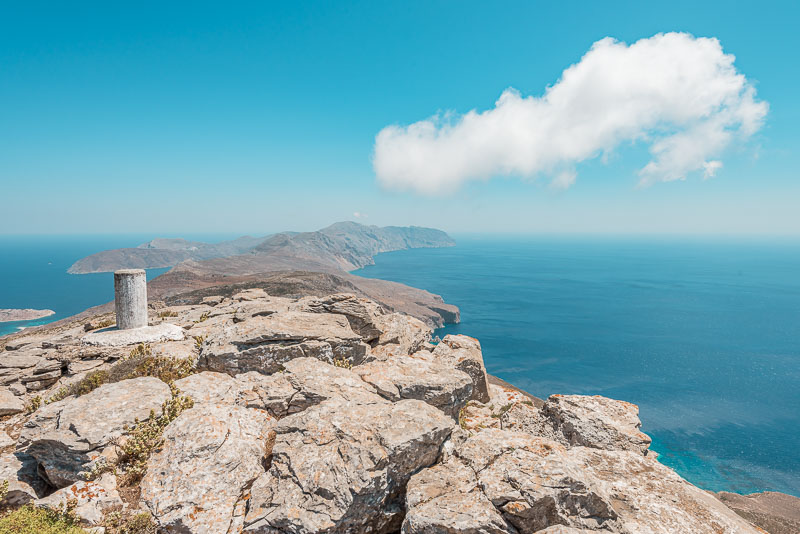
The ascent can be started either from Chora or from the main road (turn-off to the Theoskepasti cave chapel, approx. 50 minutes). The donkey trail winds its way across treeless slopes, always offering a magnificent view of the Aegean Sea and the surrounding Cyclades. At the junction to Chora, the trail becomes less defined; follow the cairns all the way to the summit.
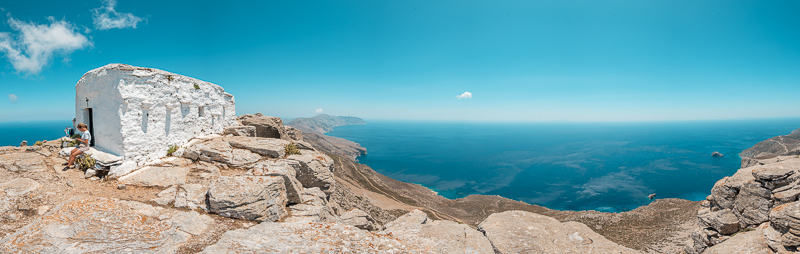
On the summit at an altitude of 698 m stands the snow-white chapel dedicated to the prophet Elijah. To the right of the chapel, caution is advised, as the steep cliff drops several hundred meters into the sea. Behind the church, a concrete column marks the highest point of the mountain.
The Old Strata of Amorgos
Hiking enthusiasts can hike the approximately 15 km long old connecting path between Chora and Langada on a challenging day hike (min. 5 hours, moderate to difficult). The starting point is Chora or the monastery of Chozoviotissa; the route then leads below the Prof. Ilias massif up to Asfontilitis and via Potamos to Langada.
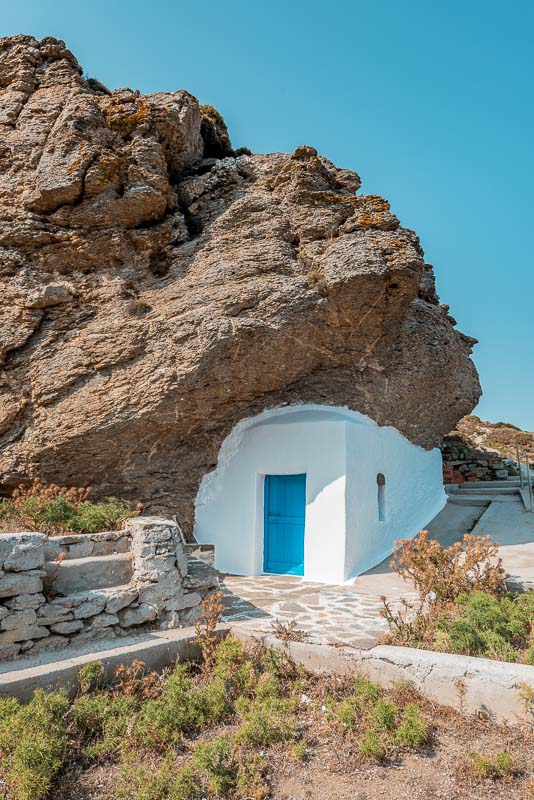

All along the route, you’ll enjoy magnificent views of the sea. A worthwhile detour is the small cave chapel of Panagia Theoskepasti, built directly beneath a rock. On the wind-protected forecourt, you can enjoy a wonderful picnic. On a clear day, the view extends to the picturesque neighboring island of Astypalea.
💡 Amorgos book tip: The Greek Islands travel guide from Lonely Planet contains an informative chapter about Amorgos with numerous travel tips and hikes: View on Amazon*
#4 Port town Katapola
Katapola, in the southwest of the island, is the main port of Amorgos. Here, most visitors set foot on land for the first time by ferry and are greeted by a typical Cycladic backdrop of white, cubic houses.
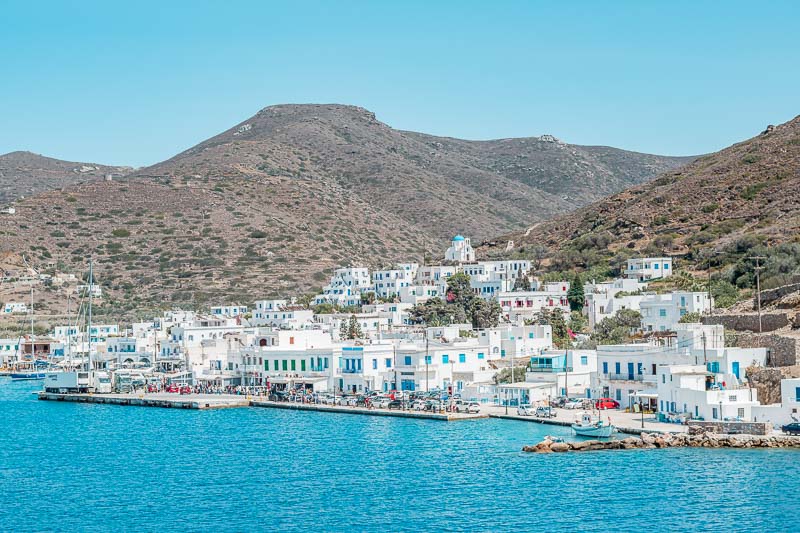
The harbor settlement is located in a deeply indented bay and consists of three districts. In the southern part of the Katapola district is the small harbor pier, which merges directly into the waterfront promenade with numerous cafés and taverns. Apartments and guesthouses are located in the hinterland.

In Katapola, there are shops for daily necessities, supermarkets, pharmacies, bakeries, a laundromat, and car rental services. Worth seeing in the town center is the historic Church of Panagia Katapoliani, which was unfortunately closed during our visit.
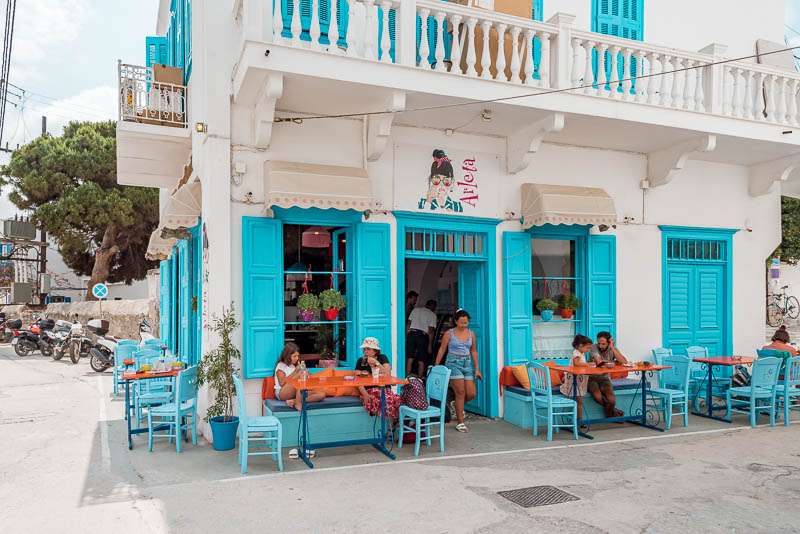
In the oldest Rachidi district, there are a few private accommodations; otherwise, the area is mainly home to locals living in quiet surroundings. The main attraction is the large church of Agios Georgios with its blue domes, which is only open for church services. Directly below is the supermarket owned by German immigrant Ursula, where you’ll find a good selection of organic products.
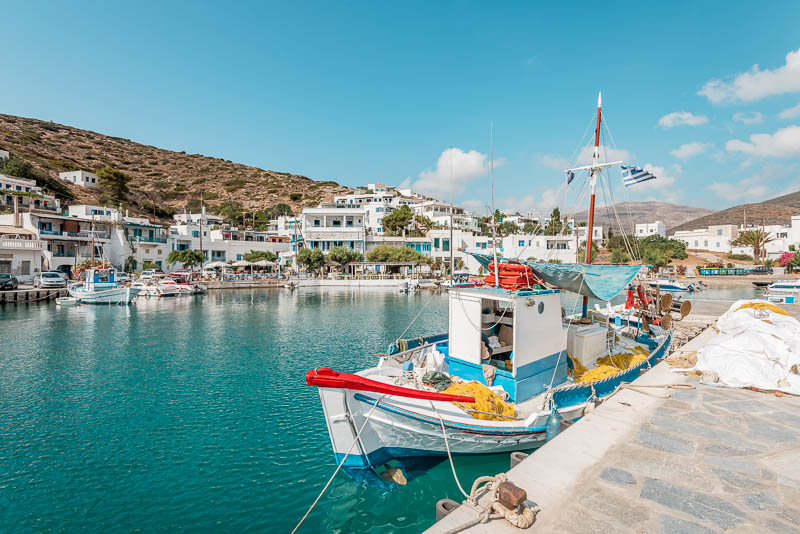
We found the most idyllic Xilokeratidi, the northern district of Katapola. The neighborhood winds around a picturesque fishing port, an ideal place to end the evening. Trendy bars and restaurants have set up shop here right on the water. A pleasant stroll through the photogenic alleys is well worth it.

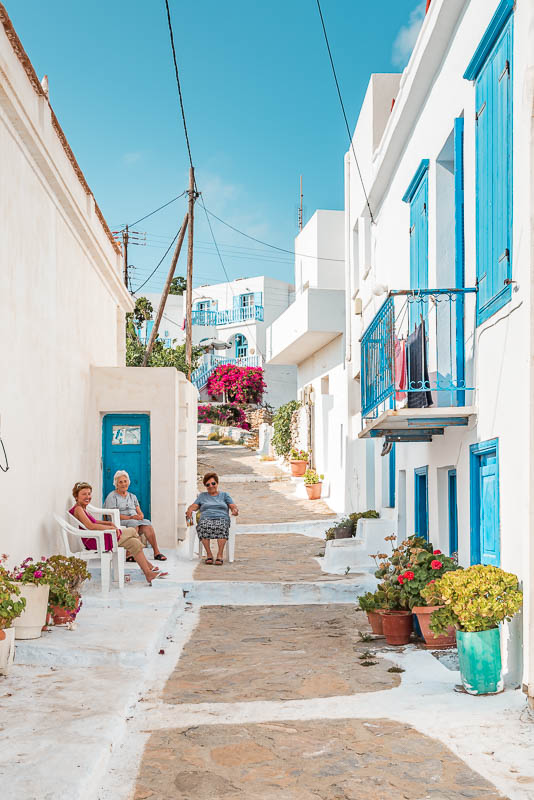
Hike to Maltezi Beach
From the cemetery on the outskirts of Xilokeratidi, you can walk to the popular Maltezi Beach in 20 minutes. The path winds along the shore to the pretty chapel of Agios Panteleimon. Behind a rocky plateau, the view opens up to the beautiful bay with its golden sandy beach and crystal-clear water.
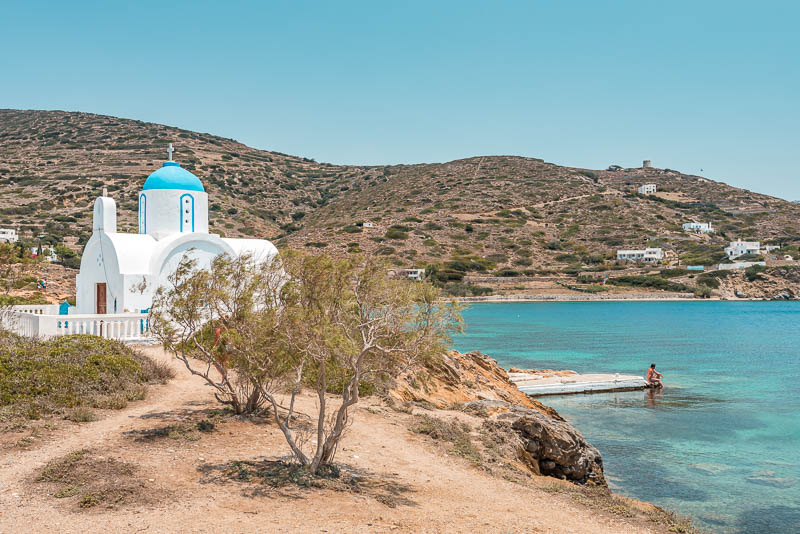
During the high season, there is a canteen on site that provides sun loungers and umbrellas. In the low season, Maltezi Beach is natural and pleasantly quiet. More information about this beach at: Beautiful beaches in Amorgos
Ascent to Minoa
South of Katapola, on Moundoulia Hill, lies the ancient site of Minoa. In Minoan times (around 2,500 BC), the summer residence of the Cretan King Minos is said to have been located here. The oldest remains include the massive Cyclopean walls that once protected the complex from attackers.
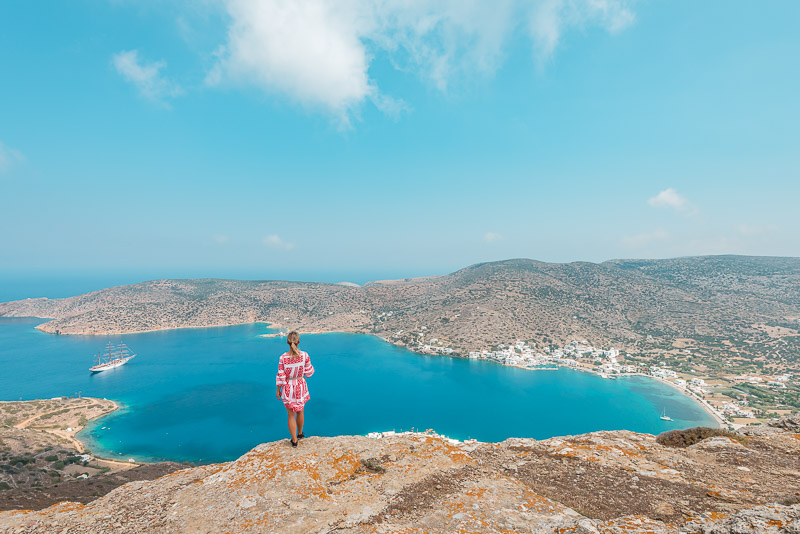
The archaeological site, whose origins date back to the 11th century BC, housed an acropolis with temples and statues in ancient times. Minoa was permanently inhabited until Roman times (around the 4th century AD). Abandoned today, the complex still offers a magnificent panoramic view over Katapola Bay.
Although you come across pottery shards from different eras everywhere, there is unfortunately not much to see. Only the foundations of a Temple of Apollo with half a statue, remains of the mighty cyclopean walls, and a Roman cistern can still be seen in the ruins.

You can reach the freely accessible ancient site either on foot via a hiking trail from Katapola or by rental car via a concrete track. You can park your car at the Stavros Chapel. From there, it’s a 15-minute walk to the entrance of the sun-drenched complex.
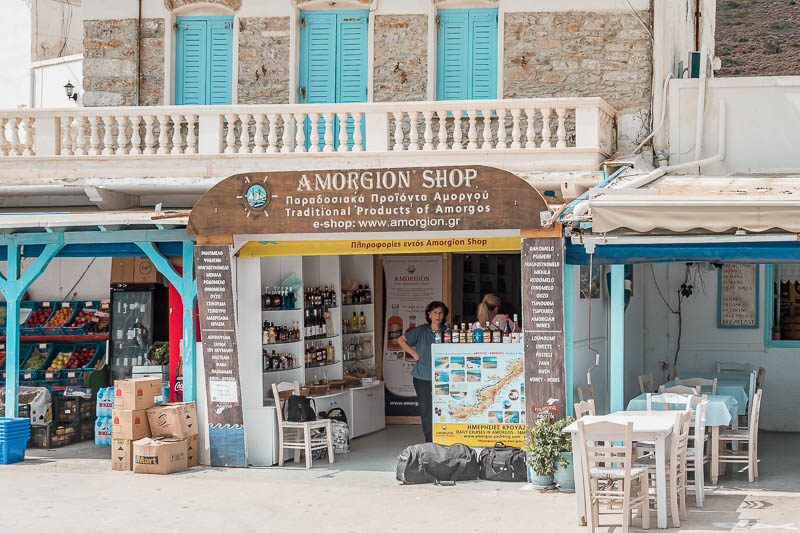
💡 A high-proof Amorgos souvenir: At the Amorgion distillery, located between Katapola and Chora, you can taste wine and spirits produced on the island, such as psimeni (an aperitif made from tsipouro, honey, and spices) and Fragkosikomelo (a liqueur made from prickly pears), and buy them in their original form or as a gift set. You can find more Amorgion shops in Katapola at the harbor and in Chora.
#5 In the footsteps of ancient Arkesini
The Ancient Site of Arkesini (Ancient Arkesini) is spectacularly situated on a rocky outcrop jutting into the sea. It was once one of the three city-states of Amorgos, along with ancient Minoa and ancient Aegiali, and was likely founded in the 9th century BC by immigrants from Naxos.
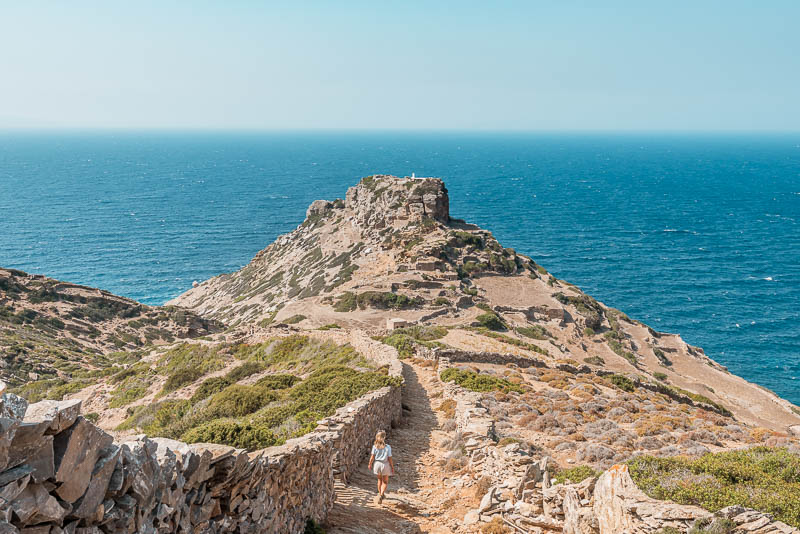
In the Middle Ages, there was great unrest in the Aegean. Amorgos and its coastal settlements were repeatedly the target of pirate attacks, and Arkesini was eventually abandoned. Because of its fortress-like structure, the cape and its complex are also called “Kastri.”
A very scenic hiking trail leads from the village of Vroutsis to Ancient Arkesini in about 30 minutes. Next to the village church of Agios Spyridon, you can park your car in a parking lot.
If you follow the alley north, you’ll come to a paved mule track that leads to the church of Agios Ioannis. With its blue dome, it’s a real gem in the landscape covered with maquis. Donkeys, sheep, and goats are not uncommon along the way.
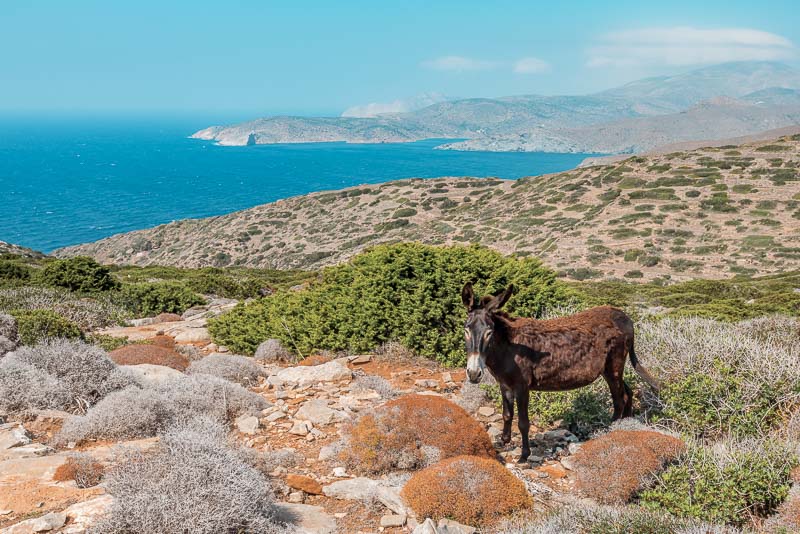
From here, it’s about a 20-minute walk to the ancient site. Narrow steps lead up to the ruin-strewn summit plateau with the snow-white Chapel of Panagia Kastriani. The plateau was once home to an ancient acropolis with a temple dedicated to Apollo and Athena, but nothing remains of it.
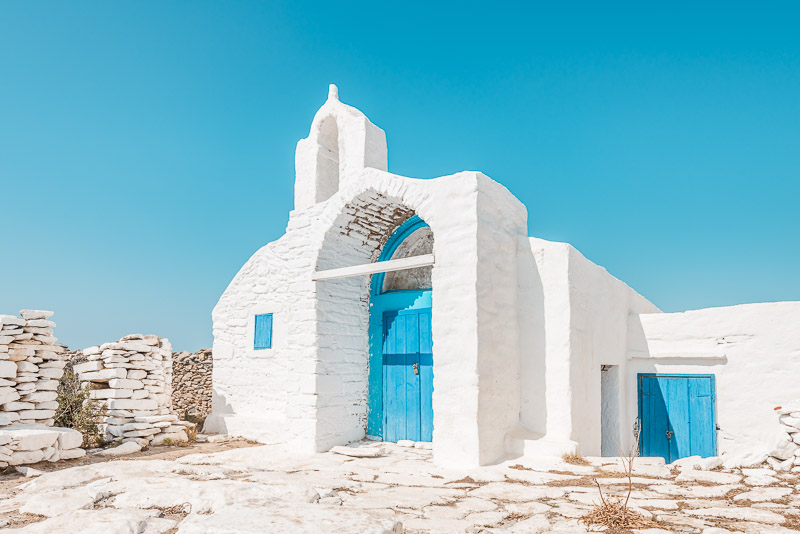
The view from up here of the west coast of Amorgos and the deep blue Aegean Sea is breathtaking. Especially at sunset, the light on the hill directly above the sea is particularly beautiful. The area is not fenced; caution is advised, as the path descends steeply in places.
Including photo stops, this Amorgos walking tour takes about 1.5 hours and is only recommended in the morning or late afternoon during midsummer, as the path is completely unshaded. Both the church of Agios Ioannis and the chapel of Panagia Kastani were closed during our visit.
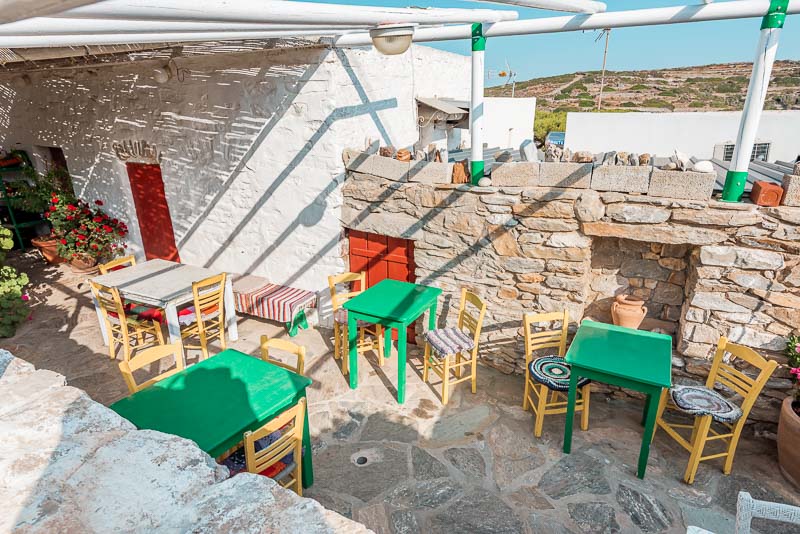
On the way back, it’s worth taking a break to rest your tired legs at the Giōrgalínēs Tavern or the rustic Kafeneion Klimataria Rest. At the latter, the friendly owner serves cool drinks and simple Greek dishes. Inside, there’s a small supermarket, known as a Pantopoleion.
Would you like to explore the island of Amorgos with locals? You’ll find guided hiking tours and other activities on the Getyourguide* portal. Click the link for details such as availability and prices: To guided tours*

#6 Kalotaritissa and Gramvousa Island
About a 35-minute drive from Chora, on the southern tip of Amorgos, lies Kalotaritissa Bay. With its golden sandy beach and shallow turquoise waters, where colorful fishing boats sail, it’s a true postcard scene. The lagoon-like bay is also sheltered from the wind, making it ideal for families with children.

Part of Kalotaritissa Beach is equipped with sun loungers and umbrellas (about €10), provided by the Kantina. The beach kiosk offers homemade food to hungry beachgoers at slightly higher prices. The rest of the beach is natural, and you can spread out your towel in peace.
From the harbor pier in the north of Kalotaritissa Bay, excursion boats depart several times a day during the season for the neighboring island of Gramvousa. The uninhabited island is home to beautiful bays with a fine pebble beach and turquoise blue water. The island is also ideal for snorkeling.

The Roussetos Roussos team offers hourly crossings between 11 a.m. and 7 p.m. for €5 per person (approx. 8 min.) during the season. On Gramvousa, you can rent an umbrella with a sunbed if needed (approx. €12) or simply spread out your beach towel. More info on Facebook: Amorgos Roussetos Daily Cruises
Shipwreck of Amorgos
In February 1980, strong northerly winds drove the cargo ship Olympia toward the coast of Amorgos. The captain sought shelter in Liveros Bay. However, the freighter was caught in high waves and washed directly onto the cliffs, where it ran aground. The entire crew managed to save themselves.
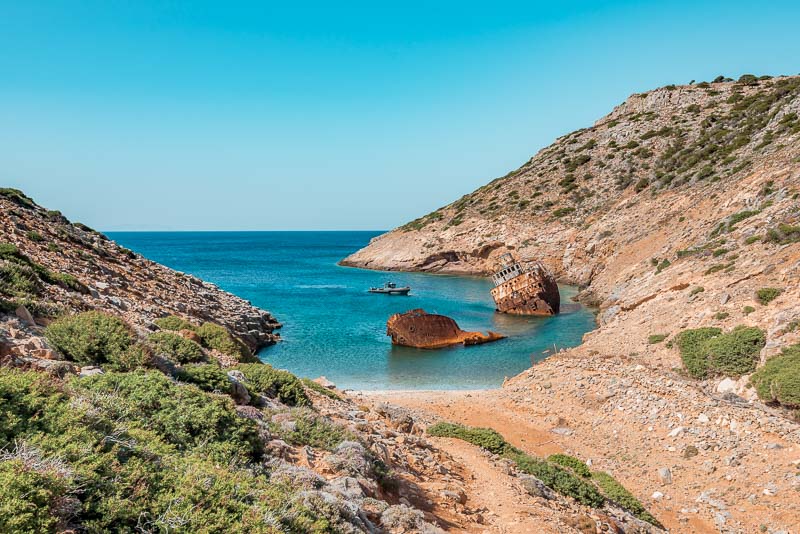
Since then, the giant has been rusting away and is not only a spectacular photo subject but also a popular dive site. It was also featured in the French diving film “Le Grand Bleu” (see box #2).
The wreck lies southwest of Amorgos, not far from Kalotaritissa Bay. Google Maps shows a parking lot on the main road where you can park your car. From here, it’s just a 10-minute walk down a narrow path to the coast.
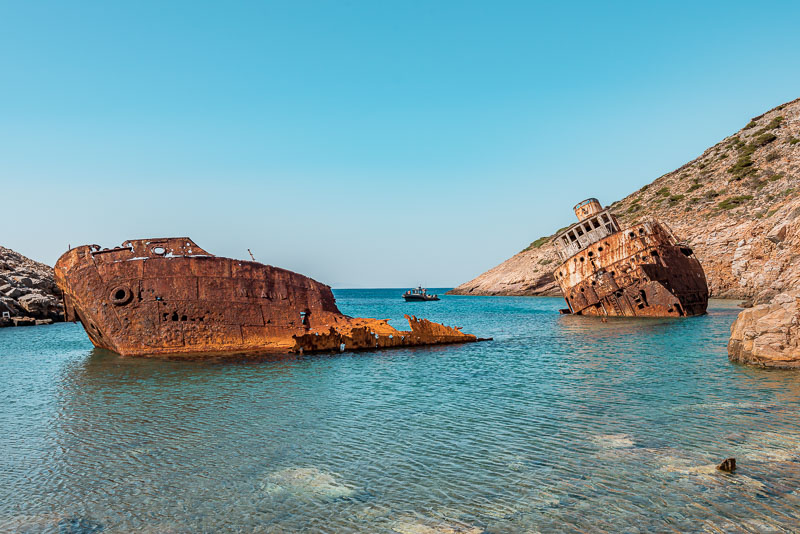
Even from a distance, the shipwreck catches the eye, lying like a rusty giant in the narrow bay. Down on the pebble beach, you can admire it in all its glory. However, we advise against exploring the wreck on your own; diving schools (e.g., We Shall Sea Diving Center) offer excursions.

#7 Bay of Aegiali
Aegiali is located in the northwest of Amorgos and, like Katapola, is a popular holiday resort with a harbor pier. In recent years, the coastal town, also known as Ormos, has grown significantly, and more and more private accommodations and smaller hotels have opened.
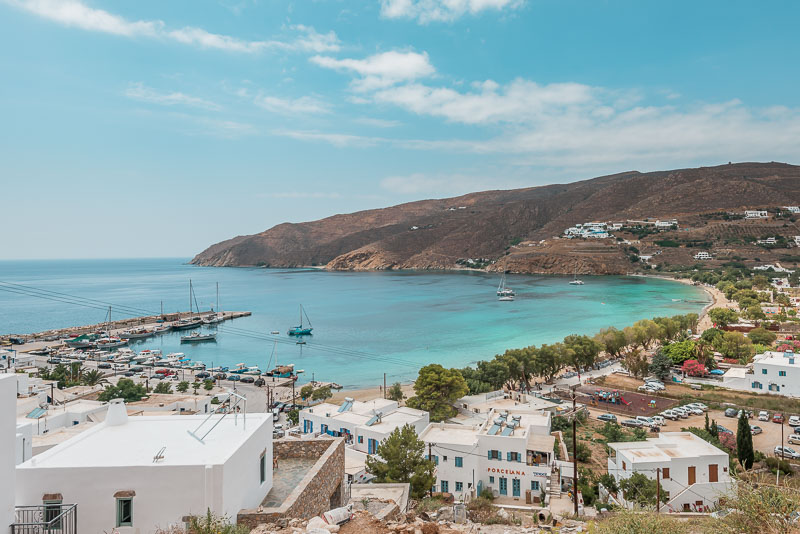
Just behind the pier lies the original settlement center of the former fishing village, which is also the gastronomic heart of Aegiali. Numerous taverns, bars, and cafés (tip: Amorgis) invite you to linger here and enjoy the view; an old windmill by the sea is a popular photo spot.
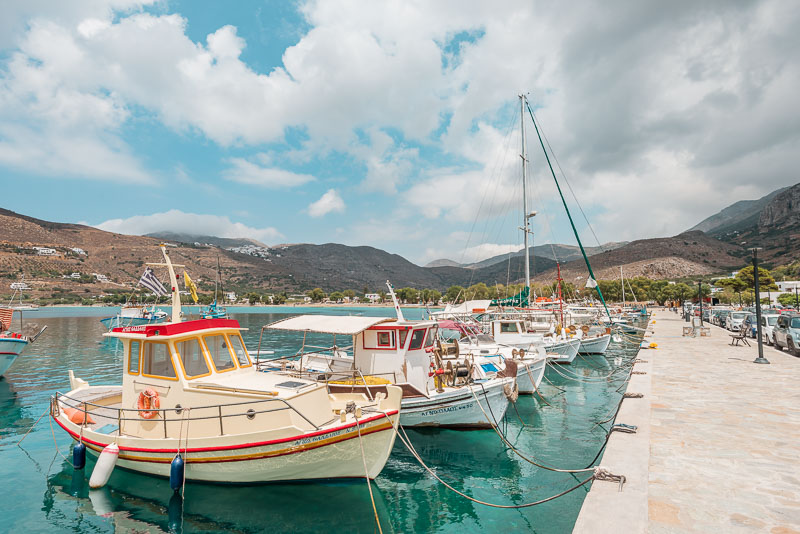
Aegiali is a great spot for a coffee break before or after a hike or a visit to the mountain villages. Behind the playground, right on Aegiali Beach, you’ll find a large parking lot, but it fills up quickly by lunchtime.
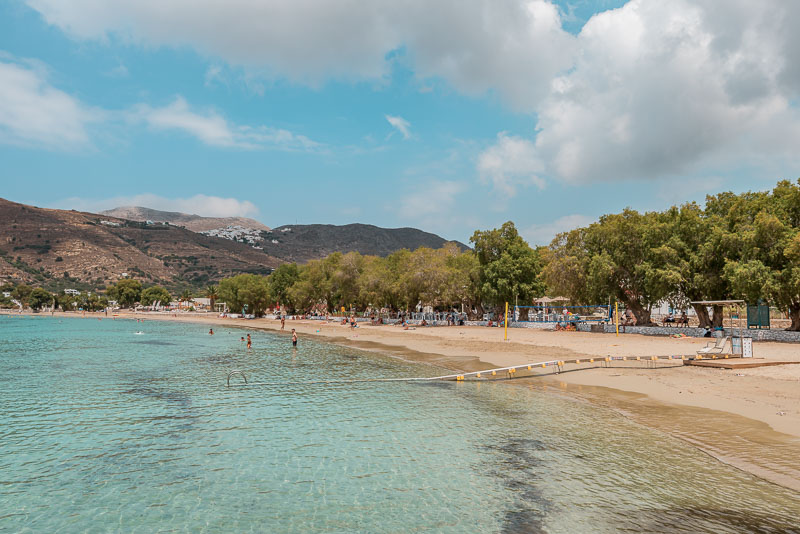
The harbor promenade stretches to the longest sandy beach on the island. The wide bay of Aegiali is largely natural and slopes gently into the sea near the shore. Tamarisk trees on the beach provide some shade. For people with disabilities, there is even a beach lift that leads directly into the sea.
Above Aegiali, a road branches off to the mountain village of Potamos. Stairs lead you to the maze of alleys in the small hamlet, which serves as a retreat for the locals. The village’s two taverns offer a magnificent view, which is especially popular at sunset.
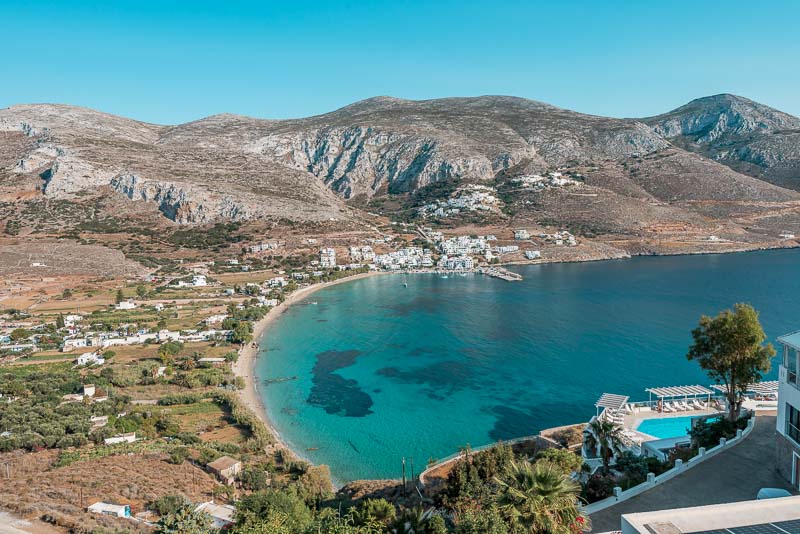
By the way, you have the most beautiful view of the photogenic bay of Aegiali from the road leading to the mountain village of Tholaria. It is also home to the island’s only 5-star hotel, the Aegialis Hotel & Spa (View on Booking.com*).
Excursion to Nikouria Island
Like a sleeping giant, the uninhabited Nikouria Island lies off the west coast of Amorgos. The island was once connected to Amorgos, but the great volcanic eruption of Santorini separated the land masses. Until the beginning of the 20th century, the island served as a place of exile for lepers, similar to the island of Spinalonga in Crete.

From the coastal hamlet of Agios Pavlos, excursion boats run several times a day during the season to Nikouria (every hour on the hour between 10 a.m. and 7 p.m., approx. €5 per person). Below the gleaming white Panagia Chapel, small bays with wonderfully clear water invite you to take a dip. On very windy days, the excursion is not recommended, as conditions on Nikouria’s beach can be quite uncomfortable.

Swimming is just as beautiful on the headland of Agios Pavlos, lined with light gravel and jutting far out into the sea. All around, the sea shimmers in wonderful shades of blue, ochre-colored rocks add colorful accents to the shore, and the scenery is very photogenic, especially from a distance!

Ruined village of Asfontilitis
The settlement on a windswept ridge above Agios Pavlos looks like a ghost town. An eerie silence hangs over the nearly deserted village, from which only the white church of Agios Nikolaos stands out. If you stroll through the ruins of Asfontilitis, you’ll embark on a journey through time and discover strange drawings at the entrances, around which many legends are woven. The rustic tavern To Steki tou Machera is open to hikers by telephone appointment.
#8 Amorgos Mountain Villages in the North
In stark contrast to the lively coastal town of Aegiali are the two white mountain villages of Tholaria and Langada, which rise above the landscape at an altitude of about 200 meters to the northeast or southeast. Only in July and August is there a lot of activity here, when the narrow, whitewashed streets fill with numerous visitors.

A colorful mix of mainland Greeks, neo-hippies, and international tourists brings the summer evenings to life until late at night. At lunchtime, you can stroll leisurely through the alleys while the crowd of vacationers lingers on the beach.
A trip to Tholaria
To get to Tholaria, drive along the main road just behind the coast, past the Aegiali Campsite and through some winding passages past the Aegialis Hotel & Spa. You can park for free in Tholaria’s municipal parking lot; in summer, the small lot is usually full.
Since Tholaria is a traffic-calmed area, you’ll explore the labyrinth of alleys in this amphitheatrically laid-out village on foot via countless steps. Today’s village center is the Platia surrounding the magnificent Church of Agioi Anargyroi.
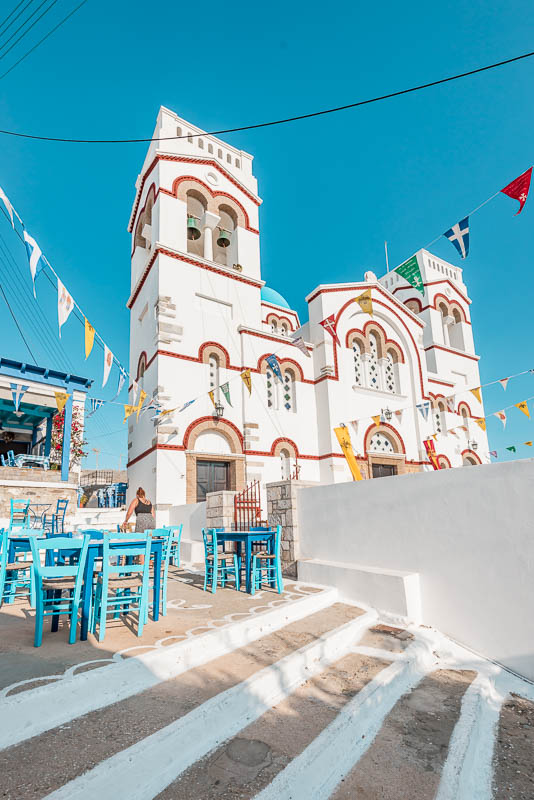
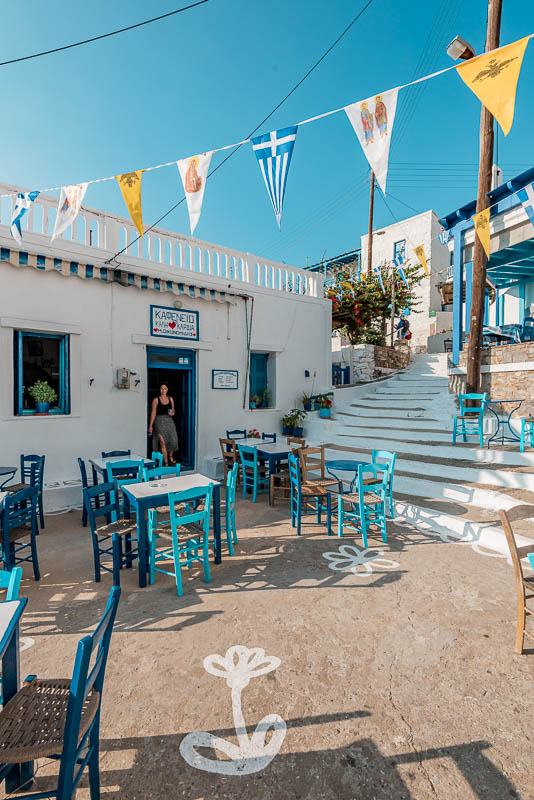
On the eve of July 1st, Tholaria’s largest festival takes place here. Around the church, there are several solid taverns and kafenia. The village, with a population of 200, used to be much larger. On the outskirts of the village, there are numerous dilapidated houses, a handful of which are renovated each year.
If you’re up for the strenuous climb to Tholaria’s highest point (near the Plori Studios) at an altitude of a good 200 meters, you can capture a very popular Amorgos postcard view.
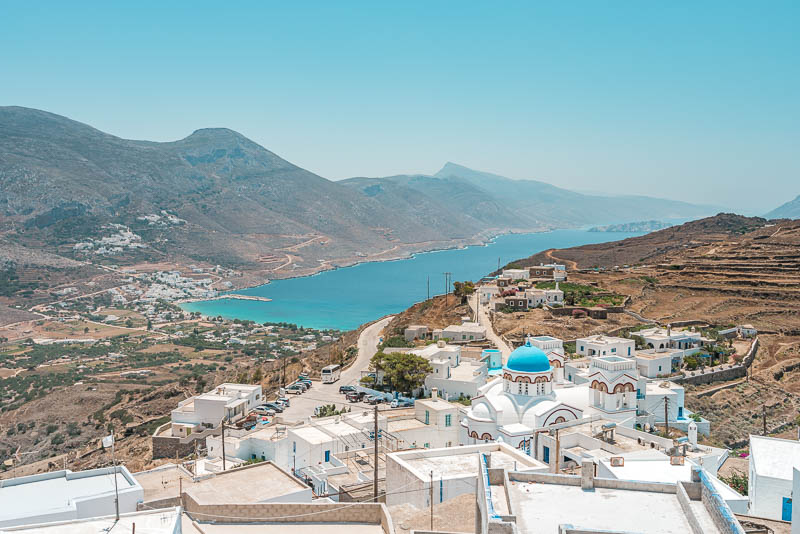
If you’re looking for a unique fashion souvenir, you should stop by Marilena’s Handmade Jewelry. On the neighboring hill of Vigla, directly opposite Tholaria, lie the ruins of ancient Aegiali. A visit is really only worthwhile for those interested in history.
In the alleys of Langada
From Tholaria, you can already catch a glimpse of Langada. Like a green oasis, the white splash of color with lush green trees stands out against the barren rocky landscape of northern Amorgos.
We park our rental car either in the free parking lot in the lower or upper village. Hiking enthusiasts can set off from Tholaria via a scenic donkey trail (Lagada-Tholaria Hiking Trail, 3 km, 1 hour) directly to Langada.
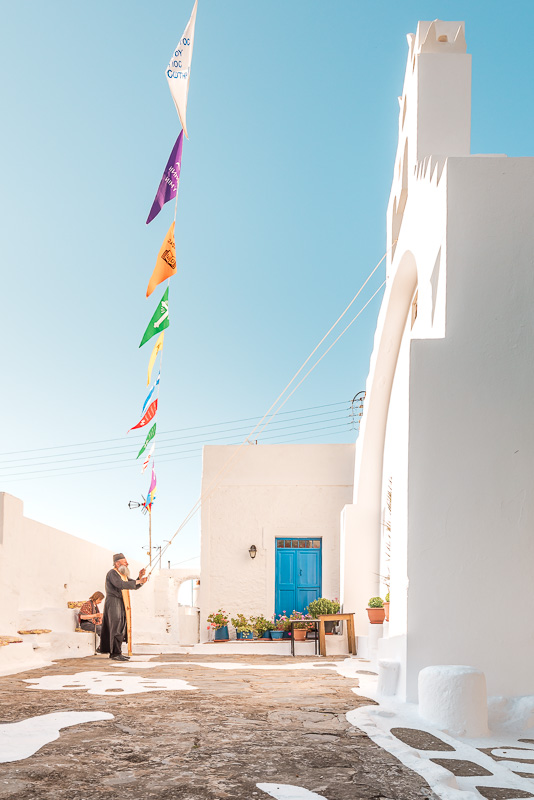

Upon arriving in the village, you’ll notice the typical Cycladic architecture. For us personally, Langada felt a bit more authentic than Tholaria. You could easily spend hours in this photogenic village, which is why we visited Langada several times.
You’ll immediately fall in love with this picturesque village of 300 inhabitants, with its winding alleys lined with quaint taverns (tip: Loukaki ksaná) and cafés, as well as small craft shops. Colorful bougainvillea, blue doors, and shutters on whitewashed houses give it that classic Cycladic charm.
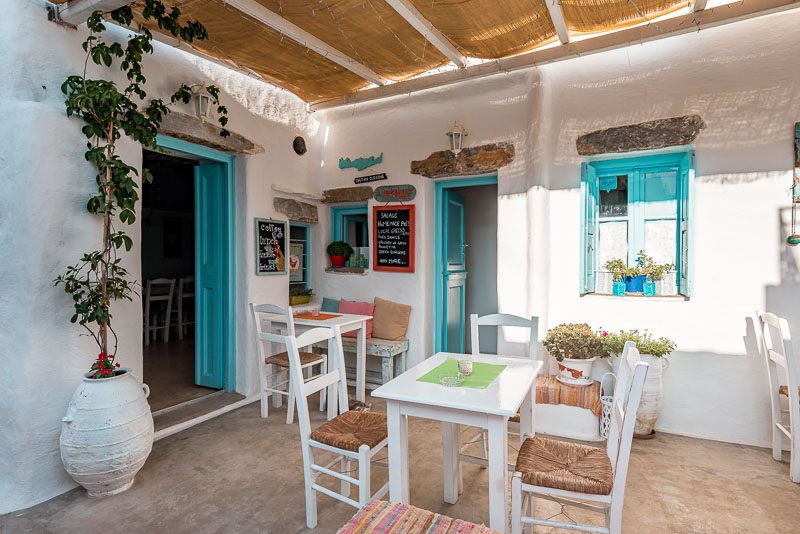
A stroll through the village is an experience at any time of day, but especially from noon onward, when the sun lights up the alleys. With a few exceptions, the restaurants are open almost continuously; colorful raffia chairs under shady pergolas along the alleys invite you to linger.
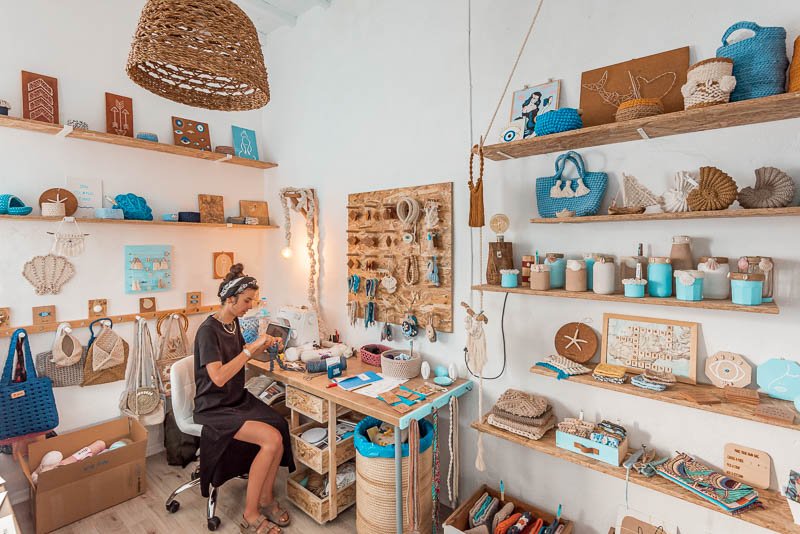
We found the craft shop I Agapi by NIAK particularly interesting, where Natalie offers creative souvenirs made from recycled materials. In the surrounding area, you can find the delicious Amorgos honey (information available at: Municipality Website), which is sold in some supermarkets.
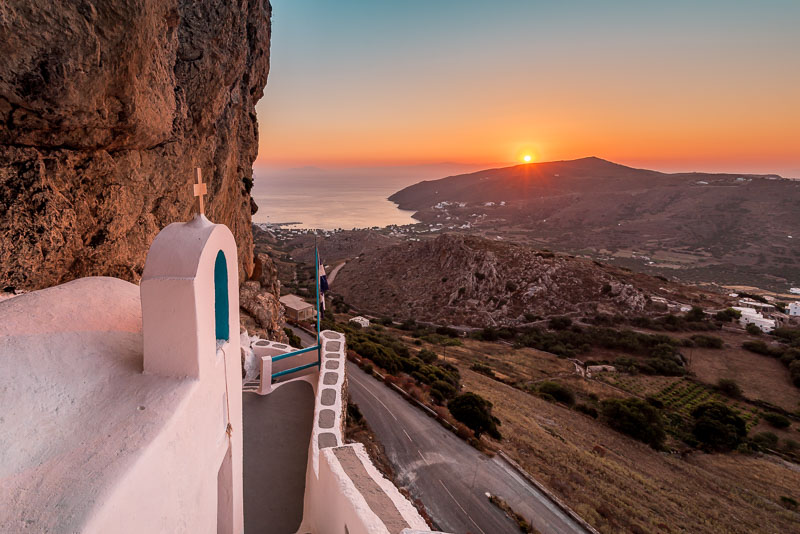
💡 Picturesque Sunset on Amorgos: From the cemetery outside the village, a path leads to the historic cave church of Agia Triada. After climbing over 100 steps, you reach the hermitage, which was built directly beneath the steep cliff face. In early July, we enjoyed a magnificent sunset all to ourselves from this spot.
#9 Hike to Agios Ioannis Monastery
The surroundings of Langada, with their outstanding natural beauty, offer numerous opportunities for hiking and short walks. A very rewarding hiking tour (Amorgos Hiking Trail 5, “Pan”) starts above the village and leads along ancient narrow donkey paths to the impressive Monastery of Agios Ioannis Theologos.

For the approximately 3 km long route, you should plan a total of about 2 hours round trip. The path is signposted (signs including St. Theologos) and well-maintained at the beginning, but leads uphill the entire way.
Shortly after Langada, you will come across the half-ruined settlement of Stroumbos, which stretches along the slopes of the narrow Araklos Gorge. After about 1 km, the path leads over several restored steps past former terraced fields.
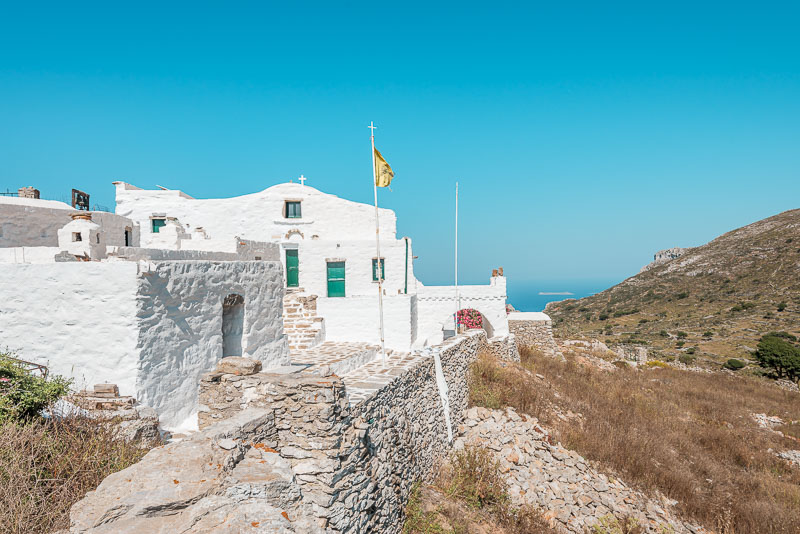
The final section winds along a stony donkey path past partially abandoned farms and old churches, including the Chapel of Agia Barbara. From here you can already see the whitewashed monastery, which sits like a fortress on a hill.
The monastery was founded in the 7th century, making it older than Chozoviotissa, and has been expanded repeatedly over the centuries. In July and August, the complex is open to the public, and the main church can be visited from 8 a.m. to 8 p.m.
The partially restored frescoes inside date from the 12th century. The view from the monastery of the surrounding area is spectacular; out at sea, you can see the barren mountains in front of the monastery, as well as the islands of Kinaros and Levithia, which are inhabited by only a few people.
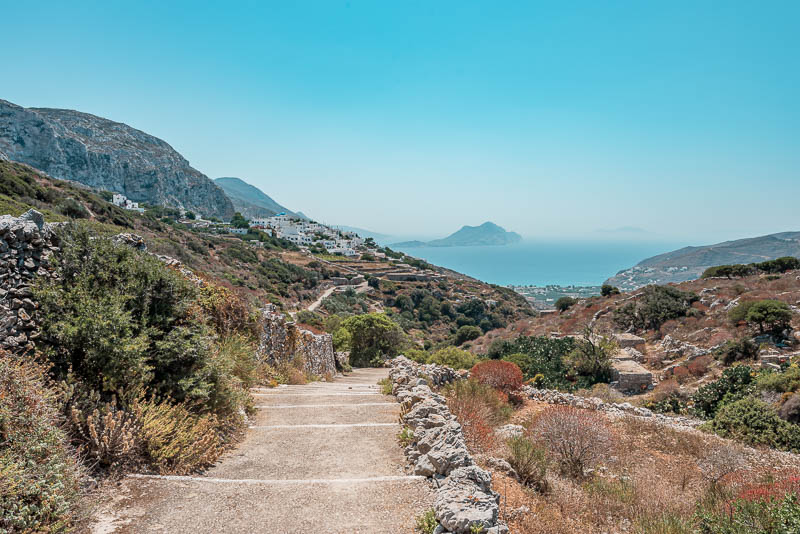
The way back to Langada is easier—it’s all downhill. On the last kilometer, we’re greeted by a fantastic view of Aegiali Bay and the island of Nikouria behind it. For the hike, you should pack enough water and a snack, along with sturdy shoes. We recommend starting the hike early in the morning.
→ Other beautiful hiking trails around Langada include the route to Paralia Mikro Vlichada or the Stavros Chapel. Information and routes at: amorgos.gr
#10 Day trip to the Lesser Cyclades
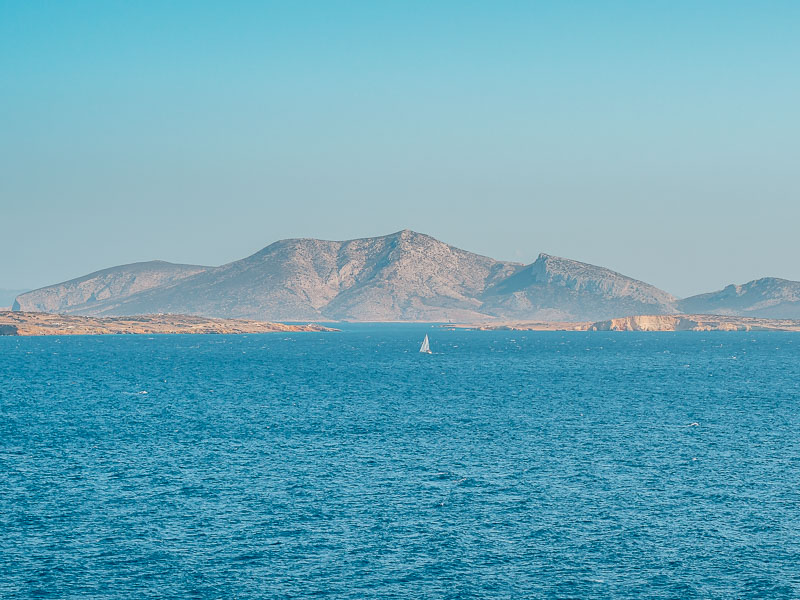
From Amorgos, you can already see the rugged archipelago to the north, known as the Lesser Cyclades. This idyllic mini-archipelago is easily explored from here, and day trips to the islands are even possible.

They consist of around 30 smaller and larger islands, of which only four are permanently inhabited: Iraklia, Schinoussa, Donousa, and Pano Koufonisi. With the exception of Donousa and the small, uninhabited island of Macheres, they are close to each other and separated only by narrow straits. In between, the Aegean Sea shimmers in the most beautiful shades of blue.
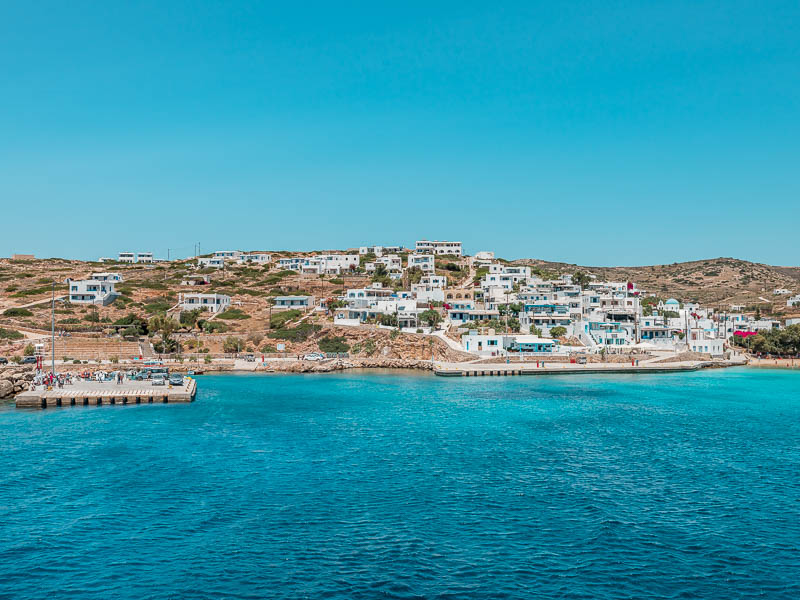
The Lesser Cyclades are still considered a true insider’s tip in Greece, with a typical blue-and-white charm and authentic atmosphere. Although connoisseurs of Greece and mainland Greeks have been raving about it for years, very few international tourists have ever heard of it.
In addition to fast catamarans and car ferries, the Ferry Express Skopelitis serves the Lesser Cyclades. The nostalgic-looking ship is based in Amorgos and sails to the islands six times a week, with one weekly trip even to the islands of Santorini and Ios.
Since 1956, the ferry company Small Cycladic Lines has provided a nearly continuous maritime link between the neighboring island of Naxos, all the inhabited islands of the Lesser Cyclades, and Amorgos.
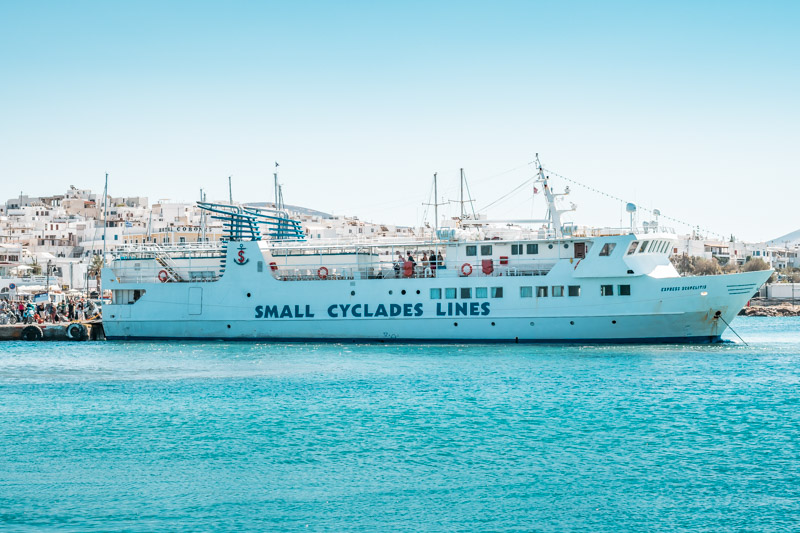
Probably the most popular island is Pano Koufonisi (also called Ano Koufonisi). The Express Skopelitis departs early in the morning at 7 a.m., and after an hour you will reach the island.
At the harbor, you’ll be greeted by an idyllic backdrop of snow-white houses whose alleys invite you to stroll. On the dreamy beach of Ammos, a Caribbean vibe takes over. Around 5 p.m., the ferry returns to Amorgos.
Island hopping in the Lesser Cyclades
If you’re looking for a slower pace and a unique experience, you can also plan to spend several nights on Koufonisi or on Iraklia, Schinoussa, and Donousa—or even incorporate these islands into a Cyclades island-hopping itinerary. Most accommodations are on Donousa and Koufonisi; it’s worth comparing options on Airbnb or Booking.com*.
→ More information on how to get there with the Express Skopelitis Ferry can be found at: Small Cyclades Lines
More Amorgos travel tips
Beautiful beaches in Amorgos
Ammoudi: A natural swimming cove with a pebble beach and crystal-clear water in the southeast of the island. There are many stones and rocks along the shoreline. A new paved road leads to a parking lot, from which the beach can be reached on foot via a gravel path.
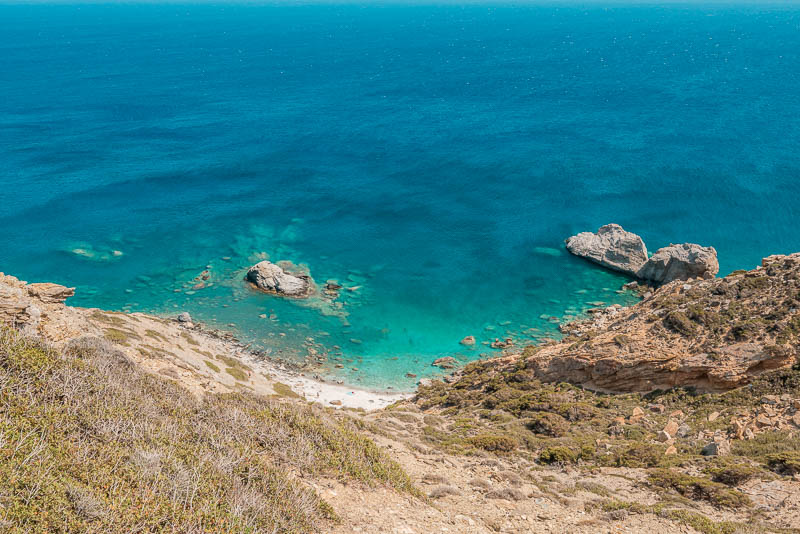
Kalotaritissa: A beautiful bay in the very south of the island with a fine sandy beach and shallow waters. For details, see point #6.
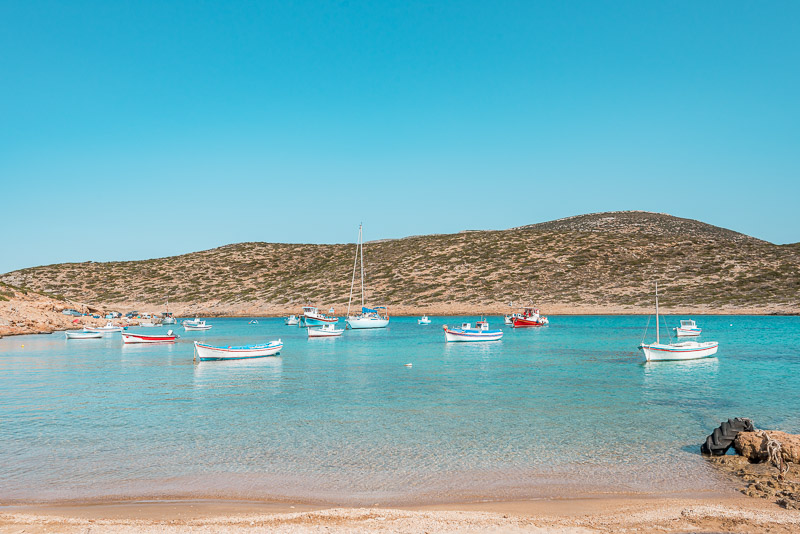
Levrossos: A long sandy beach in the north of the island near Aegiali. Largely natural, with some sun loungers at the beach bar in the back. From a small parking lot, turn left down to the beach. In high season, it is recommended to walk from Aegiali Beach as there are few parking spaces.
Maltezi: One of the few sandy beaches on the island of Amorgos. The golden sandy beach slopes very gently into the sea, making it ideal for small children. Umbrellas and sun loungers are provided on site by the Kantina. It can be reached on foot in 20 minutes from Xilokeratidi or by taxi boat from Katapola. Very crowded in August!
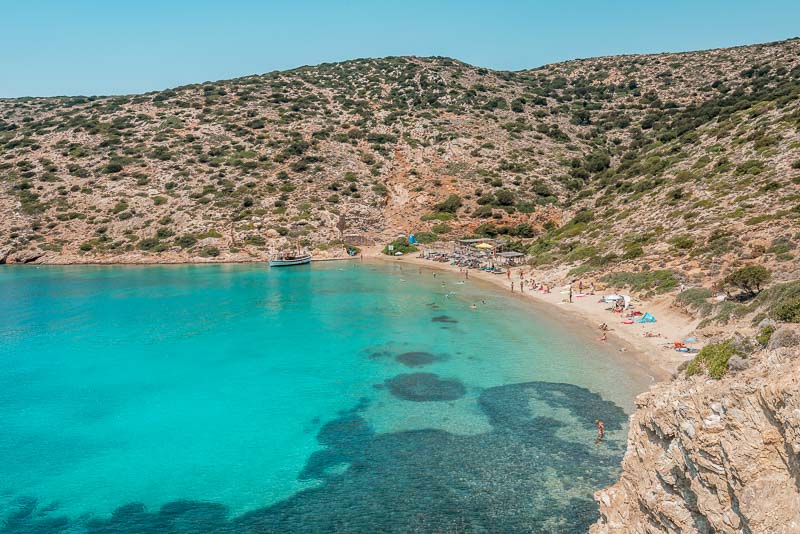
Mouros: A wild, gray pebble beach with offshore rocks and sea caves in the southeast of Amorgos. Thanks to the crystal-clear water, it’s also great for snorkeling. Parking is available above the beach, and next to it is a simple tavern that serves snacks and drinks to beachgoers.

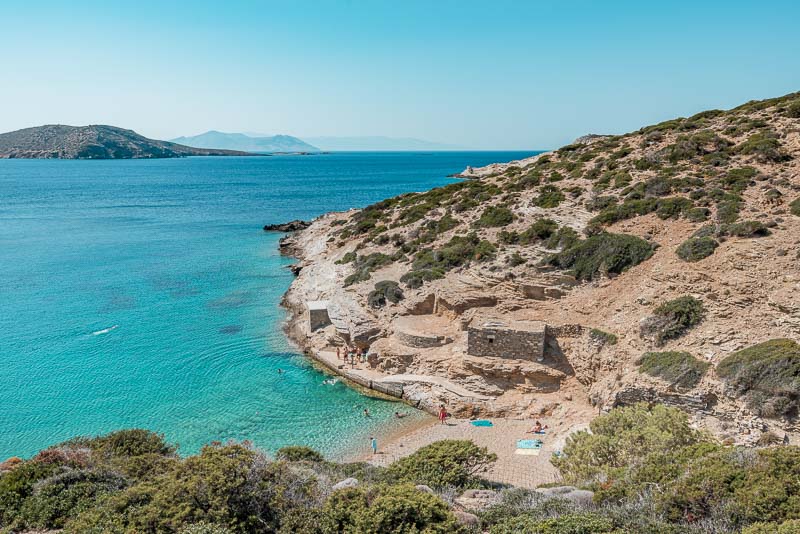
Paradisia (Paradise Beach): A small sand and pebble beach with shady tamarisk trees, which looks like a pirate’s hideout with the old boathouses above. Very quiet, especially in the off-season, but some washed-up trash due to the bay opening to the northwest.
Where to stay in Amorgos
You won’t find large hotel complexes, clubs, or resorts on Amorgos. Independent travelers will find a wide selection of apartments, studios, and vacation homes to suit every budget. The highest concentration of hotels and private accommodations is found in the towns of Katapola and Aegiali.
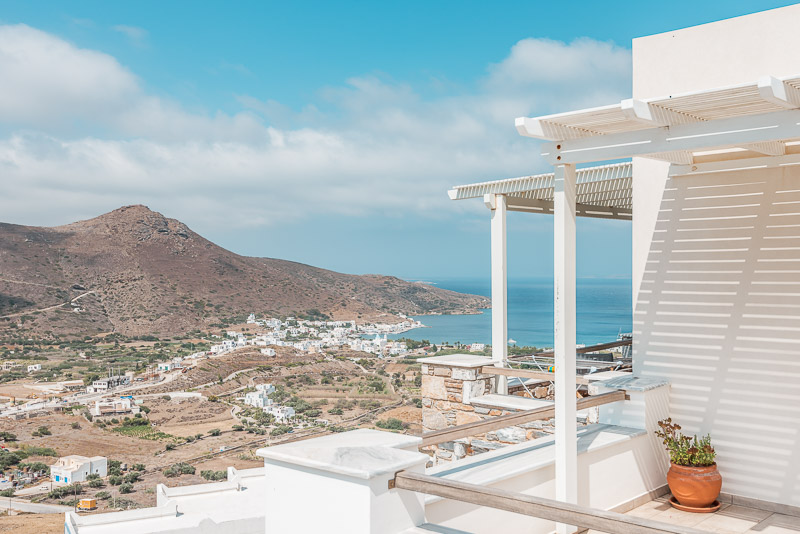
If you’re planning to stay in Amorgos in July or August, you’ll ideally want to book your desired accommodation at least six months in advance.
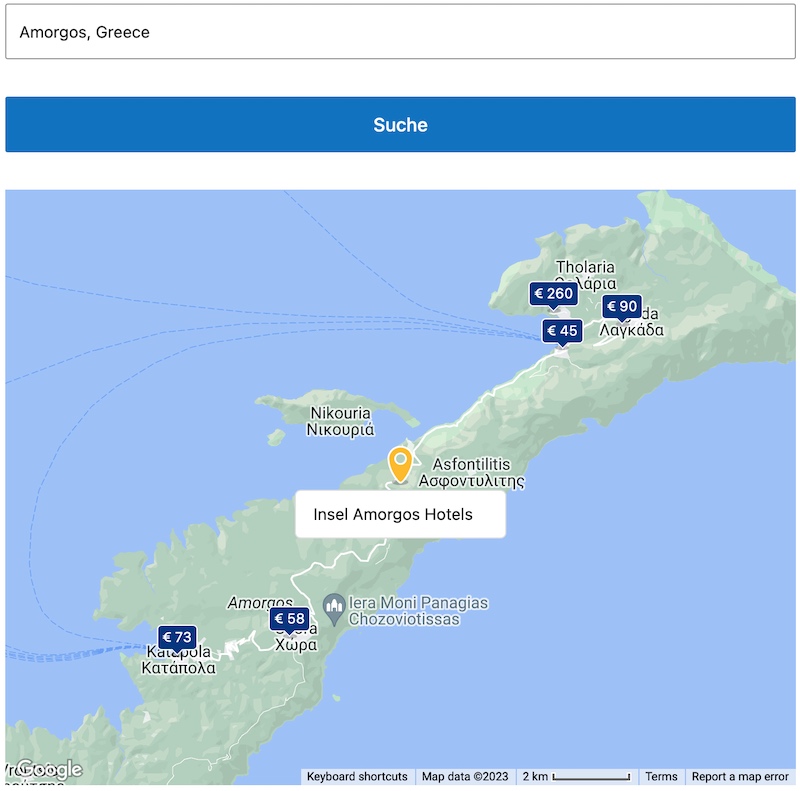
→ On Booking.com* you’ll find a selection of beautiful accommodations and can check prices directly via a map:
Here we spent the night on Amorgos
Skopelitis Village, Katapola
The small hotel above Katapola is run by manager Andreas with a lot of heart and soul. The whole team made sure that we felt completely at home here. The apartments with kitchenettes are modern and functional. From our terrace, we had a beautiful view of Katapola Bay.

Every morning, dear Elena served us a delicious breakfast featuring local products. The hotel is very centrally located, making it ideal for exploring both the north and the south. During peak season, it is advisable to book a room well in advance.
Oasis Apartments, Chora
Beautiful and well-maintained self-catering apartment complex below the main town of Chora. Modern, clean apartments with fully equipped kitchens. Quiet location outside the village, but the center is just a 15-minute walk away.
*Booking.com links
Amorgos Restaurants & Cafés Recommendations
This Cycladic island has a lot to offer in terms of cuisine. Whether it’s an authentic tavern or creative fusion cuisine, Amorgos is the place where every foodie’s heart beats faster. Rarely have we eaten so well in so many restaurants.
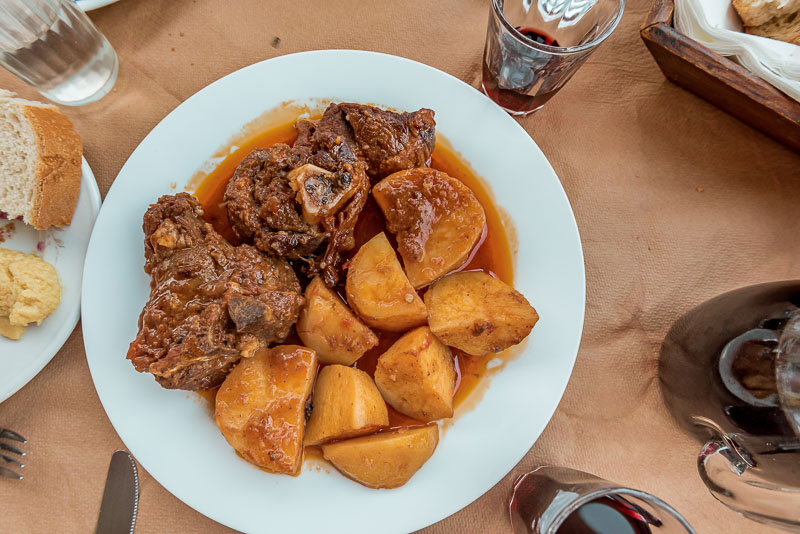
In terms of price, the island’s cuisine is a bit above the Greek average, but in our opinion, some culinary experiences justify the slightly higher price point. Lovers of hearty Greek cuisine should try the traditional Amorgos dish Patatato.
Aegiali
- Amorgis
Chora
- Botilia Restaurant
- Phōtodótēs
- Transistoraki – Tip: Bulgur Salad, Fava, and Fried Chicken
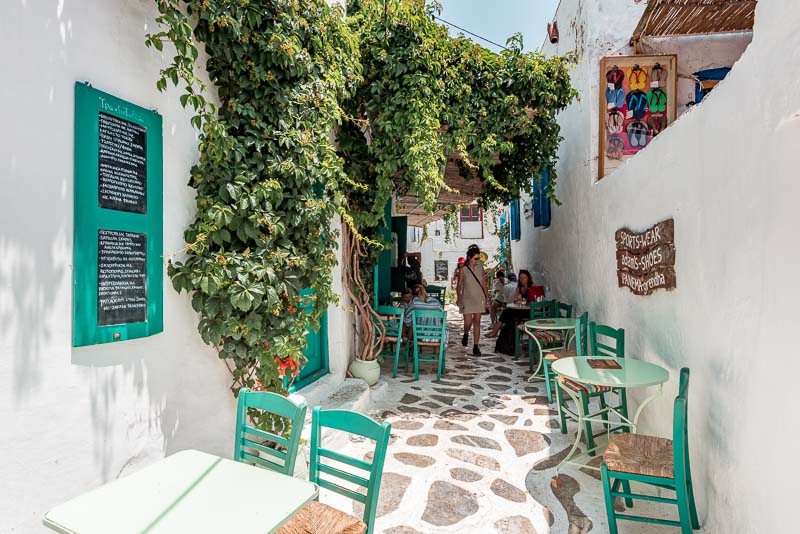
Katapola (Xilokeratidi)
- Fata Morgana – Amorgos (est. 2022) – Tip: Tomato salad and potatoes
Langada
- Loukaki Ksana (Λουκακη ξανά) – everything was so delicious here! (Tip: Pasturma pie and lamb burger)
- Moschoudaki
Tholaria
- Groova Amorgos (Nkroúba Bar)
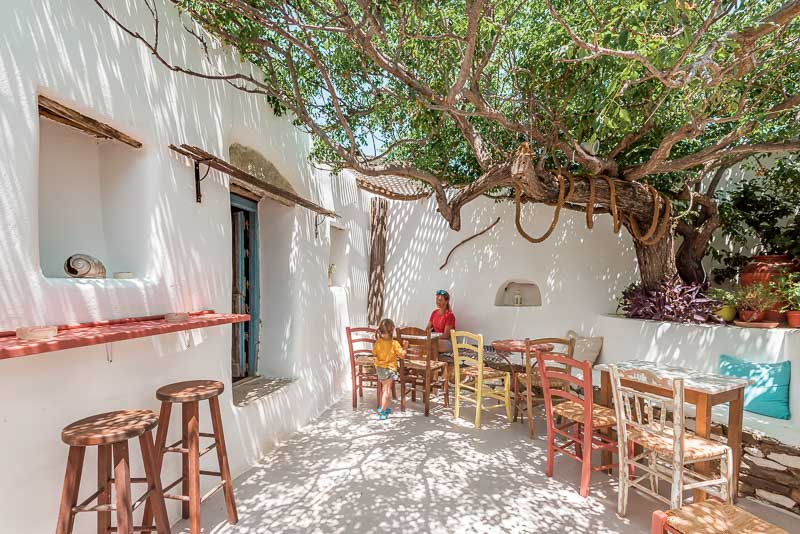
Amorgos restaurants & cafes in the south
- Klimataria, Vroutsis
- Glyka Nisos, Arkesini
- Ston Pyrgo, Arkesini – Tip: After dinner, check out the Pyrgos Agia Triada (old defensive tower) next door.
- T’Apanemo, Kalofana
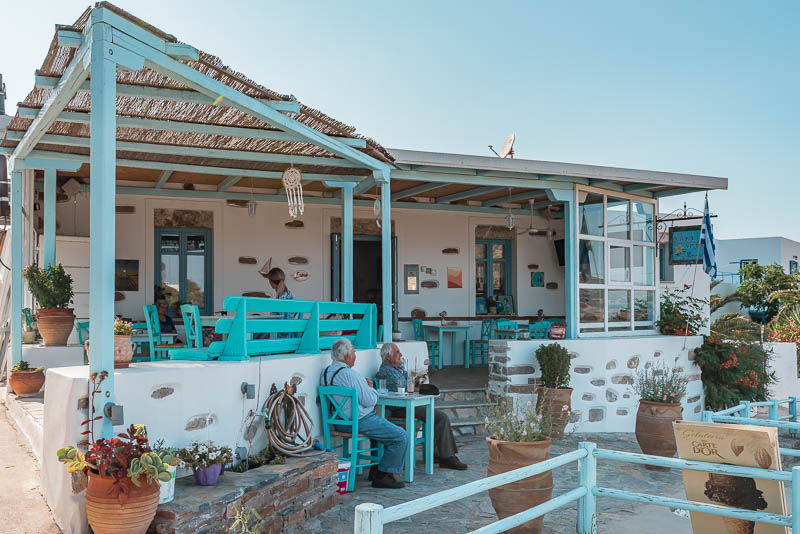
Getting around Amorgos Island
If you want to explore the island of Amorgos on your own, you will need a vehicle. Public buses usually only run during the high season between June and September and are not suitable for a full exploration of the island.
→ Bus schedules can be found at: KTEL Amorgos Bus
There are reliable local car rental companies on the island that will take you directly to one of the ferry ports. A small car is usually quite sufficient for the island’s largely paved and well-maintained road network. The following providers, among others, have very good customer ratings:
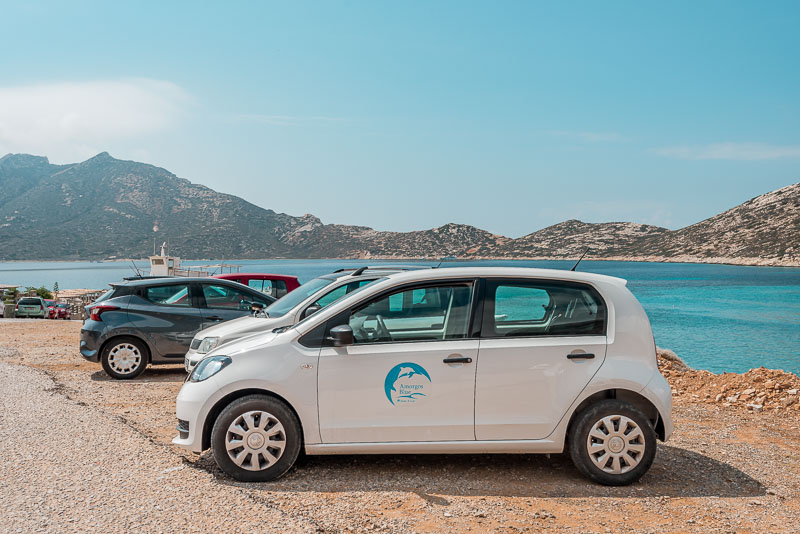
A special feature of Amorgos is the widespread practice of hitchhiking, which we haven’t seen as much on any other Greek island. We always had a free seat in the car and were happy to give hitchhikers a ride for a bit.
Getting to Amorgos
Amorgos does not have an airport and is therefore only accessible by ferry. There are two ports on Amorgos. Depending on the location of your accommodation, you will need to disembark at the port in Katapola (island center/south) or Aegiali (north).
Blue Star Ferries operates several trips a week from Piraeus to Amorgos, depending on the season. The crossing takes about 8 hours.
→ This article provides all the necessary information for your ferry journey to Amorgos: Ferries in Greece
Alternatively, you can also travel directly to Mykonos or Santorini and then take a fast catamaran from Hellenic Seaways or Seajets to Naxos Island, or transfer to the Skopelitis Express or Blue Star Ferries to Amorgos.
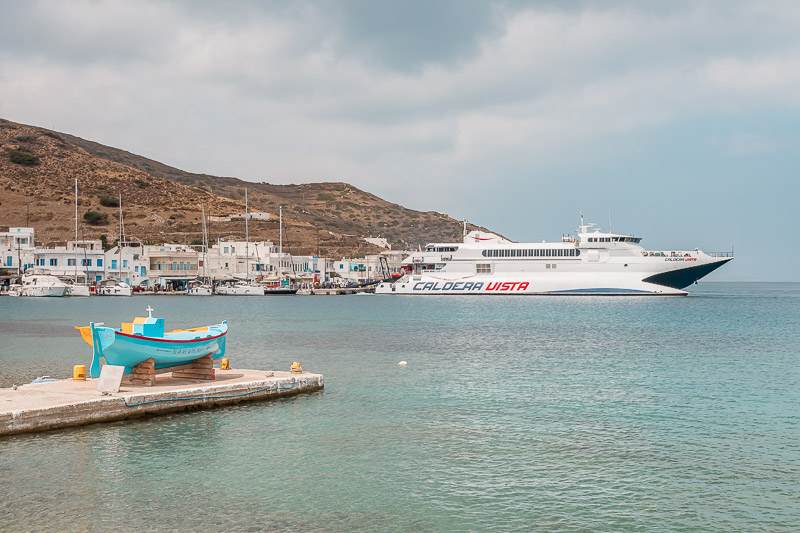
During the high season (July–early September), Blue Star Ferries also operates large car ferries from Kos (with many direct flights from Germany, Austria, and Switzerland) to Amorgos in just over 3 hours. You can search for suitable ferries to Amorgos and check prices on the Ferryhopper* portal:
➲ Go to the ferry search on Ferryhopper*
Ideally, you should include Amorgos in a Greek island-hopping trip through the Cyclades, for example, starting in Mykonos and continuing to Paros, Naxos, and Amorgos.
→ You can find more travel reports and tips about the Cyclades archipelago on our overview page: Cyclades Overview
*Support our blog Greece-Moments
In this post, you will find affiliate links marked with an asterisk (*). If you book or buy something through one of these links, we receive a small commission. For you, the price remains the same. In this way, you help us continue to provide high-quality content for free. Did you like this post and would you like to say thank you? Then just buy us the next Greek coffee ☕️ To the coffee fund
Bookmark this post on Pinterest!