

Spinalonga, once a place of exile, today a tourist magnet. A mystical aura surrounds this small fortress island in northeastern Crete. Despite the suffering and the many human stories associated with the place, it seems to draw crowds of tourists all on its own. Today, Spinalonga is one of the most visited historical sites in Crete.
Spinalonga, the Island of the Forgotten, has shaped the lives of many families in Crete across generations, and to this day, the small island continues to fascinate with its turbulent history.
Tom & Ella
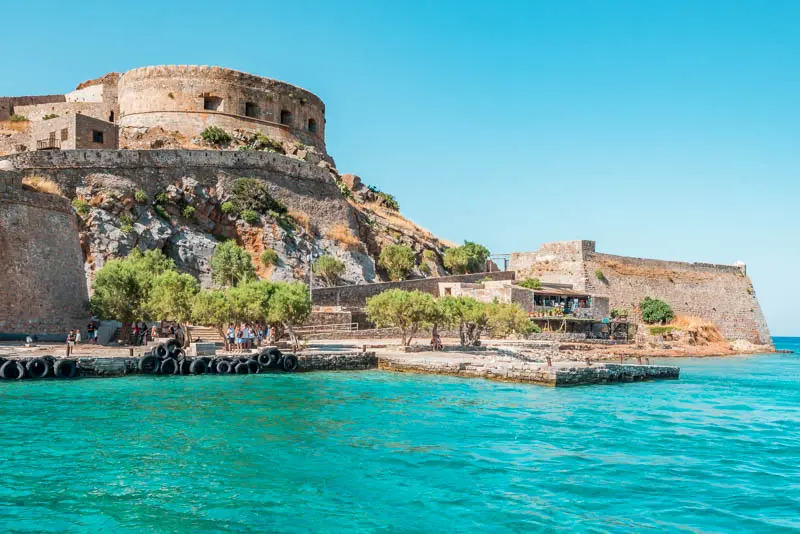
The history of this tiny island, just 440 meters long, is so eventful that a best-selling book brought this corner of Crete to international attention. A century ago, the island served as Crete’s leper colony, which meant lifelong exile for many people—but more on that later.
Unlike back then, today every visitor is allowed—or rather, required—to leave the island of Spinalonga Kalydon at the end of the day. In this post, we’ll provide you with plenty of background information and the most important tips for your trip to Spinalonga:
- #1 Getting to Spinalonga
- #2 Spinalonga Fortress Opening Hours
- #3 Spinalonga on your own from Plaka
- #4 Tours to Spinalonga Island
- #5 Walking Tour of Spinalonga Kalydon
- #6 Interesting facts about the island of Spinalonga
- #7 History of Spinalonga
- #8 Restaurants near Spinalonga
- #9 Hotel Tips for Spinalonga (Elounda)
- #10 Things to See in the Area
🏖️ Dream beaches & hidden bays
🍽️ Restaurants, tavernas & cafés
🏛️ Must-see highlights & ancient sites
🗺️ Worthwhile spots & insider tips
🚘 Practical info like rentals & parking
♾️ Lifetime access & updates
#1 Getting to Spinalonga
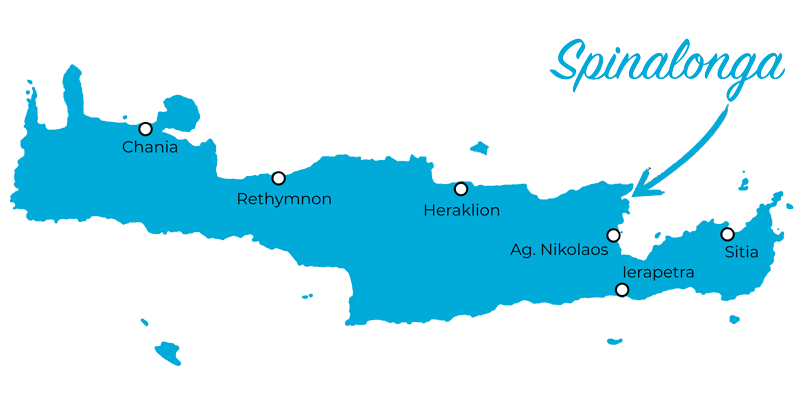
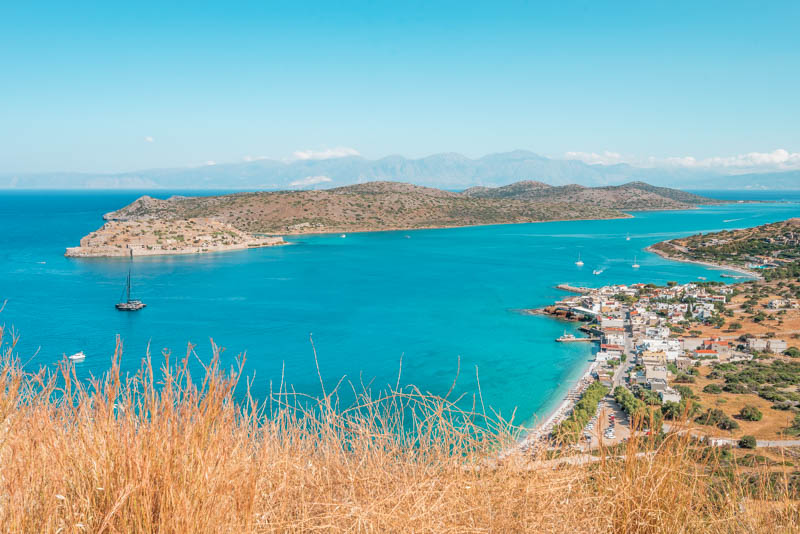
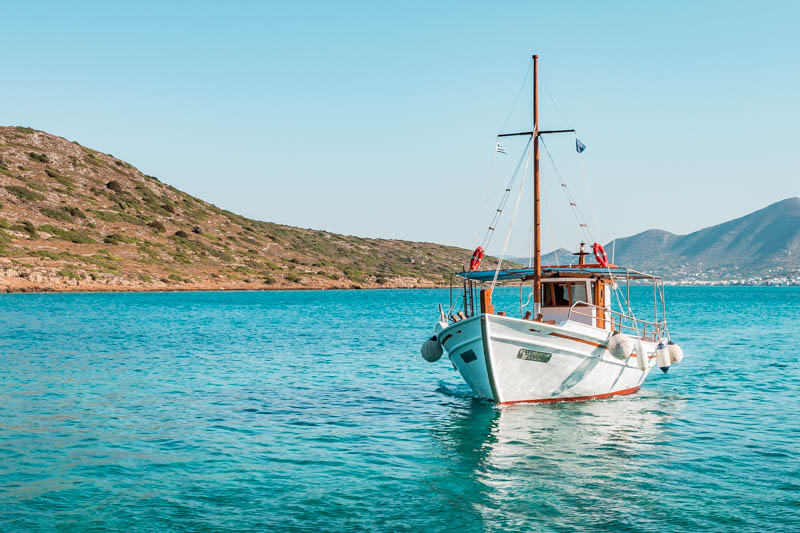
You can reach Spinalonga either by rental car or bus. The island of Spinalonga is located in the Gulf of Mirabello in northeastern Crete, just 20 minutes from the coastal town of Agios Nikolaos. Less than a kilometer separates the fortified island from the fishing village of Plaka across the bay, from where boats depart for Kalydon, as Spinalonga is actually called.
Coming from Heraklion on the A90 island highway, take the Neapoli or Agios Nikolaos exit. From there, it’s another 15 km on country roads through the idyllic hinterland (Neapoli – Kastelli – Fourni) or along the coast of the Gulf of Mirabello (Ag. Nikolaos – Elounda). If making your own way there is too much of a hassle, you can book a tour right here: Spinalonga Tours
Distances to Spinalonga
› Chania – Spinalonga: 200 km (3 hrs)
› Rethymno – Spinalonga: 145 km (2 hrs)
› Heraklion – Spinalonga: 65 km (1 hr)
› Ierapetra – Spinalonga: 45 km (1 hr)
› Sitia – Spinalonga: 80 km (1.5 hours)
Is renting a car worth it for Spinalonga?
Independent travelers arriving by rental car have the advantage of being able to tailor the trip to their preferences. During the season, visits to Spinalonga are possible as early as 8:30 a.m. The first boats depart from Plaka Harbor shortly before that, allowing you to explore the leper island well before the crowds arrive.
The distance to Spinalonga on Crete should not be underestimated. If you’re staying at a hotel in Chania, the drive by rental car takes about three hours (200 km). From Heraklion, the one-hour trip is more worthwhile. You can book your rental car for the trip to Spinalonga in advance with our partner Discover Cars*:
➲ View offers on Discover Cars*
💡 Rental cars in Crete: Crete is the largest island in Greece. Many of the approximately 500,000 residents rely on cars for their daily commutes. The A90 island highway connects the west with the east. Especially around Heraklion, there is heavy rush-hour traffic on weekday afternoons. You can find out what to keep in mind regarding traffic and car rentals in our separate article: Car Rentals in Greece
What is the parking situation like there?
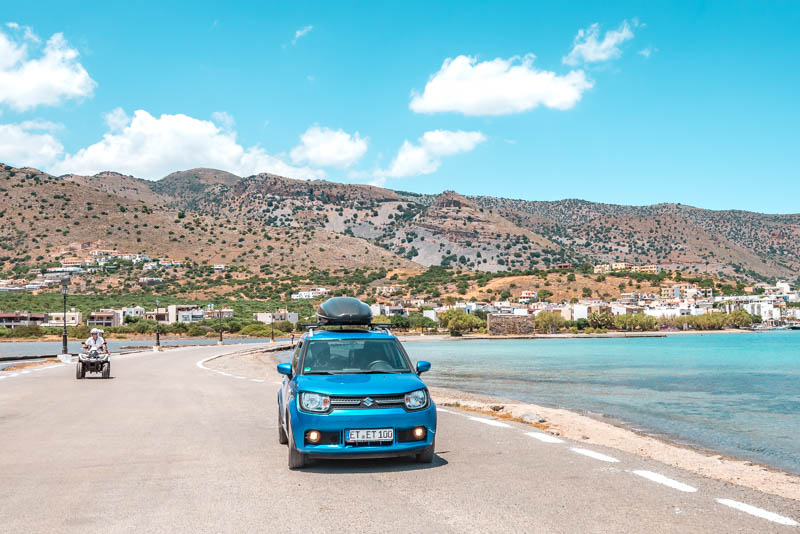
If you’re driving to Spinalonga in a rental car, you can park at the Plaka harbor — provided you arrive early enough, as parking spaces are limited. Plaka is a very small town that struggles with large numbers of visitors. In the summer, things get particularly hectic around noon, with many buses squeezing through the narrow main street.
Additional parking spots are located at the entrance to Plaka, not far from the new playground (Mirabello Park), as well as slightly further up at the large Parking Plaka lot. Parking is free, but the yellow lines indicate no-parking zones, and parking violations are subject to hefty fines.
By Bus to Spinalonga
Another way to reach Spinalonga is by bus. Crete has a good bus network, and the cities in the north are particularly well-connected. From Heraklion, buses operated by KTEL Heraklion Lasithi run several times a day from 6 a.m. to 10 p.m. via Chersonissos and Malia to Agios Nikolaos.
The trip takes about 75 minutes and starts at the central bus station in Heraklion (Bus Station A), located between the ferry port and the GDM Megaron Hotel. From the Agios Nikolaos bus station, it’s another 35-minute bus ride to Elounda or Plaka. Buses run only every two hours. We recommend traveling by bus to Spinalonga only to vacationers with experience using buses in Greece.
→ Current connections from Heraklion to Agios Nikolaos are available at: KTEL Herlas
Alternatively, you can join a guided bus tour to Spinalonga, which departs from various locations in Crete (including Rethymno, Heraklion, Chersonissos, etc.). You can book bus tours with our partner GetYourGuide*:
#2 Spinalonga Fortress Opening Hours
Spinalonga is open daily from 8:30 a.m. to 6 p.m. from April 1 to October 31. Outside of the season, Spinalonga Fortress is closed despite its historical significance to Crete. On the island itself, there is a ticket office, restrooms (fee required), and the overpriced Spinalonga Snack Bar (beer approx. €8, orange juice approx. €7).
- Spinalonga opening hours: 8:30 a.m. – 6 p.m., last admission approx. 30 minutes prior
Admission tickets for Spinalonga are available at the ticket counter upon arrival by ferry from Plaka, Elounda, or Agios Nikolaos, for both individual travelers and organized tours. Online booking of admission tickets for the fortress is not available.
Ticket prices for Spinalonga Fortress:
- Adult: €20
- Reduced-price ticket (65 and older): €10
- Children, teenagers, and students up to age 25: free admission for EU citizens

Days with free admission to Spinalonga:
- April 18 (International Day for Monuments and Sites)
- May 18 (International Museum Day)
- Last weekend in September (European Heritage Days)
- October 28 (National Holiday – Ochi Day)
Closed days at Spinalonga Fortress: Greek Rose Monday, Greek Easter Sunday, and Whit Monday, May 1
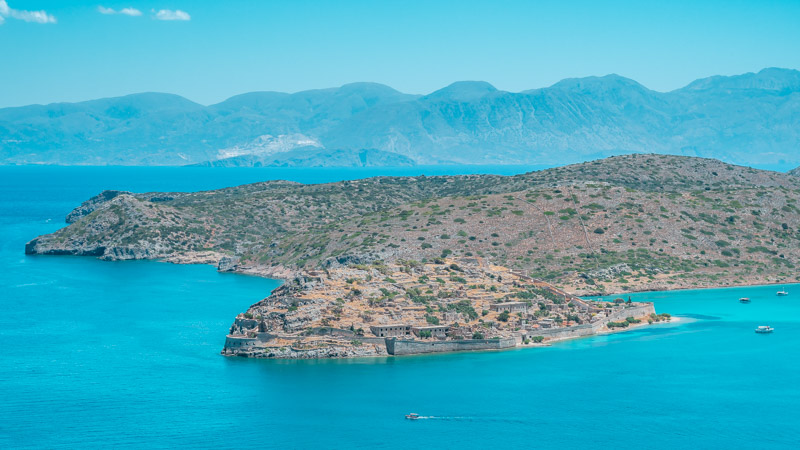
💡 Weather in Crete: The northeast of Crete is one of the driest regions on the island. Summers are particularly hot, with no rain for months on end. In July and August, a strong north wind (Meltemi) can blow into the bay and disrupt boat traffic. In spring and fall, occasional rain showers are to be expected. For more information on the weather in Crete, see our separate article: Weather in Greece
#3 Spinalonga on your own from Plaka
Spinalonga is a very popular destination in Crete and is visited by hundreds of tourists every day. Independent travelers can explore Spinalonga on their own at their own pace. The shortest ferry crossing is from the hamlet of Plaka, 5 km north of the resort town of Elounda. You can park your rental car for free at the Plaka harbor.

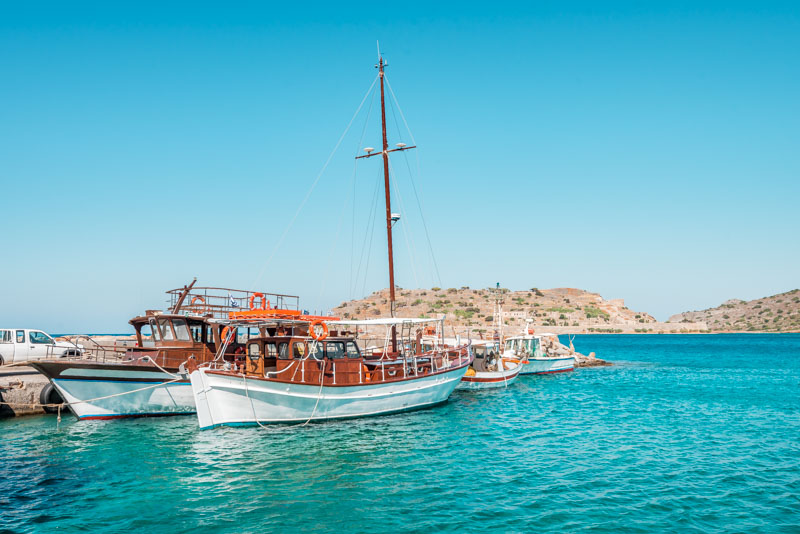
Depending on the number of tourists, small and large boats operated by the Elounda-Plaka Boat Cooperative depart from the small fishing harbor every 15 or 30 minutes. The 20 or so vessels are mostly traditional wooden boats, called kaiki, which make the crossing an experience in itself. One small downside: You’ll reach the island of Spinalonga in just over five minutes.
→ Tickets for the Spinalonga crossing (starting at €14 per person) can be booked directly at the harbor kiosk; for more information, visit: Plaka Boat
💡 Book recommendation for Crete: The Crete travel guide from Lonely Planet contains important information and tips for a vacation on the island. You can order the guide directly here: Order the book here*
Our Spinalonga Experience: We have very fond memories of our late-afternoon trip to Spinalonga. There were only our tour boat and one other boat on the island, so we were able to explore Crete’s former leper colony at our own pace and in peace, even with a toddler in tow. Around 6:00 p.m., after a stay of about 1.5 hours in beautiful evening light, we headed back to Plaka.
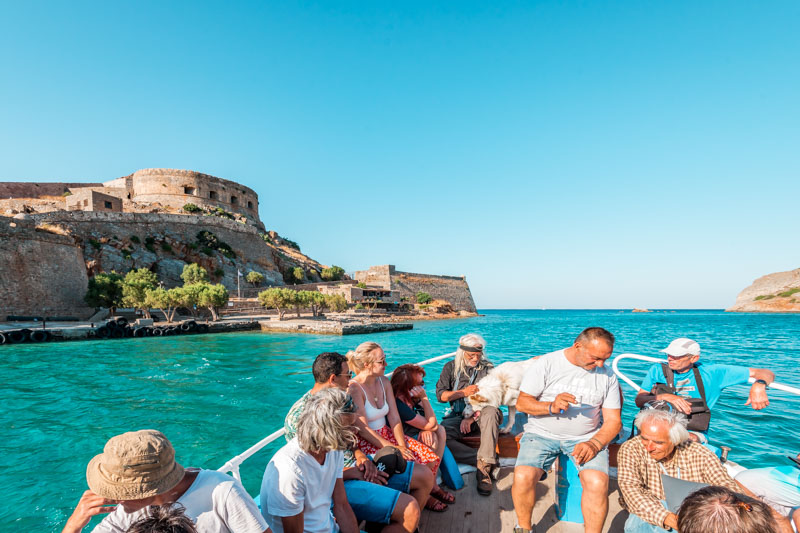
The Spinalonga boats run from 8:15 a.m. (first trip) to 6:00 p.m. (last return trip). Please note that visiting Spinalonga depends on weather conditions and the availability of boats serving the island. In rough seas, a crossing to Spinalonga is not possible.
#4 Tours to Spinalonga Island
For those who do not want to or cannot drive a rental car themselves, an organized excursion to Spinalonga is recommended. Tours are offered from Rethymno, Heraklion, Malia, and Agios Nikolaos, and prices range from €20 (Ag. Nikolaos) to €45 (Heraklion). Short sailing trips around the island with a BBQ are also available.
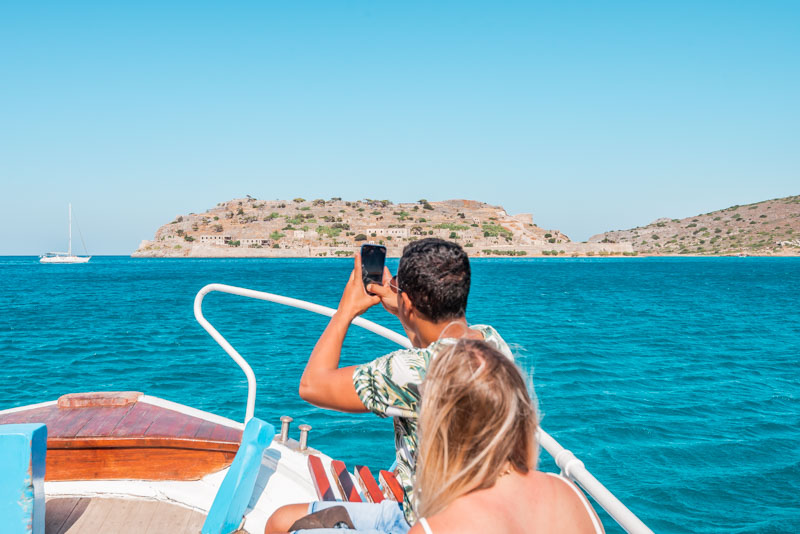
Depending on the type and scope of the tour, after the bus ride, you’ll take a boat from Agios Nikolaos, Elounda, or Plaka to the island of Spinalonga Kalydon. From Plaka, the actual boat crossing is the shortest at 5 minutes; from Elounda, it takes 15 minutes; and from Agios Nikolaos, at least 45 minutes. Upon arrival, a 1.5-hour stay on Spinalonga is usually scheduled.
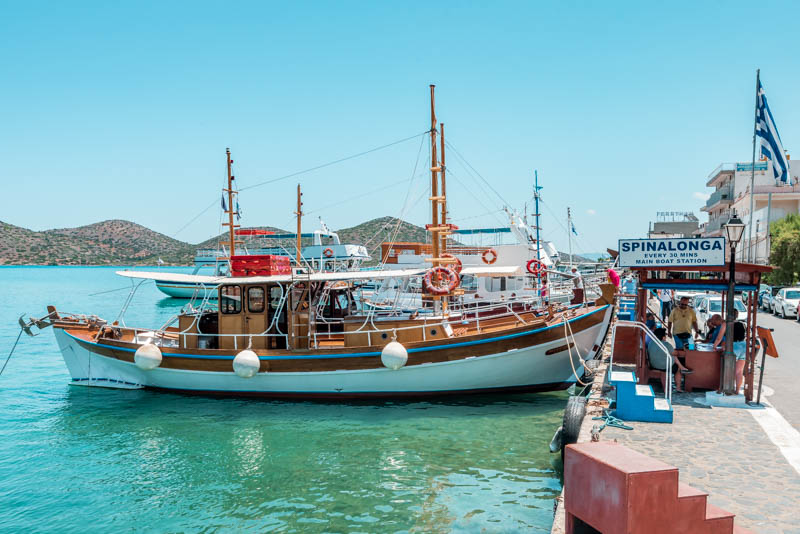
Some tours include a guided tour of the site in the price. The Spinalonga entrance fee is never included in the price but must always be purchased at the ticket counter upon arrival on the island. We recommend Spinalonga tours that also offer a detour to the surrounding area of Elounda or to Agios Nikolaos.
→ These Crete tours can be booked directly through our partner GetYourGuide*:
➲ To the boat trip from Ag. Nikolaos*
➲ To the tour from Heraklion/Chersonissos*
➲ To the sailing trip around the island incl. BBQ*

#5 Walking Tour of Spinalonga Kalydon
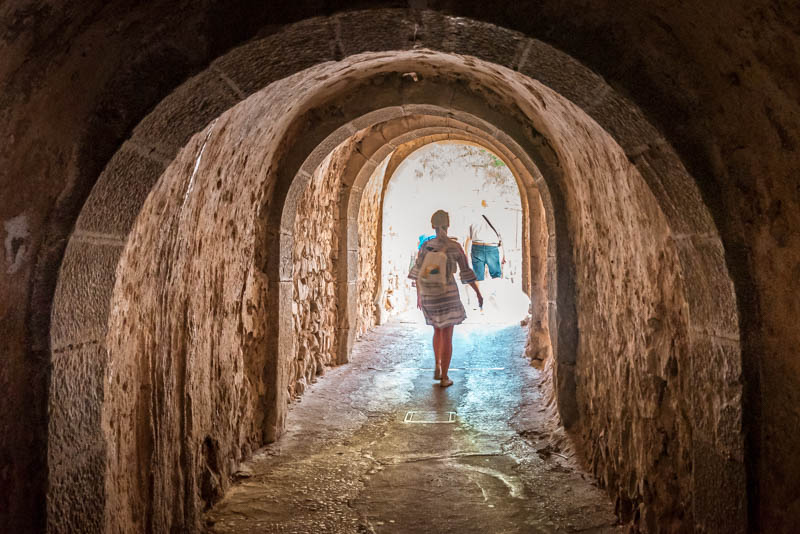
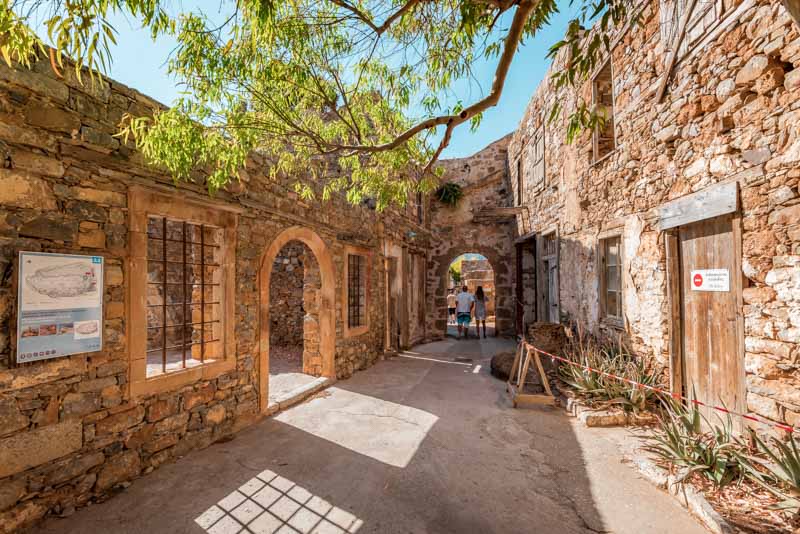
After purchasing your ticket, you enter the fortress through the imposing entrance gate and pass through a tunnel to the interior. Extensive restoration work has been underway on the site since 1997, so that some of the old residential buildings have already been modernized. Some rooms feature contemporary exhibits from that era and informational panels.
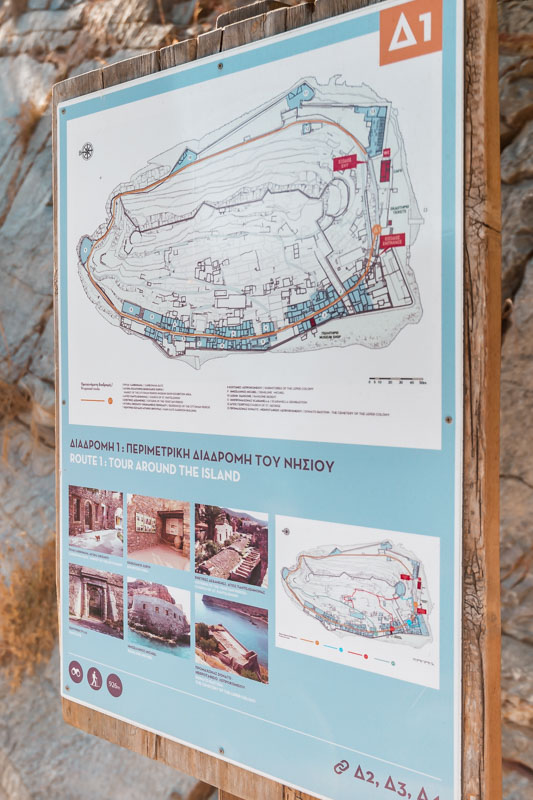
You should plan at least 45 minutes, preferably 1.5 hours, for your visit. Independent travelers have a clear advantage here, as most guided groups often only stay for just under an hour. The entire Spinalonga site can be walked around on a circular path (1 km) in about 20 minutes. Below is a description of the most important sites and buildings on Spinalonga.
Ottoman Market Square and Houses
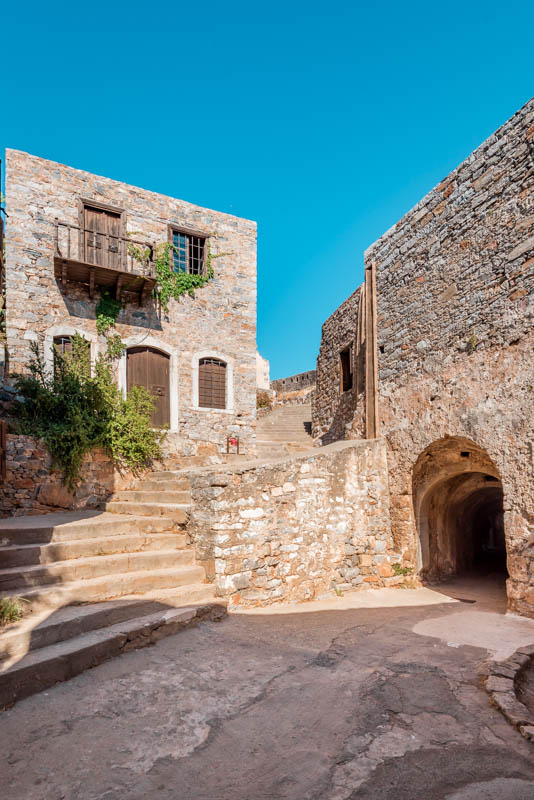
A real eye-catcher is the compact market square, which you cross immediately after entering. It was built by the Muslim families who lived on Spinalonga in the 18th and 19th centuries and served as the island’s small commercial hub. A narrow alley leads further north; some of the houses feature colorful doors and shutters.

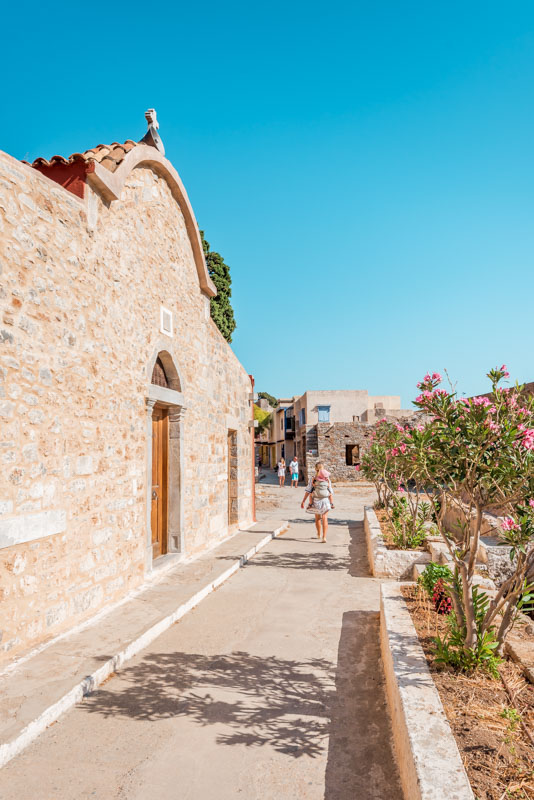
Here and there, house entrances are open; photo exhibitions and information boards offer insights into life back then, both during the Ottoman occupation and in the era when the island served as a leper colony. In other rooms, household items, tools, and medical products from that time are displayed in showcases, much like in an open-air museum.
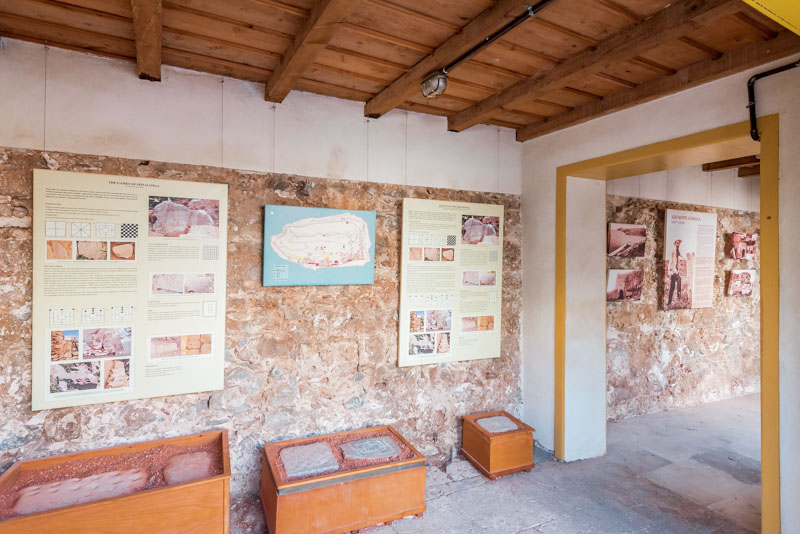
Spinalonga Hospital
If you continue down the alley, you’ll pass the Church of Agios Panteleimon, one of the island’s two restored churches, and then a sign points toward “Hospital/Nosokomeio.” The hospital is one of the largest buildings on Spinalonga and, as a medical treatment center, was the most important.

The Spinalonga Hospital is currently closed due to the risk of collapse, but from here you have a good view of the complex. Incidentally, there was also a disinfection station right by the sea where visitors from Plaka were disinfected upon arrival and departure. The path continues up a narrow staircase to the highest point (53 m above sea level) of Spinalonga.
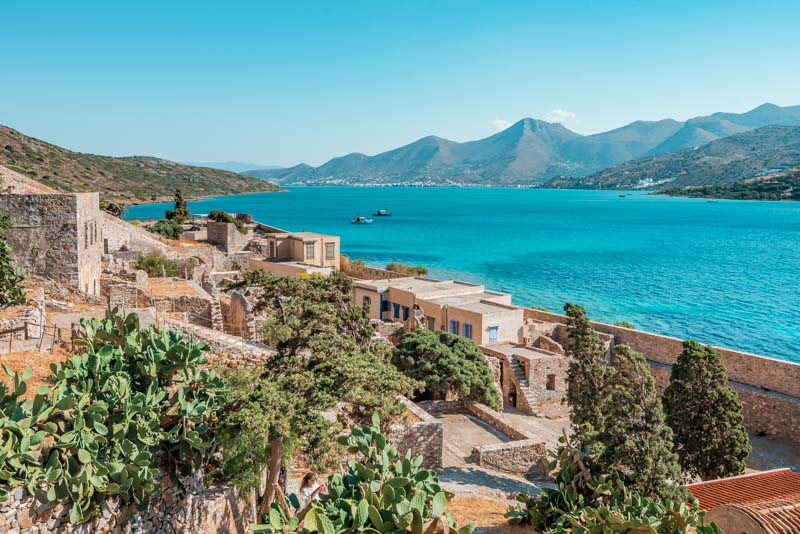
Spinalonga Castle
Even though the path up is a bit confusing and leads over rough terrain in places, the climb is worth it just for the magnificent panorama. But be careful: the citadel was built directly on the rock, is barely secured, and the descent is quite steep. Unfortunately, most of the immediate buildings are heavily damaged.
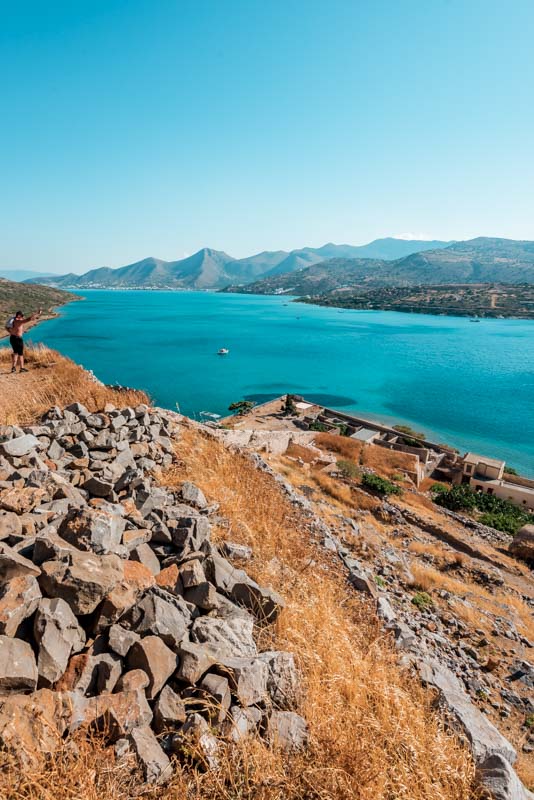
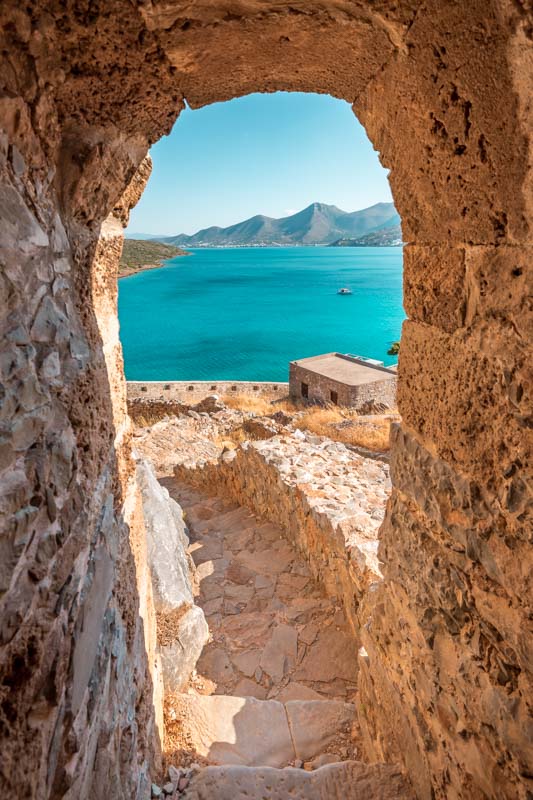
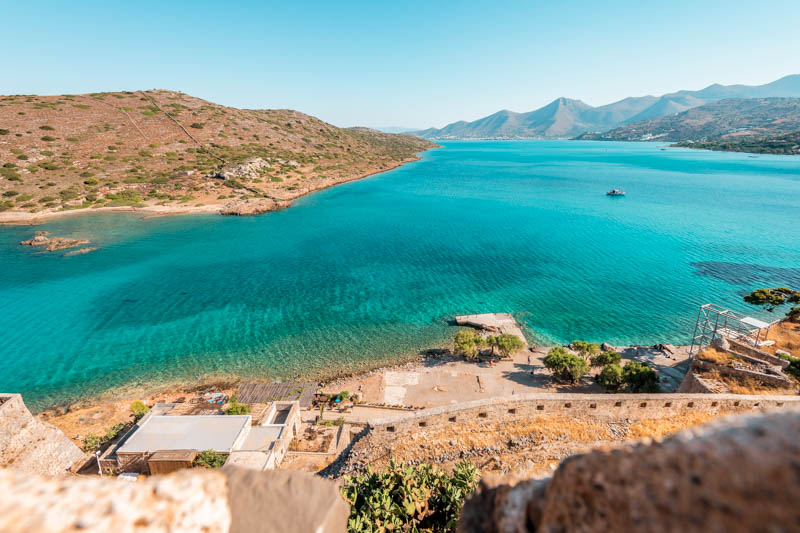
Continue south to the imposing South Bastion, which is still very well preserved. From here, you can enjoy a magnificent view over Elounda Bay. Directly below the bastion lies the two-nave church of Agios Georgios Spinalonga. The church is usually open; light a candle here in memory of the exiles of Spinalonga, and then carefully make your way back to the landing stage.
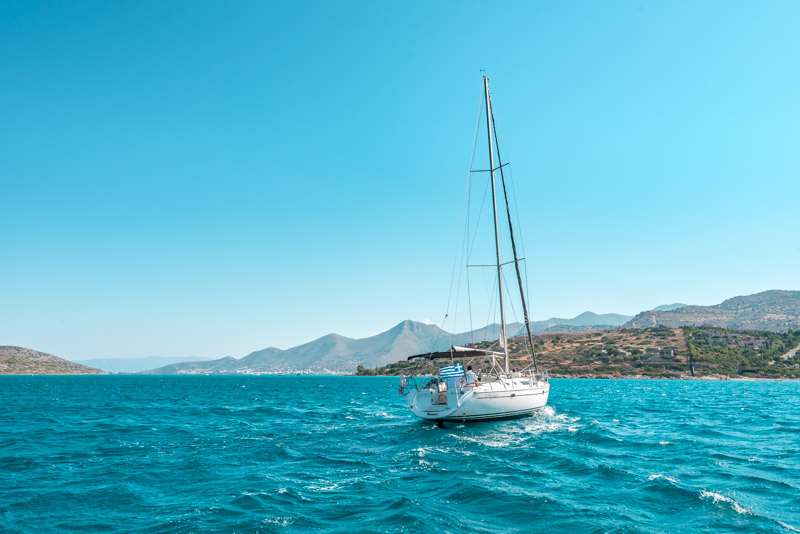
For travelers looking for a special excursion in Crete, a sailing trip in the Gulf of Mirabello is well worth it. You’ll sail around the island of Spinalonga and enjoy spectacular views. This excursion can be booked via GetYourGuide*:
➲ Sailing trips in the Gulf of Mirabello*
#6 Interesting facts about the island of Spinalonga
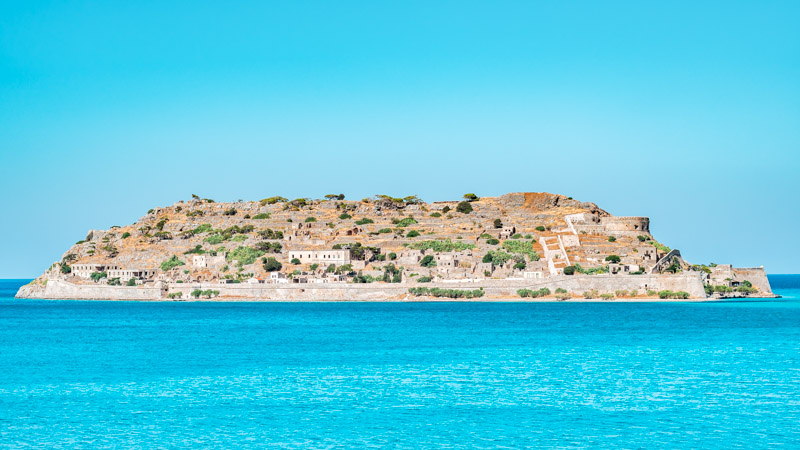
Officially, the approximately 8.5-hectare island of Spinalonga is actually called Kalydon. The name more commonly used today was introduced during Venetian rule (16th century). In Italian, “spina lunga” means “long thorn” and refers to the entire peninsula behind the fortress that frames the lagoon-like bay of Elounda.

Only 750 meters separate the island from the Cretan coast. Spinalonga is strategically located at the entrance to Elounda Bay, which is why the Venetians built a mighty fortress here in the Middle Ages to monitor the sea routes. Today, the southern side of the island is home to the boat landing and tourist facilities.
Spinalonga was already inhabited in ancient times, changed hands several times during the Middle Ages, and gained international fame in 1958 as Europe’s last leper colony. Since the 1970s, Spinalonga has been marketed as a tourist destination under the direction of the Greek National Tourism Organization. The ruins have served as a backdrop for film scenes and documentaries on multiple occasions.
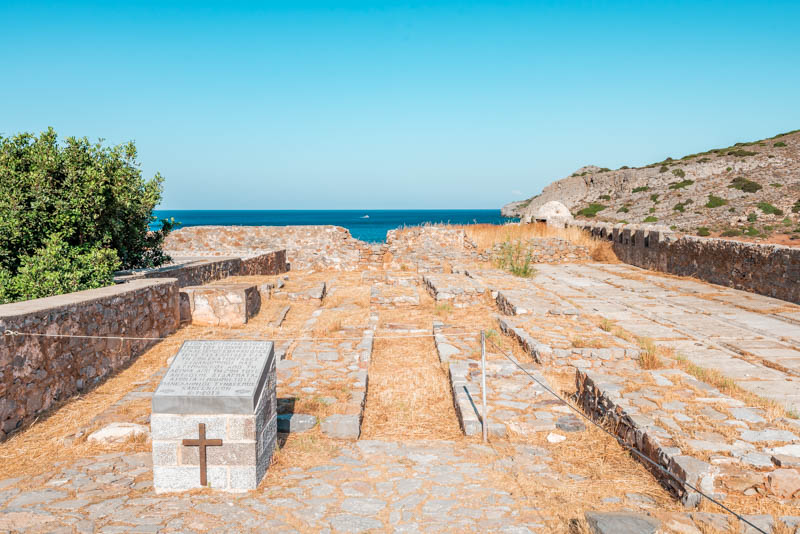
Since 2009, the Cretan regional administration of Lasithi, under the leadership of the city of Agios Nikolaos, has been making significant financial efforts to have the historic site of Spinalonga recognized as a UNESCO World Heritage Site. The application was provisionally accepted by UNESCO in 2016 but had to be withdrawn in 2019.
This led to fierce disputes between the Prefecture of Lasithi and the Ministry of Culture in Athens, which apparently envisioned even more extensive tourist development. The mayor of Agios Nikolaos remarked: “Is a former leper hospital now to be used as a tourist restaurant?” Since 2022, the entire issue has been on hold.
Spinalonga Film & Book: Island of the Forgotten
The history of the island of the exiles is both tragic and moving, and in the 70 years since its closure, it has also inspired art and film to capture what happened for posterity. Spinalonga gained international recognition in 1957 through the Greek movie *The Island of Silence* (*To Nisi tis Siopis*) by Lila Kourkoulakou.
The film, which was screened at the Venice International Film Festival in 1958 and exposed the shocked audience to medieval conditions in what was then a well-developed Europe, played a decisive role in finally closing the leper colony on Crete following international pressure.
In 2005, Greek-British author Victoria Hislop published her debut novel “The Island” and landed a bestseller. The story of archaeologist Alexis Fielding, who traces her past on the mythical island of exile, brought international fame to Hislop and, not least, to Spinalonga. You can order your copy on Amazon*: Book by Victoria Hislop*
Between 2010 and 2011, a Greek television station adapted Hislop’s book into a series titled “To Nisi” (original: Το Νησί). With stunning visuals, the 26-episode series depicts the journey of the main character, Alexis Fielding, to the island of Spinalonga and, through flashbacks, portrays the arduous lives of those afflicted with leprosy. The series To Nisi is considered the most successful and, at the same time, the most expensive Greek television production.
✓ Full coverage & unlimited mileage included
✓ Free cancellation until 24h before pickup
✓ Best price guarantee via Discover Cars
#7 History of Spinalonga
As far back as ancient times, the port of Olous is said to have been located near the island of Spinalonga. Unfortunately, very little is known today about this Hellenistic city, which maintained close ties with the island of Rhodes. It is believed that Olous and the port near Spinalonga were destroyed by the Arab invasion in the 9th century. In the period that followed, the island was inhabited by shepherds.
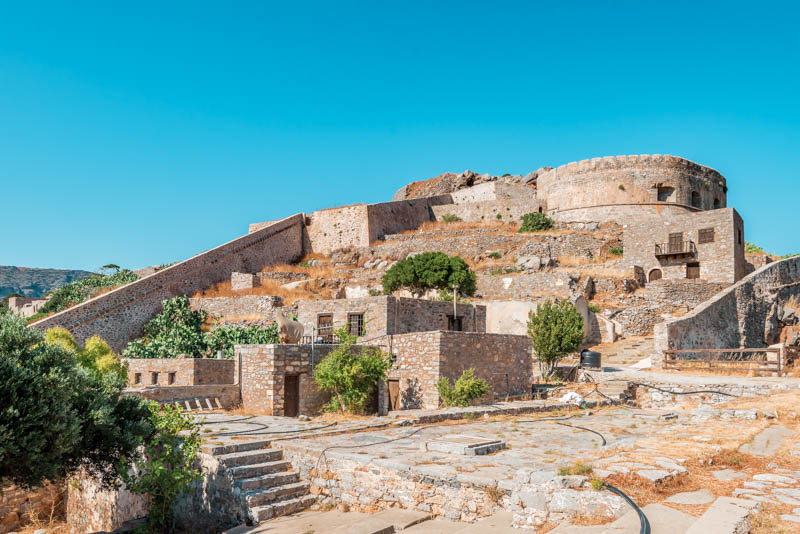
When the Venetians took control of Crete in the 16th century, they built several defensive structures and fortresses around Crete to protect against the threat of the Ottoman Empire. The cartographer Vincenzo Coronelli even reported that in 1526, the Venetians went to great lengths to separate the island of Spinalonga from the Spinalonga Peninsula behind it.
This improved the island’s defenses. Whether the landmasses were ever connected has not been scientifically proven, but the first construction work on Spinalonga began between 1574 and 1578. After the construction of massive ring walls, the bastions visible from afar followed in several phases, and the Venetian castle took on its present form.
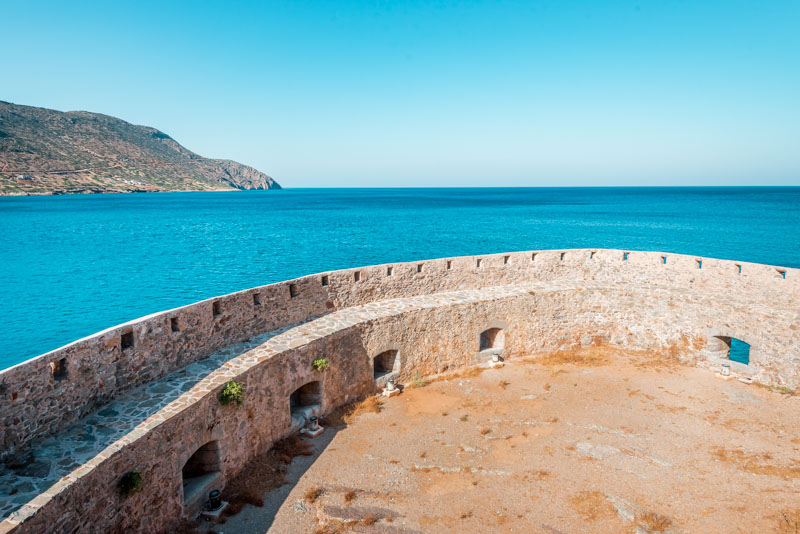
During the War of Crete (1640–1659), when the Venetians, with French assistance, attempted to repel the numerous Ottoman attacks, Spinalonga was further fortified. In 1647, the fortress took in refugees from other parts of Crete who had been driven out by the Ottomans. In 1718, Spinalonga finally fell to the Turks.
Spinalonga and its severely depleted fortress were of minor importance in the period that followed. Several soldiers and about 20 Muslim families lived on Spinalonga until the end of the 19th century. During the Greek War of Independence, Spinalonga was one of the few places in Crete that remained under Ottoman control.
While many parts of Greece had long since been liberated from the Ottomans, Crete did not gain its autonomy until 1897. Under pressure from the Greek Orthodox population, many Muslim families were forced to leave the islands, leaving behind all their belongings. In 1903, the Cretan government decided to quarantine leprosy patients on Spinalonga.
On October 13, 1904, the first 251 leprosy patients were relocated to the island of Spinalonga. Although they lived in the former homes of the Muslims, they lacked everything. Basic necessities were provided only reluctantly. In 1935, about 300 people lived on the island; on average, one person died each week and a new one arrived—without medical care, this meant lifelong exile at the time.

In 1939, new buildings were erected, including facilities for medical care, and a ring road was built. Starting in 1948, new treatment methods (including the antibiotic dapsone) improved conditions on Spinalonga, and cured patients were able to leave the island. Spinalonga remained in operation until 1957 and was thus considered Europe’s last leper colony.
The last inhabitant of Spinalonga, an Orthodox priest who had long since been cured, left the island in 1962 due to complete loneliness.
💡 Leprosy: The name derives from the Greek word lepros, meaning scaly and rough, which describes the characteristic appearance of those afflicted. This chronic infectious disease, caused by Mycobacterium leprae, is one of the oldest known diseases. Although leprosy is only mildly contagious, it was virtually incurable at the time. Common causes of new infections included poor hygiene, malnutrition, and a weakened immune system.
#8 Restaurants near Spinalonga
There are no dining options on Spinalonga itself, only a snack bar selling (overpriced) drinks and snacks. However, after visiting the leper colony, you can stop by one of the cozy taverns in Plaka or Elounda. The restaurants in Plaka with a view of Spinalonga are charming but do not offer good value for money. Here are our recommendations:
To Pefko (The Pine Tree) (Plaka): A very cozy café in the alley leading to the harbor. You sit under the eponymous pine tree and can watch the hustle and bustle of the town in peace. In addition to delicious coffee and Greek cake, hearty small bites (mezedes) are also served.
PORTA | Resto Bar (Plaka): A modern wine restaurant right above Plaka’s harbor with a view of Spinalonga. In addition to traditional Greek cuisine, they also serve international dishes. Friendly owners and attentive staff, fair prices, and a relaxed atmosphere.
Okeanis (Elounda): Somewhat hidden away, but all the more peaceful for it, is this family-run, attractively designed tavern. Here, the friendly owner still cooks in the kitchen himself and serves his guests tasty home-style cooking. Good value for money and a wide selection of vegan and vegetarian dishes.

Venue Cafe Bar (Elounda): A café on Elounda’s village square. Here you can enjoy good coffee and refreshing cocktails with a view of the harbor. Perfect for passing the time while waiting for the ferry to Spinalonga.
Akrohoria (Elounda): A rustic tavern just outside Elounda with friendly owners. Wide selection of grilled dishes, popular with locals, and affordable prices. Stunning view of Elounda Bay from the terrace.
#9 Hotel Tips for Spinalonga (Elounda)
Elounda has become one of the most popular holiday spots in Crete in recent years. There is accommodation for almost every budget, from villas with pools in the hinterland to simple vacation apartments in town to exclusive luxury hotels right by the sea. Here are our recommendations; further details on Booking.com*:
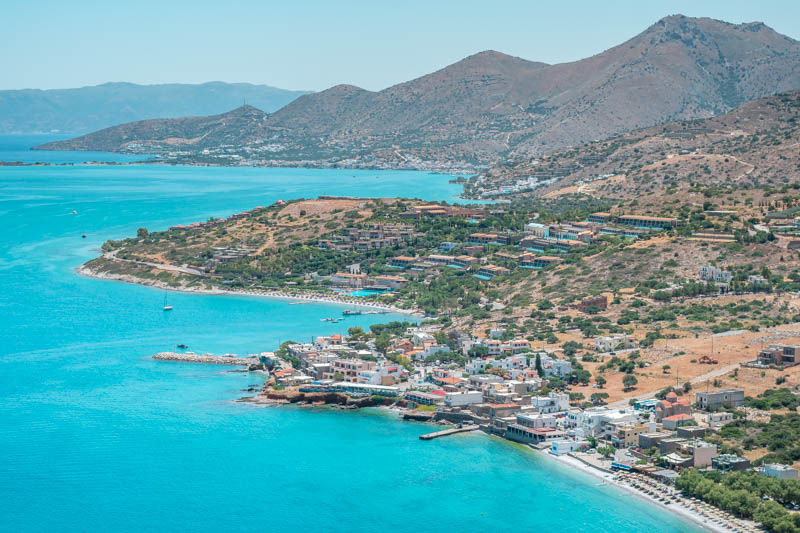
Beautiful accommodations in the region
Cayo Exclusive Resort & Spa (Plaka)
A new 5-star resort in a quiet location above Plaka with a stunning view of Spinalonga and the surrounding bay. The rooms are ultra-modern, the service is top-notch, and the well-maintained grounds exude a sense of well-being. A hefty price tag for exclusivity on your Crete vacation.
➲ Book Cayo Exclusive Resort & Spa*
Casa di Plaka (Plaka)
Newly built villa made of natural stone, located directly on the traffic-calmed waterfront promenade. Very elegant and luxurious amenities (hot tub, small pool, fireplace, etc.) as well as balconies and a terrace with ocean views. Accommodates up to 6 guests! Probably the most beautiful place to stay in the immediate vicinity of Spinalonga.
Elounda Colour Apartments (Elounda)
Centrally located aparthotel not far from Elounda Harbor. Maria rents out modern studios and apartments, some of which can accommodate up to four people. A delicious and personalized breakfast is also served.
➲ Book Elounda Colour Apartments*
Elounda Heights (Elounda)
A solid 3-star hotel for adults in a prime location above Elounda. Some apartments offer a magnificent panoramic view of the bay. The rooms are tastefully furnished, and a swimming pool provides a refreshing escape on hot summer days. Good value for money.
*Link to Booking.com
#10 Things to See in the Area
Day trip to Agios Nikolaos
The provincial town, just 25 minutes away, is the heart of eastern Crete. Hardly any visitor to Spinalonga misses out on a stroll through this town of 12,000 residents. The highlight of Ai Nikola, as the Greeks call it, is Lake Voulismeni, located right in the center of town. Shopping enthusiasts appreciate the many boutiques, jewelry stores, and shoe shops.
→ In this post, we’ve summarized everything you need to know about the city: Agios Nikolaos
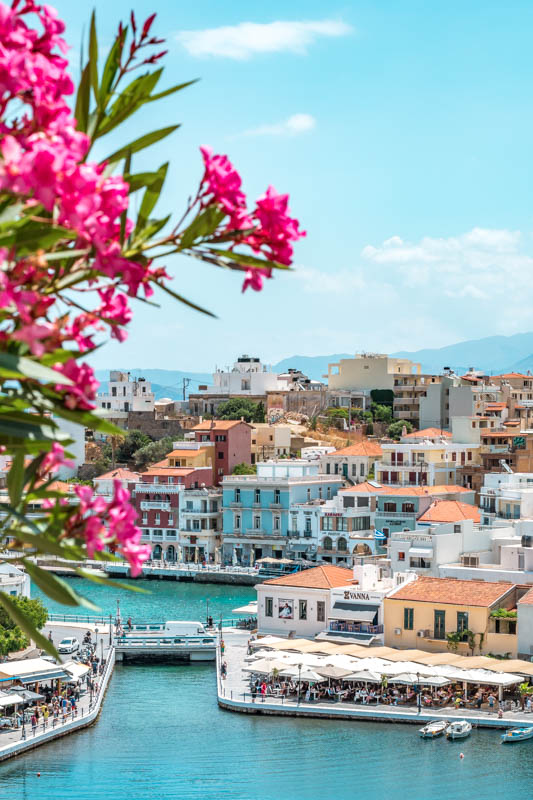

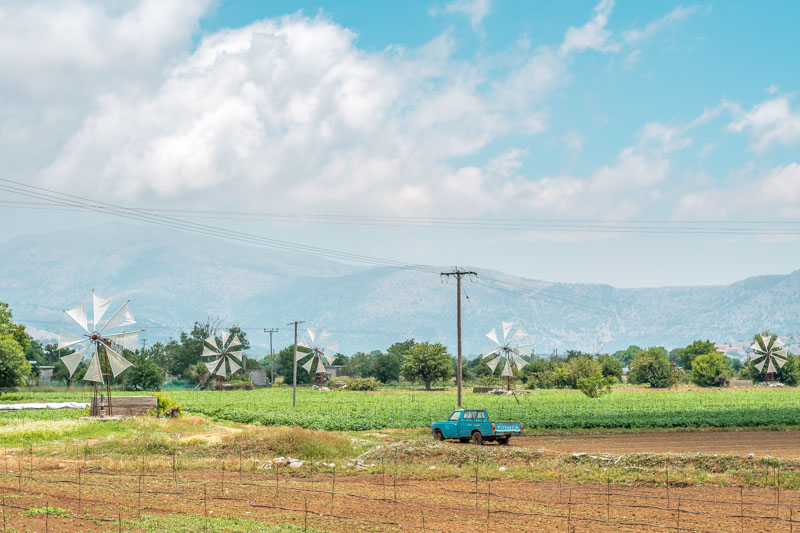
Excursion to the Lasithi Plain
The Lasithi Plateau is the largest of its kind in all of Crete. It lies about 60 km southwest of Spinalonga and can easily be combined with Agios Nikolaos and Spinalonga for a day trip. Characteristic of the plateau are the white windmills, which once stood by the thousands in the fields.
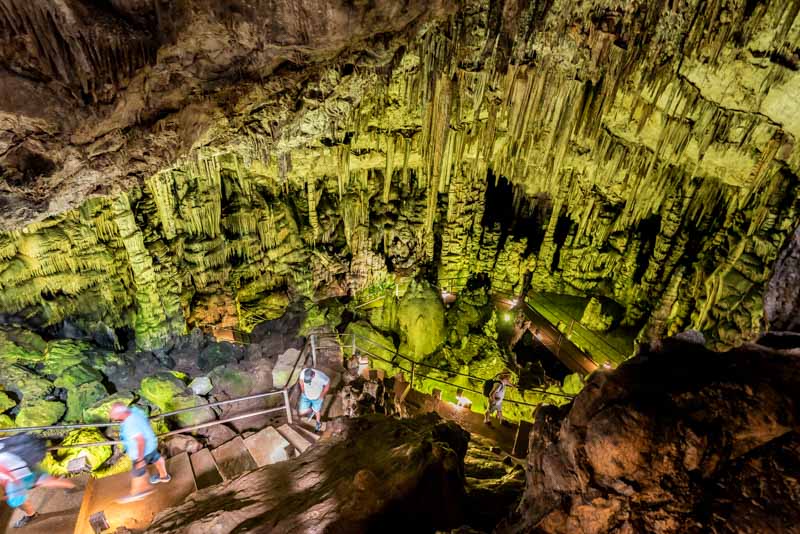
The famous Cave of Psychro (Dikteon Antron), where Zeus, the father of the gods, is said to have been born, is also worth a visit. It lies on the slopes of the Lasithi Plateau and impresses with its size and the many bizarre stalactite formations.
→ In this post, you’ll find more information about this destination: Lasithi Plateau
Areti Monastery near Karidi
Like an oasis in the desert, the Areti (Aretio) Monastery lies in the barren landscape about 1 km outside the village of Karidi. The Venetian-style monastery (16th century) suffered greatly from Ottoman attacks. After Crete gained autonomy, it was rebuilt at the end of the 19th century, and monks have lived here again since the 1950s.
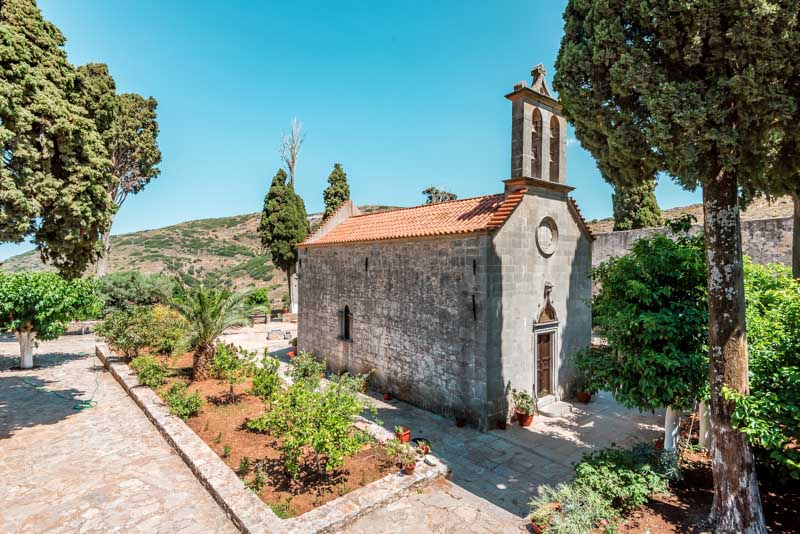
Today, the courtyard is an oasis of tranquility, featuring the venerable katholikon and 12 cypress trees, which symbolize the 12 Apostles. Visits to this charming little monastery are possible outside of siesta hours; appropriate attire is required. Small souvenirs can be purchased in the monastery shop.
→ You can find more articles about the island and numerous tips for Crete here:
*Support our blog Greece-Moments
This post contains affiliate links marked with an asterisk (*). If you book or purchase something through one of these links, we receive a small commission. The price remains the same for you. This helps us continue to provide high-quality content for free. Did you enjoy this post and want to say thank you? Then simply buy us the next Greek coffee ☕️ Go to the coffee fund
Save this post on Pinterest too!