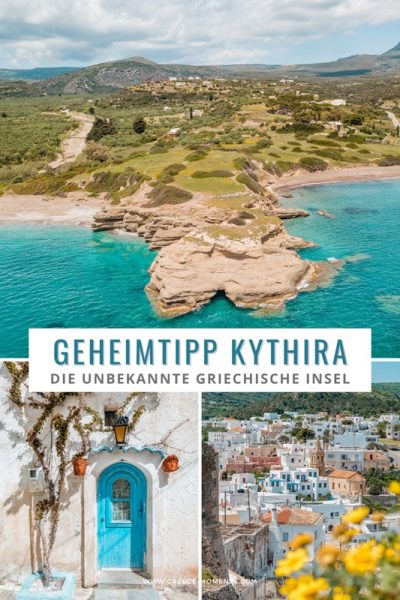

Fifty authentic villages and a charming main town, numerous dream beaches and bays with crystal clear waters, lush green gorges with waterfalls and ancient hiking trails that invite you to explore. Who believes that Kythira Island can’t save itself from holidaymakers, is wrong, because international tourism has hardly played a role here so far.
»Between the southern tip of the Peloponnese peninsula and the largest Greek island of Crete lies another real insider tip!«
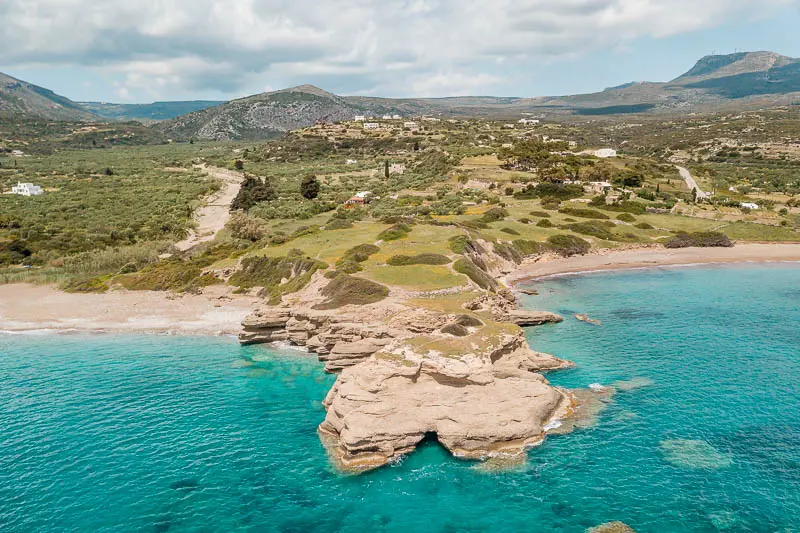
Only in July and August do Greeks from all parts of the country flock to the almost untouched island jewel, which is geographically one of the Ionian Islands (including Zakynthos), but is administered by the region of Attica (Athens).
We explored the compact island for a week. At the end of April and beginning of May, Kythira was still sleepy, but particularly green and in full bloom.
With the exception of a few vacationers, we were all alone in many places. Enclosed we tell you about our most beautiful experiences and the Kythira’s Top Sights:
- #1 Chora: Kythira’s charming capital town
- #2 Coastal town of Kapsali
- #3 Stone Bridge of Katouni
- #4 Monastery of Panagia Myrtidiotissa
- #5 Mylopotamos and the Valley of the Watermills
- #6 Castle of Kato Chora
- #7 Baths of Aphrodite of Avlemonas
- #8 Port town Diakofti
- #9 The traditional village of Potamos
- #10 On the road in the north of Kythira
- #11 Island Dwarf Andikythira
- More Kythira travel tips
#1 Chora: Kythira’s charming capital town
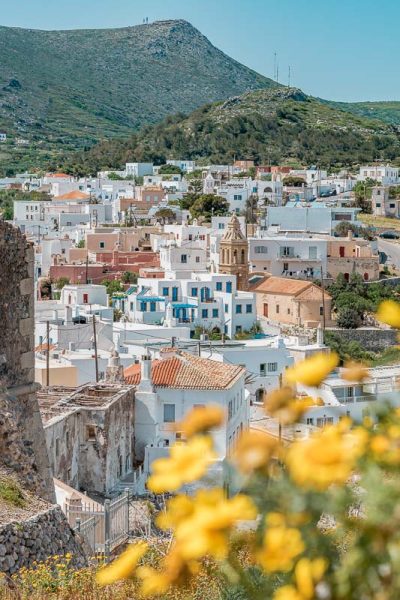
In the south of the island lies the capital of Kythira, also called Chora, with its striking castle ruins. When we visited in May, everything was still in deep sleep. Only a few shops and restaurants were open. In the summer months, life probably pulsates here day and night.
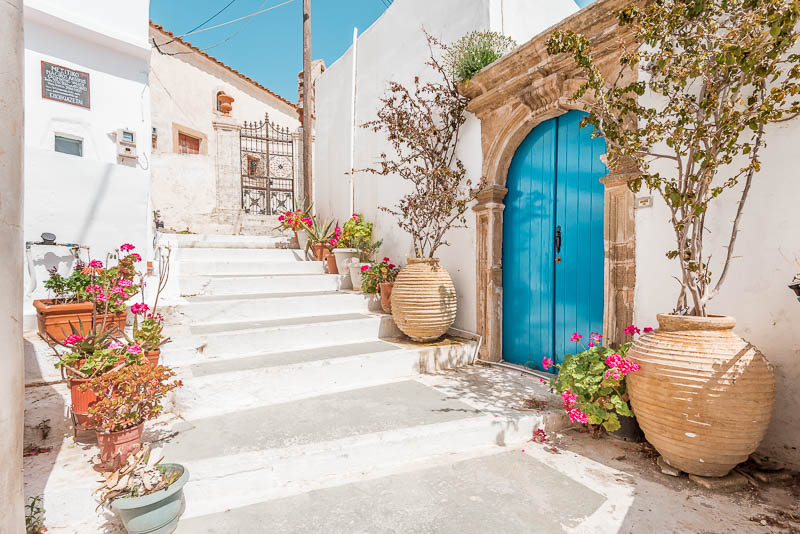
You can park your vehicle in a large parking area in the north of the village and walk into the town centre. The photogenic alleys of the town of 300 inhabitants offer countless photo opportunities, small shops and boutiques invite you to stroll.

In a southerly direction you will reach the Castle of Chora, also called Fortezza. The former Byzantine fortress was probably expanded around 1503 under Venetian rule. Even today, the lion of St. Mark towers over the massive entrance gate.
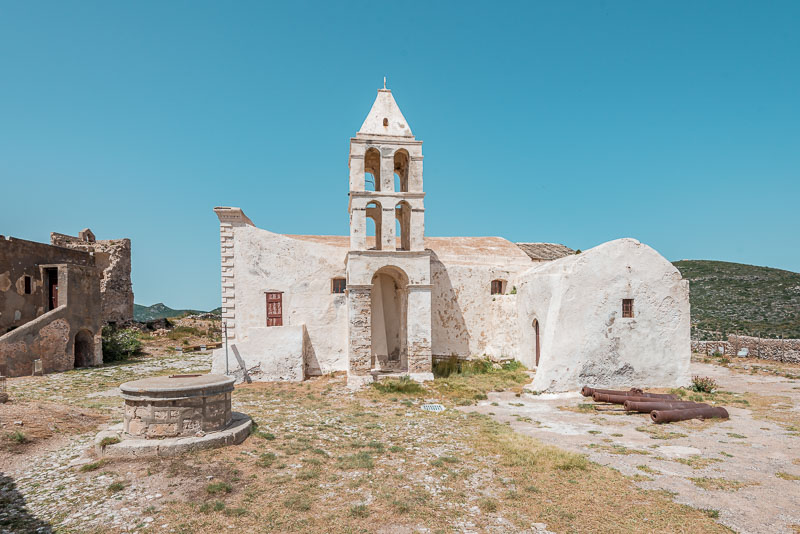
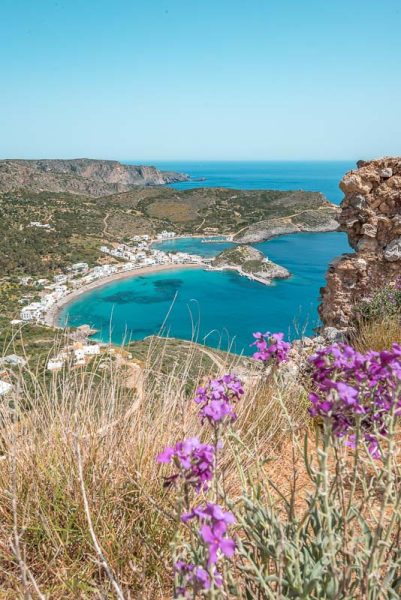
The facility is extensive and is home to a gunpowder magazine, several chapels and exhibition rooms. Behind the church of Mirtidiotissa from Venetian times you can enjoy a magnificent view of the bay of Kapsali (daily 8:30 a.m. – 3:30 p.m., admission free).
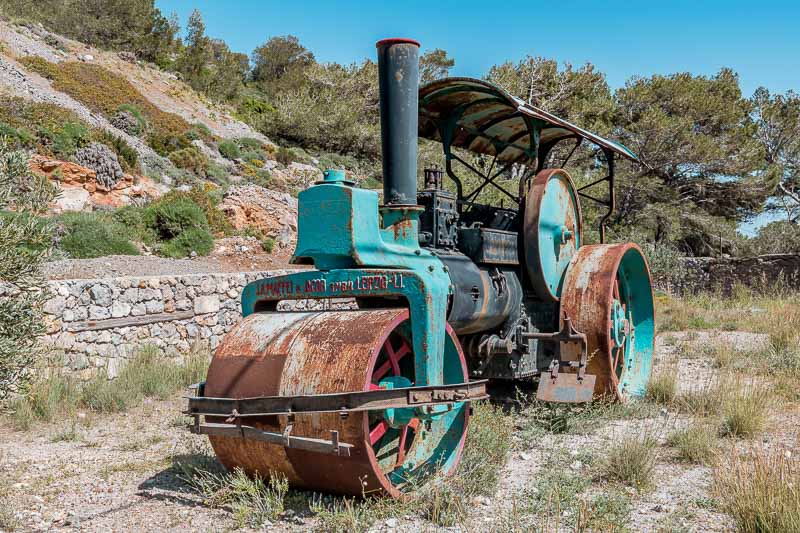
Shortly before the entrance to Chora, a curious photo stop awaits you. Known to locals as “Olga”, a steam road roller adorns the Leipzig Mafei & Jacob Company from the 1920s. The steel colossus was used by the British in the 20th century to expand the infrastructure and the then road builder immortalized the name of his wife Olga on the side.
#2 Coastal town of Kapsali
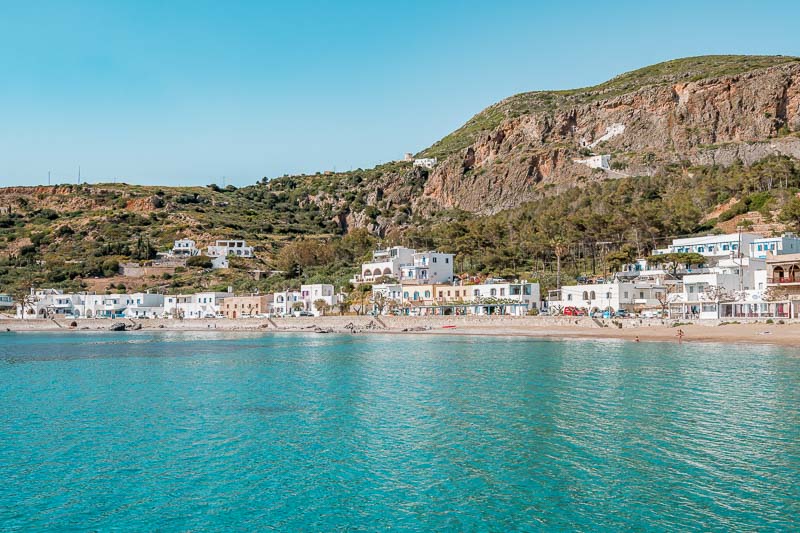
If you leave Chora to the east, you can see the striking twin bays of Kapsali from afar. The popular holiday resort of Kythira on the south coast is located directly below the capital and is wonderful for a relaxing day at the beach.
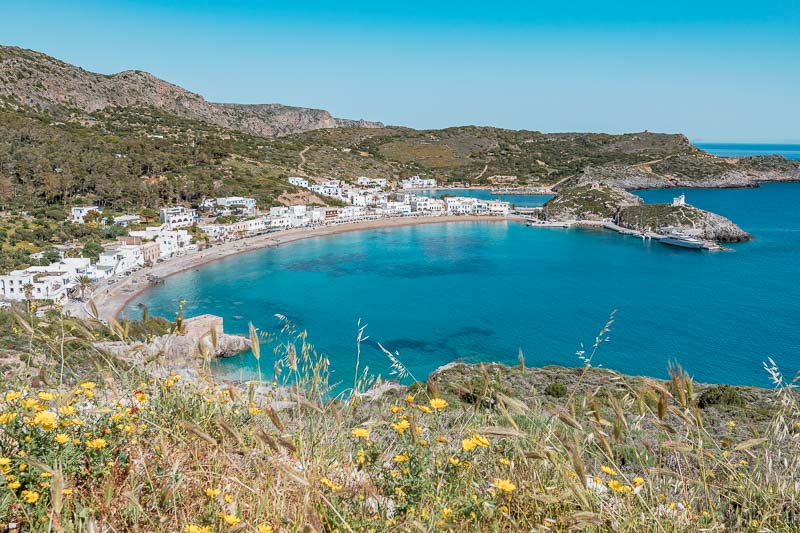
On the long sand and pebble beach, numerous restaurants and café bars have set up shop with loungers and umbrellas. Behind the waterfront you will find studios, apartments, tourist shops and mini-markets.
In the hinterland of Kapsali there is an easy Kythira Campsite only for tents, but which has been closed in recent years. From the Agios Ioannis rock chapel above the campsite you can enjoy a magnificent view of the bay of Kapsali.
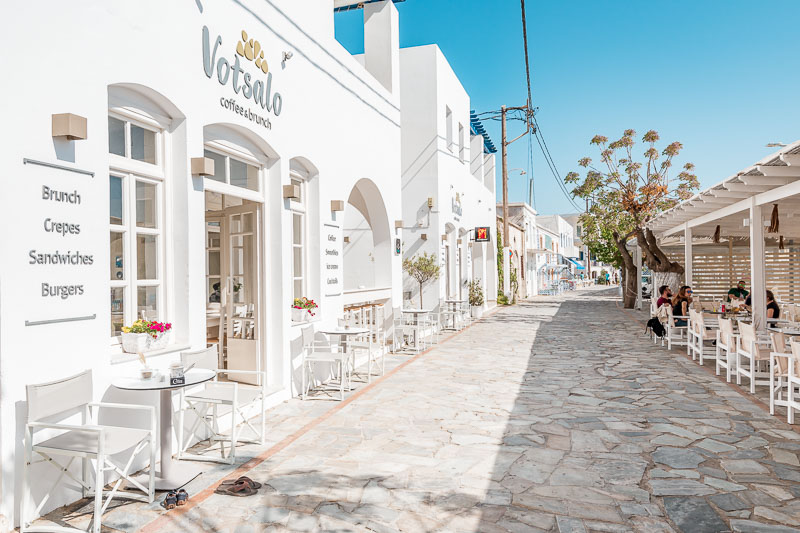
Even in the low season, some restaurants were open in Kapsali. We stayed several times in the cozy Votsalo Beach Bar enjoyed a cool Freddo espresso and some delicious snacks. The staff is friendly and accommodating and the prices are fair.
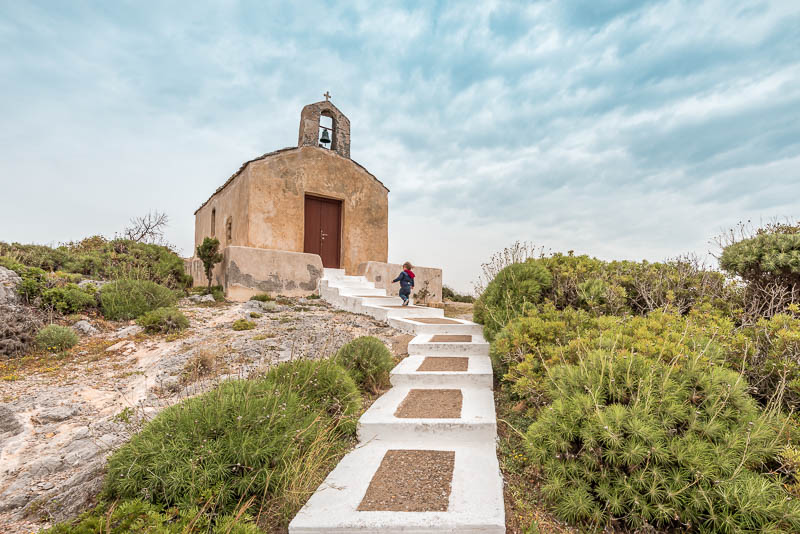
A magnificent view of the Kapsali Beach enjoy the lighthouse and the chapel of Saint George, which are located on a headland in the sea. An entertaining walk takes you up whitewashed steps to the viewpoint.
💡 Kythira – Souvenir for eternity: Sempreviva (Latin for eternal life) is the most famous flower on the island. It stands for everlasting beauty, because once picked, the plant no longer needs water. The yellow delicate flowers are dried and braided into decorative wreaths. In Greek, it is also called Elichrysos, known to us as Immortelle.
Detour to Saint Sophia Cave
Only 10 minutes inland from Kapsali is the Cave of Saint Sofia (Spilaio Agias Sofias). In spring, the journey through the lush green gorge alone is a real highlight. The concrete track ends directly in front of the cave entrance, which is marked by a white cross.
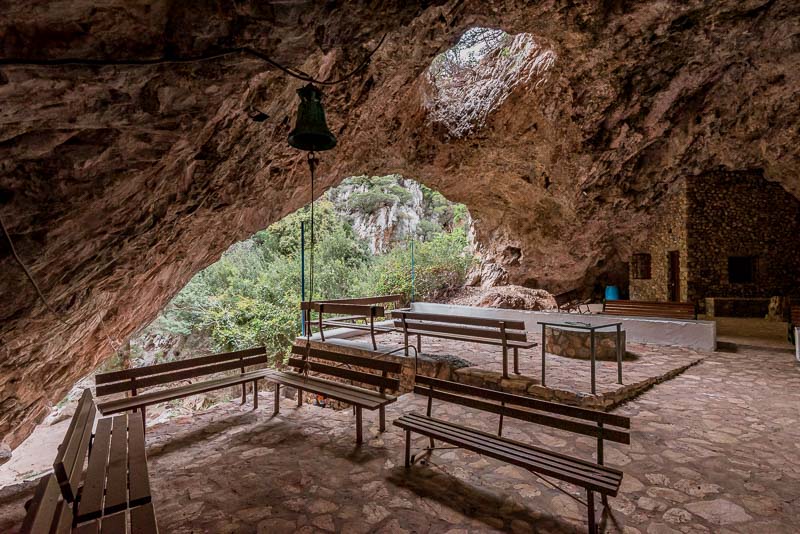
Inside the huge grotto, you’ll come to an open church vestibule with an iconostasis full of images of saints. A few benches invite you to take a short break. Take your time to enjoy the wonderful silence in this place and pause.

#3 Stone Bridge of Katouni
One of the most important buildings of Kythira awaits you not far from the town of Livadi. The massive Katouni Bridge, with its 13 arches, was built during the British occupation and is the largest stone bridge in Greece.
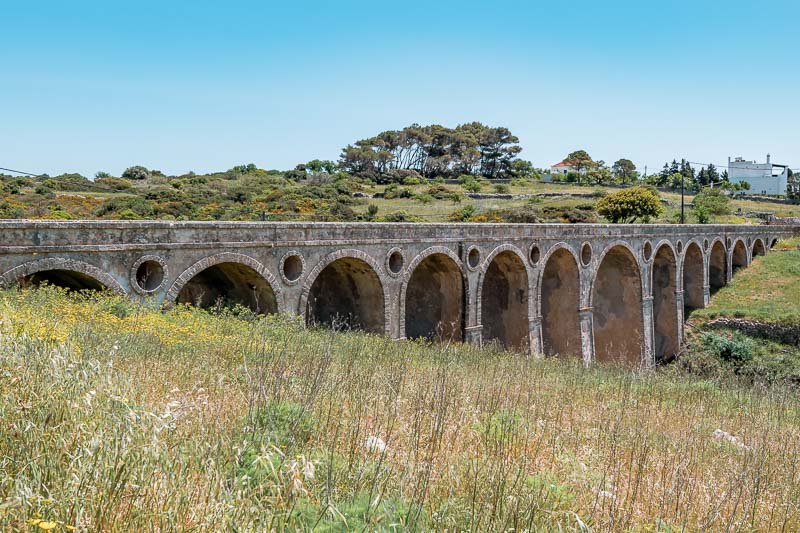
In 1826, the 110 m long monument was completed, which at that time connected the village of Avlemonas with the capital. The building is not the only building from the British era (1909 – 1964). Above Livadi there is still a former school of the English, the so-called Milapidea School.

Ceramics made in Kythira
Just 500 m south of the Katouni Bridge you will find the beautiful Pottery workshop Ceramics Roussos. The family business of the friendly owner Panagiotis is now in its fifth generation of production of handmade ceramics and pottery.
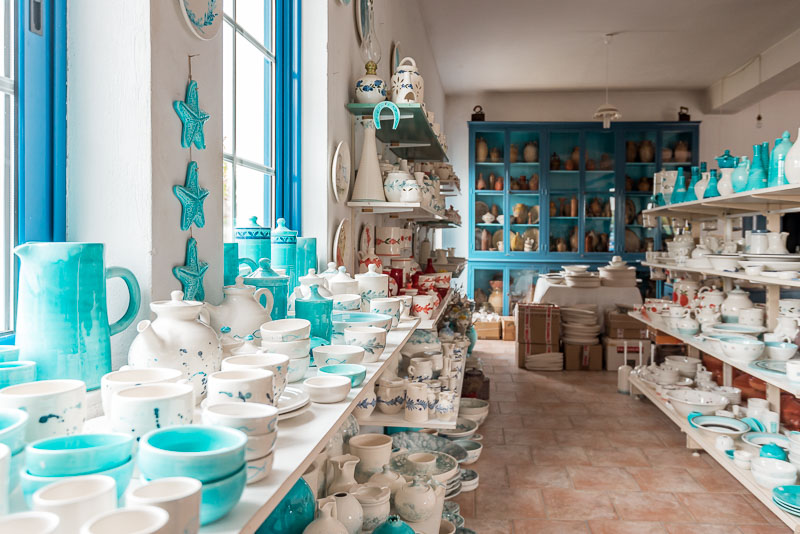
The individual pieces are painted by hand and are so tasteful that you would like to buy the whole store. From traditional to modern, everyone will find a suitable island souvenir here, small guided tours are possible spontaneously (open daily 10 a.m. to 5 p.m.).
#4 Monastery of Panagia Myrtidiotissa
That largest monastery of Kythira blends picturesquely into the landscape of the west coast. Even the journey to the monastery is a real experience! Coming from the hamlet of Kalokairines, the asphalt road leads through the natural stone Arch of Tripia Petra.
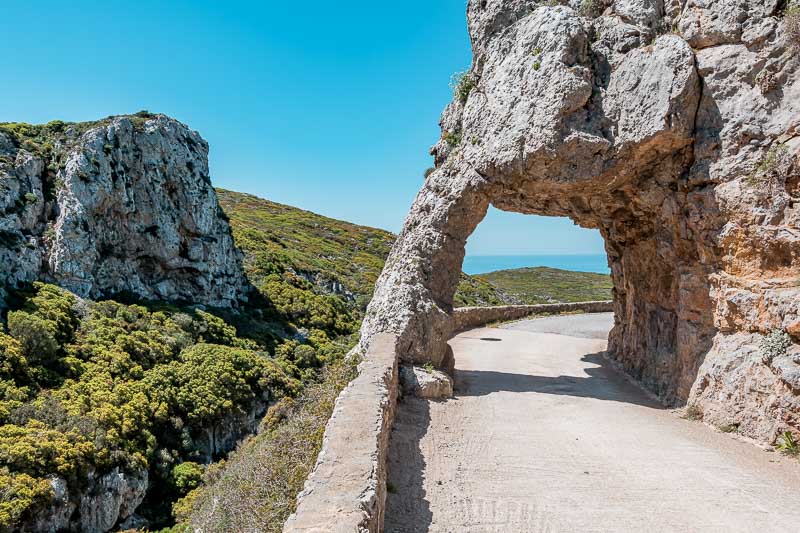
A few meters behind it, you’ll come to a monument with a large cross at the top. As you pass through the gate, a magnificent panorama of the monastery and the coast awaits you. The monastery is home to the valuable icon of the Panagia Myrtidiotissa, who is also the patron saint of Kythira.
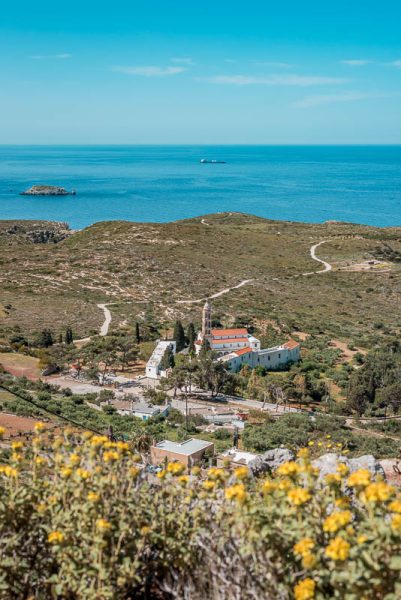
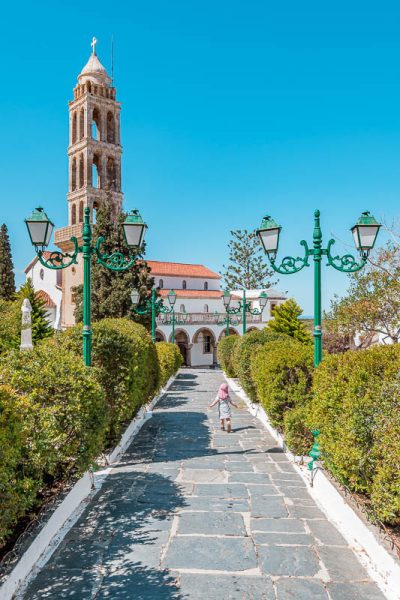
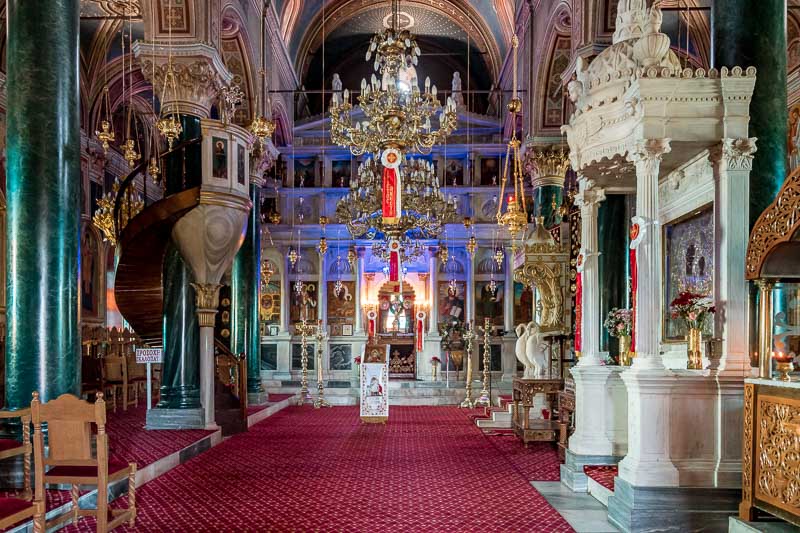
A visit to the well-kept and green grounds gives an insight into Orthodox church art. In addition to the main church, which was built around 1857, the 26 m high bell tower is also the focal point of the complex.
When we visited at the end of April, the miraculous icon of the Holy Mother of God was not in the monastery. In the 15 days after Easter Sunday, it “wanders” through all the villages of the island every year before arriving in the main town of Chora for the big procession, in which many locals take part.
#5 Mylopotamos and the Valley of the Watermills
A real Kythira highlight awaits you in the west of Kythira. The tranquil Mylopotamos village is an ideal starting point for a hike into the green heart of the island. After the excursion, there is still enough time to linger in one of the cozy taverns on the village square.

In the center of the village there is a free large parking lot where you can park your vehicle. Keep on the village road to the north, past the church of Agios Sostis and the beautiful Elixrysos Herb Shop the Scotswoman Sara. Follow the narrow road behind the shop.

After a few metres, a stone path branches off to the right into a wooded valley. On the right hand side the path goes to the Neraida Waterfalls, which we save for last. Frist we follow the signs to “Watermills”.
The M41 hiking trail (see box: Kythera Trails) winds through a lush green valley, past the remains of old watermills. In the high season, one of the old mills also houses the Café Phill’s Watermill.
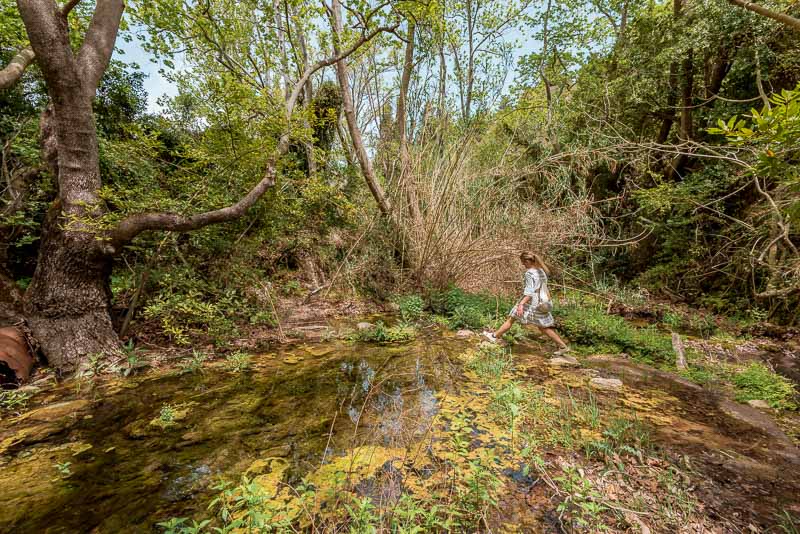
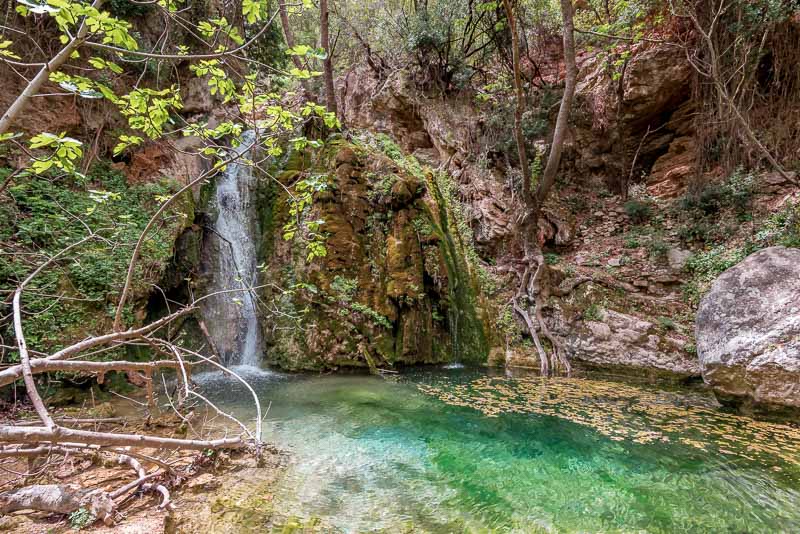
Just a few steps further you will reach an impressive Kythira Waterfall with natural pool. The scenery is breathtaking, with a little climbing skill you can capture this gem photographically. The hike to the waterfall from Mylopotamos takes about 20 minutes.
Back in Mylopotamos, the Tavern O Platanos is good for a rest. Under shady plane trees, you will sit right in the heart of the village and enjoy traditional Greek cuisine. Right next to it, the stream splashes and ducks refresh themselves in the cool water. A real village idyll!
💡 Kythera Trails: A network of more than 100 km of trails on Kythira makes the hearts of hiking enthusiasts beat faster. In the meantime, 11 routes with different lengths and levels of difficulty have been reliably marked and give an insight into the flora and fauna of the island off the beaten track. More information and hiking app at: Kythera Trails
#6 Castle of Kato Chora
Only 1 km west of Mylopotamos we set off in the ruined village of Kato Chora on a journey back in time. Behind the former British school in the centre of the village, you can explore the Castle of Milopotamos, which dates back to 1565.
Through the castle gate, at the top of which the lion emblem of St. Mark is still enthroned, we get inside the complex. In the meantime, large parts of the Venetian Kastro have been overgrown by nature. The many chapels from Byzantine times are striking, but they were all closed during our visit.
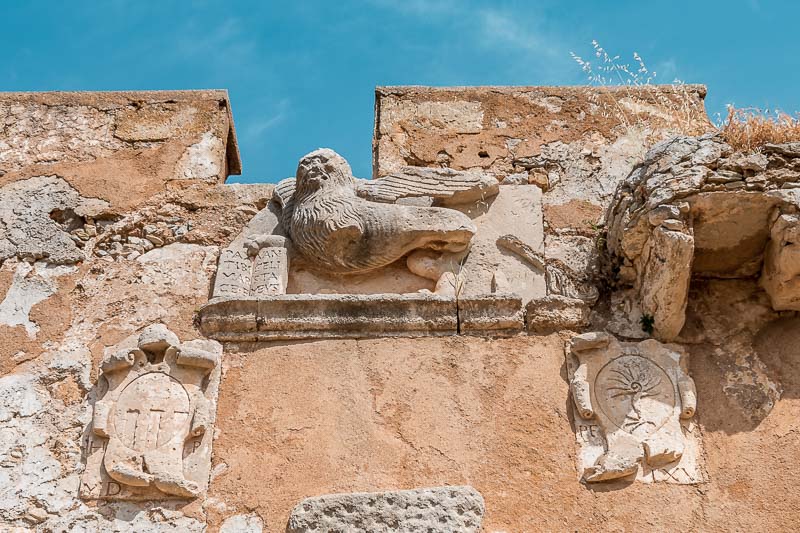
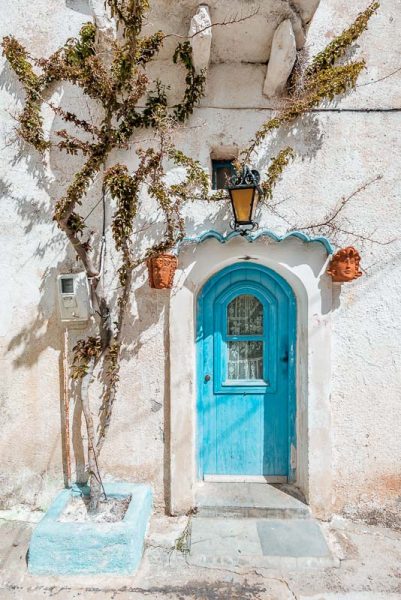
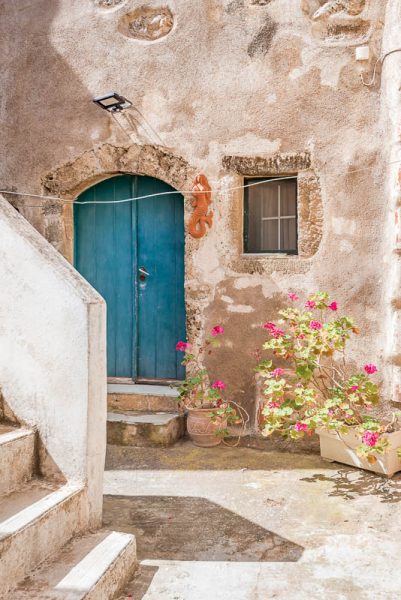
The castle of Chora was spectacularly built on a rocky outcrop and caution is advised, because behind the chapels the slope drops steeply. Especially at sunset, the atmosphere on the ghostly grounds is magical! On the way back, many photo spots are waiting for you in the new (inhabited) part of Kato Chora.
Agia Sofia Cave
Below Kato Chora on the coast lies another impressive cave in honour of Saint Sofia. The cave entrance with ancient wall paintings from the 13th century is already worth seeing.
Over a length of 200 m, visitors can not only admire numerous stalactite formations, but also take a look at the chapel built into the rock, which is dedicated to Saint Sofia.
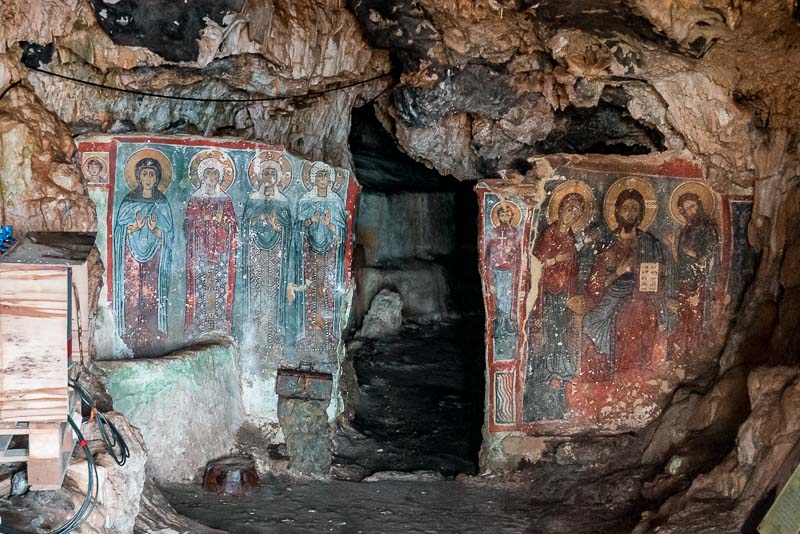
The total area of Saint Sophia Cave is a proud 2,000 m² and even in midsummer it is a pleasant 16 degrees underground. Unfortunately, the cave was closed for our visit in 2022, we only had a view through the gate. It is best to find out about the opening hours in advance.
Cycladic flair in Limnionas
If you drive from Kato Chora down to the west coast, you will reach the lonely Limnionas Beach. At the end of April, there was a yawning emptiness here, the perfect place for those seeking peace and quiet.
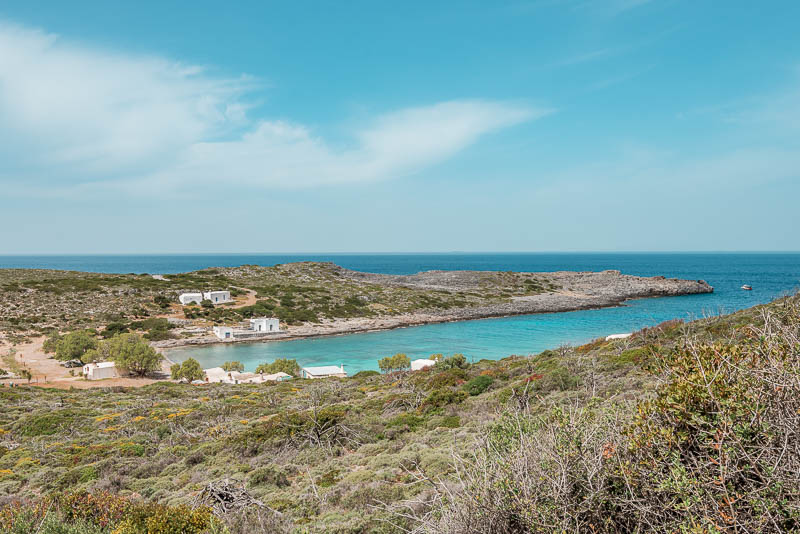
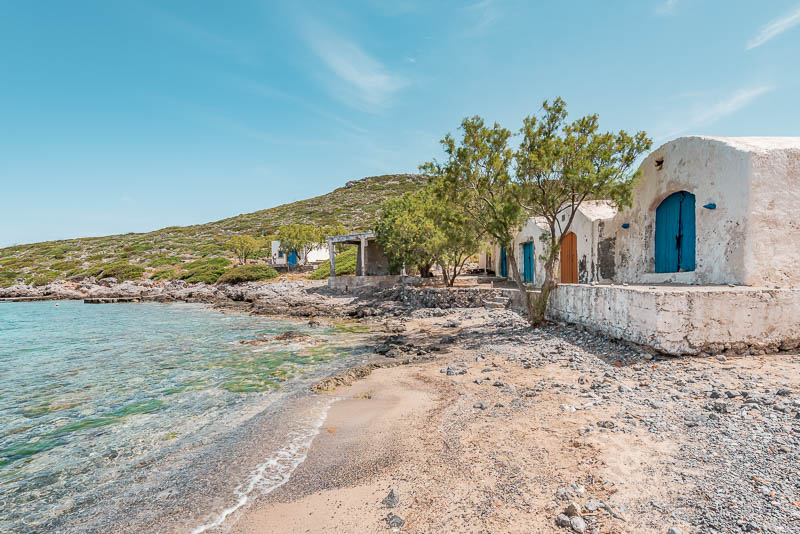
In summer, the iconic VW Bulli “Brothers on wheels” provides bathers with cool drinks and coffee. The white boathouses with its colourful doors exude a touch of Cycladic flair and the crystal-clear bay invites you to take a dip in the cool water.
#7 Baths of Aphrodite of Avlemonas
Kythira is said to be one of the two birthplaces of the goddess Aphrodite. In the sea near Avlemonas, she was born as a so-called foam-born woman (foam Greek for “aphros”), according to Hesiodos. Avlemonas is quite remote in the barren east of Kythira and even today the cute fishing village adorns itself as the home of the goddess.

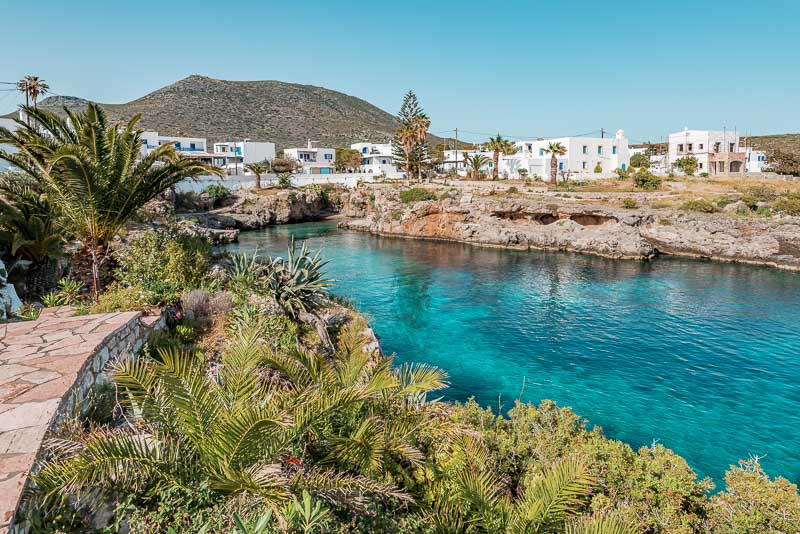
The whitewashed cubes of houses are picturesquely lined up around the distinctively curved twin bay. In the Middle Ages, the Venetians maintained the main cluster of the island here. A small tower (Watch Post) in the village and the remains of the octagonal Kastelo Fortress from 1565 at the entrance to the bay bear witness to this time.
The highlight of Avlemonas, however, are the »Baths of Aphrodite«, a picturesque bay lined with palm trees. Ladders make it easier to enter the crystal clear sea. At the end there is even a small sandy beach. Many a holidaymaker hopes that a swim in the bay will give them a rejuvenation cure.
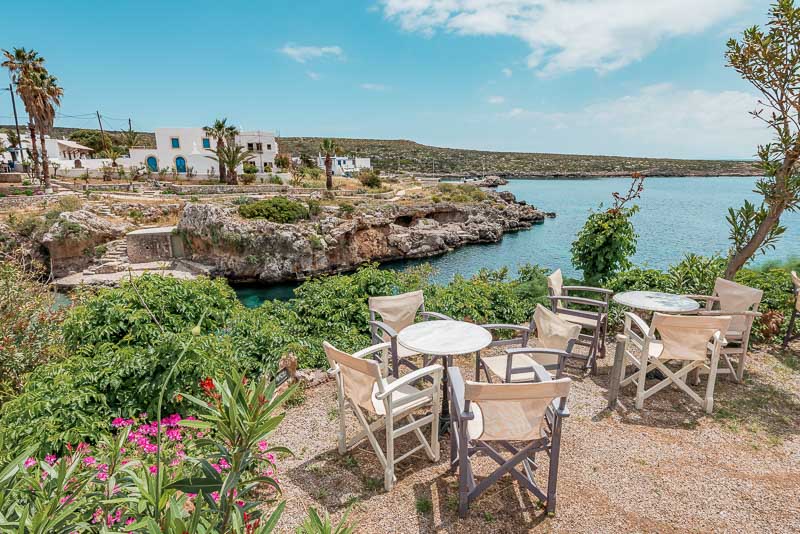
In the village itself there are a handful of taverns and cafés (tip: Mpotzio), some of which are only open continuously from June. You can linger comfortably in the Arachtopoleio Bar on the fishing harbor of Avlemonas in the eastern part of Twin Bay. Cool drinks, cakes and small snacks are served in an atmospheric atmosphere. There is live music on weekends.
Coastal landscape of Paleopoli
Just 5 minutes outside of Avlemonas you will find the longest beach on the island, Paralia Paleopoli. Paleopoli means something like “old city”, and in ancient times the island’s capital Skandia was located here. Excavations have uncovered several archaeological sites, including Minoan temples and burial chambers. A huge earthquake around 370 AD reduced everything to rubble.
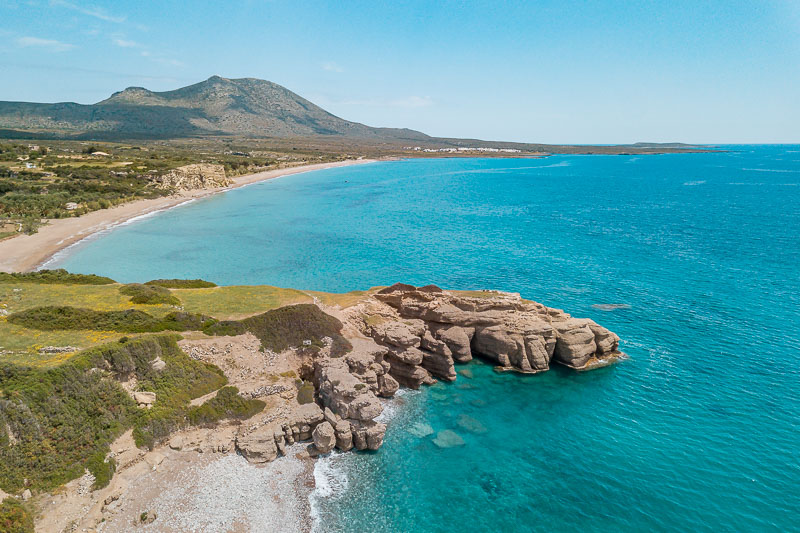
In the western section of Paleopoli Beach lies a striking rocky landscape. Here, several caves and grottos (Kamarela) have been created on the coast by the constant surf.
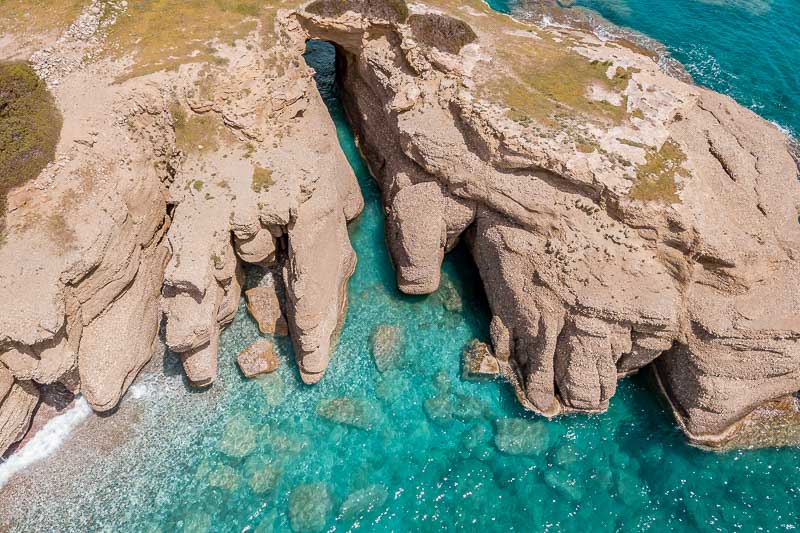
The yellow Sempreviva flower grows on the plateau in spring (see box #2). On the other side is the natural Limni Beach, which is especially popular with nudists.
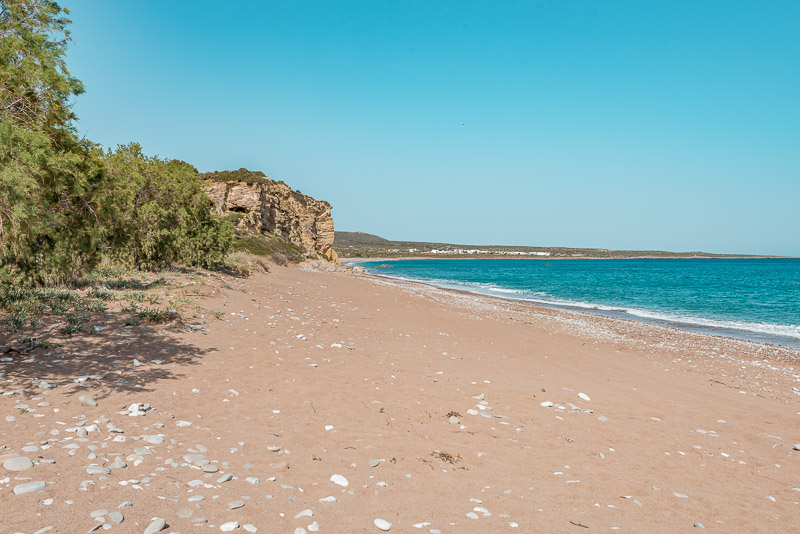
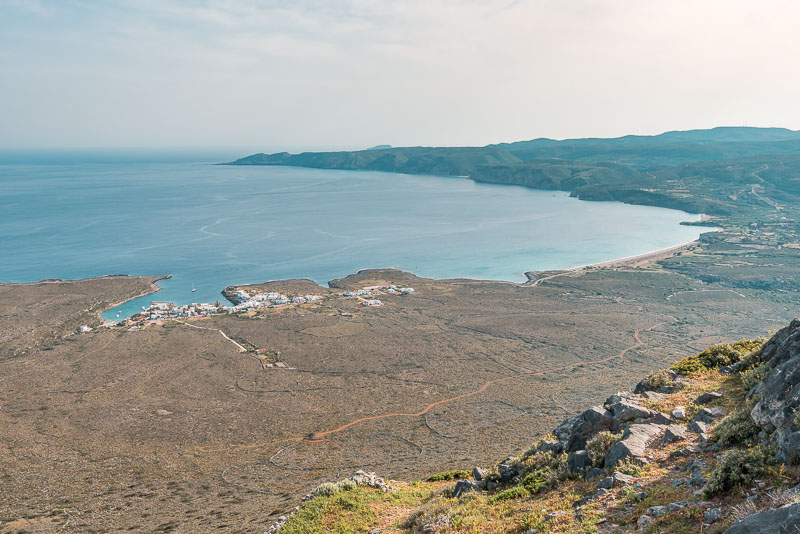
By the way, you can enjoy the most beautiful view of Avlemonas and the coast around Paleopoli from the medieval church of Agios Georgios above Avlemonas. Over several serpentines it goes uphill on a consistently concrete but extremely narrow road. The panorama from up here and the atmosphere at sunset are magnificent.
Kaladi Beach
Don’t miss Kaladi beach, about 3 km south of Paleopoli. The impressive backdrop with boulders in front of it is considered a postcard motif of Kythira.
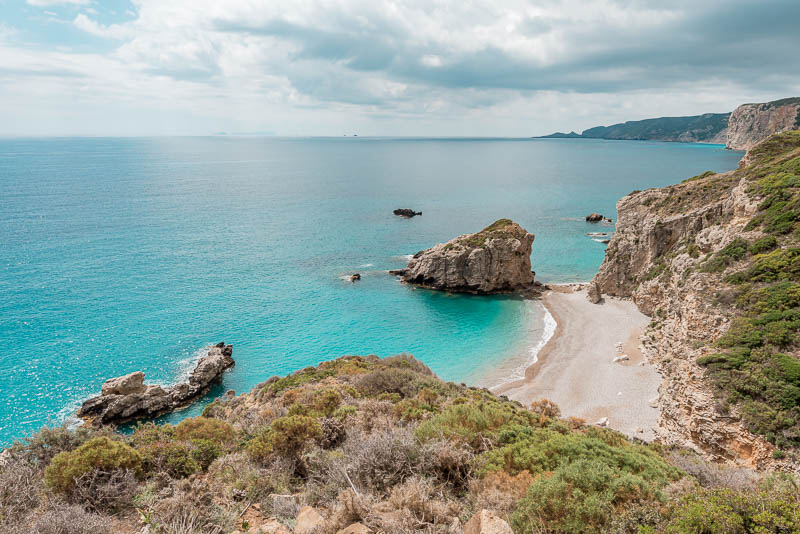
You can park above the pebble beach. A beautifully landscaped natural stone staircase with 162 steps leads you down to the sea. The Kaladi Canteen provides hungry bathers with snacks and drinks by delivery service in summer.

#8 Port town Diakofti
Almost every holidaymaker sets foot on land for the first time in Diakofti. The harbour hamlet on the east coast welcomes all newcomers with a shallow lagoon where the sea sparkles in the most beautiful shades of blue.
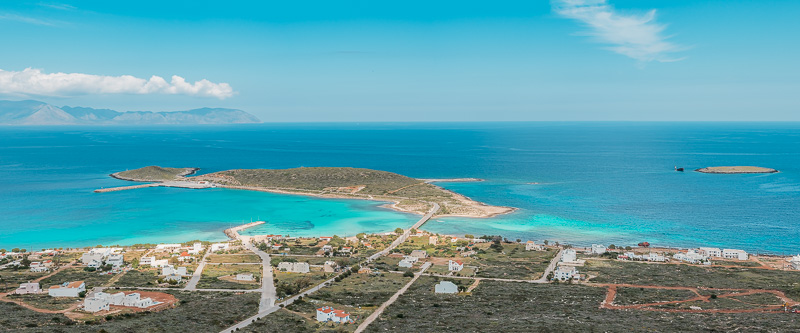
The best way to enjoy the paradisiacal flair is to enjoy it immediately after arrival with a cool frappé in the hip Café Minas, which is located directly on the bright sandy beach. Diakofti itself consists of only a few rows of houses in which apartments and hotels have settled.
The most beautiful view of Diakofti is from the Monastery of Agia Moni, which is enthroned on a hilltop above the village. The Ship Nordland, which ran aground in 2000 and was once a popular subject for photographs in Kythira, has unfortunately left hardly anything to see.
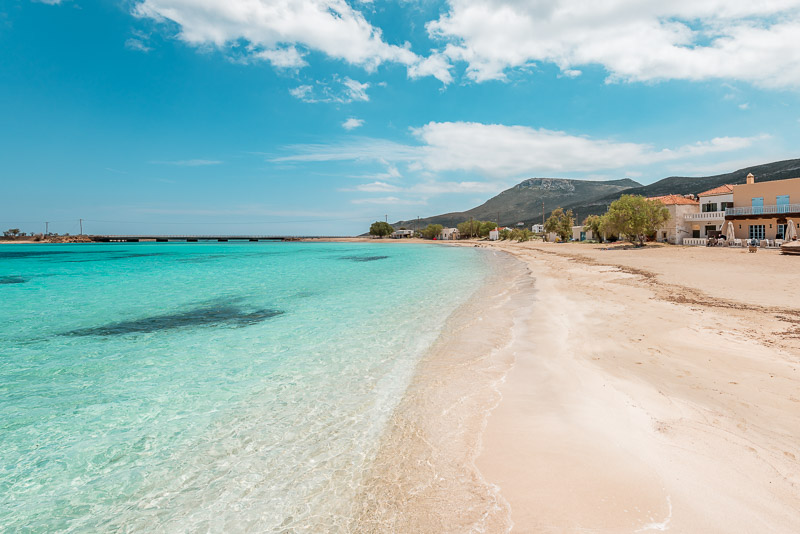
Hiking enthusiasts beat off Diakofti den Aphrodite Trail M38 towards Avlemonas. After about 6 km through wild, untouched nature, you will reach the small fishing village with its cozy taverns and the popular Aphrodite Baths (see point #7).
#9 The traditional village of Potamos
In the biggest village of Kythira we pitched our tents for a week and felt comfortable from the first minute. Potamos is centrally located in the north of the island and is an ideal starting point to explore the island extensively.

The village is authentic, and the alleys are bustling in the mornings. On the large village square there is a weekly market on Sundays, where you can buy honey, cheese and the typical Paximadi rusks. The numerous cafés and taverns are well filled. In the summer months, there is a folk festival atmosphere in the evening.
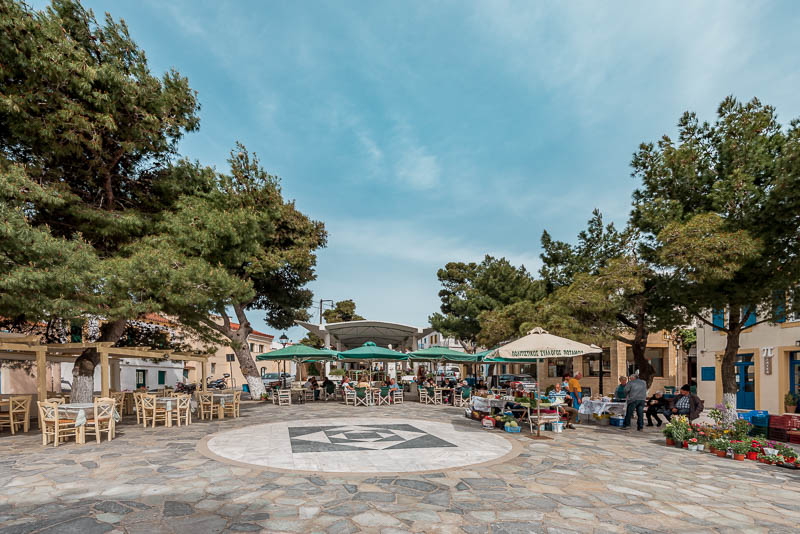
A real institution in Potamos is the historic Café Astikon, which has been in operation since 1908. It is said to be open 365 days a year and whenever we drove by, someone sat inside.
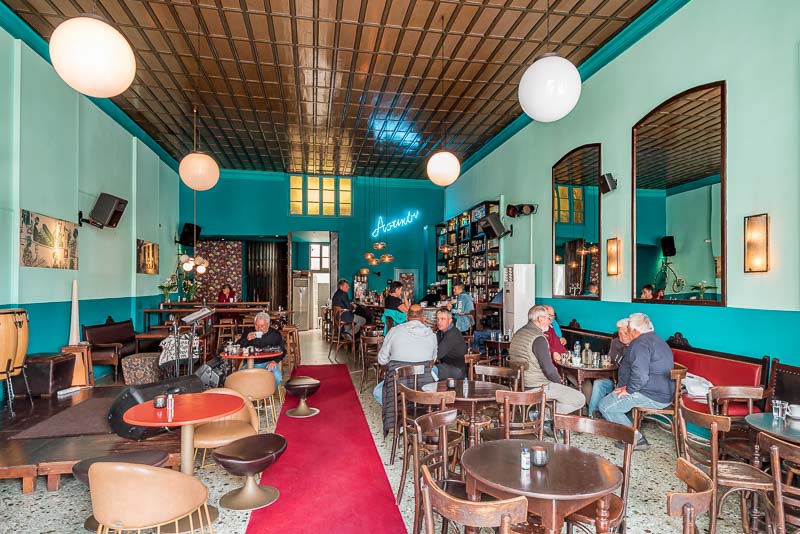
Especially in the evening, the atmosphere here is very exuberant, and there is often live music. In 2022, the Astikon was included as a member of the list of »Historic Cafés Route« adopted by Europe. You shouldn’t miss a visit to the restaurant, which is open 24 hours a day, according to the locals.
Fortress of Paleochora
East of Potamos is one of the most important archaeological sites of Kythira. Paleochora was built in the 12th century by immigrants from Monemvasia and was the capital of the island in Byzantine times. Around 1537, the Ottoman corsair Barbarossa plundered and destroyed large parts of the complex.
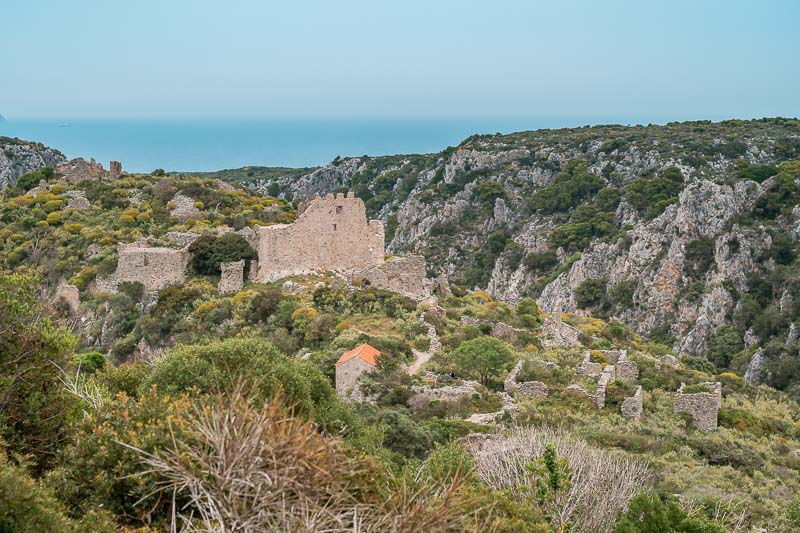
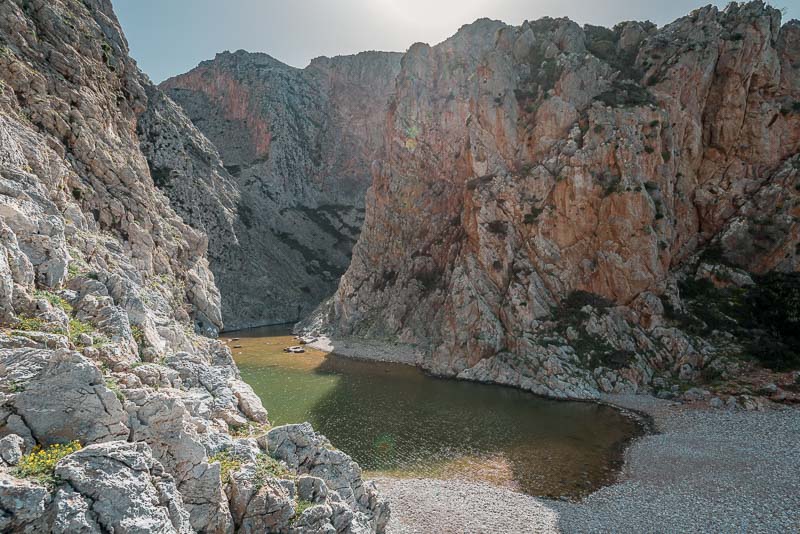
The extensive grounds of the once fortified city are impressively located on a plateau high above the Kakia Lagada Gorge. On a tour you will discover numerous ruined houses, as well as ancient Byzantine churches, which are unfortunately mostly closed.
#10 On the road in the north of Kythira
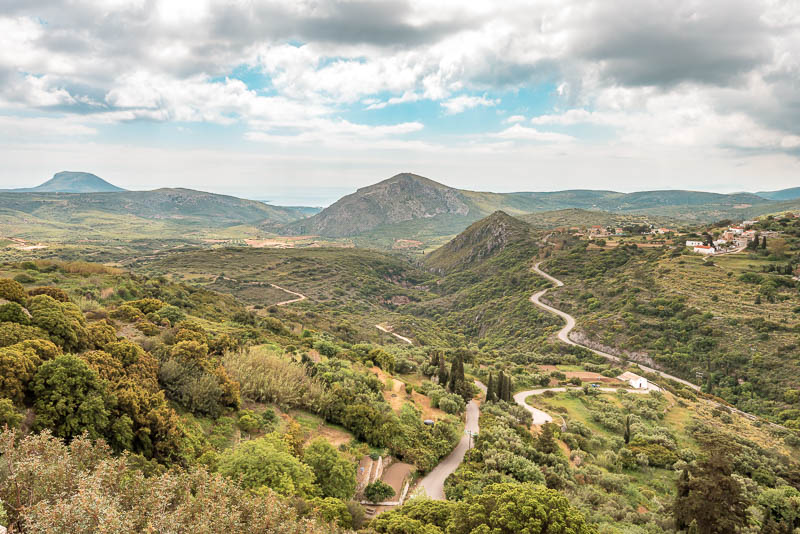
Very few holidaymakers end up in the sparsely populated north of Kythira. The landscape around Potamos is very charming with many hills and lush green valleys. In many places, agriculture and livestock farming are practiced. Behind the village of Karavas, on the other hand, the landscape becomes more barren and the beaches become rougher.
Coastal town of Agia Pelagia
The village of Agia Pelagia in the northeast is well visited in midsummer. Numerous apartments, holiday homes and small hotels are available to holidaymakers. When we visited at the beginning of May, Agia Pelagia was still in a deep sleep and almost all taverns and cafés were still closed.
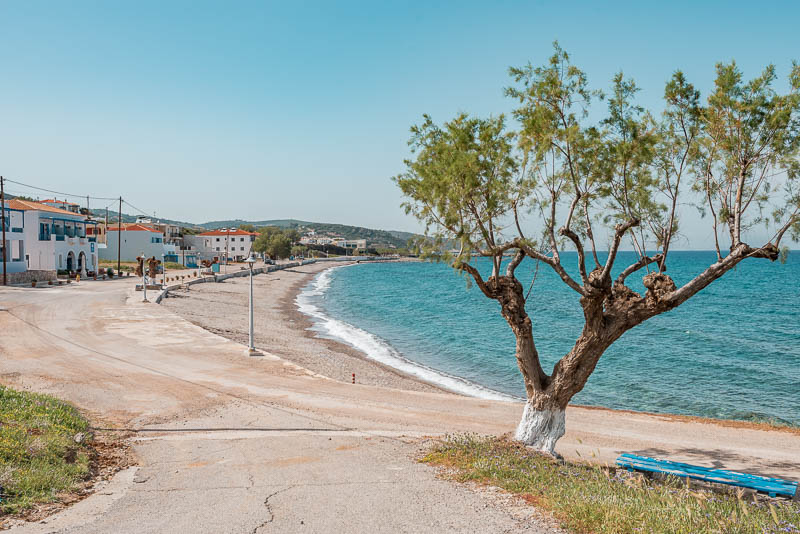
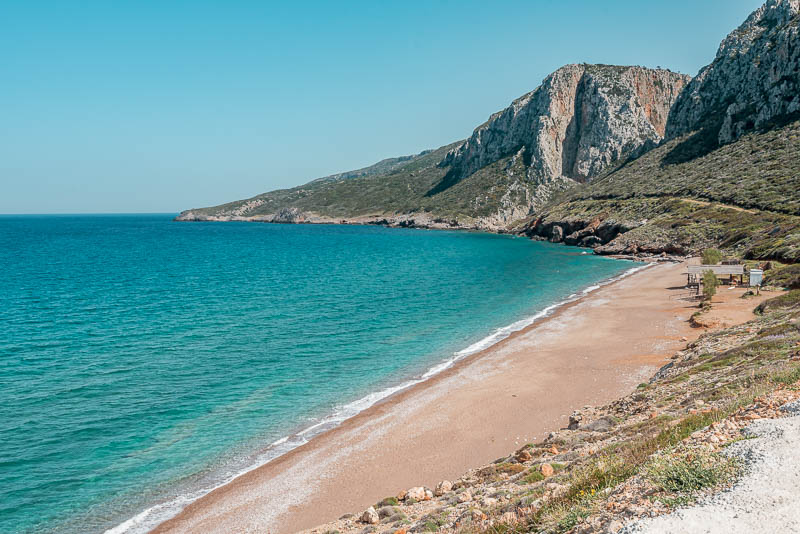
The highlight of the area is the south-facing Kakia Lagada Beach, where a river flows at the suggestive gorge exit and where you can also jump into the sea at the same time. A magnificent backdrop that is worth a detour!
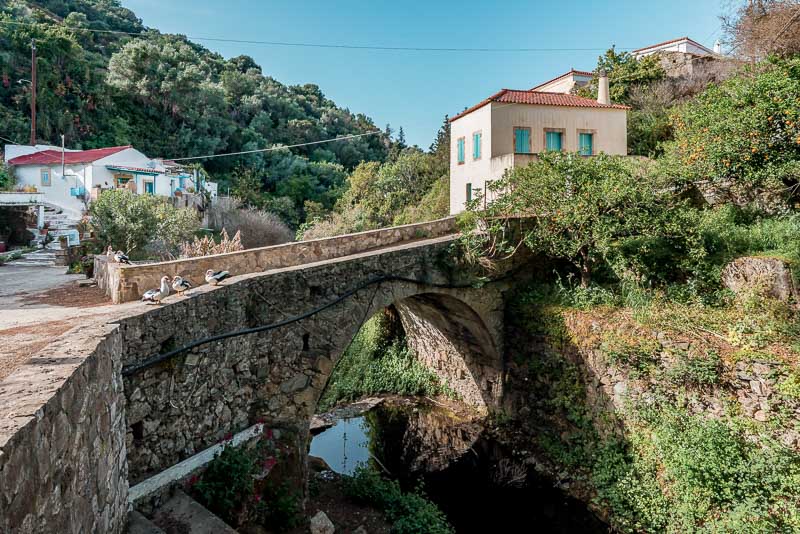
Amir Ali Springs in Karavas
Karavas is the last major town in the north of the island. Due to its abundance of water, the entire area is lush green. A small oasis awaits you at the Amir Ali Springs on the northern outskirts of the village.

A stream ripples through a wooded valley under stone bridges, next to it chattering ducks make themselves comfortable. That Amir Ali Restaurant directly opposite the bridge is recommended, but is only open in July and August.
In the centre of Karavas, it is also worth visiting the Karavas Bakery. The traditional bakery has been making pastries with local olive oil for more than 20 years. Particularly popular is the “Rusk”, a kind of rusk with various herbs. We found the variety with thyme and dried tomatoes delicious, perfect as an ingredient for the salad.
Moudari Lighthouse
At Cape Spathi, the northernmost point of Kythira, towers a 25 m high lighthouse, which was built in 1857 under British occupation. A bumpy dirt road leads you to the end of the island to this beautiful viewpoint.
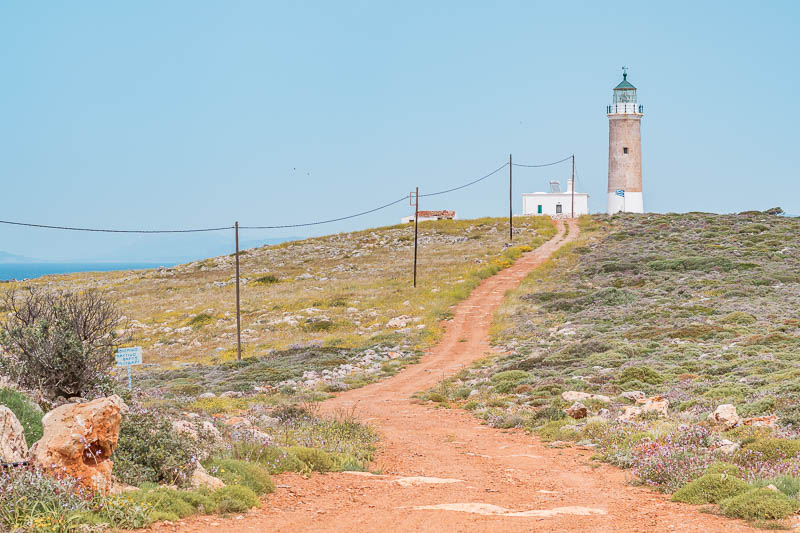
In good visibility, the view extends over to the Island of Elafonisos near the Peloponnese peninsula. A visit is especially worthwhile in the evening, when the red fireball plunges into the sea. The Moudari lighthouse belongs to the Greek military and is therefore unfortunately not accessible.
#11 Island Dwarf Andikythira
About 1.5 ferry hours south of Kythira lies the small sister-island Andikythira (also Antikythera). With 68 inhabitants, the islet, which is only 10 km long, is one of the most sparsely populated islands in the Aegean.
For migratory birds, the island is an important stopover. The world’s largest population of Eleonora’s falcons also breeds on the cliffs of the cliffs in the west. Since 2006, Andikythira and the surrounding rocky reefs have been part of the Natura 2000 nature reserve.
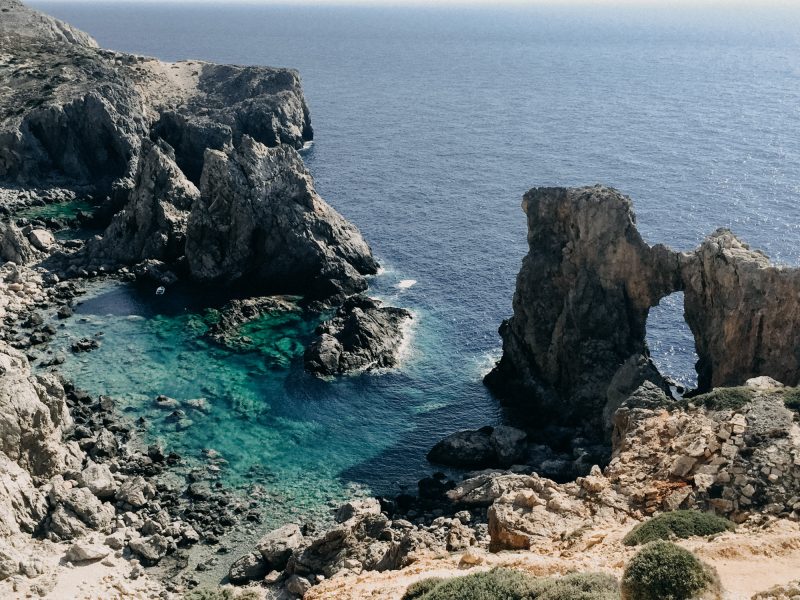
The Cretan wild goat (Kri-Kri) can also be found due to resettlement campaigns and even the rare Mediterranean monk seal still finds a refuge here. In 2017, a Climate Observatory (PANGEA) which examines the influence of humans on nature.
Nature lovers and hermits will get their money’s worth on Antikythera. Orientation on the island is easy, there is only one large village, the port of Potamos, as well as a few scattered settlements in the hinterland. Rustic home cooking is available in the tavern “I Gonia tou Strato” in Potamos.
The highlight of the year is 17 August, when the great island festival of Saint Myron of Cyzicus takes place and up to 1,000 visitors make a pilgrimage to Antikythera. Otherwise, the island is rather tranquil.
Andikythira became famous after the finds of an ancient merchant ship salvaged off the coast were presented in 1900. In addition to bronze busts, marble statues and numerous gold coins, other secrets have been recovered from the sea.
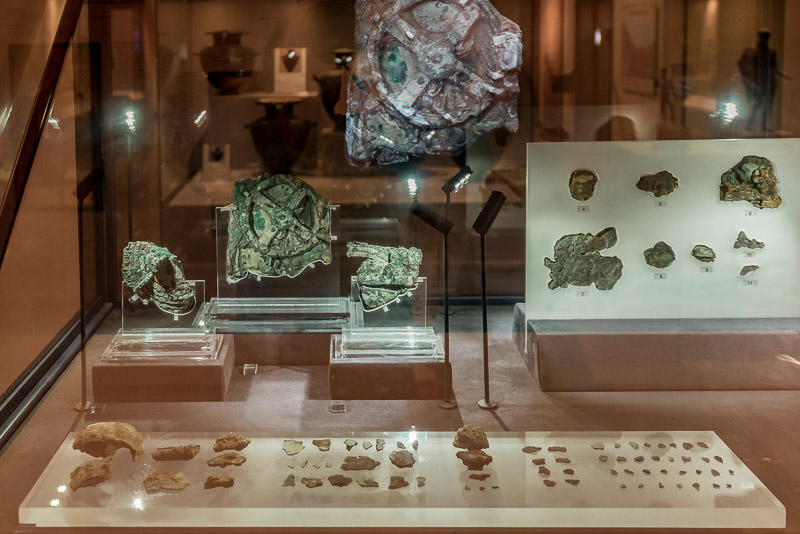
The Mechanism of Antikythera, a sensational gear drive from the 2nd century BC, is still a mystery to scientists today. It is probably the first computer in human history. The fragments are now in the National Museum of Athens exhibited.
Getting to Andikythira
Andikythira is regularly served by ferries from Piraeus and Kythira as well as from Kissamos (Crete). Accommodation on the island is limited, a handful of vacation rentals can be found through Airbnb, for e.g. Argyro Rental House (View on Airbnb).
→ A vivid travel report to Antikythera can be found on the website of our blogger colleague Silvia: Sheep & Ouzo
More Kythira travel tips
Beautiful beaches on Kythera
Chalkos Wind-protected bay in the southeast of the island with a pebble beach and crystal clear water. The beach drops quite quickly deep into the sea, bathing shoes are recommended for the underground. Well organized in summer with changing rooms, showers and beach bar offering umbrellas and sunbeds.
Firi Ammos Long red pebble beach in the south of the island with crystal clear water and sea caves. In midsummer, loungers and umbrellas are rented, in the low season they are usually deserted. Somewhat difficult approach and narrow road conditions.
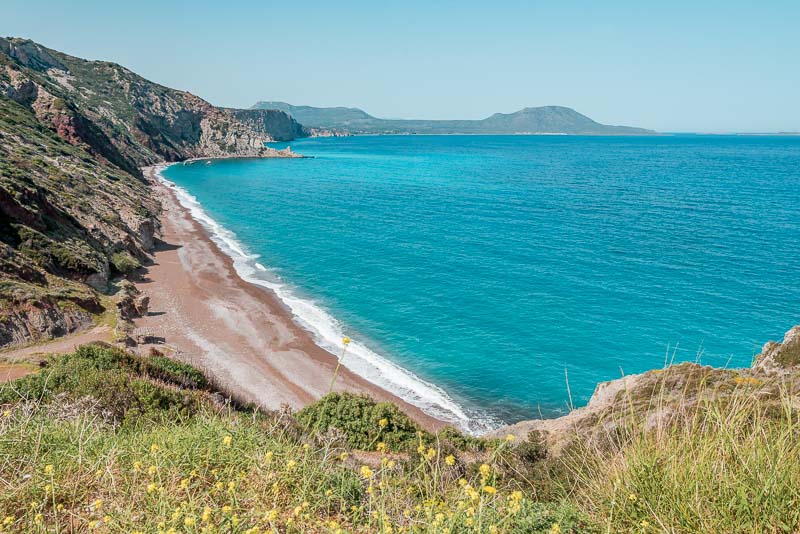
Kaladi Photogenic bay south of Avlemonas with a light pebble beach and turquoise blue sea. Interesting rock and cave formations. Natural and without an operator. For details, see point #7.
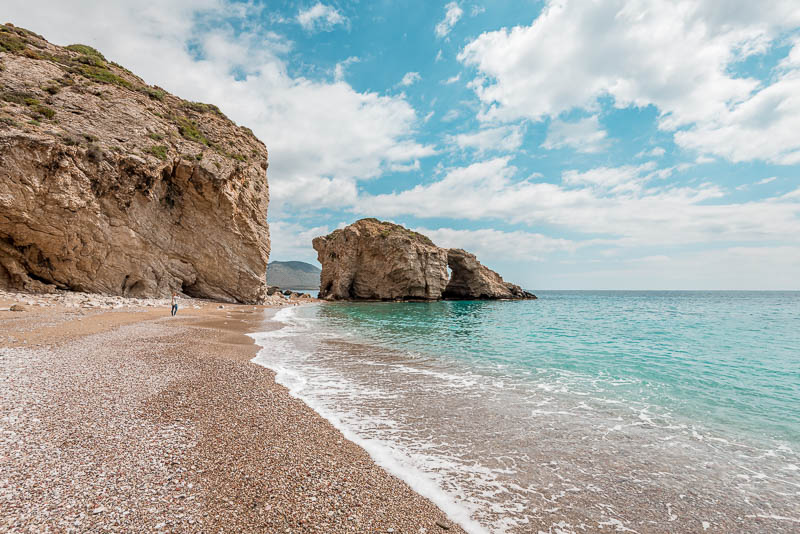
Kalami Deeply cut bay with pebble beach on the west coast. Fantastic natural scenery with wonderful blue tones of the water. Very adventurous descent that requires climbing skills. Not suitable for families with children. You can park at the rock monastery of Panagia Orfani, from there it is about a 15-minute walk.
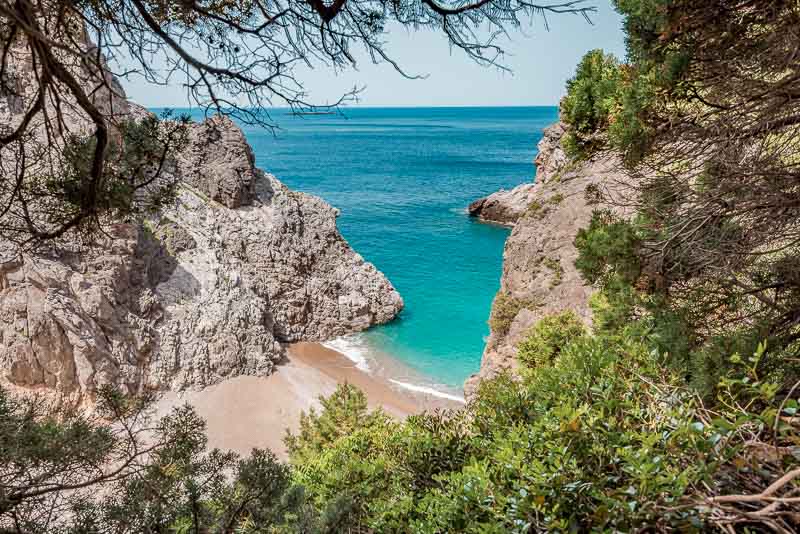
Melidoni Beautiful sand-pebble beach in the southwest of the island. The shore area slopes gently into the sea and the bay is sheltered from the wind, ideal for families with children. In the high season, a canteen provides loungers and umbrellas. Paved road down to the beach.
Accommodation on Kythira
You won’t find large hotels and resorts on the island, but there are plenty of self-catering apartments and studios, as well as small family-run hotels that usually offer breakfast. Enclosed we have put together a personal selection of beautiful accommodations on Kythira for your vacation:
DonQuihotel Chalet, Karvounades
Rustic holiday home (up to 5 people) on the outskirts of Karvounades in the centre of Kythira. Timeless décor, very friendly hosts and delicious breakfast on request.
Anemes, Avlemonas
Small aparthotel in Avlemonas. Functionally equipped studios, some with sea views, extensive breakfast, helpful staff and very fair prices.
Kythira Golden Resort, Diakofti
Family-run, well-kept hotel with a small pool above Diakofti. Spacious rooms, homemade breakfast and, with the exception of July and August, very good value for money.
Here we spent the night on Kythira
The Pigeon House, Potamos
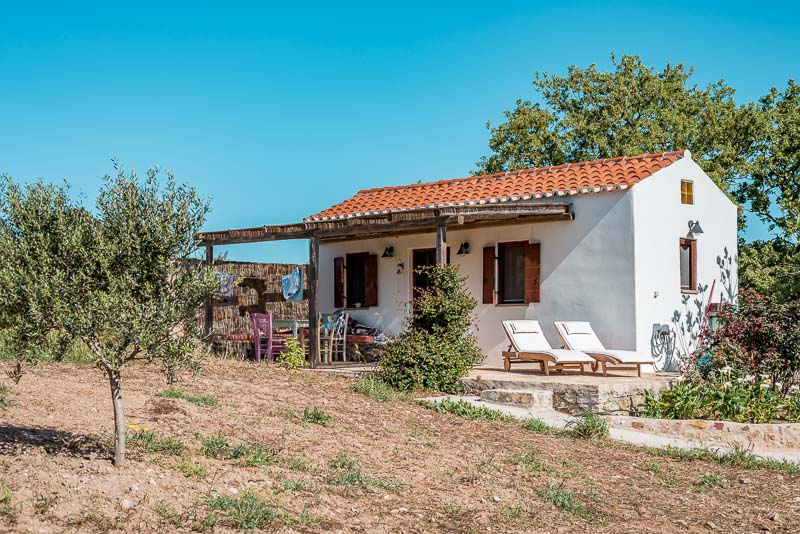
The friendly British woman Claire and her husband rent out a newly renovated chalet in the middle of an idyllic garden. Despite its compact size, the Tiny House is well equipped (kitchenette, bathroom, washing machine). We particularly liked the large sun terrace and the quiet location outside Potamos.
Kythira Restaurants: Our Recommendations
Unfortunately, not all gastronomic facilities on the island were open at the time of our visit at the beginning of May. Nevertheless, we have eaten delicious food in one or the other tavern and tell you about our personal favorites:
- Il Mercato Bar, Chora
- Koukos Bar, Chora
- Panaretos Restaurant, Potamos
- Pierros, Livadi
- Platanos, Mylopotamos
- Tony’s Pizzeria, Chora
- Votsalo Coffee & Brunch, Kapsali
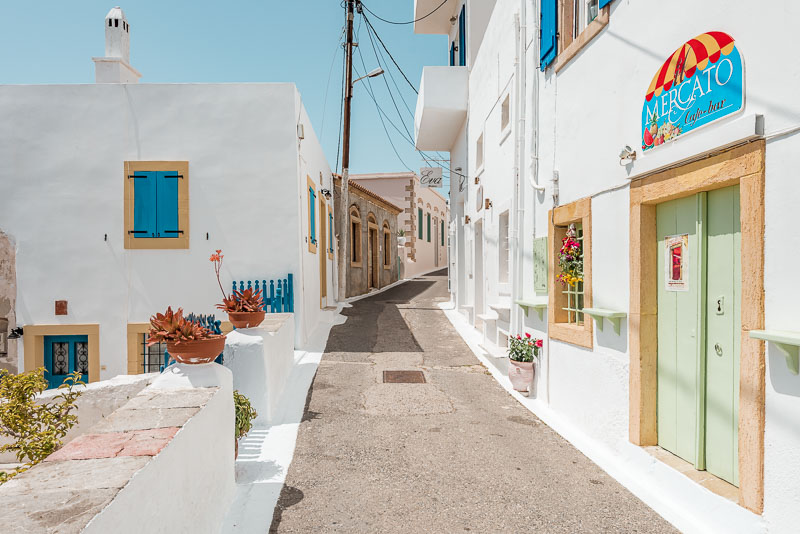
Restaurants and taverns on Kythira offer solid home cooking with typical Greek cuisine You should definitely visit the cozy bars in the main town of Chora, which only open in the summer season.
Getting around Kythira
If you want to explore the island of Kythira on your own, you will need a wheeled vehicle. Unfortunately, the public bus network is very sparsely developed and is not suitable for getting around the island.
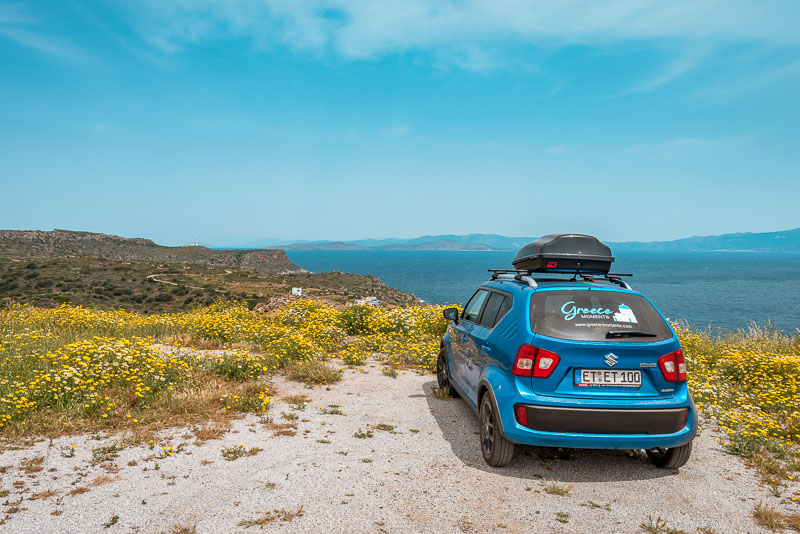
There are reliable local car rental providers on site who will bring your desired vehicle directly to the port or airport. A small car is usually quite sufficient for the largely asphalted and intact road network of the island. We can recommend the following car rental companies on Kythira:
- Drakakis Rent a car
- Panayotis Rent a car
- Anna Rent a Car
Kythira Arrival: How to get to the island
The Kythira National Airport “Alexandros Onassis” is located in the central east of the island, not far from Diakofti. It is served several times a week from Athens Airport in about 35 minutes during the season from April to October (including SKY express and Olympic).
Cheap direct flights from Germany (or AT, CH) to Athens and from Athens to Kithira (KIT) can be found on the flight search portal Skyscanner*:
➲ Search for flights with Skyscanner*
Alternatively, you can also take the ferry to Kythira. Starting points for a ferry crossing are the following ports on the mainland:
- Piraeus (Athens), crossing with Seajets, approx. 6.5 hours
- Gythio (Peloponnese), crossing with Seajets, approx. 2 hours 15 min.
- Neapoli (Peloponnese), crossing with Triton Ferries, approx. 1 hour 15 min.
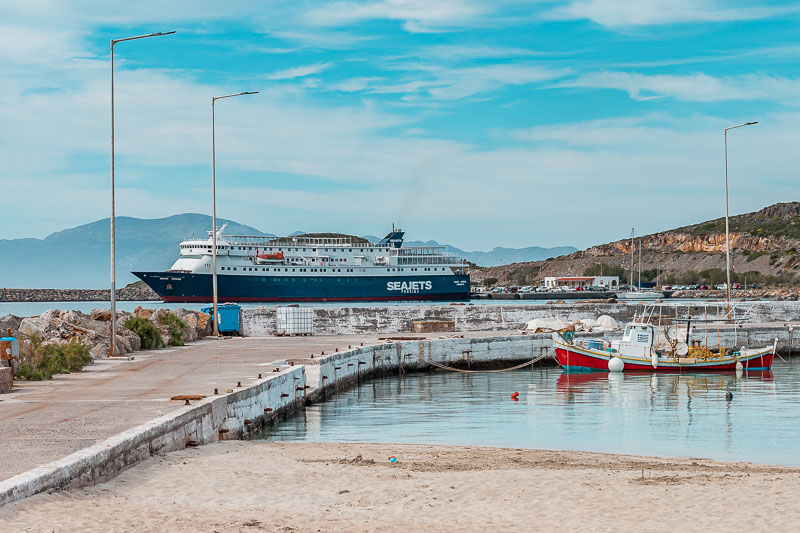
On the Port of Diakofti all major ferries dock in the east of the island. From Kythira there is also a direct continuation to the Island of Crete (Port of Kissamos). You can research suitable ferries and check prices via our partner Ferryhopper*:
➲ To the ferry booking with Ferryhopper*
→ You can find more travel reports and tips about the archipelago in the Ionian Sea on our overview page: Ionian Islands
*Support our blog Greece-Moments
In this post, you will find affiliate links marked with an asterisk (*). If you book or buy something through one of these links, we receive a small commission. For you, the price remains the same. In this way, you help us continue to provide high-quality content for free. Did you like this post and you would like to say thank you? Then just buy us the next Greek coffee ☕️ To the coffee fund
Bookmark this post on Pinterest!