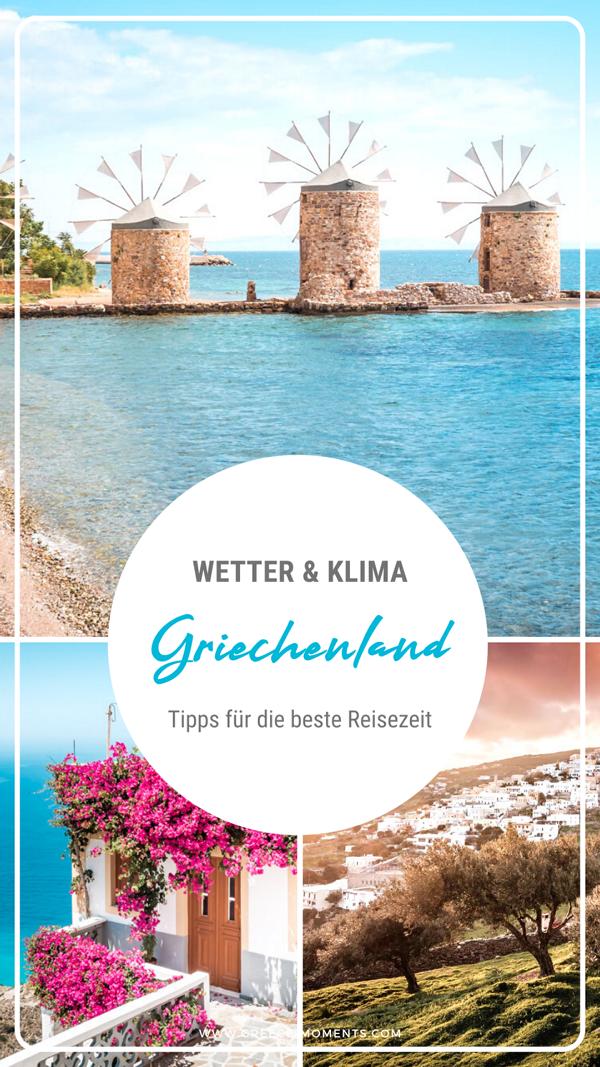

Are you planning a trip to Greece and looking for the best time to visit? In this article, we will introduce you to the weather in Greece. Here you can find out how the climate on the Greek islands of Crete, Rhodes & Co., as well as on the Greek mainland behaves in spring, summer and autumn.
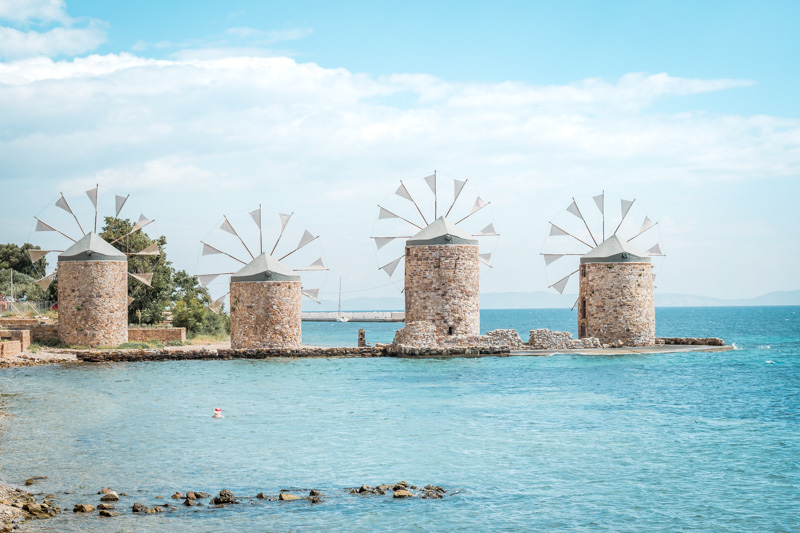
With our information about the climate and weather in Greece, you know exactly which season is suitable for a vacation in Greece. And who knows, maybe even winter is the best time to travel Greece for you.
- When is the best time to travel to Greece?
- #1 Where is the weather most beautiful in Greece?
- #2 This is the climate on islands and mainland
- #3 Climate tables for islands and mainland
- #4 What is the weather like in spring in Greece?
- #5 What is the weather like in summer in Greece?
- #6 Is a Greece Holiday in autumn worth it?
- #7 How warm is it in winter in Greece?
- #8 Useful tips for your travel time
- #9 Clothing for every Greece weather
When is the best time to travel to Greece?
We would like to give you two answers to this question!
Priority is the best time to travel for Greece the classic peak travel season during the season from May to October.
During these months, warm temperatures prevail and the weather is particularly beautiful on the Greek islands, in the coastal regions and mostly in the hinterland.
Rain and cool temperatures are rather rare in Hellas during this period. In the Greek islands, there is even not a single cloud in the sky for weeks.
The second answer to the best time to visit Greece is: Anytime! In recent years, Greece has become the most important 365 days destination developed!
Of course, this always depends on your own comfortable temperature. For many people, the Greek midsummer is simply too hot. Temperatures rise to over 40 degrees on some days from the end of July to the beginning of September. During the day, spending time in the blazing sun can be very strenuous and sporting activities are hardly an option.

We also usually avoid the August in Greece. Definitely too hot, too many people and ultimately too expensive. You should also take this into account when planning your vacation.
Therefore, more and more holidaymakers prefer spring or autumn for their trip to Greece. The temperatures are much milder and the winds provide pleasant cooling. Are you planning a holiday in Greece in autumn? Then the Greek Islands in OctoberJust right for you.
💡 Have you already booked your holiday in Greece? Early bird offers for the new season from April, as well as last-minute bargains for an autumn holiday in Greece can be found here: Offers for package tours on Holidaycheck*
#1 Where is the weather most beautiful in Greece?
Statistically, Greece is most beautiful on Rhodes, Crete and Corfu, at least as far as the sunshine duration per day is concerned. These Greek destinations are considered every year along with other islands and coastal Greece Regions as the sunniest holiday destinations in Europe.
Rhodes even shines with a whopping 3,000 hours of sunshine per year! This means that the Greek island has the most sunny days of all European destinations, along with the Algarve. Rhodes rightly has the nickname “Sun Island of the Aegean”. Lindos on Rhodes, with an average temperature of 21.4 degrees, is even the mildest place in Greece.

In addition to the islands of Greece, the southern Peloponnese Peninsula one of the sunniest places in Europe. And even Athens is among the top 10 European cities capitals with the most sunshine (Source: Ryanair). For us personally, one of the most beautiful cities to escape the winter in Germany.
#2 This is the climate on islands and mainland
The weather in Greece is largely controlled by a Mediterranean climate certain. This means that there are hot, dry summers and relatively humid but mild winters. Due to the special location in the south of the Balkan Peninsula and the relatively mountainous profile of Hellas, there are sometimes large climatic differences.
Greece is not a pure island state, almost 80 percent of the land area consists of mountains. The up to 3,000-meter-high mountains (Olympus Mountains) and the adjacent Mediterranean Sea have a significant impact on the climate of Greece. The 2,500-metre-high Psiloritis massif on the island of Crete is even the southernmost mountain range in Europe.

In the winter months in northern and central Greece, there is not only a lot of precipitation but also snowfall. In the pretty town of Kastoria in the far north of Hellas, temperatures below freezing are not uncommon in December and January. The nearby Florina is even considered to be coldest city in Greece.
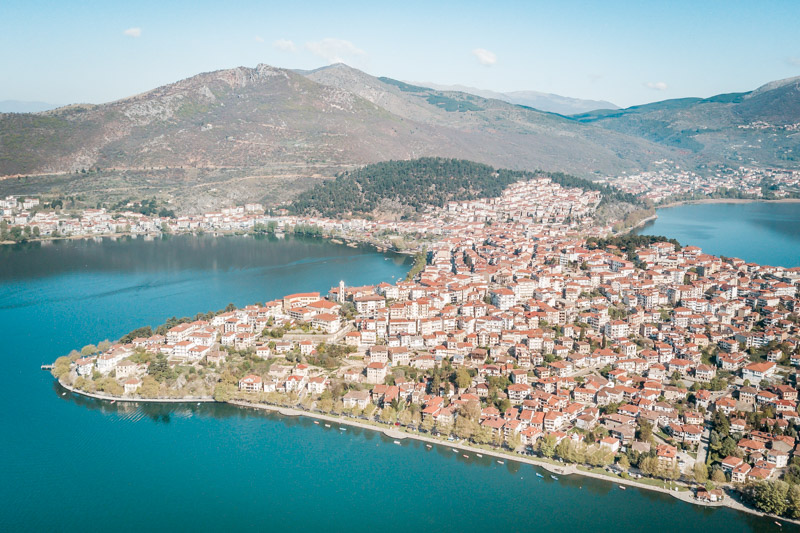
Weather in Greece: Hot summers and mild winters
In contrast, in the coastal city, two hours away, Thessaloniki a mild climate all year round. In the winter months, daytime temperatures rarely drop below 10 degrees. The summers, on the other hand, will be very hot. Many travellers are then drawn to the sea to cool off, e.g. to the Halkidiki Peninsula.
The capital Athens also offers a very pleasant climate all year round. Even the Austrian Empress Sisi is said to have spent several winters in Athens. No wonder, as the coastal metropolis of Athens is one of the mildest capitals in Europe.

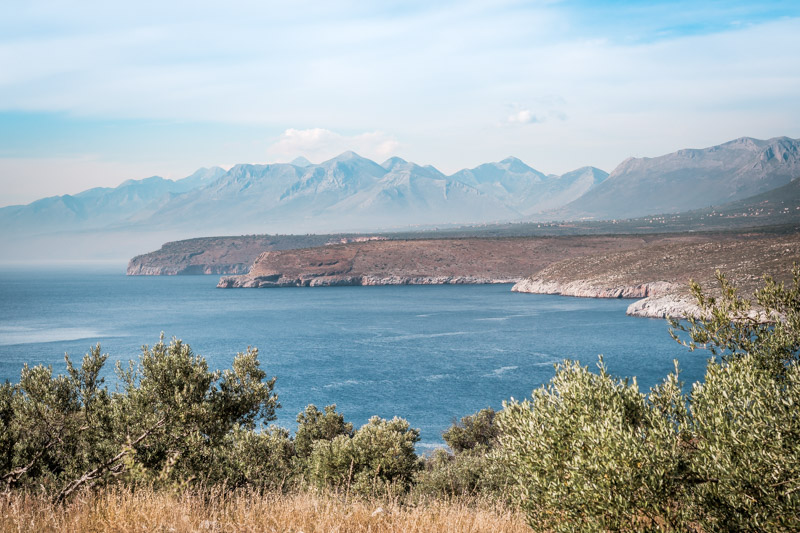
Rainy days are very rare on the Greek islands in summer time. On some islands in the eastern Aegean and at the southern tip of the Peloponnese, in the Mani, not a drop falls from the sky for five months.
In the summer months, the powerful Meltemi wind away. It provides a pleasant cooling, especially in August, and flattens out again in September. On the islands, temperatures rarely drop below 10 degrees in winter. An exception is the mountainous region of Crete, where snow is not uncommon.
#3 Climate tables for islands and mainland
Enclosed we present six different climatic tables of Greece that depict the weather in Greece. The selected cities and islands roughly reflect the climate in the different regions of the country. Nevertheless, regional fluctuations in temperatures and rainy days can occur.
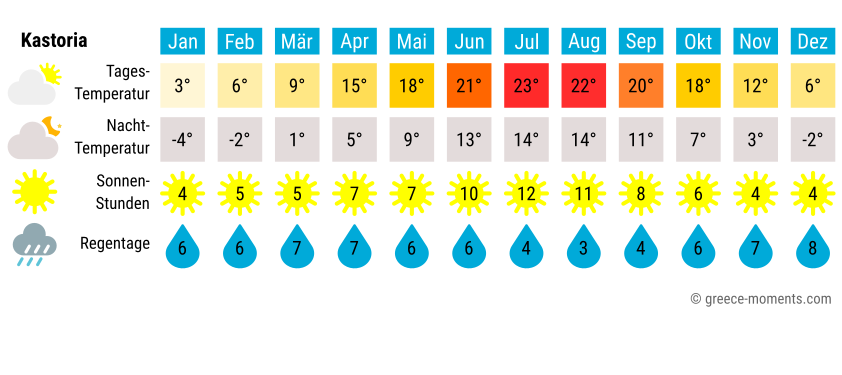
Weather in Kastoria: The mountainous region of Greece
The city of Kastoria in northern Greece is representative of the mountainous region of the mainland. The region is one of the coldest areas in the country in winter. In summer, however, it remains pleasantly mild.
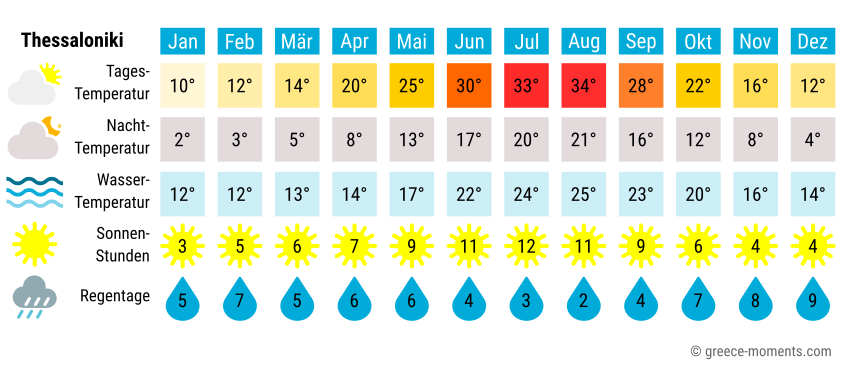
Thessaloniki Climate: Northern Coastal Region
The weather in Thessaloniki depicts the weather of the northern coast of Greece. If your trip takes you to the Halkidiki peninsula, the temperatures are almost identical. The climate on the island of Thassos is also essentially the same as that of Thessaloniki.
Weather in Athens: The mild south of Greece
The weather in Athens can be used to represent the southern coastal region of Greece. The entire region of Attica is blessed with a mild climate. In the Peloponnese, temperatures are sometimes even milder in the winter months.

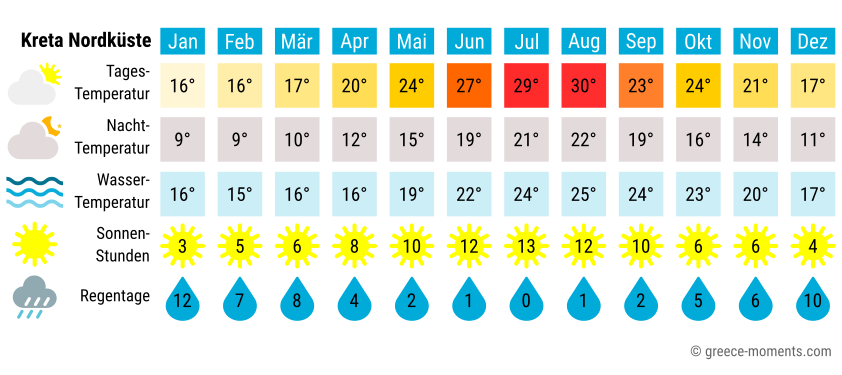
Weather in Crete: Crete and the South Aegean
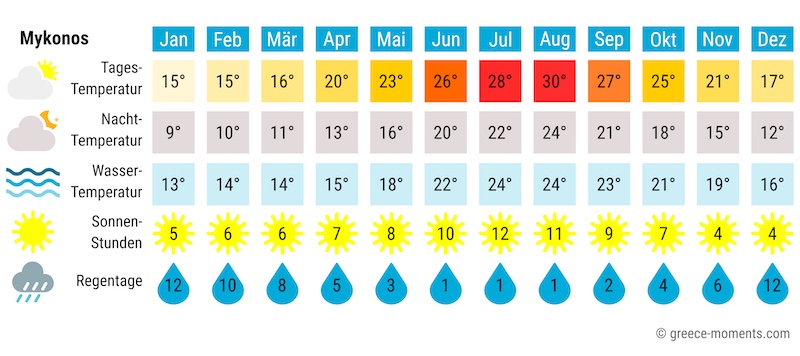
The weather in Crete reflects the weather on the islands of the South Aegean. The temperatures on the Cyclades Islands from Santorini, Mykonos & Co. hardly differ in summer from those on Crete. Only in winter is it a little milder on Crete. Cool north winds hit the Cyclades more often.
Cyclades Climate Table: Mykonos, Santorini & Co.
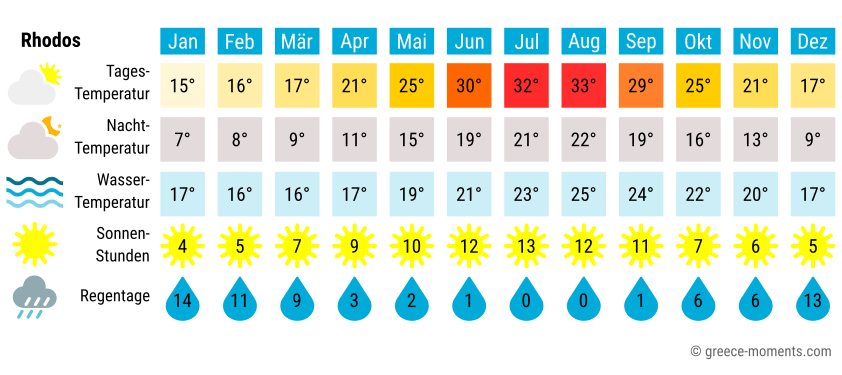
Rhodes Climate Table: The Islands of the East Aegean
The climatic table of Rhodes stands for the islands of the Eastern Aegean. These include islands such as Kos, Kalymnos, Ikaria or Samos. Rhodes is considered one of the warmest regions in Greece. The climate in the North Aegean, Lesvos, Chios or Limnos is similar. In winter, however, there are lower temperatures.
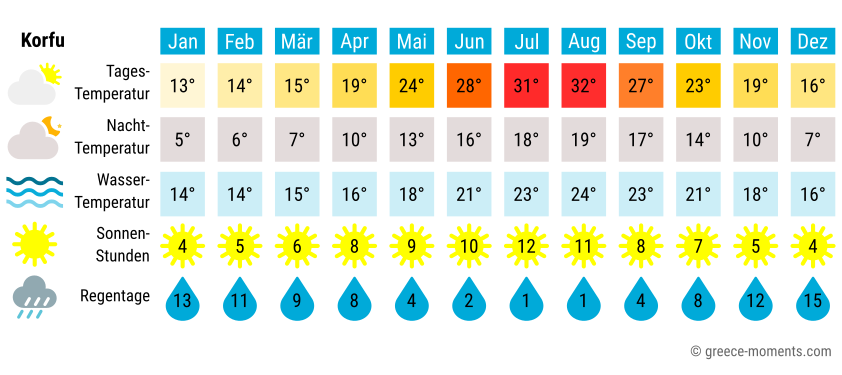
Corfu Climatic Table: The Ionian Islands
The climatic table of Corfu is representative of the Ionian Islands. These include the holiday destinations Zakynthos, Cephalonia and Lefkada. In contrast to the islands of the South and East Aegean, temperatures are somewhat milder throughout the year. Isolated rainy days can occur in summer.
#4 What is the weather like in spring in Greece?
Spring in the mountainous region of Greece
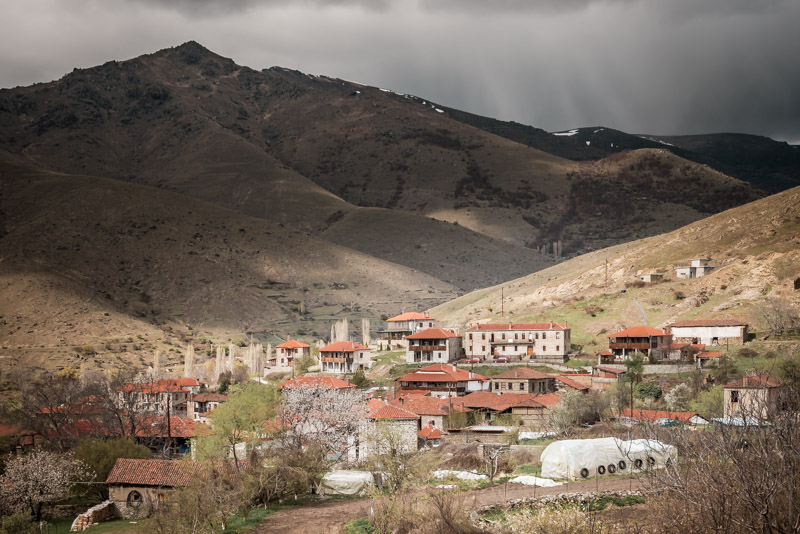
In the mountainous region of Greece, spring sets in late. In some cases, nature does not come to life until the end of April. Temperatures of below 15 degrees are not uncommon at this time.
In some places there is still abundant precipitation and in the higher altitudes also some snow until the end of March. Many rivers, waterfalls and springs in the mountains now carry abundant water.
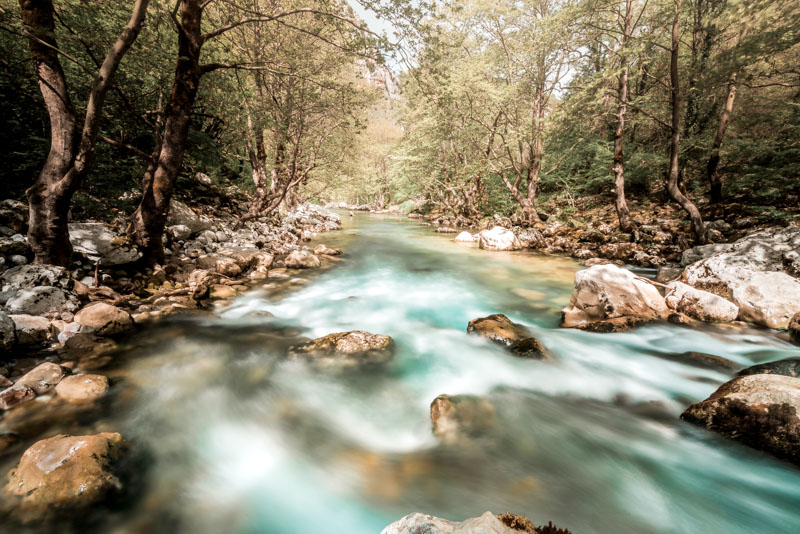
Spring in northern Greece has a special charm. In some places you are still the only vacationer and the Greeks are happy about such unexpected visitors.
The accommodations are very cheap and there are many culinary specialties, such as mushrooms or wild spinach. And in the taverns you can sit together with the locals by the fireplace.
→ Is spring in the mountainous region of Greece the best time for me to travel?
Spring on the Greek coast
The spring on the Greek coast begins much earlier than in the mountains. From mid-March it slowly gets warmer. In April, most of Greece’s coastal regions reach the 20 degree mark every day.
However, occasional rain showers must be expected. Many hotels and restaurants are still closed. The beaches are deserted and somehow the most beautiful right now.
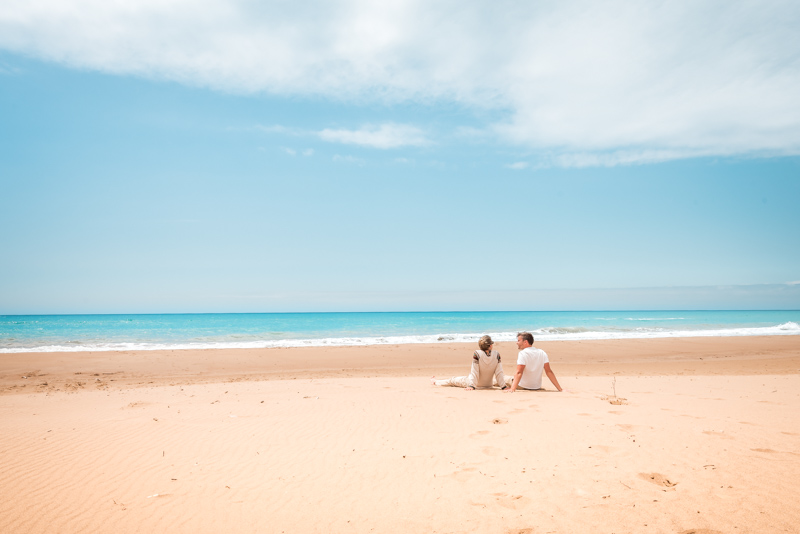
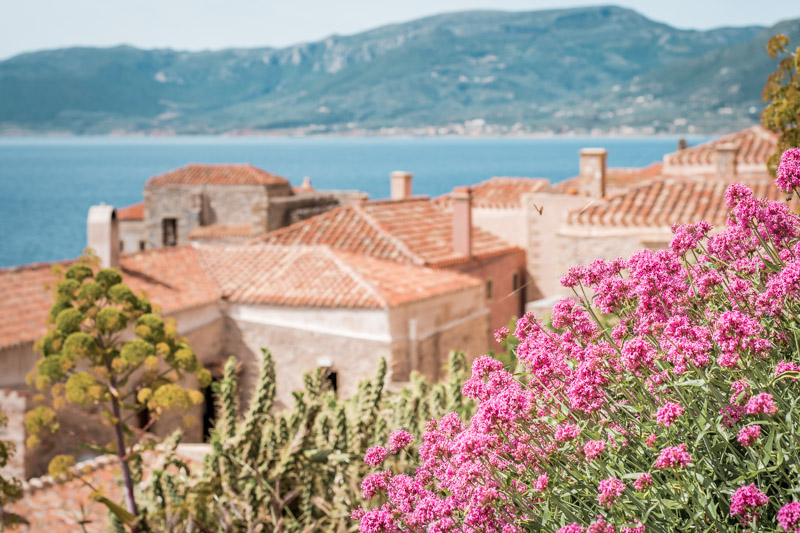
Although a beach holiday is not yet out of the question, this travel time is worthwhile, especially for visiting the many archaeological sites on the mainland. May is a wonderful month for a Peloponnese Road Trip.
The famous sights Olympia, Cape Sounion, Delphi and Co. are now covered with many spring flowers and fragrant herbs. The rush of visitors is still limited until mid-May and the weather on the Greek mainland is largely sunny and rain-free.
→ Is spring on the Greek coast the best time to travel for me?
Spring on the island of Crete
Spring is one of the best travel times for Crete. Everywhere it blooms and smells and hikers take advantage of the mild temperatures for extensive tours. The local herb and plant world shows its most abundant side.
Some restaurants and shops in tourist places will remain closed until the end of April or still closed at the beginning of May. Nevertheless, in many Crete Resorts hotels are already open. Click on the link of Booking.com* to see suitable hotels for the island of Crete:
➲ To beautiful accommodations in Crete*

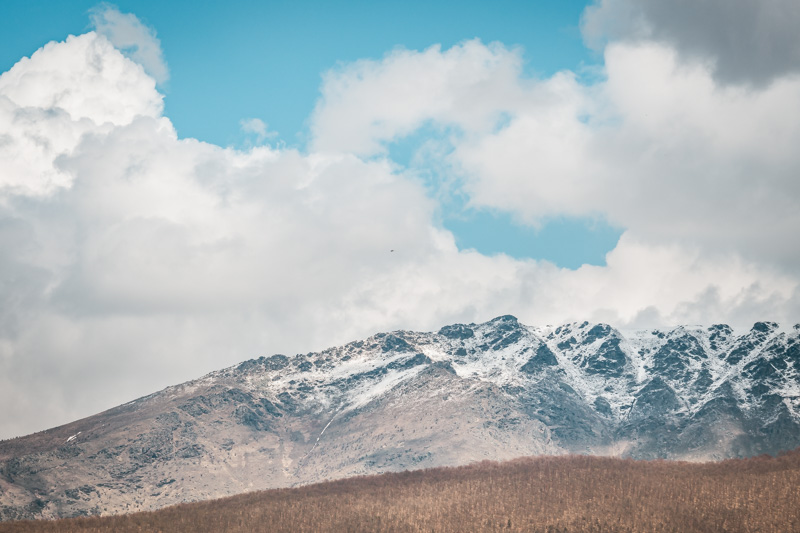
From March and April, the thermometer can reach over 20 degrees on a daily basis. Sunshine, clouds and rain often alternate until the beginning of May. As the name suggests, the White Mountains of Crete are still partially covered with snow until the beginning of June.
→ Is spring on the island of Crete the best time for me to travel?
Spring on the Greek islands
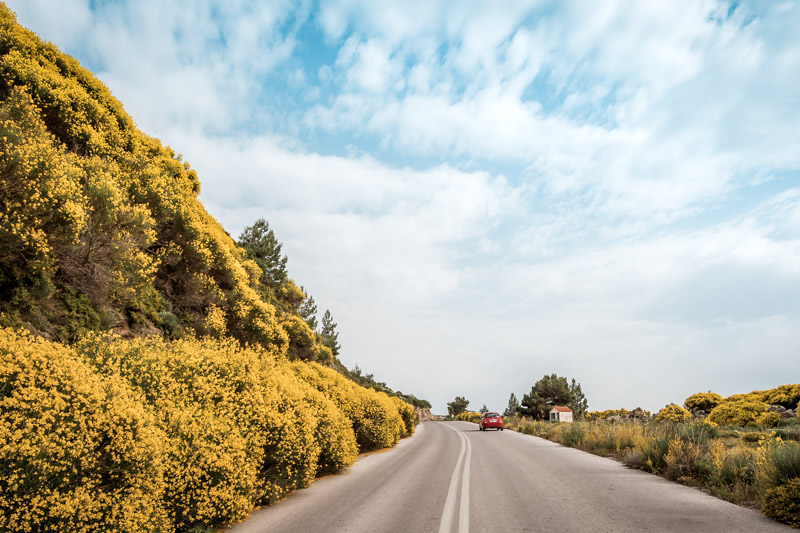
From January begins the spring on the Greek islands. If you have only traveled to Greece in midsummer, you will hardly recognize the islands during this time. Where in August a sparse dry vegetation sometimes characterizes the landscape, in spring it blooms everywhere in the most magnificent colors.
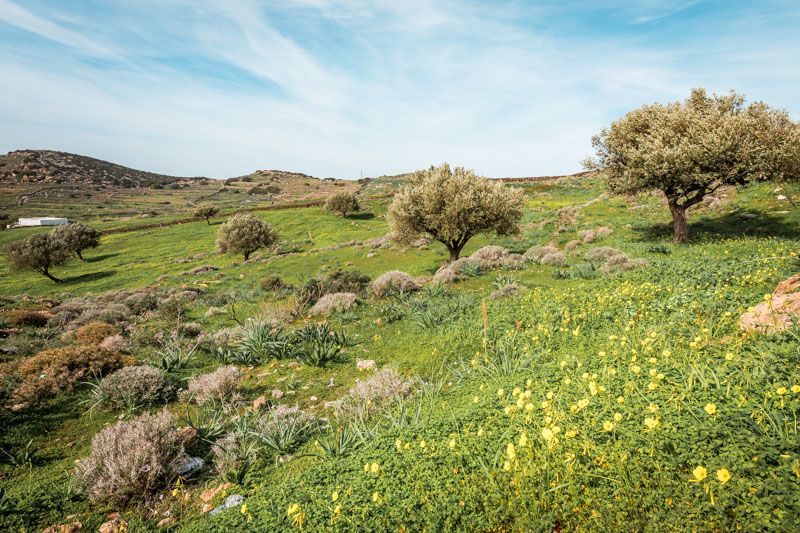
The clover in particular is omnipresent and makes the islands shine beautifully green. This travel time is ideal for nature lovers and hikers. Due to the few tourists, it is still very quiet on the Greek islands.
Some hotels and restaurants are still closed. With water temperatures below 20 degrees, a pure beach holiday is only recommended for hardened Greece fans. 😉
→ Is spring in the Greek islands the best time for me to travel?
#5 What is the weather like in summer in Greece?
Summer in the mountainous region of Greece
The mountains of Greece are a popular retreat for many Greeks, especially in summer. You visit relatives in the countryside and in the remote regions. Temperatures climb to 25 degrees and rarely rise above 30 degrees.
The forests are lush green and the mountainous landscape has an unmistakable charm. Ideal for nature lovers and sensitive minds who do not tolerate the heat so well.
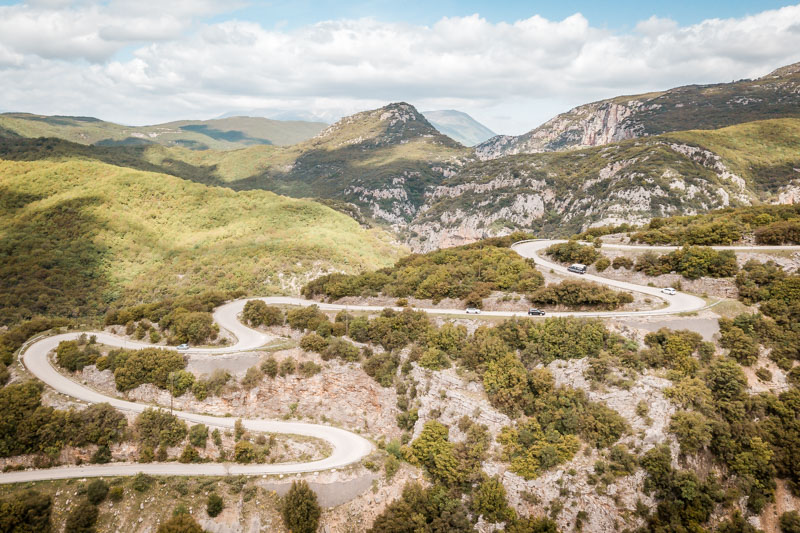
The mountainous region of Epirus, around the city of Ioannina, attracts some Greeks from Athens and Thessaloniki in summer. The rivers and lakes of Epirus provide cooling. In the plains of Thessaly and Macedonia, fruits and vegetables are now thriving.
The Pelion, a picturesque mountainous region of Thessaly is considered the main cultivation area for orchards (apples). In the interior, it can get very hot and dry in August. From the beginning of September there will be the first rain.
→ Is summer in the mountainous region of Greece the best time to travel for me?
Summer on the Greek coast
It is the most popular travel time for Northern Greece around Thessaloniki and Halkidiki. Except for a few days with extreme heat waves, the thermometer remains just above 30 degrees in summer. In the south of Greece around Athens and especially on the coast of the Peloponnese peninsula, it gets very dry in the summer months.
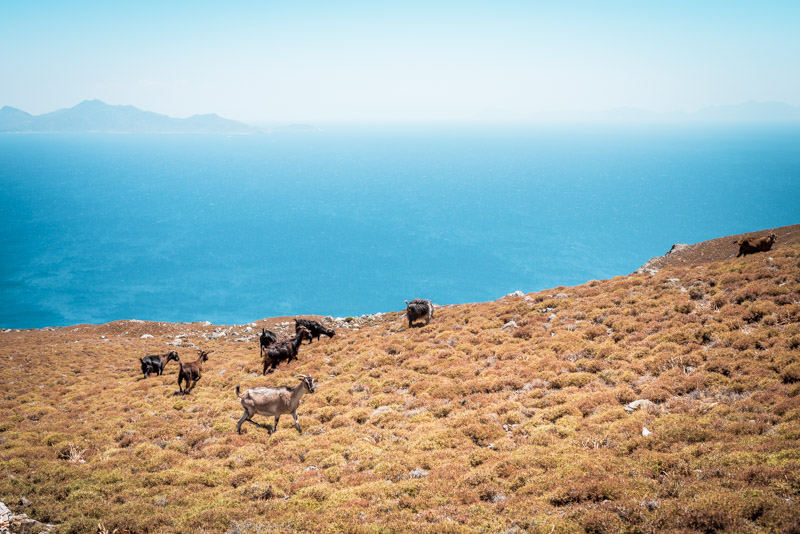
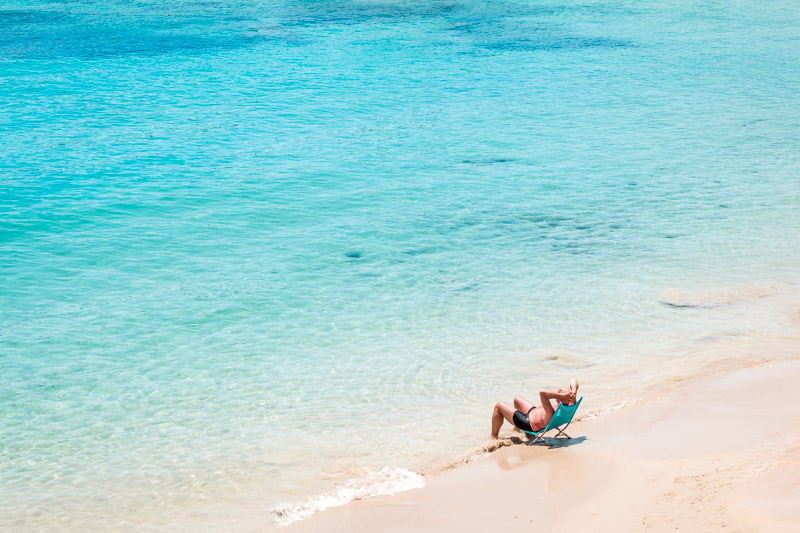
The water temperatures reach a solid 23 to 25 degrees. In the big cities such as Athens, Thessaloniki, Patras & Co., it can be very humid and unpleasant in August due to the heat.
The regions of Attica, Central Greece and Thessaly will then reach temperatures above 40 degrees in the shade on some days. The city of Larissa in particular achieves new heat records almost every summer.
It is not uncommon for the extreme drought combined with the carelessness of some people to cause devastating Forest fires in Greece, especially on the mainland. Every year, many forest areas are destroyed as a result.
→ Is summer on the Greek coast the best time for me to travel?
Summer on the island of Crete
On a Crete Holiday in summer it really get’s hot! Temperatures will rise to 40 degrees and more in July and August, especially in the south and east of the island. The beaches in the tourist regions are then very well visited. Until the beginning of August, precipitation, especially in coastal areas, is almost impossible.
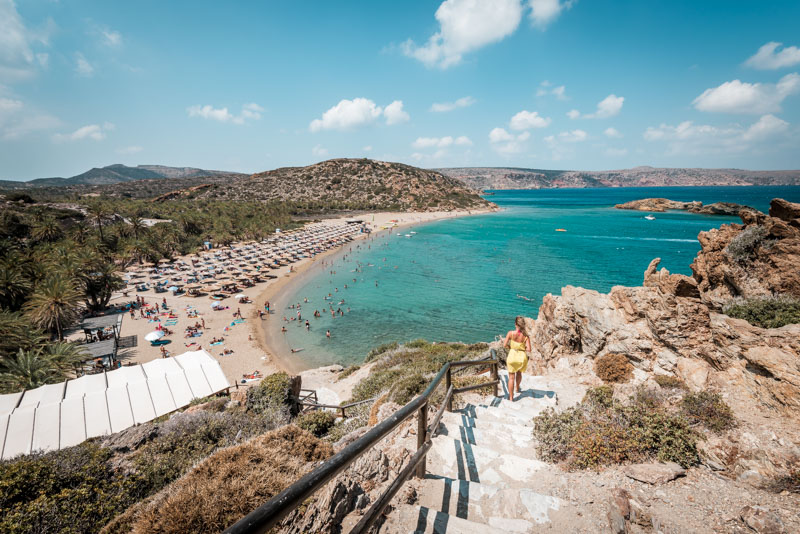
In the mountainous centre of the island of Crete, heat thunderstorms can also occur in summer, from August at the latest. Usually rain falls for a few minutes and the air cools down a little. The water temperatures in Greece reach up to 25 degrees.
The driest is the east of Crete, near Xerokampos. The area around Xerokampos is one of the sunniest regions on Crete and almost has an African climate.

→ Is summer on the island of Crete the best time for me to travel?
→ You can find out even more helpful travel information and facts about Greece in the Greece Profile
Summer on the Greek islands
On the Greek islands of the Aegean Sea, sunshine is guaranteed almost every day in summer. In some cases, no rain falls in the unique island world until the end of September. Temperatures rise to 35 degrees in July, and even higher at the end of August – perfect Greece weather for sun worshippers.
Fortunately, however, the cooling Northwest wind Meltemi and provides a pleasant cooling. On Booking.com* you will find beautiful accommodations in the Greek islands:
➲ To accommodation in the Greek islands*
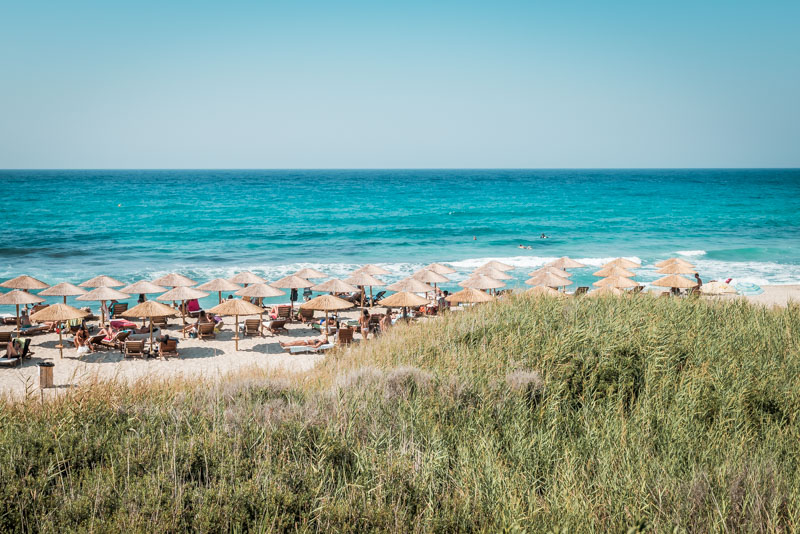
The August 15 on Assumption Day not only marks one of the most important Greek holidays. From mid-August, the weather actually slowly becomes milder and changeable.
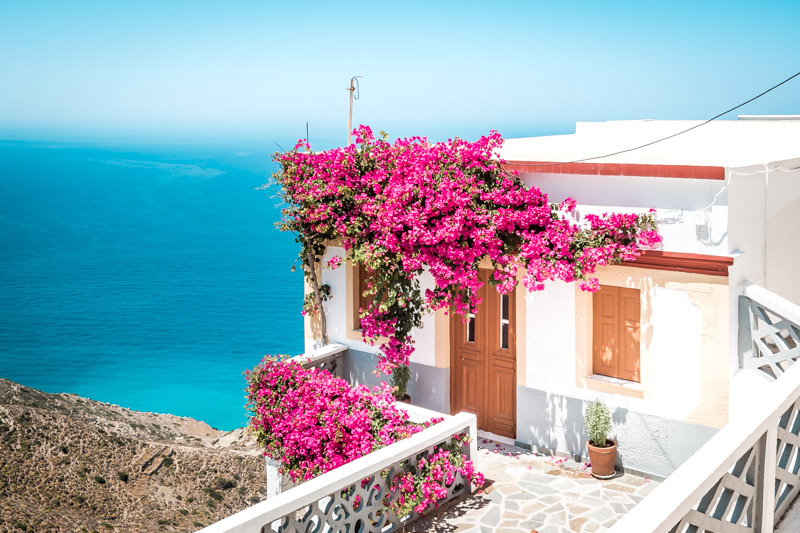
The water temperatures then reach their maximum with an extraordinarily warm 25 degrees. In midsummer, the colorful bougainvillea (triplet flower) shows itself in full splendor and decorates many houses in Greece.
→ Is summer in the Greek islands the best time for me to travel?
#6 Is a Greece Holiday in autumn worth it?
Autumn in the mountainous region of Greece
In the mountainous locations of the Greek mainland, it will become more capricious from September. The temperatures are still quite pleasant, but are slowly moving below the 20 degree mark on a daily average. On the coast of Epirus near Parga temperatures will also reach up to 30 degrees on a daily basis.
From October onwards, there may be heavy precipitation and thunderstorms in some cases. Nature lovers will still get their money’s worth. The foliage colouring of the trees in northern Greece is a unique spectacle.
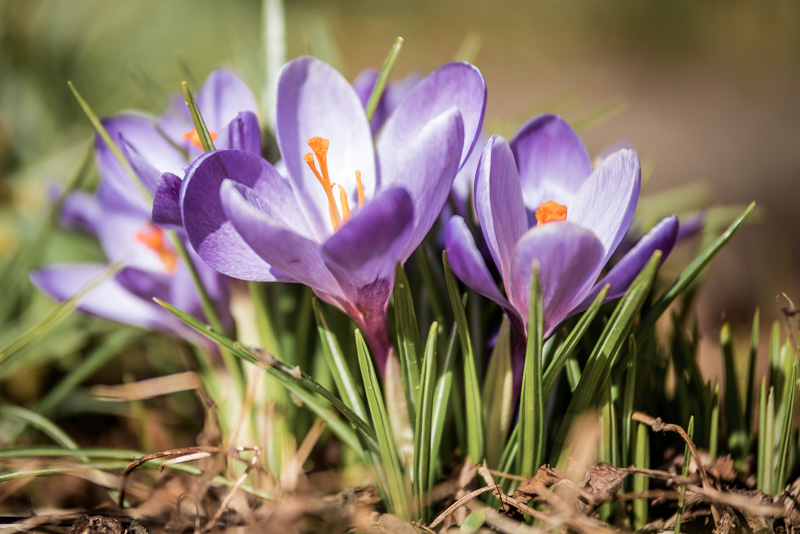
In the village of Krokos near Kozani, wild saffron is harvested from November. Then the fields of the region of Western Macedonia shimmer in the most beautiful shades of purple. That, too, is Greece! At the beginning of November, there may be the first snow in the high altitudes.
→ Is autumn the best time to travel to the mountainous region of Greece?
Autumn on the Greek coast
September and October are the ideal travel time for mainland Greece. Whether Athens (Attica coast), Thessaloniki (Halkidiki) or Peloponnese – mostly beautiful weather determines autumn on the coast. Temperatures in September are usually around 25 degrees, with isolated rainy days occurring.
Nevertheless, a holiday in Greece is worthwhile, especially for those seeking peace and quiet during this time! From the end of October, the weather changes and it becomes more uncomfortable on the coast.

→ Is autumn on the Greek coast the best time for me to travel?
→ Here you can find suitable accommodation on Booking.com*:
Autumn on the island of Crete
Crete is a real 360-day destination due to its southern location. After all, the small island of Gavdos is located below Crete, the geographically southernmost point of Europe.
The island of Crete is an ideal holiday destination for autumn. Several times a week, the airports in Heraklion and Chania. The weather in autumn on Crete continues to show its most beautiful side.
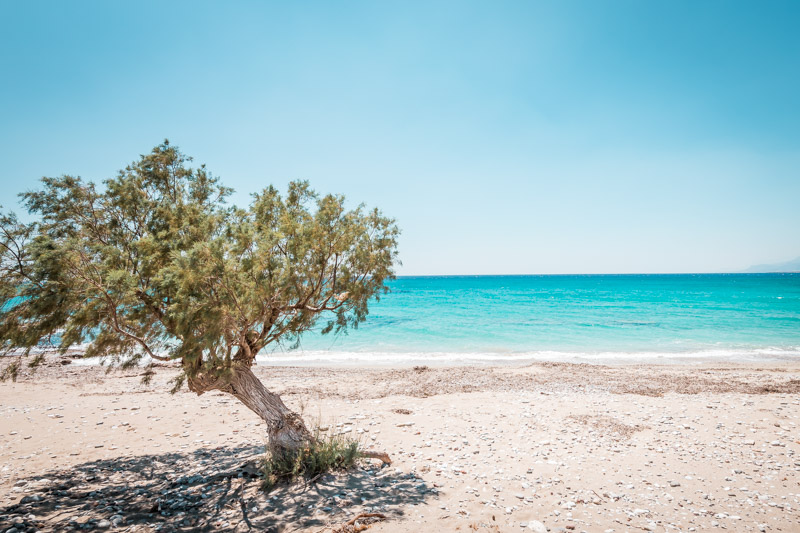
By the end of September, the tourist crowds have disappeared, accommodation prices have normalized and temperatures are much more bearable than in summer. Many dream beaches in the south of Crete, for example on the Libyan Sea, are now almost deserted.
Until November, the daytime temperatures are over 20 degrees. Ideal for nature lovers and hikers who want to actively discover Crete during this travel season.
→ Is autumn on the island of Crete the best time for me to travel?
Autumn on the Greek islands
The fact that the Greek islands are not just a summer destination should be known recently. In addition to spring, autumn is the most important ideal time to travel to the Greek islands.
Until mid-September, there is still a lot going on in terms of tourism on most Greek islands. Taverns, cafés and shops are all still open. There is plenty of sunshine and the temperatures are just below the 30 degree mark.
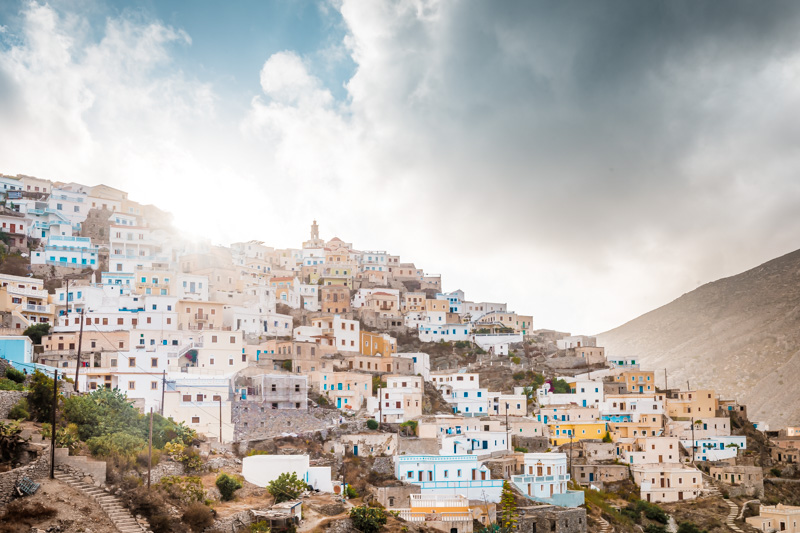
With water temperatures of 22 to 24 degrees, this travel time for a holiday in Greece is becoming increasingly popular. From the end of September, however, you also have to expect one or two clouds and some rain.
Nevertheless, the autumn months are ideal for hikers due to the pleasant air temperatures of 25 degrees. The temperature differences between the warm sea and the cool air masses from the north will cause isolated thunderstorms and autumn storms in Greece.

At the end of October, most hotels, taverns and shops on the most popular Greek islands close. November is still a very pleasant and mild month.
The Scirocco south wind from Africa ensures warm temperatures. This travel time is just right for individualists seeking peace and quiet who consciously seek solitude and silence on the partly extinct islands.
→ Is autumn the best time for me to travel to the Greek islands?
Which Greek island in October?
A holiday in Greece in October is definitely worth it! If only because of the few tourists on site. For us personally, September and October are the best time to visit Greece. Autumn is also great for relaxed island hopping on the Greek islands.
However, keep in mind that although the sun is still shining extensively and the rain clouds are still a long time coming, the first restaurants and hotels on smaller islands are already starting to close. If that doesn’t bother you, you can spend your vacation on almost every Greek island in October.
These Greek islands are perfect for an October vacation due to infrastructure and accessibility:
#7 How warm is it in winter in Greece?
The Winter in Greece is significantly warmer than in Germany. Athens is considered one of the mildest capitals in Europe. From November to March, the Greek capital has an astonishing daily temperature of an astonishing 15 degrees on average.
Even at Christmas and New Year’s Eve, the thermometer can reach a spring-like 20 degrees. Blue skies and sunshine are included! And even if it doesn’t get quite as warm, Athens’ city center is decorated for Christmas everywhere. The creativity of the Greeks knows no bounds. 😉
A magnificent Christmas tree will be erected in Athens’ Syntagma Square. And many Athens districts, such as Monastiraki and Psyri, also shine in colorful splendor. In Trikala, the largest Christmas market in Greece the winter village of Matsopoulou Mill (late November to early January).
The weather in Greece in winter is mild, especially on the islands and on the coast. In December and January there is heavy rainfall, but the temperatures rarely drop below 10 degrees and there are still enough sunny days.
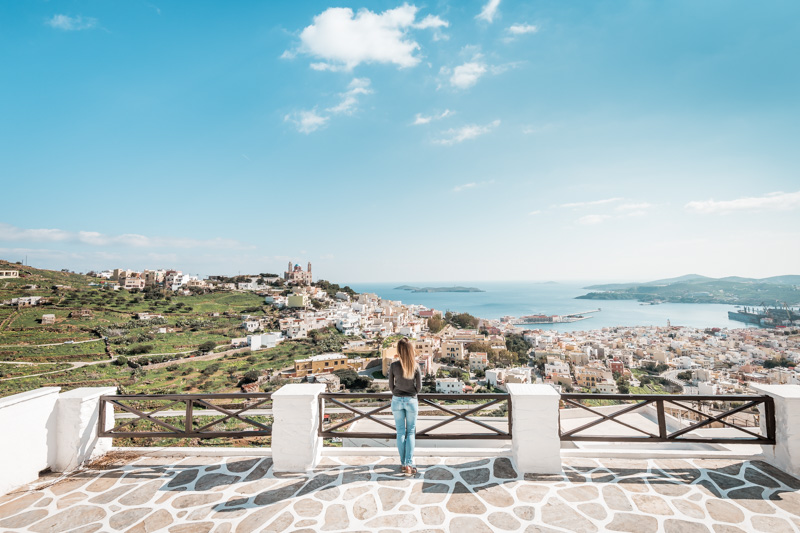
Due to its southern geographical location, the sun is much higher in Greece than in Germany. From mid-February, the temperatures slowly rise, making it perfect for escaping the winter in Germany.
But not all islands are suitable for wintering in Greece, as many facilities have closed. A few Greek Islands seem almost extinct. Many Greeks are drawn to Athens or Thessaloniki during this time.
In winter, there can sometimes be violent storms and thunderstorms in the Aegean and Ionian Seas. As a result, ferry traffic quickly comes to a standstill. Only a few islands are suitable for wintering due to their good infrastructure.

Destinations to spend the winter in Greece:
- Athens, Attica region
- Thessaloniki, Region of Macedonia
- Nafplio, Peloponnese Peninsula
- Ermoupoli, Syros Island
- Chania, Island of Crete
- Rhodes Town, Rhodes Island
Is it possible to go on a winter holiday in Greece?
Yes! In fact, you can spend your winter vacation in Greece. The regions in northern Greece invite you to winter sports in the cold season. Yes, you read that right, Skiing in Greece, totally crazy!
There are even 21 professional ski resorts in Greece. Especially the mountainous region of Epirus or Macedonia, around the city of Thessaloniki, are ideal for a winter holiday in Greece.
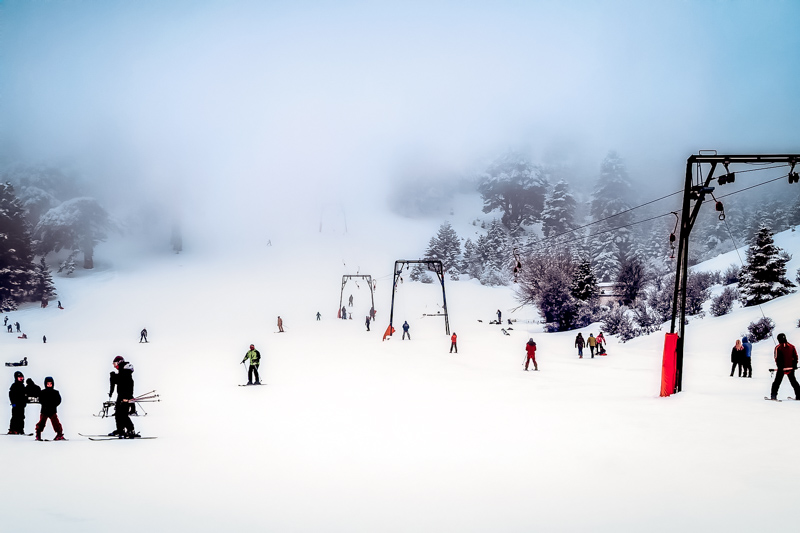
Western Macedonia, Epirus Zagori, the Pelion, Arcadia on the Peloponnese and Tzoumerka near Arta even have high season in the winter months. Many accommodations and taverns are open at exactly this time of year. Quaint mountain villages such as Nymfaio, Metsovo, Ano Pedina & Co. are waiting to be discovered.

Temperatures usually fall below freezing in the higher altitudes of Greece. While on the coast and on the islands it is spring-like 17 degrees, in northern Greece there can be freezing cold. In the cozy mountain taverns, the fireplace is then heated. Hardly anyone knows Greece like this!
→ Here you can find suitable accommodation on Booking.com*:
Winter destinations for skiing in Greece:
- Ski Center Voras Kaimaktsalan near Florina in Western Macedonia
- Seli Ski Resort near Kozani in Western Macedonia
- Vasilitsa Ski Center near Ioannina in Epirus
- Parnassos Ski Center near Delphi
- Pelion Ski Center in Chania on the Pelion Peninsula
- Kalavrita Ski Center on the Peloponnese Peninsula
#8 Useful tips for your travel time
A very interesting website with current and historical weather data from places all over the world and of course many Greek regions, we would like to offer you for the planning of your Greece Tour to the heart.
On the website Time and Date you can sometimes view the climate values of a place for up to 9 years. As long as they are maintained and available. This makes it child’s play to put your holiday destination and the month of travel through its paces, at least as far as the weather situation of the past years is concerned.
#9 Clothing for every Greece weather
Our personal rule of thumb is: The warmer and drier the weather, the less you have to pack and the lighter the suitcase you pull behind you.
Especially on the Greek islands, almost only short clothes are needed in midsummer. You can confidently leave rain jackets at home, especially in the Aegean Sea in July and August.
For the evening and in the off-season, a long cardigan is recommended, especially when the Meltemi wind blows a little stronger.
Gentlemen should plan at least long pants in their luggage, because many hotels expect at the dinner buffet that men do not show a bare leg.
On the mainland, especially in the mountainous region, the weather is somewhat more unstable all year round. Here, rain jackets and long clothes belong in your luggage, even in summer.
What else you should pack for your Greece vacation or not forget, you can find out here: Checklist vacation
*Support our blog Greece-Moments
In this post, you will find affiliate links marked with an asterisk (*). If you book or buy something through one of these links, we receive a small commission. For you, the price remains the same. In this way, you help us continue to provide high-quality content for free. Did you like this post and you would like to say thank you? Then just buy us the next Greek coffee ☕️ To the coffee checkout
Bookmark this post on Pinterest!