

Mount Olympus. Home of the gods. It is not only known to connoisseurs of Greek mythology. On Mount Olympus in Greece, the sun-drenched mountain shrouded in clouds, Zeus, the father of the gods, lives with eleven of his closest companions, including the beautiful Aphrodite, Hera, Poseidon, and Athena.
“Mount Olympus – Experience Greece in a completely different way!”
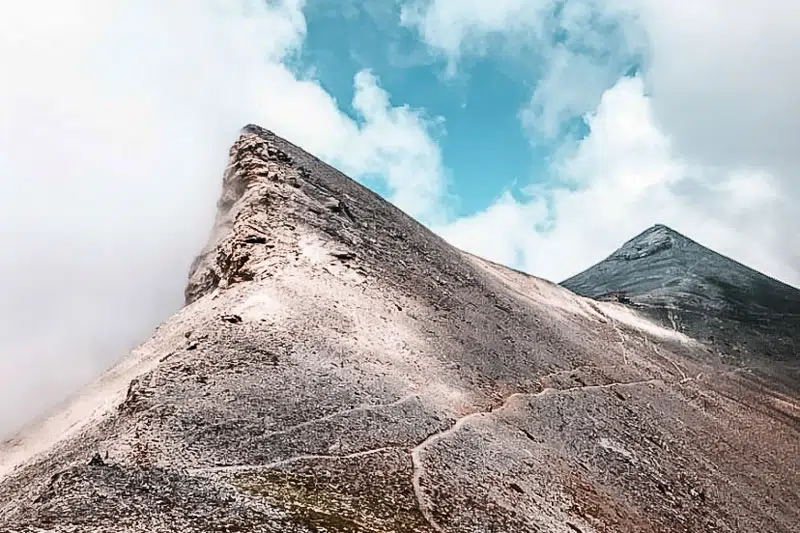
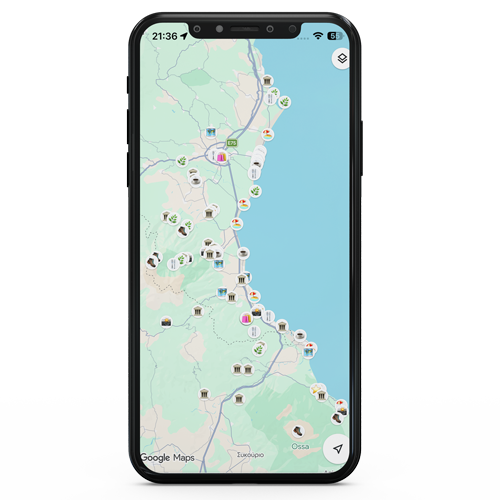
A once-in-a-lifetime trip up there? Why not? But the mountain from ancient mythology isn’t a single mountain at all, but an entire mountain range. The Olympus Mountains in the southwest of the Macedonian capital Thessaloniki stretch from the Aegean Sea up to 2,918 meters in height. In this article, you’ll learn everything about the region surrounding Greece’s highest mountain:
🏖️ Dream beaches & hidden bays
🍽️ Restaurants, tavernas & cafés
🏛️ Must-see highlights & ancient sites
🗺️ Worthwhile spots & insider tips
🚘 Practical info like rentals & parking
♾️ Lifetime access & updates
What makes Mount Olympus in Greece so special?
While down by the sea, locals and tourists alike lounge in the shade on the beach in 30-degree heat or dive into the turquoise waters of the Aegean Sea, up here temperatures hover around 0 degrees, even in the summer months.
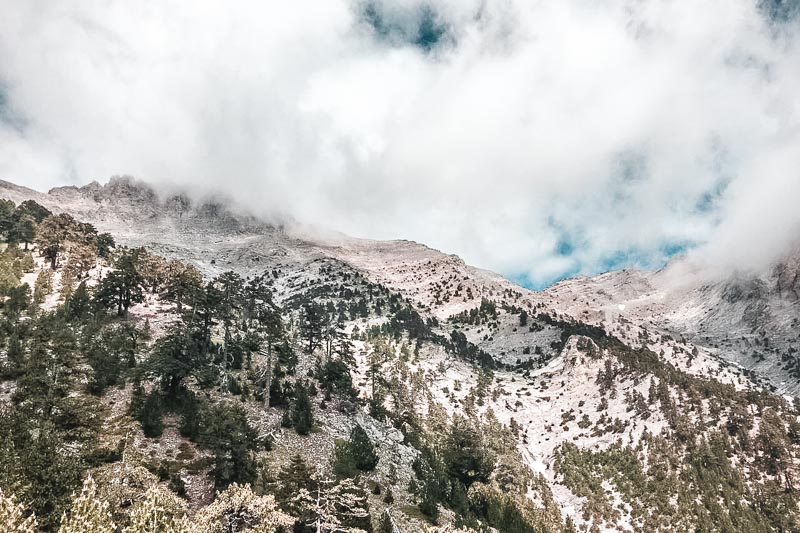
First of all, it should be noted: The hike up to one of the four highest peaks—Mytikas, Skolio (both 2,911 m), Stefani (2,909 m), or Skala (2,866 m)—is technically challenging. You should either be experienced in mountaineering or prepare thoroughly for this adventure in advance.
Once you reach the top, you’ll be rewarded with an impressive, nearly 3,000-meter-deep view down to the sea. A breathtaking view that once again reminds us just how beautiful our planet is.
When we think of Greece, the first thing that comes to mind isn’t necessarily a hike in the high mountains. But this unique country is so much more than dreamlike islands with picturesque villages, ruins steeped in history, breathtaking sunsets, and perhaps the best food in Europe. Although each of these aspects has already been highlighted, several Greece Trips invites you to explore the beautiful landscape.
#1 Hike to Mount Olympus: The best time to visit
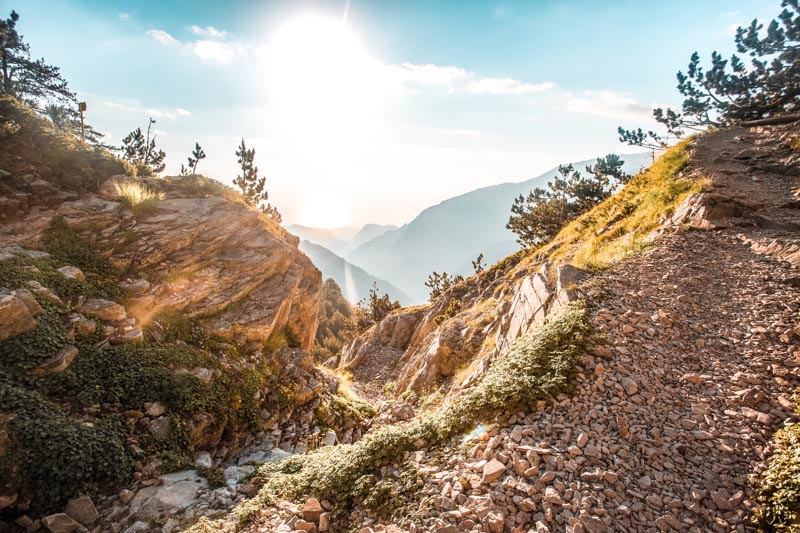
During the summer months between May and September, you can safely climb the ascent to Mount Olympus. There are usually a few snowfields at higher altitudes year-round, but with the right equipment (hiking boots, trekking poles) you can navigate them quickly and safely.
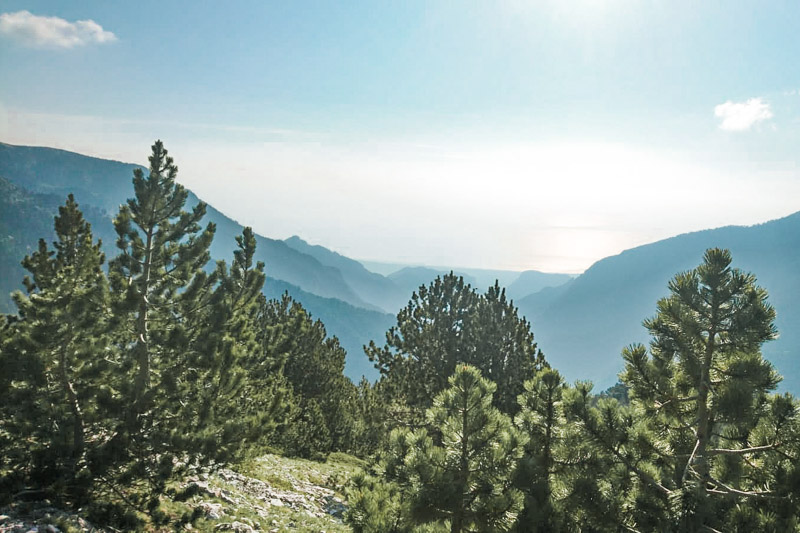
→ You can find more information about the weather in the mountainous region of Greece, including climate tables, in our article: Weather in Greece
#2 Hiking routes to Mount Olympus
There are various hiking routes that lead up to one of the highest peaks of the Olympus massif. The route you choose depends on how much time you have for the hike and your level of experience.
For your adventure far away from mass tourism, however, you should plan at least two or three days. The shortest hike to the Olympus massif starts from the Priònia tavern and is about 7.5 kilometers one way. It covers an elevation gain of approximately 1,600 meters.
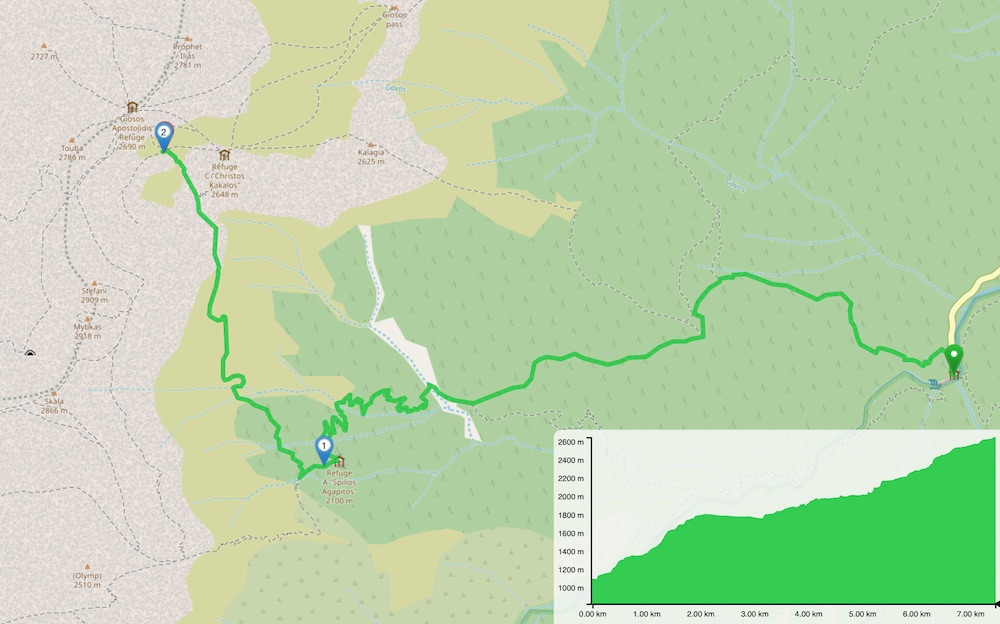
The complete hike along the E4 hiking trail from Litochoro is at least 20 kilometers one way. It covers an elevation gain of about 2,400 meters. You can choose to hike along the Enipeas River with its numerous waterfalls or above the Enipeas Gorge.
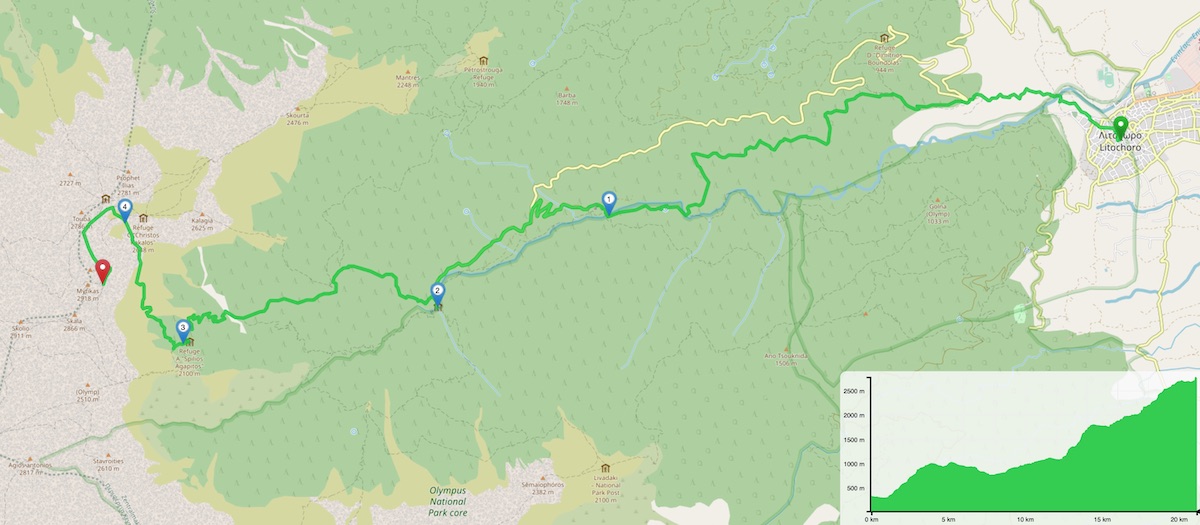
→ On Komoot, you can find detailed Olympus Hiking Routes with a map: Komoot Hikes
Day 1: Litochoro – “Spilios Agapitos” Hut
From Litochoro, you hike along the Enipeas, the raging river that has carved a deep gorge into the rock over thousands of years. The trail winds through lush green meadows and across beautiful old wooden bridges that span the river, guiding you up to its source in Priònia.
The dense foliage of the many beech and pine trees shields you from the scorching sun, which occasionally peeks through the greenery and casts a glittering dance upon the Enipeas. Every now and then, the trees offer a breathtaking view upward, toward the peaks of Mount Olympus.
Along the way, you will pass a cave where Saint Dionysius is said to have lived as an ascetic, as well as the monastery named after him. The Monastery of Agios Dionysios is open to visitors from April through October.

In addition to countless small streams, which carry the snowmelt from the peaks down to the sea as rivulets, spectacular waterfalls also line your path. The hike through the Enipeas Gorge is very well marked by yellow arrows and signposts. You are walking the International Trail E4 here.
Enchanted forests and fresh spring water
It will take you about five hours, including short breaks, to reach the parking lot and the source of the Enipeas in Priònia. Once there, you should definitely replenish your water supplies, because from this point on, water is scarce all the way to the summit. How about a little refreshment by resting your feet in one of the many ponds with crystal-clear water along the way?


If you need a refreshment, I can recommend the hearty goat soup at the Prionia Tavern. It’s about a three-hour hike to the Spilios Agapitos Hut. On clay paths, you’ll hike through an enchanted forest, where a nymph seems to sit behind every tree and on every rock.
If you arrive at today’s lodging exhausted and tired, there’s nothing better than putting your feet up first and then ending the evening with the other hikers in the fireplace room with a first-class pasta dish.
Day 2: Spilios Agapitos Hut – Mytikas – Giosos Apostolides Hut
Early in the morning, we set off fit and energetic toward the summit of Olympus. The trail first winds upward slightly in narrow switchbacks before it splits. Continue straight ahead on a direct path to Skala; to the right, head up to the Plateau of the Muses, where huts B and C are also located.
If you only started in Priònia today and have already been on the trail for over three hours, it is advisable to take the more strenuous path to the plateau, stop at a mountain hut, and tackle the summit of the gods the next morning.
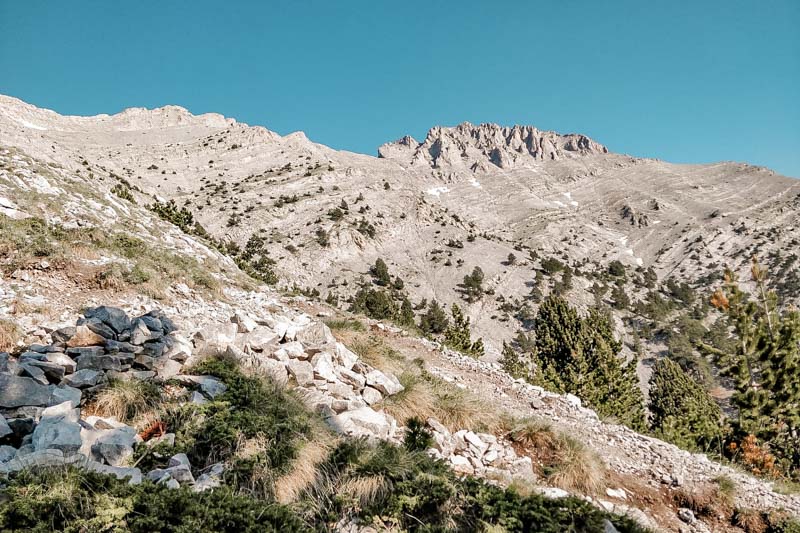
Otherwise, continue straight ahead and reach the tree line after just under an hour. From here the path becomes stony and rugged, a true high-mountain idyll. After a good two hours you have reached the fourth highest peak, Skala.
If you dare to do it and are an experienced hiker—perhaps one who has already climbed in the mountains—then you can turn right from here. The mighty battlements of Mytika open up before you. You now ascend it from the back. The narrow scree path that leads up very steeply is called Kakoskala, which means “bad levels,” and that’s exactly what they are.
Arrived at the throne of the gods
Climbing Mytikas is a real challenge, but we could already imagine that the gods don’t make it easy for us. Once at the top, you have a breathtaking view over to Halkidiki, and to the north even as far as the neighboring countries of Albania and North Macedonia. An entry in the summit book is a must.
If you’re not sure whether you want to attempt the climb, you can also make your way to Skolio, the second-highest peak in the mountains, relatively easily from Skala. From 2,911 meters, the view is just as impressive, and the clouds are guaranteed to lie at your feet like a soft, white sea.
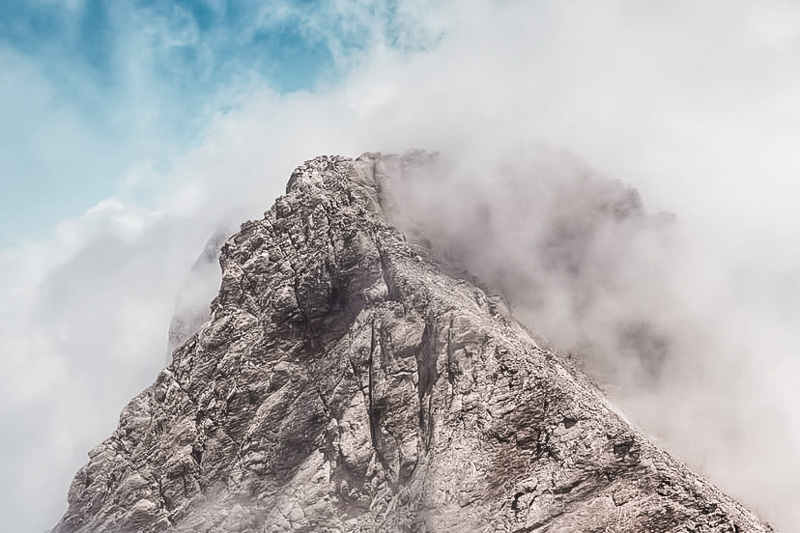
Directly beneath the peaks lies the Plateau of the Muses, which you can reach via a narrow climbing path from the peaks. Time and again, sudden high-mountain fog also surrounds the plateau. If this happens, it’s best to take a short break and only continue once visibility improves.
Along a cone-shaped gorge, a rocky but relatively wide path leads to the Giosos Apostolides Hut, where you can stop for a bite to eat today after your strenuous hike. From the lower hut to Mytikas, it takes about three hours, and from the summit to the hut on the Plateau of the Muses, another 45 minutes.
Even though this isn’t a long hike, don’t underestimate the fact that you’re at an altitude of nearly 3,000 meters and that climbing the peaks can take a toll on you. So make yourself comfortable by the fire with a delicious mountain tea. The herbs for the tea all grow here on the slopes of the Olympus massif.
Day 3: “Giosos Apostolides” Hut – Priònia – Litochoro
Today you can either take the same route back that you came or you can walk down the direct but also more difficult path to Priònia. From the Plateau of the Muses, the trail descends very steeply down a rock face.
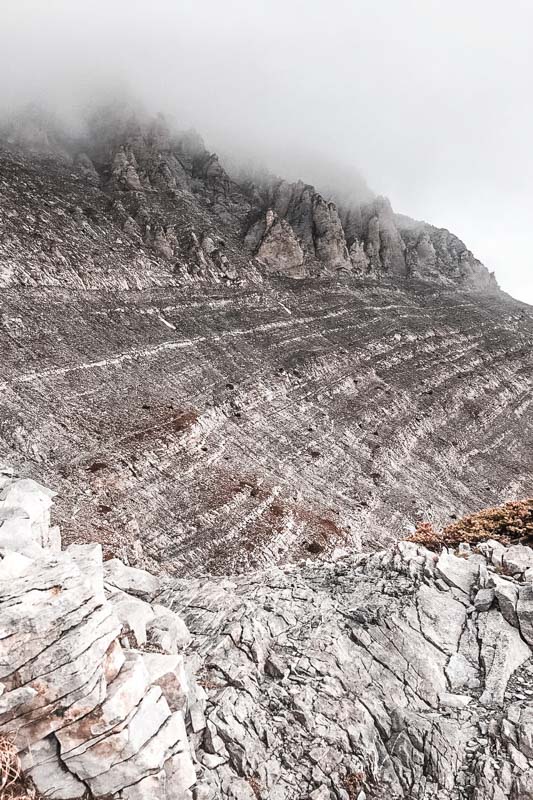
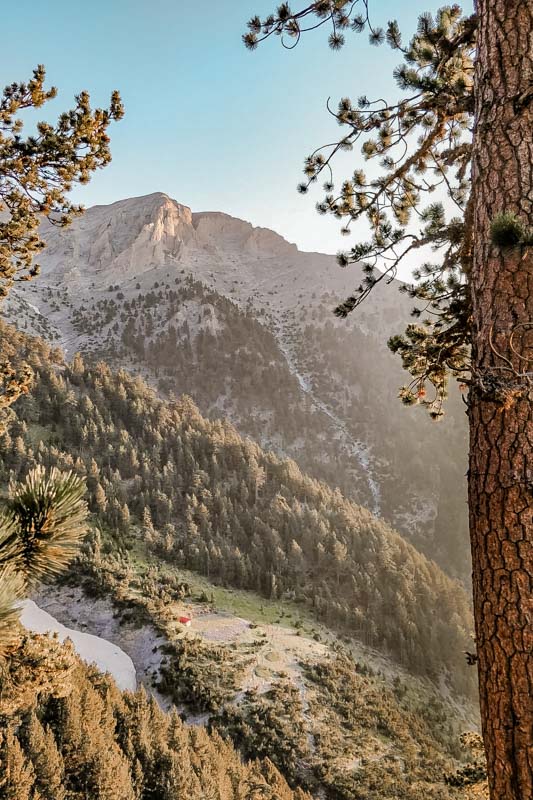
After just a few hundred meters, an indescribable view opens up over the Enipeas Valley with its myriad shades of green and out to the vast, glittering sea. A stark contrast to the rocky, impassable terrain around you, where only here and there does a conifer stand in the barren wasteland.
Withered undergrowth peeks out from between the rugged stones. And sometimes, if you’re lucky, you can spot chamois nibbling on this undergrowth or mountain foxes hiding behind it.
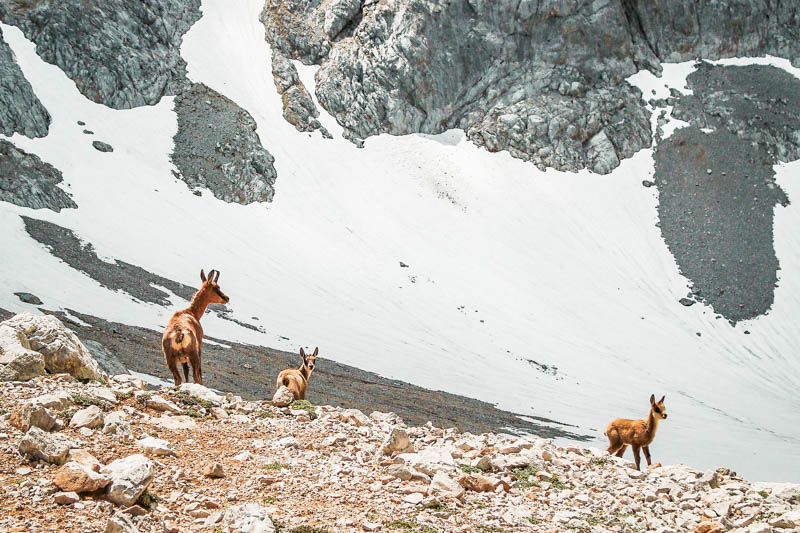
Once you have left the steep slope behind you, you can also cross one of the remaining snowfields in summer. Be extra careful here so that you don’t slip and trigger a small snow avalanche.
Shortly below this snowfield, you leave the rocky slopes behind and enter the pine and beech forests of Olympus. The birdsong grows louder, and from a distance you can already hear the roaring waters of the Enipea.
After just under three hours, you’ll reach Spilios Agapitos, and after another two and a half to three hours, you can dip your feet in the well-deserved cool water of the Enipeas spring in Priònia.
It’s now up to you whether you continue your hike to Litochoro, call a taxi—it costs about €25—wait for the bus—or join one of the many hikers. Here, people are happy to give a ride to a fellow hiker. And since they have to head down anyway, why not do so in the best company and reminisce about the highlights of the Olympus adventure?
✓ Full coverage & unlimited mileage included
✓ Free cancellation up to 24 hours before pickup
✓ Best price guarantee via Discover Cars
#3 Landscape in the Olympus Mountains
The area around Mount Olympus was designated as Greece’s first national park. Anyone who has ever been there is not surprised, because the mountain region captivates with a uniquely beautiful and diverse landscape.
The entire area is designated as a UNESCO Biosphere Reserve and is home to chamois, marmots, foxes, and deer, as well as wild boars and rare wild cats. Until 2008, there were even bears in this area. It is the unspoiled nature that makes you feel at home in the region around Olympus National Park.
The untouched nature, far from human interference, captivates with dreamlike backdrops of picturesque waterfalls, untamed streams, and romantic brooks that meander across barren alpine terrain and through lush, moss-green valleys.
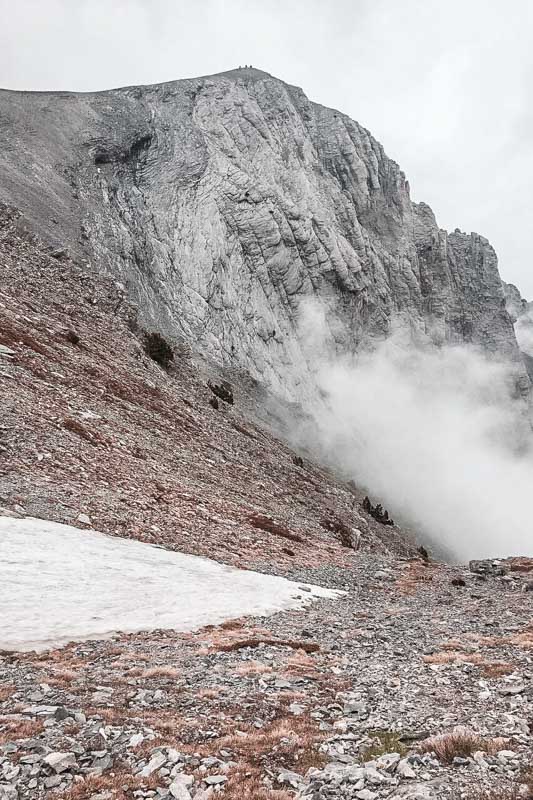

It is the wild beauty that enchants its visitors with menacing snowfields, fallen trees, and dilapidated paths. A place of longing for every nature lover—serene yet powerful at the same time.
Specialties from the Olympus Mountains
In addition to many herbs and local berries, strawberry trees also grow in the region. They are one of the key ingredients of tsipouro, a pomace brandy and a hallmark of Macedonian cuisine. This clear schnapps is served everywhere, in a very special way, in the tsipouradika around Mount Olympus.
In the traditional taverns (Tsipouradika or Ouzerí), as a guest, you don’t order food, but a round of tsipouro, and with every shot of schnapps you order, you’ll be served a Greek delicacy called mezede. You can still find tsipouradika primarily in the beautiful port city of Volos, below Mount Pelion.
💡 Olymp Travel Guide: The comprehensive travel guide Northern and Central Greece from Bradt Guide contains an informative chapter about the Olympus Mountains and the ascent to the highest peak. Order on Amazon: Travel Guide Northern and Central Greece*
#4 Mountain huts in the Olympus massif
Spilios Agapitos Hut
This mountain lodge is located at 2,100 meters. It is very well equipped, has Wi-Fi, a large outdoor area, a cozy fireplace room where you can warm up after your long hike, and—unlike the other huts—even restrooms with “real” toilets.
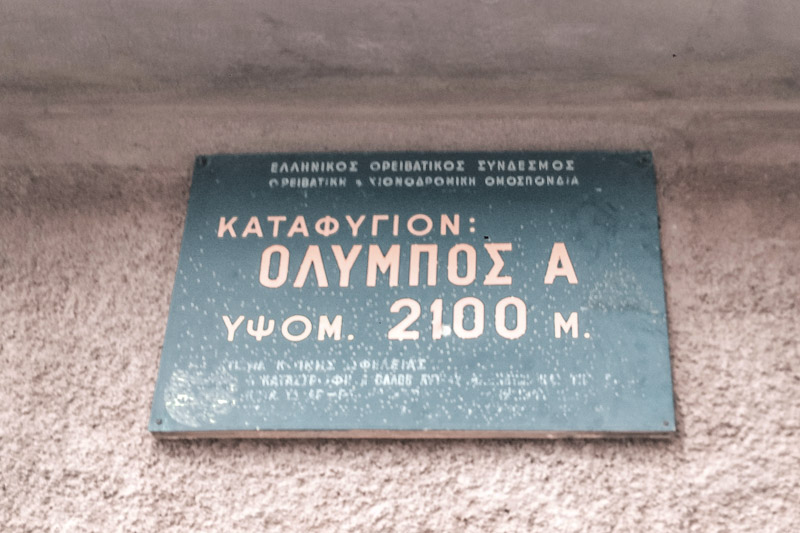
The hut can accommodate up to 110 people. In the summer months, up to eight people work here to prepare a delicious breakfast, lunch, or dinner for you and provide you with plenty of tips for your mountain tour. By the way: The spaghetti Bolognese was, after my strenuous hike in pouring rain, the best I’ve ever had.
Christos Kakalos Hut
The refuge is located at 2,650 meters at the base of the mystical Muses plateau. The smallest of the three mountain huts is very cozy and simply furnished. After the strenuous hike, however, you don’t need much more than a bed.
The hut operators can accommodate 18 hikers up here. In a small kitchen, simple dishes are prepared, but above all warming mountain tea, which you can enjoy—even in midsummer—snuggled up in the cozy wood-paneled common room.
Giosos Apostolides Hut
At 2,700 meters, it is the highest hut located directly on the crater of the Plateau of the Muses, just below the four main peaks. On a clear day, it offers a breathtaking view of Stefani, the throne of the gods, which rises like the erect crest of an iguana, and the highest peak behind it, Mytikas.
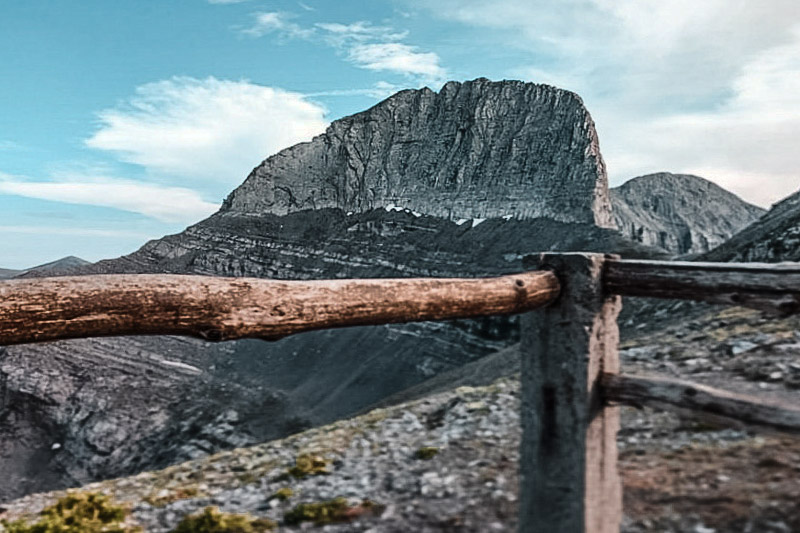
In addition to two bedrooms accommodating a total of 80 guests, there is also a fireplace room where you can warm up with a steaming cup of mountain tea made with Olympus’ own honey.
The hut operators also have warm woolen blankets ready for frozen hikers and will be happy to serve you a hot, delicious vegetable soup along with sausage and cheese platters.
The washrooms are located outside the stone main house, and aside from the fact that the water up here is freezing cold, it is usually quite scarce by the end of the day. By the way, there is no hot water at any of the three huts.
#5 Olympus hike: What do you need to bring?
For a hike to the court of the Greek gods, you only need light luggage. In addition to sturdy shoes—if you want to climb the peaks, these should definitely be hiking boots—telescopic poles (View on Amazon*) are recommended.
For the overnight stay(s), a hut-style sleeping bag (View on Amazon*), a quick-drying towel, and flip-flops for the showers. A rain jacket, sun hat, and/or sunscreen are also essential. The high-altitude sun is often underestimated, but you can prevent sunburn relatively easily.
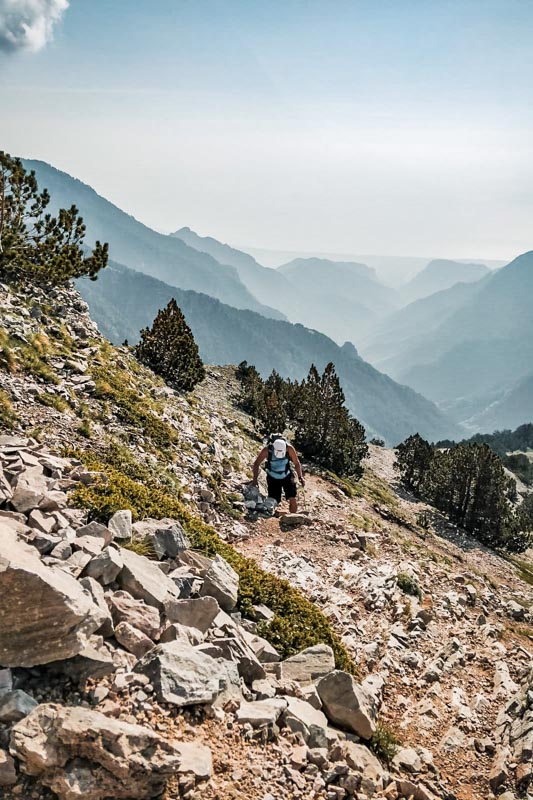
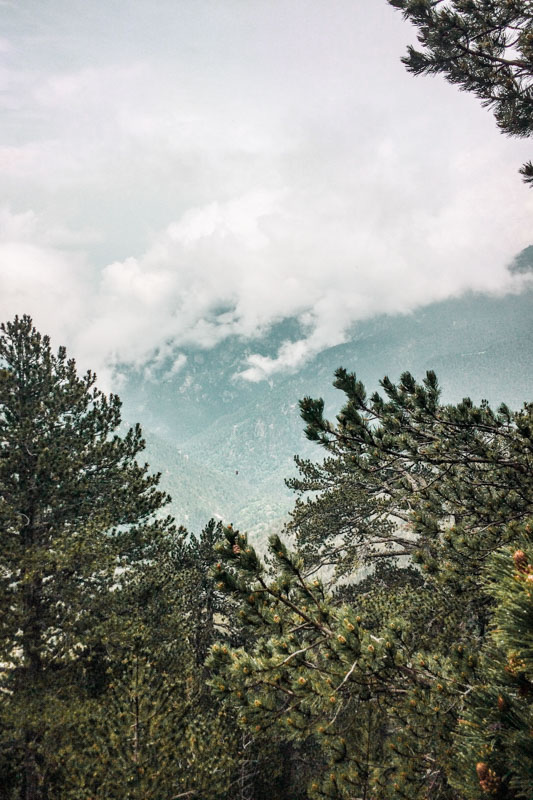
It’s also important to bring enough water with you on your hike. The last place you can refill your bottles is in Priònia; after that, water becomes scarce.
And by Zeus, be sure to bring warm clothes on your hike, which you can put on gradually as you climb higher. I made the mistake of thinking it certainly wouldn’t be that cold at the end of June.
But while it’s 30 degrees down by the sea, it can be quite cold at 2,900 meters. In any case, I froze quite a bit at night despite my sleeping bag and woolen blanket.
#6 Destinations in the vicinity
City of Dion
The city of Zeus, the father of the gods, and Alexander the Great, was the religious center of Macedonia. To the east of today’s city of Dion are the archaeological excavation sites of the same name.
For a long time, Dion hosted the ancient Olympic Games. In addition to the impressive remains of ancient temples and theaters, you can also visit the adjacent archaeological museum.
Admission to the excavation site and museum costs €6. In the summer, performances take place in the evening in the magnificent setting of the Hellenistic theater.
Dionysios Monastery
On the way from Litochoro to the peaks of Mount Olympus, you will first pass the new monastery and later the old monastery of St. Dionysius. The newer monastery is still inhabited by monks today.
The old monastery was founded in 1542 as the “Monastery of the Trinity” by Dionysius. It was repeatedly partially destroyed, most recently in 1943 by the German Wehrmacht, which attacked Greek partisans hiding in the monastery.
But the old monastery walls withstood all attacks and still look down majestically on the valley below from a height of 900 meters. The bright, sandstone-colored monastery, nestled among the wooded mountain slopes, exudes a very special, romantic charm.
Olympic Riviera
The Olympic Riviera stretches from Katerini in the north to Pori in the south. This is where the foothills of the mountain range meet the Thermaic Gulf. If you want to experience an unadulterated, authentic Greek holiday on the coast, this riviera is the perfect destination for you.
→ You’ll find more information and useful tips for the Olympic Riviera in our guide: Olympic Riviera
Sandy beaches alternate with pebble beaches; Greeks sit in the alleys of the small villages with a glass of wine and a game of backgammon, and in the taverns, authentic delicacies and, of course, the typical tsipouro are served.
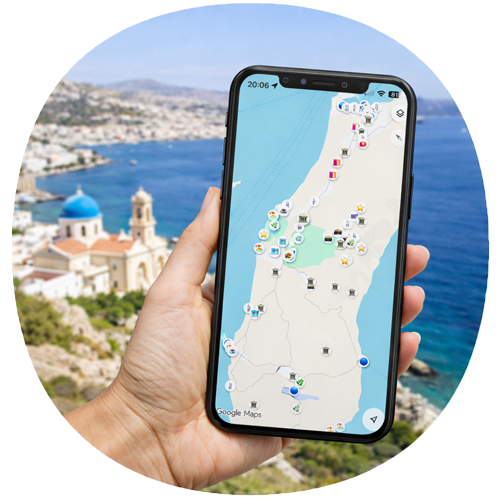
Meteora Monasteries
Not far from the Olympus Mountains lie the unique Monasteries of Meteora. Created by human hands, these legendary structures are perched atop narrow rock spires reaching toward the sky. You can explore these heavenly monasteries on your own by rental car or as part of an organized tour via GetYourGuide*:

*Advertisement
In the 9th century, monks moved to this mystical place amidst bizarre rock formations. In search of asceticism—that is, complete solitude—they lived in the caves and crevices of these otherworldly-looking rocks.

In the 11th century, they founded a monastic state, which over the centuries came to include 24 floating monasteries at dizzying heights. Six of these magical places still exist today and are open to visitors.
With a rental car, for example, you can reach the rock monasteries in just an hour and a half through the impressive Tempi Valley.
You can find out more about this magical place in our article: Meteora Monasteries
Thessaloniki
The Macedonian capital is definitely worth a visit. It’s a bit like Athens’ underrated little sister. A young, modern Greek metropolis with trendy clubs and vibrant nightlife. Both major cities are diverse. You can find out what you need to consider when traveling to Athens in our article: Athens Travel Guide
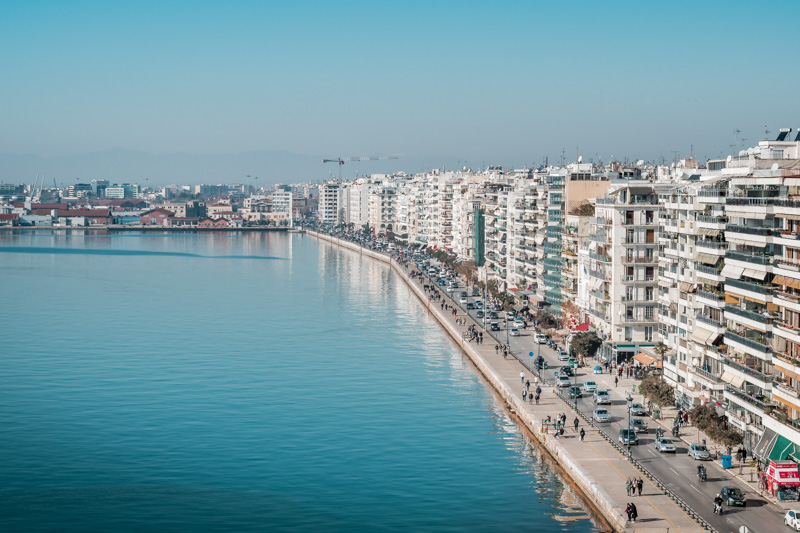
Thessaloniki’s trendy Ladadika district invites you to go out in the evening and during the day to stroll through the many small shops offering all kinds of handicrafts and to linger in the numerous hip cafés.
The city is easy to navigate, and you can reach everything quickly and comfortably on foot. Probably the most famous landmark of Thessaloniki is the White Tower, one of the city’s seven surviving defensive towers. You’ll find it at the bottom of the harbor, from where you can continue strolling along the pretty promenade.
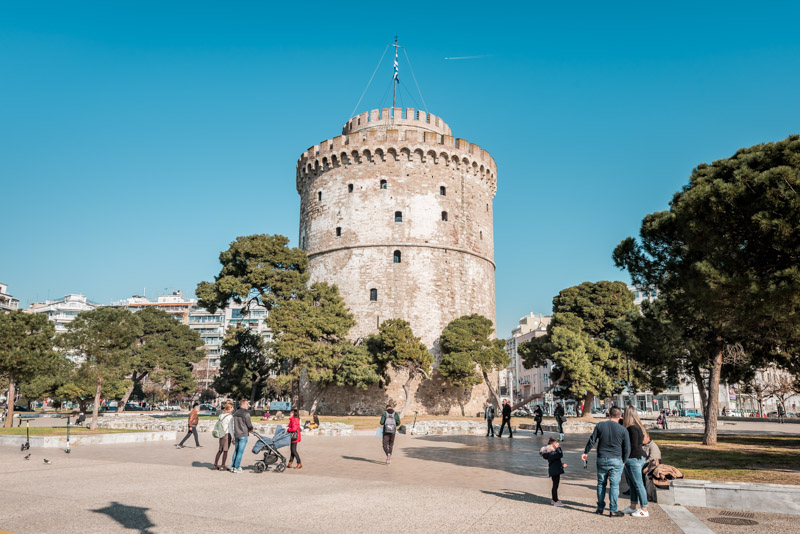
As much as this part of Thessaloniki resembles a busy, hectic big city, you’ll find a more relaxed atmosphere in Ano Poli, the upper town. In these picturesque, winding streets, nestled among colorful houses, you can escape the noise of the city center.
You can find more information and useful tips about this lively city in the Macedonia region in our article: Thessaloniki Sights
Accommodation at the foot of Mount Olympus
If you want to relax a bit before or after your climb on the mighty Mount Olympus in Greece, it’s worth staying near Litochoro. On Booking.com* you’ll get a good overview of available accommodations and hotels on Mount Olympus. Recommended hotels on Mount Olympus include, among others:
- Ktima Bellou
- Palio Litochoro Countryside Lodge
- RiverBed Traditional Guest House
- Robolo Boutique Hotel
Getting to Mount Olympus in Greece
For a trip to the mainland regions of Macedonia and Thessaly, take a direct flight to Thessaloniki (Book on Skyscanner*). From there, you can choose to take a rental car, train, bus, or taxi to Litochoro, the starting point for exploring Mount Olympus. You can book suitable rental cars online via Discover Cars*:
➲ Book your rental car from Thessaloniki here*
How to get to Mount Olympus from Thessaloniki
- Train: from Thessaloniki to Litochoro currently costs €9.00 per person
- Taxi: A taxi costs between €70 and €80. The taxi from Litochoro to Priònia will cost you around €25.
- Bus: The round-trip bus fare is €12.
Alternatively, you can also drive up to Priònia at 1,080 m. From Litochoro, a winding mountain road takes about 45 minutes to reach the top. Priònia is not a village, but simply a large gravel parking lot surrounded by greenery, featuring a cozy, spacious tavern.
You can park your car here for free. Around the parking lot, you’ll find many benches where hikers coming down from the peaks can rest themselves and their tired feet.
Bus routes to Mount Olympus in Greece
During the summer months, there is a bus service between Litochoro and Prionia. Information in German on how to get there by bus from Athens and Thessaloniki can be found on the Spilios Agapitos website.
*Support our blog Greece-Moments
In this post, you’ll find affiliate links marked with an asterisk (*). If you book or buy something through one of these links, we receive a small commission. For you, the price remains the same. This way, you help us continue to provide high-quality content for free. Did you like this post and want to say thank you? Then just buy us the next Greek coffee ☕️ To the coffee fund
→ You can find more tips and inspiration for the most beautiful regions of mainland Greece in the overview at: Mainland Greece
About the author:
Andrea is an editor, a travel enthusiast, and a real whirlwind. Her love for Greece was practically instilled in her from birth by her Greek godfather. The sea, the food, the people, and that unique light are what make Greece a place of longing for Andrea. On her blog amarieswelt and via her Instagram channel amarie_wanderlust, she shares exciting stories of real people like you and me and reports on her sometimes adventurous journeys. In spring 2022 she published her first book by HarperCollins Verlag.
✐ More travel tips from Andrea can be found here: Amaries world

Did you enjoy this article about Mount Olympus? Then save it on Pinterest!