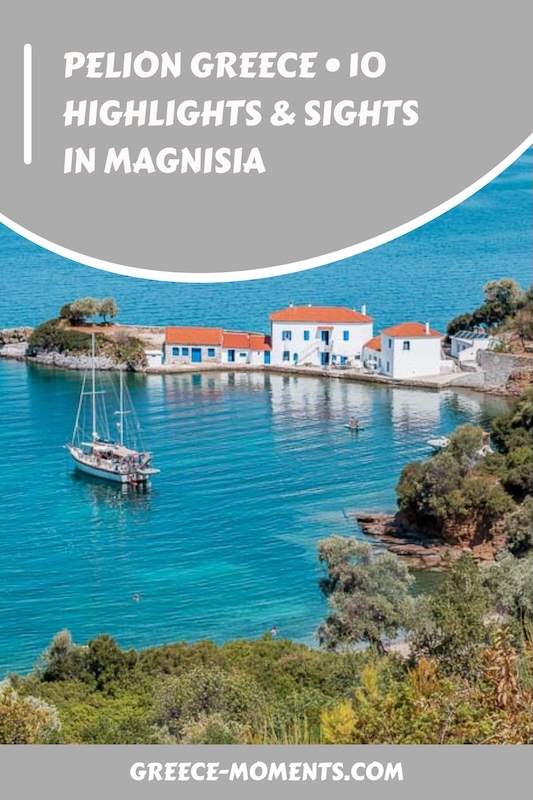

Lush and green, the Pelion Peninsula lies not far from the coastal town of Volos in the Thessaly region. Dense, jungle-like vegetation, picturesque mountain villages with traditional architecture, countless hiking trails, bubbling springs and fantastic views of the sea make this region of Greece an absolute paradise for nature lovers.
“Pelion, with its numerous treasures between mountains and sea, makes the heart of many an individual explorer beat faster.”
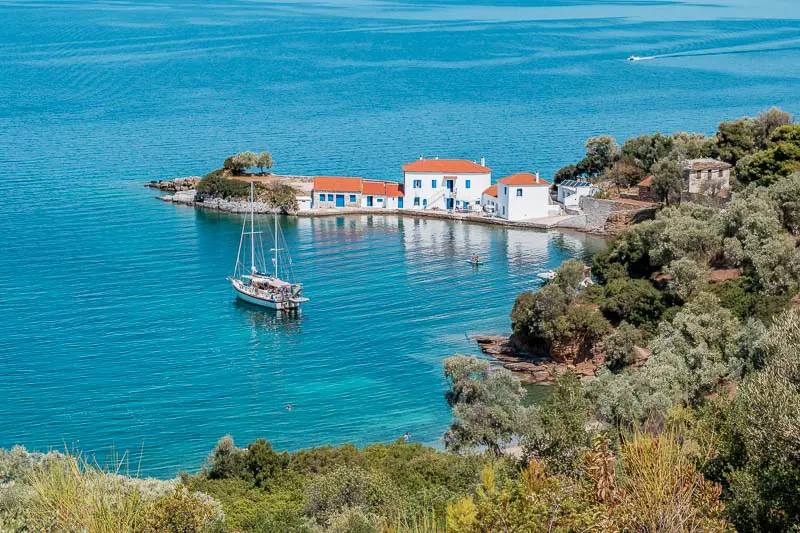
Zeus and his Olympian gods were so taken with the peninsula that they made it their summer residence. No wonder Zeus vehemently defended his favourite spot on earth during the battle of the titans.
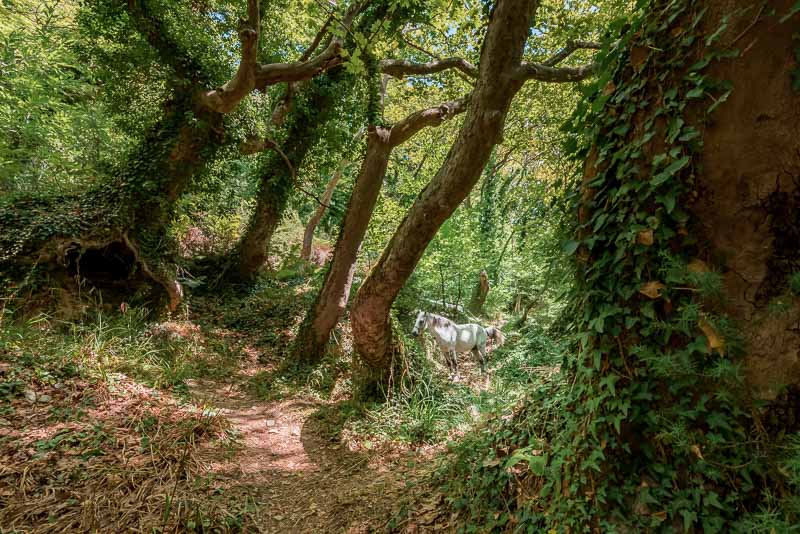
The Pelion Mountains were once the seat of the centaurs, those mythical creatures that were half man, half horse. In the lushly forested heart of Pelion, where some areas remain untouched and the dense carpet of plants hides many a secret, it would hardly be surprising if they still lived here today.
Today, Pelion is particularly popular with Greeks, who appreciate its summer retreat at higher altitudes. Only a few international tourists find their way here, making the region a true Greece insider tip.
We will take you to one of the most mysterious regions of Greece and show you our 10 highlights of the Pelion Peninsula:
- #1 Volos: Gateway to Pelion
- #2 Makrinitsa: On the Balcony of Pelion
- #3 Quaint mountain villages in the northwest
- #4 On the Road with the Pelion Narrow-Gauge Railway
- #5 Visiting Milies and Vizitsa
- #6 Pelion beaches: Our favorites
- #7 Along the Stone Paths of Tsagarada
- #8 Fishing village of Damouchari
- #9 Road trip in the south of Pelion
- #10 From Lafkos to Platanias
- More Pelion travel tips
#1 Volos: Gateway to Pelion
On a trip to the Pelion Peninsula, there’s no way around Volos. Even if the coastal town doesn’t seem very attractive at first glance, you can at least stock up on the essentials here that aren’t readily available on the rather rural peninsula. The local amenities in Volos are excellent, with several large supermarkets, including Lidl and Sklavenitis.
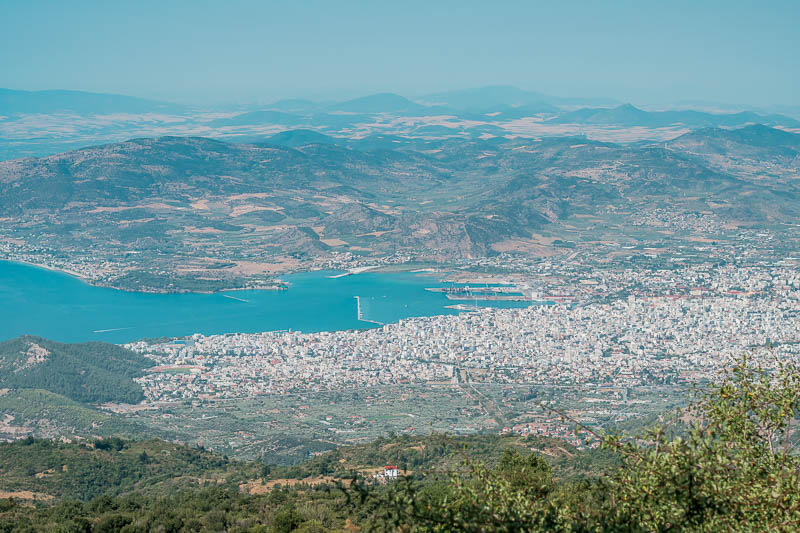
Volos, with its almost 86,000 inhabitants, has always been an important port city on the Pagasitic Gulf. In ancient times, the Argonauts set off on their voyage aboard the ship Argo from Volos. Today, holidaymakers use the busy ferry port to reach the northern Sporades (e.g. Skiathos and Skopelos).
On a visit you can expect a busy Greek city that has hardly any historical buildings left due to the severe earthquake of 1955. Today, it is mainly modern concrete buildings that characterise the cityscape of Volos. Nevertheless, it is worth taking a stroll along the Argonafton waterfront and the shopping alleys.
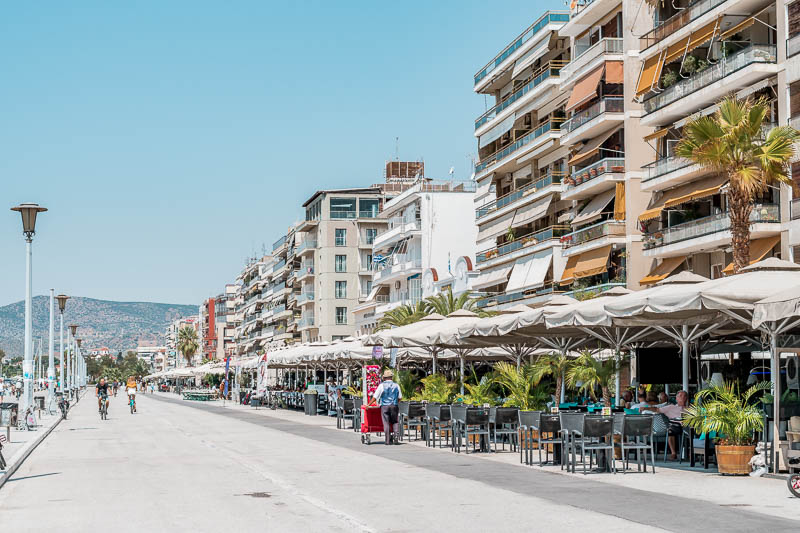
Right at the port of Volos, you can park your vehicle in a paid car park. From here, the promenade leads to the University of Thessaly and the city park of Agios Konstantinos behind it.
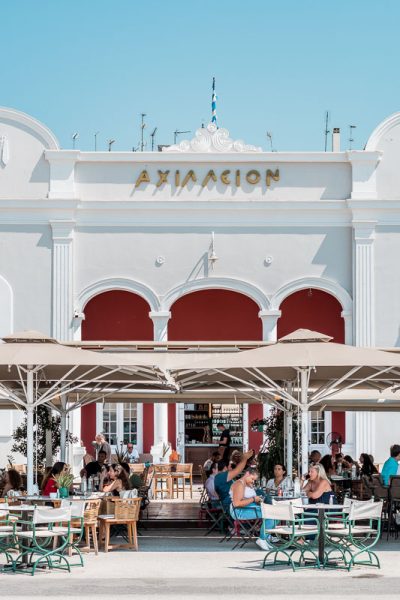
Numerous cafés line the promenade, where you can watch the hustle and bustle around the harbour pier (e.g. at the Achilleion Foyer).
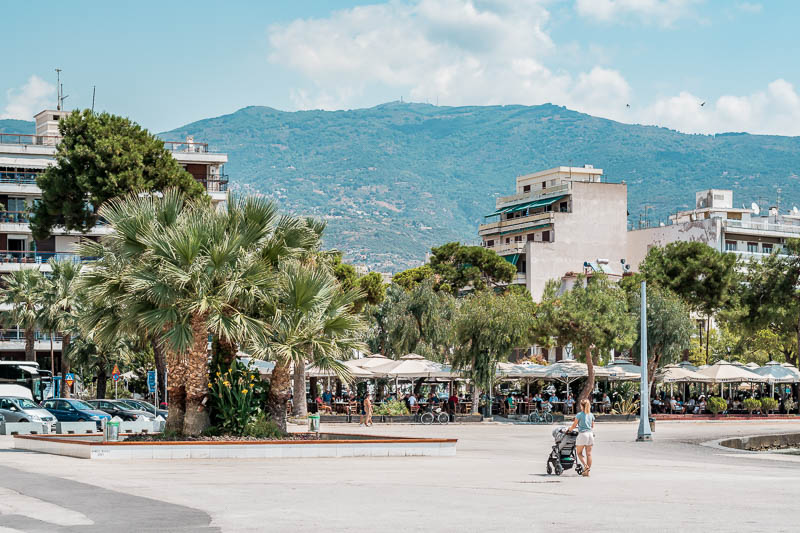
From the university, you can reach Ermou Shopping Alley via Filellinon Street. It is largely traffic-free and perfect for a leisurely stroll. In the pedestrian zone you will find numerous shops for everyday needs, clothing and shoe stores, small cafés and concept stores.
After about 400 m, you reach the massive Metropolitan Church of Volos. The interior of this magnificent church is completely painted, and a quick look inside is well worth it.
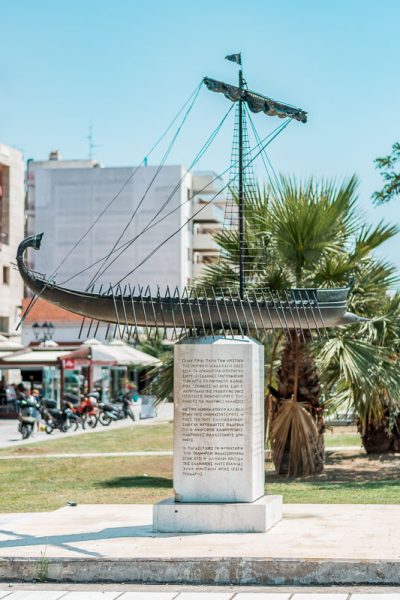
Via Venizelou Street you can make your way back to the harbor. On the left, easily overlooked, on a small green area in front of the harbor, stands a replica of the famously swift warship Argo, which plays a major role in the Argonaut saga (see box).
💡 Jason and the Argonauts: No less exciting than the epic Odyssey saga is the story of the legendary Argonauts. Hero Jason and his crew (including Heracles and Orpheus) set off on an adventurous journey from Volos aboard the ship Argo to find the Golden Fleece, a magical ram’s hide. Along the way they encountered harpies, the Amazons, the sirens and even dragons. A great audiobook about the legend is available on Amazon*: The Argonaut Saga*
#2 Makrinitsa: On the Balcony of Pelion
The white “Archontika” — mansions with gray slate roofs — cling picturesquely to the mountainside of the Pelion range, as if floating above the city of Volos. Makrinitsa is our first stop on the way to the heart of Pelion, and right from the start we get to discover one of the most beautiful villages in the region.
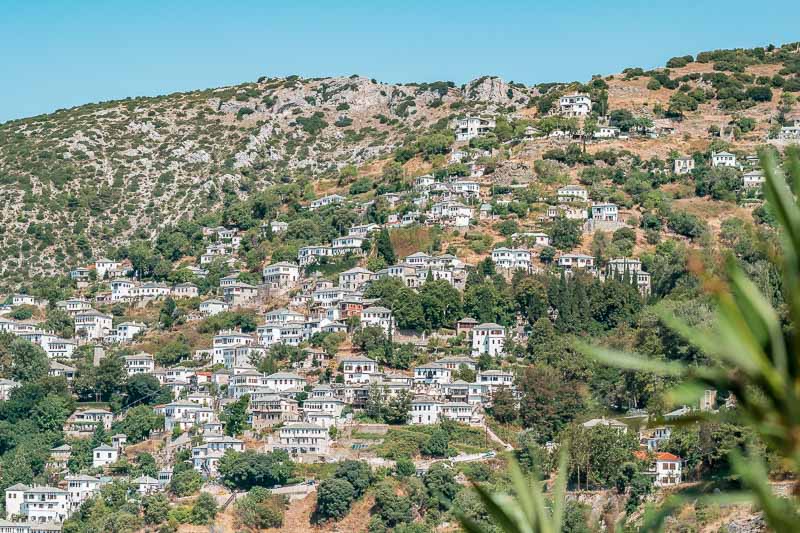
Since the village is traffic-calmed, you have to park your vehicle at the entrance in a parking area, which fills up quickly. From here you can walk along the cobbled main street, past souvenir shops and stores to the listed town centre.
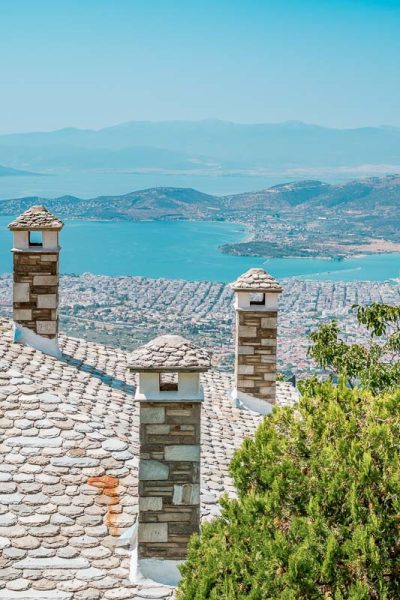

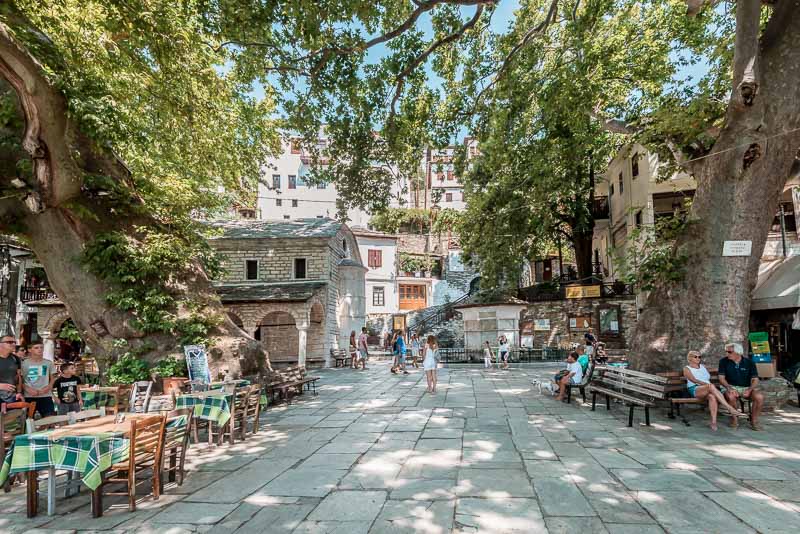
Along the way, there are magnificent views of Volos and the Pagasitic Gulf. Once you arrive at the central village square with its huge plane trees, you can take a coffee break in one of the taverns and enjoy the stunning coastal panorama.
The Platia of Makrinitsa is a real gem and very typical of the villages of Pelion. Before exploring the alleys, you can visit the old Metamorfosis church and fountain at the edge of the square.
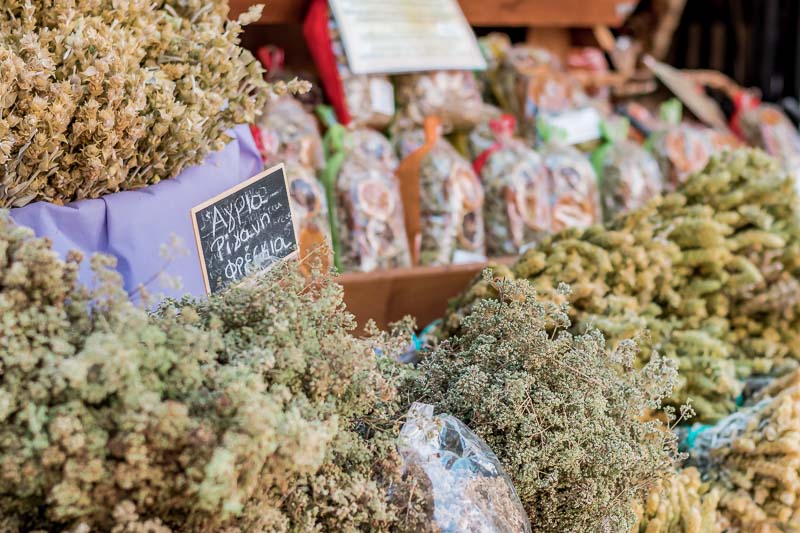
After you have thoroughly explored the cobbled streets of Makrinitsa, it is worth stopping by the interesting shop The Shop of Nature on your way out of the village. At Marietta and Giannis you will find a wide range of natural products, soaps, spices, teas and medicinal herbs from the Pelion region.
Hike through the Centaur Forest
Just a five-minute drive from Makrinitsa, at the entrance to the village of Portaria, you will have the opportunity to discover a small natural jewel. In Greek mythology, centaurs are hybrid creatures (half man, half horse) who made their home in the mountainous region of Pelion.
The Centaur’s Path is a delightful hiking trail that leads through an almost mystical forest. Right next to the Meli Café, the path starts behind a stone archway, beneath which water cascades down into a basin.

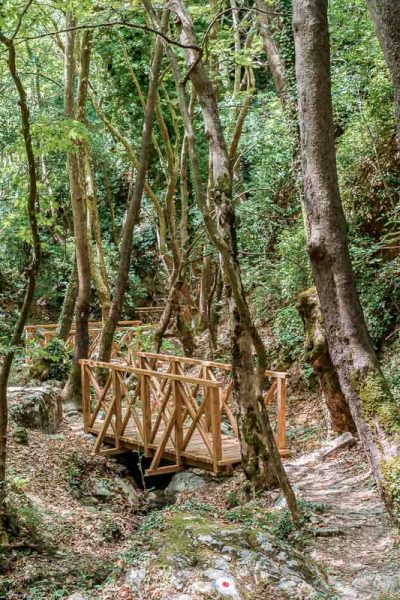
You follow the stream throughout and cross countless wooden bridges. After about 600 m through dense vegetation, the trail ends at a spring. Sturdy shoes are recommended due to the slippery forest floor.
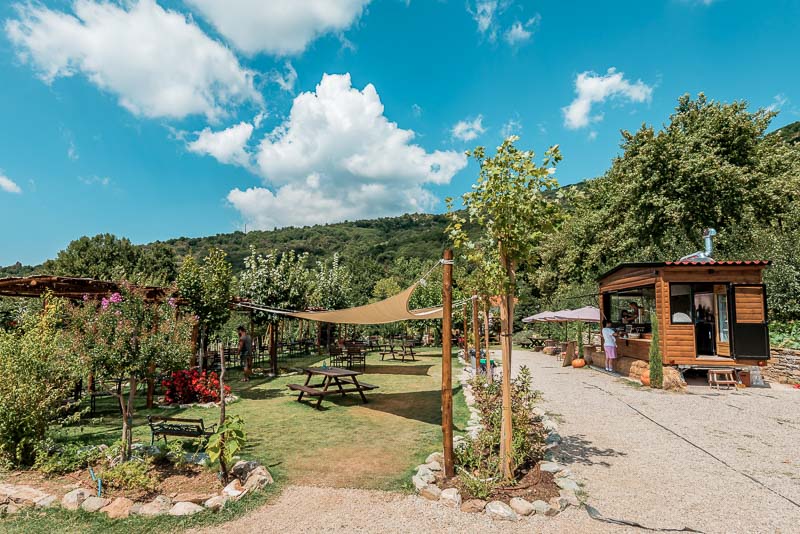
💡 Pelion Family Holidays: The idyllic Karaiskos Farm, just five minutes from Portaria, is a perfect destination especially for families with children. In addition to numerous farm animals, you’ll also find an excellent restaurant serving typical Pelion cuisine and a cozy self-service café.
#3 Quaint mountain villages in the northwest
Martyrs’ Village Drakia
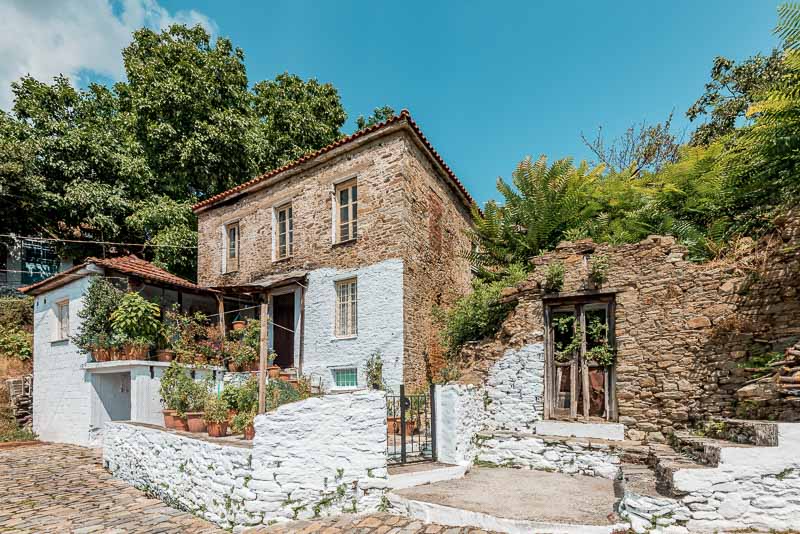
The road from Agria winds up through countless hairpin bends to an altitude of 500 metres before the first red rooftops come into view. The mountain village of Drakia is nestled in a lush green hilly landscape, and even during our visit in August it was peacefully quiet.
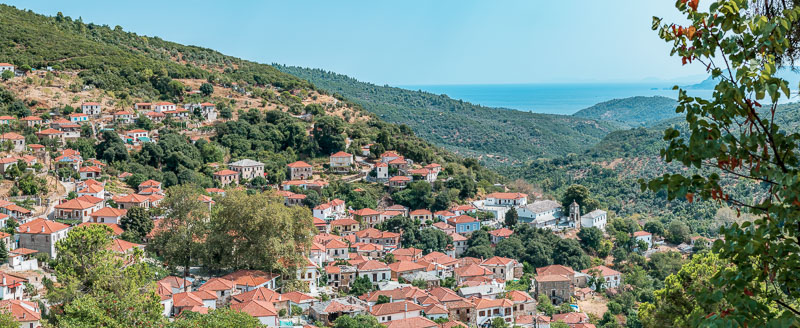
The narrow streets of Drakia invite you to take a stroll. In the lower town center you can park your vehicle at the town hall. Heading south, you will come to one of the two beautiful village squares with its huge plane tree. At the Tavern Palia Platia we ate deliciously and at reasonable prices.
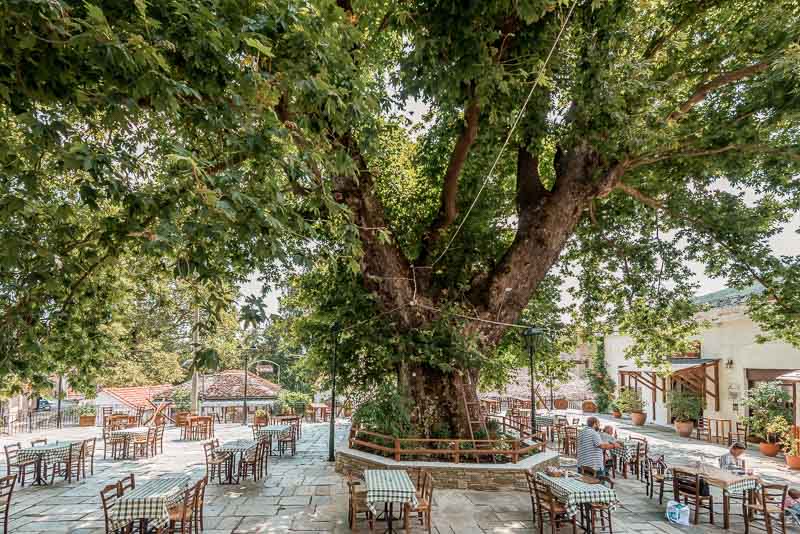
The village was founded in 1655 by craftsmen from Epirus and has been considered a martyr village since 2000. A memorial plaque in the centre of the village commemorates the massacre of Drakia, in which 118 men from the village were executed by German soldiers during the Second World War.
Music Village Agios Lavrentios
The picturesque village is located southeast of Drakia and immediately enchants visitors with its traditional architecture. Agios Lavrentios is home to many historic mansions and a very cozy village square shaded by large plane trees.
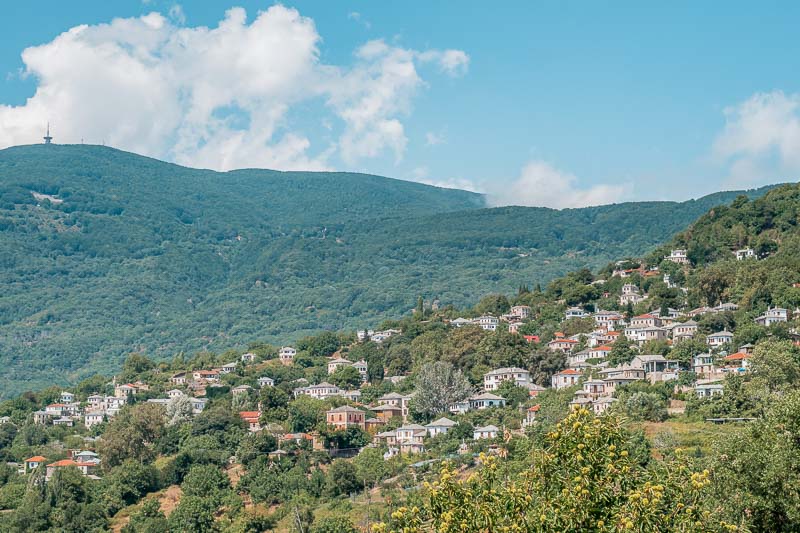
The village received its name in 1378 from the monk Lavrentios, who founded a Byzantine monastery here. History buffs can visit the »Monastery of St. Lawrence«, just outside the village, which is the oldest monastery in Pelion.
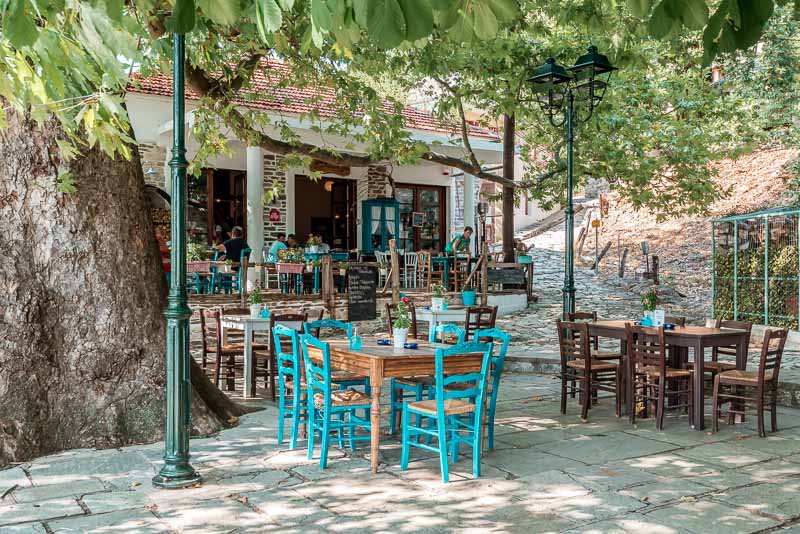
Agios Lavrentios is also known as the music village of Pelion, as many cultural events take place here, especially in summer, and musicians from all over the world gather for spontaneous jam sessions.
💡 Book tip Pelion: The Greece travel guide from Lonely Planet contains an informative chapter of the Pelion Peninsula and was a faithful companion packed with travel tips: View on Amazon*
#4 On the Road with the Pelion Narrow-Gauge Railway
The narrow-gauge railway »Moutzouris« is the top tourist attraction on the Pelion, even if it is no longer pulled by a classic steam locomotive.
The train has been running between the villages of Ano Lechonia and Milies since 1903, although it was closed between 1971 and 1996. With a track width of only 600 mm, it is considered one of the narrowest train lines in the world.
Today, the diesel-powered train covers a distance of 28 km in 90 minutes. The scenic ride winds through wildly romantic gorges and crosses several stone bridges and streams.
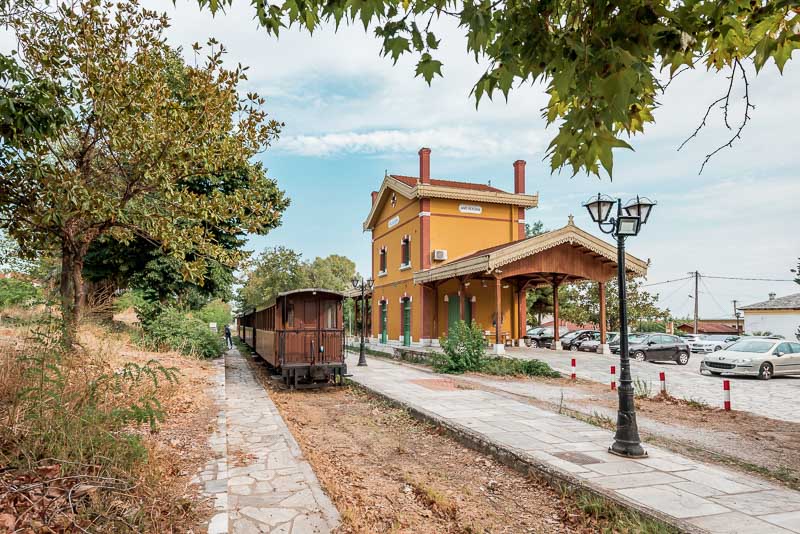
The Moutzouris train was designed by the Italian engineer Evaristo de Chirico, after whom the metal bridge just before Milies station was named.
Especially with children, a ride on the narrow-gauge railway is a real Pelion highlight. The historic train runs daily in July and August, and only on weekends between mid-April and June and from September to the end of October.
The train departs from the station in Ano Lechonia at 10 a.m. and returns at 3 p.m. from the terminus in Milies. In the village of Ano Gatzea, it makes a 15-minute stop, where the locomotive is turned manually for the return route.
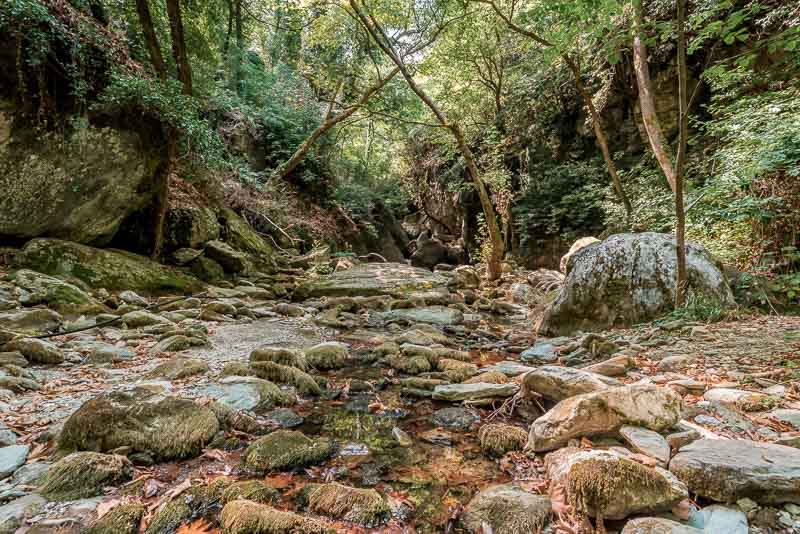
During our visit in late summer, we had to skip the trip due to the risk of forest fires. So it’s definitely worth checking the timetable before you go: Hellenic Train
✓ Full coverage & unlimited mileage included
✓ Free cancellation up to 24h before pickup
✓ Best price guarantee via Discover Cars
#5 Visiting Milies and Vizitsa
Even if you haven’t planned a ride on the Pelion Railway, you should visit the train station west of Milies. The historic complex, including the ancient water mill, is idyllically located in the middle of dense forests and has often served as a backdrop for romantic weddings.
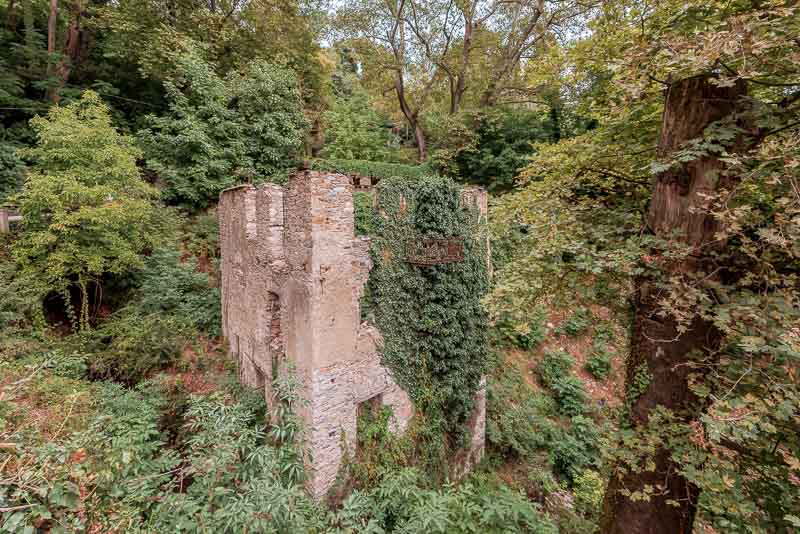
The town centre with its shady village square and the Taxiarchis church from 1741 is also worth a detour. Directly behind the Platia, a beautiful children’s playground has been created beneath plane trees.
Just a five-minute drive west of Milies, the picture-book village of Vizitsa is one of the best-preserved traditional villages in all of Greece. Vizitsa is a listed settlement due to its special architecture.
Old tower houses and villas, which have been extensively renovated, offer a glimpse into times long past. You can also enjoy a magnificent view of the Pagasitic Gulf from Vizitsa, and a walk along the cobbled streets is a must during your stay in Pelion.
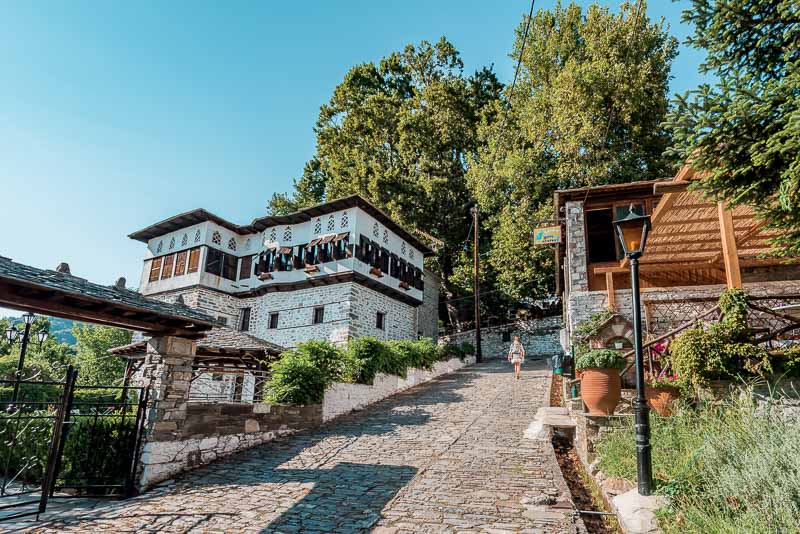
The centrepiece is the Platia, shaded by plane trees, with its striking fountain and numerous taverns that invite you to take a break. Residents of Volos in particular make a detour to the mountain village at weekends to escape the hustle and bustle of the city.

#6 Pelion beaches: Our favorites
Pelion is not only a natural paradise, but also a beach paradise. Numerous beaches, especially on the east coast, invite you to spend a relaxing day by the water. Below we present our beach favorites on Pelion (from north to south):
Agii Saranta
A bright pebble beach with crystal clear water, divided into two beautiful green bays. Particularly striking is the rocky spur Kalogeros (Monk Rock) at the southern end of the beach.
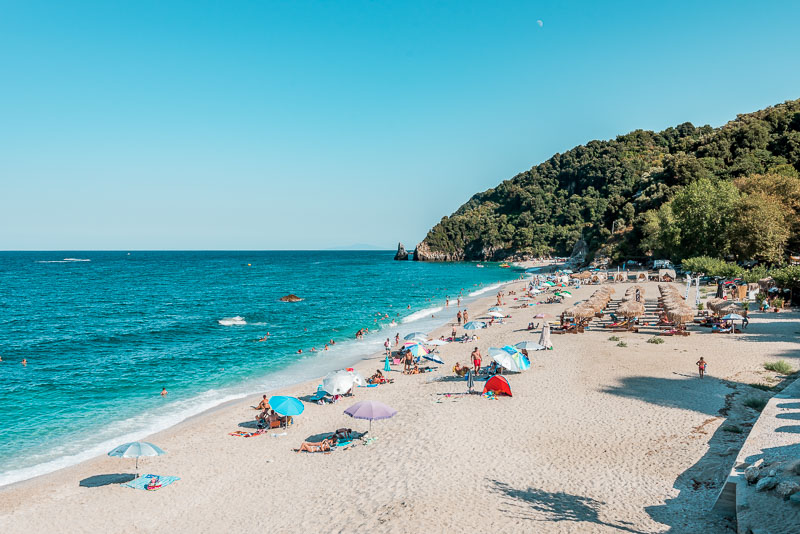
The beach bars on site (including Sarande and Monk) provide loungers and umbrellas and are all worth a visit. In midsummer, Agii Saranta Beach gets busy, and parking spots down by the beach can become scarce.
Plaka
A fantastic beach of light pebbles and turquoise blue water. The northern section is operated by the Eden Hotel, which provides umbrellas and loungers. You can also park here very comfortably for around €6.
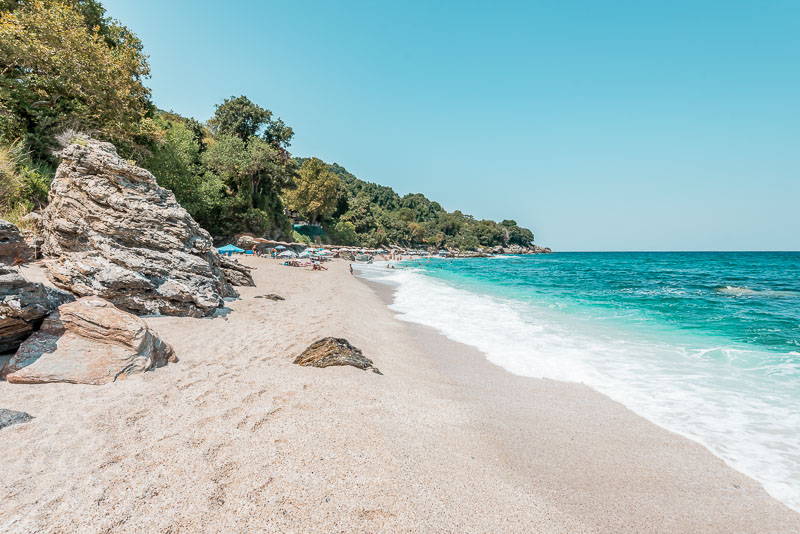
The free parking facilities above Plaka Beach are very limited, especially in high season. Alternatively, you can walk from the port of Agios Ioannis via a beaten path along the coast to Plaka Beach.
Paralia Fakistra
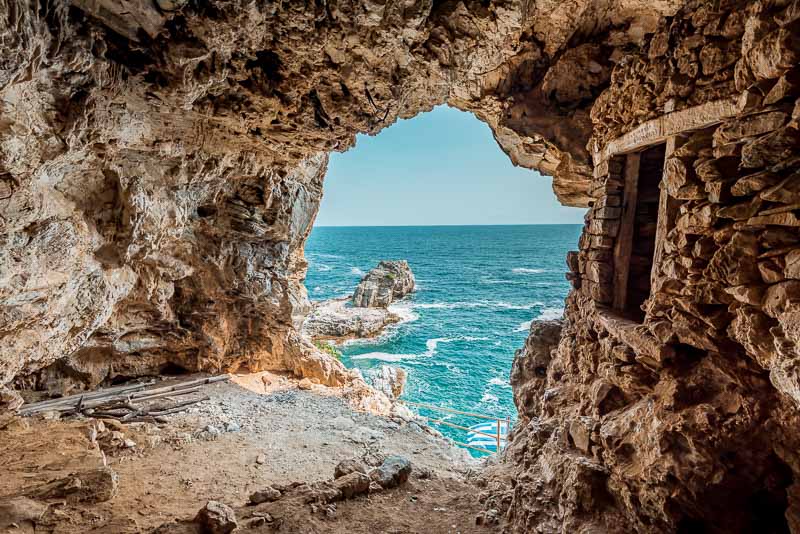
A natural beach near Tsagkarada. On calm, windless days in particular, the 400 m steep descent down into the wild bay, where the sea sparkles emerald green, is well worth it. There is no operator on site, so you have to bring your own parasol and food.

💡 Hike to the Pelion Cave Church: From the parking area above Fakistra Beach, a dirt road leads down to the coast in about 20 minutes, which later turns into a trail. Hidden in a cave just above the sea is the church of Panagia Megalomata. During the Ottoman occupation, there was a secret school here where a monk taught children to read and write.
Mylopotamos Beach
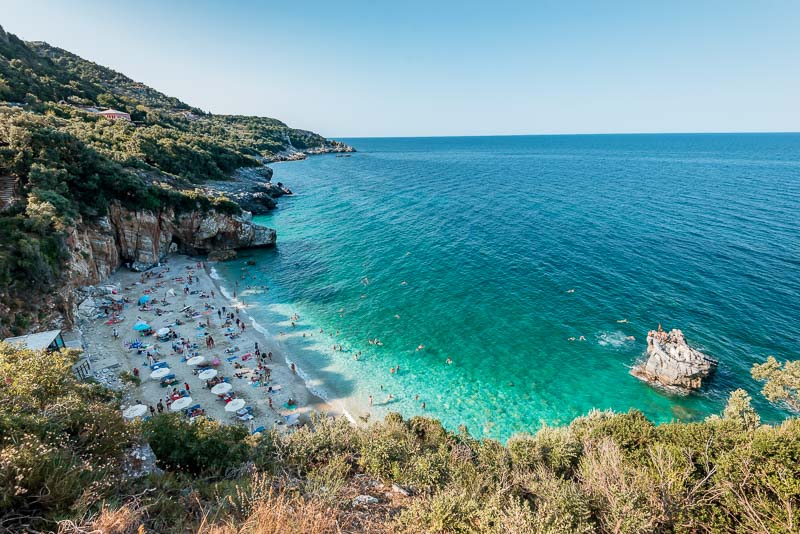
Probably the most popular beach on Pelion is nestled in an impressive landscape of wooded cliffs, which give way to a beautiful sand-and-pebble beach. Mylopotamos Beach is divided into two halves by a rocky outcrop.
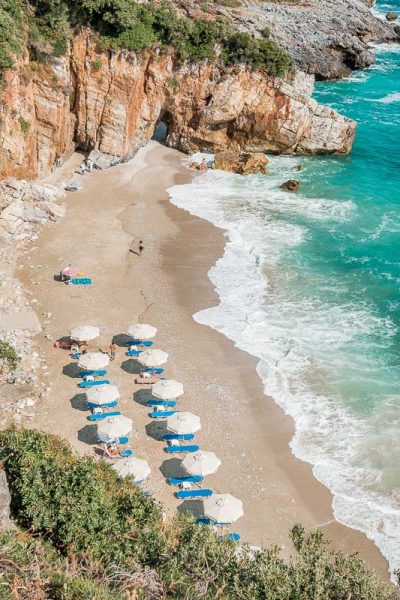
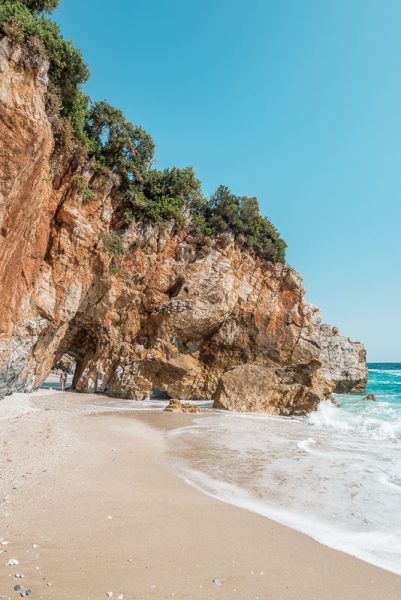
A natural rock arch connects both sections of the beach. There is a bar on site that offers pricey sun loungers. A visit to this photogenic beach is especially recommended in the low season, as it tends to get very crowded otherwise.
Paralia Potistika
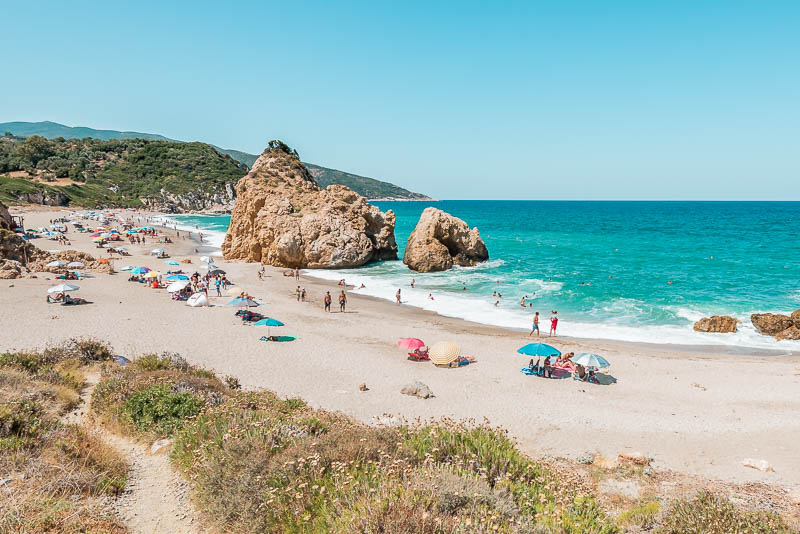
A wide sand-and-pebble beach with crystal clear water and huge boulders scattered along the shoreline. The Beach Bar Climax provides loungers and umbrellas on site, while large sections of the beach remain unspoiled. In the southern area, between the large stones, the beach slopes gently into the sea and is therefore well suited for families with children.
Paralia Paltsi
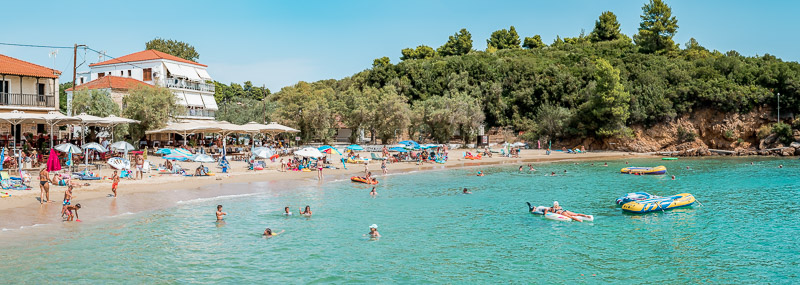
A natural pebble beach in the hamlet of the same name. The lush green forests and the imposing rocks on the beach make for a stunning backdrop. From the Archangel Church above the beach, you can enjoy a magnificent view of the coastline.

Paralia Agios Georgios
Fantastic golden sandy beach with crystal clear water in the east of Pelion. Views of the island of Skiathos. From Katigiorgis harbour there are even taxi boats to the Sporades paradise. A handful of taverns take care of the physical well-being. Especially popular with locals on weekends.
💡 Neochori is usually only a transit stop on the way south, but a short visit to this tranquil village is well worthwhile. Above the large Agios Dimitrios church is the beautiful village square with its plane trees, where you can linger at your leisure. In the evenings, the locals gather here, and in summer there is a regular folk festival atmosphere.
#7 Along the Stone Paths of Tsagarada
Tsagarada, also known as Tsangarada, is without a doubt one of the most beautiful villages on the Pelion Peninsula. Built on a slope in the middle of dense forests, you can look out over the deep blue Aegean Sea from an altitude of over 450 m. Magnificent old mansions with slate roofs blend picturesquely into the lush green landscape.
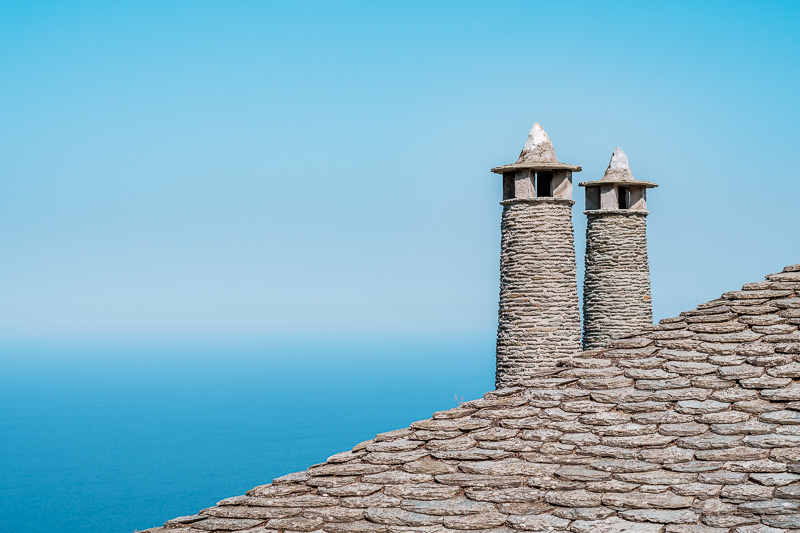
The four districts of Tsagarada – Agii Taxiarches, Agia Paraskevi, Agios Stefanos and Agia Kyriaki – stretch for more than 2 km, and each of them has a pretty village square shaded by at least one giant tree.
The most famous is the Platia of Agia Paraskevi with its over 1,000-year-old plane tree, a natural giant with a circumference of 14 m, which now has to be supported by concrete pillars. On the square of Agia Paraskevi with the church of the same name, you can also stop for a coffee.
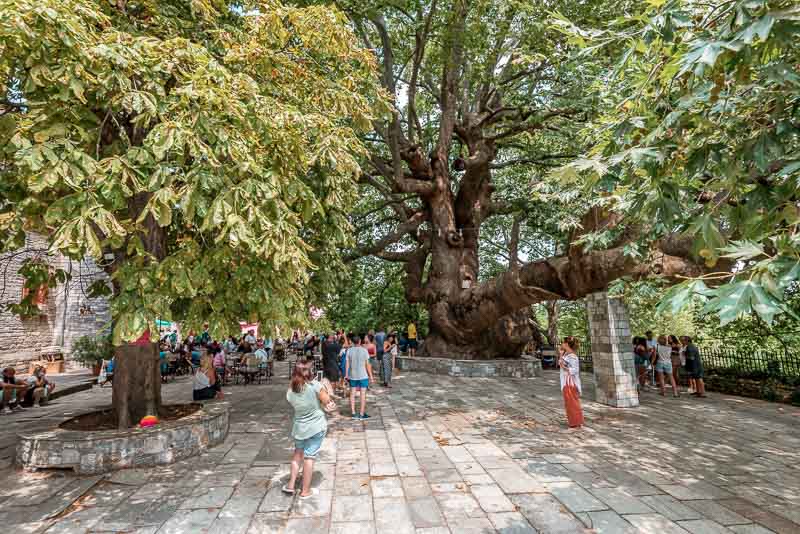
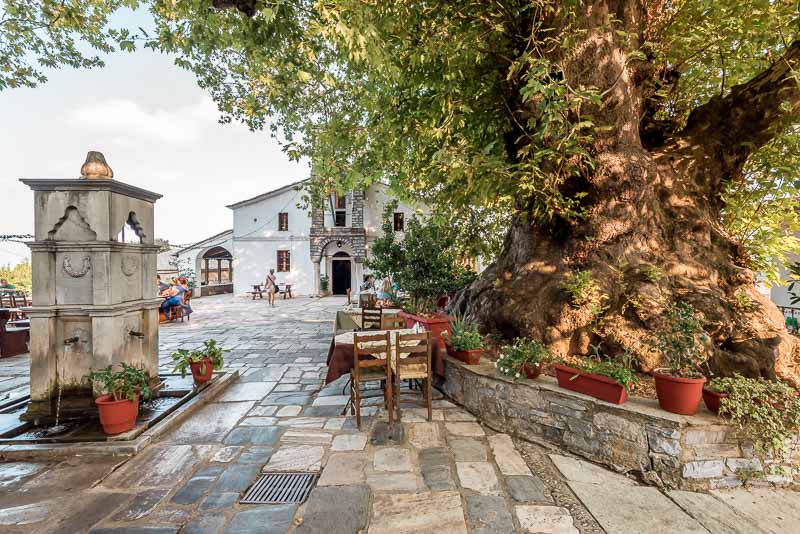
The charming area around Tsagarada is best explored on a scenic hike along the old stone paths. The tour starts on the village square of Agii Taxiarches in the very south of the village. On the cozy Platia, you can fuel up before hitting the path, and admire the marble spring fountain and the Taxiarchis Church with its wood-carved iconostasis.
We continue north along the old stone path through dense deciduous forest of oaks, beeches and chestnuts. The charming route leads past beautiful gardens with fruit trees and babbling streams. After a few kilometres we cross the road leading down towards Mylopotamos Beach, then pick up the hiking trail on the opposite side.
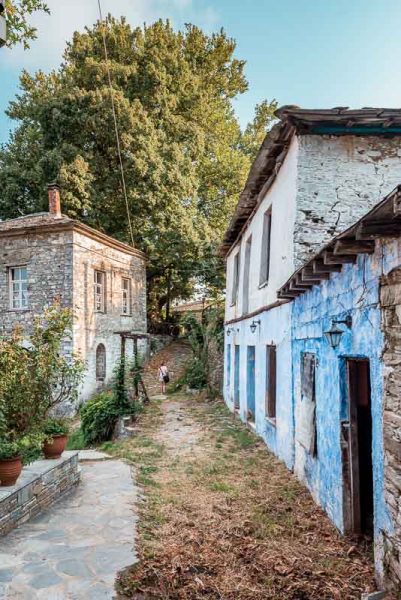
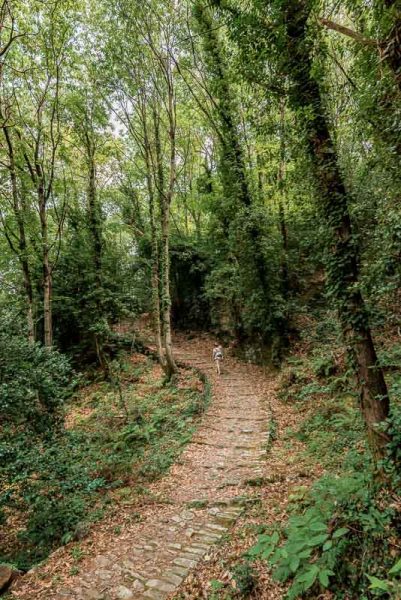
The path passes an Orthodox church standing in the middle of the forest and runs alongside the village school to the Hotel Lost Unicorn. From here it is only a few steps to the pretty Platia Agia Paraskevi with its huge plane tree.
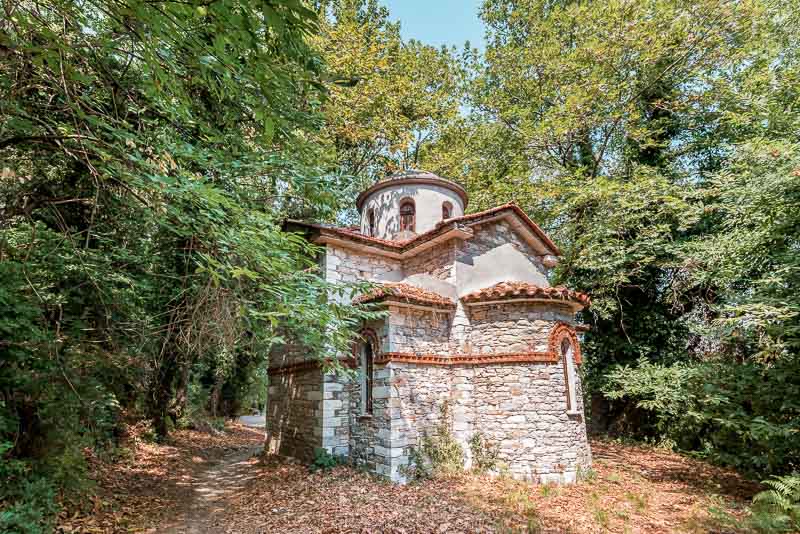
If you don’t feel like lingering here, follow the road up to the crossroads, where shops for daily needs, including supermarkets and a pharmacy, can be found. At Café Agna Di right on the main road we enjoyed a delicious snack and good coffee.
If you’re a confident walker, you can continue from Tsagarada all the way to the idyllic coastal hamlet of Damouchari and Papa Nero beach. You can find a handy hiking description here: AllTrails (Tsagarada to Damouchari)
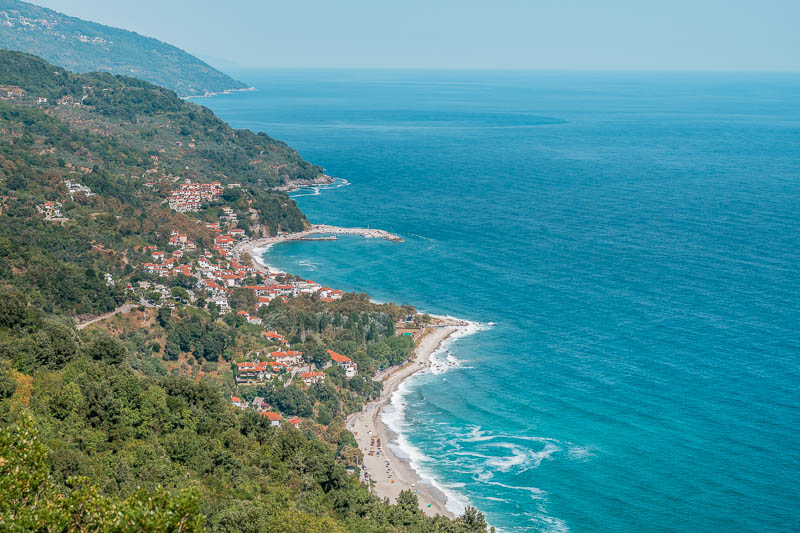
#8 Fishing village of Damouchari
The small fishing village of Damouchari looks like a film set — and in fact it became famous in 2008 through the filming of the movie Mamma Mia!. The romantic coastal village with its idyllic natural harbour and winding alleys is a real highlight on the Pelion Peninsula.
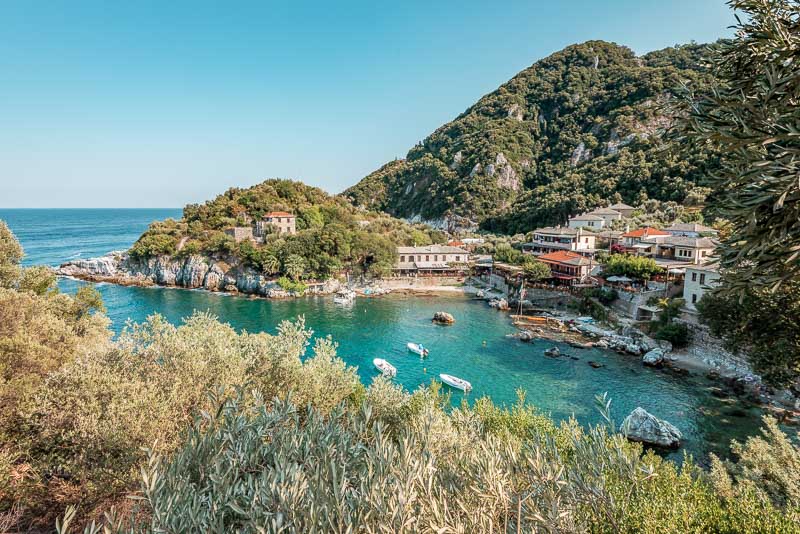
Above Damouchari you can park your vehicle and walk into the traffic-calmed town centre. The road leads you down to the photogenic harbour bay, where the fishermen’s colourful kaikis sail.
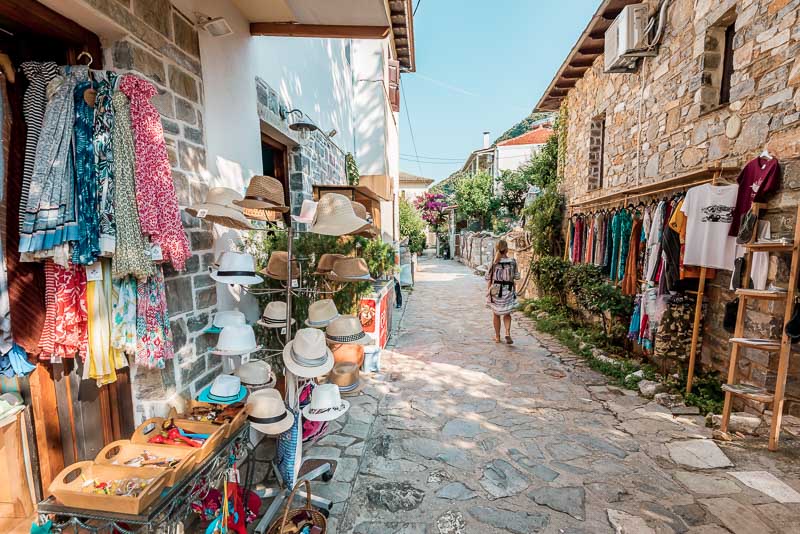
The coast is divided here by a rocky outcrop on which a Venetian castle once stood. Passing tavernas and souvenir shops, you will reach the back pebble beach of Damouchari. Fans of unique accommodation will love the Damma Mia Beach House (View on Booking.com*), a charming Pelion retreat.

💡 Apples from Pelion: Thanks to the rainy climate and mild summer temperatures, the region is one of the most important growing areas for cherries, plums, mirabelle plums and apples. The latter are especially popular throughout Greece for their sweet flavour. The plantations are mainly located in the northeast, around the mountain village of Zagora. On the slopes you’ll find countless apple trees — some of them wild — belonging to the “Agricultural Cooperative of Zagora”, which was founded in 1916.
#9 Road trip in the south of Pelion
Compared to the north, southern Pelion is quite sparsely populated. We start our tour in Argalasti, the largest village in the south of Pelion.
The small town is located on a fertile plateau and is surrounded by olive trees, vineyards and grain fields. Argalasti is well developed for tourism and serves as the main supply centre in the south.
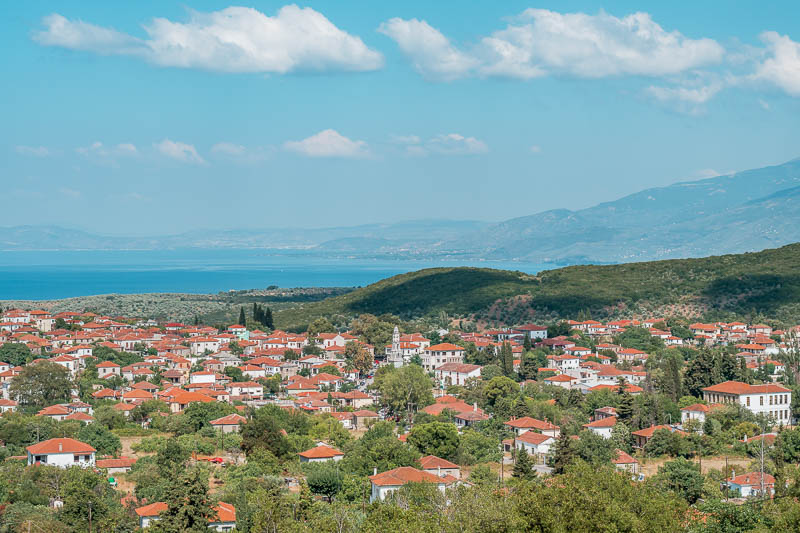
Here you will find a gas station as well as numerous shops for everyday needs. The central village square of Argalasti invites you to enjoy a coffee before exploring. Not far from there, you can also admire the famous bell tower of the Church of the Apostles, which was built from marble in 1914.
From Argalasti we drive down to the coast to Chorto. The compact village with a striking river mouth and a narrow strip of beach was once the port of the small town. Nowadays, it attracts large numbers of Greek tourists in summer.
It is similarly busy further south in Milina. In the high season, the long coastal road is usually completely congested. The beach is not particularly well suited for swimming, but there are still plenty of bathing opportunities ahead on our tour to the south.
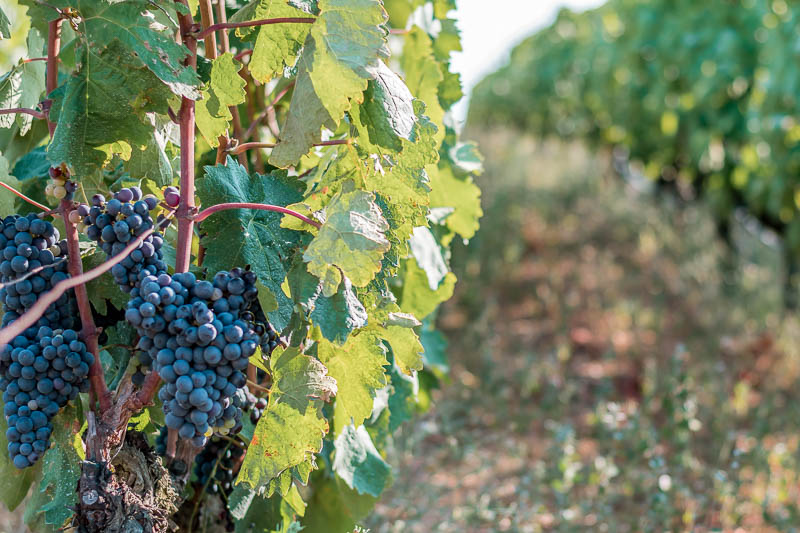
💡 Pelion Winery: Many Greeks already refer to South Pelion as the Tuscany of Greece. So it is no surprise that wine is cultivated on a large scale in many places. Since 1980, the Patistis family has been growing Greek grape varieties such as Xinomavro, Roditis and Limnio east of Argalasti. The certified organic wines can be purchased on site at the Patistis winery. A tasting is also possible by appointment.
From Tzasteni to Trikeri
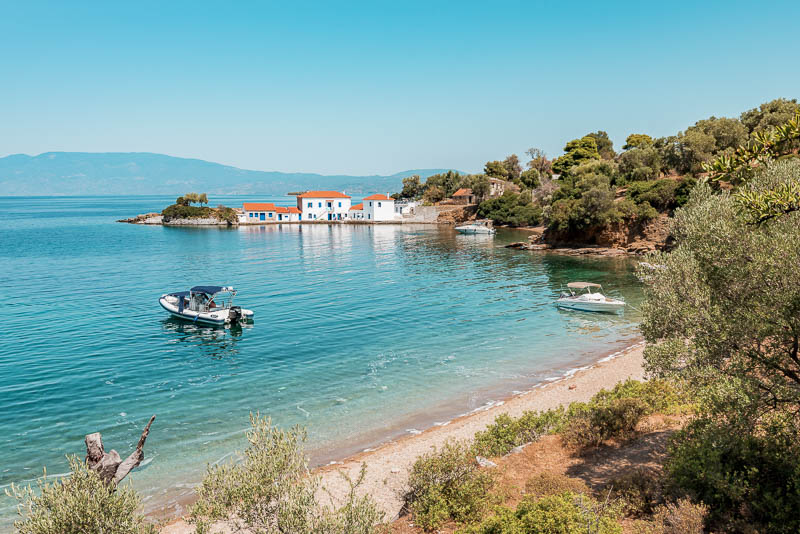
The coastal road winds its way from Milina through the hamlets of Koukoulaika and Marathias to Tzasteni Bay. You should have your camera ready here, because this paradisiacal spot is a real postcard moment. On the pebble beach of Tzasteni you can refresh yourself and relax in the shade of the trees.
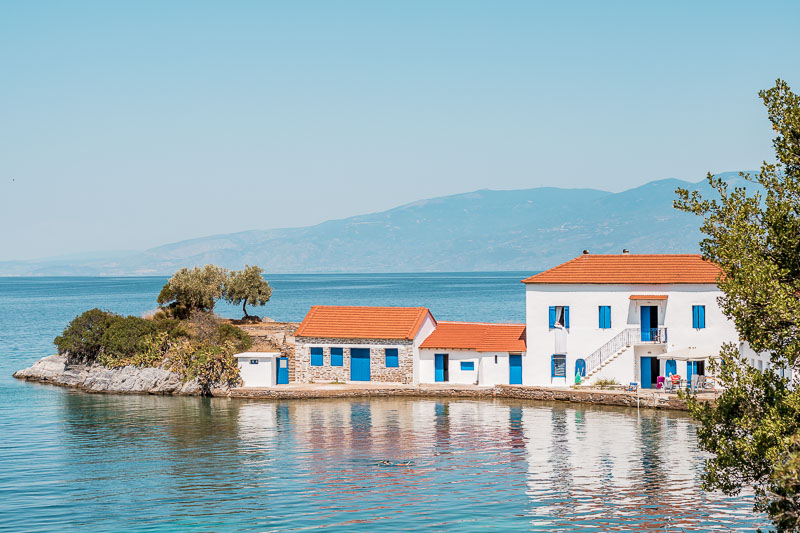
The pretty cluster of houses on the headland is privately owned and always adds to the wonderful photo opportunity. The road continues through quite remote territory, with beautiful bays appearing again and again where you can stop undisturbed.
After 45 minutes of driving from Argalasti, you reach the sleepy coastal hamlet of Kottes, where we stopped for lunch. Even in August it was peaceful here, and we very much enjoyed the “end of the world” atmosphere.
At the fish tavern Da Angelo on the northern edge of the village, you can enjoy delicious food in an extremely idyllic setting. The restaurant is not accessible by car, so it’s best to park at the Church of the Holy Apostles and take the footpath along the coast (about 8 minutes).
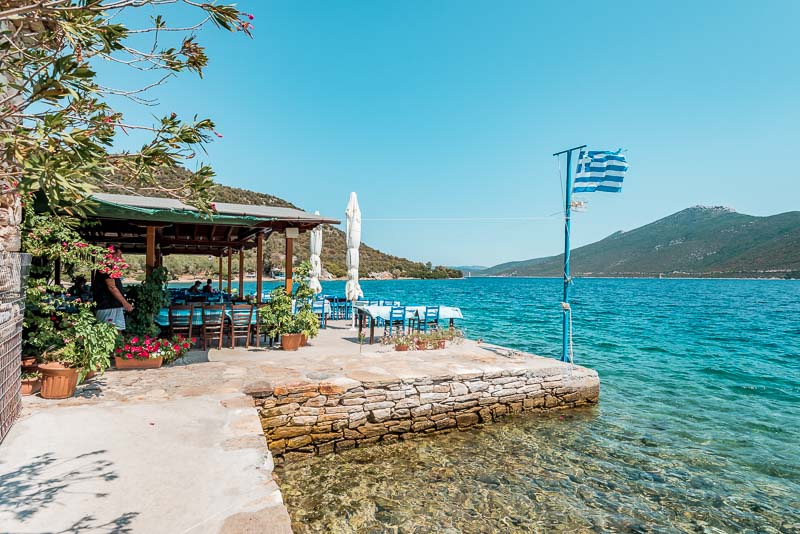
Before heading back, it’s worth taking a look at Trikeri. The mountain village rises like a pyramid above the coast and offers a 360-degree sea view. A stroll through the cobbled alleys will transport you back to times long gone.
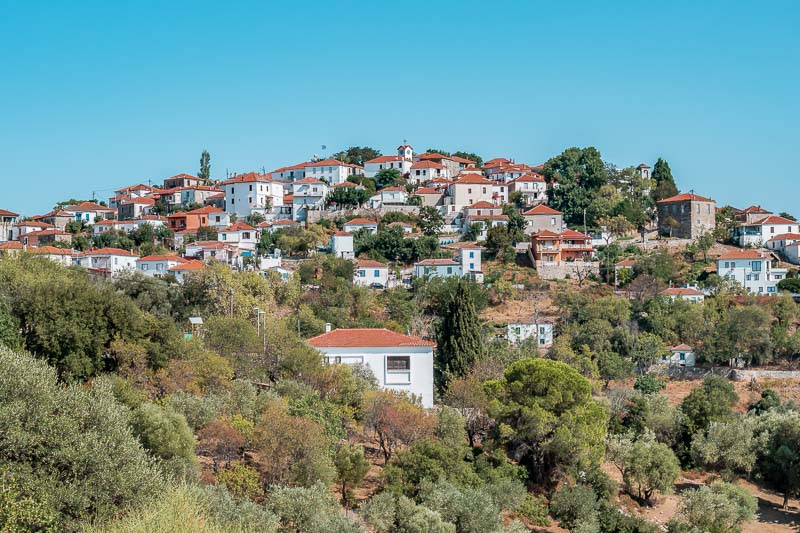
If there is still time, it is worth taking a detour to the southernmost coastal village of Agia Kyriaki. The small fishing hamlet with its historic shipyard invites you to enjoy a leisurely coffee far away from the hustle and bustle. Then we take the same path back along the west coast and turn off at Milina towards Lafkos.
#10 From Lafkos to Platanias
The picturesque village of Lafkos is located on a ridge at an altitude of 310 m above Milina and offers magnificent views of the Pagasitic Gulf.
The traffic-calmed town centre enchants with narrow cobbled streets, historic buildings, well-kept gardens and a huge platia where you can end the day.
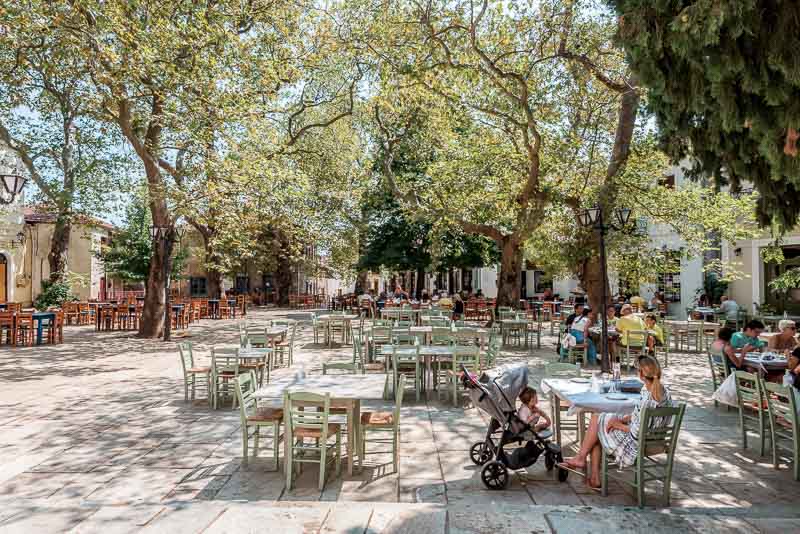
Several traditional taverns have settled here in the shade of the trees. If you want to immerse yourself in the delicious Pelion cuisine, this is the place for you. We had an excellent meal at Restaurant »Ki opou to pei«.
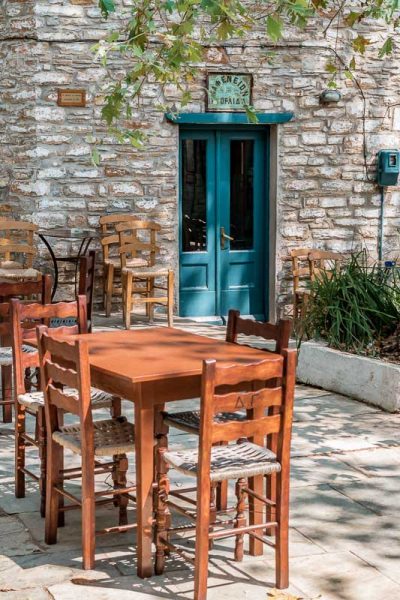
On a walk through Lafkos you will discover all kinds of photo opportunities, perhaps including the traditional kafenion Forlida, which has been in operation almost continuously since 1785, as well as the old Lafkos wood-fired bakery, where crispy olive bread (eliopsomo) has been baked since 1911.
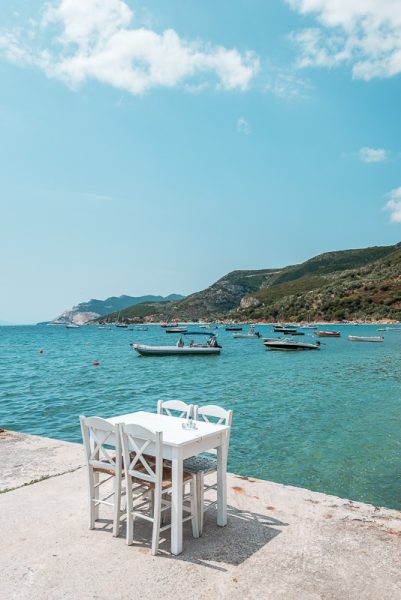
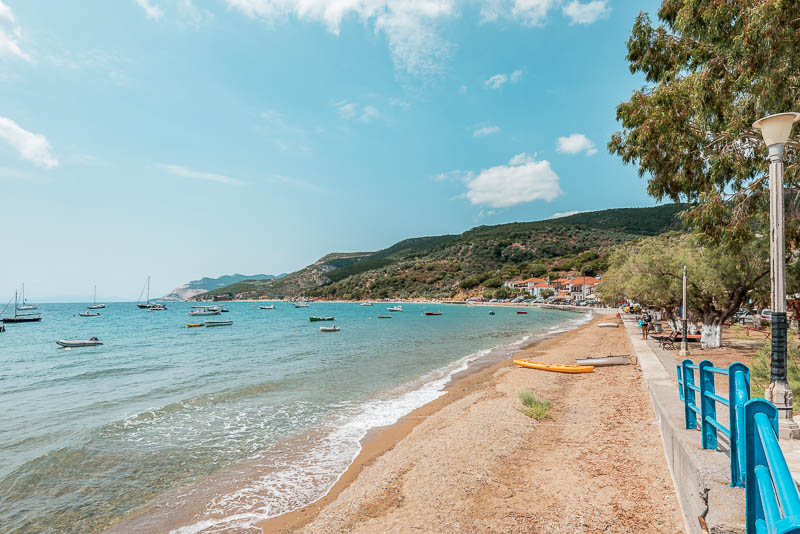
From Lafkos it is about 20 minutes to Platania or Platanias, one of the many coastal hamlets in the south. Platania is particularly popular for its two golden sandy beaches. Solid tavernas have settled along the waterfront. At the Mammas supermarket you will find local products such as honey, cheese and wine.
More Pelion travel tips
Accommodation in Pelion
You won’t find large hotel complexes and resorts on Pelion, but there are plenty of traditional holiday accommodations, from simple studios to luxurious villas.
→ On Booking.com* you will find an overview of all accommodations: Show hotels and guesthouses*
Don’t miss an overnight stay in an Archontiko – a historic guesthouse typical of the Pelion Peninsula. Below we have put together a personal selection of beautiful accommodations on the peninsula (links to Booking.com*):
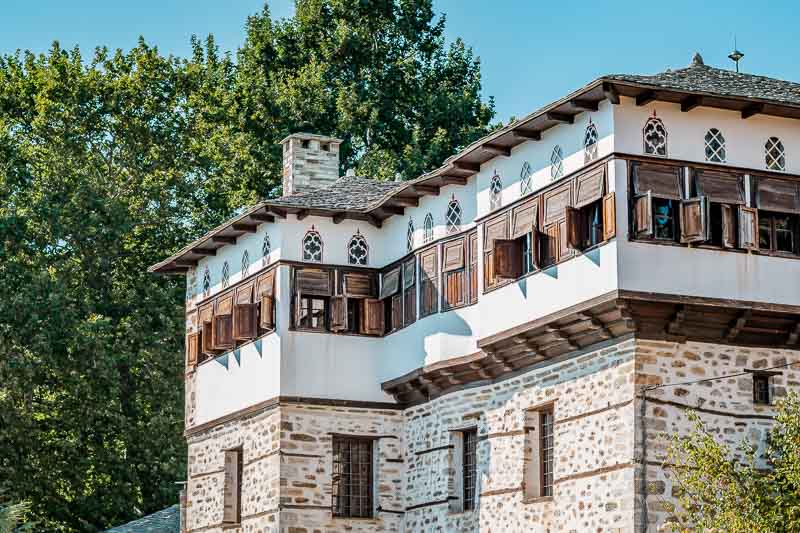
Cleopatra’s Miramare, Damouchari
A luxury inn opened in 2022 on the peninsula of Damouchari. Hosts Maria and Sotires rent out four extraordinary suites, each unique and timelessly designed. A great place to relax, with prices from €200 per night.
➲ To book Cleopatra’s Miramare*

BLUE GREY Cottage, Portaria
Traditional stone house (sleeps 4) in Portaria, a suburb of Makrinitsa. From the balcony and terrace there is a fantastic view of Volos and the Gulf. Quiet location, attentive host, and a well-equipped kitchen with dishwasher.
Adis Oneirou, Mouresi
A lovingly run guesthouse nestled in lush green nature. The beautiful garden with a view of the sea invites you to linger for hours. The suites have a fireplace for cool nights. Great value for money and a fantastic homemade breakfast by hostess Jula.
Volos Center Luxury Home
A modern and very well-equipped apartment not far from the waterfront of Volos, sleeping up to 6 people. Despite its central location, the property is situated in a quiet neighborhood.
➲ Book Volos Center Luxury Home*
Where we stayed
Tiny House Fleur de Tilia, Tsagarada
Katerina and Lemonis rent out a cozy stone house in the village of Tsagarada in the heart of Pelion. The property is set in a very quiet spot within the hosts’ idyllic orchard. During our two-week stay, we were regularly supplied with fresh fruit and vegetables.
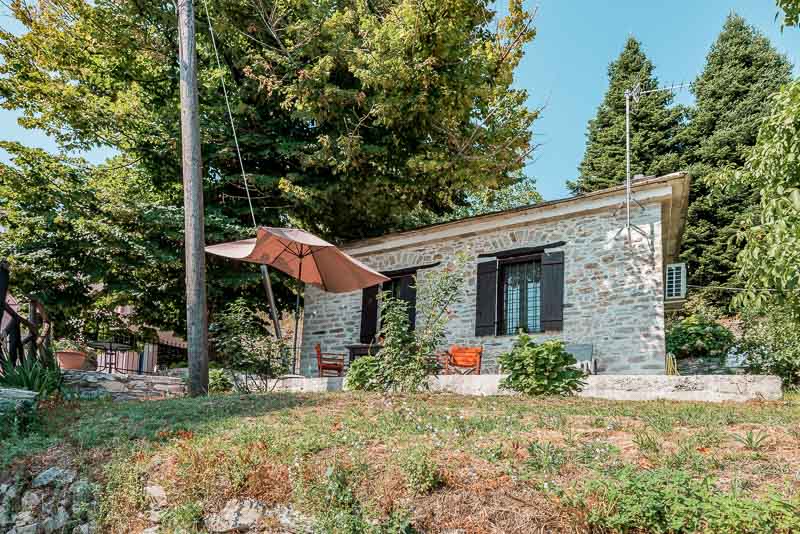
The compact house is well equipped and can accommodate two adults and two children (bunk bed). From the terrace you can enjoy a beautiful view of the sea. In the hot summer months, a natural pool fed directly from the mountain spring next door provides a refreshing dip.
We can warmly recommend a stay at Katerina and Lemonis for nature lovers and those seeking peace and quiet. The friendly couple has many tips for the region, and the location is ideal for exploring northern and eastern Pelion.
➲ To book Fleur de Tilia (Airbnb)
Pelion restaurants: Our recommendations
The Pelion cuisine is a real treat for the palate and will make your mouth water long after you’re back home. The traditional dishes are based on simple and healthy local ingredients from the region and aromatic wild herbs that thrive in the mountains.
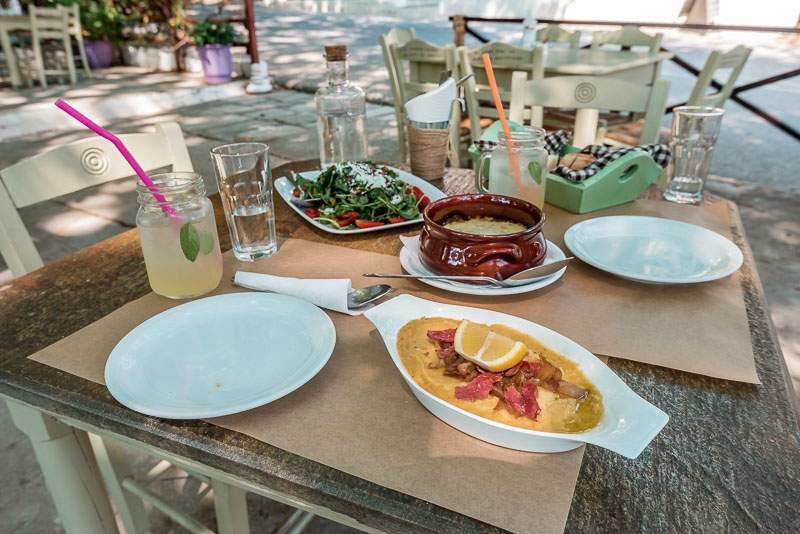
If you want to enjoy the typical Greek cuisine, you’ll get your money’s worth on Pelion. We ate incredibly well (and sometimes even quite cheaply!) on Pelion and would like to recommend a few of the tavernas and cafés that we visited:
- Vasilikos & Diosmos, Agios Lavrentios
- Sarande Beach Bar, Agii Saranta Beach
- Palia Plateia, Drakia
- Da Angelo, Kottes
- Ki opou to pei, Lafkos
- cardamo, Makrinitsa
- Taxydromeio Café, Mouresi
- Karaiskos Farm, Portaria
- Agna Di Café, Tsagarada
- Itamos, Tsagarada
Getting around the peninsula
Exploring Pelion requires your own means of transport. A hire car is, in our opinion, indispensable for exploring the peninsula and its beautiful beaches, even well off the tourist trail.
We recommend booking a vehicle in advance so that you are mobile from the moment you arrive at the airport and can avoid the costs of a complicated transfer. You can compare prices for cheap rental cars through our partner Discover Cars*:
➲ To the rental car booking from Volos*
Intercity buses connect the individual villages on the peninsula from Volos. However, many stops are only served three times a day from Volos, and the villages are usually not connected to each other by bus routes. You can find timetables at: KTEL Volou
How to get to Pelion
Arrival from Volos
Nea Anchialos International Airport (VOL) is located about 40 minutes south of Volos and is served directly by Condor once a week from Munich and Düsseldorf during the season. You can search for suitable flights and check prices on the Skyscanner* portal:
➲ To search for flights with Skyscanner*
Arrival from Thessaloniki
Alternatively, you can take a direct flight from Germany (or AT, CH) to Thessaloniki. More than 10 German airports offer direct connections to Thessaloniki Airport (SKG) several times a week. Here you can select your departure airport and check prices: Flights to Thessaloniki (Skyscanner*)
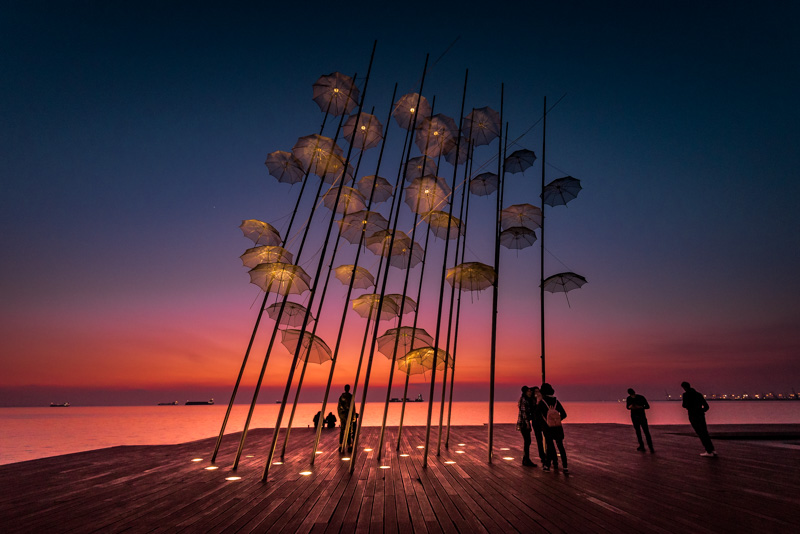
From Thessaloniki it is about a 2.5-hour drive to Volos. There are numerous car rental providers directly at the airport. The route passes by the Olympus Mountains, which also makes for a worthwhile stopover.
Arrival from Skiathos
If you want to combine islands with the mainland, we recommend a direct flight to the island of Skiathos (1–2x per week from Düsseldorf and Munich). The island is located east of the Pelion peninsula and is well connected to Volos by ferry (including Express Skiathos). You can find suitable connections here: Flights to Skiathos (Skyscanner)*
→ You can find more travel reports and insider tips on the Greek mainland on our overview page: Mainland Greece
*Support our blog Greece-Moments
In this post, you will find affiliate links marked with an asterisk (*). If you book or buy something through one of these links, we receive a small commission. The price stays the same for you. This way, you help us continue to provide high-quality content for free. Did you enjoy this post and want to say thank you? Then just buy us a Greek coffee ☕️ To the coffee fund
Bookmark this post on Pinterest!