

Northern Epirus, including the Zagori region, is a hidden gem on the Greek mainland. Few other regions in Greece boast such natural beauty. Evergreen mountains, ancient stone bridges, crystal-clear rivers, and mysterious mountain villages enchant visitors from the very first moment.
“With its mighty mountain ranges, Zagori resembles Switzerland more than the Greece found in travel brochures.”
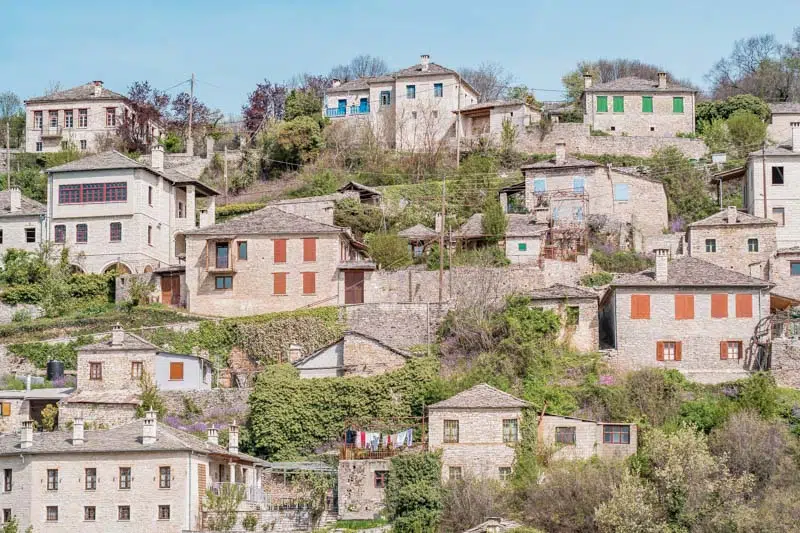
Above all, the so-called Zagorochoria villages make this region so attractive to independent travelers seeking the authentic Greece. Grab a rental car and set off on a journey of discovery into a completely unknown Greece. Here are our Epirus highlights from the Zagori region:
- #1 Vikos-Aoos National Park
- #2 Zagoria Villages: Zagorochoria
- #3 Monodendri on the edge of the Vikos Gorge
- #4 Megalo Papingo and Mikro Papingo
- #5 Epirus Mountain Villages Tsepelovo and Dilofo
- #6 Hike into the Vikos Gorge
- #7 Viewpoints of the Gorge
- #8 Ioannina: The Capital of Epirus
- #9 Sights in Ioannina
- More Epirus travel tips & info
#1 Vikos-Aoos National Park
A road trip through this unspoiled region is an unforgettable experience, and you should plan at least a week for it. Zagori is located in the Vikos-Aoos National Park, one of the ten national parks on the Greek mainland.
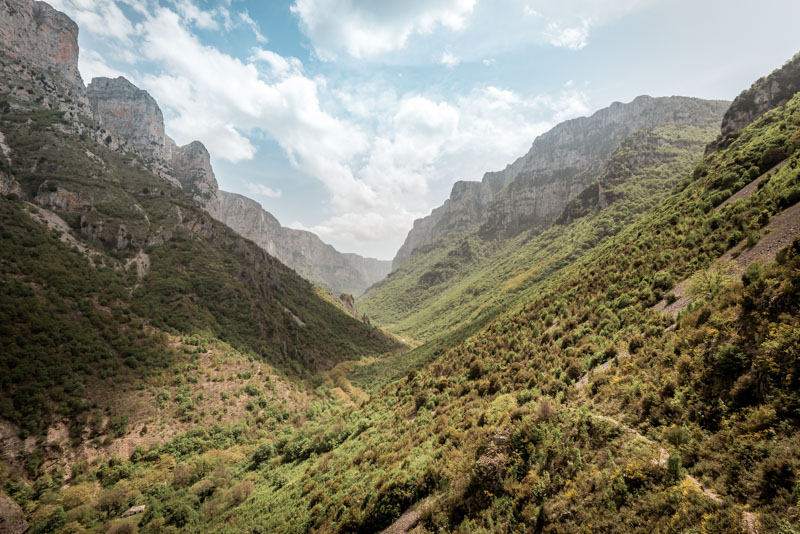
If you’re looking for peace and relaxation, Epirus is the perfect destination. You can explore the pristine nature on numerous hiking trails. In many places, you’ll find yourself alone, surrounded by countless plant species and the scent of mountain herbs.
Every now and then, a turtle crosses your path. A small population of bears and wolves is also said to exist here in the deep forests. The streams and rivers of the Zagori region are considered the cleanest and clearest waters in Europe.

The mountainous region around Vikos-Aoos National Park and the adjacent Pindus Mountains is an ideal destination in Greece, especially for hikers and nature lovers.
#2 Zagoria Villages: Zagorochoria
In northwestern Greece, hidden among the towering peaks of the Pindus Mountains, lies a treasure that has remained largely undiscovered. The 46 picturesque Zagoria villages, with their traditional stone houses and slate roofs, take you on a journey back in time.
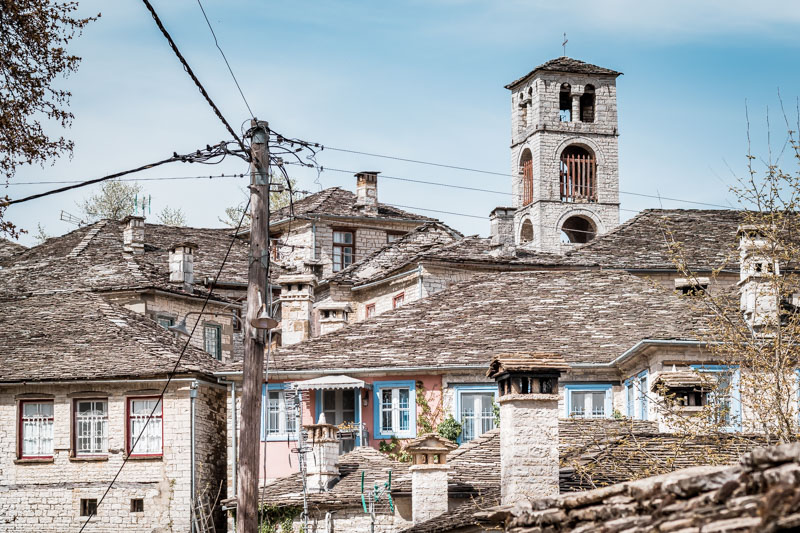
Here in Zagorochoria, a name derived from the Slavic meaning “villages behind the mountains,” a completely different Greece awaits you. The unique architecture of the Zagoria villages and the charming locals make this region of Epirus a true destination of longing.
A round trip through the Zagori region
Zagori is best explored by car. You should plan at least two to three days to get to know the villages with their cobblestone streets, gray slate roofs, and colorful shutters. Most of the stone houses are listed as historic monuments and have been meticulously restored.
💡 Epirus Book Recommendation: The travel guide Northern and Central Greece from Bradt Guides includes a detailed chapter on the Zagori region with many useful travel tips. Order here: View on Amazon*
Staying overnight in one of the stone houses is a special highlight. Many old Zagori houses have been converted into traditional guesthouses. A stay here is an unforgettable experience. We spent four nights at the beautiful Gioraldi Mountain Resort in the village of Ano Pedina.

The Zagori villages have so far been spared from mass tourism. They enchant visitors above all with their unspoiled charm. There are no large hotel complexes, supermarkets, banks, or shopping districts. The region’s sustainable tourism creates an exclusivity that remains affordable for everyone.
But the region also has plenty to offer outside the villages. The massive stone arch bridges are hard to miss. These architectural masterpieces, also known as Gefiri (Γεφύρι), are considered landmarks of the Zagori region.
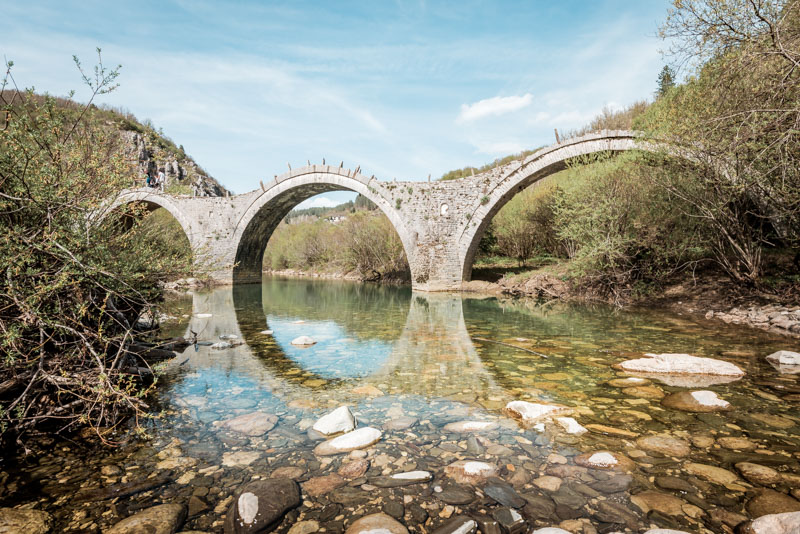
You’ll find many of the old stone bridges between the villages of Dilofo and Kipi. The three-arched “Plakidas” bridge (also known as “Kalogeriko”) is rightly considered one of the most beautiful in Zagori. The Voidomatis River flows under the bridge until late spring.
✓ Full coverage & unlimited mileage included
✓ Free cancellation until 24h before pickup
✓ Best price guarantee via Discover Cars
#3 Monodendri on the edge of the Vikos Gorge
The Zagoria village of Monodendri lies at an altitude of 1,060 meters right on the Vikos Gorge. Although a few day-trippers from Ioannina find their way here, the influx of visitors has remained limited so far.
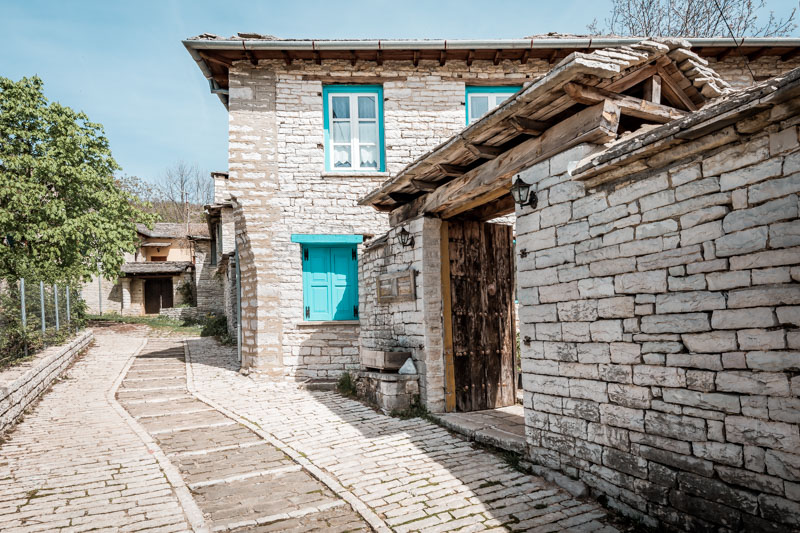
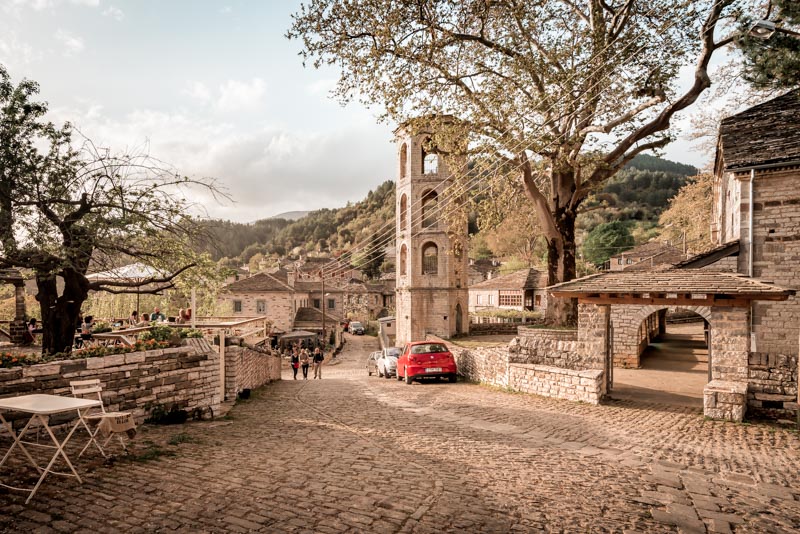
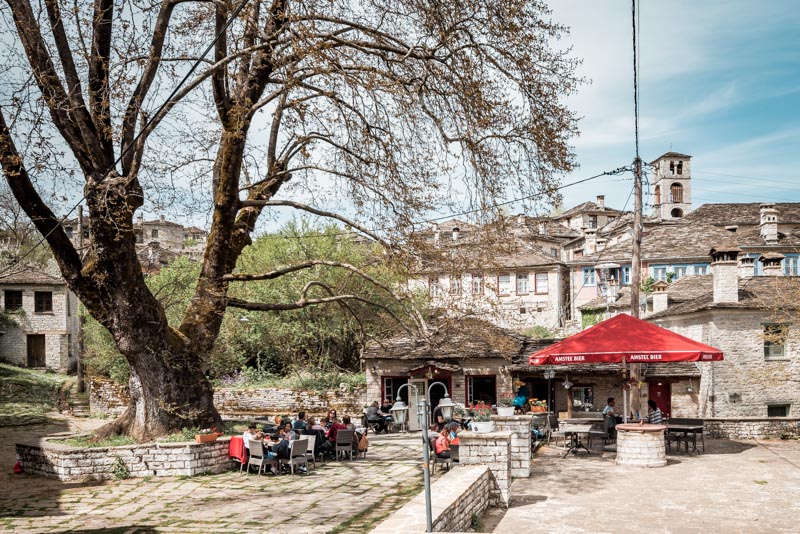
The village has a beautiful village square with a large plane tree, as well as charming kafenia and traditional taverns. It’s worth taking a stroll through the photogenic alleys.
From Monodendri, a detour to the Oxya viewpoint and the Agia Paraskevi Monastery is also recommended. The latter is spectacularly situated on a rocky outcrop in the Vikos Gorge.

The more adventurous can even hike along a narrow path behind the monastery, right on the edge of the Vikos Gorge. At the end of this adventurous trail lies a small hermit’s cell directly above the gorge. Enter at your own risk!
#4 Megalo Papingo and Mikro Papingo
Another popular destination is the Zagori village of Megalo Papingo in the western part of the region. The stone houses here cluster closely at the foot of the Pindos massif, including Mount Tymfi. On a clear day, the scenery is breathtaking!
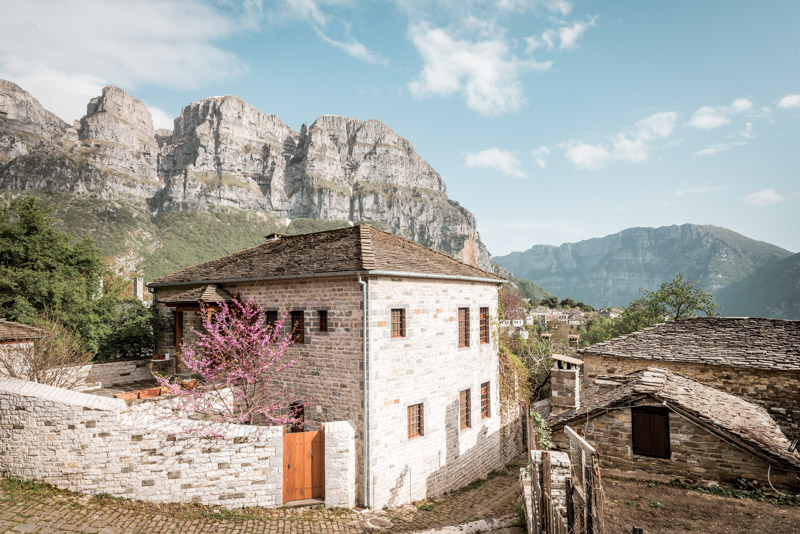
The peaks are usually snow-capped until spring. In Megalo Papingo, there are several restaurants and cafés, as well as small shops selling handicrafts. The village is a popular destination for a day trip from Ioannina or Igoumenitsa.
Papingo Rock Pools and Lake Tymfi
From Papingo, the journey continues to the neighboring Zagoria village of Mikro Papingo. Halfway there, the Rock Pools are well worth a visit. The Rogova River winds its way through a rocky gorge here. Over millions of years, small stone pools have formed, offering a welcome cool-down, especially in summer.

Mikro Papingo is also the starting point for a day hike (6–7 hours) to Drakolimni Lake, located at an altitude of 2,000 meters. This picturesque mountain lake on Mount Tymfi is said to hold mystical significance. Legend has it that a dragon once made its home here.
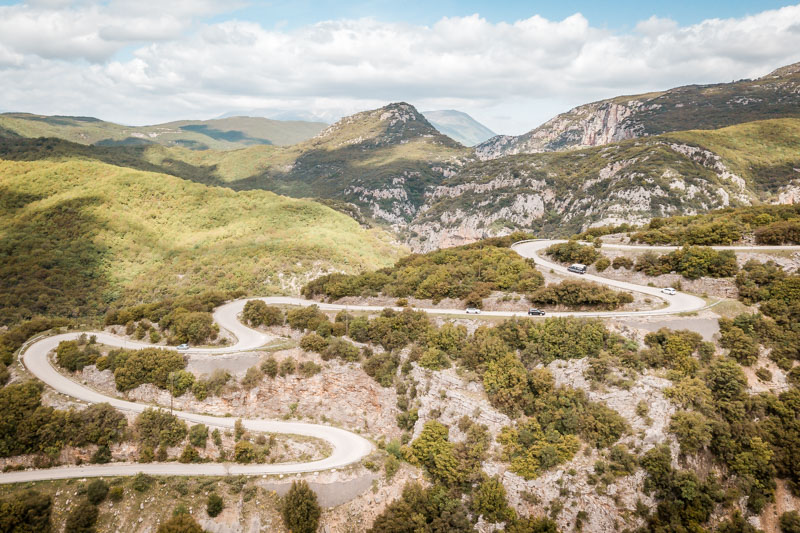
Halfway to the lake, there is a mountain hut (refuge) that is open in the summer. For hiking enthusiasts, this is one of the most beautiful excursions in the Zagori region.
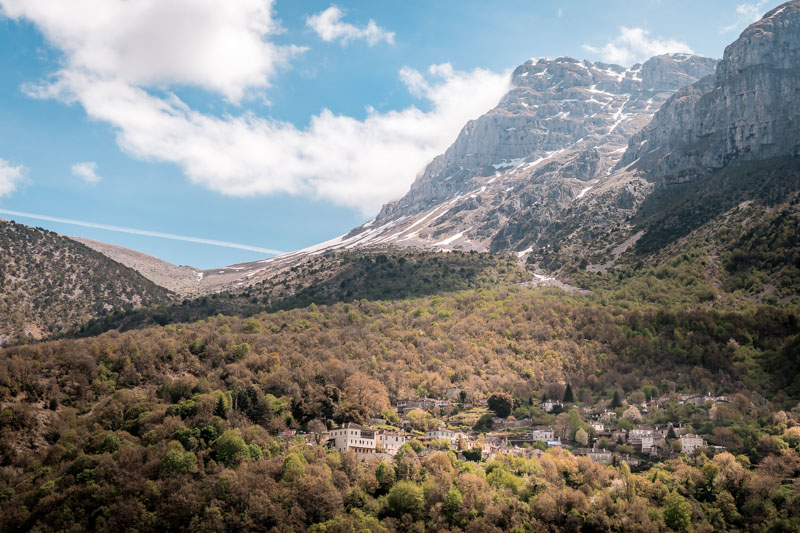
On the way to Aristi, the neighboring village of Papingo, it’s worth making a quick stop at the Papingo Bridge. Here, the Voidomatis River winds its way along with its brilliant blue water.
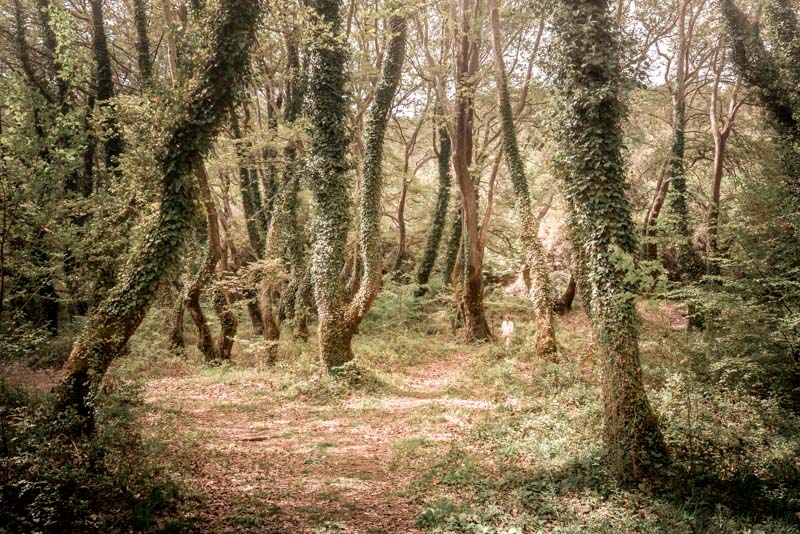
The Zagoria village of Aristi is a popular starting point for rafting tours and a real highlight in the Epirus region. There is also an enchanted forest that is well worth a visit.
#5 Epirus Mountain Villages Tsepelovo and Dilofo
Tsepelovo, the largest village in Zagoria, is also worth a visit. The village is the administrative center of the mountain region and charms visitors with its picturesque alleys and a cozy central square. Here, locals gather for coffee, and children play under the large plane tree.
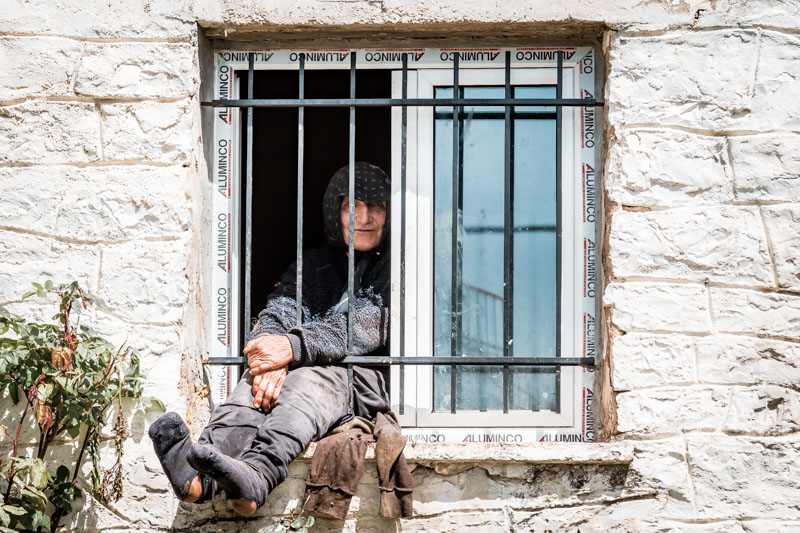
A delightful village idyll best enjoyed on a stroll through the narrow streets. Tsepelovo is located right in the heart of the Vikos–Aoos National Park. From here, you can embark on several hikes into the Vikos Gorge.
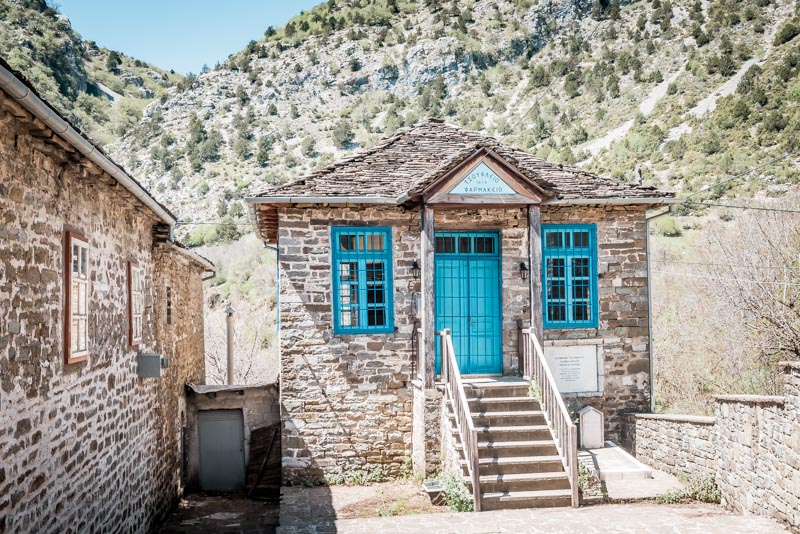
Just behind the village square is also the old pharmacy house. With its bright blue shutters, what is arguably the prettiest retro pharmacy in Greece is impossible to miss.
Idyllic Zagoria Village of Dilofo
Things are a bit quieter in the Zagoria village of Dilofo. The village is small but no less beautiful than the others. Here, too, a large plane tree lines the village square with its accompanying tavern. Most of the buildings and the old stone alleys are still in their original condition and are best discovered on a short walk through the village.
#6 Hike into the Vikos Gorge
A natural phenomenon of superlatives! According to the Guinness Book of World Records, the Vikos Gorge is the deepest gorge in the world, reaching up to 1,000 meters—at least in terms of the ratio of height to width. The untouched beauty of the national park is unique. You should set aside at least one to two days to explore the Vikos Gorge.
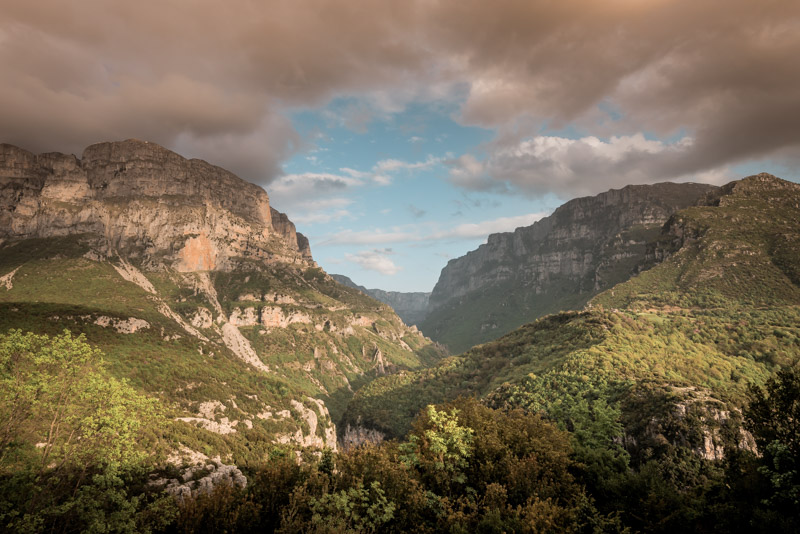
You can cross the gorge on foot via a six-hour hike, the Vikos Trail. The 12-kilometer hiking trail runs from Monodendri along the Voidomatis River and ends in the village of Vikos.
If you don’t have that much time, we recommend the shorter route. From the mountain village of Vikos, a path leads down to the river and the Panagia Chapel. Sturdy footwear is helpful for the 1.5-kilometer hike, as the trail is full of loose rocks.
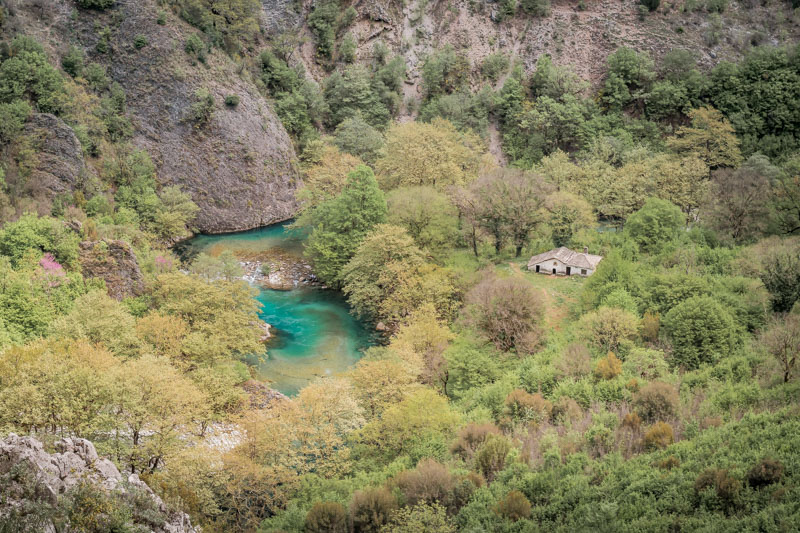
Even from a distance, you can see the magnificent colors of the Voidomatis. The river is one of the cleanest in Europe and originates here from several springs in the Vikos Gorge.
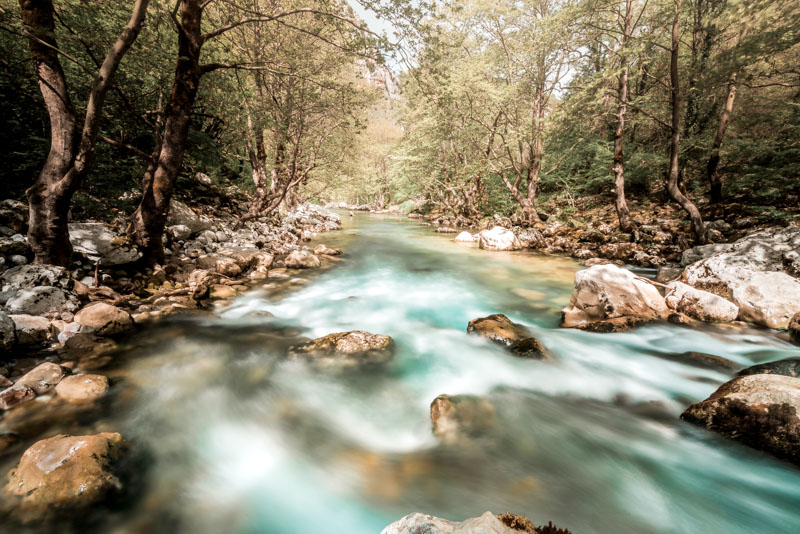
We immediately filled our bottles with the fresh spring water for the return trip. The entire hike, including a visit to the springs and the chapel, takes about two to three hours. In the spring, the entire gorge blooms in the most beautiful colors. The scent of wild herbs accompanies you along the entire trail.

#7 Viewpoints of the Gorge
You can also enjoy a magnificent panorama of the Vikos Gorge from two viewpoints. The Oxya Viewpoint is located about eight kilometers from the Zagori village of Monodendri. Since tourist buses also stop here, the spot is more crowded.
From a parking bay, it’s just a few meters’ walk to the viewpoint. Not all sections of the short hike to Vikos Gorge are fenced off. The cliff drops straight down, so extra caution is required.
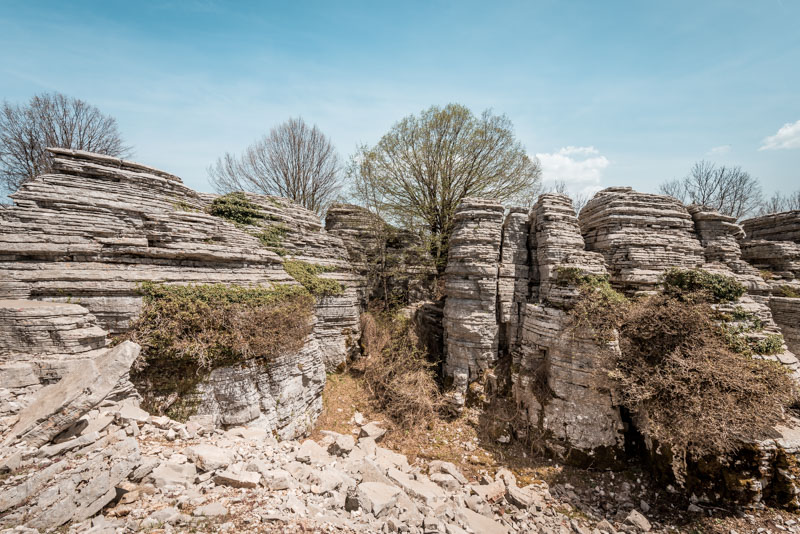
Halfway to the Oxya Viewpoint, you’ll also pass a bizarre stone forest. The whimsical gray rocks look like pancakes in the rugged landscape. They were once used as building material for the typical stone houses of Zagori.
Beloi Viewpoint and Vradeto Steps
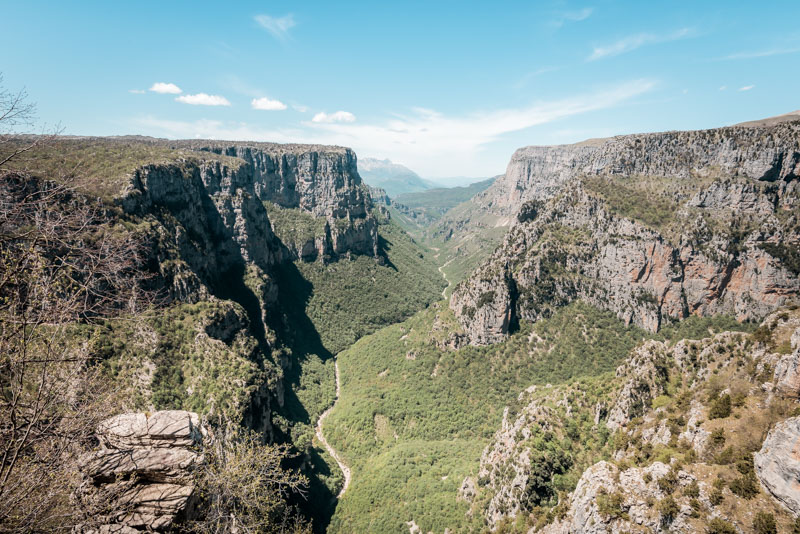
Another magnificent vantage point overlooking the gorge is located near the village of Vradeto. Since it takes about 20 minutes to hike to the “Beloi” viewpoint, this spot isn’t as overrun with tourists. The view of the gorge from here is spectacular, and we found the frontal view of the canyon more beautiful than from the Oxya Viewpoint.
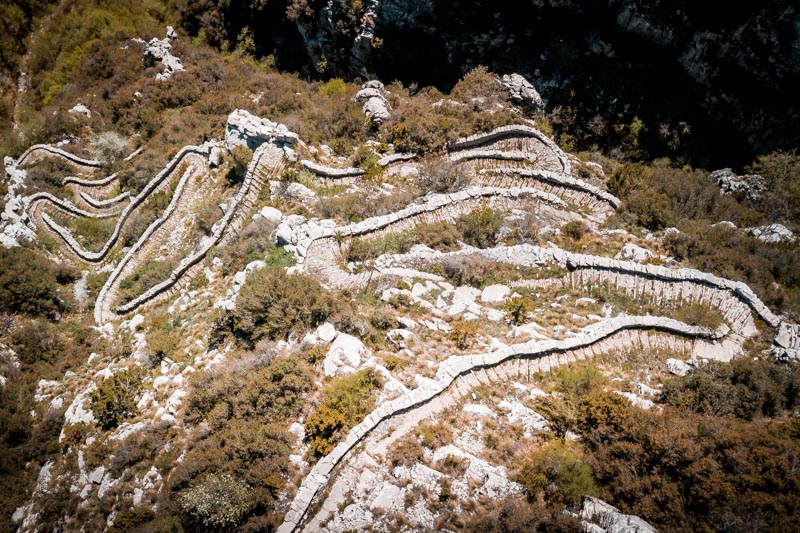
From the village of Vradeto, it’s also worth taking a detour to the “Vradeto Steps” (Skala). An old stone staircase was carved into the mountain here in several steep sections. Until the 1970s, the over 1,000 steps were the only connecting path between the villages of Kapesovo and Vradeto.
#8 Ioannina: The Capital of Epirus
The capital of Epirus is usually also the starting point for a visit to the Zagoria villages. Ioannina is worth seeing, and you should set aside at least one day to explore the city. The city is surrounded by Lake Pamvotida.
Over 300 years of Ottoman rule have left a lasting mark on the cityscape. The Turkish-Albanian ruler Ali Pasha, “the Lion of Ioannina,” gained particular fame; his tomb can be visited next to the Fetih Mosque.
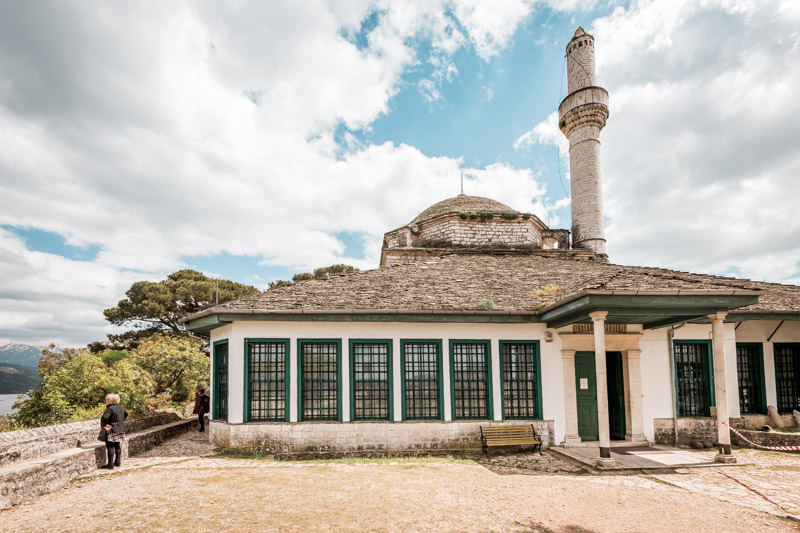
Until 1912, this part of Epirus and the city of Ioannina were firmly under the control of the Ottoman occupiers. The historic old town of Ioannina is still surrounded by a mighty fortress wall today.
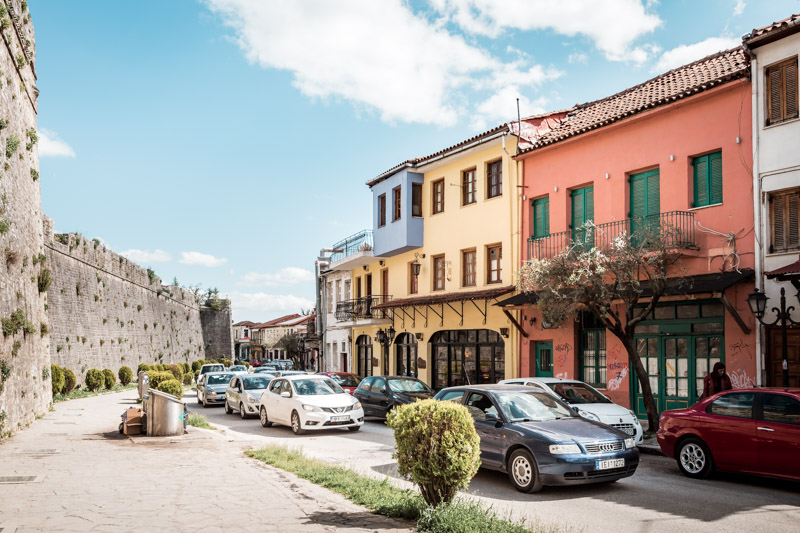
A short stroll through the narrow streets gives you a sense of the typical architecture. Many of the buildings date back to the Ottoman occupation.
At the northern end of the old town stands the Aslan Pasha Mosque, the city’s most significant building. Today, the mosque houses a folklore museum.
#9 Sights in Ioannina
Another landmark of the city is Lake Pamvotida. Since the lake has no natural water exchange, the greenish-gray water is heavily polluted with algae. Swimming in Lake Ioannina is currently no longer possible.
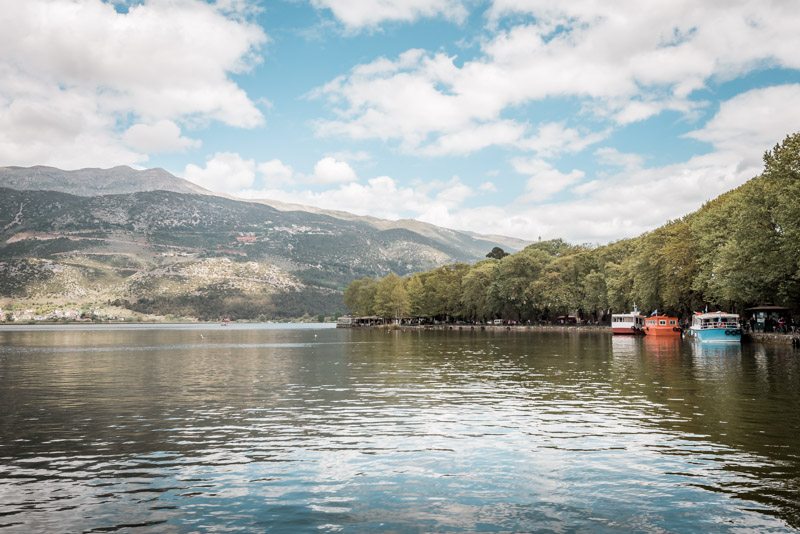
However, a boat trip to Nissi Island is well worth it. Here you’ll find several Byzantine churches and monasteries that are open to visitors. Excursion boats typically depart every half hour for about 3 euros to the monastery island.
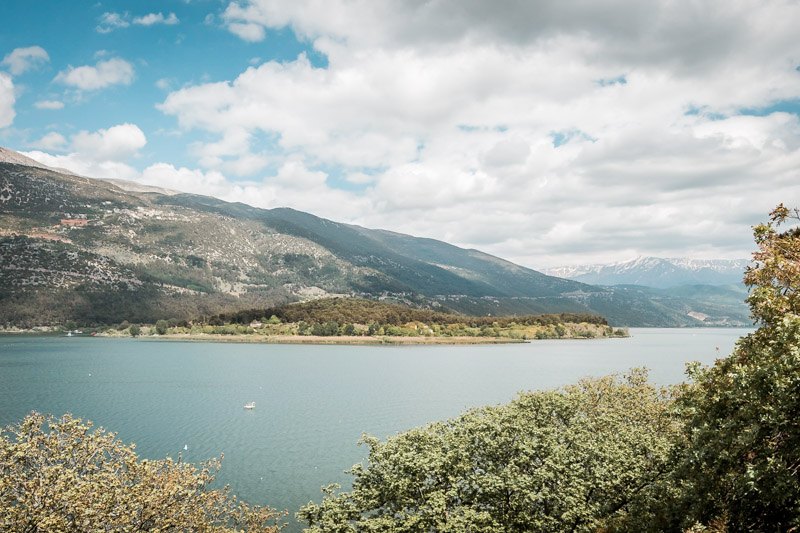
Outside of Ioannina, a trip to the Perama Cave is highly recommended. The 1.5-million-year-old cave is located just about four kilometers north of the city. Inside, the temperature remains a constant 17 degrees.
The stalactite formations are spectacular and can be viewed along a route about 1.5 kilometers long. There is a guide (Greek/English) who leads visitors through the cave in 45 minutes.
Ioannina is more than just a day trip
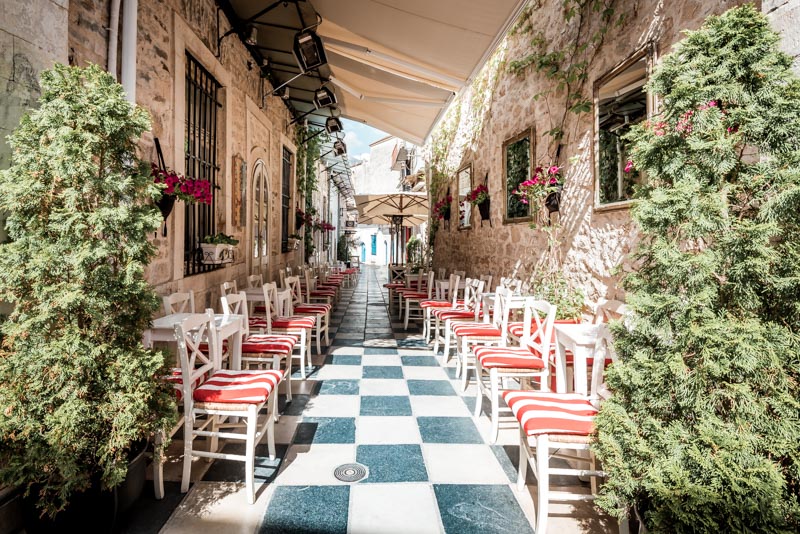
Numerous cafés and restaurants have set up shop along the waterfront promenade in Ioannina. Despite having more than 100,000 residents, the city felt very cozy to us on the weekend.

There are countless small shops and boutiques. The art of silversmithing also originated in Ioannina. Handcrafted jewelry is still sold here today. The city is very popular among young Greeks and is considered an insider’s tip among Greece connoisseurs.
The high concentration of bars and clubs also reveals that Ioannina is a lively student town. We particularly loved the alley “Stoa Liampei” with its trendy bars. Here, night turns into day.
More Epirus travel tips & info
Guided tours in Epirus Zagori
Here we’ve selected popular tours in Zagori for you. Rafting tours on the Voidamits River and organized hikes through the Vikos Gorge are very popular. You can book tours and excursions from local operators on-site via GetYourGuide. Click on the GetYourGuide* links for details such as availability and tour prices:
➲ To the Voidomatis Rafting Tour*

Restaurant recommendation in Epirus Zagori
The mountainous region of Epirus is a gourmet’s paradise. Just as in Western Macedonia, we enjoyed excellent dining here in Zagori. Fresh mushrooms, wild asparagus, spinach pie, dandelion, and wild herb salad grace the plate.
Restaurant Lithos “στου Τάκη”, Dilofo
We had a particularly delicious meal in Dilofo at the tavern “Lithos stou Taki.” It is a typical Zagori restaurant. The traditional dishes are fresh and homemade and are served by very friendly waitstaff.
The chickpeas with eggplant and the beetroot salad were especially delightful. From the cozy terrace, you have a fantastic view of the picturesque Zagoria village.

Accommodations in Epirus Zagori
If you’re planning a trip to the Zagori region, it’s worth staying in one of the traditional Zagoria villages. Places like Monodendri, Papingo, Tsepelovo, or Ano Pedina are excellent starting points for exploring Zagori.
The picturesque stone cottages blend perfectly into the landscape. In addition to high-quality guesthouses, there is usually one tavern per village to cater to your culinary needs. For us personally, the Zagoria villages are among the most authentic places in Greece.
The Zagori region offers numerous quaint guesthouses for a relaxing vacation. On Booking.com*, you can find additional accommodations in Epirus Zagori, ranging from hotels to apartments.
Here’s where we stayed in Zagori
Gioraldi Mountain Resort, Ano Pedina
We spent four nights at the Gioraldi Mountain Resort in the charming Zagoria village of Ano Pedina. The accommodation is simply fantastic. The owners, Margarita and Kostas, have painstakingly and lovingly restored a cluster of stone houses high up in the village.
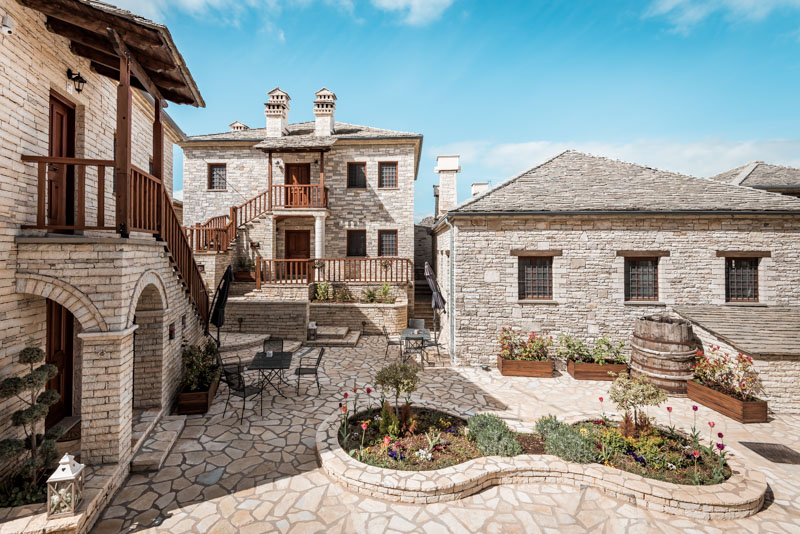
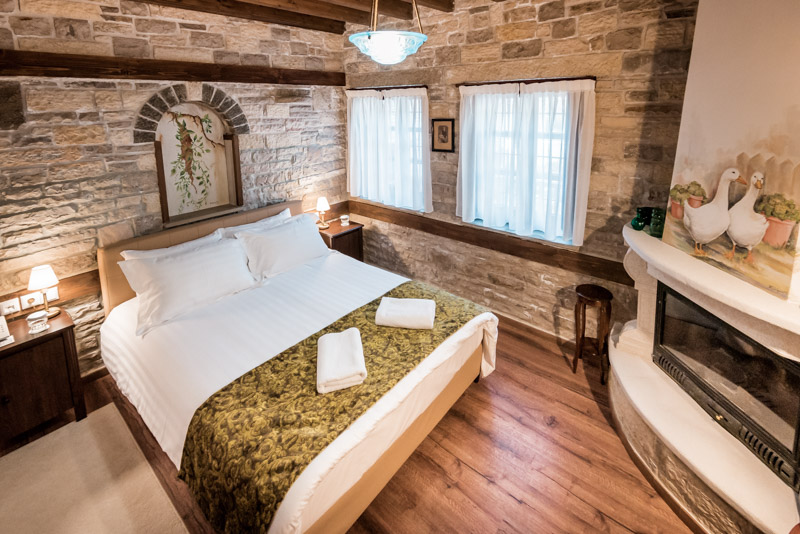
The rooms are very tastefully decorated and even feature their own fireplace for cold winter nights in Epirus. You can sit comfortably in the planted courtyard and enjoy the silence of this peaceful place.
Breakfast is freshly prepared every morning and leaves nothing to be desired. Homemade cakes and jam, freshly baked bread, omelets, and sweet pastries—after that, you’ll be energized for the whole day. We grew very fond of the entire team during our stay and felt like part of a big family. You can find more information about the accommodation on Booking.com*:
➲ Book the Gioraldi Mountain Resort*
Traveling to the Zagori Region
You can reach the Epirus region and the Zagoria villages from Germany via a direct flight to Thessaloniki (SKG) or Preveza (PVK). The picturesque Zagori region is easy to explore by rental car from Thessaloniki or Preveza. You can find suitable flight connections via the Skyscanner* portal:
➲ Find affordable flights to Thessaloniki
➲ Find affordable flights to Preveza

It takes about three hours to drive from Thessaloniki to Ioannina via the highway. The drive from Preveza to Ioannina takes just 1.5 hours. Minor tolls may apply along the route. You can find a suitable rental car for your road trip via the Discover Cars* portal:
Another option is to travel in your own car or camper and take the ferry from Italy to Igoumenitsa. The ferry port is located on the northwest coast of Greece and is only about an hour’s drive from Ioannina.
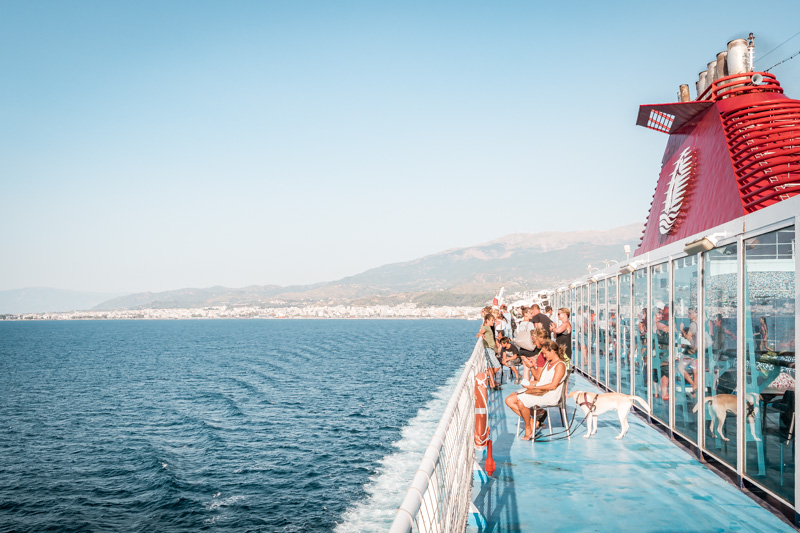
Ferry prices vary depending on the route. Traveling to Greece via Italy is especially worthwhile if you’re staying in Greece for several weeks.
→ Find more travel tips for the Epirus region here: Epirus Travel Destinations
*Support our blog Greece-Moments
This post contains affiliate links marked with an asterisk (*). If you book or purchase something through one of these links, we receive a small commission. The price remains the same for you. This helps us continue to provide high-quality content for free. Did you enjoy this post and want to say thank you? Then simply buy us the next Greek coffee ☕️ Go to the coffee fund
Save this post on Pinterest too!