

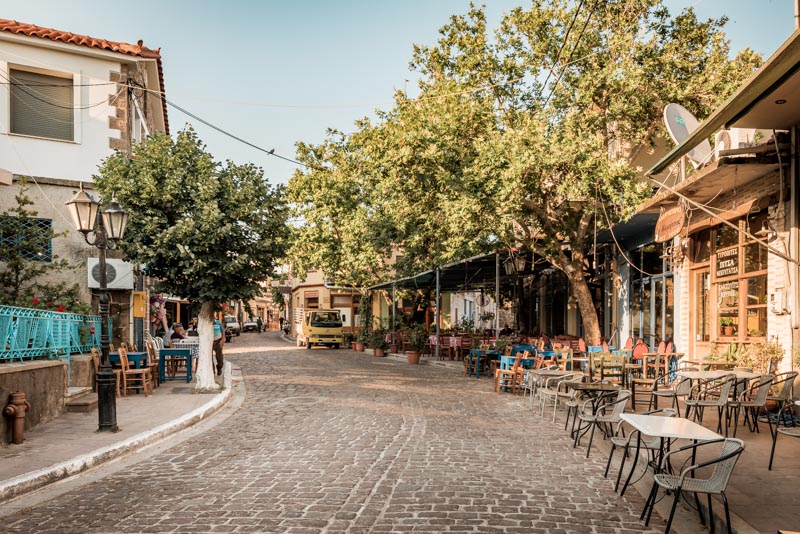
Lesbos, Greece’s third-largest island, has managed to retain a great deal of its authenticity compared to many other Greek islands. At the very least, when you sit under a shady plane tree in one of the traditional villages and sip Greek coffee with the locals, you’ll feel the magic of Lesbos.
“The people of Lesbos are an extremely endearing group with strong personalities. Despite many challenges in the past, they have never given up hope.”

Lesvos is soothing to the soul in its own unique way, a place to unwind and recharge. Here you can escape the daily grind, experience authentic Greece, and make new friends. Ultimately, an island’s character is always shaped by its people.
They showed us their beautiful island with great passion and pride, helping to ensure we had an unforgettable stay and will definitely be back.

We’ll share everything we discovered on Lesvos (also Lesbos*) with you in our 10 highlights of the island. Experience a dream vacation in Greece on the island of Lesbos!
- #1 Mytilini and Surroundings
- #2 Medieval Towns in the North
- #3 Side trip to Skala Sikamineas
- #4 Things to See Around Kalloni
- #5 The Petrified Forest on Lesbos
- #6 Bali Vibes in Skala Eresou
- #7 Hot Springs on Lesvos
- #8 For an Ouzo in Plomari
- #9 Visiting the mountain village of Agiassos
- #10 Explore Lesbos with the locals
- More Lesbos travel tips & info
*Note: To ensure the article is easily found online, we use both spellings, “Lesvos” and “Lesbos,” in the following text. Both terms are common in international usage. However, the correct spelling is and remains “Lesvos.”
#1 Mytilini and Surroundings
The lively island capital is the economic and cultural center of Lesvos. Mytilini, with its 30,000 residents, has a charm all its own and enchants especially those who stay longer than just an afternoon.
The residents of Mytilini and the surrounding villages (including Moria) have had to endure a great deal in recent years, as they have regularly been in the public spotlight due to the refugee crisis.
The situation has since calmed down. Nevertheless, people continue to arrive on the island of Lesbos from time to time. There is still no European solution, neither for Lesvos nor for Greece. Learn more about the topic here: Refugees in Greece
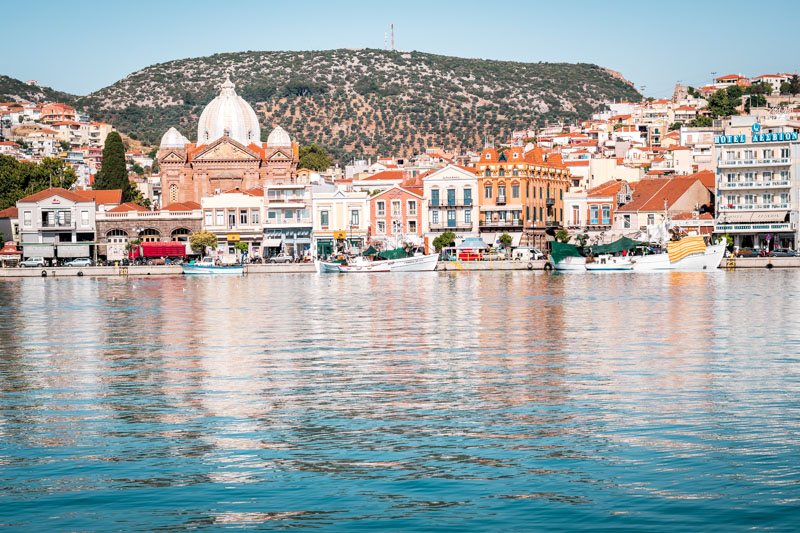
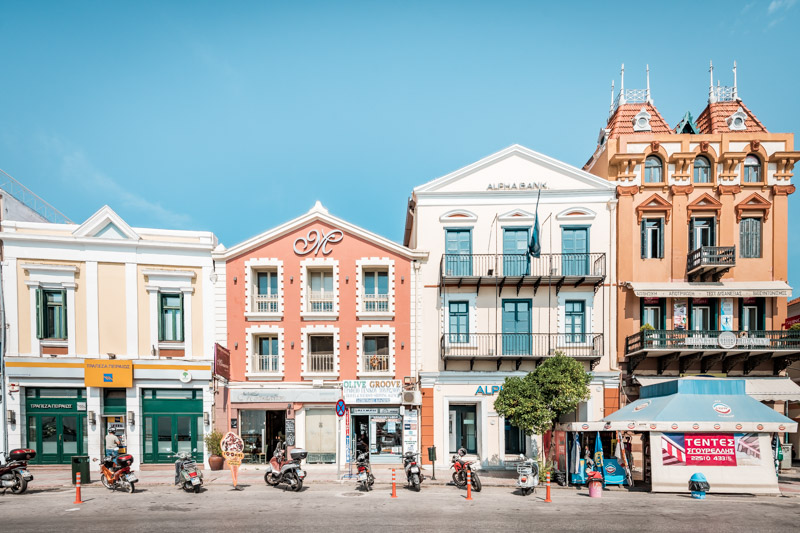
Upon arrival by ferry, the city with its pastel-colored houses immediately strikes a friendly impression. Magnificent villas and mansions are complemented by modern architecture.
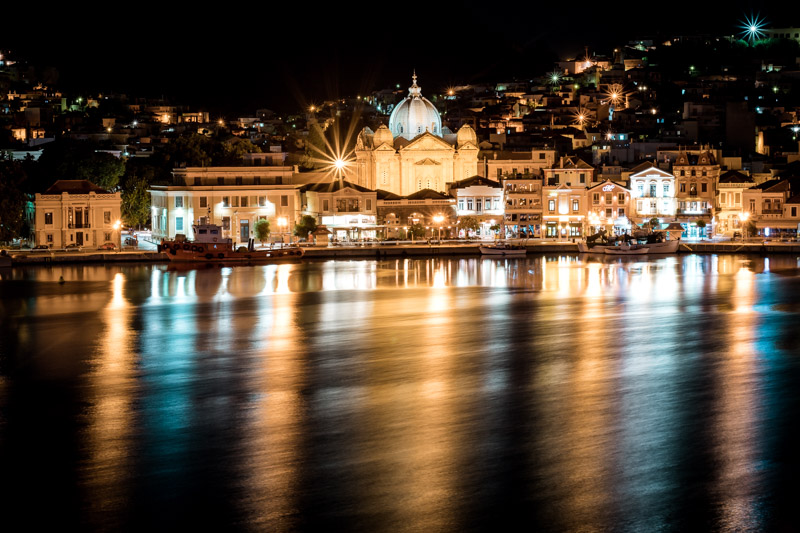
Take the time to explore the lively city on foot. Along the waterfront promenade, you’ll enjoy a stunning panorama, with the magnificent Church of Agios Therapon always in the background. Especially in the evening, when the whole city is lit up, the atmosphere is magical, and the pier offers a fantastic photo opportunity of Mytilini.
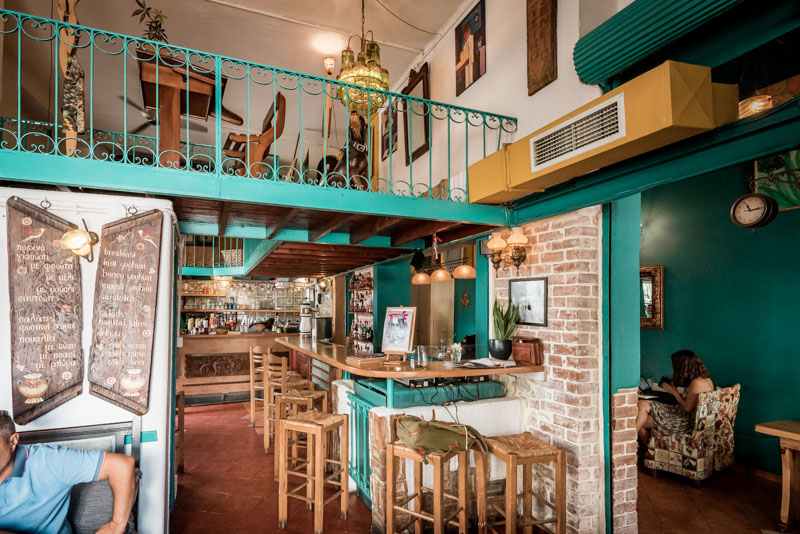
In the city’s bar district, you can have breakfast at one of the cozy cafés, such as the Mousiko Kafeneio, before heading into the hustle and bustle of Ermou Street.
In the alleys of Mytilini
The shopping street transforms into a marketplace in the morning; it’s loud, hectic, and bustling. A variety of smells waft in from all directions. Fishermen tout their catch, and fruit, vegetables, leather goods, and delicacies are sold. An authentic atmosphere of a small Greek town that you should experience.
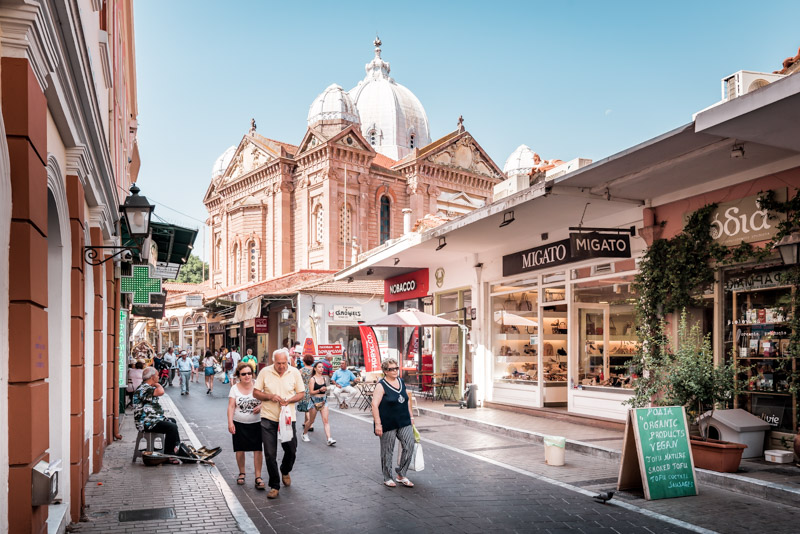
At the far end of Ermou Street, you’ll find yourself in the former Turkish quarter. Remnants of the past include an old hamam and the Yeni Cami mosque. Perched on the rocky promontory of the peninsula above the city stands a mighty fortress.
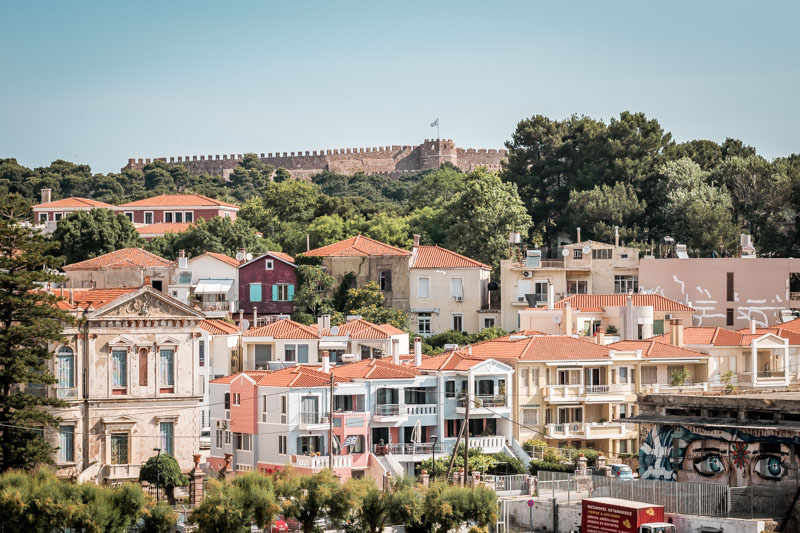
The Kastro of Mytilene dates back to the Byzantine era and served primarily as a defensive structure. Today, only ruins remain of the castle complex, but the view from the fortress walls of the city and the sea alone makes a visit worthwhile.
- Kastro opening hours: Daily 8:00 AM – 3:00 PM, closed Mondays | Admission: 2 euros
Swimming coves south of Mytilini
There aren’t any particularly charming beaches right in the capital. That’s why a detour south is well worth it. Agios Ermogenis Beach is located in the far southwest and is picturesquely nestled in a turquoise-blue bay. The fine sandy beach slopes gently into the water, making it ideal for children.
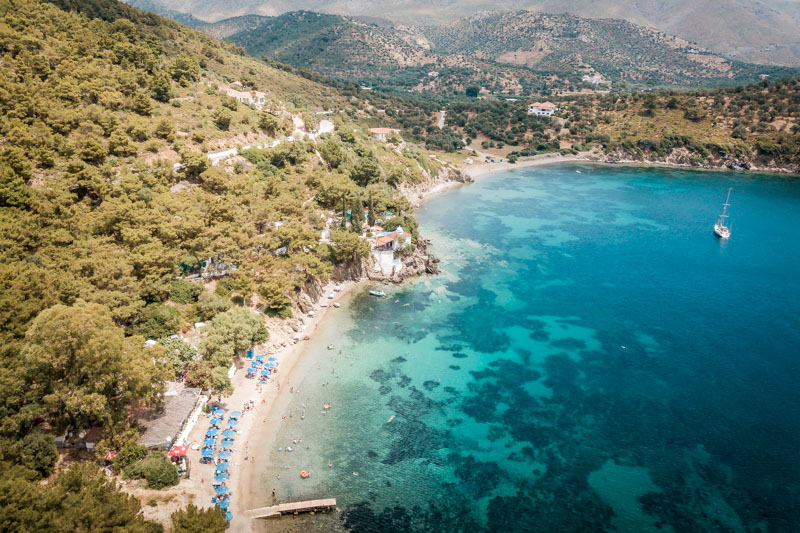
Perched above the bay is a pretty white chapel that gives the beach its name. There’s a tavern on site that offers cool drinks and snacks, as well as umbrellas and beach chairs. In the height of summer and on weekends, Agios Ermogenis Beach is very popular with locals.
💡 Lesbos Book Tip: The Greek Islands travel guide from Lonely Planet contains all the essential information for a vacation on the island and offers numerous tips for exploring on your own. Order here: View on Amazon*
The Roman Aqueduct near Moria
This impressive structure stands about seven kilometers north of Mytilini, near the small village of Moria. The Roman aqueduct is 170 meters long and spans an entire valley. It is still quite well-preserved and consists of three levels.
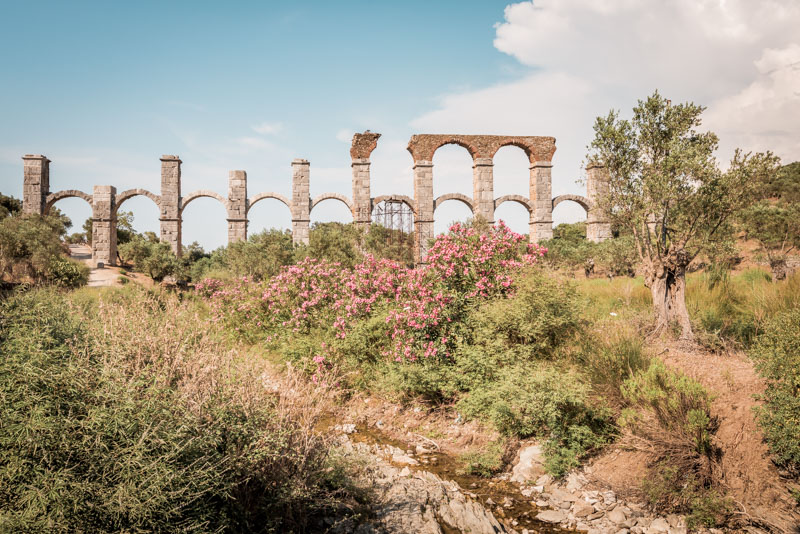
In the early centuries B.C., Mytilini was supplied with water from the island’s mountain villages via this aqueduct. The island’s refugee camp is currently located near the aqueduct at Moria.
#2 Medieval Towns in the North
Molyvos (also known as Mithymna) is the island’s picture-perfect village and, quite rightly, Lesbos’s main tourist attraction. The medieval town sits picturesquely perched on a hill overlooking the sea. At the summit above stands the imposing Kastro of Molyvos.
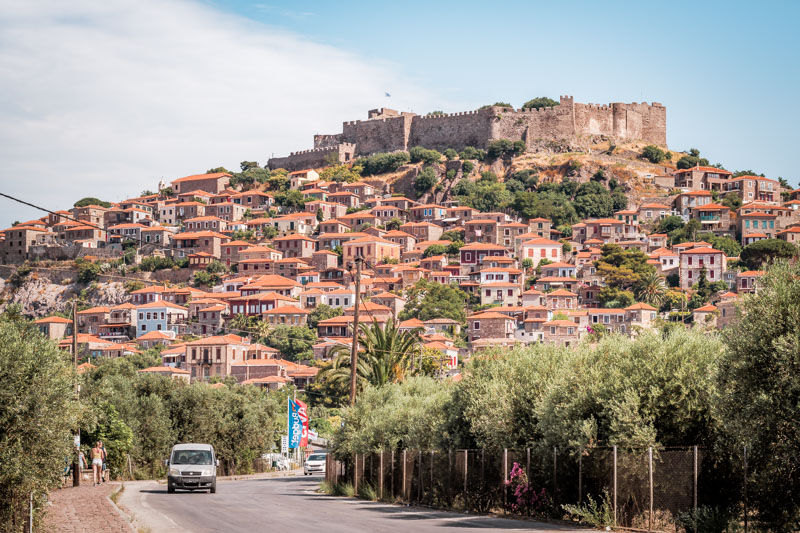
The cobblestone alleys are like a small labyrinth, and it’s easy to get lost as you discover a new photo opportunity around every corner. In April and May, a special highlight awaits you in Molyvos: the purple wisteria vine blooms, arching over the town’s narrow alleys like a canopy.
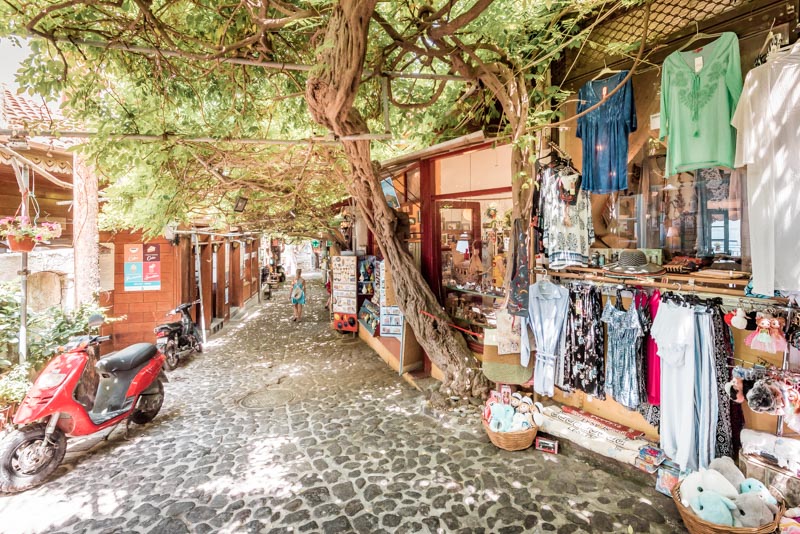
A stroll through enchanting Molyvos
You can park your car at the edge of the city wall and stroll through the alleys up to the castle. Along the way, you’ll pass numerous taverns and cafés, some with magnificent views of the sea. Some are housed in old Ottoman mansions, whose balconies invite you to linger.
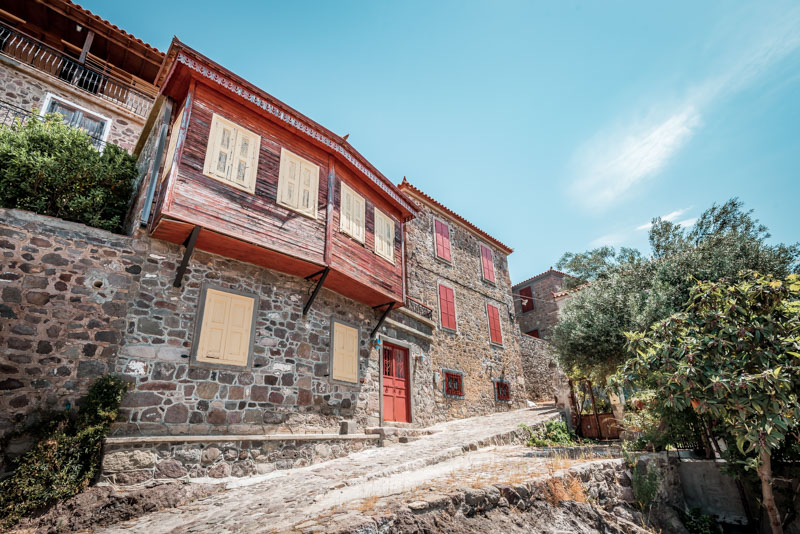
It’s clear at every turn that Molyvos has adapted to tourists. There are countless souvenir shops and tourist stores, but in between them are also charming boutiques selling handmade jewelry.
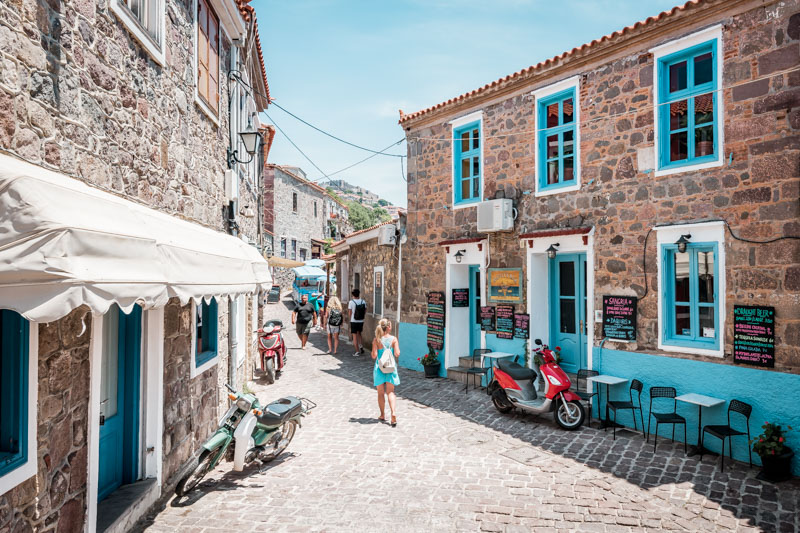
The Kastro of Molyvos dates back to the Byzantine era and, like its counterpart in Mytilene, served primarily for defense. Over the years, the complex was expanded by the Genoese and the Turks. Today, only ruins and a small museum remain to be visited, but the view of the rooftops of Molyvos and the turquoise-blue Aegean Sea is magnificent.
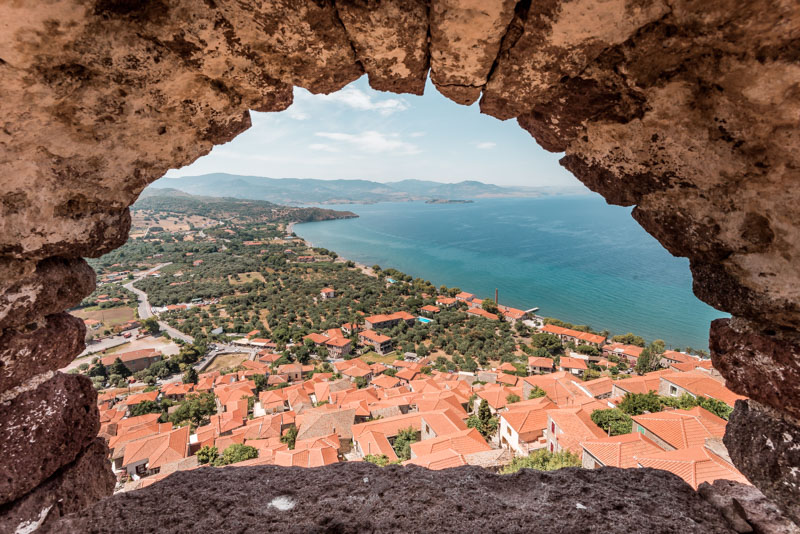
- Molyvos Kastro opening hours: Daily 8:30 AM – 4:00 PM, closed on Tuesdays | Admission: 2 euros
At the rear of Molyvos lies the town’s small harbor (Limanaki). A beautiful waterfront street lined with magnificent mansions leads you to this gem. The Limanaki is a postcard-perfect view of Molyvos.
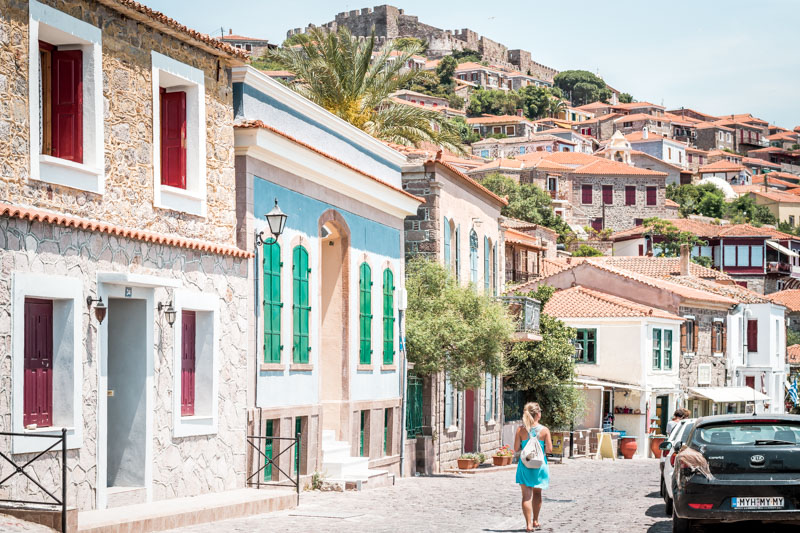
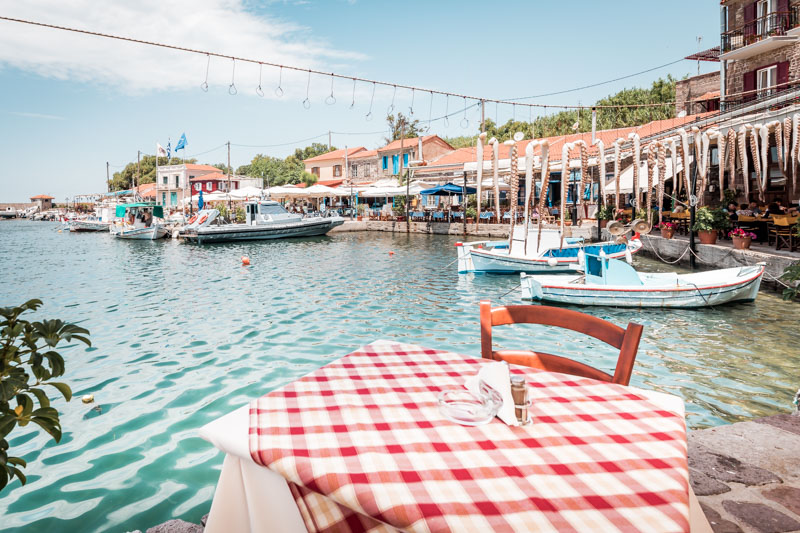
Fishing boats bob in the harbor, fresh octopus dries on lines, and the taverns await guests who take their seats on colorful wicker chairs. It’s almost a kitschy Greek idyll, but one that you’ll fondly remember.
The Rock of Petra
The neighboring town of Petra also seems to be firmly in the hands of vacationers. During the day, the gray sandy beach is well-visited; in the evening, the beach taverns fill up. The narrow alleys of the coastal town, however, have managed to retain their authenticity.
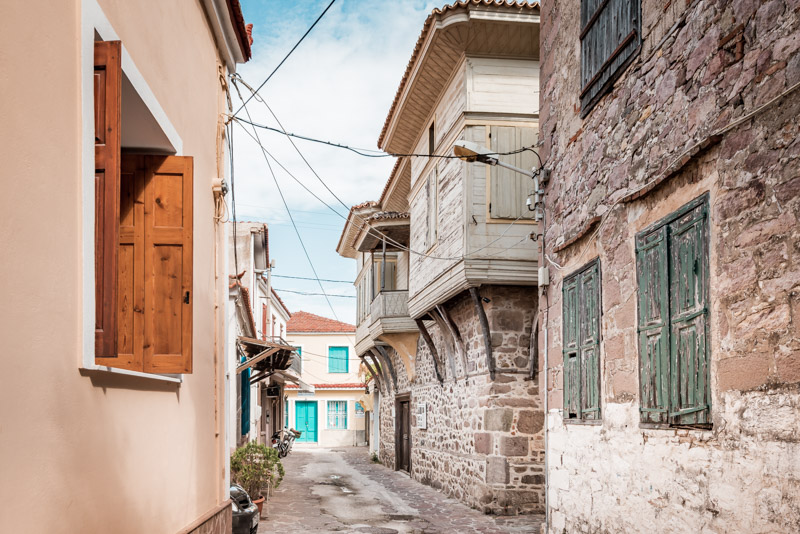
The rock of Petra in the center of town is striking. The Panagia Glykofilousa Church sits atop it. The short climb is worth it, as the view of Petra from up here is beautiful.
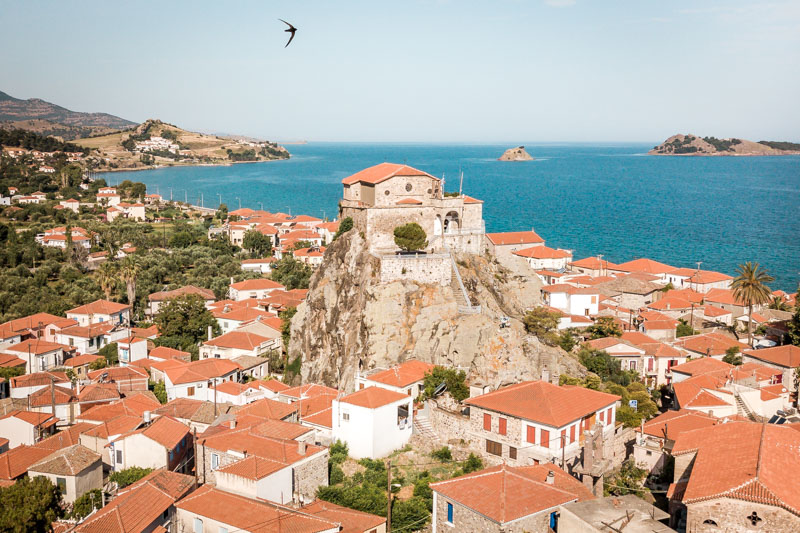
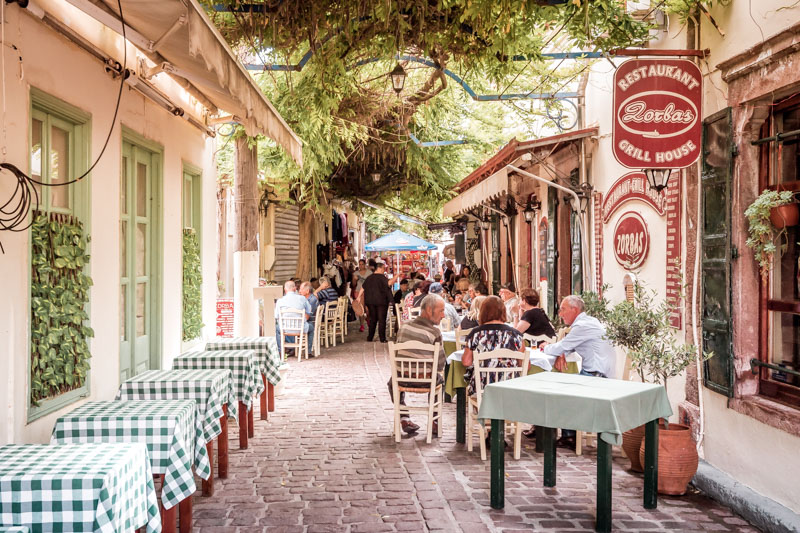
Afterward, take some time to stroll through the pretty alleys. The locals have made the kafenia of Petra their home, chatting about everything under the sun far away from the tourist hustle and bustle.
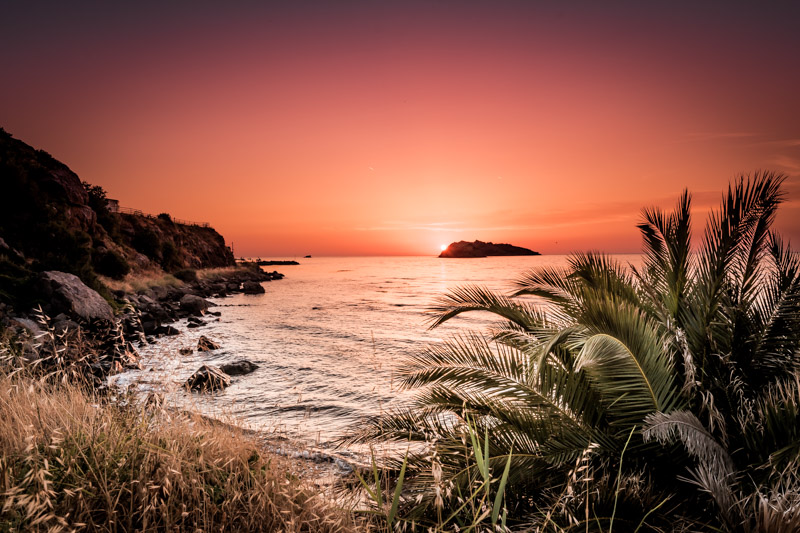
A definite highlight of Petra is the magical sunset over the sea, which you can best enjoy from one of the many taverns along the shore.
#3 Side trip to Skala Sikamineas
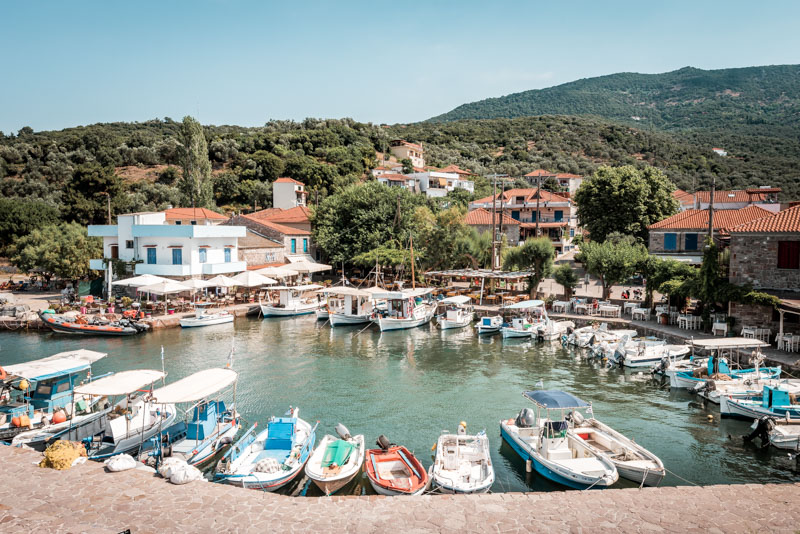
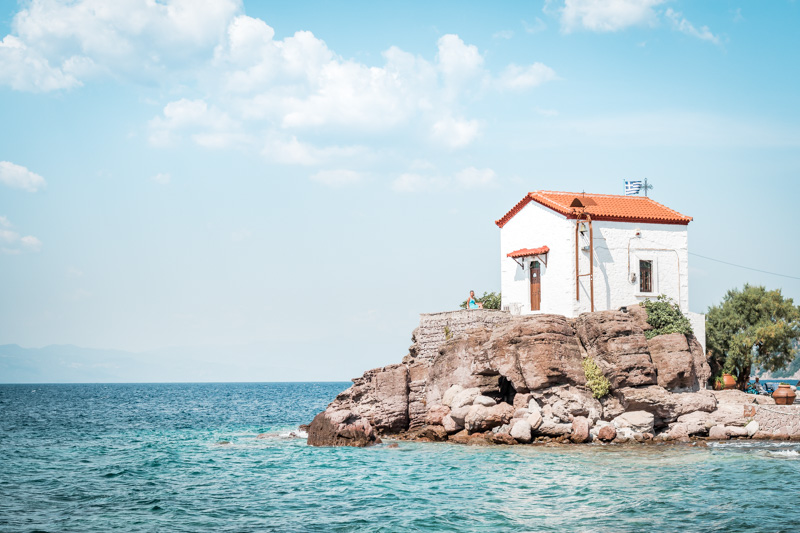
You shouldn’t miss this small fishing village in the far northeast of the island during your vacation on Lesvos. The town’s landmark is the white Panagia Gorgona chapel, perched on a rock in the sea.
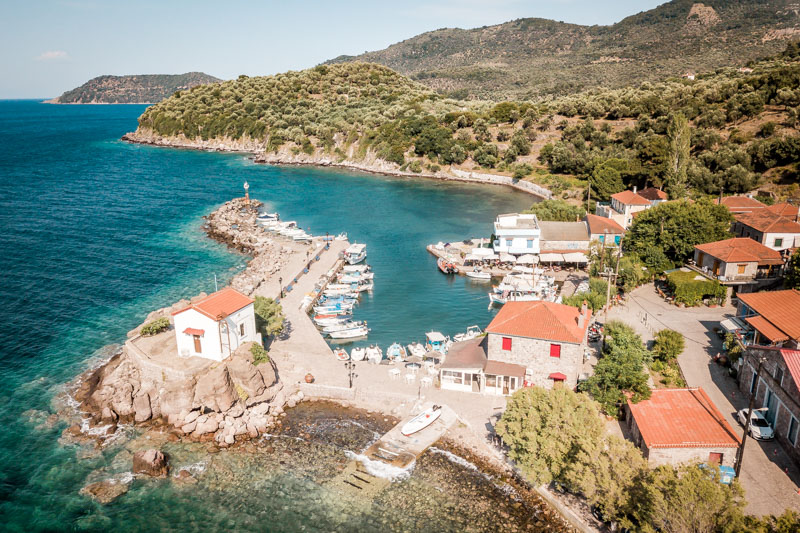
Next to it is a small pier with fishing boats. Sit down at one of the charming cafés, sip a cool freddo cappuccino, and just let your mind wander. Skala Sikamineas is an idyllic spot on the island and definitely a Lesvos highlight for us!
You might notice during your time on Lesvos that some harbor towns have the prefix “Skala.” In the past, people preferred to settle in the mountains for protection against pirates. When piracy came to an end, wealthy villagers built a second home down on the coast.
This eventually led to the formation of entire villages, and people simply used the name of the mountain village and added “Skala” in front of it to distinguish them—a word that means “landing place” in Greek.
Pilgrimage Site and Pottery Village of Mantamados
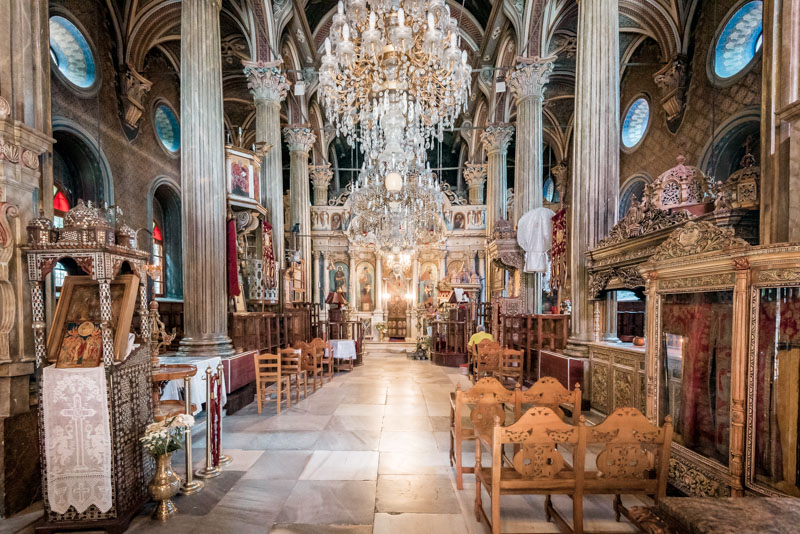
For religious pilgrims and pottery enthusiasts, a southern detour to the mountain village of Mantamados is well worth it after visiting Skala Sikamineas. Just before the village, a road branches off to one of the most important pilgrimage sites on Lesvos. The Taxiarches Church is a popular pilgrimage site due to the miraculous icon of the Archangel Michael.
Mantamados itself is a traditional mountain village; few tourists ever find their way here. The village is best known for its handmade ceramics and pottery, which you can purchase here in a wide variety of shapes and colors.
#4 Things to See Around Kalloni
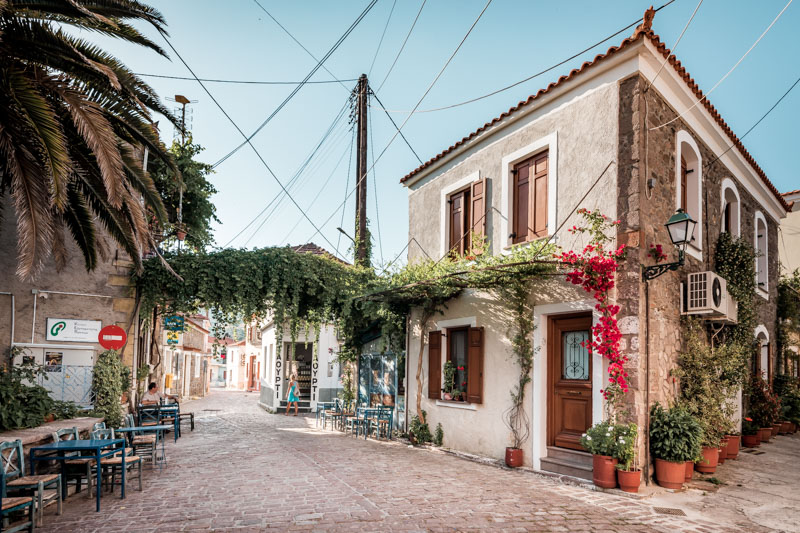
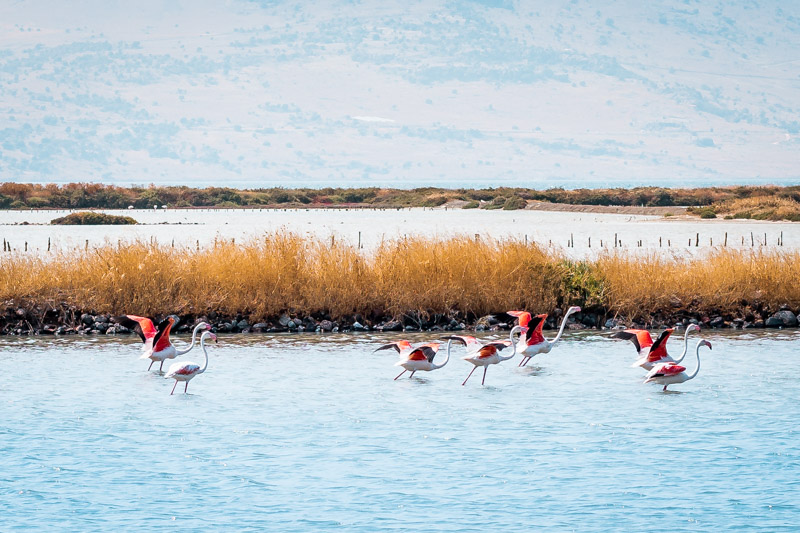
Kalloni itself is mostly just a stopover and has little significance for tourism. Nevertheless, there are quite a few highlights to discover in the surrounding area. The salt lagoons to the east are always worth a visit. Flocks of flamingos live here almost year-round. At the edges of the salt lakes, there are observation towers where you can sometimes even get a close-up view of the pink birds.
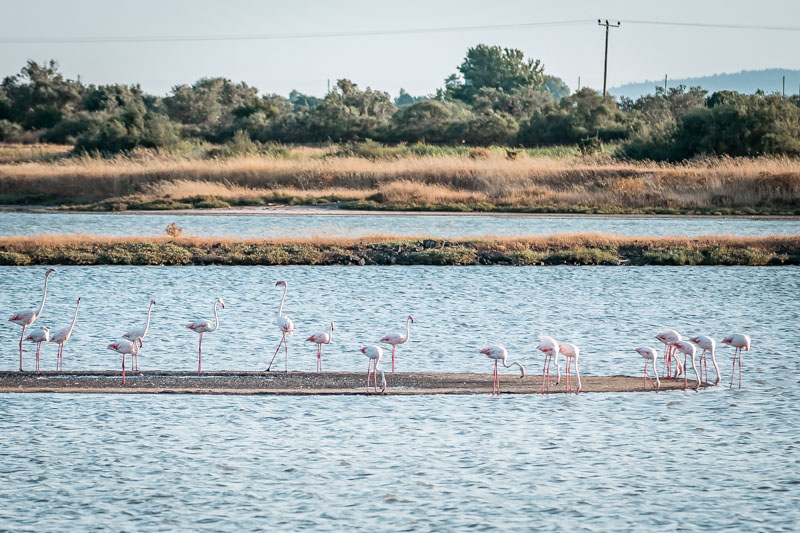
Kalloni’s counterpart on the coast is the port town of Skala Kallonis. This is an ideal starting point for exploring the center of Lesvos. In the northwest, a detour to the village of Agia Paraskevi is well worth it.
Tourism plays no role in this affluent village, so you’ll find mostly authentic village life here. Take a break at one of the many taverns, most of which still serve traditional Greek dishes in a rustic setting.
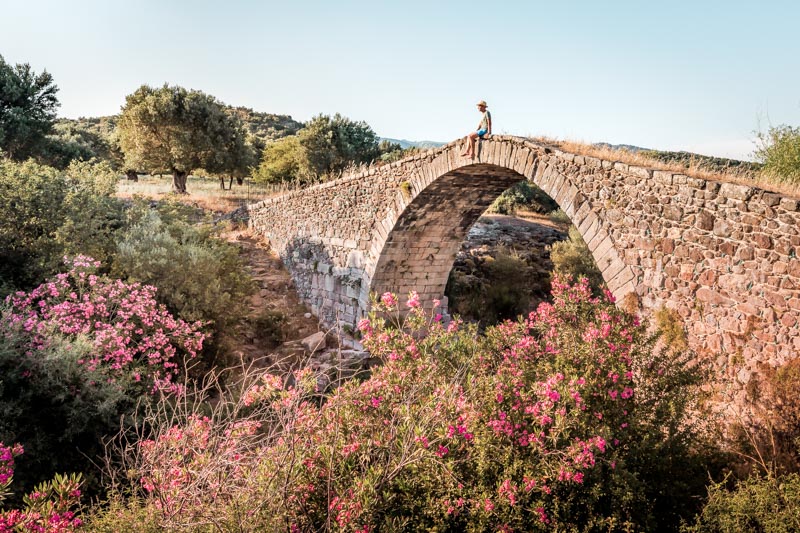
Just four kilometers north of Agia Paraskevi, you’ll reach the Kremasti Bridge. The old stone bridge is nestled in a picturesque landscape. The river carries water almost year-round, fostering lush vegetation along its banks. The bridge is reminiscent of the Greek mainland region of Zagori and makes for a great photo opportunity.
The Moni Limonos Monastery
Five kilometers northwest of Kalloni lies the Moni Limonos monastery complex. Especially in the morning, the sun shines into the valley, revealing a multitude of small church domes. The scenery is impressive thanks to the sheer number of chapels.
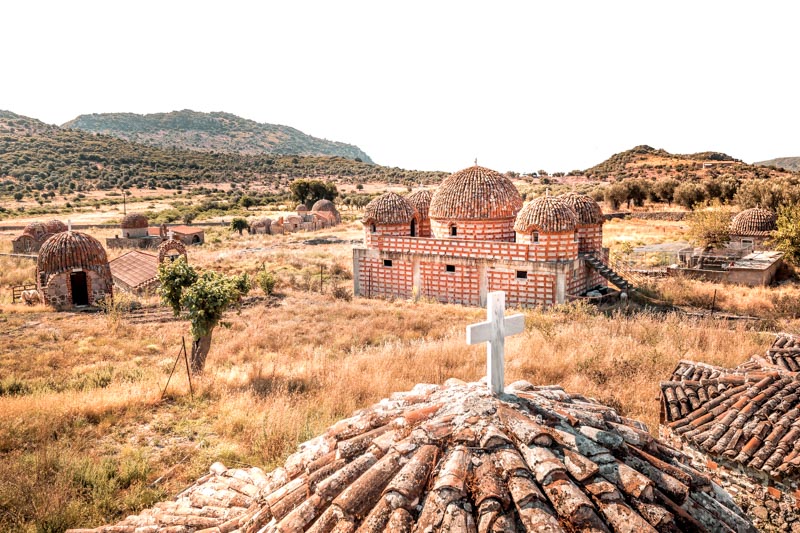
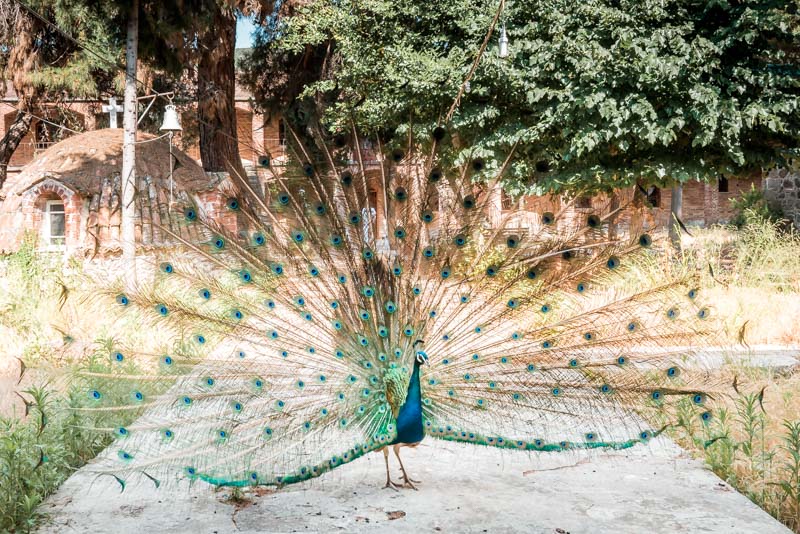
You can also tour the interior of the monastery. Among other things, there is an old monastery church that only men are allowed to enter, an olive storage room, a monk’s cell, and another chapel. Peacocks also feel at home on the monastery grounds and occasionally show off their plumage.
Relaxing in Skala Kallonis
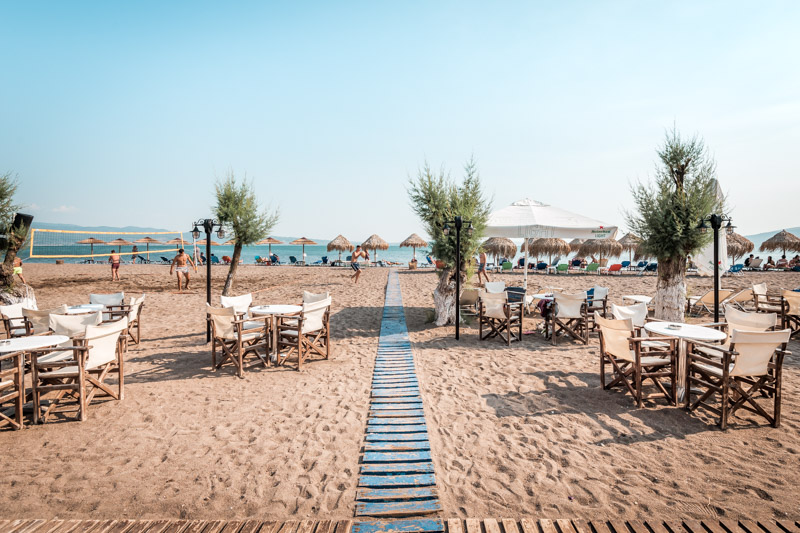
If you’re looking to spend a relaxing day at the beach, we recommend the town of Skala Kallonis. The small coastal town of Kalloni offers plenty of taverns and laid-back cafés right on the beach. The water in the Gulf of Kalloni is usually a bit warmer than the open sea.
The beach has fine pebble sand and the entry into the sea is very shallow. You can end the day wonderfully at one of the cozy beach bars. For example, at the Element Beach Bar, umbrellas and beach chairs are free—all you have to do is order a cool drink.
Lesvos is a paradise for foodies. Outside the tourist centers, you can still find traditional Greek cuisine that delights with its homemade specialties and local products. We had a particularly delicious meal at the Ambrosia tavern in Skala Kallonis.
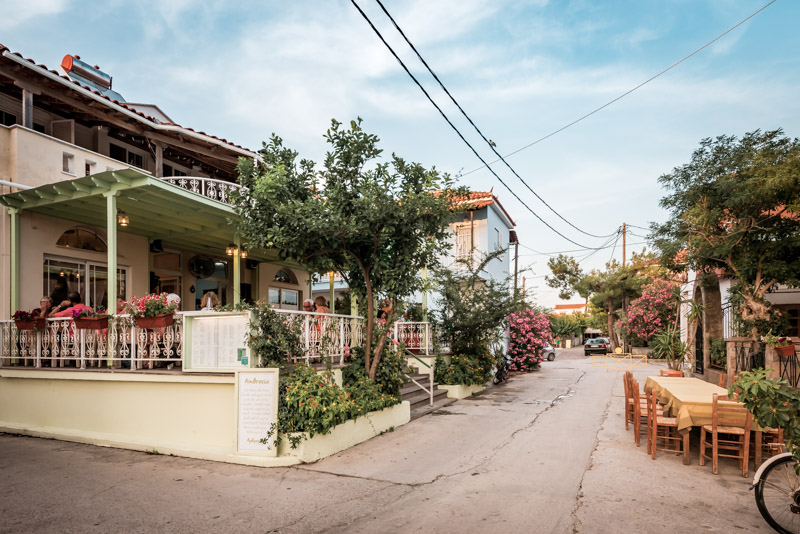
Here you’ll find Greek home-style cooking at reasonable prices. The moussaka was heavenly, and the vegetable balls with tzatziki were a real treat! Very friendly staff and a cozy atmosphere.
✓ Full coverage & unlimited mileage included
✓ Free cancellation until 24h before pickup
✓ Best price guarantee via Discover Cars
#5 The Petrified Forest on Lesbos
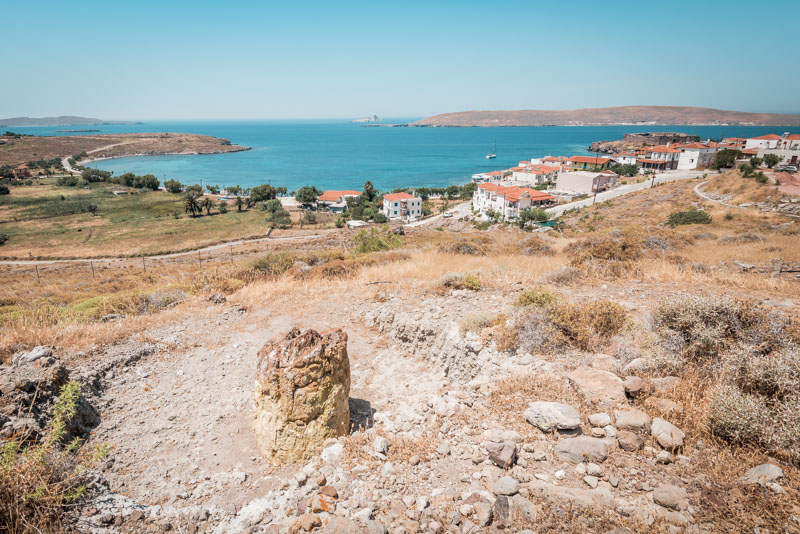
In the west of the island lies a unique natural monument of Lesbos. Over 20 million years ago, buried under volcanic ash and lava, a Petrified Forest formed here. The fossil remains of the Petrified Forest have been gradually uncovered in recent years.
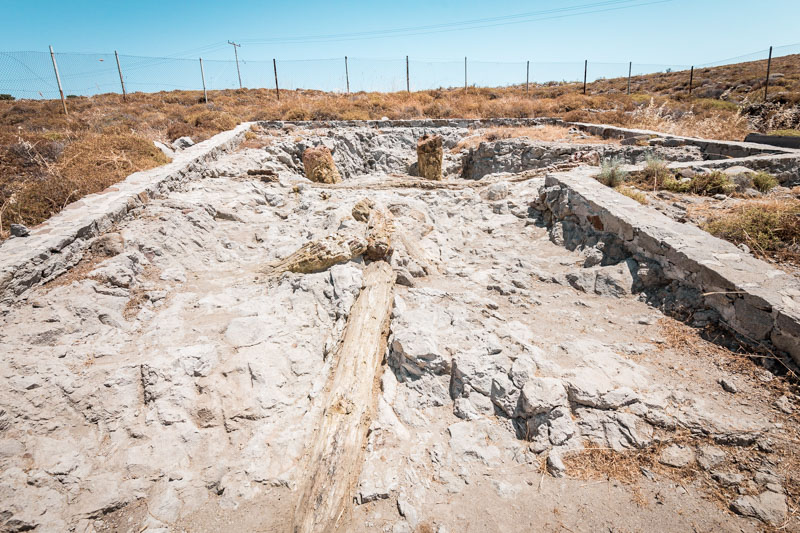
You can marvel at fossilized tree trunks, root systems, and leaves in a wide variety of sizes and colors in and around the town of Sigri. They indicate that this area was densely forested millions of years ago. Alongside the Petrified Forest in California, the Petrified Forest on Lesbos is one of the largest in the world.
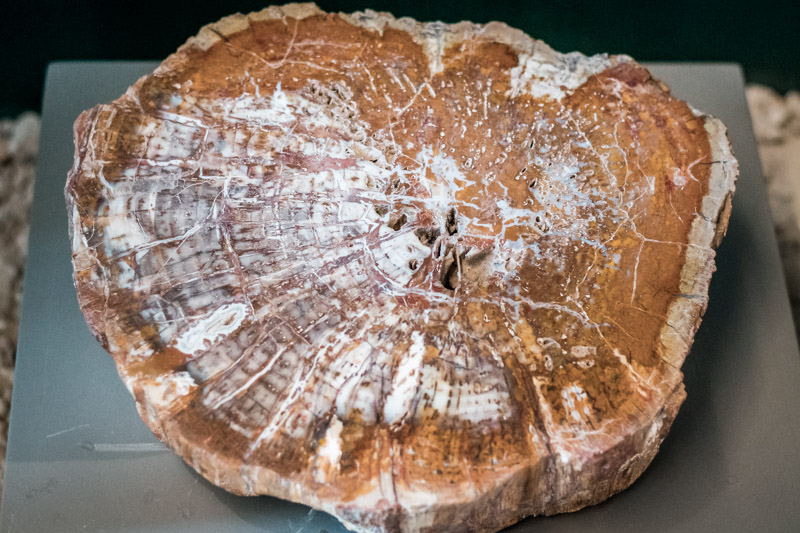
The Natural History Museum of Sigri
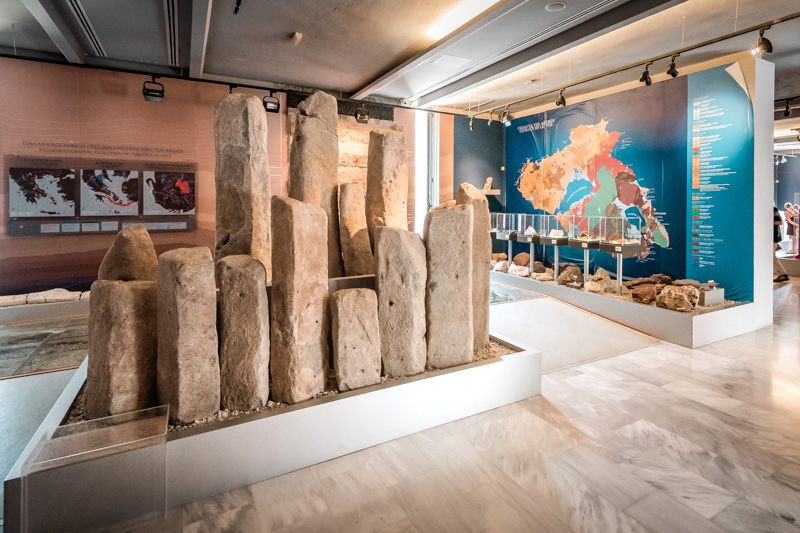
A visit to the Natural History Museum in Sigri is particularly worth seeing. It not only offers detailed information about the formation of these fossilized trees and the process of petrification, but also provides comprehensive insights into geological features and volcanic activity throughout the Aegean.
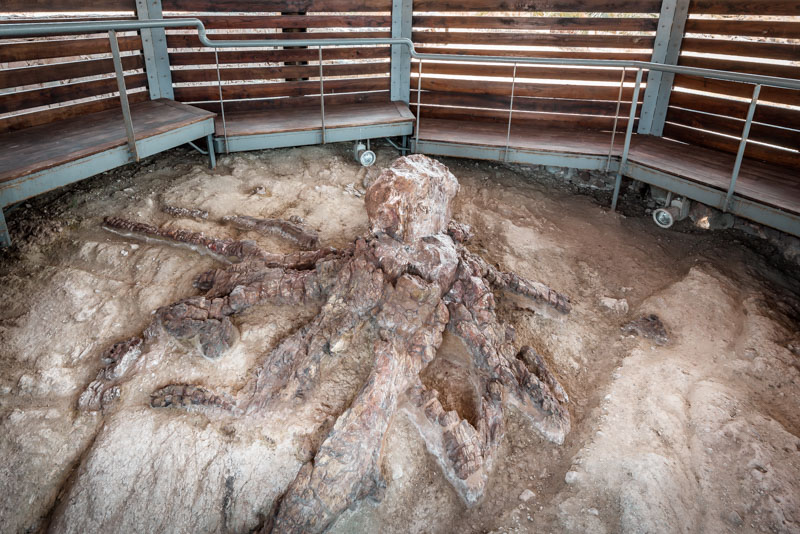
In the museum’s outdoor area, you can see impressive fossilized root systems, among other things. About 800 meters south of Sigri lies the Petrified Forest of Plaka. Here you’ll find the world’s largest standing fossilized tree trunk, with a circumference of 13.70 meters. Bali Alonia Park, located north of the village and featuring a massive fossilized sequoia trunk, was unfortunately closed during our visit in June 2019.
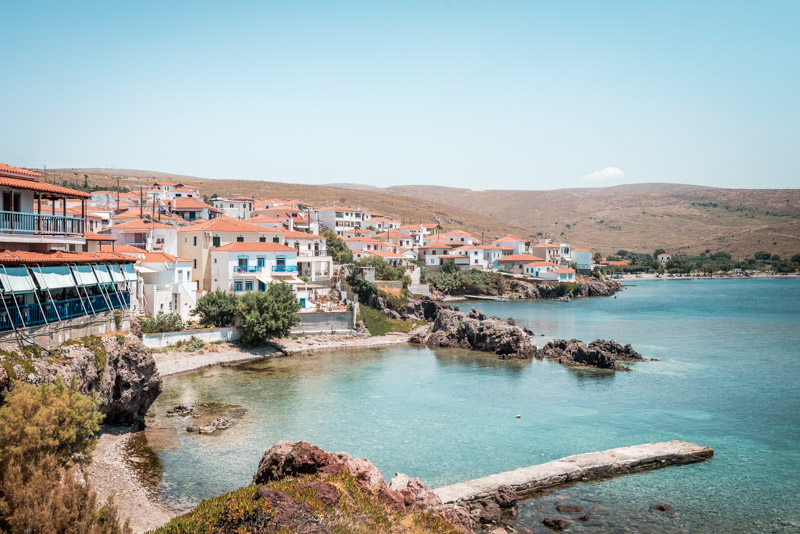
Sigri itself is a sleepy fishing village. The local castle remains closed until further notice due to the risk of collapse. Right by the sea, there are a few taverns that mainly serve fresh fish. Behind the village lies a beautiful stretch of beach. The water here is very clear, and the sandy beach slopes gently into the sea.
Off the coast of Sigri lies the island of Nissiopi. Here, too, you’ll find fossil remains along the shores. You can take a glass-bottom boat to the island and admire more fossil finds underwater at the same time.
#6 Bali Vibes in Skala Eresou
The coastal village of Skala Eresou, located in the far west of Lesbos, was a real highlight for us and should not be missed when exploring the island. At first glance, the place seems rather unspectacular.
Essentially, Skala Eresou is a resort town with guesthouses and hotels and a long, dark sandy beach where nude swimming is tolerated. To experience the special vibe of this place, you should plan to stay here for at least one night.
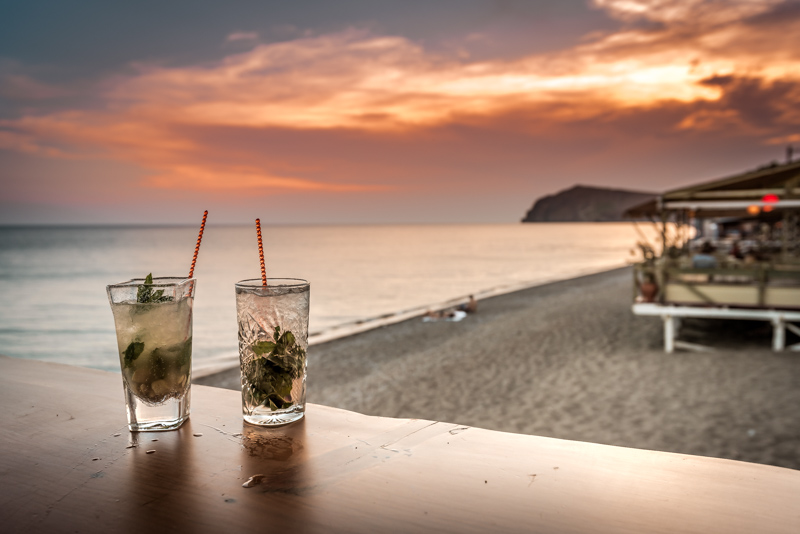
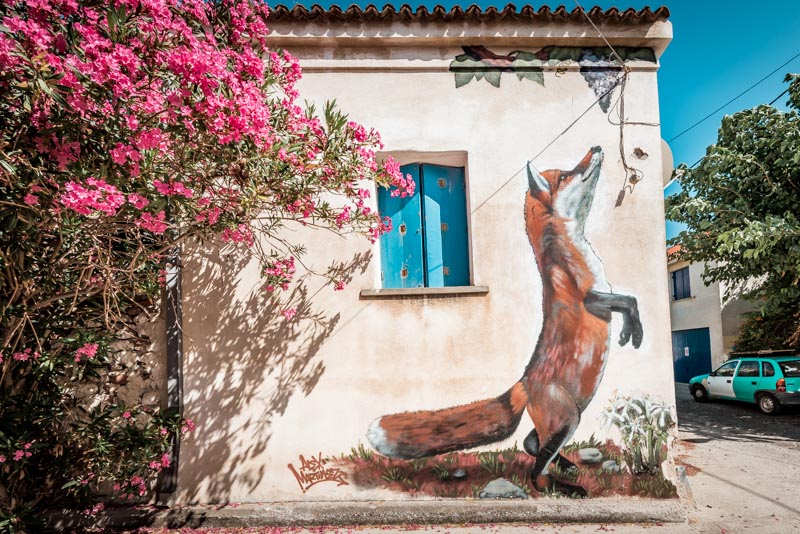
The alleys, embellished with graffiti, are fairly quiet during the day. Pretty bars and restaurants line the waterfront promenade. They were built slightly elevated on wooden planks above the sea. Start your day in one of the cozy cafés with a view of the deep-blue Aegean Sea.
It’s probably the mix of people that makes the place so appealing and gives you the feeling that you’ve arrived. Alongside individualists, backpackers, families, retirees, dropouts, and couples, digital nomads sit together in cafés with their laptops. Everyone is welcome here, and no one feels like a stranger. Skala Eresou is a place where you feel at home, a place you’ll want to return to.

Evening atmosphere at Parasol
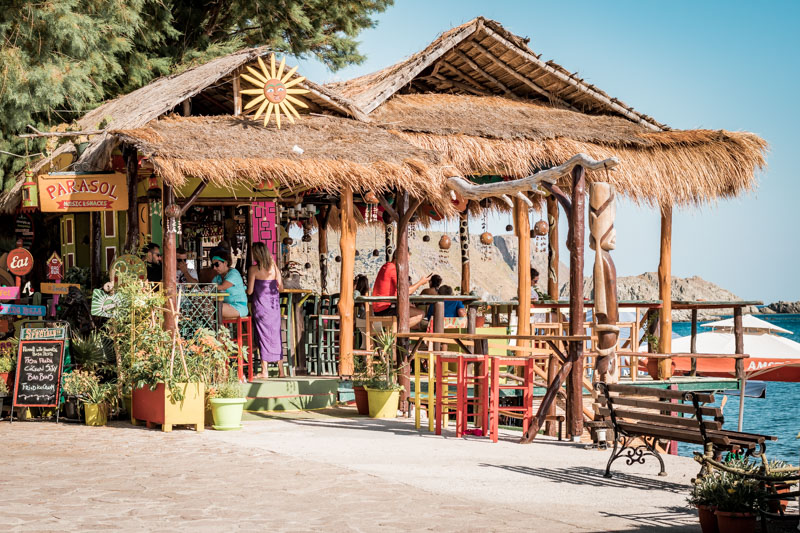
In the evening, the sun sets behind the long bay and Skala Eresou comes to life. By now, at the latest, you should head to the Parasol for a cocktail. The trendy bar is an icon on Lesbos and inevitably evokes a Bali vibe. The perfect dishes are served alongside. With curry and fried noodles, you’ll be in seventh heaven. The atmosphere is magical, and you’ll remember this place for a long time to come.
The gray sandy beach of Skala Eresou is especially crowded in the height of summer. The Chalandra River flows into the beach, and there are usually many wild campers gathered around it.
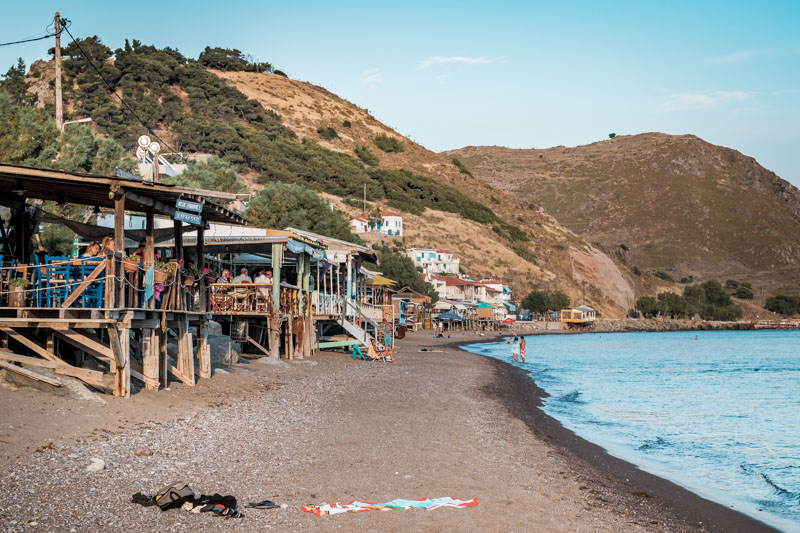
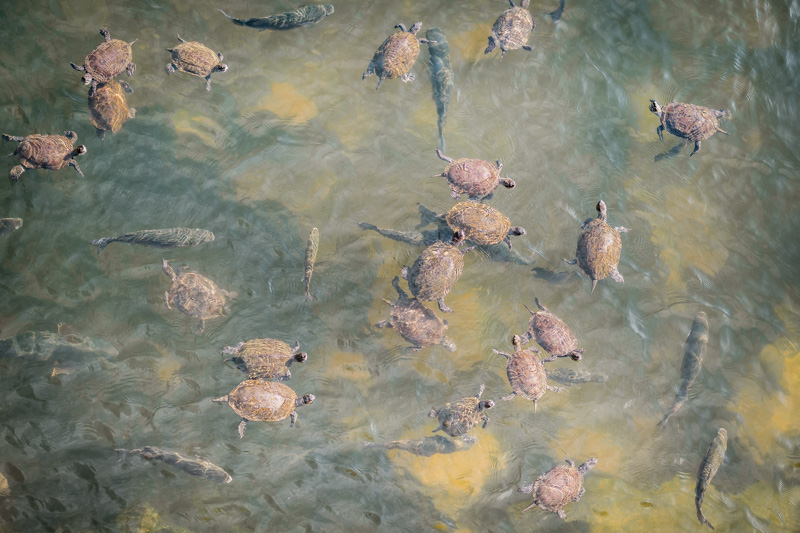
A little above the river mouth, you’ll come to a bridge. Here, countless turtles frolic in the water and stretch their little heads up toward the bridge. They’re already used to vacationers feeding them breadcrumbs.
To the east of the village is a small harbor and a white chapel. From here, a footpath leads you to the ruins of Vigla Castle. Once at the top, you’ll have a fantastic view of the entire bay of Skala Eresou.
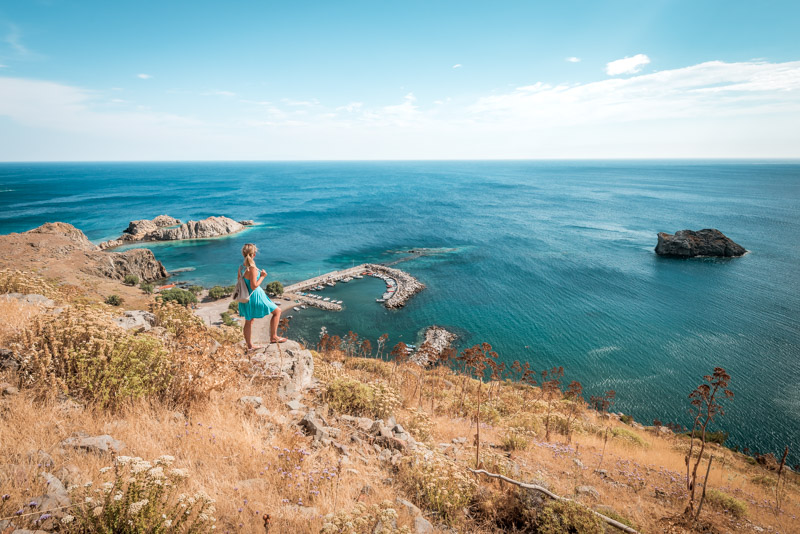
The ancient town of Eressos once stood on this hill, where the famous poet Sappho is believed to have been born. She was considered the most significant female poet of antiquity. Her passionate writings and dreamlike songs, particularly those about women and their sensuality, shaped the concept of “Sapphic” or “lesbian” love many years later. That is why the island, and especially Skala Eresou, remains a popular destination for lesbian women today.
Excursion to the Moni Pithariou Monastery
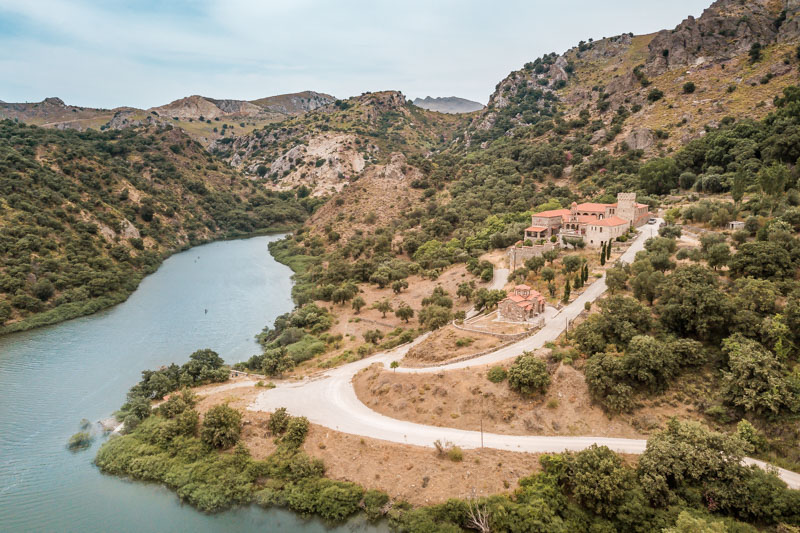
North of Skala Eresou lies Techni Limni, a reservoir that supplies the region with water. Perched impressively above the lake is the beautiful Moni Pithariou Monastery. The interior of the monastery complex is very well-maintained, and from a terrace you have a fantastic view of the green reservoir and the small Byzantine church located in front of the monastery.
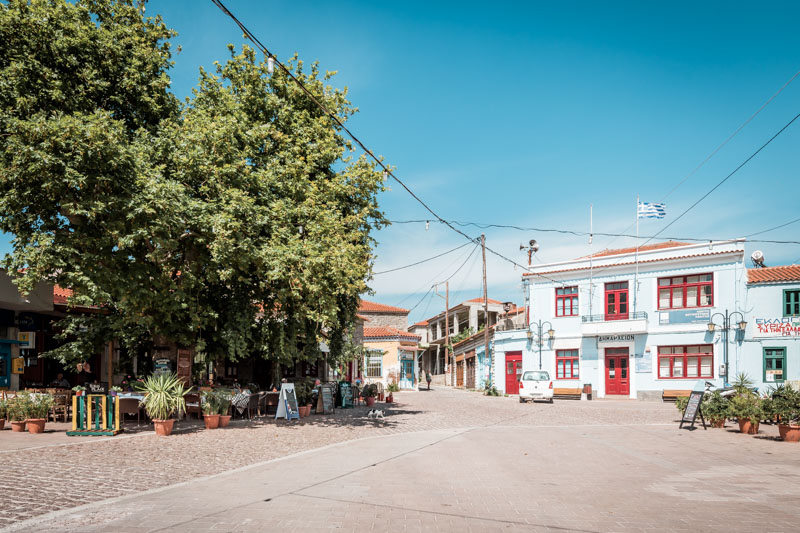
You shouldn’t miss the nearby mountain village of Eressos with its pretty Platia either. We had a delicious meal here at the Kafene tavern and enjoyed the idyllic village atmosphere under a large plane tree.
#7 Hot Springs on Lesvos
Several volcanoes once rumbled on Lesvos, though they have since gone dormant. Testaments to this volcanic activity are the numerous hot springs scattered across the island. Some have been developed into spa resorts for visitors and offer a wonderful opportunity for relaxation and relief from various health ailments.
A Break at the Gera Thermal Spa
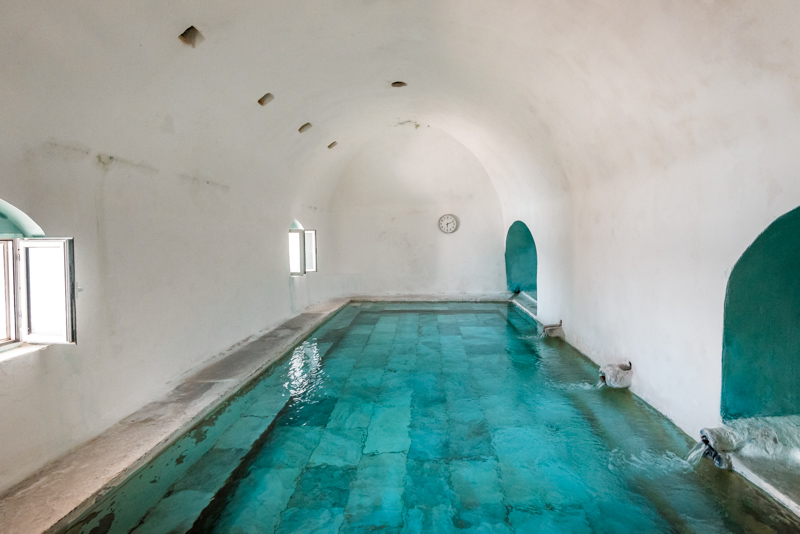
We particularly enjoyed the Therma Spa on the Gulf of Gera, about eight kilometers north of Mytilini. Here, the hot springs, with a temperature of 39.5 degrees, are channeled into two ancient bathhouses.
The two thermal pools are located in vaulted chambers and are separated by gender. The new outdoor infinity pool is open to both genders and, especially in summer, is somewhat more pleasant than the indoor pools.
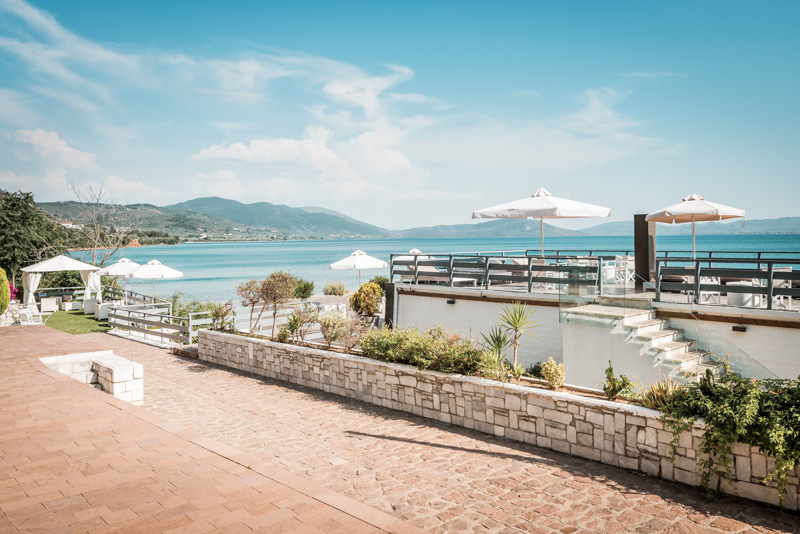
We had the warm pool all to ourselves and were able to enjoy a relaxing soak with a view of the sea. There is also a lovely lounge with a bar serving cool drinks. The main building also houses a spa with massage rooms.
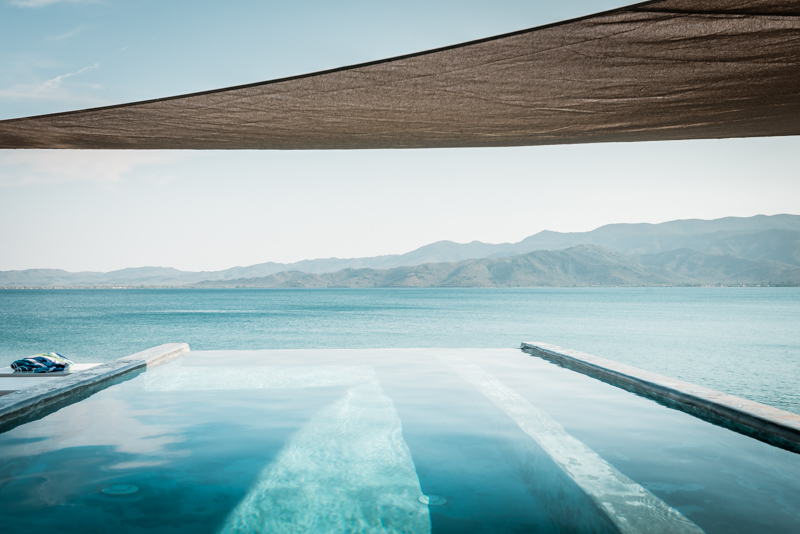
In front of the Thermal Spa, there is a narrow stretch of gravel beach with umbrellas and lounge chairs. The facility’s thermal water is channeled through pipes into the Gulf, warming the surrounding seawater to a pleasant temperature.
- Gera Thermal Baths opening hours: Daily 9:00 AM – 9:00 PM | Admission: 5 euros per person (1 hour in the outdoor pool)
Eftalou Hot Springs
In the north of Lesvos, you can visit the bathhouse and beach at Eftalou. In a covered 17th-century vault, there is a steaming pool with thermal water up to 46 degrees Celsius. Additionally, there are seven private cabins with pools, which are also fed by the healing water.
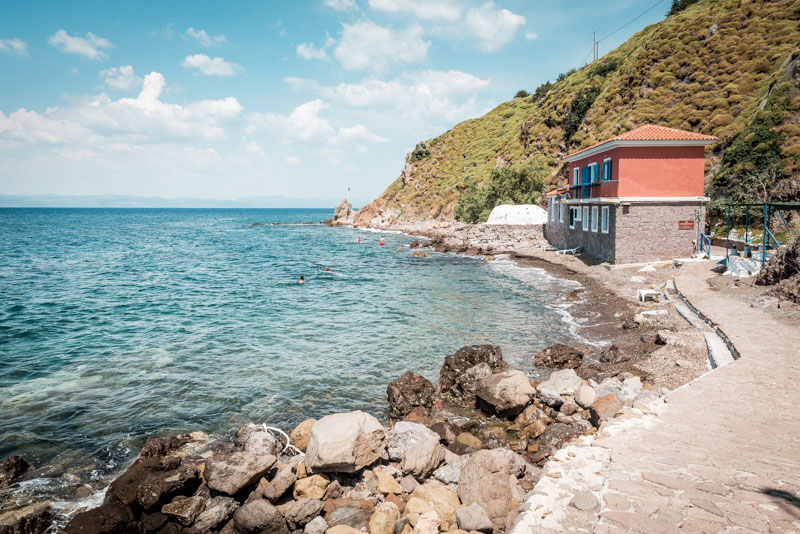
- Thermal springs opening hours: Daily 11:00 a.m. – 7:00 p.m. | Admission: 4 euros per person (45 min in the communal pool)
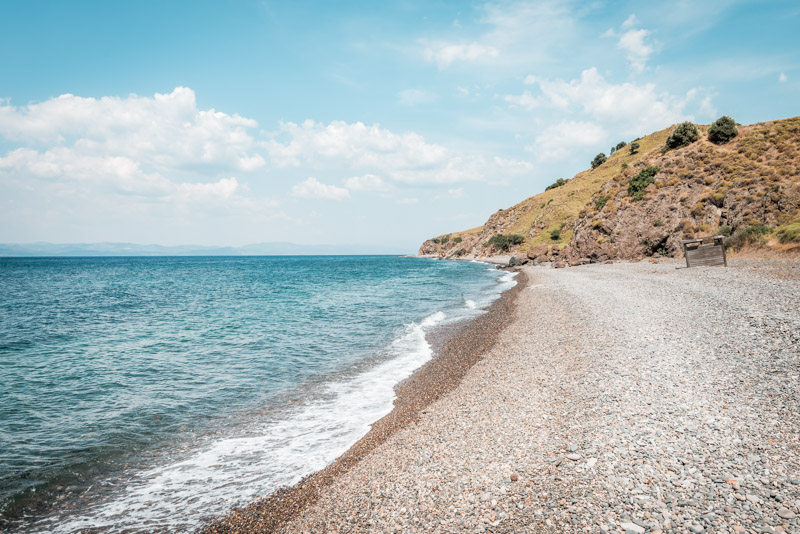
After a hot bath, cooling off on Eftalou’s mile-long pebble beach is a welcome relief. Here, too, thermal water bubbles into the sea in some spots. A beach tavern serves hungry visitors typical Greek dishes. Nude bathing is also tolerated in the rear section of the beach.
Polichnitos Thermal Wonderland
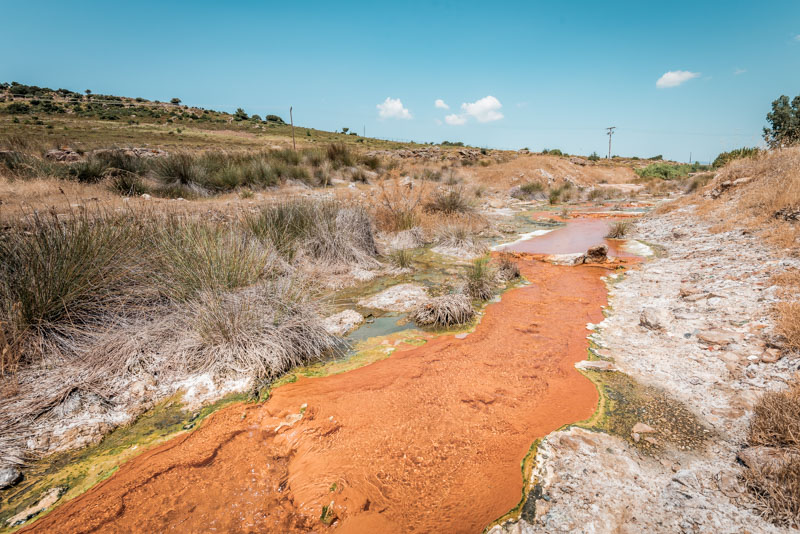
The hottest springs in Europe are located near Polichnitos in the south of Lesvos. Here, the water gushes out of the ground at temperatures as high as 92 degrees Celsius. Unfortunately, the bathhouse is no longer in operation and is falling into disrepair. Nevertheless, a detour to this unique thermal landscape is well worth it.
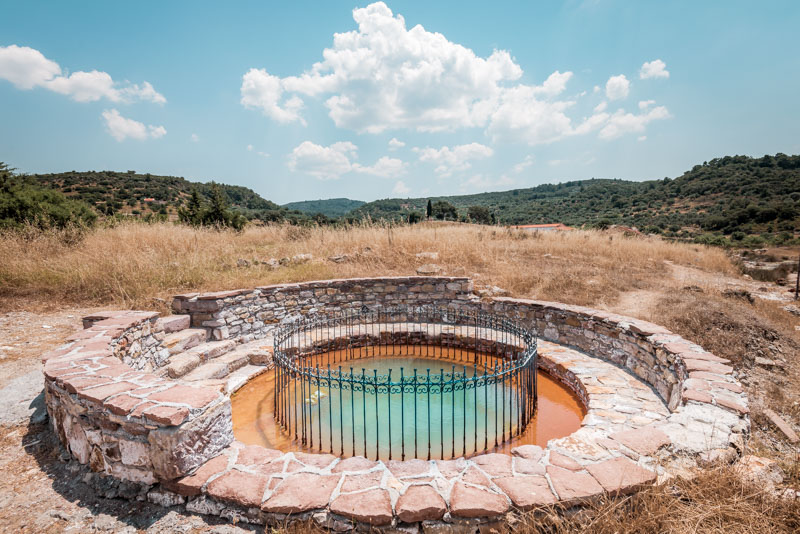
In some places, the slightly radioactive healing water reaches the surface, creating a bizarre landscape. You can stroll along the steaming streams, which have been turned red by algae. Be careful when touching the water, though—it remains very hot in most places, even further down the stream!
#8 For an Ouzo in Plomari
Plomari is a beautiful place and we fell in love with it right away. The colorful houses climb up a hill like an amphitheater, with the deep-blue Aegean Sea stretching out before them. In the narrow alleys, there are a few small shops, and along the harbor front, cozy cafes where you can enjoy a nice breakfast.
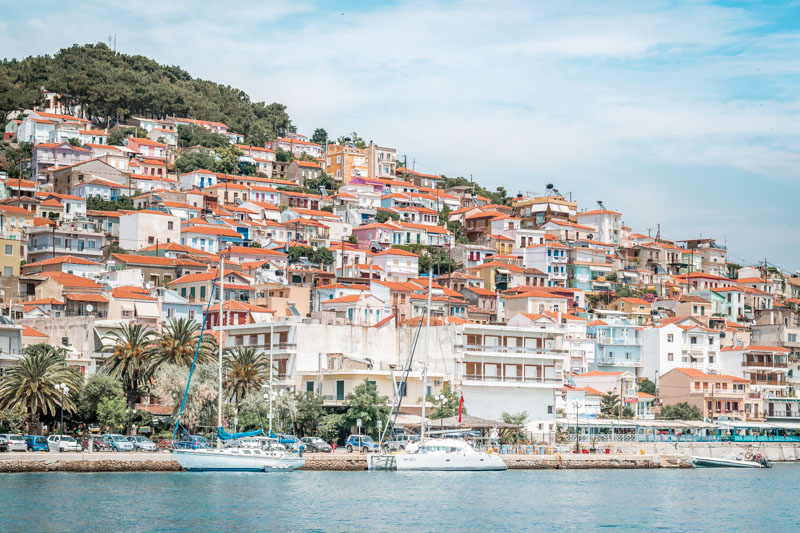
The heart of the small town is the Platia with its mighty plane tree, beneath which colorful chairs invite you to enjoy an ouzo. Speaking of ouzo, Plomari is the place to be if you want to try this delicious anise-flavored liqueur. There are about 14 distilleries across the entire island, most of them in beautiful Plomari. No wonder the island of Lesbos is often referred to as the birthplace of ouzo.
Barbayanni: A King Among Ouzos
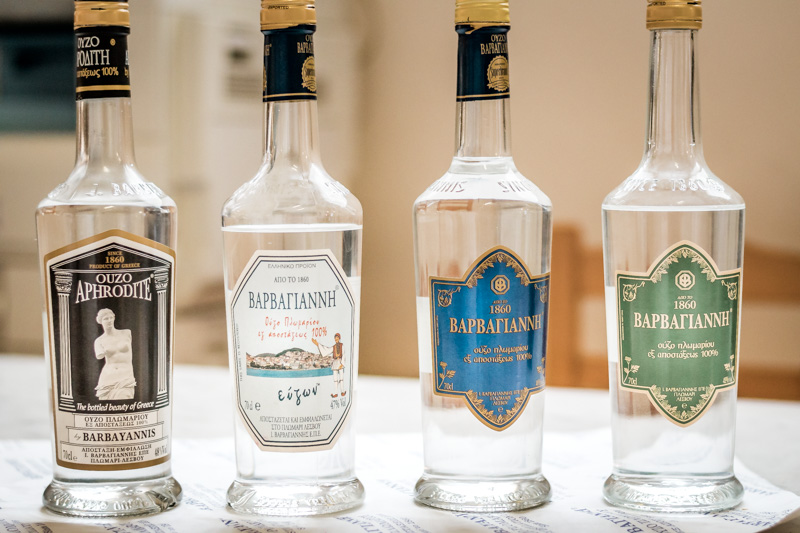
The family-owned Barbayanni company in Plomari has been producing one of the finest anise-flavored liqueurs since 1860. The family crafts four different varieties using a traditional recipe, having kept their production method unchanged since the very beginning. Another distinctive feature: Unlike many industrial ouzos, Barbayanni Ouzo contains absolutely no added sugar or flavorings.
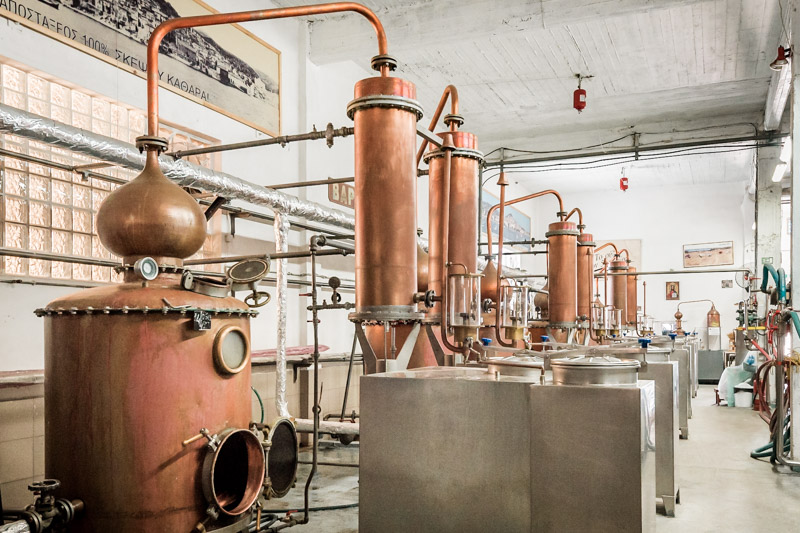
On the upper floor, there is a small museum that offers insights into the old production methods and describes the distillation process. You can tour the current production facilities in the basement. The warehouses house the distillation and bottling areas, as well as a small sales counter.
A little tip: you can actually get these fine spirits at the best prices right here in Plomari. Outside the island, the price goes up significantly due to export costs and alcohol taxes.
After eleven years in Greece, we finally learned at Barbayanni how to drink ouzo properly. Namely, not neat or with ice, but only mixed with cold water. If you add ice cubes to the ouzo, the natural essential anise oils crystallize and the flavor is lost. Nevertheless, water is needed to release the aromas in the first place.
- Barbayanni Hours: Mon. – Fri. from 9:00 AM – 4:00 PM | Admission: free
During your stay in Plomari, be sure to explore the surrounding area. The Sedounda Valley, with its namesake river, transports you to an idyllic forest area with ancient oak trees. Even in summer, this enchanted grove remains pleasantly cool, and you can take a short walk through the beautiful natural surroundings.
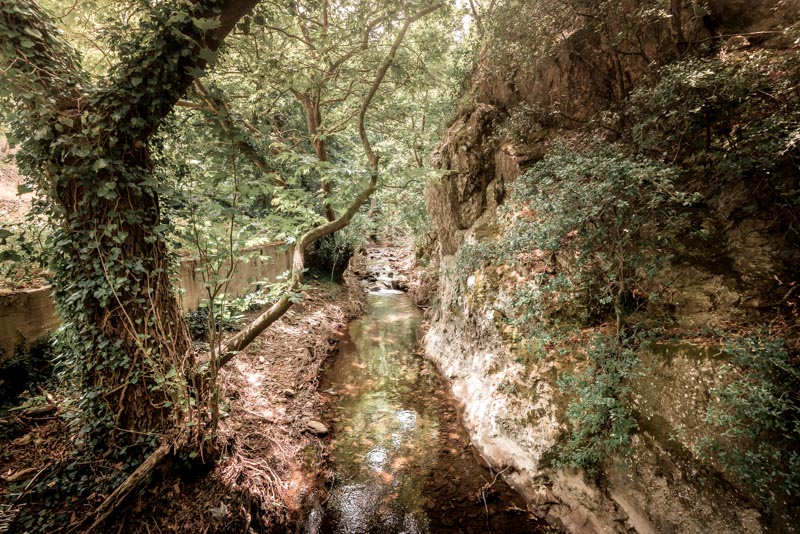
Plomari also has a beautiful stretch of beach two kilometers to the east. Agios Isidoros Beach, with its long pebble beach and crystal-clear water, is perfect for swimming.
#9 Visiting the mountain village of Agiassos
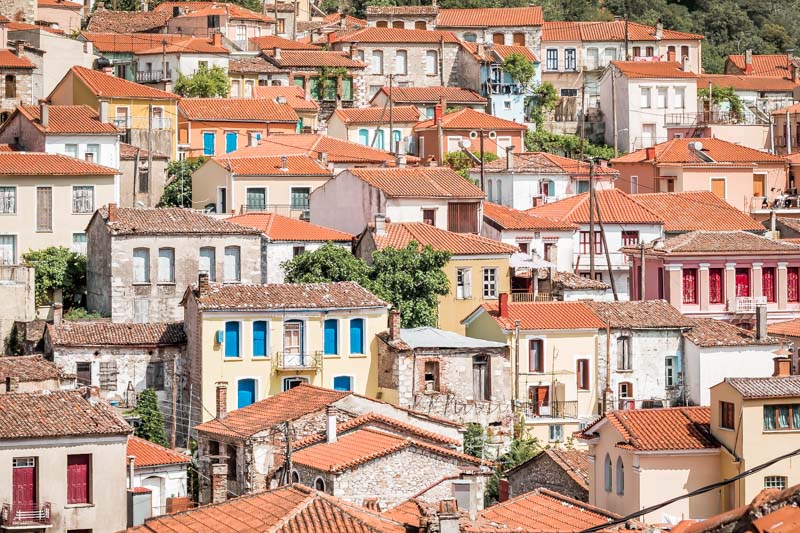
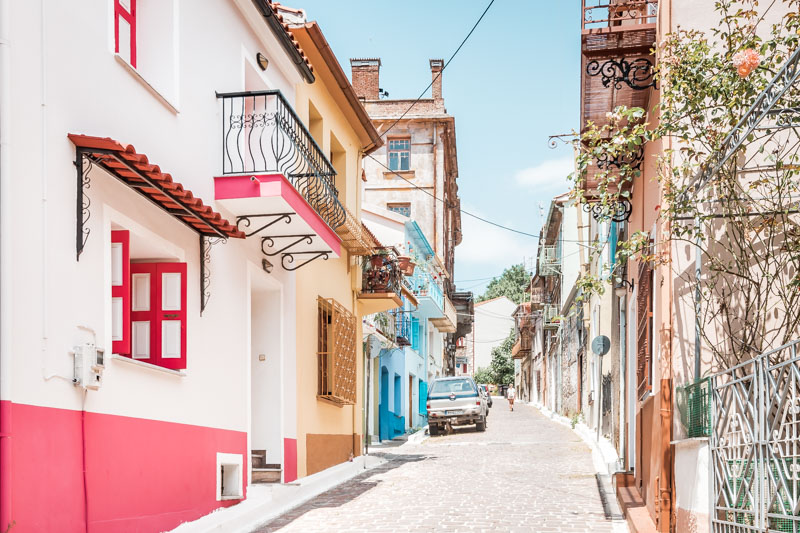
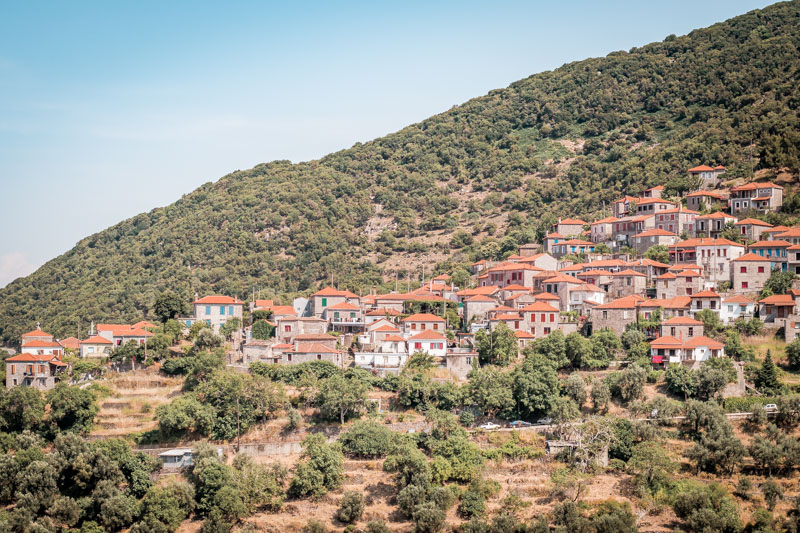
The little village is romantically situated, surrounded by forests at the foothills of mighty Mount Olympos. For us personally, Agiassos is one of the most beautiful villages on the island and enchants with its stone houses featuring red roofs and colorful shutters. You can park your car below the village and wander into the labyrinth of narrow streets.
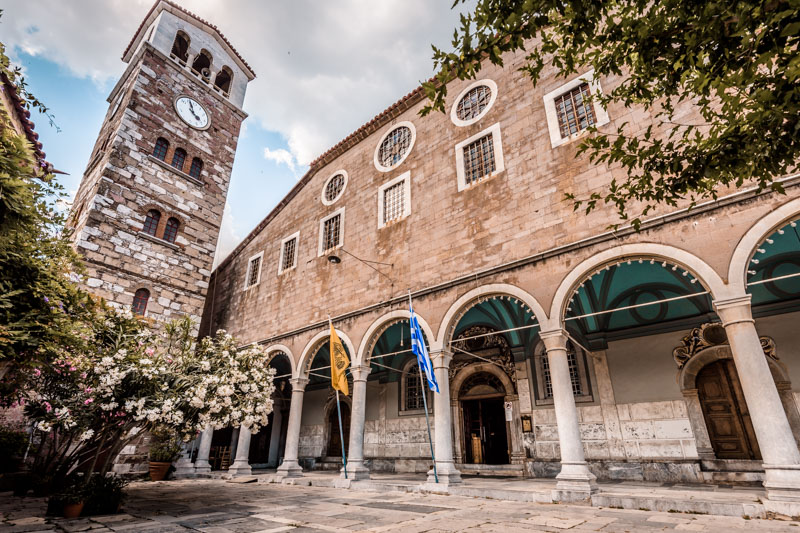
In the heart of Agiassos lies the Panagia pilgrimage church with its miraculous icon of the Virgin Mary. Many pilgrims seeking divine assistance are drawn here. Around the church square are rows of charming little kafenia, delicatessens, and traditional shops selling pottery and wood carvings.
It’s especially cozy to sit under the village plane tree, where you can sample delicious Greek dishes. If you speak Greek, you’ll notice another unique feature in Agiassos: the locals have their very own dialect, which isn’t even understood by their fellow countrymen.
#10 Explore Lesbos with the locals
The island of Lesbos offers a diverse natural landscape. Two bays cut deep into the island, giving Lesbos the shape of a plane tree leaf on the map. Majestic mountain peaks rise up on all sides, some of them evidence of long-past volcanic activity. The island’s vast forests are a paradise for hikers and mountain bikers.
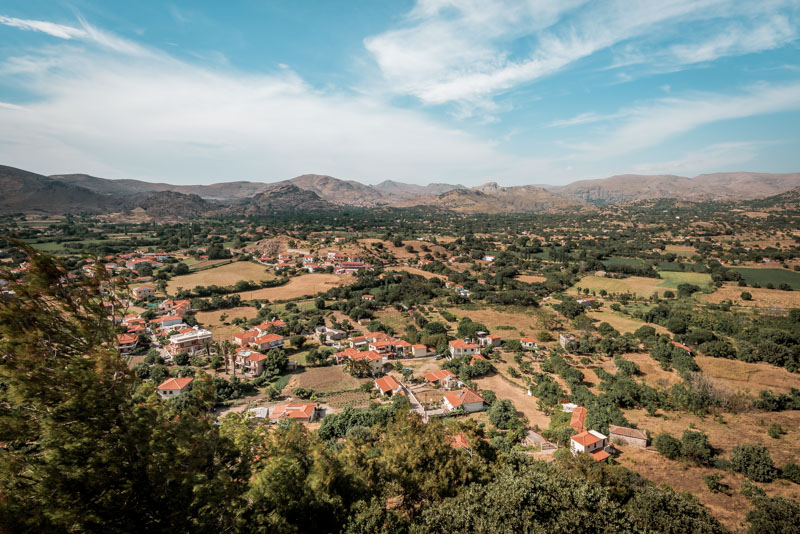
Well-maintained and marked hiking trails lead through vineyards, olive groves, and along alpine mountain slopes. Up-to-date hiking maps are provided free of charge on site, detailing route paths, duration, and difficulty levels.
Across the island by mountain bike
Lesvos Ride, Mytilini
On a cycling excursion, we explored the salt lagoons in the Gulf of Kalloni together with Ioulia and Titos from Lesvos Ride. Our tour took us along a beautiful coastal landscape, past anise fields, salt lakes teeming with flamingos, and small fishing villages.
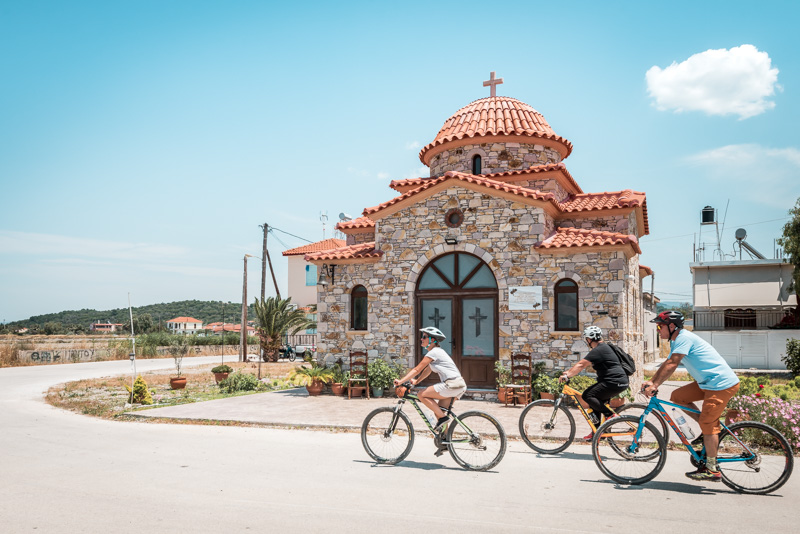
The two charming owners offer guided bike tours for beginners and pros on Lesbos. They also provide MTB technique training, organize events, and bike races. Learn more about their offerings here: Lesvos Ride
More Lesbos travel tips & info
Accommodations & Hotels on Lesvos
Greece’s third-largest island is home to a quiet and sustainable tourism scene. You won’t find any large hotel complexes on Lesvos. In Mytilini, there are a few solid hotels and apartments.
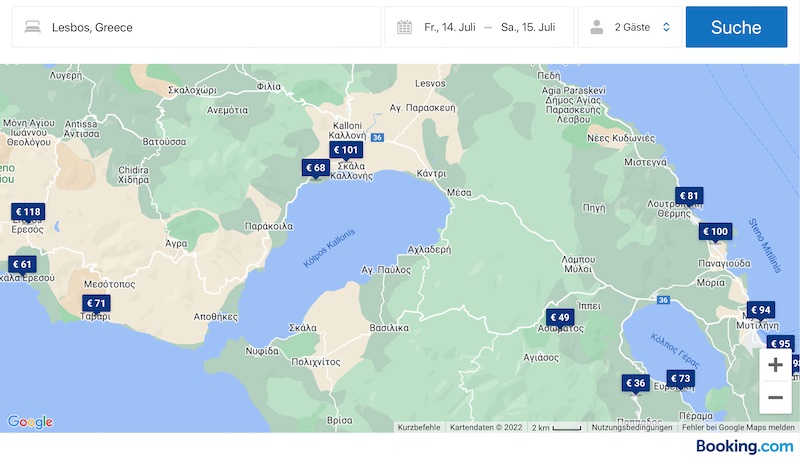
In the Lesvos hinterland, you’ll find beautiful villas, and many locals rent out well-equipped vacation rentals. The most popular resorts on Lesvos are Petra and Molyvos in the north, Skala Kaolin in the center, and Eresos in the west.
→ You can find many accommodations on Lesbos via Booking.com* and check prices directly here:
Guided tours to authentic Lesbos hidden gems
Seafari Adventures, Plomari
Another great way to explore Lesbos is with a personal local guide. Aspa and Dinos from Seafari Adventures are both from the charming town of Plomari and will show you the beauty of their island with great passion. You can join them on land and in the water.
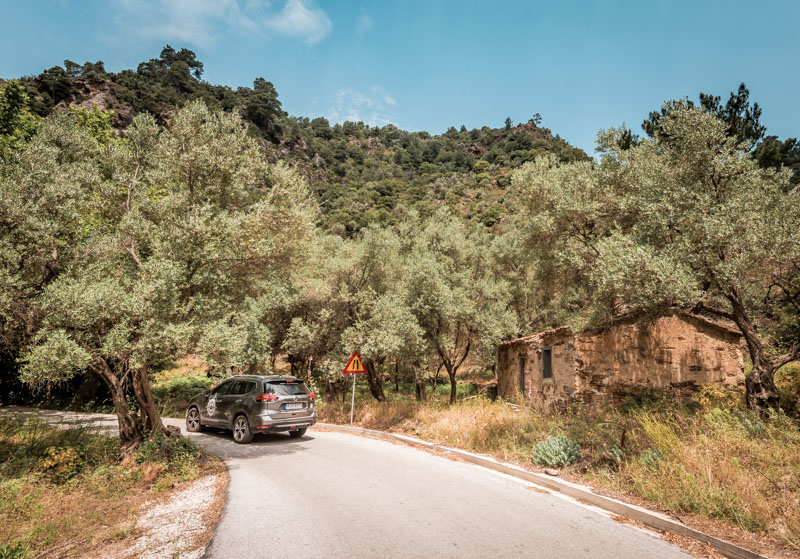
In a 4×4 Jeep, you’ll travel along remote dirt roads through wild nature. This lets you experience Lesbos from a completely different perspective. A boat trip along the spectacular southern coast of Lesvos is also well worth it. At the end of the boat tour, you’ll reach the small, hidden chapel of Ekklisia Krifti, which sits picturesquely by the sea beneath a cliff.
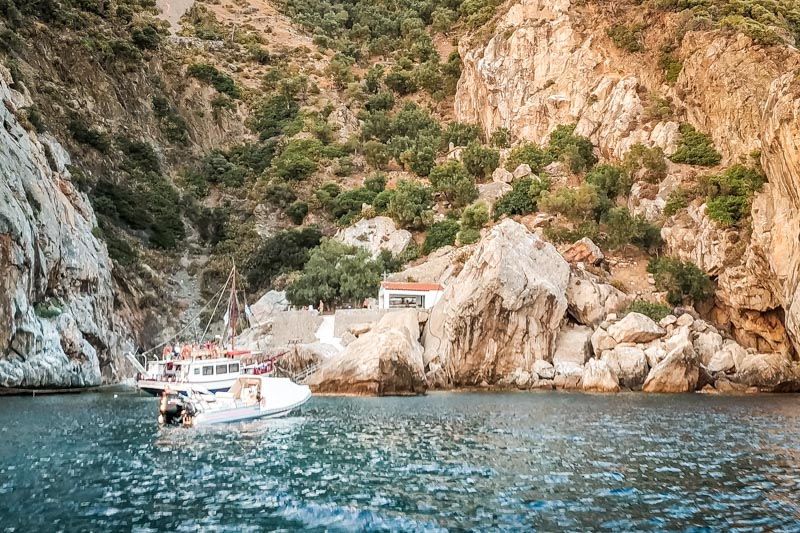
Aspa and Dinos will be happy to put together a customized package for your trip. For more information, visit: Seafari Adventures Lesvos
Getting to the Island of Lesbos
The island of Lesbos has a very well-developed airport, Mytilini Airport (MJT). Unfortunately, there are currently no direct flights to Lesbos from Germany. From most German airports, you can fly directly to Athens or Thessaloniki. We use the Skyscanner* portal to search for suitable flights:
➲ Find cheap flights to Athens*
➲ Find cheap flights to Thessaloniki*

From both cities, you can fly to the island of Lesbos in one hour with Olympic Air, Skyexpress, or Astra. For example, you can fly from Stuttgart and Düsseldorf to Lesbos via Thessaloniki. From Frankfurt and Munich airports, however, you’ll fly to the island via Athens.
Cheap flights to Lesvos
Since May 2020, flights to Lesbos (Mytilini) have been scheduled from Brussels BRU and Amsterdam AMS airports. We hope that other airports will resume direct flights to Lesbos in the future. For more information, see our article: Flights to Greece
➲ Available flights to Lesbos (Mytilini)*
By ferry to Lesvos
Another way to get to the island is, of course, by taking a ferry to Lesbos. This is especially worthwhile if you’re traveling with your own car or planning to island-hop in the North Aegean.
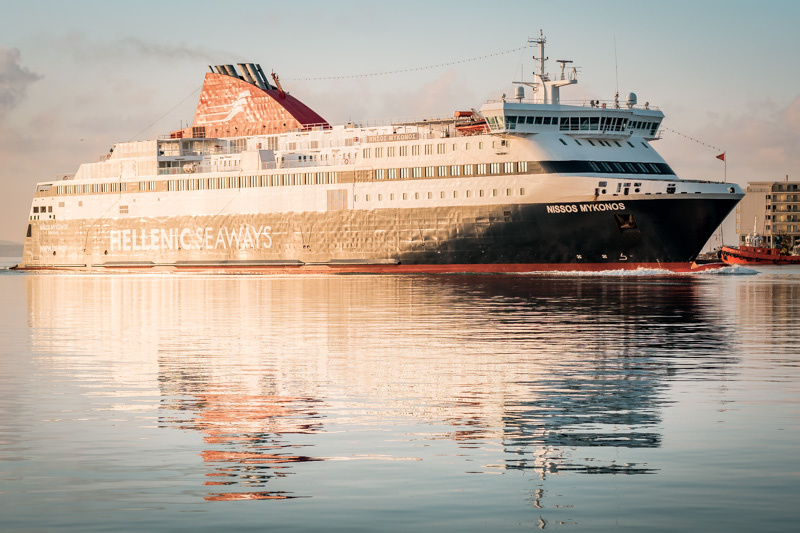
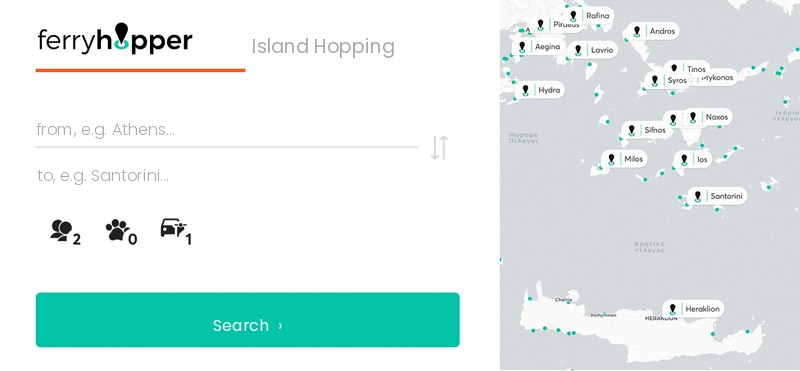
You can depart from either the Piraeus ferry port or from Kavala in northern Greece. The crossing from Piraeus takes about 12 hours, while the ferry from Kavala takes about 8 hours to reach Lesbos. We use the search portal Ferryhopper* to view current ferry connections to Lesvos:
➲ Book a ferry with Ferryhopper*
The island’s ferry port is called Mytilini, like the island’s capital city of the same name. Mytilini is considered one of the busiest ports in the Aegean Sea. Ferries run to the island several times a week. You can easily view and book the connections on the website of the ferry company Blue Star Ferries.
Getting Around on Lesvos
Lesvos is an island for explorers, and the distances between towns are considerable. It’s about 90 kilometers from the capital, Mytilini, to the remote stone forest of Sigri. Unless you’re specifically planning a classic beach vacation at a hotel, we definitely recommend renting a car for your stay.
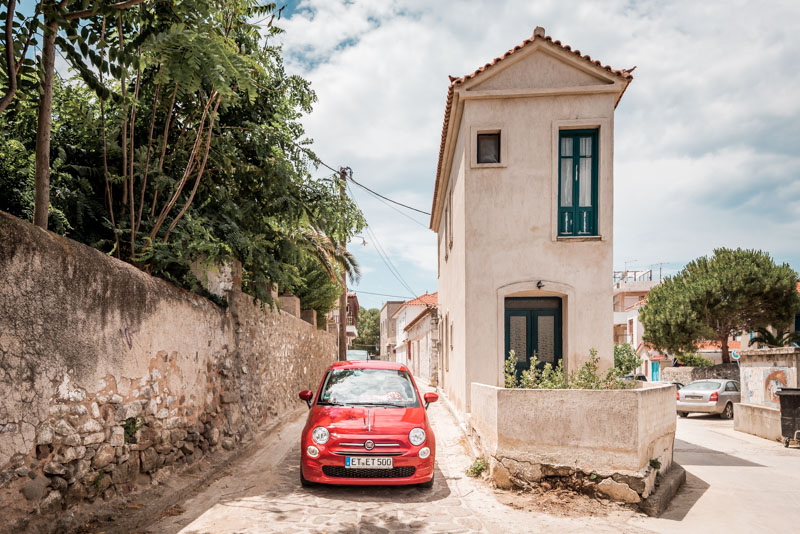
You’ll find many car rental companies both at the airport and at the port of Mytilini. Major European providers like Sixt, Hertz, and others also have rental stations on-site. Especially during peak season, it’s advisable to book your rental car in advance online, for example through portals like Discover Cars*:
➲ Book a rental car for the island*
Intercity Bus – The Bus Network of Lesvos
The island also has a well-developed bus network. This means you can cover short distances even without a rental car. Bus fares are very affordable, as is typical for the region. The trip from Petra to Molyvos costs less than one euro. The bus takes about 1.5 hours from Mytilini to Molyvos, and the fare is a reasonable €7.50.
You can ask for the current bus schedule for Lesvos and its municipalities at the hotel reception. Alternatively, you can view the routes on the Intercity Buses website. Don’t expect German-style punctuality, so always plan for a little waiting time when taking the bus. You can find more information about buses on Lesvos at: Intercity Buses of Lesvos
Lesbos YouTube Video
Check out the video by Robert Polasek © for impressions of the island:
→ You can find more articles about the Greek islands of the Northern Aegean here: Northern Aegean
*Support our blog Greece-Moments
This post contains affiliate links marked with an asterisk (*). If you book or purchase something through one of these links, we receive a small commission. The price remains the same for you. This helps us continue to provide high-quality content for free. Did you enjoy this post and want to say thank you? Then simply buy us the next Greek coffee ☕️ Go to the coffee fund
Save this post on Pinterest too!