

The Peloponnese Peninsula is not a holiday destination for just one week. There are simply too many sights to discover in this multifaceted region of Greece. One thing in advance: a Peloponnese Road Trip lasting several weeks is definitely one of the most beautiful journeys in Greece.
“The Peloponnese Peninsula is a real treasure trove. It’s perfect for anyone who wants to experience Greece without the hustle and bustle of some of the more touristy Greek islands.”
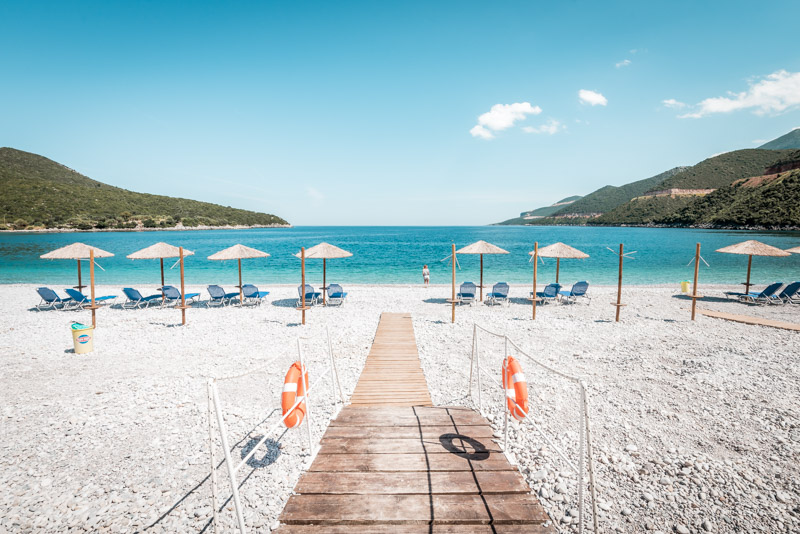
While history fans lose themselves in the seemingly endless number of historical sites, campers enjoy the dream beaches and nature lovers explore the ancient settlements and rock monasteries of the remote mountain regions. Nowhere else in Hellas can you find so much concentrated history and scenic diversity in one place.
Mighty mountain peaks and untouched nature offer a true paradise for active holidaymakers. The wild Mani takes peace seekers into another world, far away from mass tourism. Along the coasts, there are dream beaches that are deserted in places.
A road trip on the Peloponnese Peninsula by rental car along the three fingers of the Peloponnese is a unique experience! We will show you the highlights of our individual Peloponnese round trip and take you to the most beautiful places on the peninsula.
- #1 Olympia: Ancient cult and sports site
- #2 Mysterious Arcadia
- #3 Kalamata on the Gulf of Messinia
- #4 Messene: The ancient showcase site
- #5 The Byzantine fortress of Mystras
- #6 Sparta: In the footsteps of Leonidas
- #7 Pylos and Methoni in the southwest
- #8 Voidokilia: Dream bay of the Peloponnese
- #9 Peloponnese idyll in Koroni
- #10 Detour to the wild Mani
- #11 Day trip to Elafonisos Island
- #12 Monemvasia: The medieval fortress
- #13 To Leonidio on the Forgotten Highway
- #14 Nafplio: Greece’s most liveable city
- #15 Epidaurus and the Corinth Canal
- #16 Mycenae: An archaeological highlight
- More Peloponnese infos
- FAQ for a Peloponnese Road Trip
🏖️ Dream beaches & hidden bays
🍽️ Restaurants, tavernas & cafés
🏛️ Must-see highlights & ancient sites
🗺️ Worthwhile spots & insider tips
🚘 Practical info like rentals & parking
♾️ Lifetime access & updates
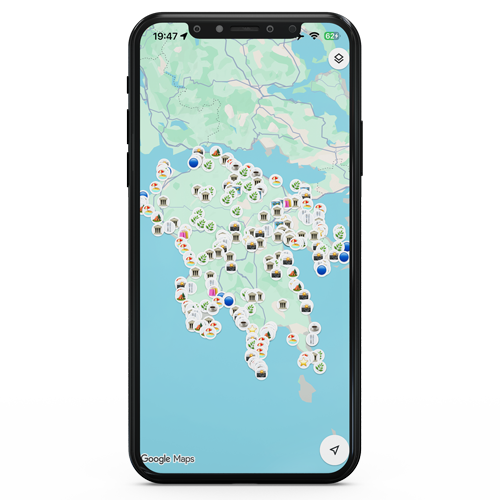
#1 Olympia: Ancient cult and sports site
Coming from Patras, Olympia is the main attraction on the Peloponnese and one of the most visited historical sites in Greece. The complex in the northwest of the Peloponnese is located on the outskirts of the modern small town of Archea Olympia. The town is perfectly geared towards tourism and offers numerous hotels, tavernas and souvenir shops.
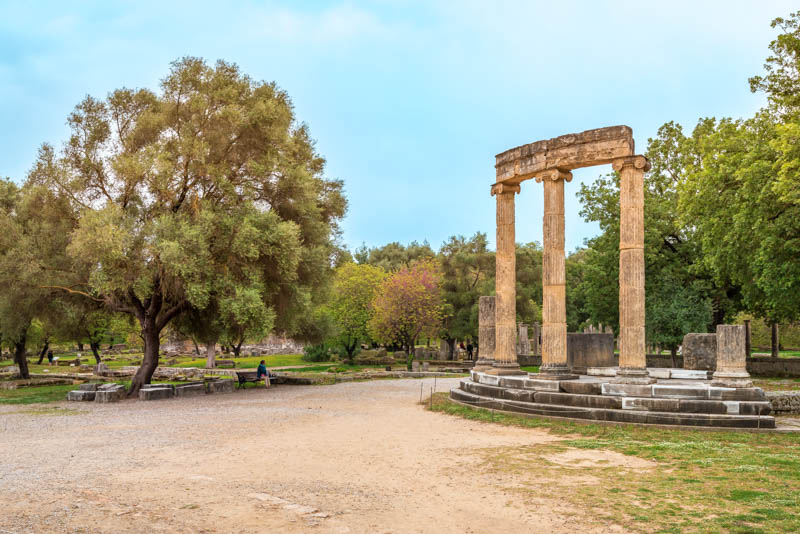
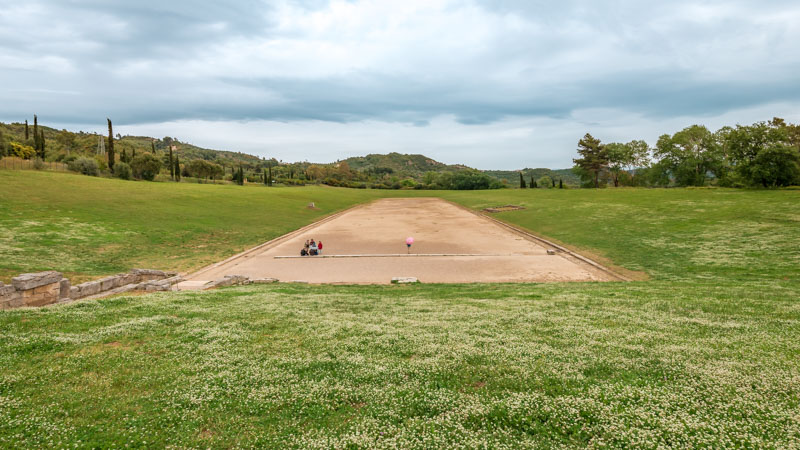
The Olympics were once the most important event in antiquity. The sanctuary served primarily as a place of worship and was the spiritual and social centre of Greece. The more than 200-metre-long stadium of Olympia is particularly worth seeing. The grounds of Olympia are very spacious, and we recommend spending a whole day exploring them.
All information about the most famous ancient site on the Peloponnese, including opening hours and admission prices, can be found in our separate article: Ancient Olympia
On the site of Ancient Olympia, there is also a highly recommended museum, and admission is already included in the ticket price for Olympia. To learn all the details of the ancient site, we recommend taking a guided Olympic tour with a professional guide, bookable for example via GetYourGuide*:
➲ To the guided tour incl. museum ticket*
➲ To the ticket with audio guide*
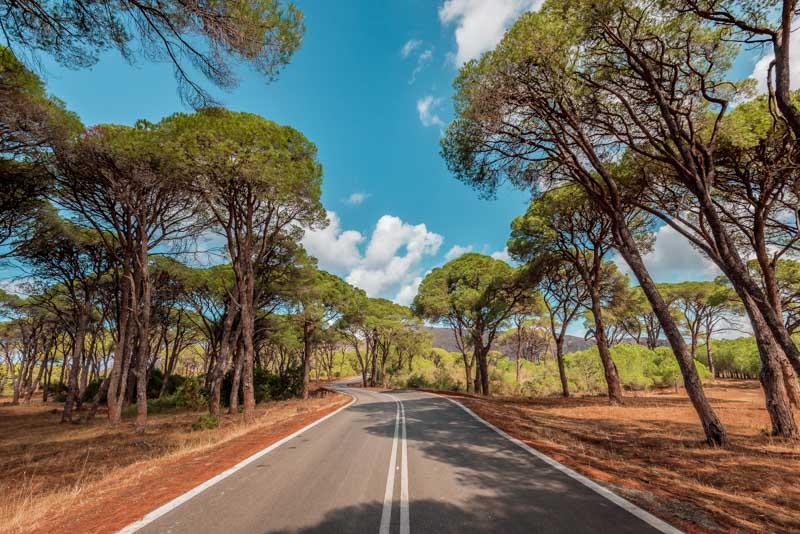
💡 Strofylia National Park: On the way to Olympia, a detour to Strofylia National Park near the coastal town of Kalogria is well worth it. The region captivates with its extraordinary scenic beauty. Highlights of the area, which is characterised by wetlands and marshes, include a huge pine forest and the dune-lined beach of Kalogria.
Hotel recommendations at Olympia
Galinio Boutique Apartments, Skafidia
Comfortable self-catering apartments about 30 minutes from Olympia, near the village of Skafidia. Quiet location, tastefully decorated, with a pool and sea view. The beautiful sandy beach is only a 5-minute walk away. You can find more information about the accommodation and prices on Booking.com*:
➲ To the Galinio Boutique Apartments*

#2 Mysterious Arcadia
Many myths and legends surround this mysterious mountain region in the centre of the Peloponnese. Directly behind Olympia, the golden Arcadia begins. A day trip is hardly enough to explore this still very pristine area.
Arcadia is a paradise for nature lovers. Mountain peaks over 2,300 metres high are cut through by deep gorges, highland basins, lakes and marshes. If you take a hike through Lousios Gorge, you can marvel at the wild landscape.
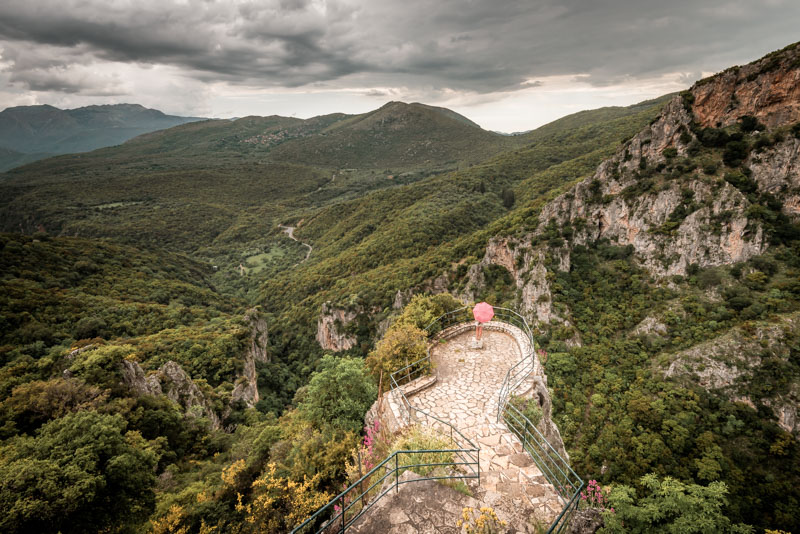
A special highlight are the monasteries along the gorge. Many of them are completely hidden, built into crevices and caves. During the time of Ottoman occupation, the monasteries played a major role in ensuring that Greek philosophy, language and culture were preserved.
Hike to Prodromou Monastery
The spectacular Prodromou Monastery is built into a rock face above the Lousios Gorge. A visit is a unique experience! The monks unlock the small chapel inside and prepare a Greek coffee for each visitor.
The monastery can be visited daily until 1:00 pm and from 5:00 pm. Admission is free, but a small donation is welcome. Long trousers for men and long skirts for women are mandatory. Appropriate rental clothing is available at the entrance.

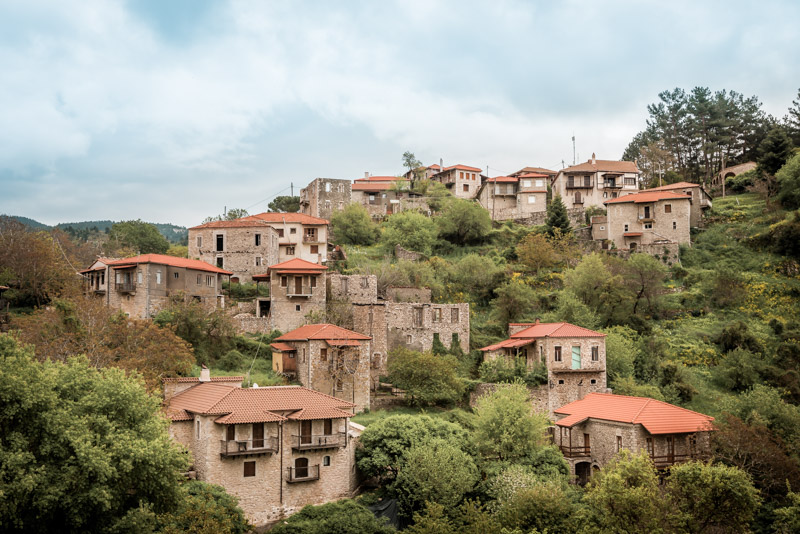
A visit to the traditional villages of Stemnitsa and Dimitsana is also something you should not miss. The Arcadian mountain villages were built on elevated ground to protect them from pirates along the coast. From here, many resistance movements for Greek independence were initiated.

The old stone houses with their red roofs are picturesquely lined up along the mountain slopes. On the village square, you will find tavernas and cafés. Some guesthouses offer the opportunity to experience the village idyll in the evening. The villages have a special charm and are a typical postcard motif of Arcadia.
#3 Kalamata on the Gulf of Messinia
Even though Kalamata is not necessarily love at first sight, the city is a good starting point for exploring the southwest of the Peloponnese. Kalamata has 70,000 inhabitants and is known for its delicious olives and the olive oil produced from them. Click on the link from GetYourGuide* to learn more about an olive oil tour in Kalamata:
➲ To the organised olive oil tour*
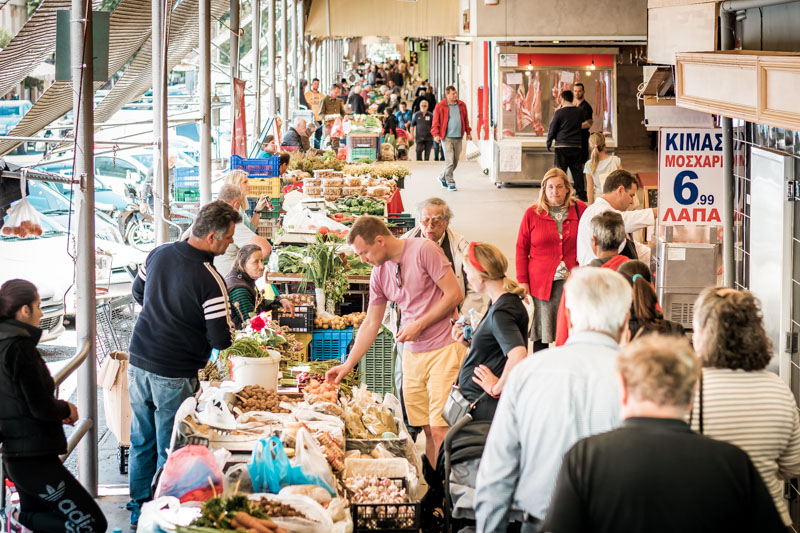
The city is wonderful to explore on foot. It is best to start your tour below the Kastro at the Agora. Every Wednesday and Saturday, there is a weekly market in Kalamata. Between fruit, vegetables and fish, it gets very busy, and we stocked up here for our stay.
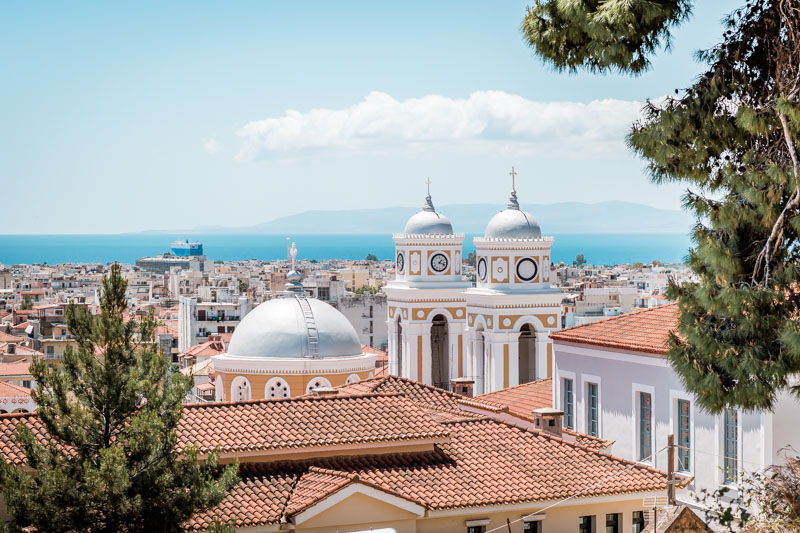
You can park for free at the Agora and walk through the old town up to the Kastro of Kalamata. From here, you have a fantastic view of the city all the way to the harbour. Admission to the Kastro costs between €2 and €4, depending on the season.
Culinary treats in Kalamata
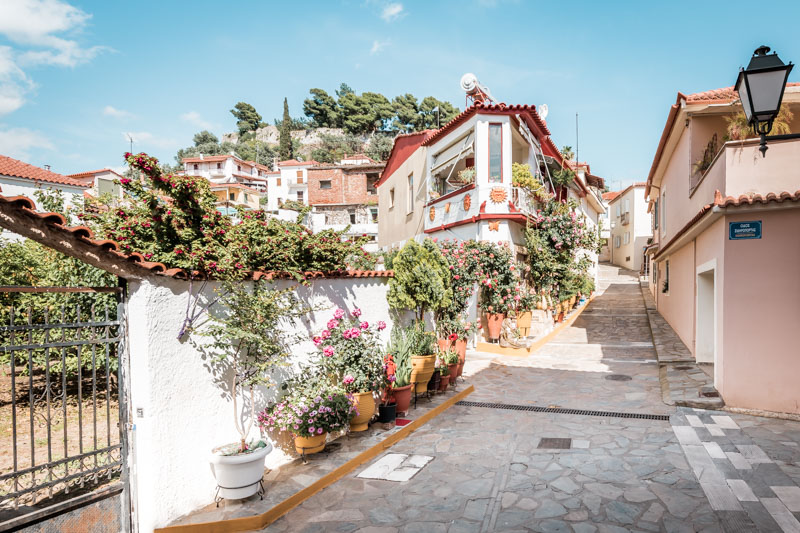
Below the castle hill, you enter the old town. This area is traffic-calmed and shows its cosy side. Our tour leads past the beautiful Ypapanti Church to the square “Platia 23. Martiou”.
Opposite the Archaeological Museum of Messinia is probably the oldest souvlaki stall in the city. “Souvlakia o Tzimis” is a true icon of Kalamata. It is worth a short stop, because the chicken skewers with homemade fries are simply delicious!
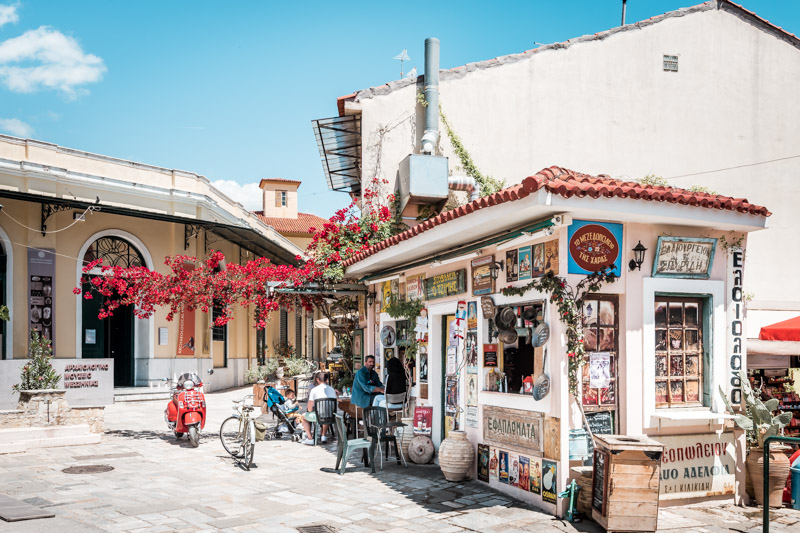
Right next to it is the small Byzantine Church of the Holy Apostles. In the branching alleys, you will also find numerous cafés and tavernas, music bars and small shops. A visit to Kalamata is also worthwhile in the evening.
💡 Peloponnese book tip: The Peloponnese travel guide from Bradt contains numerous valuable tips for the peninsula and is a faithful companion on your road trip. Order here: View on Amazon*
In Kalamata, we visited the taverna To Kapilio (Το Καπηλειό). The rustic restaurant is quietly located in a side street and is charmingly furnished. Delicious Greek dishes are served, such as homemade tzatziki, courgette balls and aubergine with feta. We felt like we were in gourmet heaven. The staff were very hospitable and the prices reasonable!
By the way, behind the port of Kalamata lies the new town, which is not necessarily worth a detour. Only along the shore road are there some hip cafés and bars where you can round off the evening.
Hotel recommendations near Kalamata
Bay View GuestHouses
Apartment complex a few minutes outside Kalamata, in a hillside location with a fantastic view of the Messinian Gulf. Friendly landlady, well-equipped kitchen and large balcony or terrace. More information about Peloponnese accommodation on Booking.com*:
#4 Messene: The ancient showcase site
Messene was once the ancient capital of the Messinia region. The Greek polis (city) was founded in 369 BC by the Theban general Epaminondas after his victory over Sparta.
Thanks to its strategic location, Messene was one of the most powerful Greek cities until Roman times. After that, Messene gradually lost its importance.
Today, the area at the foot of the 798-metre-high Mount Ithome is considered one of the most extensive excavation sites in all of Greece. Thanks to generous private donations, Messene has become a true showcase excavation site. It is well worth a visit even for non-historians, as it brings history tangibly to life.
Excavations are constantly progressing, with new finds from the ancient city emerging year after year.
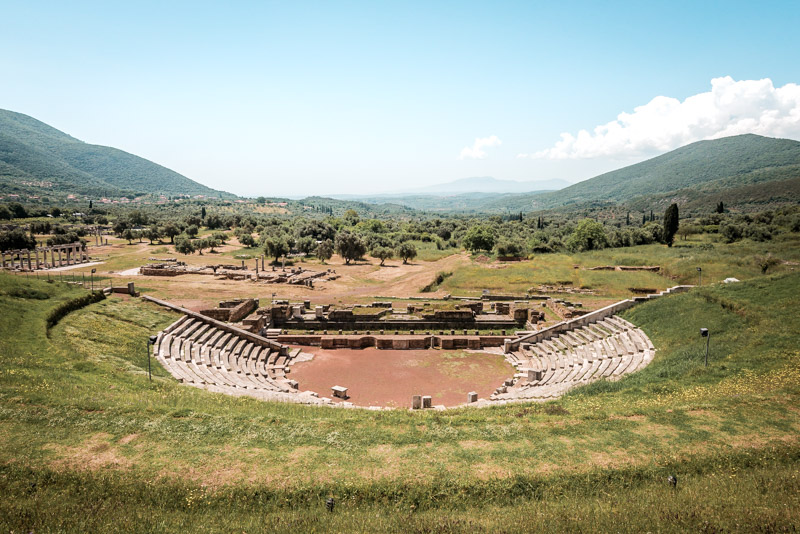
Since the site is only about 40 minutes from Kalamata, Messene is perfect for a day trip. The terrain below Mount Ithome is very extensive. We recommend avoiding the midday heat, as there is hardly any shade on the excavation grounds. The remains have been very well reconstructed, giving you an excellent impression of the entire complex.

Among other things, you can see an amphitheatre, remains of an agora, an impressive Asclepieion temple and one of the largest stadiums in ancient Greece, including a tribune lined with columns.
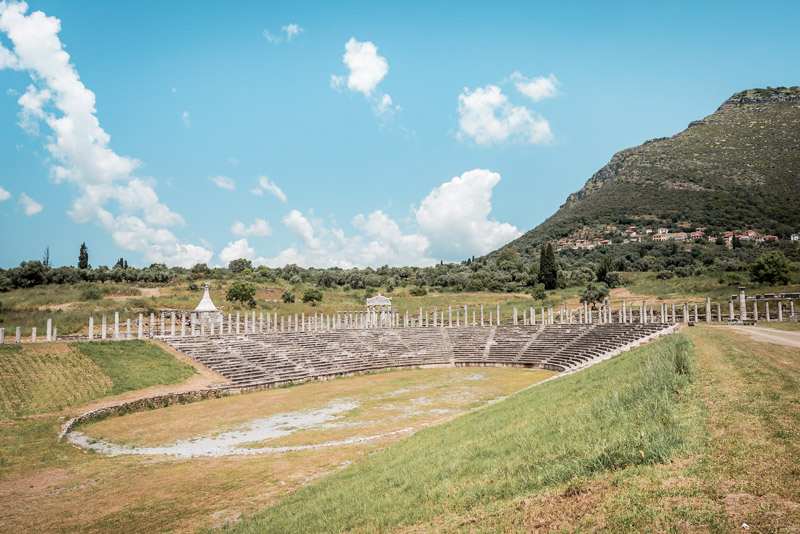
Parts of huge cyclopean walls give an idea of how powerful the complex of Messene must have been in antiquity. Information boards describe the individual structures and provide details about life and rituals at this ancient site.
- Opening hours Messene: 8:00 am – 8:00 pm | Admission: €15, reduced €8
✓ Full coverage & unlimited mileage included
✓ Free cancellation until 24h before pickup
✓ Best price guarantee via Discover Cars
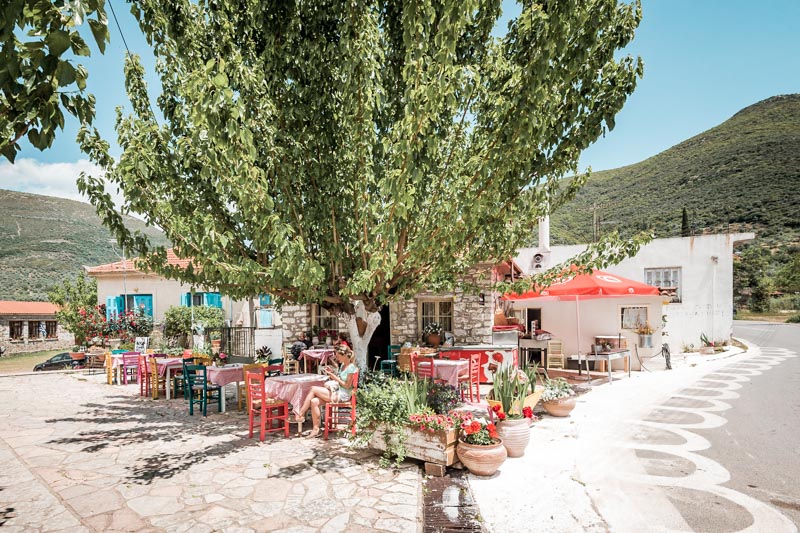
After our hike across the complex, we visited the neighbouring village of Arsinoi and “To Tiganaki tis Xristitsas”. The taverna is located in the middle of the pretty village square and serves delicious homemade food. The ambience with the colourful chairs is very cosy, and the owner is friendly and attentive.
#5 The Byzantine fortress of Mystras
One of the most impressive historical sites in Greece is the Byzantine ruined city of Mystras. The mighty fortress was built by crusaders in 1249 and still impressively sits enthroned on a rock today.
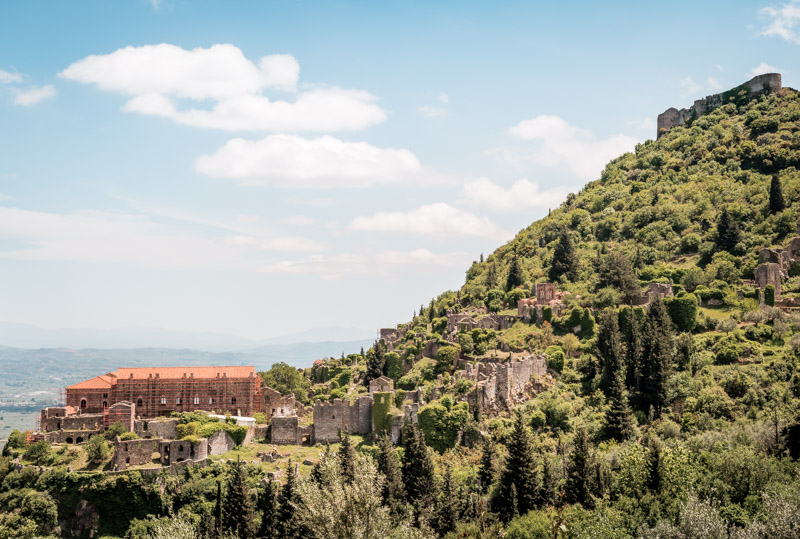
From the 13th to 15th century, tens of thousands of people lived here in the heart of Laconia. After that, the strategic complex changed rulers several times between the Venetians and Ottomans. In 1825, Mystras was almost destroyed during the Greek struggle for independence.
As soon as you approach the fortress above the complex, an impressive panorama awaits you. You can park your car here and use the upper entrance to visit the castle complex at the top of Mystras. Unfortunately, only ruins remain. However, the view from the Kastro across the wide plain of Sparta is magnificent.
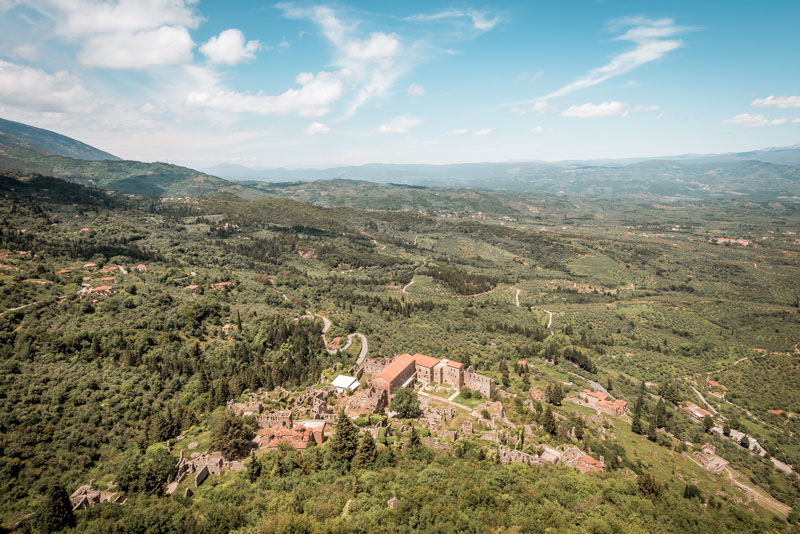
In spring, the complex is awash with a dreamlike sea of flowers. Until May, the midday heat will also be bearable. In the upper area of the complex, you will pass several Byzantine churches and remnants of old settlements. The upper complex extends to the Despot’s Palace, which is still very well preserved, even though it was unfortunately closed to visitors at the time of our visit.
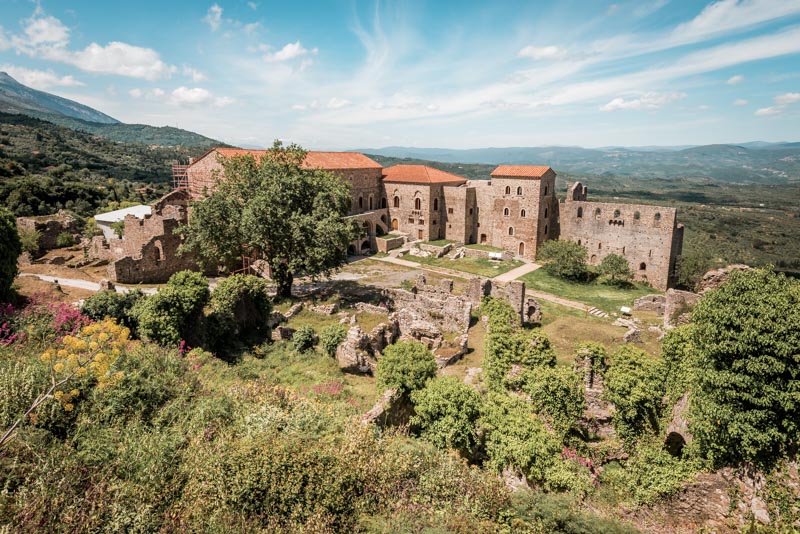
To visit the lower town, you can also drive down and use the car park at the lower entrance of Mystras. This will save you the arduous walk back. Mystras is a very spacious site, so you should allow several hours for your visit. The structures are explained in detail on information boards in English.
- Opening hours Mystras: 8:00 am – 8:00 pm | Admission: €20, reduced €10
How to get to Mystras
If you set off from Kalamata in the direction of Mystras, we can recommend the more scenic, toll-free road over the mountains. It is half the distance of the toll road and, despite some hairpin bends, only 10 minutes longer.

The road is paved and in good condition. The drive takes you through narrow gorges and wild nature, past sleepy mountain villages and bizarre rock formations. A real adventure! Just watch out for falling rocks and speeding road users.

#6 Sparta: In the footsteps of Leonidas
Even though the Spartans were among the greatest powers of antiquity, there is hardly any trace of the influence of King Leonidas and his people today. Unfortunately, financial resources for the excavation site of Sparta are lacking, so the site is now overgrown with grass and threatens to decay.
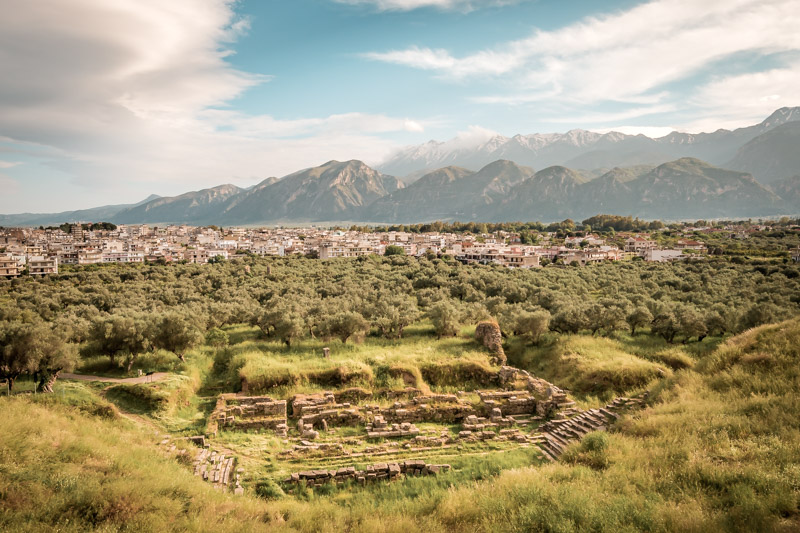
For history buffs, however, a short detour to the archaeological site is worthwhile. Above all, the Amphitheatre of Sparta is still reasonably well preserved. From here, the view opens up to the new town of Sparta and the mighty Taygetos Mountains.
- Opening hours Ancient Sparta: 08:00 – 16:00, closed on Tuesdays | Admission free
Furthermore, a large part of ancient Sparta lies beneath the thick concrete of the new town, which was simply built on top of the ruins in the 19th century. When walking through Sparta, you come across small archaeological sites everywhere. The ruins usually come to light when old houses are demolished and new ones are built.
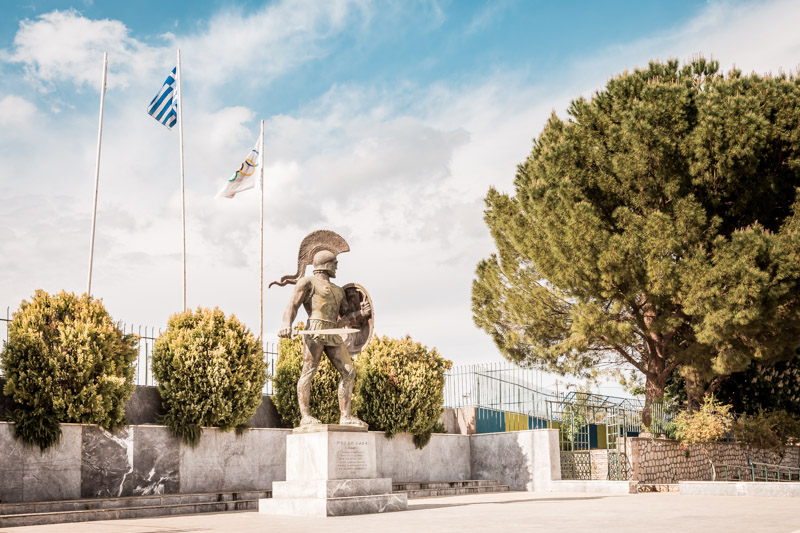
The city of Sparta itself is not particularly worth seeing. We only stopped here for a coffee and took a short stroll along the famous Palm Road. If you like, you can take a selfie with Leonidas, the legendary king of Sparta.
#7 Pylos and Methoni in the southwest
The western finger of the Peloponnese can be explored wonderfully from Kalamata. The pretty little town of Pylos is about an hour’s drive from Kalamata. Things are lively here. Around the harbour square with its large plane trees, cafés and tavernas are lined up one after another.
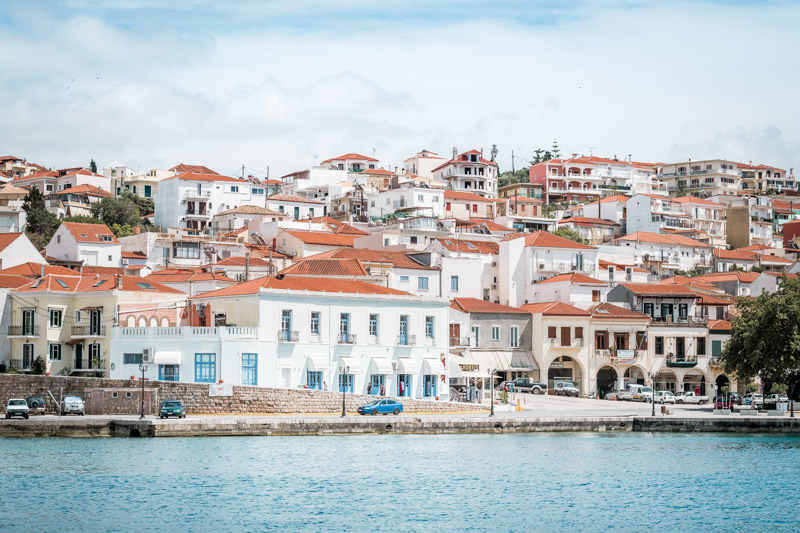
A greater rush of visitors can be expected when cruise ships dock in the sheltered bay off Pylos. In recent years, several hotels and resorts have also been built around Pylos, making the town well set up for tourism.
The sleepy fishing village of Methoni
Things are a little more tranquil in Methoni to the south. The small fishing village was still in a deep sleep when we visited in May. Only a few tavernas at the harbour were already open. Otherwise, the village seemed deserted.
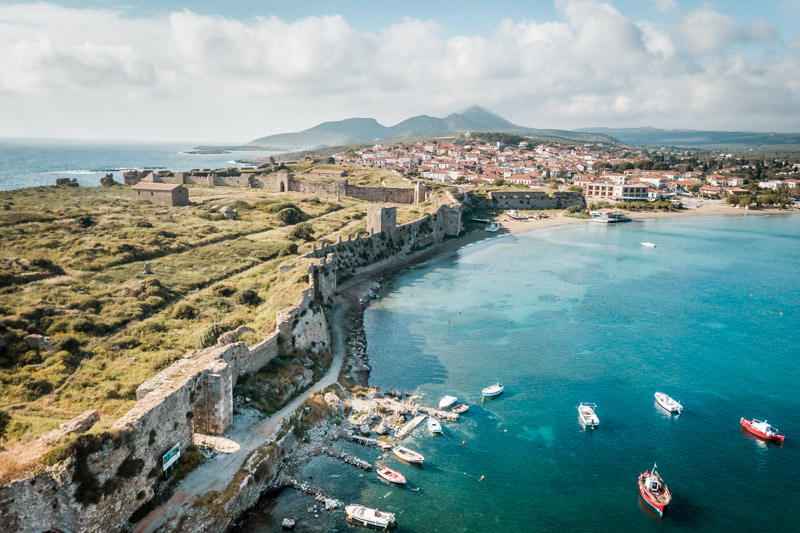
Worth seeing is the Venetian fortress of Methoni. The mighty complex has been a sought-after defensive stronghold over the centuries. At the end of the complex stands a small lighthouse from the Ottoman period, which has become an icon of the entire Peloponnese region.
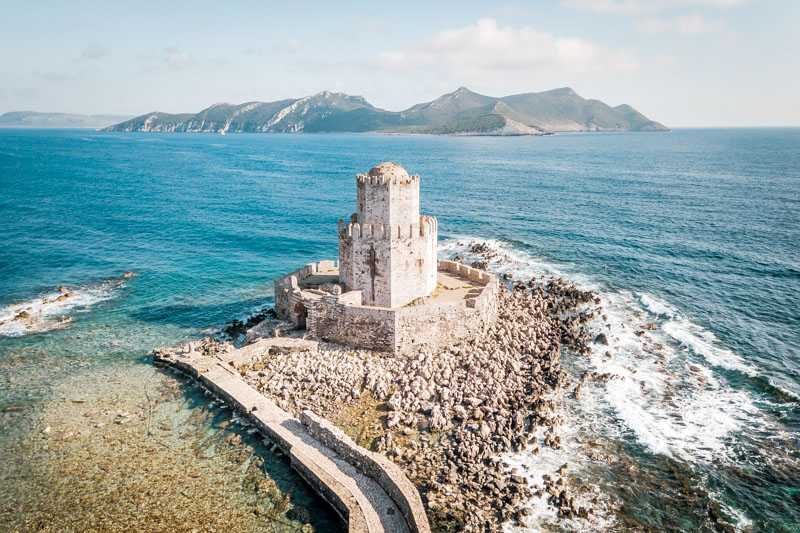
- Opening hours Methoni Fortress: 08:30 – 16:00, closed on Tuesdays | Admission: €3
#8 Voidokilia: Dream bay of the Peloponnese
One of the most beautiful Peloponnese highlights on our round trip and definitely a must-see is Voidokilia Beach near Pylos. The Ox Belly Bay is a dream beach, and especially in spring you usually have the gem all to yourself.

The turquoise-blue water slopes very gently, making it ideal for children. The sandy beach is natural and unmanaged, so there are no umbrellas or sanitary facilities. The coast around the Bay of Navarino can also be explored beautifully with guided sea kayak tours (via GetYourGuide*):
➲ To the sea kayak tour incl. lunch*
Hike to Navarino Castle (Paleo Kastro)
The most beautiful view of Voidokilia Beach is from the neighbouring Navarino Castle (Paleo Kastro). You can reach the castle either via a very steep trail from the beach or via a footpath along the ridge.
The access road along the isthmus between the lagoon and the beach is a rough gravel road. Along the lagoon and in Navarino Bay, kayaking is offered. At the end of the slope, there is a small parking bay. From here, the path leads up to the Paleo Kastro.

Entering the castle is at your own risk, as the ruins are dilapidated. There is no marked path up to the viewpoint of the bay. You have to make your way through tall grasses and bushes inside the castle.
The ascent takes about 20 to 30 minutes. Spiders and snakes feel particularly at home in the undergrowth, so sturdy shoes and long trousers are recommended. However, the magnificent view of Voidokilia Bay more than makes up for the effort.
#9 Peloponnese idyll in Koroni
From Methoni, it is worth taking a detour to the picturesque village of Koroni on the east coast. The small village with its whitewashed houses enchanted us right away. It is picturesquely situated on a hillside directly by the sea.
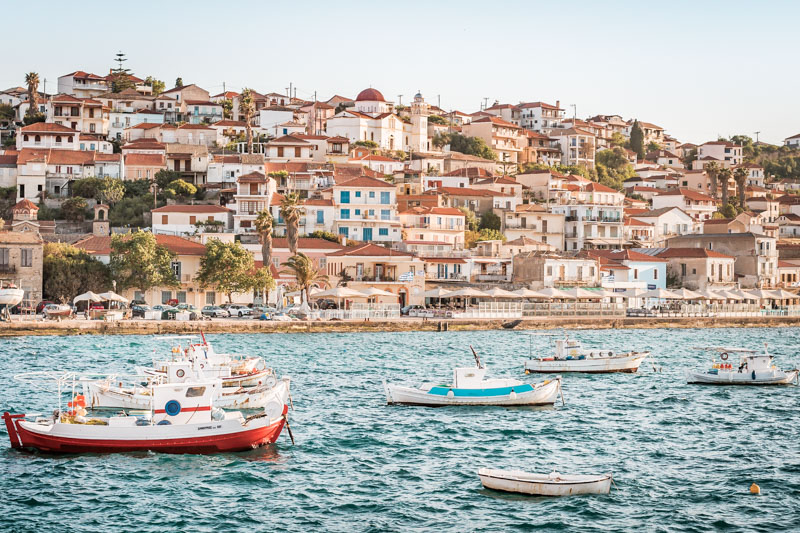
Take your time to stroll through the photogenic alleys. Koroni is alive and exudes an authentic charm. The children play on the Platia, the kafenia are well attended by locals.
Along the waterfront, there are many shops and cosy tavernas to stop at. On a clear day, you can look across to the Mani and the mighty Taygetos Mountains.
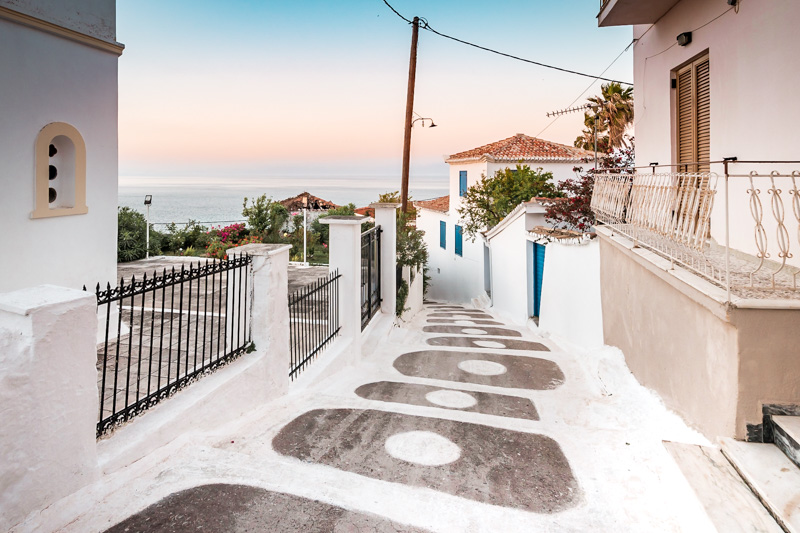
Behind the mighty fortress that towers above the village, there are miles of sandy beach. Koroni was one of our absolute highlights on our Peloponnese round trip.
#10 Detour to the wild Mani
We continue our Peloponnese round trip and explore the middle finger of the peninsula for the next few days. Only 30 minutes from Kalamata, we reach the Outer Mani, also called Exo Mani.
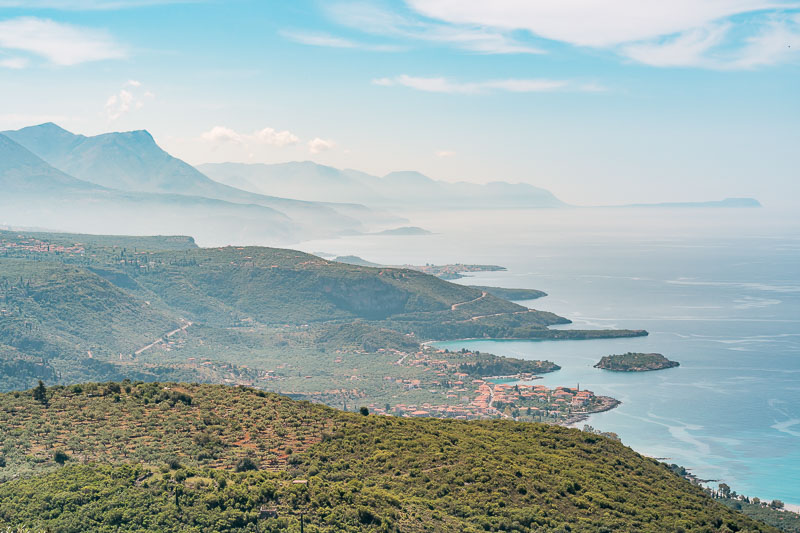
In the beautiful coastal town of Kardamili, we make a short coffee stop before continuing into the heart of the wild Mani. The southern tip of the Mani with Cape Tenaro marks the southernmost point of the Greek mainland.
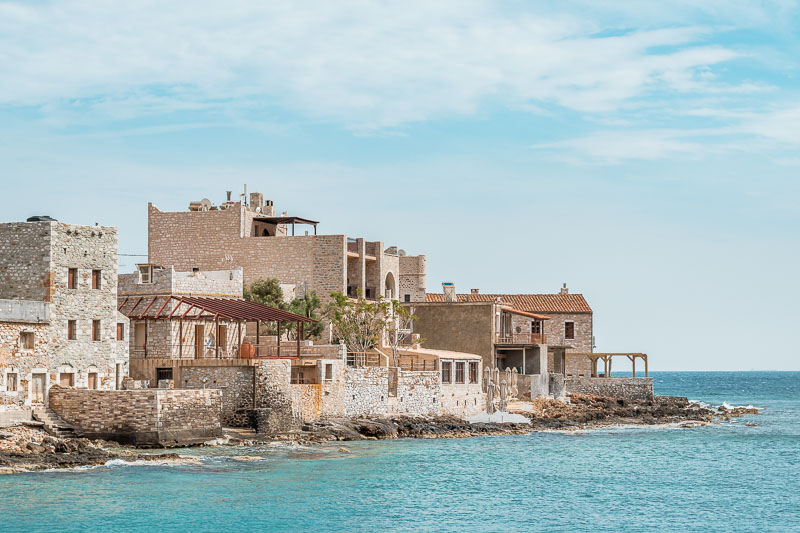
→ You can find all our highlights of this unspoilt region in our separate article: Mani Peloponnese
#11 Day trip to Elafonisos Island
During an extended Peloponnese round trip, it is worth taking a detour to the island of Elafonisos. It is located at the southern tip of the eastern finger of the Peloponnese and is still considered a real insider tip. The small island of Elafonisos is hardly known to international holidaymakers but offers some of the most beautiful sandy beaches on the peninsula.
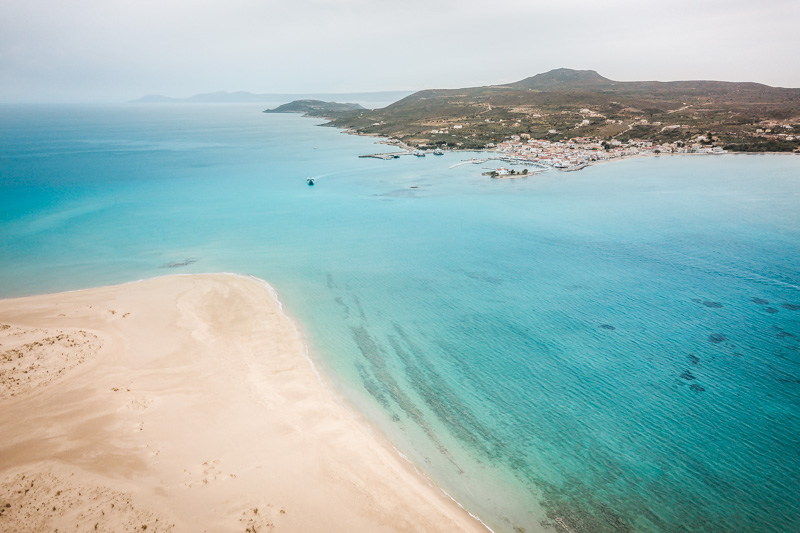
Elafonisos is separated from the Peloponnese by a narrow strait. Just 1,000 inhabitants live on the islet, which has one of the largest fishing fleets in Greece. Tourism only plays a major role in July and August. From the harbour town of Neapoli, regular car ferries run to Elafonisos.
#12 Monemvasia: The medieval fortress
Some 45 km north of Elafonisos, the rock of Monemvasia rises like a petrified prehistoric giant from the sea. Its gigantic dimensions leave you in awe. Monemvasia was one of our absolute highlights on our Peloponnese round trip, and we would go so far as to say it is unmissable!
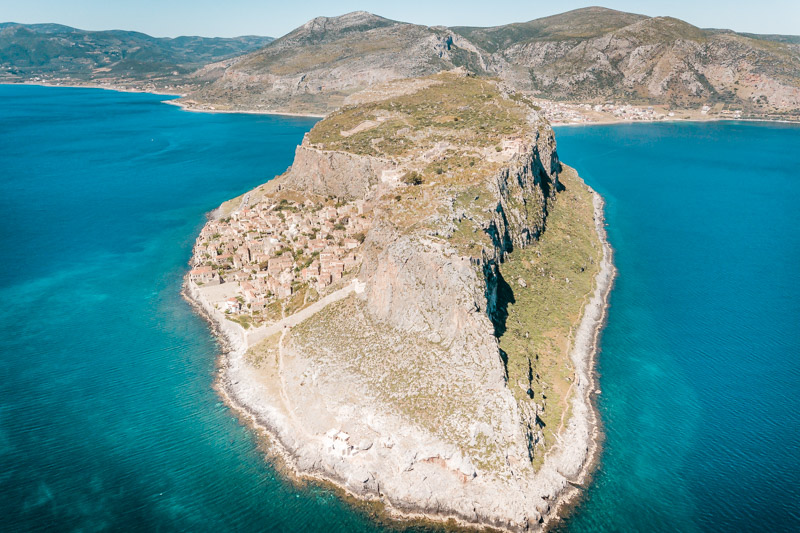
The medieval fortress was built on an offshore island. The first settlements date back to around AD 500. In Byzantine times, a gigantic castle was built on the top of the rock as a defensive base. Later, Venetians and Ottomans fought over the strategic fortress.
Unfortunately, not much remains of the once imposing upper castle complex. Nevertheless, you can still enjoy a fantastic view of the lower village of Monemvasia.
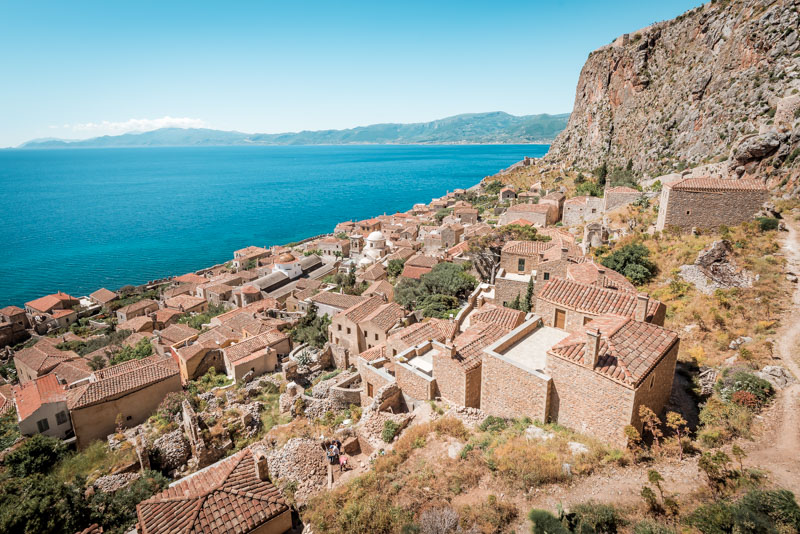
In its heyday, Monemvasia had over 25,000 inhabitants. From 1822, with the liberation of Greece, the fortress sank into insignificance and was almost deserted by 1970. Since 1980, people have been settling here again. The island is connected to the mainland by a narrow causeway.
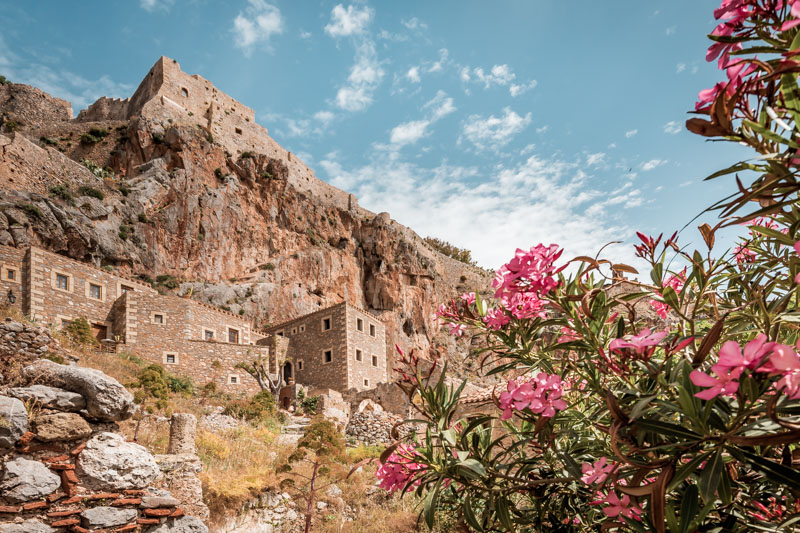
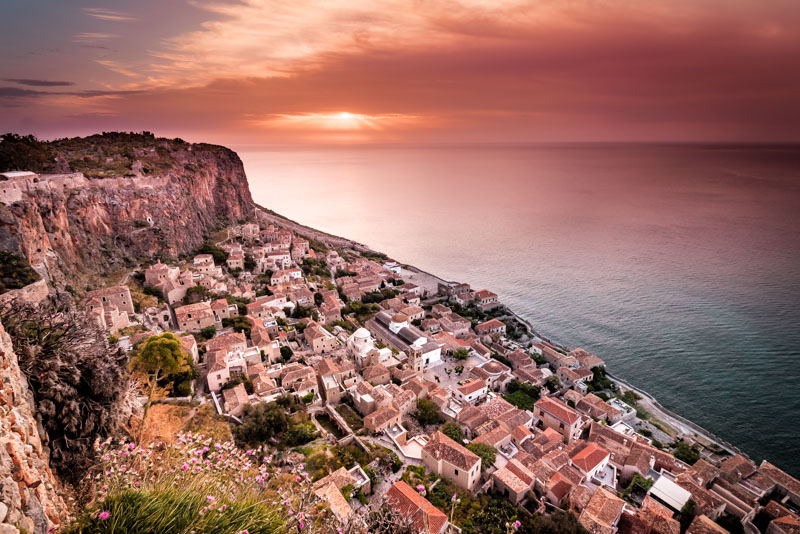
You can reach the former upper town with the fortress on foot in about 10 to 15 minutes. For early risers, an ascent for the sunrise is recommended. The scenery from up here is unique! Admission to the fortress is free of charge.
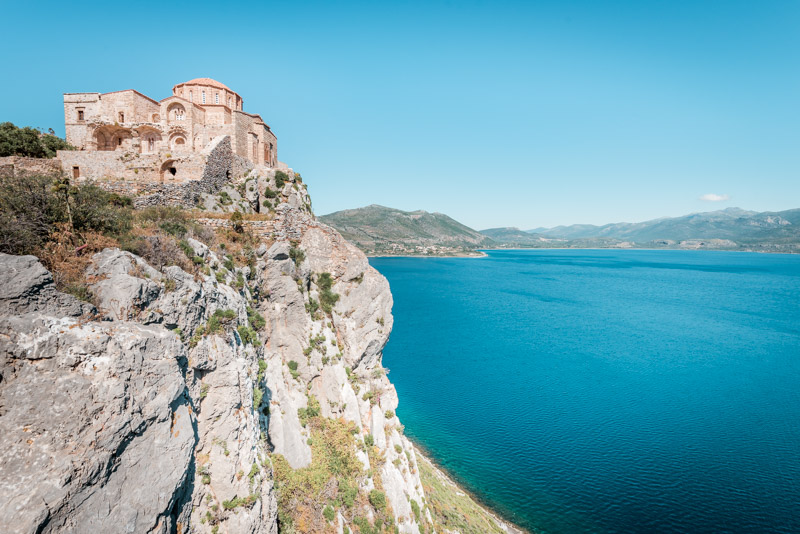
At the entrance, as well as throughout the site, there are information boards about the buildings and their historical background. Be sure to also visit the beautiful Byzantine Church of Agia Sofia and the remaining parts of the complex. You will always be accompanied by a breathtaking panorama.
In the alleys of Monemvasia
The lower village has been largely restored true to the original and is now rightly a tourist magnet. Walking through Monemvasia, you feel transported back to the Middle Ages. Coarse cobblestones, narrow winding alleys and charming archways create a very special atmosphere.

You can stroll wonderfully along the main street. There are souvenir and craft shops, as well as numerous tavernas, bars and cafés. It is worthwhile checking a few restaurant reviews (e.g. on TripAdvisor) in advance. We had a very tasty meal at the Taverna Oinomelo.
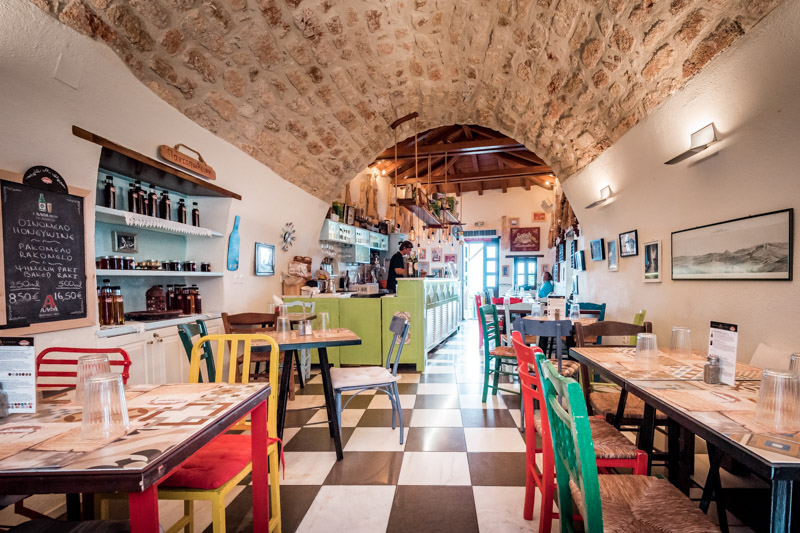
The restaurant is located along the main alley near the entrance. You can sit outside on a small balcony or in the cosy interior. The homemade Greek dishes have that certain something and taste excellent. Prices are moderate for Monemvasia. Very friendly staff and a relaxed atmosphere.
Where to stay in Monemvasia
There are also plenty of accommodation options on Monemvasia. You should plan at least one overnight stay so that you can experience the magical atmosphere outside of the tourist rush hours.
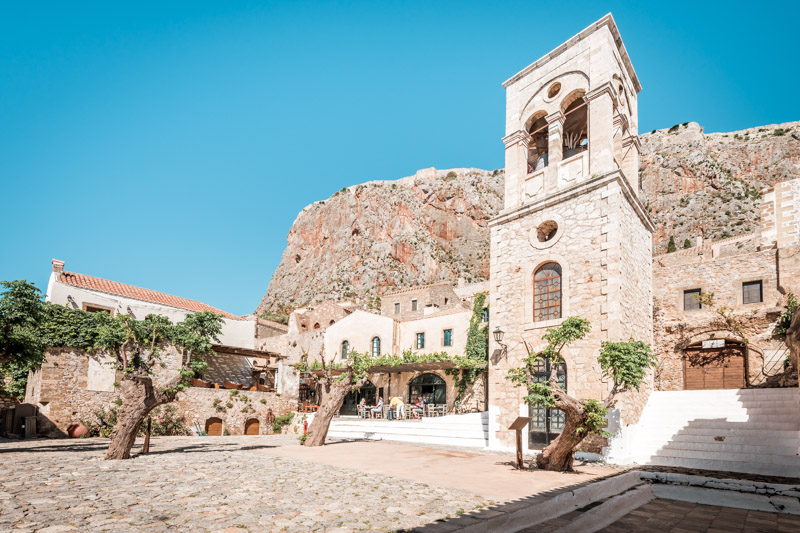
Note that Monemvasia is a “car-free zone”. This means that you have to park your car in front of the city gate and walk into the complex with your luggage. Some hotels also offer a luggage service.
Parking spaces are only available along the roadside and these are limited. We walked at least 10 minutes to the city gate. Within the lower town, however, the distances are quite short.
→ In this post, you’ll find more information about visiting the fortified town: Monemvasia
Hotel recommendation in Monemvasia
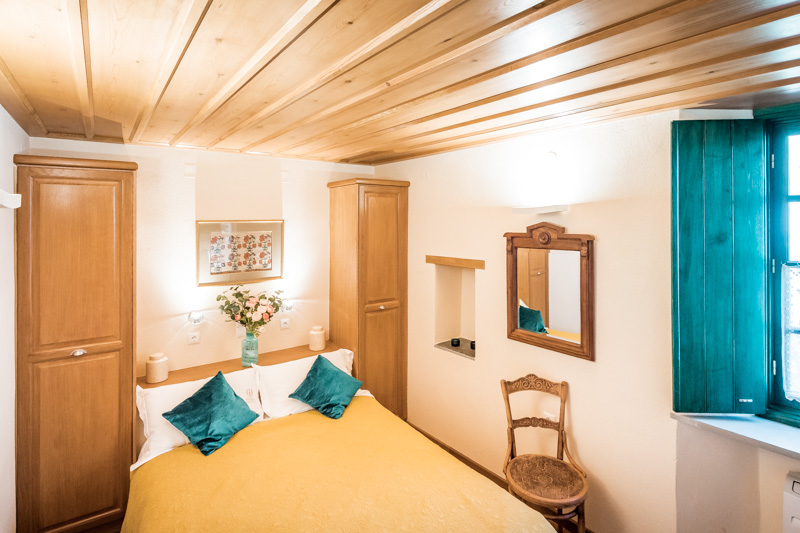
Ritsos Guesthouse
Tastefully furnished, authentic guesthouse in a quiet side street. In less than five minutes, you can be in the middle of the action on foot. From small budget rooms to large suites for every budget, with a hearty breakfast right at the Kafenion next door. More information about the accommodation and prices on Booking.com*:
#13 To Leonidio on the Forgotten Highway
If your Peloponnese round trip takes you from Monemvasia to Nafplio, be sure to take the route via Leonidio along the coastal road. A fantastic panoramic drive awaits you!

The road from Kiparissi to Fokiano was only completed in 2018. So far, it does not appear on Google Maps or in navigation devices. We have christened the route the “Forgotten Highway” because during the 25 kilometres, there was no traffic at all.
💡 Help with your Greece holiday planning: Not sure where to start or how to plan your trip to the Peloponnese? No problem — benefit from our years of experience travelling to Greece and let us help you. We can advise you on all your questions and concerns, even via video chat. You can book your consultation here: Travel Advice Greece
Forgotten villages and lonely bays
The starting point of the new road is the small harbour village of Kiparissi. The whitewashed houses along the shore shine like a Cycladic village. In May, the cafés were still closed and the pretty village seemed deserted. In the summer season, Kiparissi is a popular destination for Greeks.
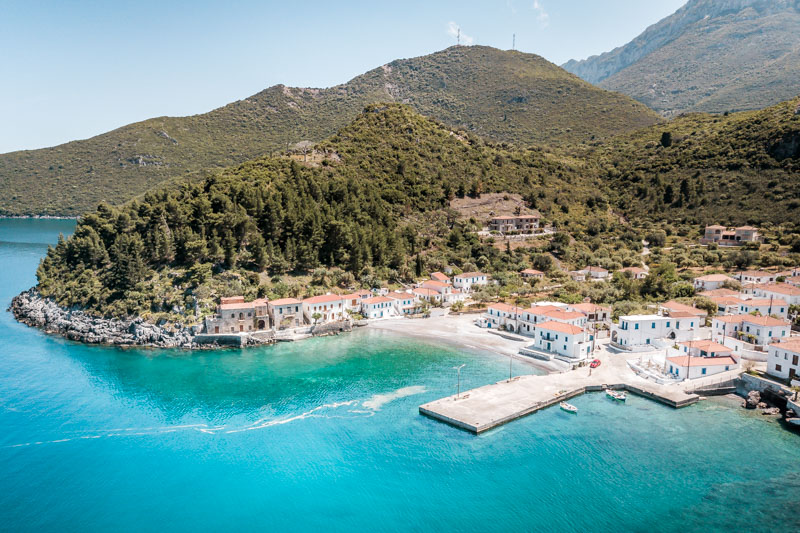
The picturesque route continues directly above the sea to Fokiano. Even from afar, the turquoise-blue water of the lonely bay shines invitingly. There is a kafenion, a taverna and a beach bar.
The wide beach is lined with light pebbles. The scenery is a dream! We were the only visitors to Fokiano Beach in May. Behind the bay, there is also a parking area for motorhomes.
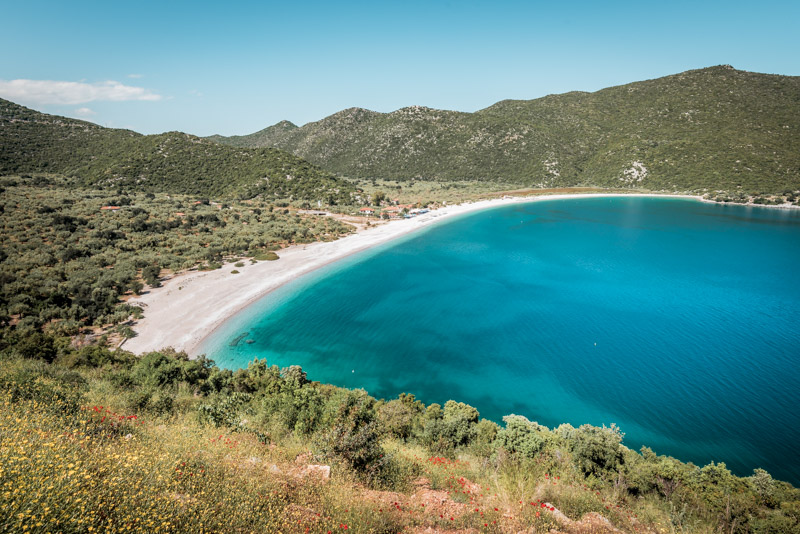
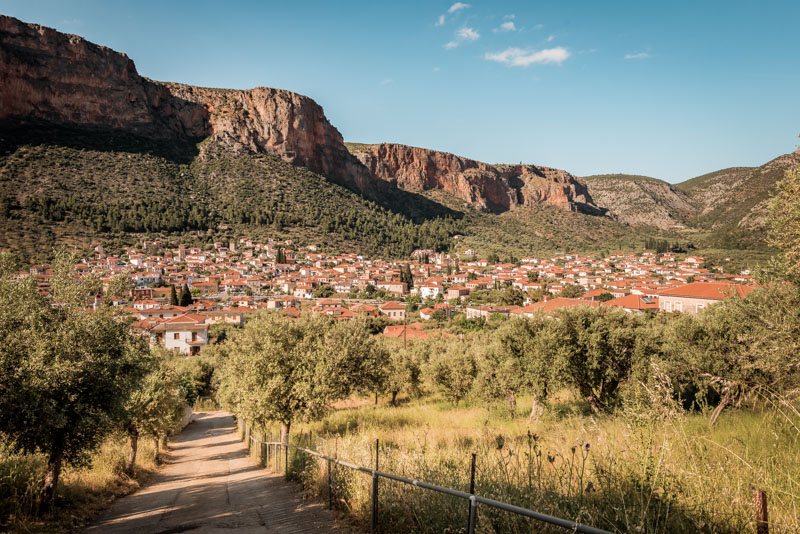
From here, the road winds its way to beautiful Leonidio. The small town is picturesquely situated below a rocky cliff. Easter in Leonidio is known nationwide. Hundreds of small hot air balloons are released into the sky during the celebrations.
→ You can find more information about Easter in Greece in our dedicated article: Easter in Greece

The coastal road that leads from Leonidio to Nafplio is also known as the Arcadian Riviera. Turquoise-blue sea and tranquil villages as far as the eye can see. The Peloponnese straight out of a picture book.
#14 Nafplio: Greece’s most liveable city
It is not without reason that Nafplio has been voted by the Greeks several times as the most liveable Greek city. The pretty harbour town with its 14,500 inhabitants should not be missed on a Peloponnese round trip.
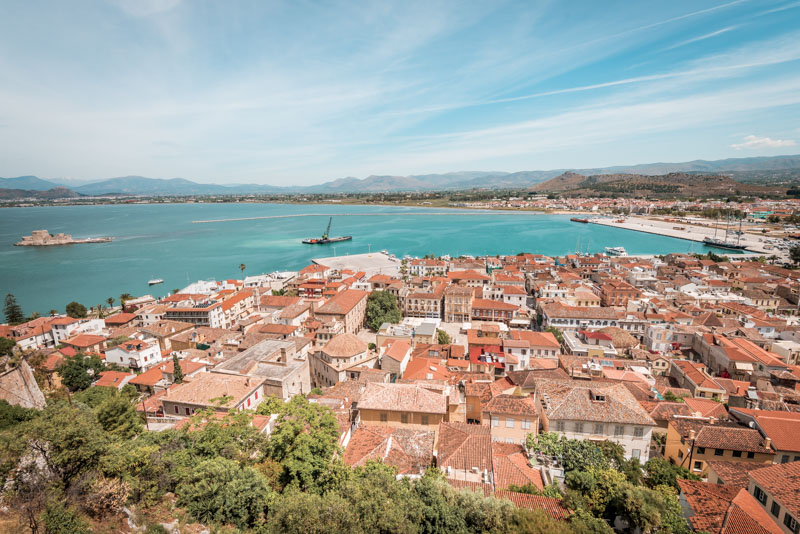
Nafplio is not only about its wonderful hillside location on a rocky outcrop directly by the sea. The beautiful old town with its shopping alleys is traffic-calmed and offers numerous cafés, tavernas and music bars. Everywhere, colourful bougainvillea adorn the house façades, and you discover a new photo opportunity at every corner.
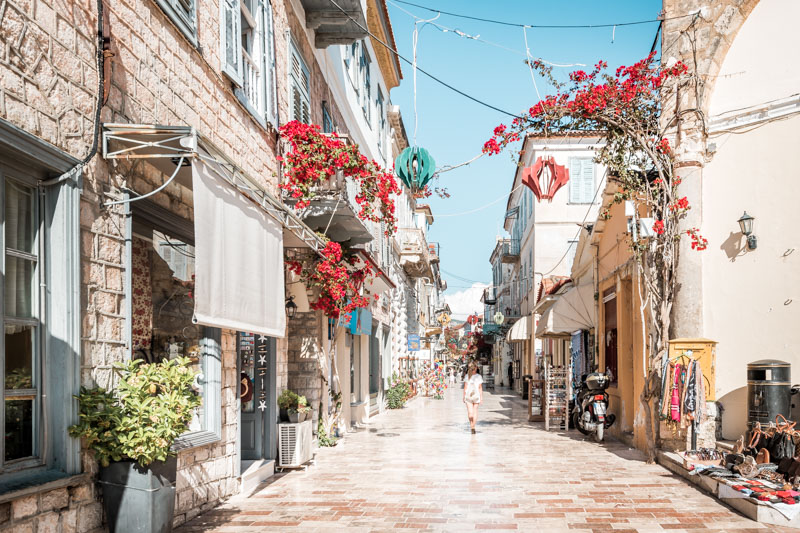
The centre of the old town is Syntagma Square. Beautiful marble slabs lie at your feet. It feels wonderful to walk along them. The city knows how to enchant with its elegant charm.

Shoppers’ hearts also beat faster in Nafplio. Many visitors find themselves in a shopping frenzy when they see the high-quality leather goods and pretty boutiques. Typical for the city are the many Komboloi shops. Kombolois are bead chains that older gentlemen in particular like to use as a fidgeting pastime.
→ In this post, you’ll find more information about the city and all our tips for Nafplio: Nafplio
Nafplio’s fortresses: Palamidi, Akronauplia and Bourtzi
The former capital of Greece has always been fiercely contested. Venetians and Ottomans fought bitter battles here. Even from afar, you can see the different eye-catching fortifications of Nafplio.
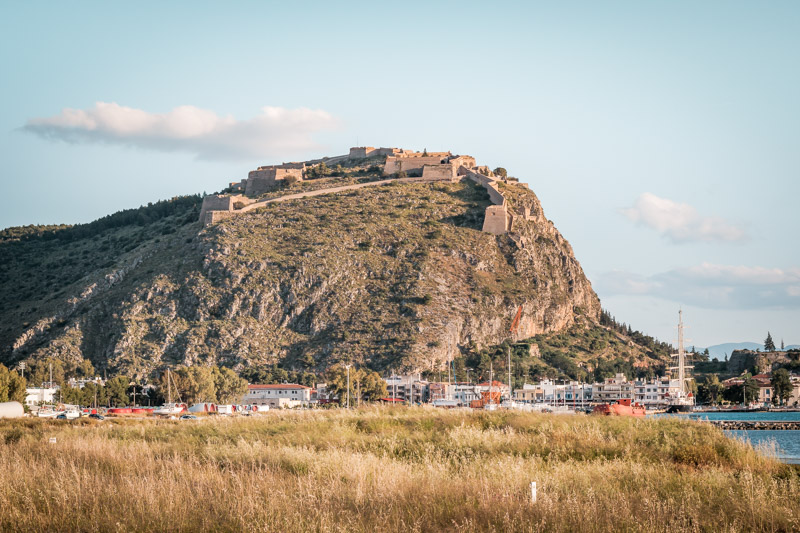
You can reach the impressive Palamidi Fortress either on foot via 999 steps from the city centre or by car via a driveway to the castle walls. The view from up here over the city and the Argolic Gulf is magnificent.
- Opening hours Palamidi Fortress: 8:00 am – 8:00 pm | Admission: €20
The second fortress, Akronauplia, above the old town is not immediately noticeable, as a hotel has been built in this area. A road leads up to the clock tower. From here, you also have a beautiful view of the harbour and the city. Especially at sunset, Akronauplia is worth a detour.
The third fortification is the symbol of the city of Nafplio. It is the Bourtzi water castle, which sits on a small island in the harbour. Excursion boats run several times a day during the summer months to the once Venetian fort.
If you would like to get to know the city in depth, a guided city tour of Nafplio via GetYourGuide* is recommended.
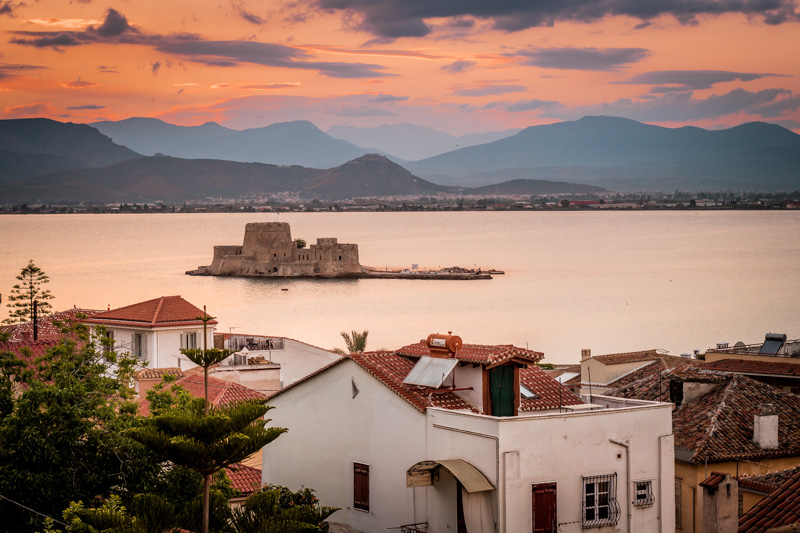
The city is also an ideal starting point for exploring the eastern part of the Peloponnese. Many historical sites such as Mycenae, Epidaurus and Corinth can be reached in just one to two hours.
Culinary highlights in Nafplio
We were also spoiled with culinary delights in Nafplio. For lovers of Greek loukoumades, there is no getting around Pergamonto. Here you can find the heavenly dough balls in a wide variety. Especially in the traditional version with honey and cinnamon, they are a real treat. The two owners are absolutely adorable, and their loukoumades are homemade.

In the evening, we can recommend the restaurant Karima Kastro. Here you will find delicious Greek-oriental food at fair prices. We found the hummus, falafel and couscous salad very tasty! The restaurant is located in a quiet side street, a little away from the bustle of the main street.
Hotel recommendations for Nafplio
Regno Di Morea
Small boutique hotel on the eastern edge of the old town of Nafplio. Tastefully and stylishly furnished rooms and suites, some with a balcony, plus a fantastic breakfast. On Booking.com*, you can find more information about the accommodation and check prices:
Aetoma Hotel
Elegant hotel in the historic centre of Nafplio. Modern and traditional at the same time, with friendly staff, a varied breakfast and very fair prices. On Booking.com*, you can find more information about the accommodation and check prices:
#15 Epidaurus and the Corinth Canal
The entire Peloponnese Peninsula is considered a historical treasure chest of Greece, with countless ancient sites to visit. The eastern part in particular offers several important excavation sites that could be interesting even for those who are not history enthusiasts.
The sites of Corinth, Epidaurus and Mycenae can easily be visited in one day. These historic sites were already well attended when we visited in May. The reason for this are the numerous day-trippers who take part in one of the Athens excursions.
The Amphitheatre of Epidaurus
Epidaurus is considered one of the best-preserved ancient theatres in Greece. With 55 rows of seats and room for 14,000 spectators, it is also one of the largest ancient theatres of all. When you stand before it for the first time, you will be blown away by the sheer dimensions!

It is said that you can hear the whisper of a speaker even in the top row of the theatre. Even though you will rarely be alone on stage in Epidaurus, you are of course welcome to give a speech at any time and test the excellent acoustics for yourself.
The Epidaurus Theatre is over 2,300 years old and is one of the most important tourist attractions on the Peloponnese. If you want to avoid the rush of visitors, we recommend visiting first thing in the morning or in the evening. Click on the link to secure a ticket on GetYourGuide*:
➲ To the online ticket for Epidaurus*
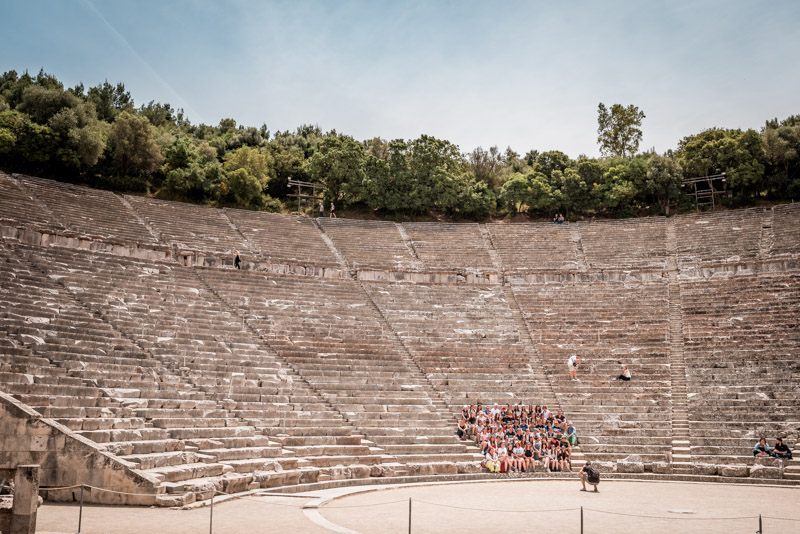
Even today, performances take place during the Epidaurus Festival at the beginning of August. Under a wonderful starry sky, mostly classical works are performed. A visit on one of these evenings is an unforgettable experience, not only for theatre fans!
On the site, which also served as a spa and religious centre, there are other temple complexes and building ruins. Unfortunately, these are not as well preserved as the theatre. They have little visual impact, and it takes a good imagination to get a sense of the extent of the complex in its heyday.
- Opening hours Epidaurus: 8:00 am – 8:00 pm | Admission: €20, reduced €10
The Corinth Canal
Unfortunately, the area today no longer reflects the historically great significance of the former region. Corinth was a powerful empire right on the Gulf of Corinth, which controlled trade routes at this strategic point for many centuries in antiquity.
For history buffs, it may be worth visiting Ancient Corinth with its Agora, the theatre and Odeon, as well as various temple complexes. For everyone else, we recommend at least taking a look at the famous Corinth Canal.
Efforts to cut through this narrow isthmus have existed since ancient times. The project was not realised until 1893, and since then, smaller ships have impressively made their way through the cobalt-green canal.
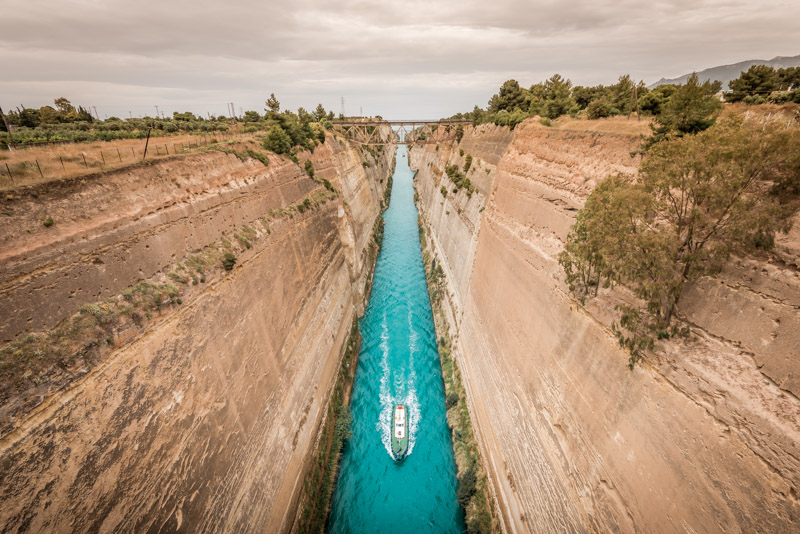
The most beautiful view of the Corinth Canal is from the old bridge (Palea EO Athinon Korinthou) to the railway bridge. You can park your car at a car park with some small bistros.
Hotel recommendations for Epidaurus and Corinth
Desa Green Homes
Four tasteful holiday homes in an idyllic location in the midst of nature, not far from Epidaurus. Only 15 minutes from the sea, with freshly prepared breakfast and many thoughtful touches from the hostess Despina. Ideal for a family holiday on the Peloponnese. On Booking.com*, you can find more information about the accommodation and check prices:
#16 Mycenae: An archaeological highlight
At the latest at the site of Mycenae, you will come across the name Schliemann for the first time. The German archaeologist and discoverer of Troy, Heinrich Schliemann, unearthed a large part of Mycenae. He used Homer’s Iliad to guide him to the presumed — and ultimately correct — location of the site.

Schliemann was actually searching for the Tomb of Agamemnon, which he suspected to be here, about 35 minutes from the city of Nafplio.
Mycenae was once one of the most important cities in Greece. The Mycenaean civilisation, which flourished in the 2nd millennium BC, has not yet been fully researched. Since 1999, the archaeological site of Mycenae has been a UNESCO World Heritage Site.

The gigantic cyclopean walls can be seen from a distance. Other curious formations reveal themselves as you explore Mycenae. Pyramid-like complexes, erected stone circles and cave-like tombs give the entire site a mystical appearance.
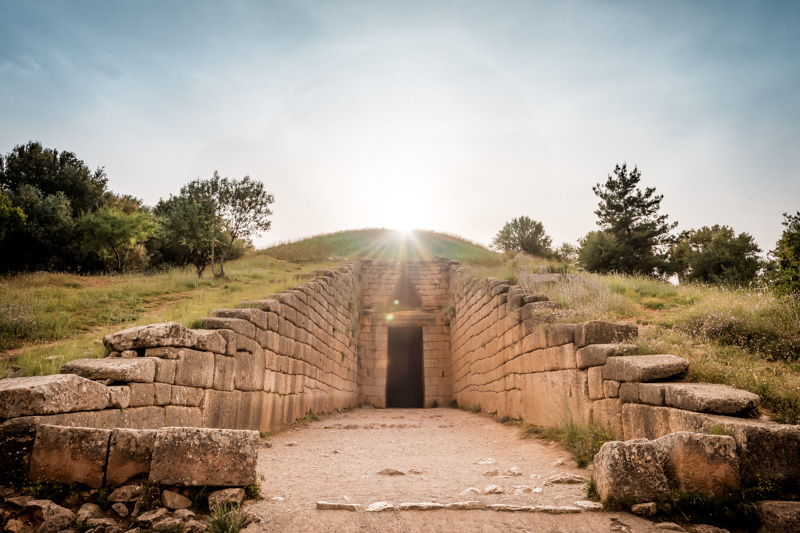
Amazingly, even an Egyptian scarab amulet and a unique golden death mask were found in the tombs. And when you stand in front of the mighty Lion Gate or in the centre of the Treasury of Atreus, you cannot shake the feeling that many a historical secret in Greece has yet to be revealed. You can buy your online ticket before your visit via our partner GetYourGuide*:
➲ To the online ticket for Mycenae*
- Opening hours Mycenae: 8:00 am – 8:00 pm | Admission: €20, reduced €10
More Peloponnese infos
Guided tours on the Peloponnese
Here, we have put together popular tours on the Peloponnese. Some of the excursions are even possible from Athens. Click on the GetYourGuide* activities to see more details:
➲ To the excursion to Nafplio & Mycenae*
➲ To the excursion to Corinth & Epidaurus*
Accommodation on the Peloponnese
On the Peloponnese Peninsula, you can choose between numerous hotels, apartments and holiday homes. Both independent travellers and those who prefer a package holiday on the Peloponnese will find what they are looking for here in all price categories.
The Peloponnese is also an ideal destination for a camping holiday. For years, it has been attracting enthusiasts from all over Europe who come to camp on the Peloponnese. There are many campsites, especially along the coast. You can find all the important information about camping in Hellas in our article: Camping Greece
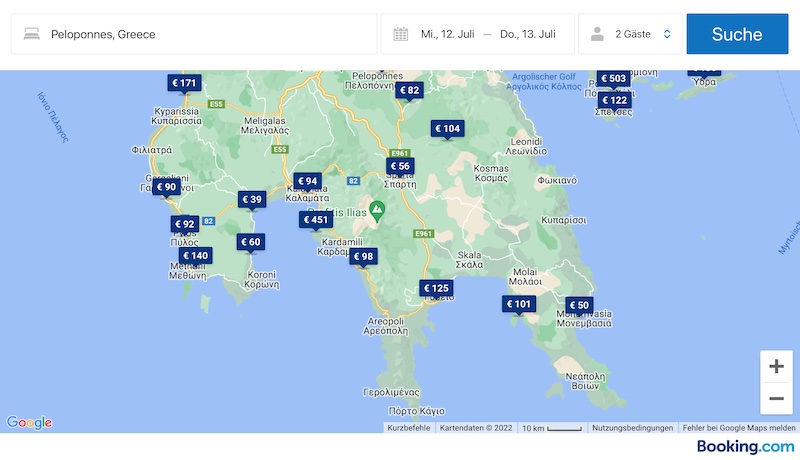
→ On Booking.com*, you will find many hotels on the Peloponnese and you can check prices here:
Peloponnese holiday packages
The most popular destinations for package holidays are Kalamata and Nafplio (Tolo), as well as Olympia (Katakolo) and the coast of Corinth. The journey is by direct flight either to Patras, Kalamata or Athens. It is worthwhile comparing holiday offers for package tours to the Peloponnese in advance.
Package holidaymakers can find the best deals for the Peloponnese via Check24*:
➲ To the package holiday offers*
Peloponnese holiday homes and hotels
If you are planning an extensive Peloponnese round trip, you should plan several stops given the many sights. Especially in the quaint mountain villages and small coastal villages, comfortable holiday apartments can be found. On Booking.com*, you can search for affordable Peloponnese accommodation:
➲ To beautiful accommodation on the peninsula*
Getting to the Peloponnese Peninsula
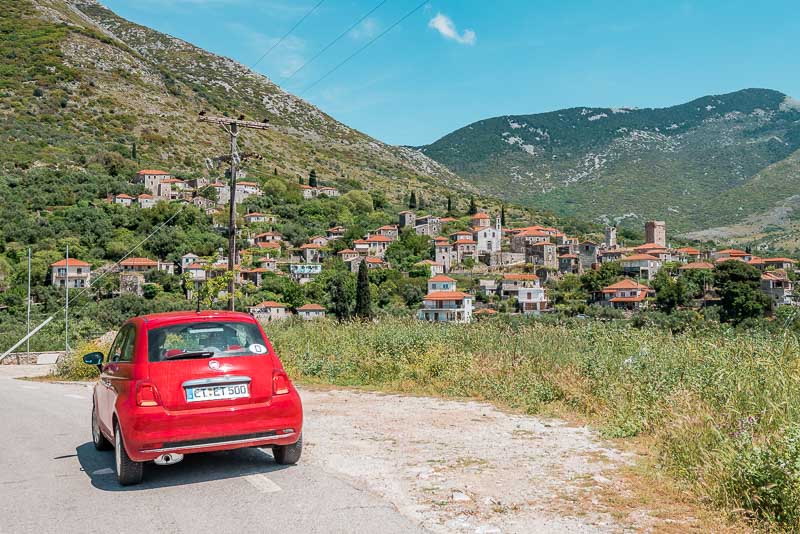
You can also reach the Peloponnese Peninsula by direct flight from Northern Europe. During the summer months, flights to Kalamata and Patras are offered. Both cities are great starting points for exploring the Peloponnese. Ideally, you should rent a car directly at the airport. You can easily compare prices on Discover Cars*:
Flights to Kalamata KLX Airport
Kalamata in the south of the Peloponnese is known for its rich olive groves. From here, it is three hours to the southern cape of Greece. The city on the Messinian Gulf can be reached from airports such as Düsseldorf, Munich and Frankfurt, among others. We like to use the Skyscanner* portal to search for suitable flights:
➲ To cheap flights to Kalamata*
Flights to Patras GPA Airport, Araxos
Patras is located in the northwest of the Peloponnese Peninsula, directly on the Gulf of Corinth. The city is also an excellent base for exploring Western Greece and the Epirus region (e.g. Arta and Parga). There are also flights to Patras from Munich, Düsseldorf and Frankfurt. Use Skyscanner* to find suitable flights:
Alternatively, you can fly directly to Athens. You can also start your Peloponnese round trip from the capital. If you would like to travel to Greece with your own car, we recommend our article on the topic: Getting to Greece
→ For even more travel tips on the Peloponnese and inspiration on the individual regions of mainland Greece, see the overview at:
FAQ for a Peloponnese Road Trip
How many days do you need for a Peloponnese road trip?
For a proper Peloponnese road trip, plan at least 10 to 14 days. The peninsula is large, roads can be winding and there are many worthwhile stops. With only one week, focus on one area: the west, the south or the east.
What are the best places to visit in the Peloponnese?
The best highlights include Olympia, Arcadia, Messene, Mystras, the wild Mani, Elafonisos, Monemvasia, Nafplio, Epidaurus, Mycenae and the Corinth Canal. For beaches, add Voidokilia, Koroni, Fokiano and the coast around Pylos and Methoni.
Is the Peloponnese good for a road trip?
Yes, the Peloponnese is one of the best road trip regions in Greece. You get ancient sites, mountain villages, wild coastlines, fortresses, beaches and small harbor towns in one trip. With a rental car, the peninsula is much easier to explore.
What is a good Peloponnese road trip itinerary?
A strong route starts in Athens and continues via Corinth, Nafplio, Mycenae and Epidaurus to Monemvasia, the Mani, Kalamata, Messene, Voidokilia, Olympia and Arcadia. With less time, focus on Nafplio, Monemvasia, the Mani and Kalamata.
Do you need a rental car in the Peloponnese?
For a road trip, yes. Many villages, beaches and mountain areas are difficult to reach by public transport. A rental car gives you the freedom to include places such as Arcadia, the Mani, Elafonisos, Voidokilia and the Forgotten Highway.
Where should you stay in the Peloponnese?
Good bases are Nafplio for the east, Monemvasia or the Mani for the southeast, Kalamata for the southwest, Pylos or Koroni for Messenia and Olympia or Arcadia for the west. For a full Peloponnese road trip, several short stops work better than one fixed base.
Which Peloponnese sights are easy to visit from Athens?
From Athens, the easiest Peloponnese highlights are the Corinth Canal, Ancient Corinth, Mycenae, Epidaurus and Nafplio. They work well for a short trip or as the first stops on a longer Peloponnese itinerary.
When is the best time to visit the Peloponnese?
April, May, June, September and October are ideal for a Peloponnese road trip. Spring is green and pleasant for ancient sites. July and August are better for beach holidays, but they are hotter and busier.
*Support our blog Greece-Moments
In this post, you will find affiliate links marked with an asterisk (*). If you book or buy something through one of these links, we receive a small commission. For you, the price remains the same. In this way, you help us continue to provide high-quality content for free. Did you like this post and would like to say thank you? Then simply buy us our next Greek coffee ☕️ To the coffee fund
Bookmark this post on Pinterest!