

If you’re looking for some real hidden gems on your trip to Greece, you’ll find them in the Gulf of Corinth, between the Peloponnese peninsula and the mainland. This 127-kilometer-long inlet of the Ionian Sea is framed by majestic mountains, which give the gulf the feel of a tranquil mountain lake.
“Away from the hustle and bustle of the Greek islands, travelers will find an oasis of authenticity in the Gulf of Corinth.”
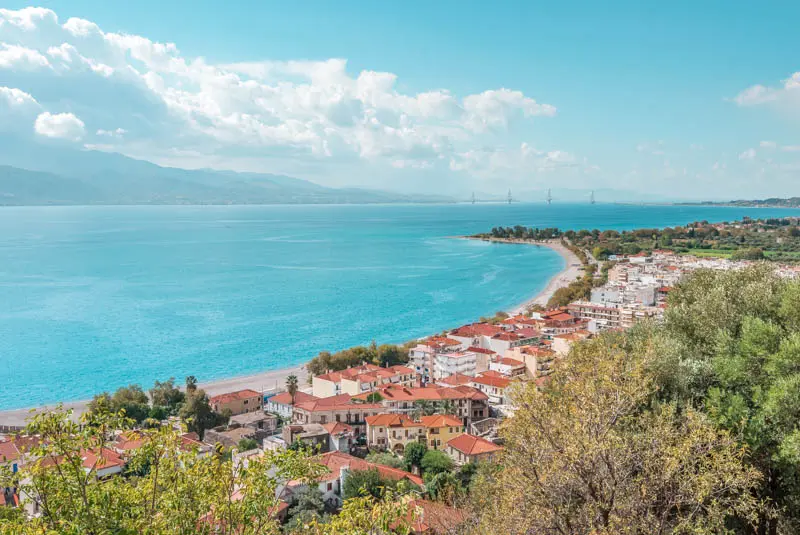
With the Corinth Canal, the region boasts one of Greece’s most memorable sites. Where the waves gently lap the shore, past and present converge, as numerous archaeological finds lie between modern cities like Corinth and Patras.
But it’s not just the history of the “Korinthiakos Kolpos,” as the Greeks call it, that enchants visitors; the culinary treasures (including the Korinthia grapes) and the many warm encounters with locals also make for an unforgettable experience of the Gulf of Corinth’s beauty.
We’ll take you on a journey of discovery to the most important sights in the Gulf of Corinth and to worthwhile detours in the hinterland:
- #1 Corinth Canal
- #2 Loutraki Hot Springs
- #3 Ancient Corinth
- #4 A Break in Xylokastro
- #5 Odontotos Railway: From Diakopto to Kalavryta
- #6 Egio and Trypiti Monastery
- #7 Patras: Gateway to the Gulf of Corinth
- #8 Nafpaktos: The Charming Port City
- #9 Trizonia: An island idyll in the Gulf of Corinth
- #10 Galaxidi: A picture-perfect town in Central Greece
- #11 Oracle of Delphi
- #12 Hosios Lukas Monastery
- #13 Porto Germeno and Aigosthena
- #14 Perachora and Lake Ireon
- Travel Tips for the Gulf of Corinth

#1 Corinth Canal
For Greece enthusiasts, the Corinth Canal is a must-see. The 6,343-meter-long canal is the most significant attraction on the Gulf of Corinth. This marvel of engineering serves as a waterway, providing a direct shipping route from the Ionian Sea in western Greece across the Gulf to the Aegean Sea in the southeast.
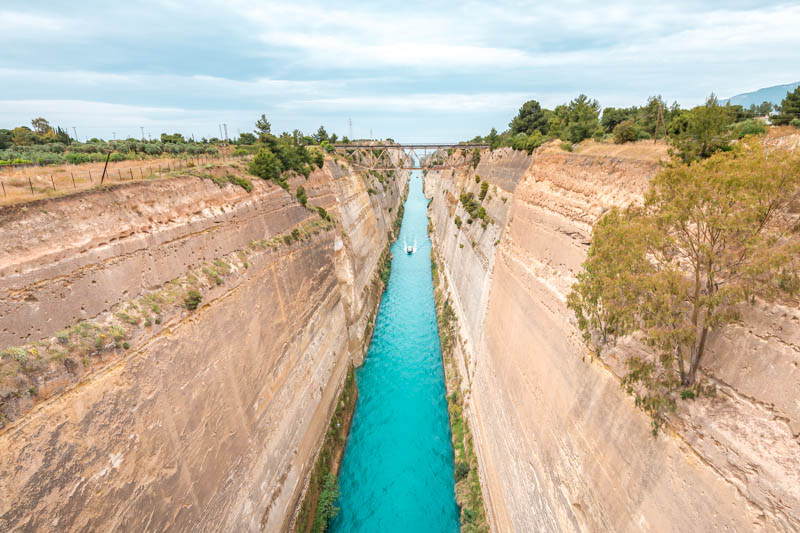
It thus shortens the long journey around the Peloponnese for ships by up to 325 km. The Corinth Canal is located at the narrowest point between the Peloponnese and the Attica Peninsula (Greater Athens), the so-called Isthmus of Corinth. The idea of a canal dates back over 2,600 years, but the current canal was not built until between 1891 and 1893.
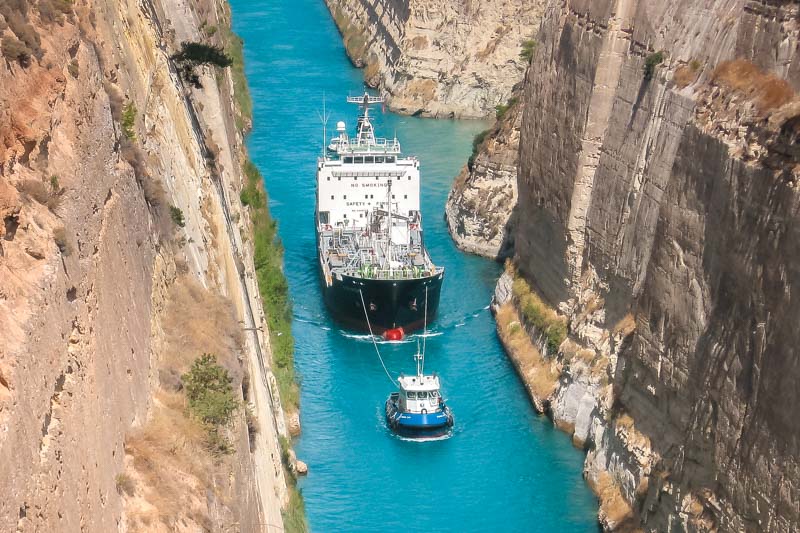
Engineers dug up to 84 meters deep into the sandstone. Around 11,000 ships pass through the waterway annually, which can accommodate vessels up to 17 meters wide. From the viewpoint on the Isthmus Bridge along the Old National Road (Palia Ethniki Odos), you can admire the ships as they make their way along the steep coastline through the turquoise-blue canal.
💡 Bungee jumping at the Corinth Canal: Daredevils looking for their next adrenaline rush can take one of the craziest bungee jumps in the world from the Corinth Canal bridge. The operator Zulu Bungy lets you plunge toward the blue canal. For the jump, you’ll even get a GoPro strapped to your wrist so you can show your friends the video of your crazy canal bungee jump as proof. More info directly from the operator: Zulu Jump
Exploring the Sousaki Volcano
The Sousaki Volcano is located about 7 km east of the Corinth Canal. It is considered the northernmost volcano of the Aegean volcanic arc, which also includes the islands of Santorini, Milos, and Nisyros. The volcano still shows slight activity. Sulfur fumes rise in many places along the last eruption zone.
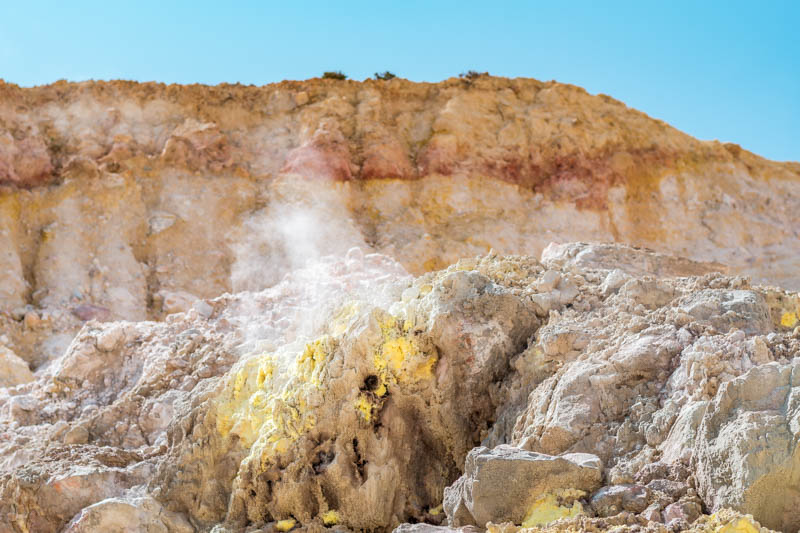
The thermal springs of Loutraki (see point #2) are also likely connected to Sousaki. Adventurers and hikers in particular will enjoy the volcanic landscape along the Gulf of Corinth. Before the Motor Oil Hellas oil refinery, turn off toward Agii Theodori. A gravel road leads to Sousaki; exploring the volcanic field is at your own risk.
#2 Loutraki Hot Springs
International tourists are largely unaware of them, but the Loutraki hot springs are very popular among Greeks. They are located just a 10-minute drive north of the viewpoint at the Corinth Canal. The name Loutraki derives from the Greek word “loutro,” meaning spa. Archaeologists have found remains of Roman buildings here (including the Roman villa of Katounistra), which suggest that the area was used for bathing in ancient times.
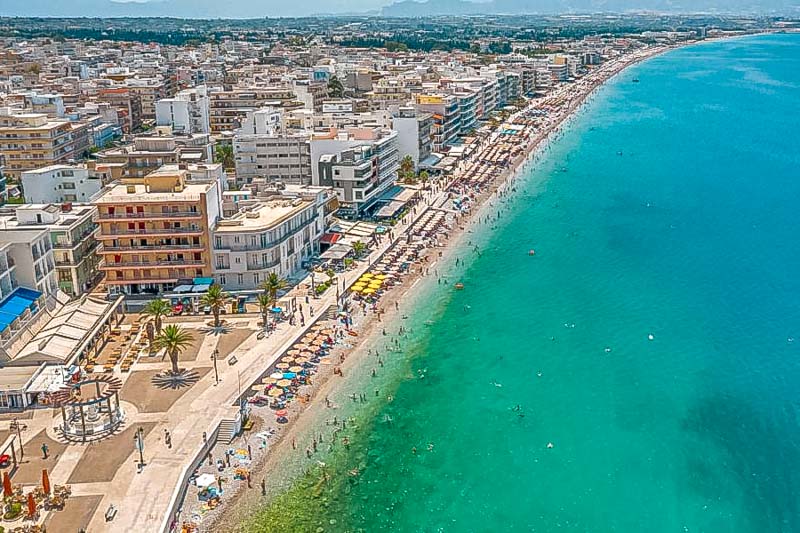
In the 19th century, scientists rediscovered the therapeutic benefits of the thermal water, triggering a veritable construction boom in the region. The Loutraki Municipal Thermal Springs on the northwestern outskirts of town offer a historical glimpse into the world of thermal baths. Although bathing is not permitted here, visitors can sample the healing water and admire the stunning rotunda-style setting.
- Opening hours of the Loutraki Municipal Thermal Springs: 9 a.m.–2 p.m. (closed Mon & Sat), free admission
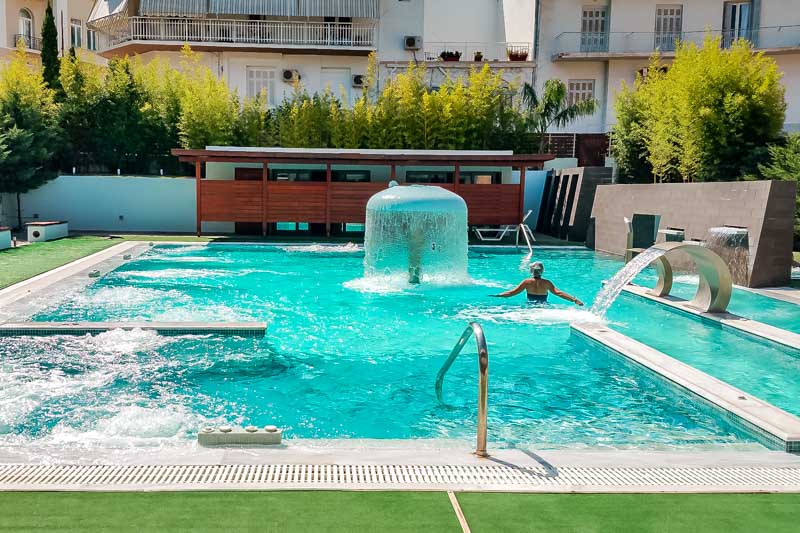
Just 400 meters further south, the Loutraki Thermal Spa stands out as one of the most modern in Greece. In large and small pools, you can experience the therapeutic benefits of the healing water for yourself. The neighboring Loutraki Beach Park invites you to take a stroll under the palm trees. Loutraki is also home to one of Europe’s largest casinos at the Club Hotel Casino Loutraki (View on Booking*).
- Loutraki Thermal Spa hours: daily 11 a.m.–7 p.m., admission €10, website: Loutraki Spa
Visit to the Monastery of Agios Patapios
After wellness and relaxation in the thermal springs of Loutraki, you can unwind at the historic Monastery of Agios Patapios, located directly above the town. The drive up a steep mountain road takes only 15 minutes. From the top, there is a breathtaking view of Loutraki and the Gulf of Corinth.
If you want to feel the full power of this sacred place, hike along the straight path past the Monastery of Prophet Elias in Loutraki to the Agios Patapios Monastery, situated 650 meters above sea level. The distance from the outskirts of Loutraki to the monastery is approximately 2.5 km. You should plan on 2.5 to 3 hours for this moderately difficult hike.
- Agios Patapios Monastery opening hours: open daily (check with locals beforehand for siesta times), free admission
💡 Travel guide for the Corinth region: The Greece Travel Guide of Lonely Planet includes an informative chapter on the Gulf of Corinth and the surrounding area. It’s always our faithful companion on our trips to the Greek mainland: View on Amazon*
#3 Ancient Corinth
Ancient Corinth is located about 6 km west of the modern city of Corinth and is one of Greece’s most important archaeological sites. Corinth was considered a politically active state in ancient Greece and even founded colonies in Italy, such as the city of Syracuse in Sicily. The power that once emanated from this place can still be felt today on a walk through the ruins.
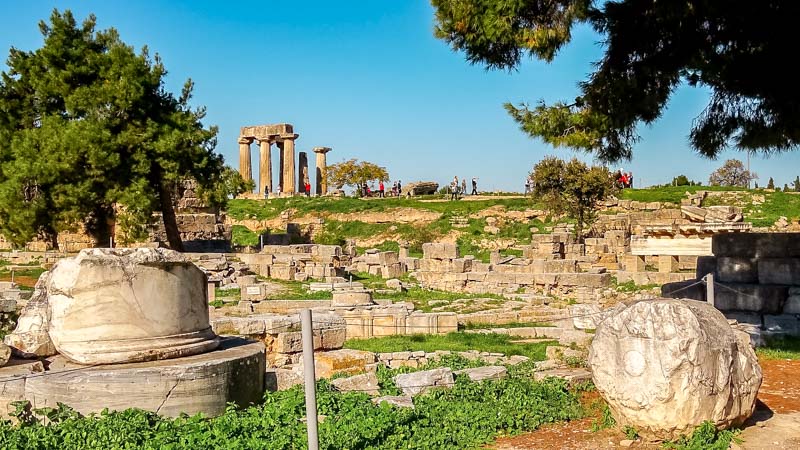
Highlights include the imposing Temple of Apollo in Corinth, the Agora (market hall), and the Bema, the judge’s platform from Roman times. It is said that the Apostle Paul was accused here by the consul of Corinth during his visit. The Epistles of Paul still bear witness today to the difficulties the Apostle faced in establishing a Christian community in Corinth.
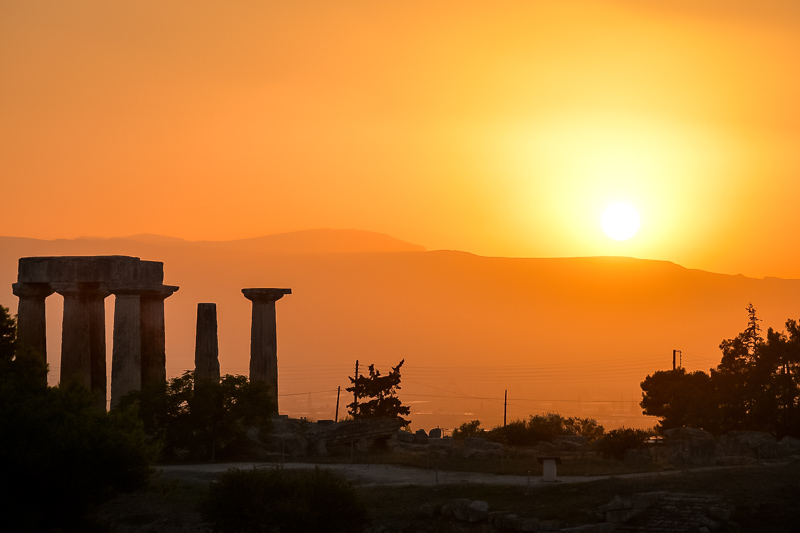
The Archaeological Museum of Ancient Corinth is also located on the site and offers further insights into the history of this region on the Gulf of Corinth. Right next to the excavation site lies the town of Archaia Korinthos, which is well-equipped for tourism with souvenir shops, restaurants, and accommodations.
- Opening hours for Ancient Corinth: open year-round, including from May through the end of August from 8 a.m. to 8 p.m.; admission €15 (reduced €8)
Acrocorinth Fortress
Even when visiting Ancient Corinth, the imposing hill directly behind the site catches the eye: the Acrocorinth Fortress—another highlight near Corinth. The view of the surrounding area from the top is spectacular. This 575-meter-high table mountain was already fortified in ancient times. The current walls date back to the Middle Ages, when the castle was alternately occupied by Crusaders and the Ottomans.
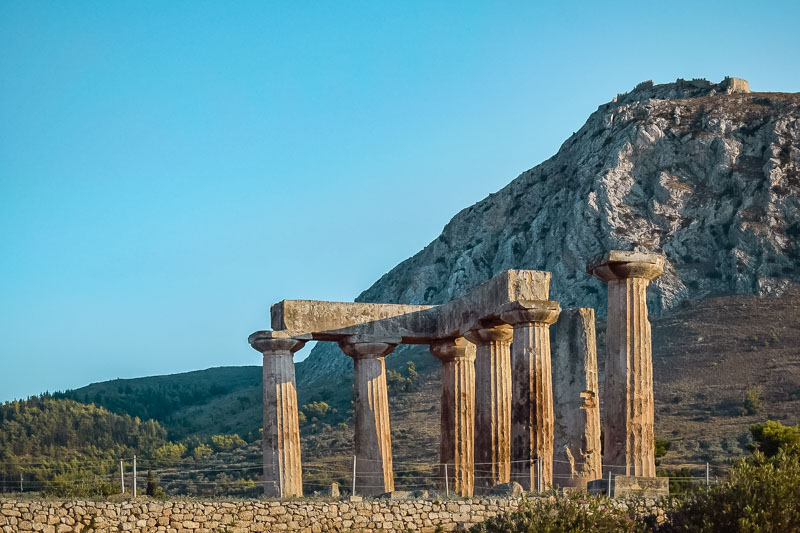
Numerous buildings have recently been restored to preserve Acrocorinth. The sprawling grounds still feature medieval churches, some of which are well-preserved, and even a mosque. A temple dedicated to Aphrodite is said to have once stood at the highest point. A paved road leads to the free parking lot at Acrocorinth below the summit.
- Akrokorinth opening hours: year-round from 8:30 AM to 3:30 PM, free admission
Panoramic view from Mount Fokas
If you have enough time to explore the Corinth region and enjoy getting up high, don’t miss a trip to Mount Fokas (translated: Seal Mountain). The 873-meter-high table mountain offers a magnificent view of vineyards and olive groves. A gravel road leads up to just below the summit, where the Castle of Fokas and its hermitage were spectacularly built into the rock.
💡 Nemea Wine Region: About 15 km west of Mount Fokas lies one of Greece’s most important wine regions. Nemea is the name of the region, its provincial capital, and the delicious red wine produced there—a wine we’ve long appreciated on our trips to Greece. This fine wine is made from the Greek grape variety Agiorgitiko, which was cultivated as far back as ancient times and is now the most common Greek red wine variety. Wine lovers are spoiled for choice among the region’s nearly 20 wineries. Our recommendation: Halkia Organic Winery or Cooperative Winery of Nemea.
#4 A Break in Xylokastro
If you’re tired of visiting historical sites and medieval fortresses, take a break for a swim on the shores of the Gulf of Corinth. In the small town of Xylokastro, 35 km from Corinth, lies one of the region’s most beautiful beaches, Paralia Pefkias Xylokastrou.
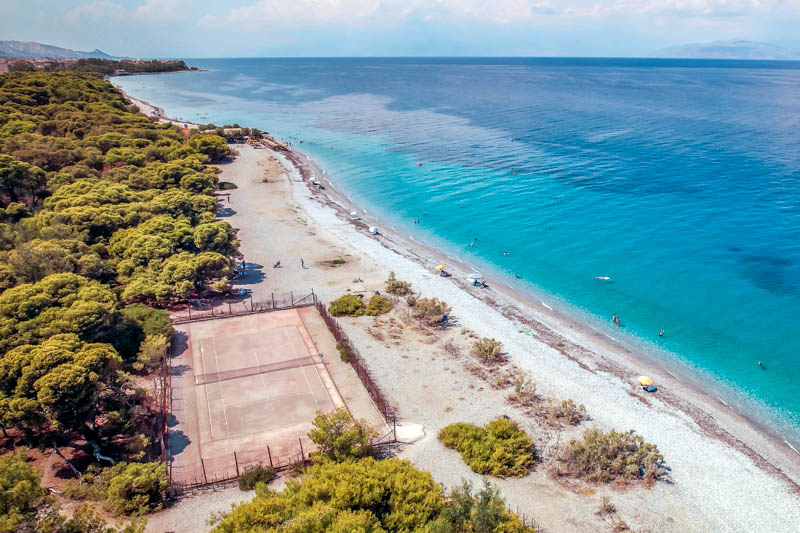
Pefkias Park, with its 2-kilometer-long pine forest (Greek: pefki), lies directly by the sea and is a true oasis of relaxation. By the way, Xylokastro means “wooden castle.” The town was founded in the Middle Ages by the Venetians, who erected a wooden watchtower at the highest point of the town to monitor incoming ship traffic.
Xylokastro itself has a modern feel, featuring a long beach promenade where cafés and restaurants with tables right by the sea invite you to linger. If you’re looking for a few days of relaxation in a good hotel on the Gulf of Corinth, you’ll find what you’re looking for at the Sikyon Coast Hotel & Resort, located right on the beach in Xylokastro. For more information about the hotel, visit our partner Booking.com*:
➲ Book the Sikyon Coast Hotel & Resort*
Moggostou Oak Forest
Hidden in the hinterland of Xylokastro, the Moggostou Oak Forest is a true natural treasure. The slightly elevated terrain features dense tree cover, bizarre rust-red soil, and interesting rock formations. You can explore the area on a 10-kilometer loop trail. A long hike through the Moggostou Forest is well worth it in the fall and spring. Unfortunately, this fairy-tale forest is not yet a protected nature reserve.
💡 Ancient Site of Sikyon: History buffs shouldn’t miss this spot on the route along the Gulf of Corinth. While Sikyon is quite compact and now overshadowed by Delphi, Corinth, and others, the site is no less worth seeing. Admission to the site, which includes the Agora, Gymnasium, Palestra, and Archaeological Museum, costs €4. The large ancient theater can be visited for free. Presumably, other buildings from the ancient city still lie buried beneath the surrounding fields.
#5 Odontotos Railway: From Diakopto to Kalavryta
Take the train from the shores of the Gulf of Corinth through impressive scenery up into the mountains of the Peloponnese Peninsula—the Odontotos Railway brings railway romance to Greece. Originally built in 1885, the railway was out of service for decades and reopened in 2009 after extensive restoration.
Today, the 22-kilometer-long historic railway line from the coastal town of Diakopto to the mountain town of Kalavryta delights young and old alike. The 750-mm narrow-gauge railway has long been a familiar name to railway enthusiasts from all over Europe; some sections of the route are even operated using cogwheel technology due to the steep gradient.
On the way to Kalavryta, situated at an elevation of 740 m, the train passes through the rugged Vouraikos Gorge, traveling through several tunnels and narrow sections of track directly beneath the steep cliffs. There is just one thing travelers must do without, despite all the railway nostalgia: the train is not pulled by a steam locomotive, but by a modern train. The following video gives an impression of this scenic train ride:
The original steam locomotives can be viewed at the stations in Diakopto and Kalavryta. The train runs daily throughout the year and is suspended only in the event of adverse weather conditions (e.g., storms, snowfall). Everything you need to know about the Odontotos Railway can be found at: Odontotos
💡 Railway on the Gulf of Corinth: Since mid-March 2026, the Odontotos rack railway has been closed again due to rockfalls and landslides. There is currently no end to the closure in sight, as the entire route needs to be inspected first, particularly the Vouraikos Gorge. Please check the current operating status before your visit.
Kastria Cave and Lakes
Just 20 minutes south of Kalavryta, the caves known as the Lakes (Greek: Spileo ton Linnmon) are well worth a visit for all explorers. The extensive underground system of the Chelmos-Vouraikos Geopark consists of 3 levels and 13 individual lakes, which are connected by rivers and waterfalls depending on the season.
Archaeologists have found evidence of human habitation dating back to the Stone Age. There is a small museum on site where artifacts are displayed and information about the cave’s formation is provided. In January and February, the cave lakes are at their fullest due to snowmelt. The Kastria Cave Lakes are currently accessible to visitors over a 2-kilometer stretch (3 lakes).
- Kastria Caves opening hours: daily from 9 a.m. to 4:30 p.m., admission €9 (reduced €4.50)
#6 Egio and Trypiti Monastery
About 15 km northwest of Diakopto lies the largely unknown yet uniquely interesting town of Egio, also known as Aigio, on the Gulf of Corinth. Those who want to experience Greece without a beauty filter—but instead in its unadulterated and unvarnished form—will feel right at home in this town of 30,000 residents. For alternative travelers, it’s worth noting that Aigio can even be reached by train from Athens.

The waterfront promenade, with its cozy cafés (tip: Cityzen Espresso), where the Twelve Fountains (Dodeka Vryses)—mentioned as far back as ancient times—are also located, is a wonderful place to stroll. The new town is situated slightly above sea level and also offers interesting sites, such as the Faneromeni Church. In recent years, significant investments have been made in the town’s appearance, but Egio is still waiting for visitors.
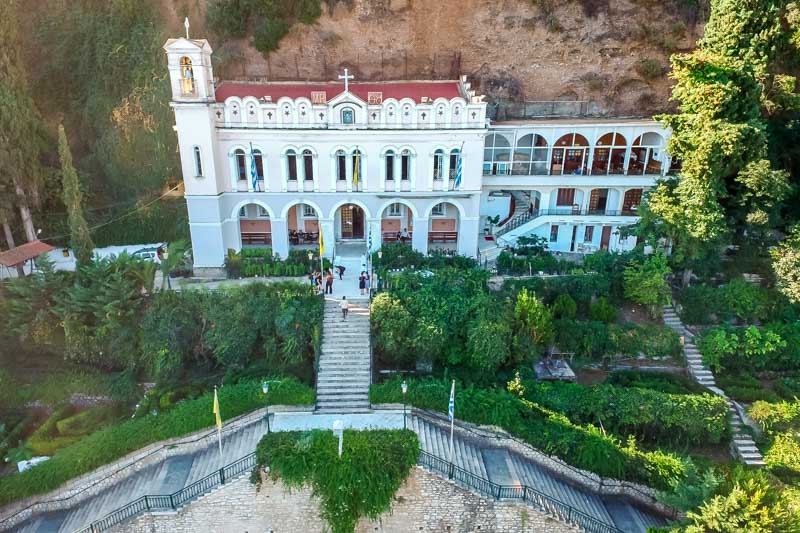
The most important sight in Egio is the Panagia Trypiti pilgrimage church right by the harbor. On the Friday after Orthodox Easter, many Greeks make a pilgrimage here. The original church (16th century) was partially built into the rock, but in the 19th century, following the founding of the modern Greek state, it took on its current neoclassical form, which resembles the Panagia Evangelistria of Tinos.
#7 Patras: Gateway to the Gulf of Corinth
Patras, located in the northwest of the Peloponnese peninsula, is considered the gateway to the Gulf of Corinth thanks to its large ferry port. At first glance, the city of 200,000 inhabitants seems uninviting, but there is much to discover within the urban maze.
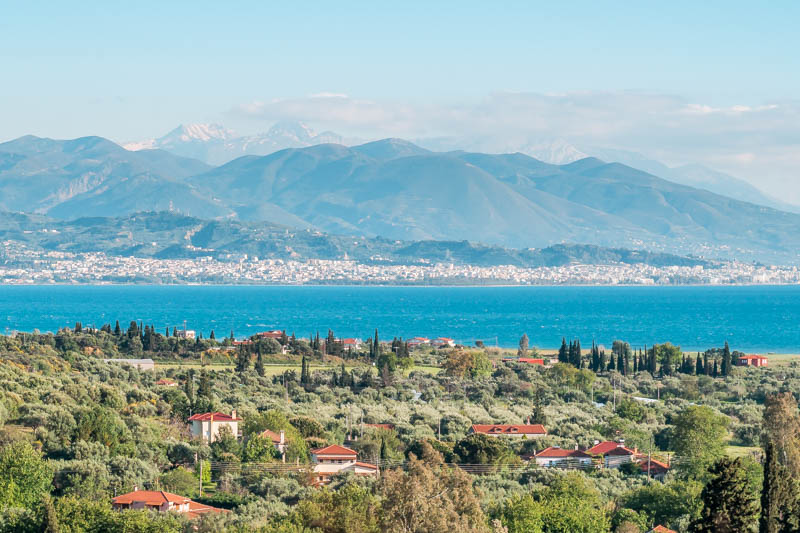
During the struggle for liberation against the Ottomans (19th century) and in World War II, a significant portion of Patras’s historic old town—along with relics spanning two millennia—was destroyed. Reconstruction proceeded slowly, but today Patras presents itself as a modern university city. Those wishing to stay in the city for a few days will be well taken care of at The Bold Type Hotel (View on Booking.com*).
History buffs should visit the remains of a Roman agora and the Odeon (theater). The (still-existing) part of the old town right next to Patras Kastro offers a truly cozy, almost village-like atmosphere. The taverns around the Kastro are among the most traditional in the city.
From the fortress, whose origins date back to the 6th century, you also have a magnificent view over the city’s rooftops all the way to the Ionian Sea. Culture lovers shouldn’t miss the Apollo Theater in Patras. It was designed by the German architect Ernst Ziller and is a miniature version of the Teatro alla Scala in Milan.
Rio-Andirrio Bridge near Patras
The bridge with the quirky name was built between 1998 and 2004 and is now one of the country’s most significant and imposing infrastructure structures. The cable-stayed bridge, resting on four pylons, spans the narrow 2.5-kilometer stretch at the entrance to the gulf between the towns of Rio and Andirrio (Greek for “opposite Rio”).
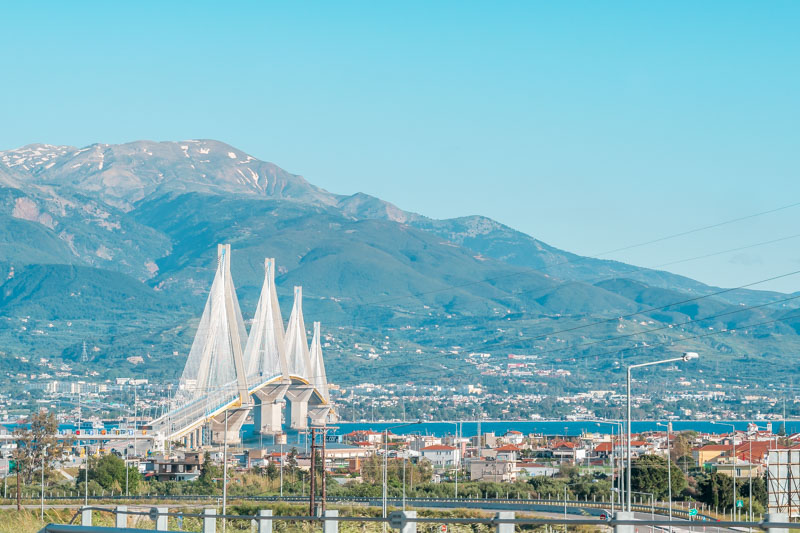
The €771 million project was long considered unfeasible because the Gulf is located in an earthquake zone (see article: Greece Earthquakes). However, in August 2004, shortly before the Olympic Games in Greece, the Rio-Andirrio Bridge was officially opened. Today, travelers enjoy the convenient crossing, which, however, costs around 14 euros per car.
#8 Nafpaktos: The Charming Port City
Nafpaktos is an ideal stopover on a trip along the northern part of the Gulf of Corinth. Just a 30-minute drive east of Patras lies the historic port city of Nafpaktos. We visited this charming little town with its nearly 13,400 residents in September and immediately fell in love with it.
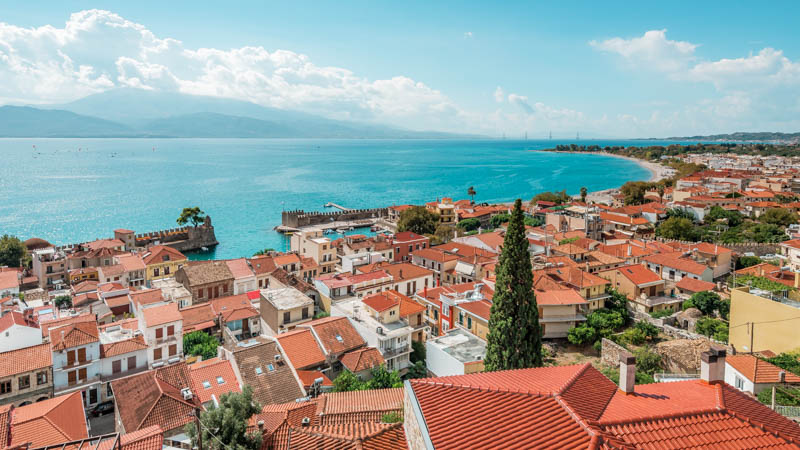
The Venetian port of Nafpaktos, with its distinctive shape in the historic town center, is not to be missed. In the cafés (tip: NAVE Cafe-Bar) right on the bulbous pier, you can enjoy a freddo while taking in the view of the picturesque harbor entrance. In the town center, there are also countless traditional taverns and restaurants for a lunch break (tip: Apiko).
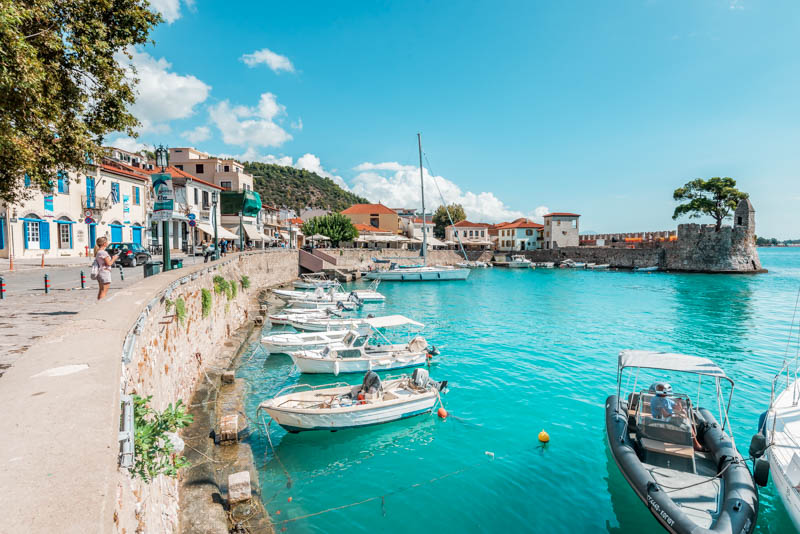
Well-fortified, head through the stone city gate Sideroporta up to the Venetian-era fortress of Nafpaktos. From the castle walls, you’ll have a fantastic panoramic view all the way to the Rio-Antirrio Bridge in Patras. Below the fortress, you can wind down the evening at Café Kastro. Here, too, the view from the terrace is spectacular!
Monastery of St. Augustine & Seraphim of Sarov
In the hinterland of the northern Gulf coast, there are numerous Orthodox monasteries, some centuries-old, others postmodern. Halfway between Nafpaktos and the quaint fishing village of Monastiraki, about 9 km from National Highway 48, near the village of Trikorfo, lies one of Greece’s most extraordinary monasteries: the Monastery of St. Augustine and Seraphim of Sarov.
It sits at an elevation of 900 meters and was founded around 1991. Today, several dozen monks from all over the world live here. It is dedicated to Seraphim of Sarov, one of the most significant saints of modern times in the Russian Orthodox Church, and Augustine of Hippo, one of the four Latin Church Fathers (5th century AD).
The entire monastery is surrounded by a massive wall, giving the complex the appearance of a medieval castle from a distance. The impressive entrance area, featuring a bell tower several meters high—whose numerous bells are rung by hand every five years in honor of Seraphim of Sarov—is another highlight of the complex. A museum and a monastery shop selling herbs and cosmetics produced on-site are also located here.
✓ Full coverage & unlimited mileage included
✓ Free cancellation until 24h before pickup
✓ Best price guarantee via Discover Cars
#9 Trizonia: An island idyll in the Gulf of Corinth
“The small joy of silence” – there’s no better way to describe the only inhabited island in the Gulf of Corinth. Trizonia is located about half an hour from Nafpaktos and can be reached by boat from the coastal village of Chania (crossing starting at €2) in just five minutes.
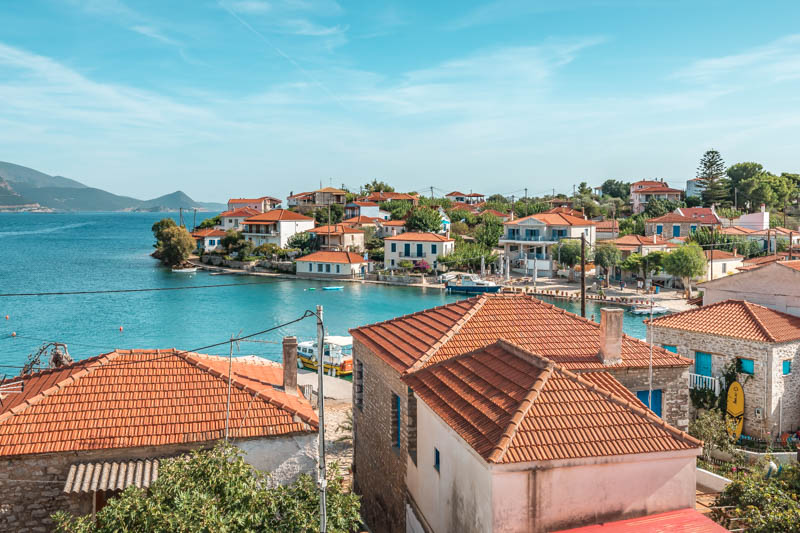
Only 64 residents live year-round on the tiny island, which is just 3 km long and 1.5 km wide. During our visit in October, we couldn’t stop marveling as we entered the harbor of Trizonia. We found not only a true postcard idyll but also a genuine hidden gem of Greece.
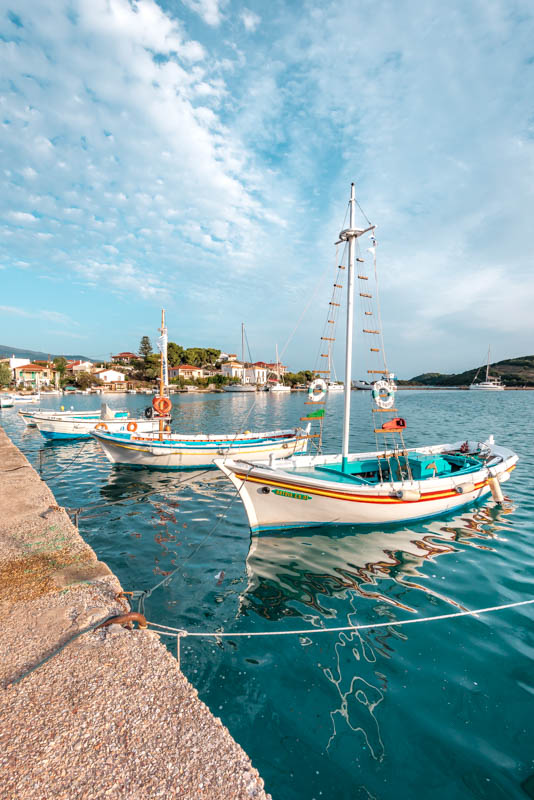
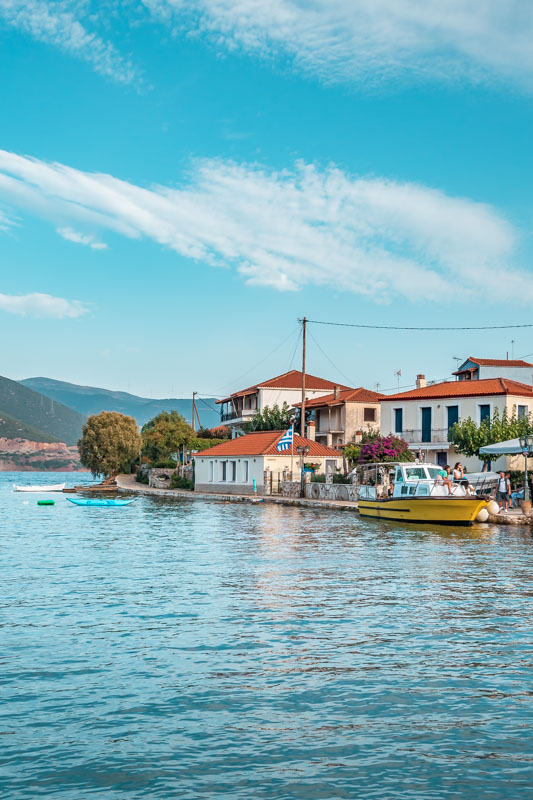
A handful of taverns nestle around the bulbous pier of Trizonia, the island’s only village. In front of the quaint eateries, hungry cats wait for scraps to fall their way. We’ll always remember the Kalypso and Ostria taverns for their homemade Greek cuisine and warm hospitality.

No car noise disturbs the peaceful silence, as Trizonia is completely car-free. We quickly realized: Time moves more slowly on Trizonia. The island is the perfect place to slow down in the Gulf of Corinth and is definitely worth a visit! After three days, it was time for us to say goodbye; we could have stayed even longer at the beautiful Trizonia Mare Suites (More Info).
#10 Galaxidi: A picture-perfect town in Central Greece
A true gem on the Gulf of Corinth is located just 35 minutes from the Delphi archaeological site. Galaxidi, with its 3,000 residents, sits picturesquely on a headland by the sea. Pastel-colored captains’ houses with red roofs line the waterfront promenade, and high above the sea of houses rises the Church of Agios Nikolaos.
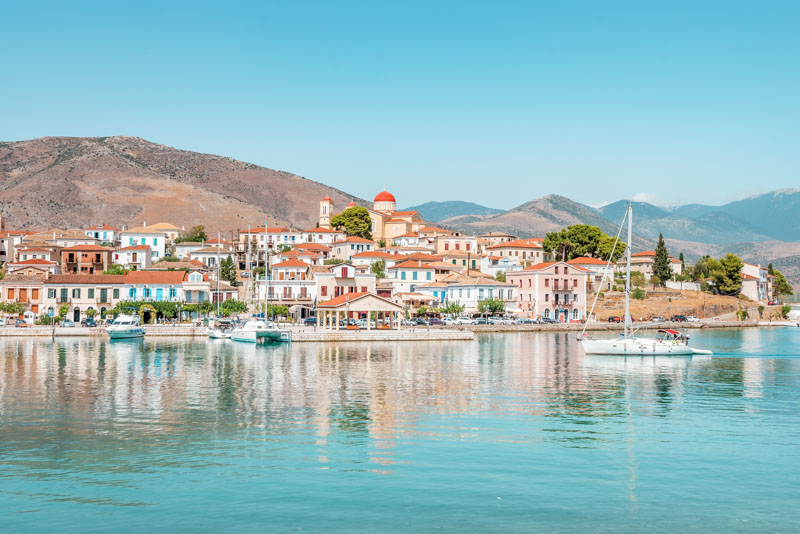
Galaxidi was once an important seafaring town and home to one of the most powerful merchant fleets in the entire Mediterranean. Even today, as you stroll through the picturesque alleys of Galaxidi, you can still sense the splendor of bygone eras. We immediately fell in love with this charming little town and captured many great photo opportunities.
In the center, there are a few hotels that are ideal for an overnight stop on your tour around the Gulf of Corinth. Unlike other picturesque towns on the Greek islands, Galaxidi is still quite peaceful. Due to its proximity to Delphi, the coastal town is a popular weekend getaway for Greeks.
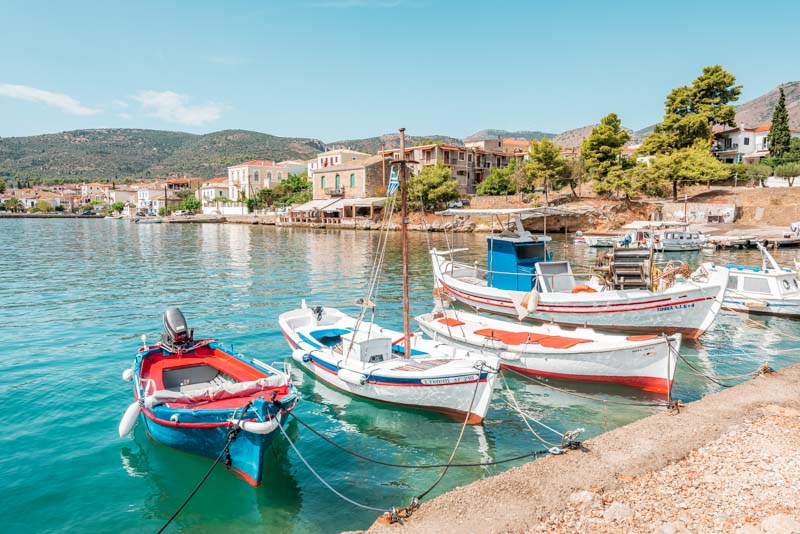
Along the waterfront promenade, numerous taverns (tip: Ab oVo) and cafés invite you to linger. By the way, the best spot for photos in Galaxidi is along Kammenou Street in the east, which leads to the Monument to the Captains’ Wives. If you want to enjoy Galaxidi at a leisurely pace, you should plan for 2–3 nights, e.g., at the highly recommended Galaxidi Sea View Apartment (View on Booking*).
#11 Oracle of Delphi
From Galaxidi, the route follows the coastal road through the industrial town of Itea to the next highlight on the Gulf of Corinth: the famous Oracle of Delphi. Even though the oracle has long since fallen silent, the ancient site of Delphi—located just about 20 km north of the Gulf of Corinth—is one of the country’s most significant archaeological sites.
You can find all the information about Delphi and many tips for the region in our separate article: Delphi Oracle

#12 Hosios Lukas Monastery
From Itea, a winding mountain road leads up to a plateau. Be careful—large trucks transporting goods for the aluminum industry (including bauxite) often travel here. Once you reach the top, you’ll be rewarded with a breathtaking view of Itea Bay and the rocky islands of Ag. Antonios and Ag. Konstantinos, which were connected by a dam in the Middle Ages.
On the plateau, the route passes the large village of Desfina (tavern tip: O Platanos) and the historic town of Distomo (Distomo Massacre), taking about 30 minutes to reach the holy Hosios Lukas Monastery. The complex at the foot of the imposing Parnassus Mountains was founded as early as the 10th century by the monk Lukas of Steiris, who was said to possess clairvoyant abilities.
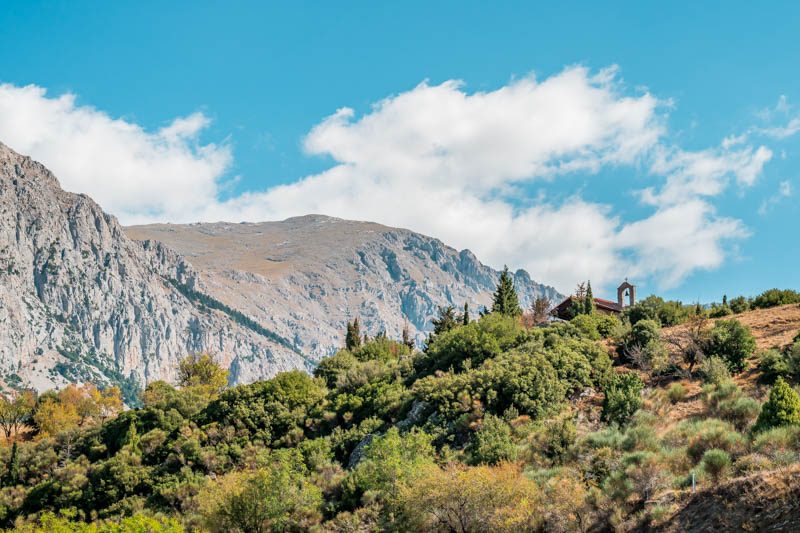
Hosios Lukas has been a UNESCO World Heritage Site since 1990 and, along with Daphne near Athens and Nea Moni on Chios, is one of the most significant Byzantine monasteries. The katholikon is unusually connected to another church; the walls are made of bricks and, in part, of ancient marble blocks that likely originate from the nearby Oracle of Delphi.
The interior is adorned with 11th-century mosaics and colorful frescoes from the late Middle Ages. Numerous monastic cells surround the main church, and a museum (€3 admission) offers further insights into its history. The Hosios Lukas Monastery is open year-round; appropriate attire is required.
- Hosios Lukas Monastery opening hours: Winter 8 a.m.–3 p.m., Summer 10 a.m.–5 p.m., free admission
💡 Aluminum mining in the Gulf of Corinth: Greece is not only a popular vacation paradise but also a major economic hub for raw materials such as bentonite, perlite, gold, and aluminum (bauxite). Large bauxite mines and aluminum smelters are located between Itea and Agios Nikolaos. In the 1960s, a town was even built specifically for the numerous workers: Aspra Spitia (Greek for “white houses”). The coastal town, now called Paralia Distomou, can be seen from afar thanks to its dazzling white architecture. At the other end of the bay lies the massive Agios Nikolaos aluminum plant, which produces 160,000 tons of aluminum per year.
Livadia Waterfalls and Springs
Just 35 km northeast of the monastery lies the provincial town of Livadia with its largely modern architecture. Nevertheless, it’s worth a detour, as the Krya Springs (Piges Kryas) in the historic town center offer a true spectacle, especially in the spring, when the Erkyna River winds its way from the mountains through the town in several cascades.
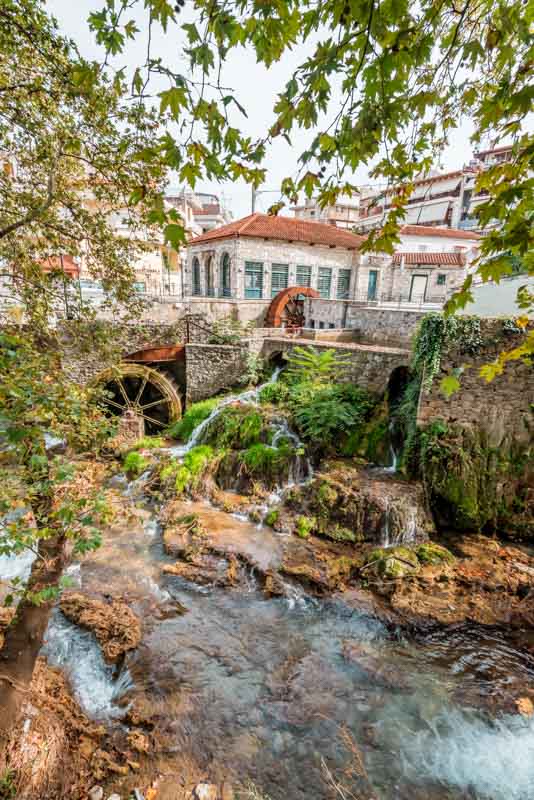
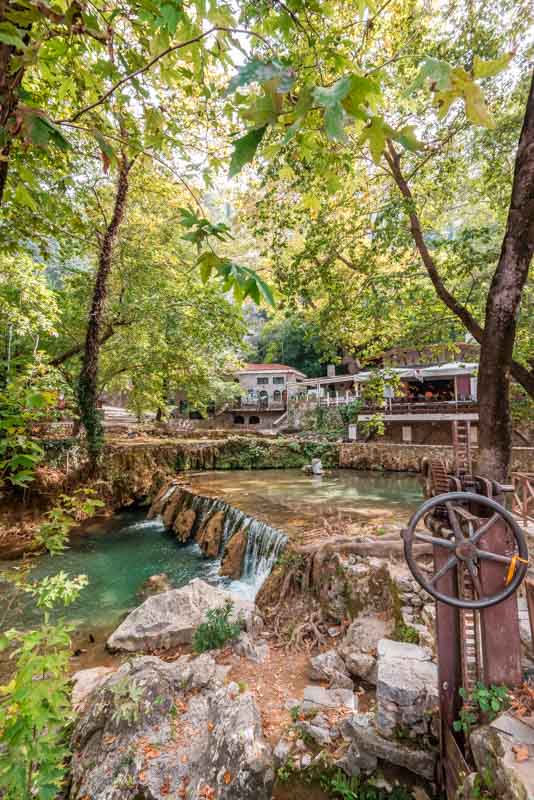
Along the riverbed, historic water mills and an old hydroelectric power plant still stand. On the traffic-calmed promenade with its giant plane trees, cozy cafés and restaurants invite you to linger. Livadia can be reached either via the mountain road from Kyriaki or via National Road 48 from Distomo.
#13 Porto Germeno and Aigosthena
At the easternmost tip of the Corinthian Gulf, at the foot of Mount Kithaironas (1,409 m), lies the sleepy resort of Porto Germeno. Only in July and August, when the Greeks are on vacation, does this village of 80 souls get a bit livelier, and the café-bars and taverns right on the village beach are packed to the brim.
Quite a few Athenians (just an hour away) even have their summer homes here, as the place exudes the rustic charm of 1990s Greece. No wonder, then, that in the summer every beachgoer brings their own umbrella to the long stretch of beach at Porto Germeno—endless rows of beach chairs are nowhere to be found here.
At the lower end of the beach, you can even admire a Byzantine church dedicated to Saint Nicholas right by the sea, featuring well-preserved frescoes. In general, the coastline around Porto Germeno is quite rugged and therefore very diverse; those seeking peace and quiet will find small pebble beaches and swimming coves everywhere.
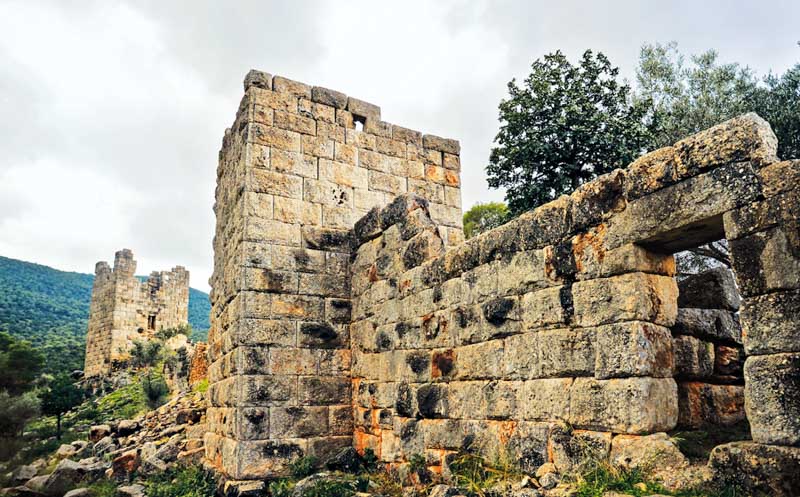
The ancient city of Aigosthena once stretched out above the village. The city walls with their defensive towers, dating from around 800 BC, are among the best-preserved of that era today. You can also visit the ruins of a Byzantine monastery (12th century). Thanks to its elevated position above Porto Germeno, you can enjoy a magnificent view of the Gulf of Corinth from here.
💡 Help with planning your Greece vacation: Not sure where to start or how to go about planning your trip to the Gulf of Corinth? No problem—take advantage of our years of experience with trips to Greece and let us help you. We’ll advise you on all your questions and concerns, even via video chat. Book your consultation here: Greece Travel Consultation
#14 Perachora and Lake Ireon
About an hour south of Porto Germeno lies the historic region of Perachora, whose landmass juts into the Gulf of Corinth like a sharp thorn. The large village of Perachora, which shares the same name, sits on a hill at an elevation of 300 meters and exudes a tranquility that many places on the Greek islands can only dream of.
In the good taverns (tip: O Vasilis), you’ll be treated to delicious home-style cooking. Afterward, it’s worth visiting the Folklore Museum, which offers insights into the traditions of the past centuries. From the village, you can already see Limni Vouliagmenis, also known as Lake Ireon. The lagoon-like lake is connected to the gulf by a narrow channel and is well worth a detour.

A little further west lie the remains of a sanctuary dedicated to the goddess Hera. The so-called Heraion of Perachora impresses with its location right by the sea; the Heraion Bay of the same name, with its sandy beach, invites you to take a dip. Excavations are still underway, but admission is free. Particularly impressive are the remains of a massive ancient cistern.
Just a stone’s throw from the Heraion stands the Melagavi Lighthouse at the tip of Cape Agrilaos. A dirt road leads from the parking lot just 400 meters to the charming, 13-meter-high lighthouse made of natural stone. Originally built in 1897, it has been a listed historic site since 2001 and is considered the most beautiful spot to watch the sunset in the Gulf of Corinth.
Seal Cave
Spilia tis fokias, translated as Seal Cave, is located about 20 minutes north of the village of Perachora and captivates visitors with its natural beauty. The large rock arch right by the sea makes for a great photo opportunity, as the water beneath it shimmers in the most beautiful shades of blue.

From the hamlet of Alkiona, a 500-meter-long gravel road leads to an unpaved parking lot. From here, it’s just a short walk to the viewpoint. Due to the weathered and rocky coastline, descending to the sea is not recommended. Instead, you can explore the sea cave by kayak or boat; providers are available in Alkiona.
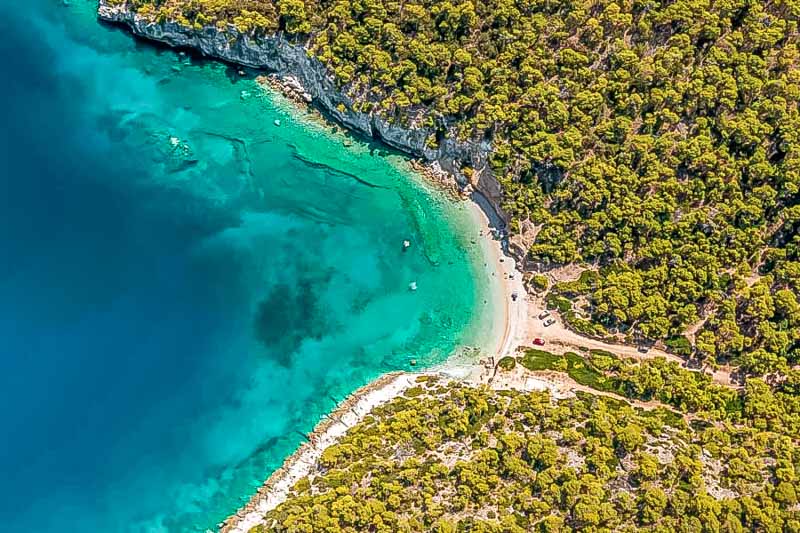
The nearby unspoiled Mikra Strava Beach is all the more inviting for a swim and is considered by connoisseurs to be one of the most beautiful beaches on the Gulf of Corinth. Except during the height of summer, it’s usually very laid-back here. From the parking lot, a gravel path leads eastward to the beach in 5 minutes.
Travel Tips for the Gulf of Corinth
Hotel Tips in the Gulf of Corinth
The Gulf is a paradise for independent travelers; there is suitable accommodation for every taste. The hotels directly on the Gulf of Corinth are the most expensive; in the hinterland, there are lodging options priced below the national average. In recent years, larger hotels have opened around Loutraki, Xylokastro, and Nafpaktos.

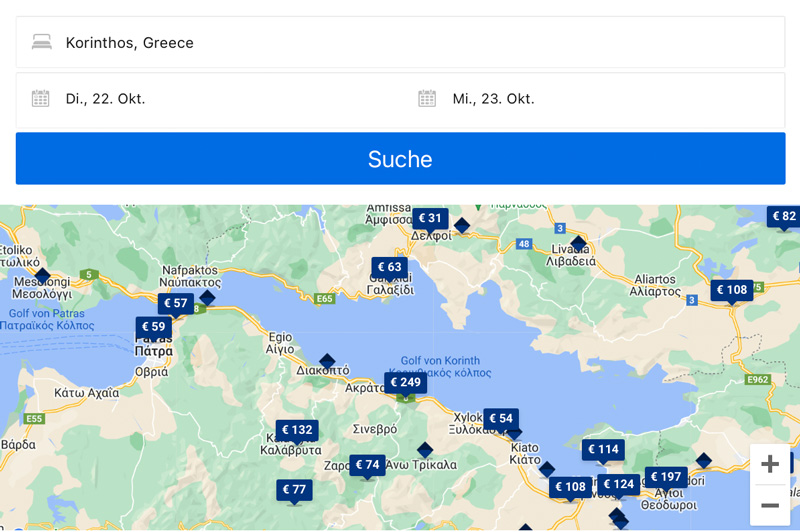
Below you’ll find our recommendations for accommodations on the Gulf of Corinth. For more information on the hotels and apartments, visit our partner Booking.com*, where you can also view the individual accommodations on a map:
Alkyon Suites, Agios Vasilios
A mini-retreat above the fishing village of Agios Vasilios with a touch of that “end-of-the-world” feeling. The spacious apartment offers sea views and picturesque sunsets, and the hearty breakfast is served on the balcony. The beach is a 5-minute walk away. All details about the accommodation on Booking.com*:
Battaglia di Lepanto, Nafpaktos
Charming 3-star hotel in the heart of Nafpaktos. Elegant rooms and suites at fair prices, delicious breakfast, and attentive staff. Full details about the accommodation on Booking.com*:
Kalafatis Beach Home, Itea
Apartments located on the outskirts of Itea, right by the sea with a small private beach near Nafsika Beach. Very nice furnishings with a large terrace, friendly host, and quiet location. A good starting point for exploring the northern part of the Gulf of Corinth. Full details about the accommodation on Booking.com*:
Trizonia Mare Suites, Trizonia Island
A small, family-run boutique hotel above the waterfront promenade. Modern apartments with comfortable beds and large balconies offering sea views. The lovely Maria is always on hand to offer help and advice and serves a hearty breakfast every morning on the cozy hotel terrace. Full details about the accommodation on Booking.com*:
Sugar Home, Xylokastro
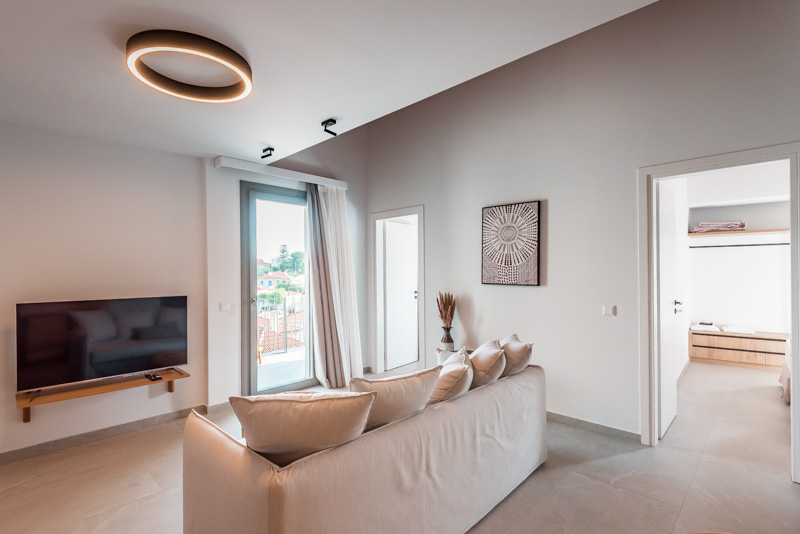
Katarina and Vagelis run a cozy bed and breakfast right next to Pefkias Park in Xylokastro. Quiet location, lovingly decorated rooms, a good breakfast, and just two minutes from the beach. All details about the accommodation on Booking.com*:
Sul Mare, Diakopto
Beautiful vacation home in a prime location, accommodating at least 6 people (2 bedrooms). High-quality amenities (including a washing machine and AC), cozy garden right by the sea. A great starting point for exploring the southern and western parts of the Gulf. Full details about the accommodation on Booking.com*:

Guided tours in the area
The Gulf is a classic destination for independent travelers. The selection of organized excursions is limited, but there is the option to take individual day trips from Athens (including to ancient Corinth or Delphi). The Corinth Canal is also visited in combination with highlights on the Peloponnese (including Mycenae and Epidaurus). These excursions are offered by GetYourGuide*:
Beautiful beaches on the Gulf of Corinth
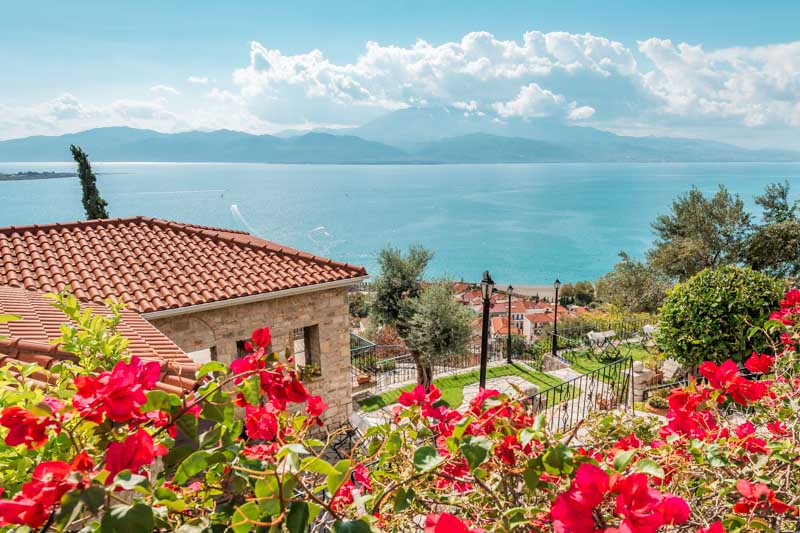
There are numerous beaches along the southern coast of the Gulf of Corinth; the northern part offers slightly fewer swimming opportunities due to its mountainous terrain. Even in summer, many coves away from the towns are sometimes deserted. Another advantage is the relatively calm waters due to the gulf’s inland sea characteristics. However, most beaches are pebbly; only a few have fine sand.
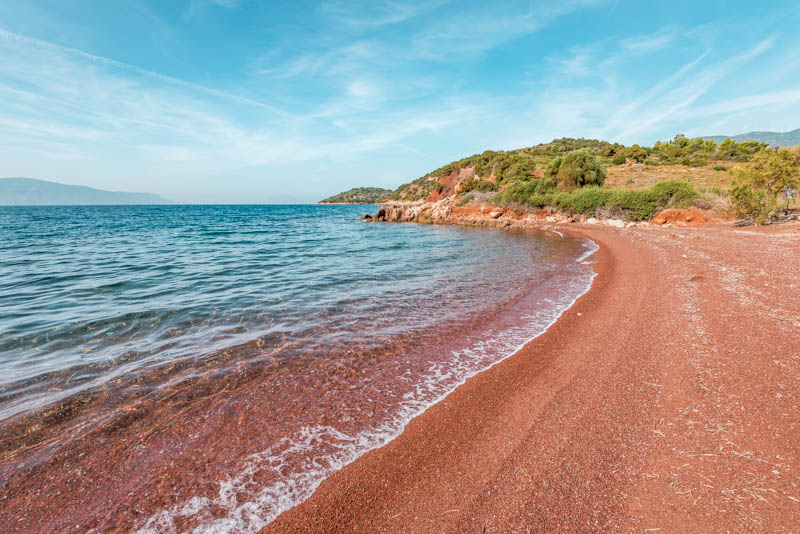
→ Our beach recommendations on the southern coast of the Gulf of Corinth:
- Paralia Kalamia, Corinth
- Paralia Vrachatiou, Vrachati
- Xylokastro Beach (Pefkias), Xylokastro
- Aigeiras Beach, Aigeira
- Akratas Beach, Akrata
- Pounta Beach, Trapeza
- Nikoleikon Beach, Nikolaika
- Mpouka Beach, Mpouka
→ Our beach recommendations on the north coast of the Gulf of Corinth:
- Monastiraki Beach, Monastiraki
- Skaloma Beach, Marathias
- Red Beach, Trizonia Island
- Vathi Beach, Tolofonos
- Agios Vasileios Beach, Galaxidi
- Asteri Beach, Itea
- Havgosi Beach, Ag. Vasileios
- Mikra Strava Beach, Alkiona
- Paralia Skalosias, Perachora
Campgrounds in the Gulf of Corinth
The Gulf of Corinth is a very interesting Greek destination for campers due to its proximity to the Peloponnese and its many attractions. Several good campgrounds have established themselves around the Gulf, some of which are even open year-round. Here are our recommendations for camping stops in the region:
Camping near Corinth
Two small but charming campsites are located near Corinth. The Olivetree Camperstop is situated in the middle of an olive grove about 9 km west of Corinth and offers everything a camper could wish for. The restroom facilities meet German standards. Due to the rural location, you can expect to hear animal noises.

The second recommended campsite is Camperstop Ancient Corinth (also known as Afrodites Waters) on the outskirts of Ancient Corinth, not far from the archaeological site of ancient Corinth. On a compact site, there are spots for caravans and motorhomes; a kiosk offers a small selection of goods, and a snack bar serves daily changing dishes at fair prices.
Camping near Delphi
The campground is located a good 500 meters above sea level, just 10 minutes from the ancient city of Delphi. With views over the olive-tree-lined landscape all the way to the Gulf of Corinth, the Delphi campground offers a first-class location. The tavern on the grounds serves home-style cooking, and a swimming pool invites you to cool off on hot days.
Camping in the Northeast of the Gulf
The Alkioni Holidays resort in the hamlet of Agia Sotira near Porto Germeno offers direct access to its own private beach. Popular with long-term campers, but also with RV travelers due to its nature-oriented campsites and idyllic location overlooking the sea. The campground’s tavern is rustic but offers good food and a magnificent view of Agia Sotira Bay.
Camping near Patras
Akrata Beach Camping: A campground right on the beach of the same name in Akrata, roughly halfway between Patras and Corinth. Clean restrooms, a quiet location, and a small kiosk on-site.
Camperstop En Plo: Compact, somewhat rustic campground right by the sea between Egio and Diakopto. If you dine at the campground’s tavern, the campsite is free (as of 2023). It’s about a 45-minute drive to Patras.
Camping Tsolis: A cozy, green campground right by the sea, spread out over several levels. Well-maintained restrooms and a small tavern on the grounds. We recommend the sites right by the sea; the upper ones are not far from Highway 8.
For more information and plenty of additional tips for your camping vacation on the Gulf of Corinth, check out our separate article: Camping in Greece

Getting to the Gulf of Corinth
Although the Gulf of Corinth is quite centrally located in Greece, the distances within the country should not be underestimated. From Athens Airport, you can reach the Gulf of Corinth in one hour (100 km). However, if you’re traveling from northern Greece, e.g., from Thessaloniki, it takes at least 5.5 hours (approx. 500 km) to reach the Corinthian Sea.

If you’re arriving by car on a ferry from Italy at the Greek port of Igoumenitsa, it takes about 2.5 hours (230 km) to reach the Rio-Antirrio Bridge. Instead of taking Highway 8 toward Athens, if you have enough time, we also recommend the scenic old national highway that runs right along the coast.
Our separate article provides all the important information on traveling to the Gulf of Corinth: Traveling to Greece
Flights to Patras and Athens
Athens Airport (ATH) is served year-round by direct flights from several German airports, including Aegean Airlines and Lufthansa. A direct flight to the capital usually offers the lowest fares. Alternatively, during the season, you can also fly to Patras Airport (GPA) in Araxos. Your journey will then begin west of the Gulf of Corinth.
→ You can search for suitable flights for your trip to Greece via our partner Skyscanner*:
➲ Search for flights on Skyscanner (Athens)*
➲ Search for flights on Skyscanner (Patras)*
Rental Cars for a Tour of the Gulf of Corinth
If you’d like to take a road trip around the Gulf of Corinth, you should plan for at least 7, preferably 10 days, to experience all the highlights. The route around the Gulf of Corinth is approximately 450 km long and runs mostly along the coast, with the exception of the northeastern section (between Itea and Porto Germeno). By the way, there are local car rental companies in almost every major city along the Gulf.
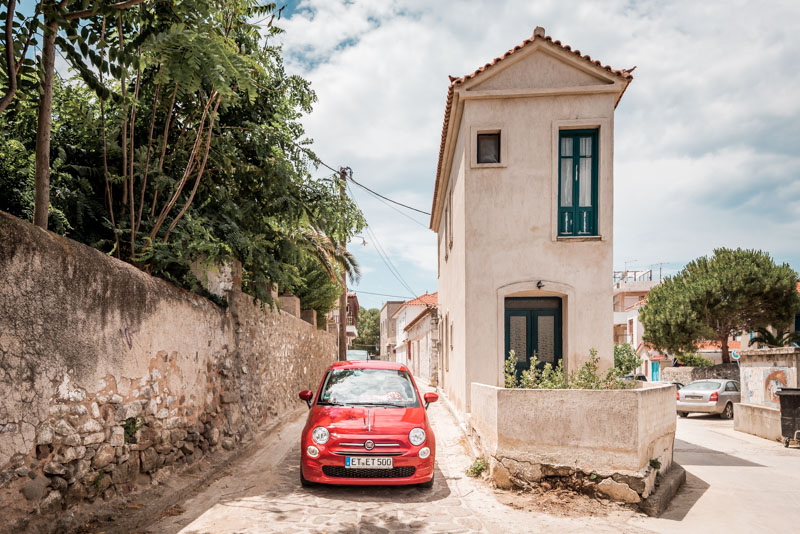
→ You can book your rental car in advance through our partner Discover Cars* at Athens or Patras Airport:
➲ View rental offers on Discover Cars*
Find out what to keep in mind on the roads of Greece and when renting a car for a round trip around the Gulf of Corinth in this article: Car Rental in Greece
→ Here you can find more articles about the region and lots of tips about the Peloponnese peninsula:
*Support our blog Greece-Moments
This post contains affiliate links marked with an asterisk (*). If you book or purchase something through one of these links, we receive a small commission. The price remains the same for you. This helps us continue to provide high-quality content for free. Did you enjoy this post and want to say thank you? Then simply buy us the next Greek coffee ☕️ Go to the coffee fund
Save this post on Pinterest too!