

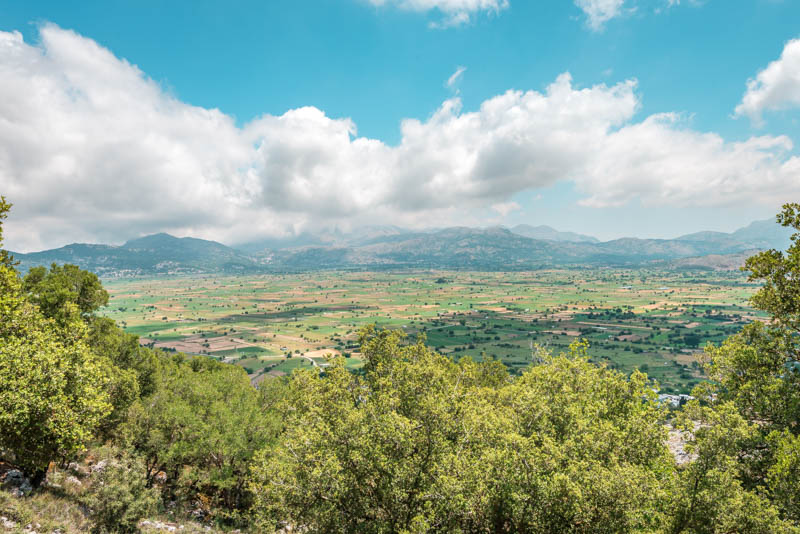
Just an hour’s drive from Heraklion lies the Lasithi Plateau on Crete. This charming, agricultural plateau, framed by the Dikti Mountains, stands in stark contrast to the island’s concrete-dominated coastal settlements.
A pre-Alpine atmosphere in Crete: The island’s famous plateau features lush meadows and fields, forested mountains, and all manner of grazing animals. Amidst it all, snow-white wind turbines spin dreamily.
Tom & Ella

A visit to the Lasithi Plateau is like a trip to the countryside. You’ll enjoy plenty of peace and quiet and serene nature on the 130 km² karst plateau, and dreamy villages invite you to take a stroll. Plus, the Psychro Cave, the birthplace of Zeus, the father of the gods, lends the entire region a mystical touch.
We were there in June and will tell you whether a day trip is worth it. We’ll also show you the best sights around the Lasithi Plateau:
🏖️ Dream beaches & hidden bays
🍽️ Restaurants, tavernas & cafés
🏛️ Must-see highlights & ancient sites
🗺️ Worthwhile spots & insider tips
🚘 Practical info like rentals & parking
♾️ Lifetime access & updates
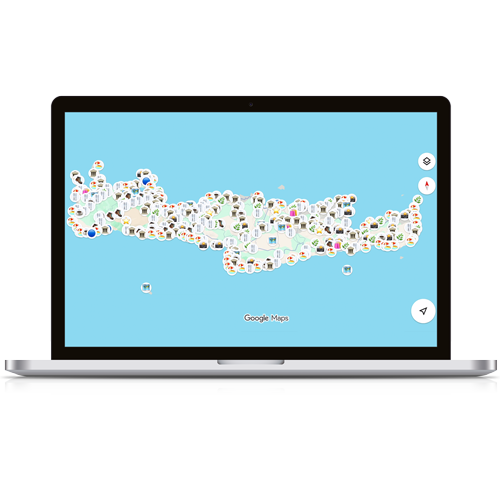
#1 Getting to the Lasithi Plateau
If you’re traveling from Heraklion or Chersonissos, you can reach the Lasithi Plateau by rental car via Island Highway 90 and take the exit in Malia marked “Lasithi Plateau” (Greek: Oropedio Lasithiou). You can reserve a rental car through our partner Discover Cars* if needed:
➲ Find affordable rental cars for the island*
From Malia, it’s about a 20-minute drive (15 km) past the village of Krasi (see point #7) and the hamlet of Ano Kera to the Lasithi Plateau. The road winds its way up to nearly 900 m; there are frequent overlooks along the roadside offering views of the Rozas Gorge and the north coast.
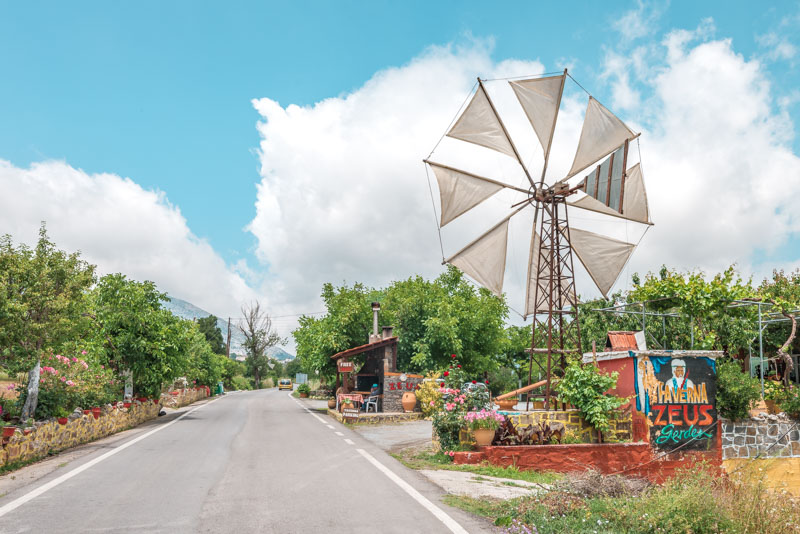
Just before you enter the plateau, you’ll pass the Ambelos Pass (894 m), and at the old windmills of Seli Ambelou, you’ll catch your first glimpse of the Lasithi Plain. You can circle the plateau on a paved road. However, the interior of the plain, with its meadows and fields, is crisscrossed by gravel roads.
Distances to the Lasithi Plateau
› Chania – Lasithi: 200 km (3 hrs.)
› Rethymno – Lasithi: 137 km (2 hrs.)
› Heraklion – Lasithi: 60 km (1 hr.)
› Ierapetra – Lasithi: 80 km (1 hr 45 min)
› Agios Nikolaos – Lasithi: 40 km (1 hr)
If you’re driving to the Lasithi Plateau from Sitia or Agios Nikolaos, you’ll ascend into the Dikti Mountains via an extremely scenic but winding mountain road. It’s about 40 km from the coast, and you’ll pass through the hamlets of Amigdali, Zenia, and Potami before reaching the village of Mesa Lasithi at the eastern entrance to the plateau.

#2 Best time to visit the Lasithi Plateau
A trip to the Lasithi Plateau is worthwhile any time of year. During the summer months, however, you should expect large crowds. The Lasithi Plateau is one of the most popular Crete attractions, so many tour groups and independent travelers arrive in this part of the island by rental car.
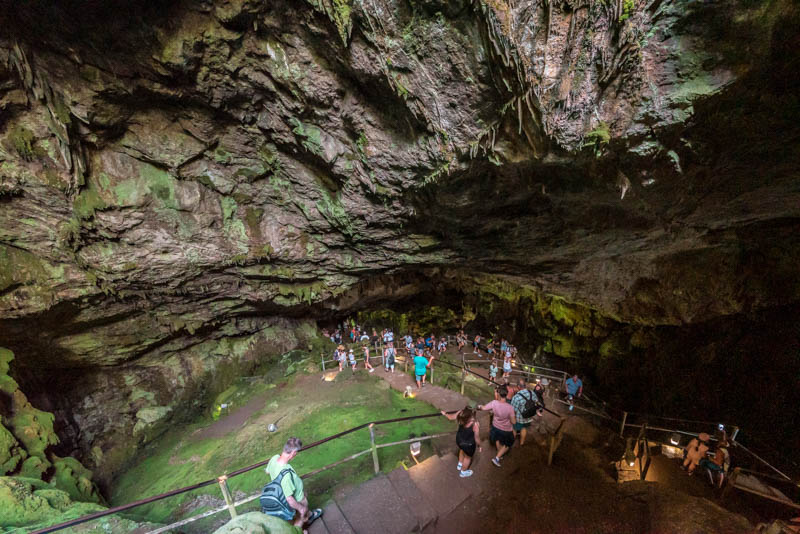
If the location of your hotel allows you to be there early in the morning or late in the afternoon, you can avoid the crowds. It’s busiest around noon; the Psychro Cave has a pilgrimage-like atmosphere, and we don’t have fond memories of waddling through the Zeus Cave.

The plateau has a unique microclimate that farmers take advantage of. It’s usually 5–10 degrees cooler here than on the coast, so you should bring a sweater. We recommend visiting the Lasithi Plateau in spring. From March to May, the valley, which is surrounded by mountains over 1,000 meters high, is covered in a sea of blossoms.
A visit is also recommended in the fall, during apple harvest season. If you visit the Lasithi Plateau in September or October, you’ll witness the fog drifting over the fields in the early morning. Those who visit Crete in the winter can experience a cozy, rustic atmosphere with the locals in the taverns by the fireplace while the first snow falls outside.
#3 Guided Tours to Lasithi
On guided tours to the Lasithi Plateau, you’ll get to know the region’s nature and village life while also learning about its mythology. Popular excursions include visits to the Cave of Zeus (Dikteon Antron), the traditional white windmills, and culinary tours featuring tastings of regional products.
Many vacationers opt for an organized bus tour to the Lasithi Plain. The excursion lasts a full day; you’ll be picked up from your hotel and travel as part of a bus group past various stops and sights around the plateau.
If you prefer something a bit more exciting, you can also join a jeep safari in the Dikti Mountains. As you drive along the mountain trails, breathtaking views open up time and again. Horseback riding tours through the region or a guided hike around the plateau are also available. Local guides will introduce you to this part of Crete in a fascinating way.

Hot air balloon flights over the Lasithi Plain are also a real highlight. The vast valley looks truly impressive from the air, especially at sunset. If you need more info, just click on the links and you’ll be taken to our partner GetYourGuide*:
➲ To the hot air balloon flight*
➲ To the bus tour of the plateau*
➲ To the jeep safari on the plateau*
#4 Lasithi Plateau Windmills
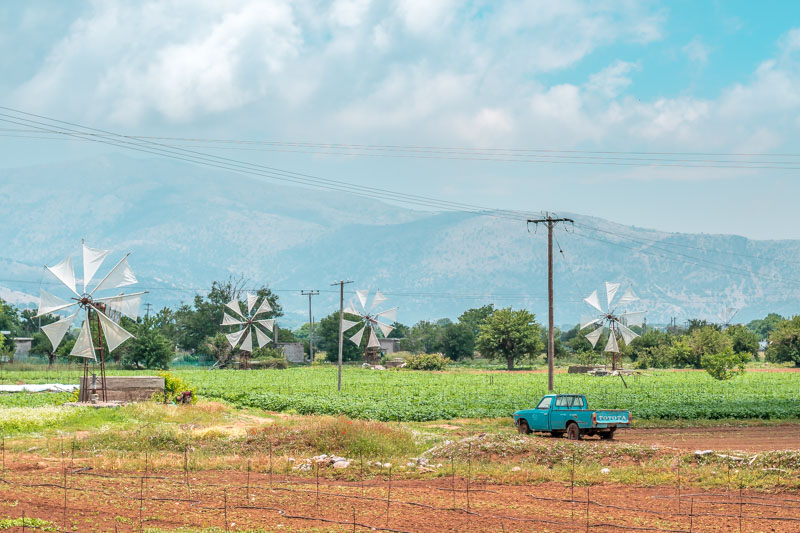
The small white windmills on the Lasithi Plateau are the region’s landmark. In the green valley, over 10,000 windmills with white cloth sails once turned to irrigate the countless fields of Lasithi’s 21 villages.
Their history dates back to the Venetian era (14th century). Unfortunately, many of them have fallen into disrepair in recent decades. Due to the dropping groundwater level, the power of the sails was no longer sufficient to pump water from the depths to the surface, so they were decommissioned and replaced by modern pumps.

Recently, however, many of the Lasithi windmills have been restored, albeit for decorative purposes only. They make for a great photo opportunity and captivate visitors with their nostalgic charm. We found a few windmills in the north, near the hamlet of Pinakiano, that are perfect for close-up photography.
If you’re looking for an original souvenir from Crete, you can purchase a small Lasithi windmill made of ceramic or wood at one of the local shops or directly from a workshop. We recommend the Windmills.gr shop on the access road from the Ambelos Pass at the northern entrance to the plain.

#5 Cave of Zeus at Psychro (Dikteon Antron)
The most important attraction on the Lasithi Plateau is undoubtedly the Cave of Psychro. It is located in the southwest of the plateau, above the small village of Psychro. Locals call it “Spilaio Diktaiou Antrou,” which means “Diktian Cave.” Its history is closely linked to Greek mythology.
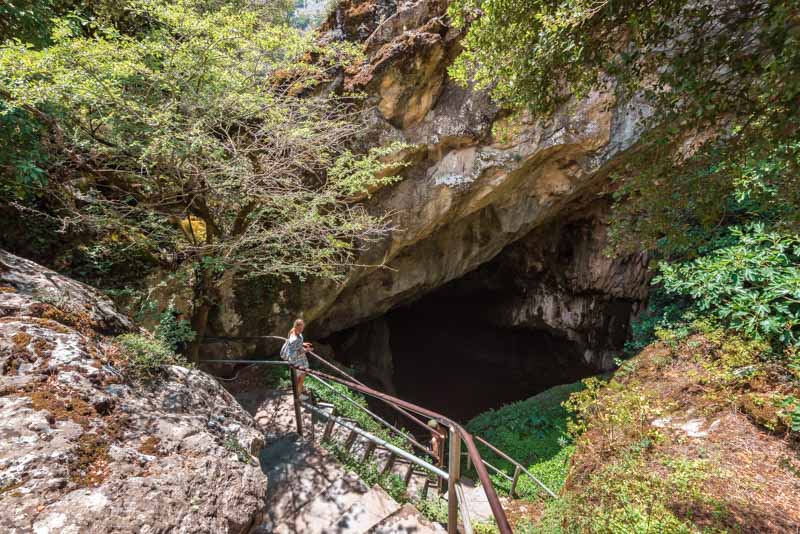
According to legend, Zeus, the father of the gods, was born in this cave, as his mother Rhea had fled there because his father Cronus wanted to kill his son out of fear for the succession to the throne. Deep within the Dikti Mountains, mother and son were safe. However, the young god grew up in the Ida Grotto on the Nida Plateau in central Crete.
Zeus’s birthplace remained forgotten for centuries and was only discovered in 1880 by hunters, who unfortunately stole valuable bronze statues from there. Shortly thereafter, archaeologists examined the stalactite cave and confirmed that it had already been used for ritual purposes during the Minoan period (around 2,800 B.C.).
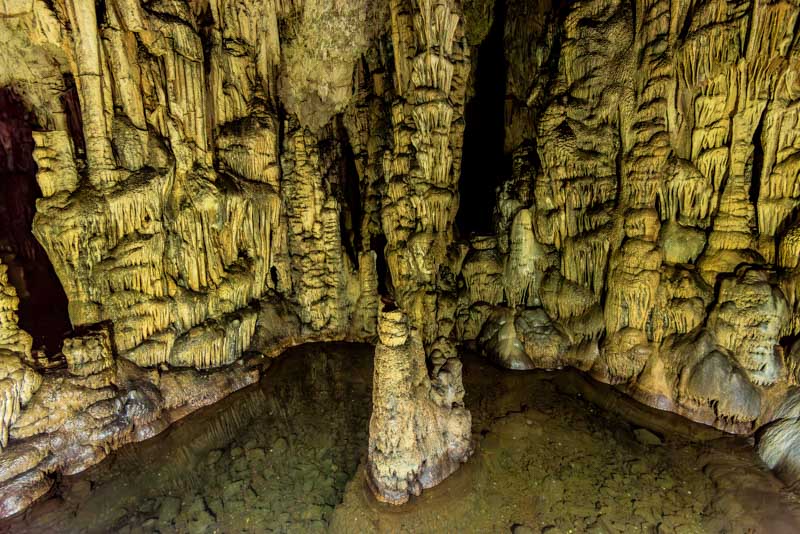
The accessible cave covers an area of 2,200 m² and is atmospherically lit. A series of steps leads down into the depths, past a small lake, and back up at the end. The temperature in Dikteon Antron Cave is usually only 15 degrees. Photography without flash is permitted.

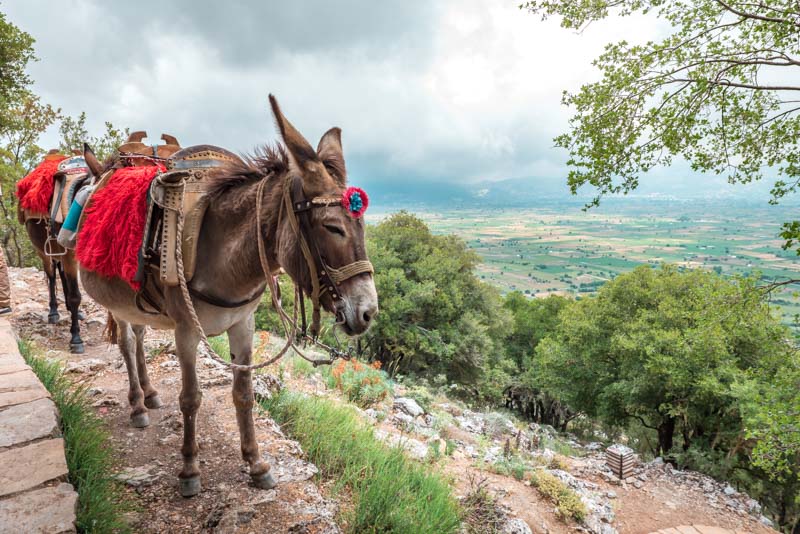
From the Zeus Cave parking area, a service road leads approximately 600 m uphill to the cave. The final section is somewhat steep but well maintained. For animal welfare reasons, adults should not ride the donkeys available along the route. From September 2024 to May 2026, the Psychro Cave was closed to the public due to renovation works. Since June 2026, visitors have once again been able to enter the cave. A new and easier access path has also been established.
Psychro Cave Admission Prices
- Standard admission to Psychro Cave: €15
- Reduced admission to Psychro Cave: €8
Free Admission Days at Psychro Cave
- 6 March – In memory of Melina Mercouri
- 18 April – International Day for Monuments and Sites
- 18 May – International Museum Day
- Annually on the last weekend of September – European Heritage Days
- National public holidays
Psychro Cave Opening Hours
- Open daily from 08:30 to 15:30. Closed on Tuesdays.
Dikteon Andron Opening Hours on Public Holidays
- 1 January: Closed
- 6 January: 08:30 – 15:00
- Clean Monday: 08:30 – 15:00
- 25 March: Closed
- Good Friday: 12:00 – 17:30
- Holy Saturday: 09:30 – 17:30
- 1 May: Closed
- Easter Sunday: Closed
- Easter Monday: 09:30 – 17:30
- Whit Monday (Holy Spirit Day): 09:30 – 17:30
- 15 August: 09:30 – 17:30
- 28 October: 08:30 – 15:00
- 25 December: Closed
- 26 December: Closed
Greek Mythology Thematic Park in Psychro
The Greek Mythology Thematic Park is located directly across from the Psychro parking lot. Spanning 3,000 m², both the indoor and outdoor areas are dedicated to Greek mythology. Life-size statues, temple reconstructions, interactive exhibits, and informative displays await visitors.

The theme park is especially recommended for families with (older) children who are interested in fairy tales and fantasy. The settings are lovingly designed and the content is educational. Admission is quite high at €8 (ages 4–10: €4), but if you’re interested in the world of gods and heroes, a visit to the Lasithi Mythology Park is a must.
#6 Villages of the Lasithi Plateau
Within the Lasithi Plateau lie about 20 traditional villages that nestle like a wreath around the fertile plateau. About 2,000 people live together in these small and large settlements. Heavily affected by rural exodus, the villages today offer genuine Cretan hospitality, traditional architecture, and a glimpse into authentic Cretan country life.
Tzermiado in the northeast is the largest town with just under 600 residents and, with its cozy taverns, small shops, and good infrastructure, is ideal for a stopover. Agios Georgios in the southeast is the second-largest town with 490 residents and is also worth a visit for its excellent taverns, the Fanourgiakis Dimitrios bakery, and the Folk Museum.

But even in small settlements like Plati and Metochi, which have barely more than 100 residents, there is at least one spot for a quick break. The best-known is the settlement of Psychro, the starting point for the famous Cave of Zeus, with a fountain worth seeing in the town center.
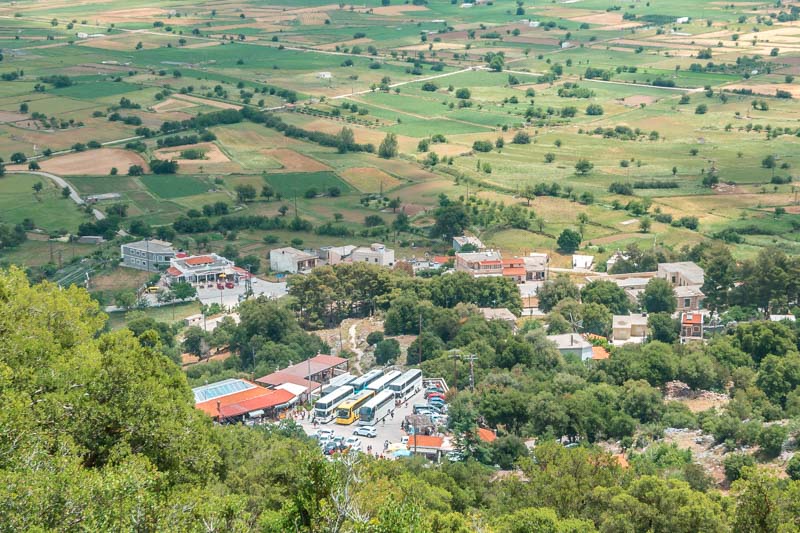
Culture enthusiasts should visit the Moni Vidianis Monastery, idyllically situated on a mountainside to the north, and the Iera Moni Koimiseos Theotokou Krustallenias Monastery at the eastern entrance to the Lasithi Plateau. Both monasteries feature a lush courtyard that invites you to take a break, as well as a shop where you can purchase local products such as olive oil or herbs.

Hiking in the Lasithi Plateau
Hiking in and around the Lasithi Plateau is a delight for nature lovers and culture enthusiasts alike. The rolling hills, lush meadows and fields, and small villages off the beaten path are a balm for the soul. Hiking trails, known as monopati, crisscross the karst landscape, and from the Stone Age to the Middle Ages, you’ll encounter traces of days long past.

Thirteen Neolithic sites have been discovered in the region, proving that the area has been an important settlement for 10,000 years. Particularly impressive is the archaeological site of Karfi, situated high above the valley. The plain was also a spiritual refuge during the Byzantine and Venetian periods, as evidenced by monasteries and chapels.
→ You can find beautiful hiking routes in the Lasithi Plain on platforms like Komoot; here is a selection:
- Tzermiado – Karfi Summit (Length: approx. 7.1 km, Duration: approx. 3 hours, Difficulty: Moderate to difficult)
- Zeus Cave Loop (Length: approx. 2.2 km, Duration: approx. 1 hour, Difficulty: Easy)
- Katharo Plateau Minoan Trail (Length: approx. 9.2 km, Duration: approx. 3 hours, Difficulty: Moderate)
- Krasi Loop Trail (Length: approx. 1.6 km, Duration: approx. 45 minutes, Difficulty: Easy)
- Zelakano Loop Trail (Length: approx. 3.8 km, Duration: approx. 1 hour, Difficulty: Easy)
💡 Book recommendation for Crete: The Crete travel guide from Lonely Planet contains important information and tips for a vacation on the island. You can order the guide here: Order the book here*
#7 Sights around Lasithi
The region offers several Crete highlights that you can check out on your way to the Lasithi Plateau, depending on your mood and time. You’ll even pass by some places on the drive to the plateau—these are worth a quick stop. The village of Krasi, with its historic architecture, giant plane tree, and top-notch restaurants, remains a fond memory for us.
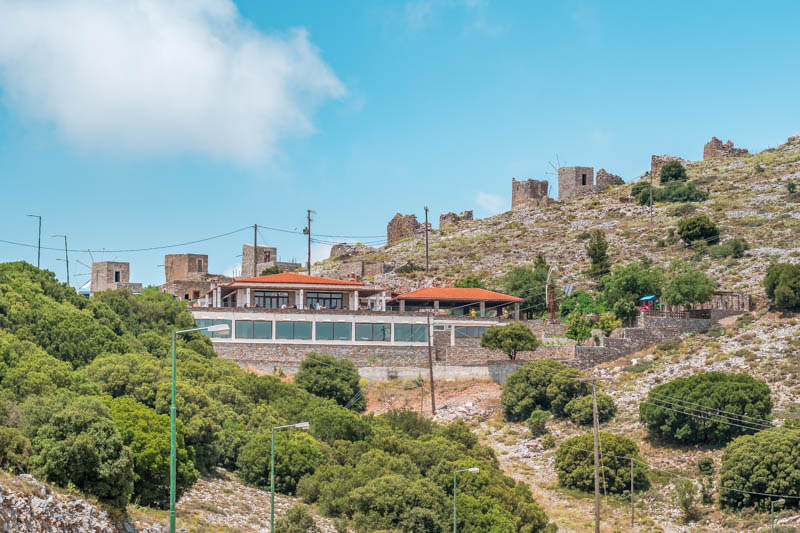
Windmills of Seli Ambelou
The windmills of Seli Ambelou stand at the Ambelas Pass. Some of the stone mills have been restored, while others have been left to decay. If you want to take photos at sunset with a view of the plateau, this is the ideal spot. But be careful: the wind usually blows fiercely up here.
Kera Kardiotissa Monastery
The impressive Kera Kardiotissa Monastery is located about 2 km south of the village of Krasi and is a popular stop on the way to the Lasithi Plain. Built in the 14th century, ancient Byzantine frescoes can still be admired today. The nuns who live here are happy to provide information about the history of the site upon request. The Taverna Niki in Ano Kera is a great place to stop for a bite to eat.
✓ Full coverage & unlimited mileage included
✓ Free cancellation until 24h before pickup
✓ Best price guarantee via Discover Cars
Walk through the village of Krasi
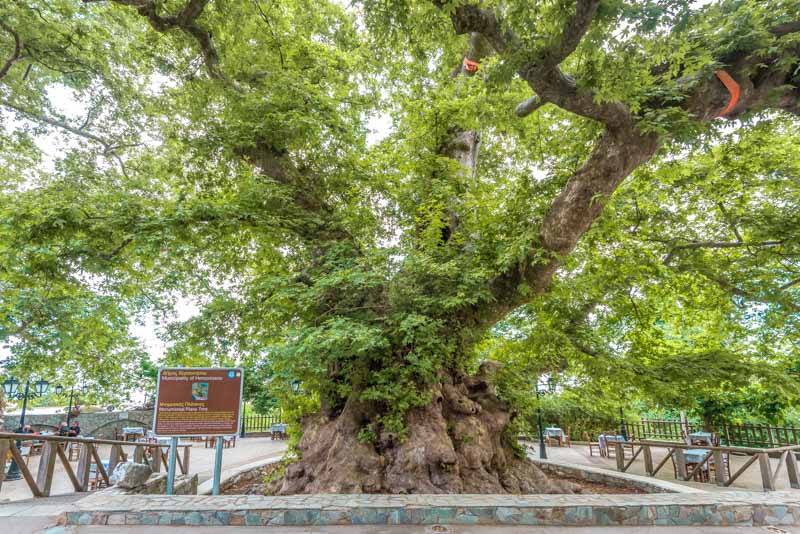
We stumbled upon the mountain village of Krasi on our tour and were immediately captivated. In the village center, there is an ancient plane tree (2,500 years old, according to locals) and a babbling fountain. The village, situated at an elevation of 600 meters, has an authentic atmosphere, and several traditional taverns (Tip: Taverna Krassopsychia) invite you to take a leisurely break.
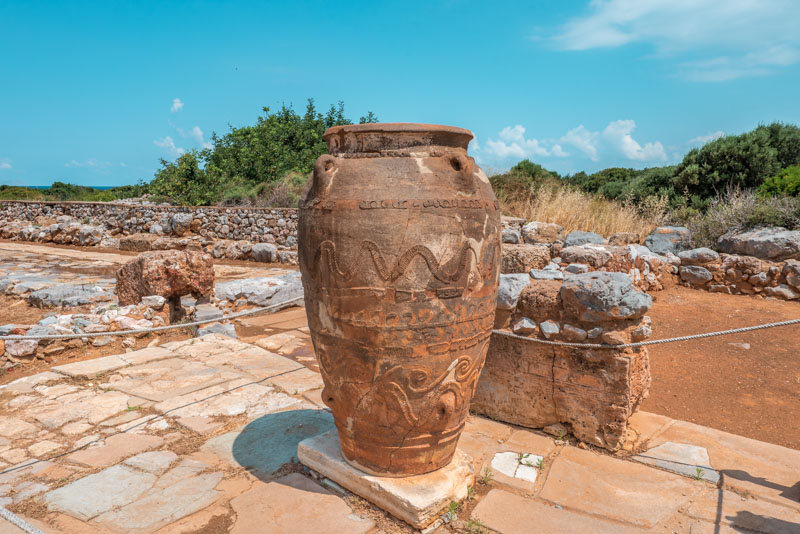
Minoan Palace of Malia
Although it disappeared 3,500 years ago, Minoan culture is still present on Crete today. The archaeological site of Malia, about 3 km east of the resort, features the remains of a palace from the Minoan era. The excavation site is located right by the sea and can be combined with a walk along the beach. A guide is recommended for a journey of discovery into the realm of the Minoans.
Visit to the town of Agios Nikolaos
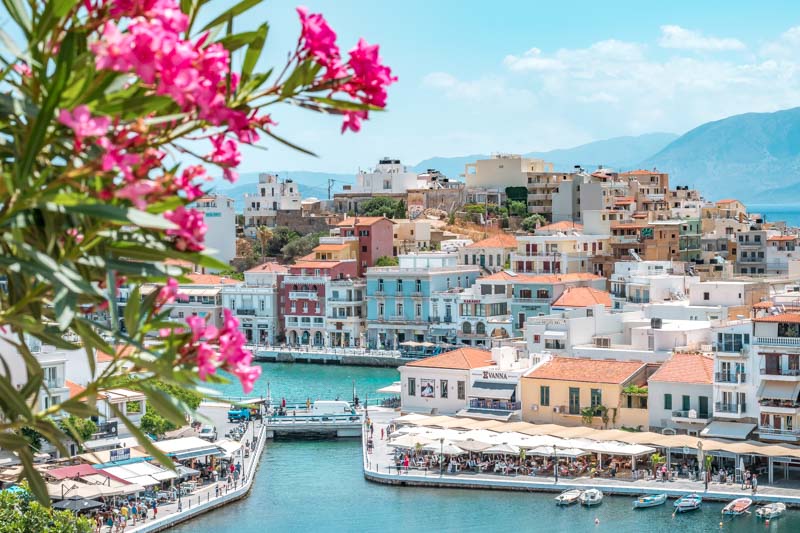
About an hour from the Lasithi Plain lies one of Crete’s most beautiful coastal towns, Agios Nikolaos. An inland lake, great cafés, and stylish boutiques await you. Agios Nikolaos fits well into a round-trip itinerary: spend the morning in the plain and the afternoon strolling through the town. Then take the island highway back to the hotel.
→ Find out what there is to discover in this coastal town in eastern Crete here: Agios Nikolaos
#8 Restaurants on the Lasithi Plateau
Unlike many eateries in the coastal towns, the taverns on the Lasithi Plateau offer traditional Greek cuisine. The dishes are rustic in style but homemade and extremely tasty. It’s advisable to check reviews on Google and other platforms beforehand; unfortunately, there are also tourist traps (microwave meals for a lot of money).
→ Our personal recommendations for restaurants on the Lasithi Plateau that serve home-style cooking:
- Metochion in Metochi
- Taverna Manos in Plati
- Halavro in Psychro
- Tavern Taxiarchos in Psychro
- To Synafi tou Kritsoti in Agios Georgios
- Oropediou Geusis in Tzermiado
- Argoulias Tavern in Tzermiado

→ You can find more helpful articles about the island and numerous Crete travel tips here:
- Crete Travel Tips
- Crete Highlights – Our 20 Most Beautiful Places
- Best Hotels in Crete
- Crete Beaches – The Most Beautiful Swimming Spots
- Crete with Kids
- Crete Excursions
*Support our blog Greece-Moments
This post contains affiliate links marked with an asterisk (*). If you book or purchase something through one of these links, we receive a small commission. The price remains the same for you. This helps us continue to provide high-quality content for free. Did you enjoy this post and want to say thank you? Then simply buy us the next Greek coffee ☕️ Go to the coffee fund
Save this post on Pinterest too!