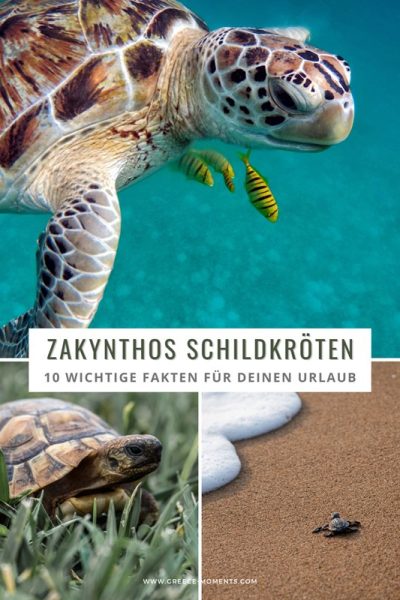

The Ionian island of Zakynthos is one of the most important breeding grounds of Caretta Caretta in Greece and even in the entire Mediterranean. The wind-protected bay of Laganas, with its dune-like sandy beaches in the far south, offered sea turtles ideal conditions for laying their eggs.
With the advent of mass tourism on Zakynthos, the populations of sea turtles have been drastically reduced. The heavy development of the coastline and the intensive use of sandy beaches for beach tourism are, alongside bottom trawling, the greatest threats to this endangered species.
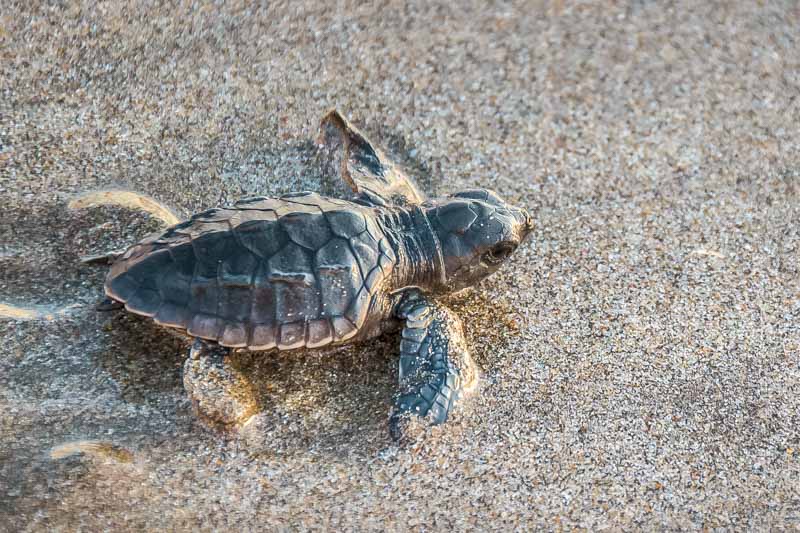
As holidaymakers, we can actively contribute to sea turtle conservation on Zakynthos – or, through our actions (often without realising it), help ensure that one day none of these majestic animals remain in the Mediterranean.
In this article you will find the most important information about Zakynthos turtles and a guide on what we as tourists can do, directly and indirectly, to help preserve sea turtles. True to the motto:
“Be the change you want for this world.”
- #1 Where to see Zakynthos turtles?
- #2 Why do turtles come to Zakynthos?
- #3 Why are loggerhead turtles threatened with extinction?
- #4 Why are there fewer and fewer turtles on Zakynthos?
- #5 How can I protect the turtles as a holidaymaker?
- #6 Which beaches do turtles nest on?
- #7 What is the Zakynthos Marine National Park?
- #8 Where can I find out more about turtles on the island?
- #9 Are turtle spotting tours recommended?
- #10 Animal-friendly turtle watching on Zakynthos
🏖️ Dream beaches & hidden bays
🍽️ Restaurants, tavernas & cafés
🏛️ Must-see highlights & ancient sites
🗺️ Worthwhile spots & insider tips
🚘 Practical info like rentals & parking
♾️ Lifetime access & updates

#1 Where to see Zakynthos turtles?
It is not without reason that Zakynthos is nicknamed the “Turtle Island of Greece”. In Laganas Bay, in the southeast of Zakynthos, numerous sea turtles gather every year to prepare for egg-laying. As early as the end of March, the first turtles reach the waters of the south coast and begin to mate.
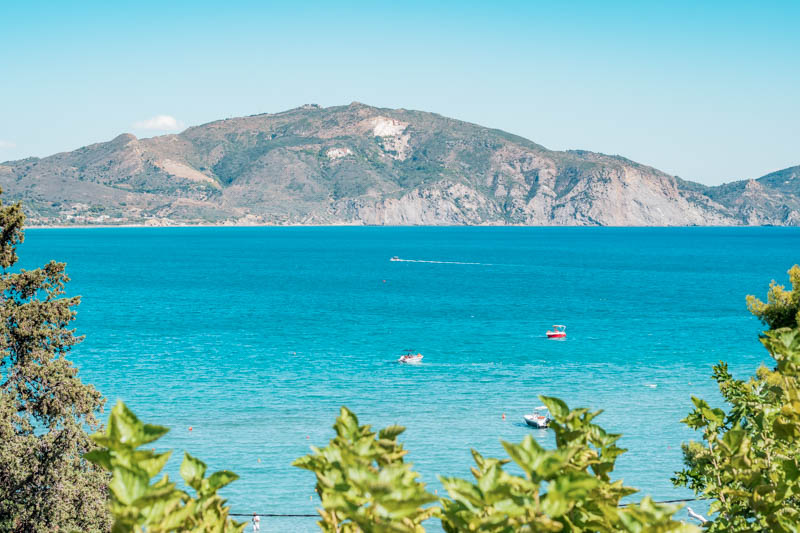
The females remain in the south of Zakynthos until the beginning of October to lay their eggs, before swimming back to other parts of the Mediterranean. Anyone planning to spend their Greece holiday on Zakynthos therefore has the best chance of encountering sea turtles. On the beaches of Kefalonia, the island neighbouring Zakynthos, you too can spot loggerhead turtles.
#2 Why do turtles come to Zakynthos?
The island of Zakynthos is considered one of the most important nesting areas for the loggerhead turtle (Caretta Caretta) in the Mediterranean. Almost every year, the first nest in Greece is found on Zakynthos. Experts estimate that between 60 and 80 percent of the entire Mediterranean population lay their eggs in Greece.
The turtles, which can grow up to 1.30 m in length, travel to Zakynthos from various parts of the Mediterranean. In addition to Zakynthos, they are also drawn to the opposite coast of the Peloponnese Peninsula, specifically to the Gulf of Kyparissia. Further nesting sites exist on Crete, Cyprus and Turkey.
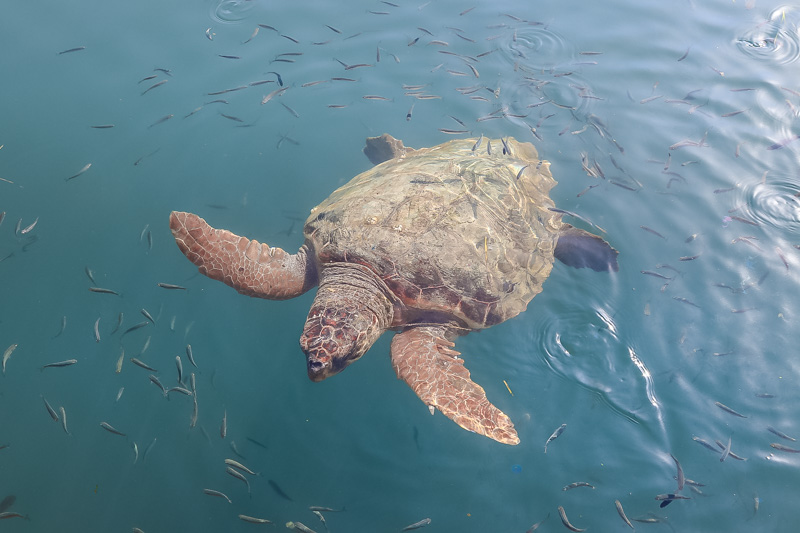
Outside the nesting season, sea turtles inhabit many parts of the Mediterranean. Exactly why they prefer to return to Zakynthos each year is not yet fully understood.
#3 Why are loggerhead turtles threatened with extinction?
The Caretta Caretta is today classified as threatened with extinction and is therefore under international protection (CITES – the Convention on International Trade in Endangered Species of Wild Fauna and Flora). Turtles have existed for around 200 million years – they were already alive at the time of the dinosaurs.
In Greek mythology they were also held in high regard. They were considered a symbol of fertility and therefore placed under the protection of the goddess Aphrodite. One of the earliest Greek coins, from the 5th century BC, already bore the image of a Caretta Caretta sea turtle.
“In our modern world, turtles are confronted with challenges that they never had to face in the past.”
The pollution of our oceans with plastic waste, extensive fishing activity (particularly trawl fishing) and mass tourism with all its negative side effects are increasingly endangering turtle populations. On Zakynthos, it feels as though everyone wants a share of the turtle business…

Beach erosion caused by intensive beach tourism is another problem for these sensitive animals. The less natural sandy beach remains, the harder it becomes for turtles to lay their eggs.
Nature conservation and tourism do not coexist harmoniously on Zakynthos. This becomes clear when you see how much the turtle business is booming, while at the same time there are barely any funds available for the preservation of the national park.
#4 Why are there fewer and fewer turtles on Zakynthos?
Just in time for the start of the holiday season at the end of May, female loggerhead sea turtles reach the southern beaches of Zakynthos and bury their eggs in the fine sand. Sea turtles are extremely sensitive animals that are highly sensitive to noise and artificial light.
The beaches preferred for egg-laying are located at Laganas, the tourist hotspot of Zakynthos. The village has long been considered the island’s party stronghold. In summer, loud music booms from speakers late into the night and the artificial light from restaurants shines far out to sea – much to the detriment of the sensitive sea turtles.
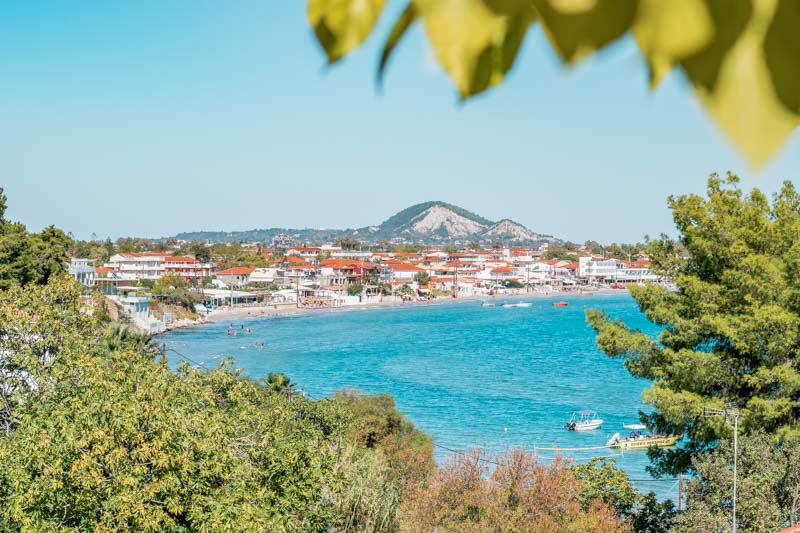
It is estimated that on average only one to two turtles out of around 1,000 eggs survive to reach reproductive maturity at 20–30 years of age. After this time, the female turtles return to the exact beach where they hatched in order to lay their own eggs.
Where two decades ago there was still an untouched natural beach, today there may be a noisy beach bar or a beach hotel. If the conditions for egg-laying are not optimal – for example, if sun loungers obstruct digging or there is excessive noise – no eggs are laid and the female loses her entire brood.
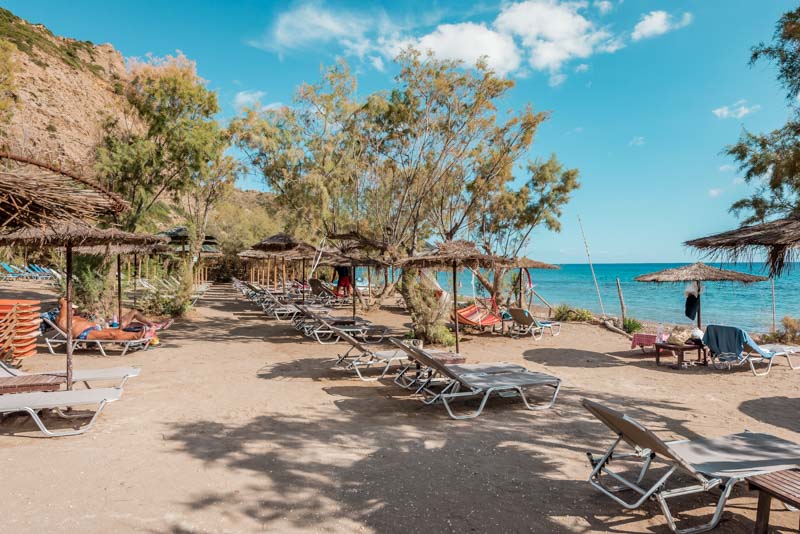
Indeed, fewer turtle nests are recorded every year. The newly hatched young animals also face serious problems. Under natural conditions, they orient themselves towards natural light sources – such as the moon and stars – to find their way to the sea.
Artificial light (e.g. from beach bars) disrupts their natural compass and draws them in the wrong direction. If they do not reach the sea quickly enough, they dry out or fall victim to cats and birds. Here is an overview of the Caretta Caretta nests counted on Zakynthos in recent years:
| Year | 2021 | 2022 | 2023 | 2024 | 2025 |
| Nests | 1,319 | 1,125 | 2,033 | 2,470 | 2,155 |
| Source: ZNMP | |||||
#5 How can I protect the turtles as a holidaymaker?
Tourism and environmental protection can go hand in hand, as demonstrated by many other regions where sea turtles are found (including Florida in the USA and Koh Tao in Thailand).
If you would like to help ensure that turtles continue to return to Zakynthos in the future, we recommend the following:
- Avoid plastic waste: Sea turtles feed on jellyfish, among other things. Plastic bags resemble jellyfish in the water, while plastic straws look like seaweed or small algae – turtles can die from ingesting them. Always dispose of rubbish properly and use cloth bags when shopping.
- Beaches in Zakynthos: Avoid the beaches where turtles lay their eggs (see #6). Zakynthos offers numerous alternative bathing options. The nests, which are protected by a wooden frame, must not be touched under any circumstances.
- Turtle tours: Avoid turtle-spotting boat tours, as these can cause stress for the animals and the turtles are usually surrounded by multiple boats at once.
- Hotels and tavernas: Avoid establishments and restaurants located directly on the beach within the national park. Even though these businesses rely on tourism, the buildings are typically constructed illegally or without a valid building permit.
You can find our personal selection of the 20 best accommodations on Zakynthos in this article: Zakynthos Hotels
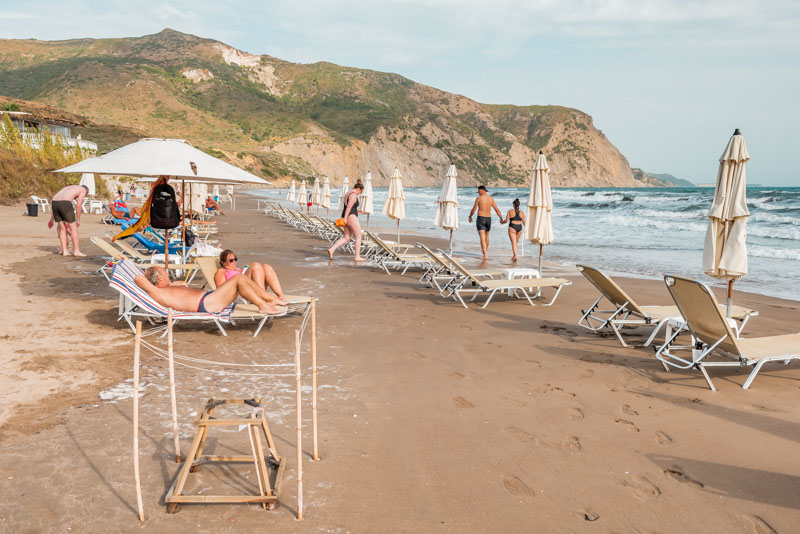
#6 Which beaches do turtles nest on?
Within the Marine National Park, the following six beaches have been designated as essential nesting sites for Zakynthos turtles. Five of these beaches remain accessible to the public from sunrise to sunset. In the interest of nature conservation, we nonetheless recommend avoiding these beaches during summer (the breeding season).
Dafni Beach
Dafni Beach is located on the Skopos peninsula and falls within Zone A of the Marine National Park. Although animal welfare should take priority here, four (illegal) tavernas are situated directly on the beach. The owners insist on their land rights, and so the restaurants continue to operate today despite repeated warnings and fines.
Parasols may not be set up close to the sea; most sunbathing areas are located in the tamarisk-lined dune landscape further back. Turtles can also lay their eggs here. During our visit in 2022, the required distance from the nests was not always maintained.
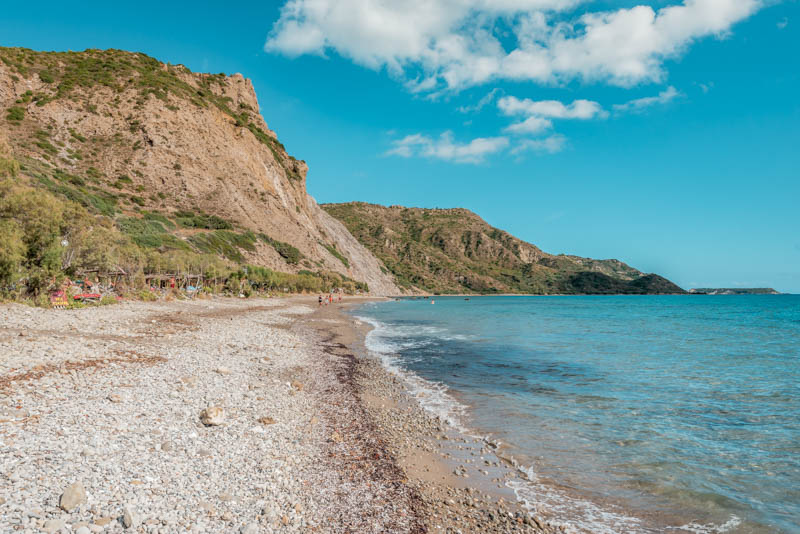
The beach consists of a mix of large stones and sandy sections. The water quality was not suitable for swimming during our visit. This raises the question of how the local tavernas dispose of their wastewater here. To make matters worse, the power generators of the tavernas produce considerable noise.
To reach Dafni Beach, you must navigate a kilometre-long, sometimes steep dirt track riddled with potholes. Car rental companies contractually exclude driving on unpaved roads, and in the event of damage, insurance cover may be voided. Yet another reason to skip this beach – for the sake of the sea turtles.
✓ Full coverage & unlimited mileage included
✓ Free cancellation until 24h before pickup
✓ Best price guarantee via Discover Cars
Gerakas Beach
Gerakas Beach is located at the easternmost tip of Zakynthos. The cape of the same name impresses with its extraordinary natural scenery. A fine sandy beach stretches along a narrow headland towards a weathered clay landscape. From 1 May to 31 October, no more than 350 people are permitted to swim here under the national park regulations.

Above the beach there is an information centre providing a concise overview of the sea turtles of Zakynthos. In high season, visitors are permitted to stay on the beach for a maximum of three hours. Private parasols are not allowed. During our visit, however, this was neither enforced nor observed by all bathers.

Kalamaki Beach
The almost 4 km stretch of coastline north of Laganas is one of the most popular beaches in the south and, at the same time, one of the preferred nesting sites of the Caretta Caretta. Although a large section remains natural, there are still some tavernas on the eastern end of the beach that also rent out sun loungers.
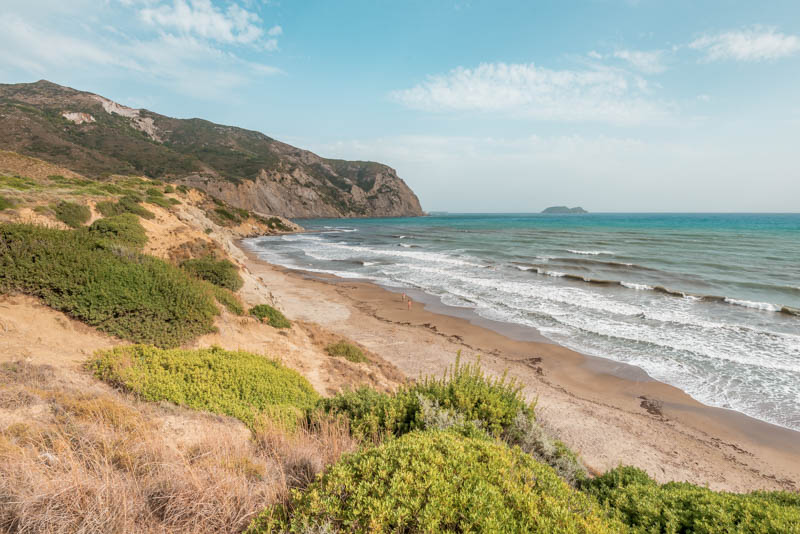
Laganas East Beach (East Laganas)
The eastern Laganas beach borders directly onto Kalamaki Beach and, unlike the western section near the village of Laganas, falls under nature conservation. This undeveloped stretch of coastline has been largely left in its natural state to protect the Zakynthos turtles. Behind the beach lies an extensive dune and forest area.
Marathonisi (Turtle Island)
This small offshore island, not far from the coastal town of Limni Keri, has a 150 m sandy beach (Zone B) that offers ideal conditions for sea turtles to lay their eggs. Marathonisi can be reached both by private motorboat and by organised tour. A maximum of 200 people are permitted on the beach at any one time.

Due to the relatively low sand temperatures, mostly male turtles hatch here. The sex of the Caretta Caretta is largely determined by the temperature of the nest. A distance of at least 15 m must be maintained from hatching turtles. Why the island has not been closed to visitors entirely remains a mystery to us.
Sekania Beach
Sekania Beach is located between Kalamaki Beach and Dafni Beach. The stretch of coastline was acquired by WWF Greece and completely closed to the public in order to protect at least this one nesting site. Today, 50 percent of all turtles on Zakynthos lay their eggs here. The beach is monitored daily by national park staff.
→ In this post, we’ll reveal our top 15 best swimming spots on the island: Zakynthos Beaches
#7 What is the Zakynthos Marine National Park?
To protect the marine ecosystem and preserve the population of the loggerhead sea turtle Caretta Caretta, the National Marine Park of Zakynthos was established in 1999 – also known as the ZNMP (Zakynthos National Marine Park). The protected area covers a total of 135 km².
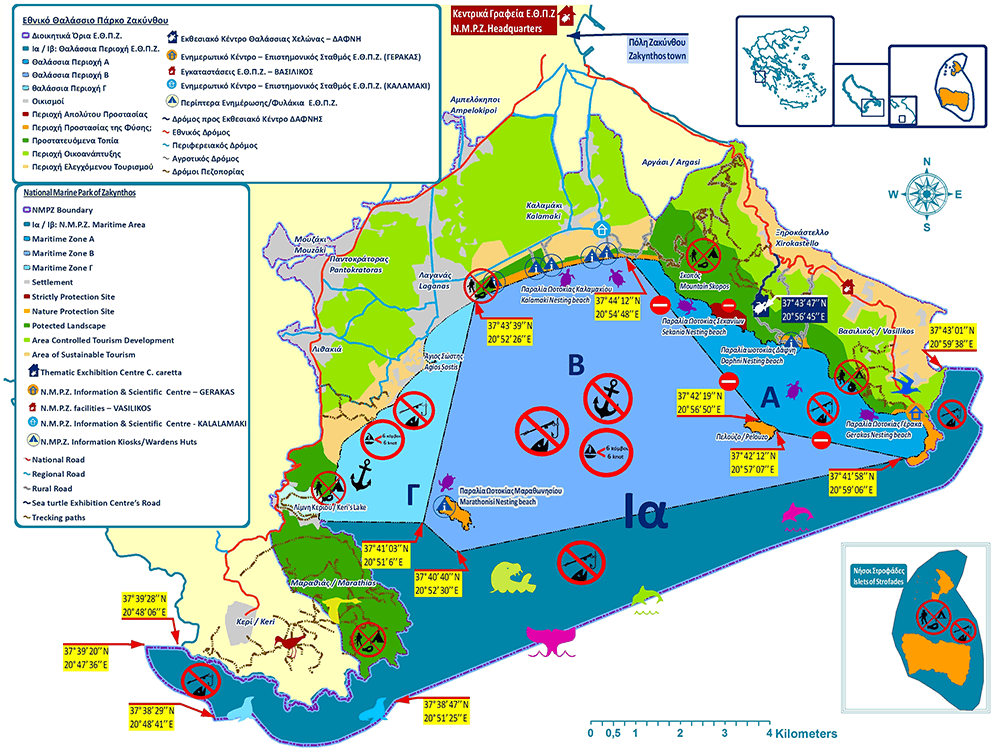
The marine nature park encompasses the bay of Laganas with its six designated beaches and dune landscape, as well as the offshore islands of Marathonisi (Turtle Island) and Pelouzo (Kalonisi), where the sea turtles lay their eggs. The marine national park forms part of the European nature conservation initiative Natura 2000.
Unfortunately, the mere existence of this protected zone does not guarantee the recovery of sea turtle populations. This is not a strictly managed national park of the kind found in the USA or Australia, for example. There are neither clear visitor regulations nor sufficient enforcement personnel. Countless motorboats set out every day on “turtle spotting” trips.
Due to a lack of financial resources, numerous rules and prohibitions cannot be adequately enforced. Although the marine park is divided into different sectors (Zones A, B and C), only one turtle beach – namely Sekania Beach – is completely closed to the public.
It is no coincidence that this protected beach records the highest number of turtle nests on Zakynthos every year. The entire area around Sekania Beach was acquired by WWF Greece and is now regarded as a successful symbol of Greek environmental and animal protection.
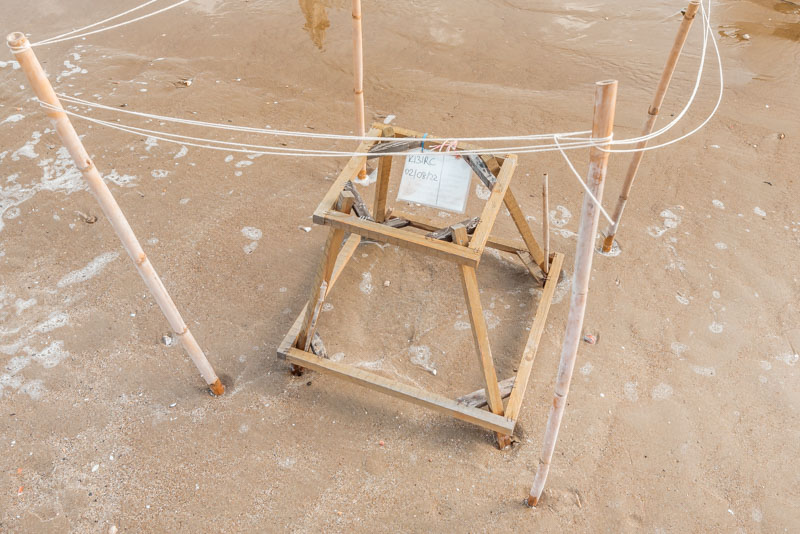
The following regulations apply throughout the Zakynthos National Marine Park:
Prohibitions within the Zakynthos Marine Park
- Underwater fishing
- Zone A: no boats permitted
- Zone B: boats may travel at speeds below 6 knots; anchoring is prohibited
- Zone C: boats may travel at speeds below 6 knots; anchoring is permitted
- Sekania Beach: strictly protected area; access only permitted for researchers and support staff with special authorisation
Bans on beaches where Zakynthos turtles lay eggs
- Entering the beach from sunset to sunrise
- Using parasols within 5 metres of the waterline
- Digging holes or pits, or building sandcastles near turtle nests (which can obstruct hatchlings on their way to the sea)
- Touching the cages that protect the nests
- Using any vehicle on the beach (including bicycles)
- Horse riding
- Allowing dogs off the lead
- Using artificial light sources at night, such as torches, fires or other lighting
General rules for the Zakynthos National Marine Park
- Fires of all kinds are prohibited
- Camping is not permitted
- Do not remove plants growing in the sand (e.g. sea daffodils)
- Do not leave any litter behind
→ More information about the Zakynthos Marine National Park can be found on the information portal Zante Island
#8 Where can I find out more about turtles on the island?
During your holiday, you have several opportunities to learn more about the situation of the Zakynthos turtles. For decades, numerous locals, community organisations and national non-governmental organisations (NGOs) have been committed to the welfare of the island’s Caretta Caretta turtles.
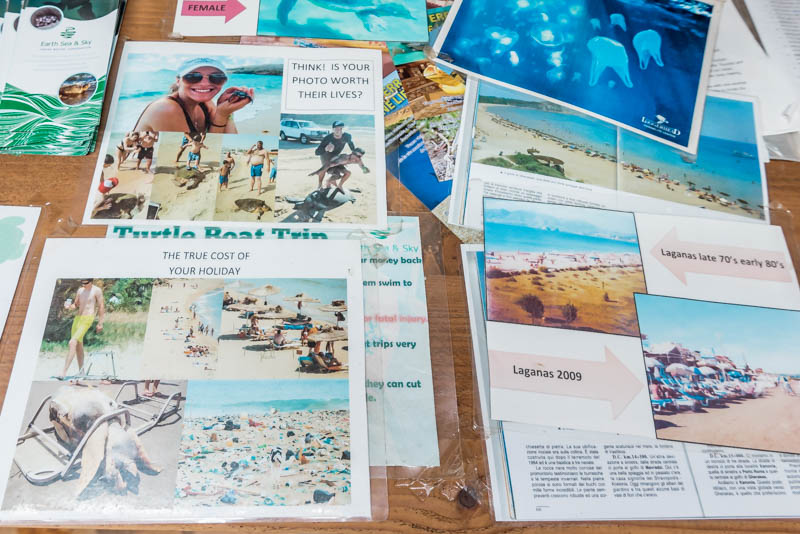
Archelon Sea Turtle Protection Society
Archelon was founded in 1983 by Dimitris and Anna Margaritoulis. As early as the 1980s, the Zakynthos turtle population was declining dramatically, while tourism on the island was growing sharply. Thanks to pressure from Archelon and WWF, a number of protective measures were successfully introduced, including night-time access bans on nesting beaches.
Archelon staff provide information about turtles at various locations on Zakynthos, including Kalamaki Beach and Zakynthos Town. They can be recognised by their blue T-shirts. Archelon now operates a large marine animal rescue centre in Glyfada, Athens. Injured turtles can be transported from Zakynthos to Athens within a matter of hours.
Mediterranean Marine Life Center
Environmentalist Yannis Vardakastanis runs a compact information centre in Vasilikos, at the end of the Skopos peninsula. Yannis grew up in the area and ran a beach bar on Gerakas Beach until the early 1990s. For the sake of the turtles, he gave it up and founded the island’s animal welfare organisation Earth, Sea & Sky in 1993.
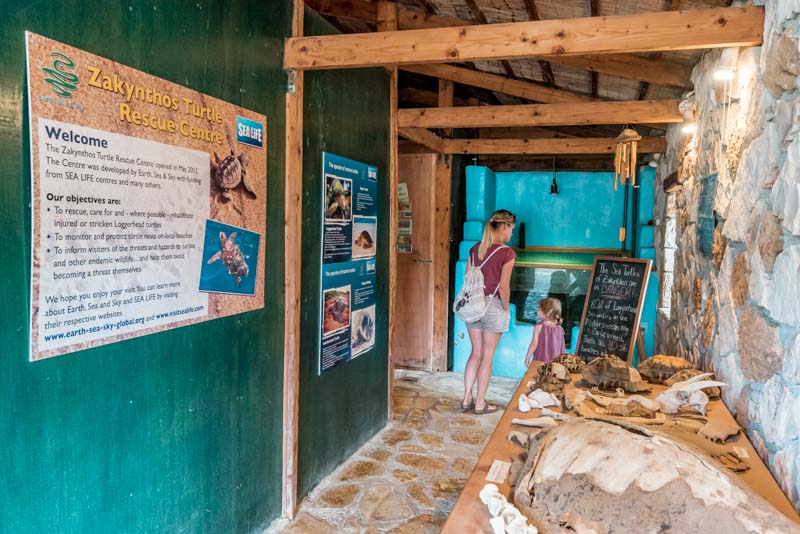
The Mediterranean Marine Life Center offers an excellent insight into the life of the Caretta Caretta and highlights the problems caused by mass tourism. In addition to four large tanks in which sea turtles can be temporarily housed, there is also an outdoor area with land tortoises. Admission to the information centre is free; donations are welcome on site.
Marine National Park Information Centres
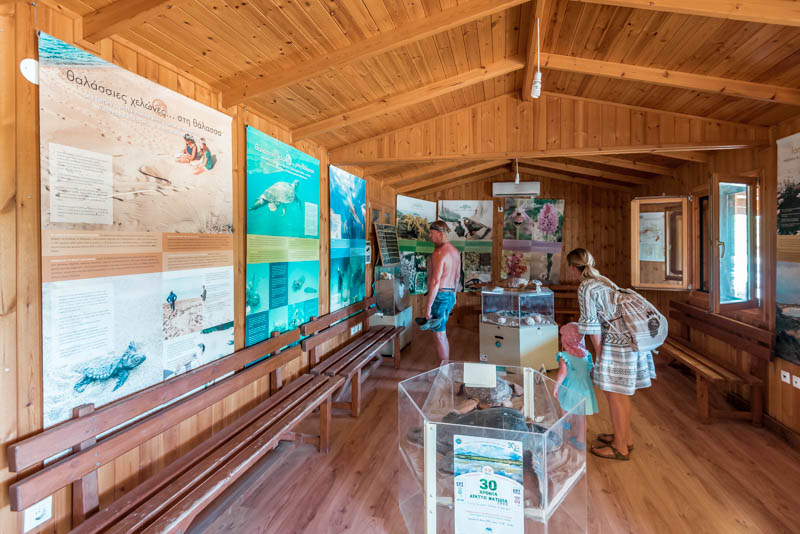
In addition to the information centre in Zakynthos Town, there is a wooden hut above Gerakas Beach where numerous information panels and replicas of the loggerhead turtle are displayed. The information centre on the road to Dafni Beach is currently closed until further notice.
Helmis Natural History Museum
The Helmis Museum is located in the village of Agia Marina, around 15 km from Zakynthos Town. It is the only museum on the island dedicated to the rich flora and fauna of Zakynthos. Biologist Panagiotis Helmis presents approximately 1,500 animal and plant species, with one section devoted entirely to the Zakynthos sea turtles.
💡 Zakynthos book tip: The Zakynthos travel guide from Michael Müller Verlag contains many valuable tips and background information and was a loyal companion throughout our stay. Order here: View on Amazon*

#9 Are turtle spotting tours recommended?
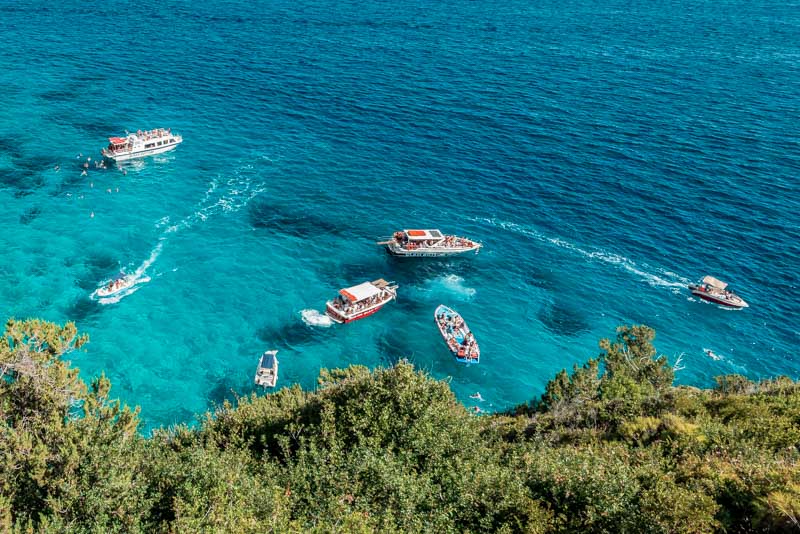
We do not recommend guided tours or safaris using motorised excursion boats, nor self-drive motorboat trips in the south of the island within the national park.
Under the regulations, boats must keep a distance of at least 15 m from the turtles and may stay for a maximum of 15 minutes for observation purposes. Anchoring is completely prohibited in many sections of the marine park. Unfortunately, the reality is very different.
Often several boats surround a single turtle without maintaining the prescribed minimum distance. This causes stress for the animals and can divert them from their intended route.
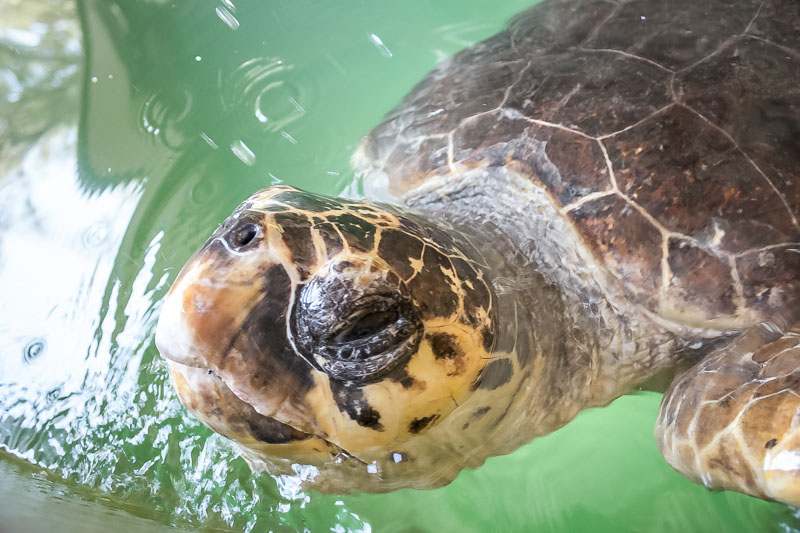
In the past, there have been several incidents in which turtles were injured or killed, as many inexperienced boat operators struggle to steer motorboats effectively and cannot avoid the slow-moving turtles in time. The six-knot speed limit for motorboats is also neither enforced nor respected by all holidaymakers.
The island of Marathonisi, also known as Turtle Island, is one of the most important egg-laying sites of the Caretta Caretta. To protect the animals, you should neither set foot on the island nor anchor nearby during the nesting season.
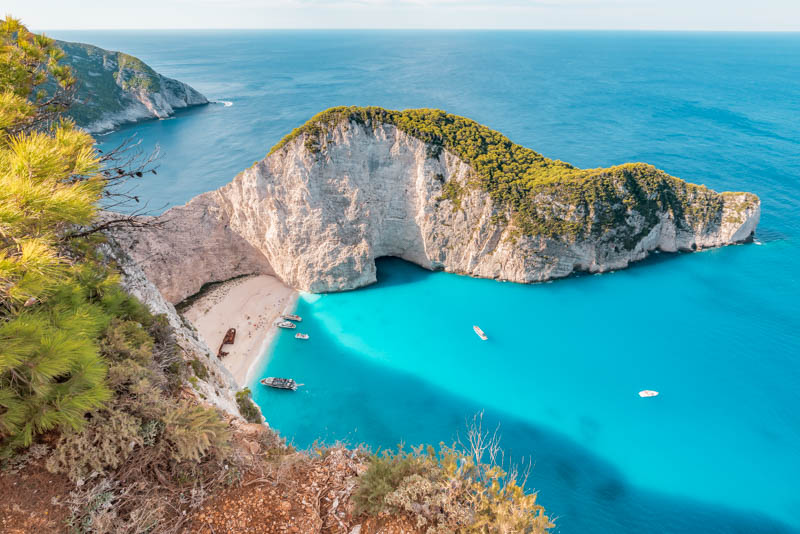
Boat tours in the north of the island, for example to Zakynthos Shipwreck Beach and the Blue Caves, are perfectly fine, as this stretch of coastline is not one of the Caretta Caretta’s nesting grounds.
#10 Animal-friendly turtle watching on Zakynthos
On Zakynthos, you also have the opportunity to observe turtles in a way that is compatible with nature conservation. Environmentally responsible turtle-watching tours are offered by Ecozante. Here are further ways to spot the Caretta Caretta on your holiday.
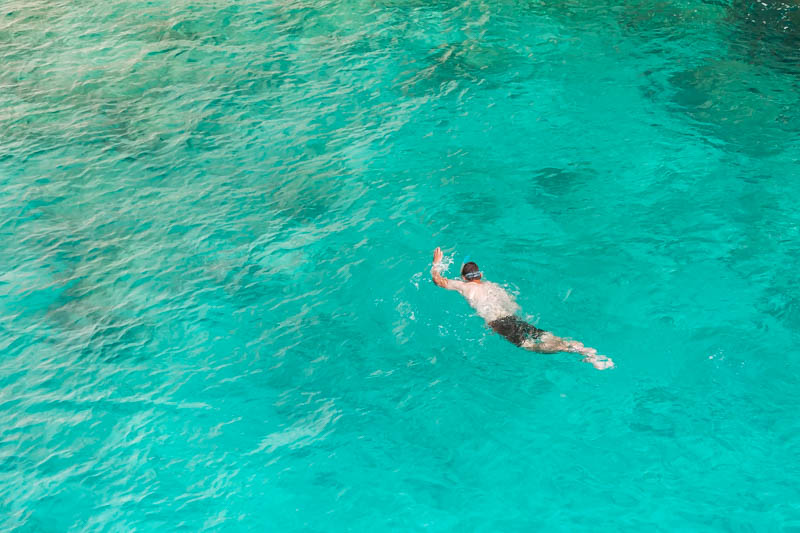
- Snorkelling with turtles: around Cameo Island, around Limni Keri, at Katsika Beach (Kalamaki Beach) and at Gerakas Beach
- Diving with turtles: scuba diving in Laganas Bay; providers include Zante Diving and Eurodivers
- Sea kayaking: from Limni Keri to Turtle Island – Sea Kayaking Zakynthos
- Sailing trip in southeast Zakynthos: information about the provider at Soliton
Did you find this article about the turtles on Zakynthos helpful? Then support us for free by booking directly with our partners* via one of the following links. We receive a small commission for this, while the price remains exactly the same for you. Efcharisto poli!
- Search for rental cars on Discover Cars*
- Find cheap flights on Skyscanner*
- View ferry connections on Ferryhopper*
- Book excursions on GetYourGuide*
*Support our blog Greece-Moments
In this post, you will find affiliate links marked with an asterisk (*). If you book or buy something through one of these links, we receive a small commission. For you, the price remains exactly the same. In this way, you help us continue to provide high-quality content for free. Did you enjoy this article and would you like to say thank you? Then simply buy us our next Greek coffee ☕️ To the coffee fund
Bookmark this post on Pinterest!