
In hardly any other country in Europe is the density of archaeological sites as high as in Greece. But that’s not all: Greece’s attractions range from the mountains to the sea, from temples to idyllic beaches, from bustling cities to picturesque islands—a trip to the southeastern tip of Europe is an unforgettable experience.
“The unique blend of history, culture, and modernity is evident throughout the country, making Greece a true open-air museum.”
But it’s not just history buffs who get their money’s worth in Greece! In addition to the many ancient ruins, there are diverse landscapes to discover that will delight the heart of every nature lover. The paradisiacal charm of the Aegean Sea is unparalleled, and above all, the iconic blue and white of the Cyclades Islands is known to everyone.
Below we provide an overview of the most interesting places in Greece. We based our rankings on visitor numbers from the Statista portal, as well as the number of reviews on Tripadvisor. The result is the top 20 most popular attractions in Greece.
- #1 Acropolis of Athens
- #2 Athens: Historic Old Town
- #3 Santorini Island Caldera
- #4 Elafonisi in Crete
- #5 Knossos Palace in Crete
- #6 Lindos Acropolis in Rhodes
- #7 Navagio Bay in Zakynthos
- #8 Monasteries of Meteora
- #9 Little Venice in Mykonos
- #10 Old Town of Chania in Crete
- #11 Rhodes: Old Town and Grand Master’s Palace
- #12 City of Thessaloniki
- #13 Ancient Olympia
- #14 Oracle of Delphi
- #15 Theater of Epidaurus
- #16 Temple of Poseidon in Sounion
- #17 Sarakiniko in Milos
- #18 Portara of Naxos
- #19 Corinth Canal
- #20 Mycenae in the Peloponnese
- FAQ about Greece Attractions
#1 Acropolis of Athens
The Athens Acropolis is the most popular attraction in Greece, boasting the highest number of visitors and the most TripAdvisor reviews. It is the symbol of the city of Athens and, at the same time, the symbol of democracy. It was in the Greek capital that Europe’s first democratic constitution was developed.
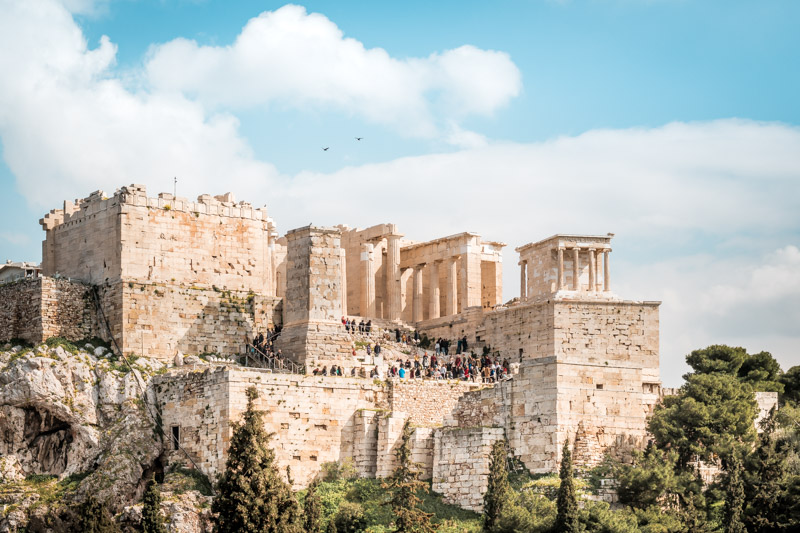
In the heart of a modern metropolis of millions, the nearly 160-meter-high hill with the ancient site rises up. Construction began approximately 2,500 years ago. The most important structures on the complex are the Erechtheion with its iconic statues of women, the Temple of Nike at the entrance, and the mighty Parthenon of the Acropolis in the center. See this breathtaking backdrop for yourself!

Nearly 5 million people visit the imposing ancient complex, the Acropolis Museum, and the surrounding sites, such as Herod’s Odeon. By the way, Acropolis means something like “upper city”; the word Ἀκρόπολις is composed of Akro (upper or highest) and Polis (city).
→ All information about the most popular attraction in Greece can be found in our article: Acropolis of Athens
#2 Athens: Historic Old Town
Anyone visiting the Acropolis of Athens will, of course, also explore the Greek capital and Athens’ Old Town. Greece’s largest city is particularly popular with us Germans.
After all, Germans made up the largest share of all visitors in 2018. The tranquil neighborhoods around the Acropolis, such as the elegant Plaka, the sleepy Anafiotika, or the lively Psirri, invite you to take a stroll through the city for several hours.
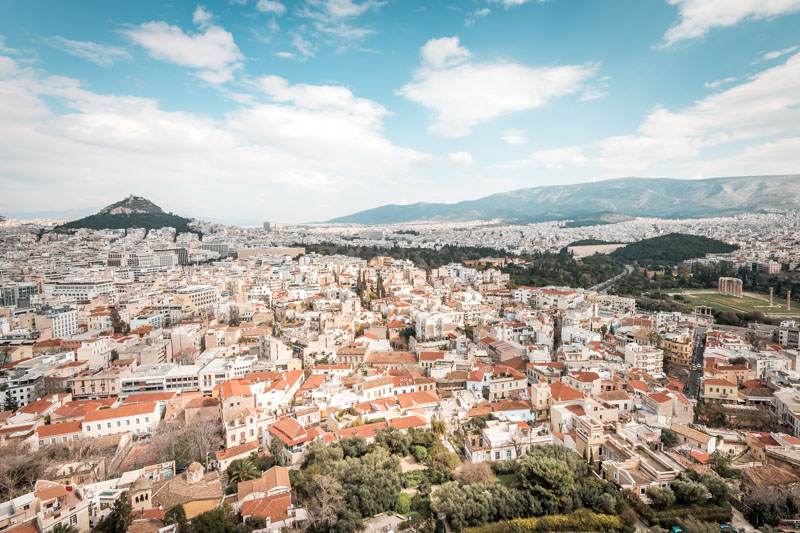
The heart of the city center is the imposing Monastiraki Square in Athens. From here, you can easily explore the old town. Countless archaeological sites await travelers interested in history.
→ You can find an overview of all our tips for Athens here: Athens Blog
The reconstructed Greek Agora (Market Square) offers a glimpse into life 2,000 years ago. Modern boutiques and numerous souvenir shops invite you to shop. The beautiful park around the Acropolis, as well as the city hills of Filopappou, Lycabettus, and Pnyx, are also worth a visit. Especially from Pnyx Hill, an impressive panorama of the city unfolds before you.

#3 Santorini Island Caldera
One of the most popular sights in Greece is Santorini Island; many vacationers don’t even stay for a single night. Santorini (or Santorini) is a highlight of numerous Mediterranean cruises and is considered Greece’s picture-perfect island.
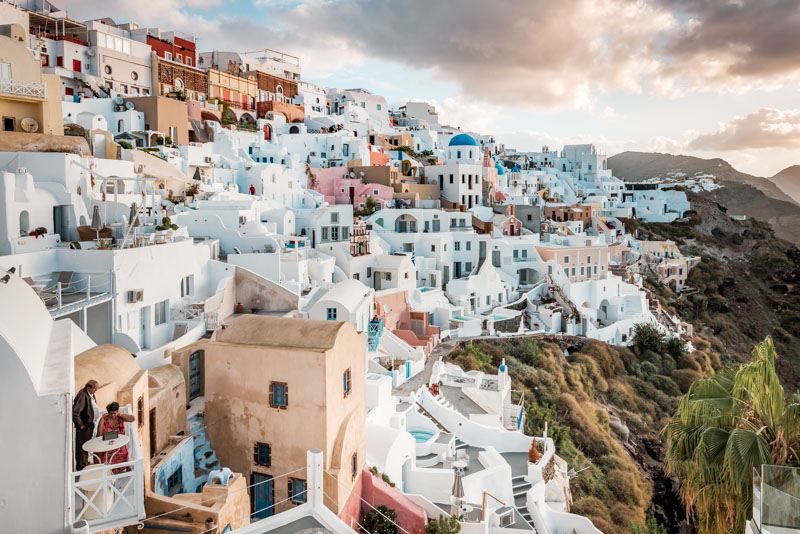
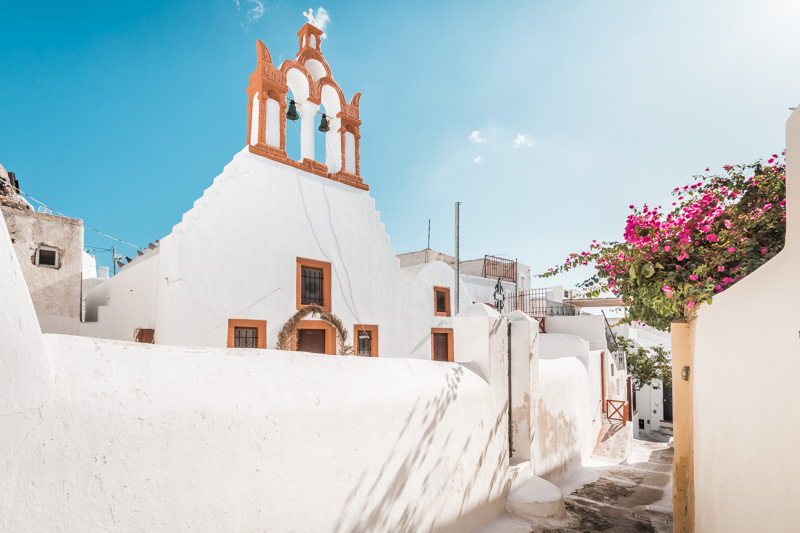
The villages of Fira and Oia, with their impressive architecture, whitewashed churches, and blue domes, are the postcard motifs of Greece. Here, you are truly in a blue-and-white paradise.
The island of Santorini actually consists solely of an erupted and still active volcano. The villages are all located on the crater rim. The crater itself has collapsed inward, and the resulting Santorini caldera has been filled by the sea.
Nearly 3 million people visit Santorini every year. That’s an impressive number when you consider that the island has just 17,500 residents. The same number of people arrive on the island every day in the summer by cruise ship or plane.
This makes the small island one of the most popular destinations alongside Crete, Corfu, and Rhodes. But of course, mass tourism also has its downsides. The growing demand for water and the increasing amount of waste pose major challenges for Santorini.
Nevertheless, Santorini is and remains the epitome of the blue and white island world. The island is unique and unmistakable in its own way, and numerous Santorini excursions invite you to go on discovery tours.
→ Is a trip to Santorini worth it? We’ll tell you here: Santorini Highlights

#4 Elafonisi in Crete
The island of Crete is a world of its own and offers numerous sights. In 2018, Greece’s largest island alone recorded 25 million overnight stays. One of the most popular destinations on Crete is the Caribbean-style Elafonisi Beach. In essence, Elafonisi is actually a small lagoon with an offshore island of the same name.
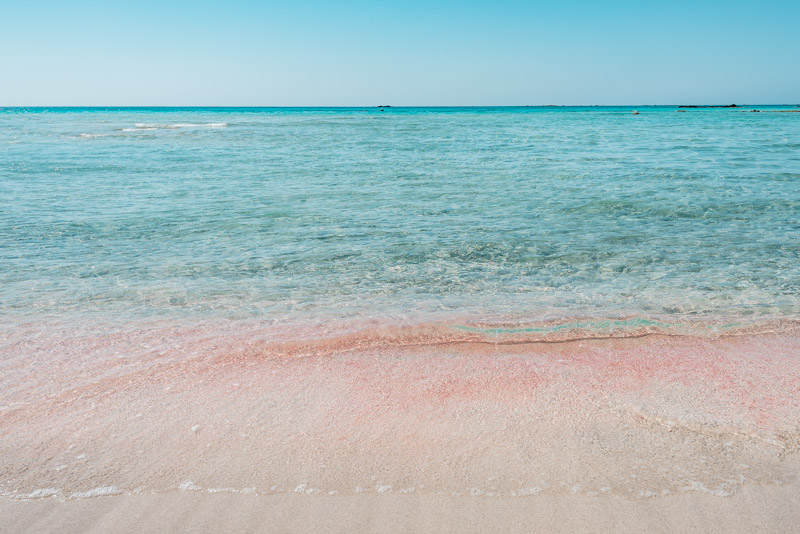
In almost every travel guide worldwide, this spot is listed as the top attraction on Crete. This paradisiacal gem is located in the very southwest of Crete. The lagoon shimmers in the most impressive shades of blue from afar. Additionally, you can find patches of the famous pink sand of Elafonisi Beach. These are small sedimentary deposits of corals and mussels.
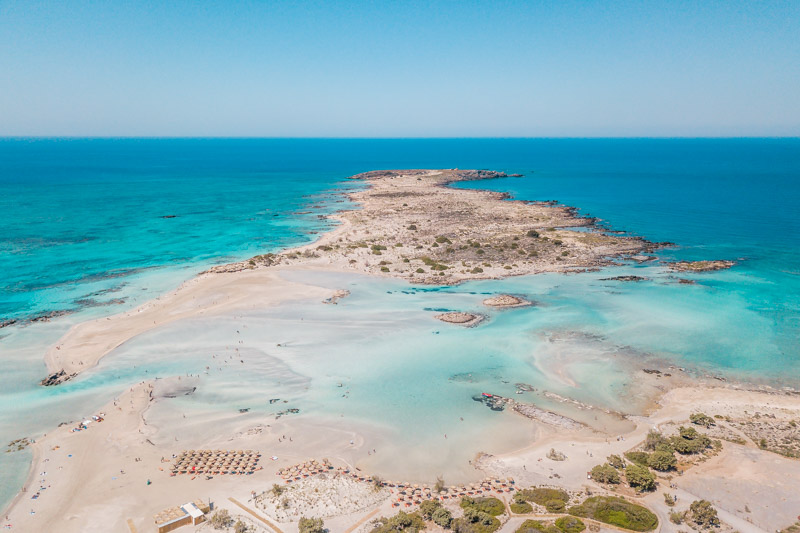
Many tour operators offer trips to Elafonisi (bookable on GetYourGuide*). The beach is therefore very crowded during the summer months. You can either set off on your own early in the morning to Elafonisi and enjoy the view largely undisturbed, or you can share the scenery with thousands of other vacationers at lunchtime.
→ You can find more information about this lagoon in Crete in our article about Elafonisi
#5 Knossos Palace in Crete
The Palace of Knossos is one of Crete’s top attractions and is also considered the most important ancient site on the island. The Minoans, likely the first advanced civilization in Europe, built this complex 4,000 years ago. The palace itself was constructed as a complex of buildings and covers an area of approximately 21,000 m². This is equivalent to three soccer fields. At the beginning of the 20th century, the complex underwent extensive reconstruction.

Particularly impressive is the north entrance, which has been restored to its original color, featuring massive red columns and a mural from Minoan times. It is believed that the Mycenaeans, a tribe from the Peloponnese, were wiped out by the Minoans along with Knossos and many other temples.
You should also visit the Archaeological Museum in Heraklion. The large number of exhibits gives you a very good impression of the time and culture of the Minoans. The Minoans had an extremely strong bond with nature and were far ahead of many subsequent cultures. The cult of Zeus, the father of the gods, is also said to have originated with the Minoans.
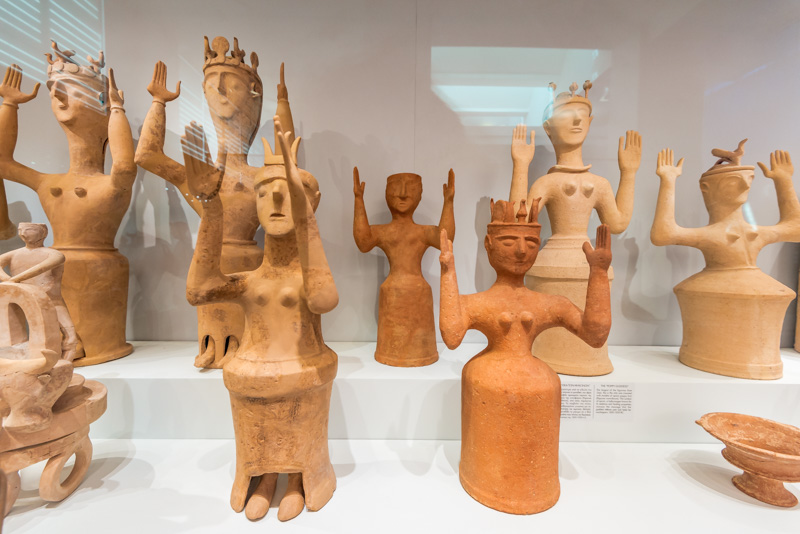
If you’re on your Crete vacation and arrive at the palace in the morning and book a Knossos online ticket in advance, you can explore the complex in a much more relaxed manner.
→ More information about this Greek highlight can be found in the article about Knossos
#6 Lindos Acropolis in Rhodes
One of the most impressive sights on the Greek islands is located in Rhodes. Every year, the impressive Acropolis of Lindos attracts several hundred thousand visitors. No wonder, since Rhodes has always been one of the most popular islands in Greece.
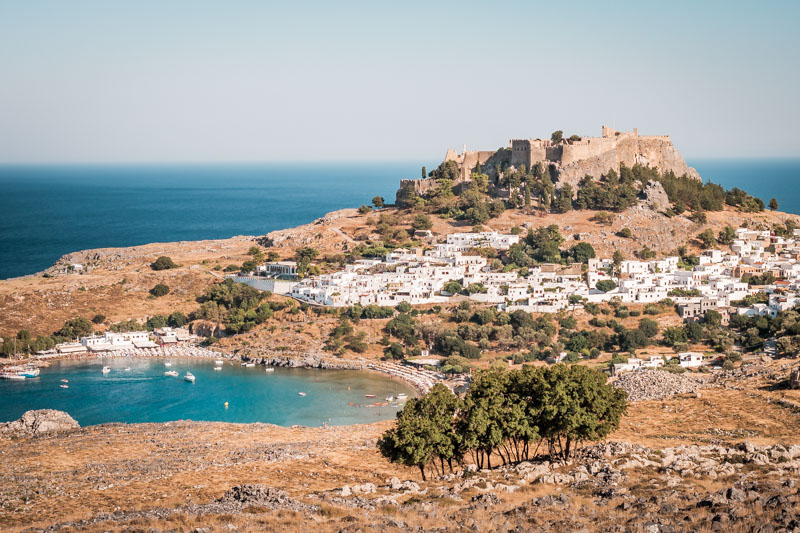
The Acropolis of Lindos is picturesquely perched on a 116-meter-high rock. In the background, the turquoise blue sea sparkles, and on the slope of the castle complex, gleaming white houses rise up the hillside in terraces. The scenery is unique to Rhodes, so the number of visitors is very high, especially in summer.
→ More information about Lindos on Rhodes can be found in this article: Lindos Rhodes

#7 Navagio Bay in Zakynthos
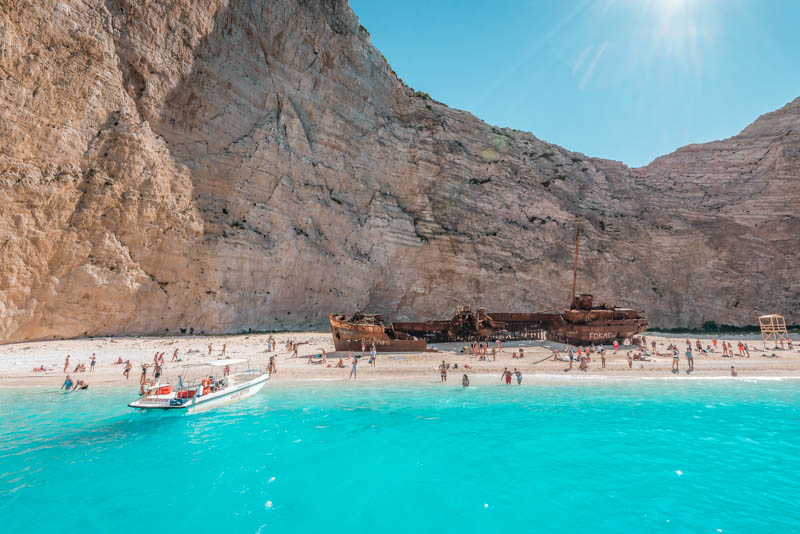
Another popular Greek attraction is located on the island of Zakynthos. The dreamlike bay of Navagio, with its striking rocks, turquoise blue sea, and white sandy beach—the Shipwreck of Zakynthos—is surely known to everyone! It is a classic postcard image of Greece.
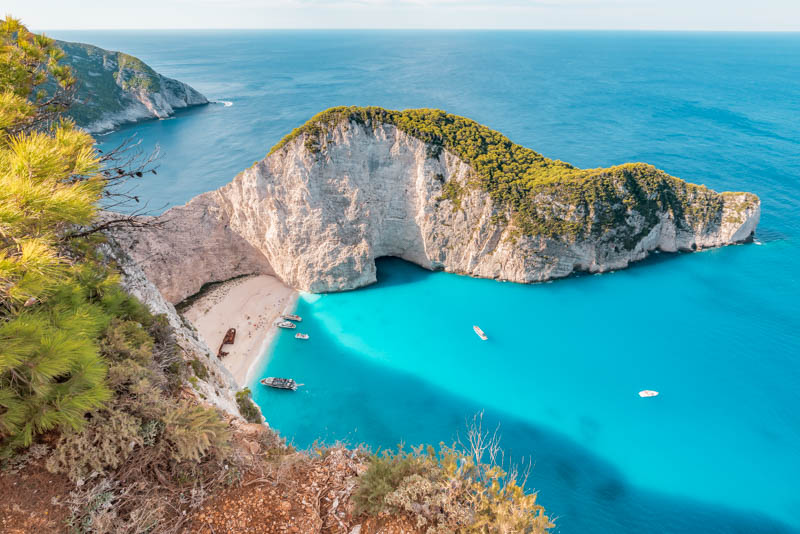
The beach area can only be reached by tour boat. Every day, crowds make a pilgrimage to Smuggler’s Bay. Above it is a spectacular viewpoint. But be careful: steep cliffs! Navagio Bay is one of the most photographed places in Greece. You won’t find the famous Zakynthos turtles here.
→ Important information for a trip to the Zakynthos Shipwreck can be found here: Zakynthos Shipwreck
#8 Monasteries of Meteora
The Greek mainland also has many highlights in store. The Monasteries of Meteora are among the most interesting places in Greece. The small provincial town of Kalambaka at the foot of the Meteora monasteries welcomes two million visitors annually. It is the perfect starting point for exploring the imposing structures suspended between heaven and earth.
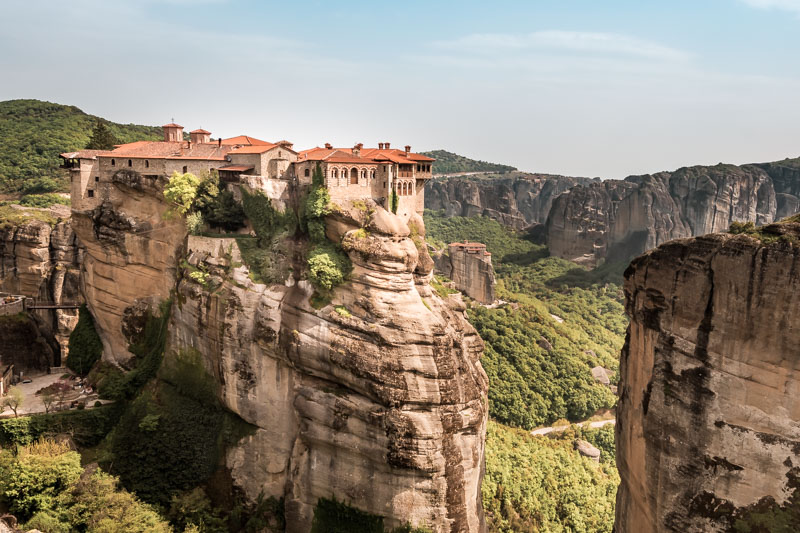
Six Meteora monasteries you can still visit today. All of them are perched on rock spires at dizzying heights, built exactly 1,000 years ago. Greece of superlatives!
→ You can find out more about this special Greek attraction here: Meteora Monasteries
#9 Little Venice in Mykonos
Along with Santorini, Mykonos is one of the most popular Cyclades islands. Most vacationers only come for a few days; hardly anyone stays longer than a week. Mykonos is considered the Party Island of Greece. The legendary nights in the bars and clubs are known worldwide.
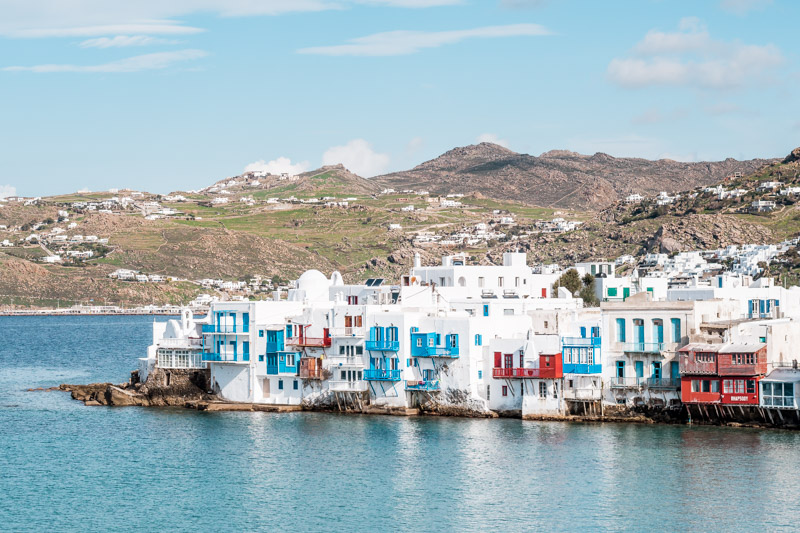
In addition to many jet-setters from all over the world, thousands of cruise tourists reach the destination of their dreams every day: the white streets of Mykonos Town. The so-called Chora of Mykonos is one of the most striking places in Greece. Blue and white colors dominate the city. In addition, there is the unique backdrop of Little Venice.
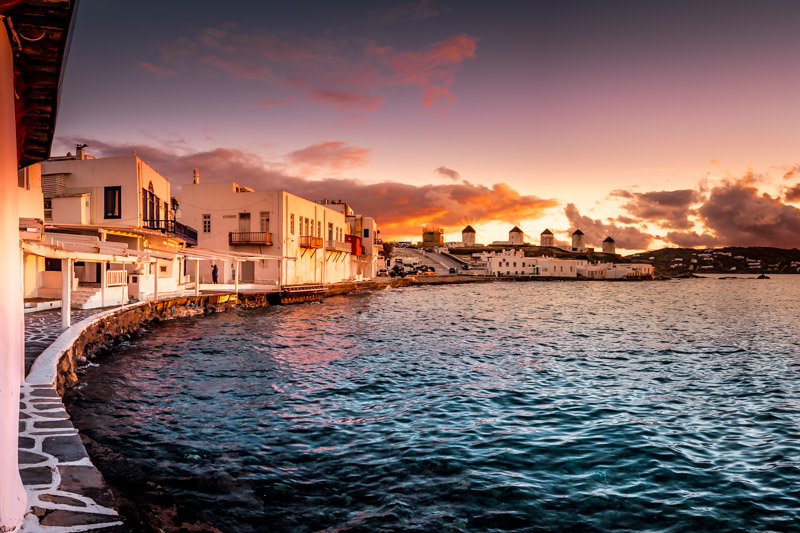
Right by the sea, colorful houses characterize the former Venetian quarter. Directly across the street from Little Venice, on a hill, stand the iconic Windmills of Mykonos. The souvenir photo at sunset is a must-see during your Mykonos vacation!
→ You can find out more about Little Venice on Mykonos in our article: Little Venice
#10 Old Town of Chania in Crete
This coastal city in northwestern Crete has just 54,000 inhabitants. The city of Chania is one of the most popular tourist destinations in Greece. What makes this small town so unique is its unmistakable blend of thousands of years of history, paired with traditional architecture and the charm of a Mediterranean coastal town. The city is considered one of the oldest continuously inhabited places in Europe.

The old town of Chania, in particular, has managed to retain its extraordinary charm and is rightly considered, alongside Kerkyra (the capital of Corfu) and Rhodes Town, one of the most beautiful cities in Greece. Many taverns and cafés invite you to linger comfortably.
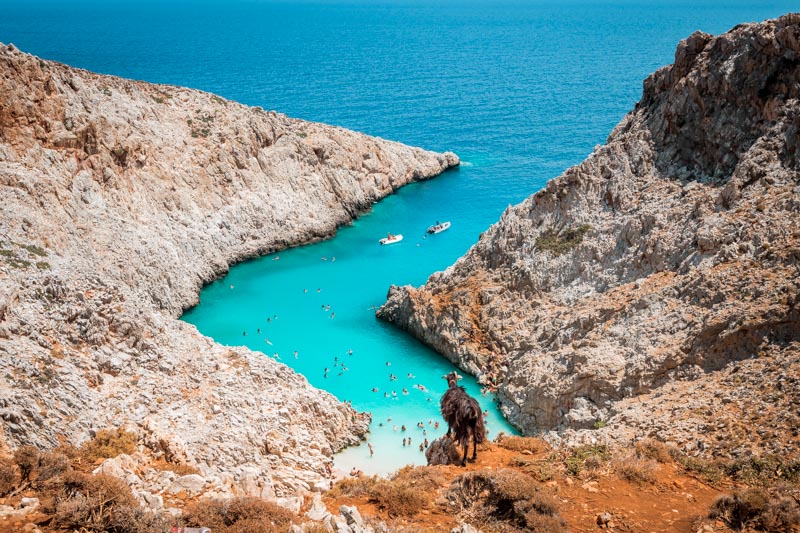
In the cobblestone alleys of the old town, you’ll find the perfect souvenir for everyone, and even avid shoppers will find plenty to enjoy. By the way, the Akrotiri Peninsula, not far from Chania, boasts some of Crete’s most picturesque beaches.
→ You can find a detailed report about the city here: Chania

#11 Rhodes: Old Town and Grand Master’s Palace
A very special sight awaits you on the island of Rhodes. Since 1988, the medieval town has been part of the Rhodes UNESCO World Heritage Site. It is one of the best-preserved city fortresses in Greece.
The old town of Rhodes is located directly on the harbor and is surrounded by a mighty fortress wall. You can even walk along it and enjoy a wonderful view of the city.
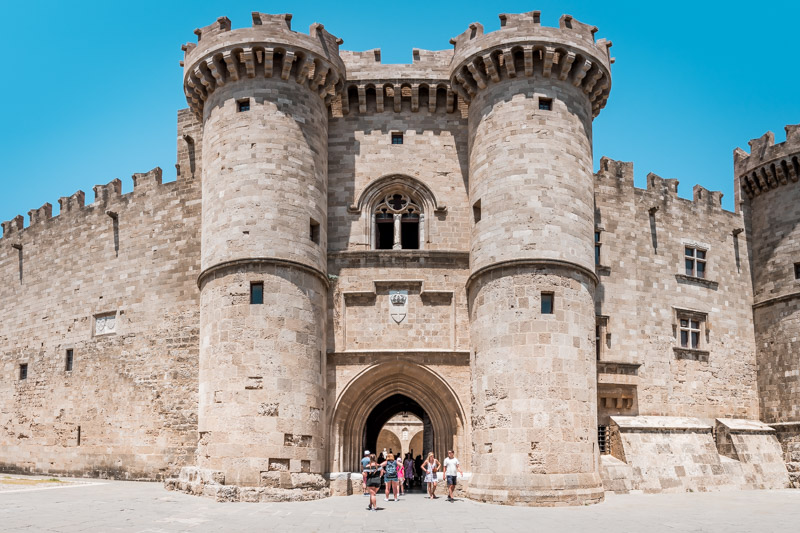
Taverns, cafés, bars, and small shops have taken up residence in the old buildings of the Old Town. At the highest point of the city stands the Grand Master’s Palace of Rhodes, built by the Knights of the Order of St. John in the 14th century.
→ Find out what else you can do in the Old Town of Rhodes here: Rhodes Town
#12 City of Thessaloniki
The second-largest city in Greece has grown in popularity in recent years and is definitely worth a visit. The northern Greek city of Thessaloniki is different from Athens. The Greeks like to describe their “Saloniki” as a large village where everyone knows everyone. Hard to imagine with more than 1 million inhabitants.
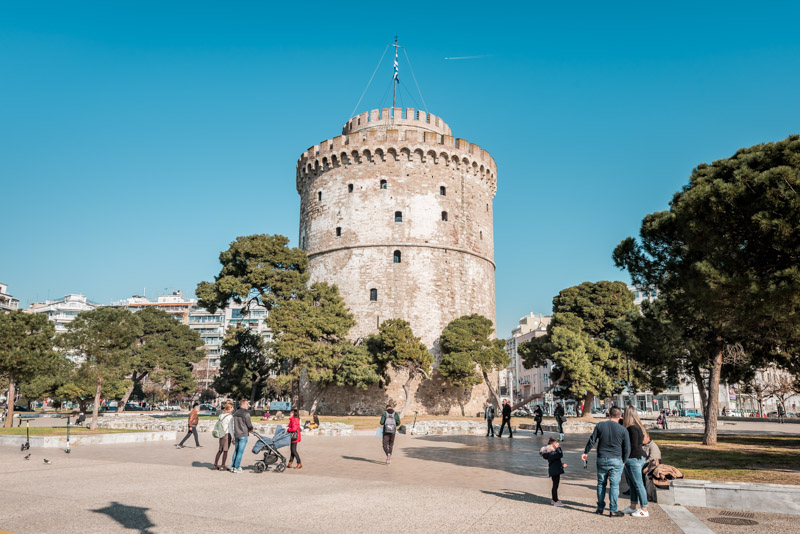
The modern architectural style doesn’t necessarily inspire love at first sight. A devastating fire in 1917 completely destroyed most of the city. Only the northern part—today’s old town—was spared from the fire. Nevertheless, the city has an unmistakable charm that can be experienced on a city tour through Thessaloniki, just waiting to be discovered.
Amidst all the modern buildings, you’ll always find ancient remnants of the city’s nearly 2,500-year-old history. Macedonians, Romans, Byzantines, and Ottomans shaped the cityscape. Especially in the tranquil Old Town of Thessaloniki, many of these remnants are still visible.
The city’s most striking landmark is the White Tower at the harbor. The Lefkos Pyrgos (meaning White Tower) was built in the 15th century and was surrounded by a massive wall until 1917. The city’s harbor promenade is lined with a variety of trendy cafés and excellent taverns. Additionally, Thessaloniki serves as the starting point for a vacation in Halkidiki.
💡 Help with Planning Your Greece Vacation: Not sure where to start or how to plan your vacation in Greece? No problem—take advantage of our years of experience traveling to Greece and let us help you. We’ll answer all your questions and address your concerns, even via video chat. You can book your consultation here: Travel Advice Greece
#13 Ancient Olympia
Half a million people visit one of the most famous archaeological sites in Greece every year. The site of the first Ancient Olympic Games is located on the Peloponnese Peninsula and is about four hours from Athens.

Thanks to the ferry port of Katakolon in the western Peloponnese, Olympia has become a popular destination for cruise tourists. The extensive complex is home to numerous temples, ruins, and architectural complexes. In addition to serving as a venue for athletic competitions, the Olympics were also a place of worship for the god Zeus.
It is said that the Temple of Zeus once housed a 12-meter-tall statue made of gold and ivory. Unfortunately, the statue is no longer in Olympia today. Historians are still debating the whereabouts of the colossal Zeus statue. In addition to the imposing stadium, which could seat 45,000 spectators and served as the actual venue for the sporting events, the neighboring Archaeological Museum is a real highlight.
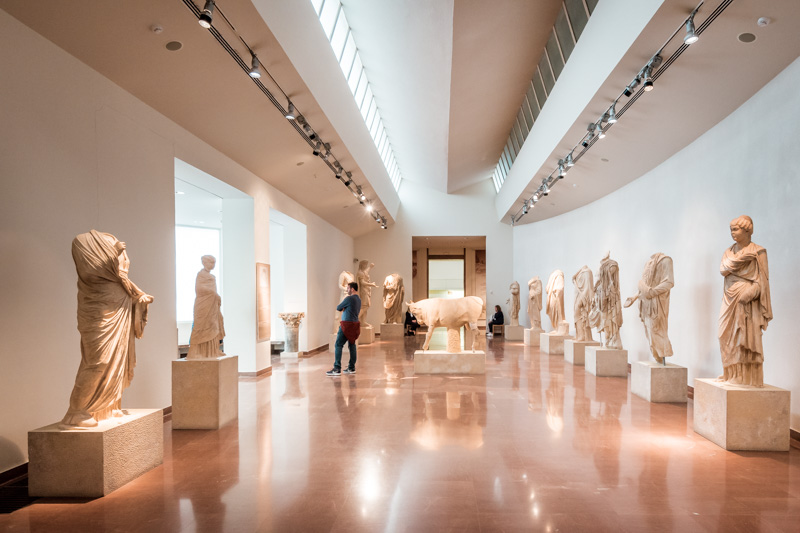
The facility, which was renovated in 2003, contains a wide variety of exhibits, ranging from ancient marble statues to Bronze Age figures of Zeus. The history of the Olympic Games, as well as the layout of the entire Olympia complex, are presented in great detail and in an informative manner.
→ More information about the ancient site of Olympia can be found in our separate article: Ancient Olympia
#14 Oracle of Delphi
The Oracle of Delphi is also one of the most popular Greek sights of all time. Delphi was the most important site of divination in ancient Greece. The place was considered the center of the world from 800 BC. From here, prophetic statements were made for the rulers of ancient times.
The prophecies were delivered by the Pythia, a priestess who was placed in a trance-like state. The sometimes cryptic statements obtained in this way were interpreted in various ways.
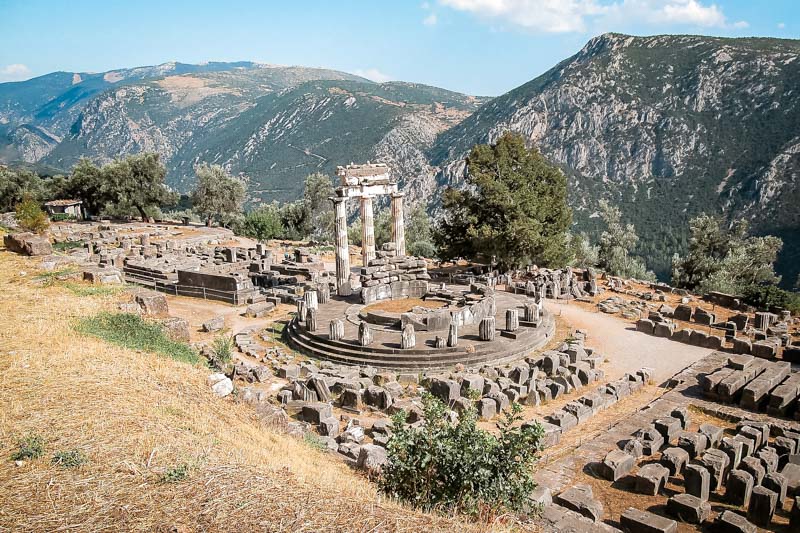
Today, you will find many temples and ruins on the large complex; even a theater and a stadium have been preserved. The landmark of Delphi is the rotunda of the Temple of Athena, the so-called Tholos with its three striking columns. Even today, you can feel the mysterious aura of the place.
→ More information about the ancient site of Delphi can be found in our separate article: Oracle of Delphi
#15 Theater of Epidaurus
Like Ancient Olympia, Epidaurus is located on the Peloponnese Peninsula and is one of the most visited historical sites in the country. The massive ancient venue is now considered the most famous theater in Greece. The open-air concert hall seats over 15,000 people, and the acoustics are second to none. Even a whisper from the actors can be heard from the top row of seats.
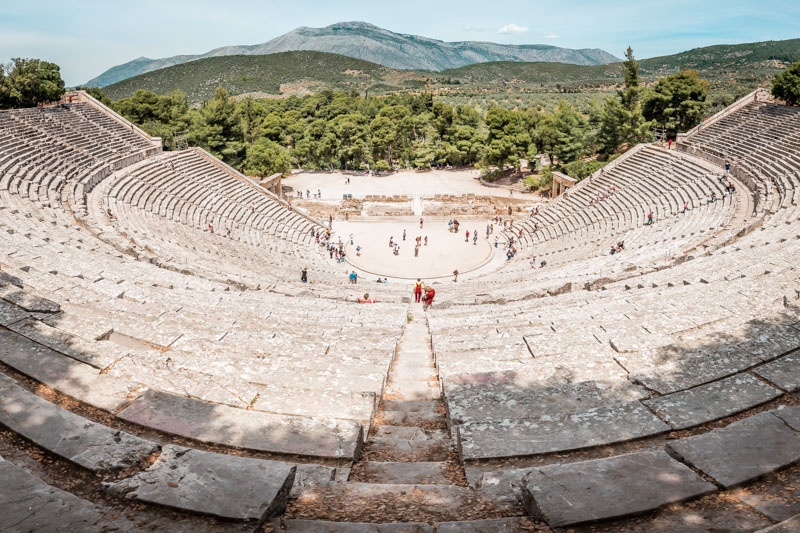
2,000 years ago, the entire complex surrounding the theater was considered the most important ancient place of worship for Asclepius, the god of healing. Today, apart from the Epidaurus Theater, you will find only a few relics from antiquity. If you have the opportunity, you should visit Epidaurus for the unique Epidaurus Festival in early August.
#16 Temple of Poseidon in Sounion
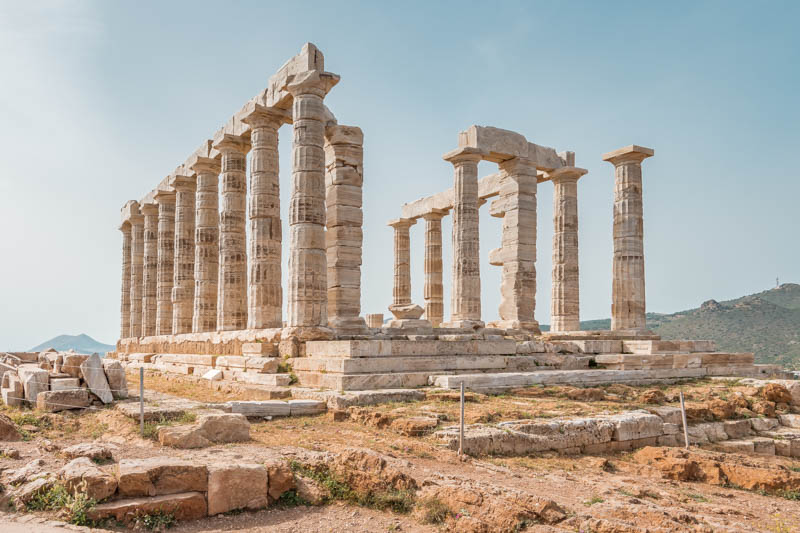
In the Attica region, southeast of Athens, stands the impressive Temple at Cape Sounion. The well-preserved marble temple was built in honor of Poseidon, the god of the sea, and sits majestically perched on the cliffs directly overlooking the sea. The backdrop at sunset is particularly picturesque.
→ You’ll find everything you need to know for a trip to Cape Sounion in our separate article: Cape Sounion
#17 Sarakiniko in Milos
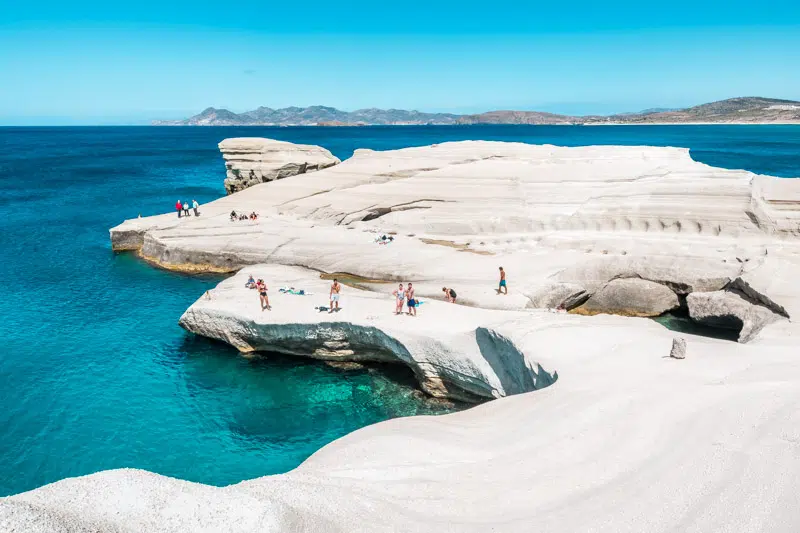
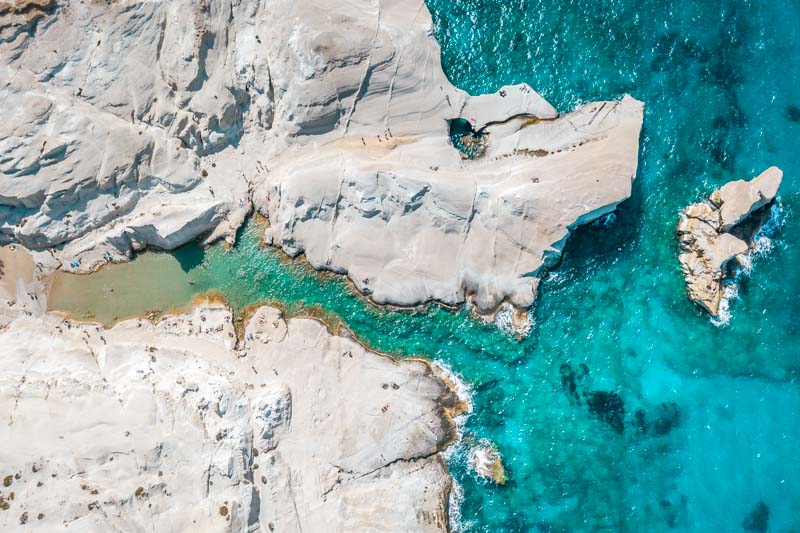
The coast of Sarakiniko on the island of Milos demonstrates once again just how diverse Greece is. Walking along Sarakiniko Beach among the white rocks feels like being in a lunar landscape. This unique scenery is considered a spectacular highlight of Greece and has served as the location for many international feature films. Milos can also be wonderfully incorporated into a Western Cyclades island-hopping tour.
→ More information about the island of Milos can be found in our separate article: Milos
#18 Portara of Naxos
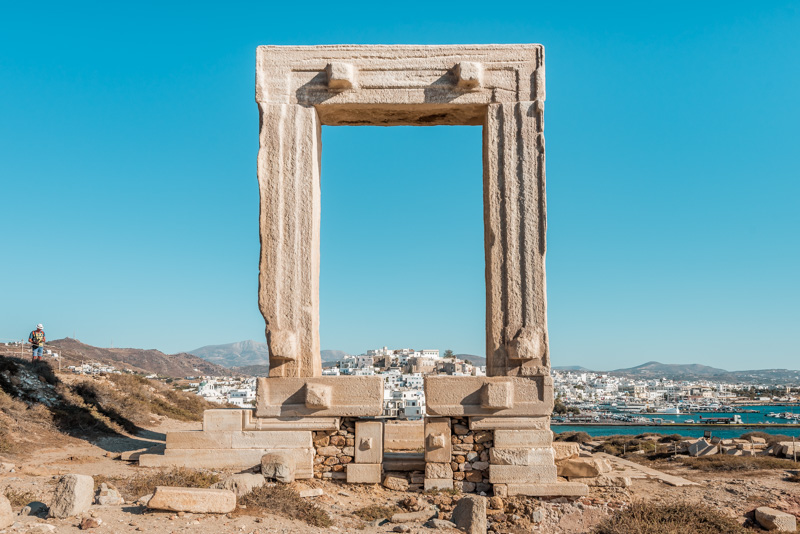
The temple gate of Naxos is considered a landmark of the Cyclades and is truly an impressive sight in Greece. The six-meter-high marble portal is located directly on the sea. The gate marks the entrance to a temple dedicated to the god Apollo. The atmosphere at sunset is particularly magical.
→ Here you can find more information about the Cycladic island of Naxos: Naxos Highlights
#19 Corinth Canal
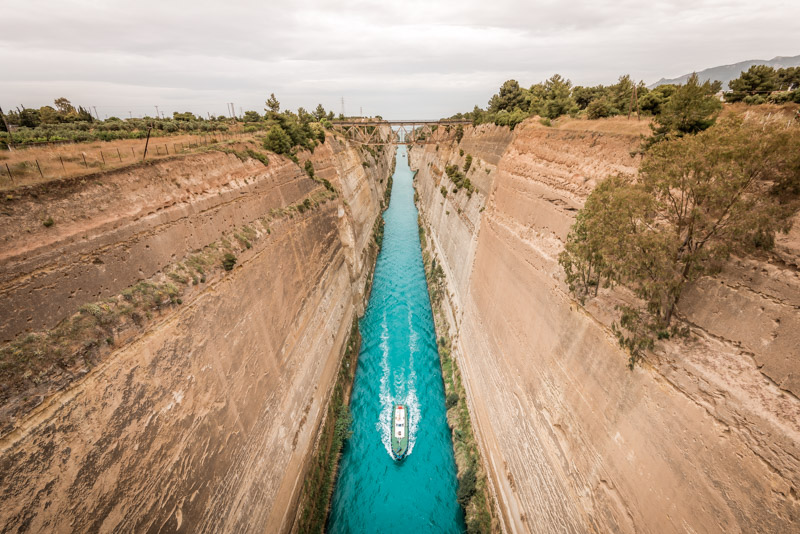
The Corinth Canal measures exactly 6,346 meters and is 25 meters wide on average. As early as ancient times, the idea of building a canal at the narrowest point of the Gulf of Corinth was conceived. It was not completed until 1893. Although it is of little importance for commercial shipping today, it enjoys great popularity as a tourist attraction.
→ All information about the Gulf of Corinth and the canal can be found here: Gulf of Corinth
#20 Mycenae in the Peloponnese
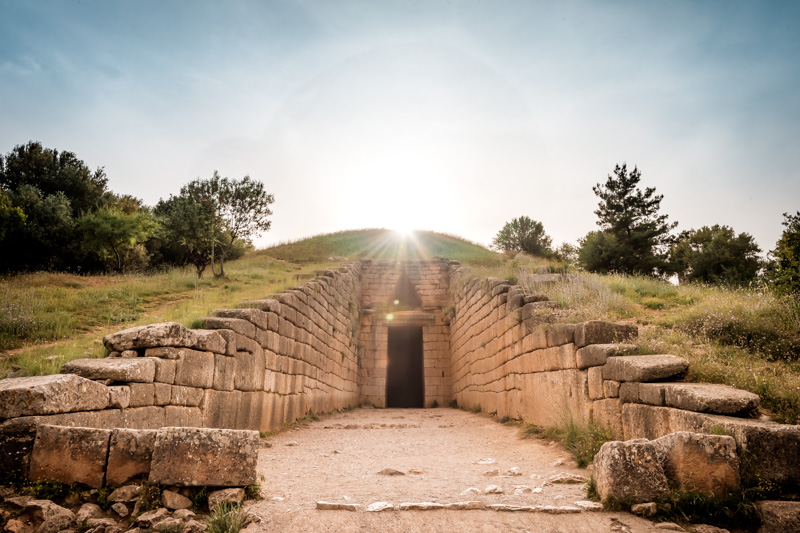
One of the most important sites in Greece is Mycenae, which is best visited as part of a Peloponnese road trip. After all, Mycenaean culture was the direct successor to the Minoans of Crete. This mystical place, with its burial chambers, cyclopean walls, and shrines, is more reminiscent of Peru or Egypt than Greece.
FAQ about Greece Attractions
Which attractions in Greece should I not miss?
For a first trip, start with the Acropolis and historic Athens, Santorini, Meteora, Delphi, Olympia, Knossos in Crete and the Old Town of Rhodes. If you love nature, add Elafonisi, Navagio, Sarakiniko and the Santorini caldera to your list.
How many days do I need for the main highlights in Greece?
For Athens, 2 to 3 days are enough. If you want to combine several major sights, plan at least 10 to 14 days. A strong first route is Athens, Delphi, Meteora and then one island such as Crete, Rhodes, Naxos or Santorini.
Which Greek attractions are on the mainland?
Mainland highlights include Athens and the Acropolis, Delphi, Meteora, Olympia, Epidaurus, Mycenae, the Corinth Canal, Thessaloniki and the Temple of Poseidon at Sounion. The mainland is perfect for combining culture, history and a road trip.
Which Greek island has the most sights?
Crete offers the biggest mix: Knossos, Elafonisi, Chania, Heraklion, gorges, beaches and mountain villages. Rhodes is also a great choice with Lindos, Rhodes Old Town and many easy day trips. Santorini is spectacular, but better for a shorter stay.
When is the best time to visit Greece for sightseeing?
April, May, June, September and October are the best months for sightseeing. In midsummer, places like Athens, Knossos, Lindos and Delphi can get very hot. For beaches and islands, June to September works well; for road trips, spring and autumn are better.
Do I need a rental car for sightseeing in Greece?
You do not need a rental car in Athens. For Crete, Rhodes, the Peloponnese, Meteora or remote beaches, a car is very useful. Many sights can also be reached by tour or bus, but driving gives you much more flexibility.
Which Greece attractions are best for a road trip?
Athens, Delphi, Meteora, Olympia, Mycenae, Epidaurus and Corinth are ideal for a mainland road trip. If you want to add islands, continue with Crete, Rhodes, Naxos, Santorini or Milos. This gives you ancient sites, landscapes and beaches in one trip.
Which attractions in Greece get very crowded?
The Acropolis, Santorini, Elafonisi, Knossos, Lindos, Navagio and Mykonos are among the busiest places. Go early in the morning or later in the afternoon. Timed tickets and a bit of planning make a big difference in high season.
*Support our blog Greece-Moments
In this post, you will find affiliate links marked with an asterisk (*). If you book or buy something through one of these links, we receive a small commission. For you, the price remains the same. In this way, you help us continue to provide high-quality content for free. Did you like this post and would you like to say thank you? Then just buy us the next Greek coffee ☕️ To the coffee fund
Bookmark this post on Pinterest!