

If even those with little interest in history choose to spend their holiday exploring a 4,000-year-old field of ruins, there must be something truly special about it. Indeed, Knossos has been Crete’s ultimate visitor magnet for decades, drawing up to one million people to the island’s most important historical site every single year.
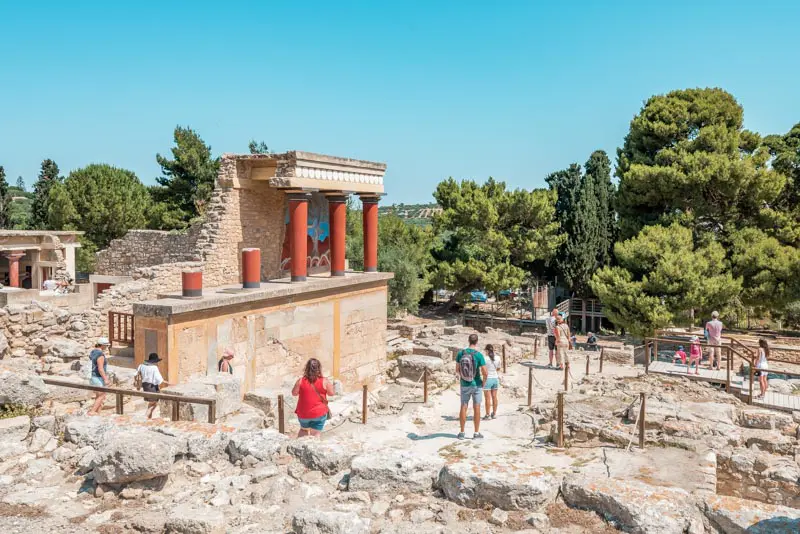
Particularly in the high season, the Palace of Knossos on Crete can become overcrowded with tourists. Nevertheless, independent travellers should not be put off, because Knossos is absolutely worth the effort! The highly idiosyncratic restoration carried out by explorer Arthur Evans makes the history of the Minoan civilisation truly tangible.
In this post, you will find out the best time to visit and what to expect during your time there. We will also equip you with the most important tips and information for your excursion to Knossos.
🏖️ Dream beaches & hidden bays
🍽️ Restaurants, tavernas & cafés
🏛️ Must-see highlights & ancient sites
🗺️ Worthwhile spots & insider tips
🚘 Practical info like rentals & parking
♾️ Lifetime access & updates
What makes Knossos in Crete so special?
After the Acropolis in Athens, Knossos is the second most visited archaeological site in all of Greece. Even today, historians continue to debate many details of the palatial complex, and numerous myths surround Knossos. It is said that the Minotaur – half man, half bull – once roamed its labyrinthine corridors.
What is certain is that from 2,600 BC onwards, the so-called Minoans established Europe’s first advanced civilisation on Crete. They maintained trade connections across the Mediterranean and, if history is to be believed, had no enemies to fear. In addition to smaller settlements, they built four large palaces in Crete, namely Knossos, Phaistos, Malia and Zakros.
Some buildings in Knossos are believed to have had up to five storeys. The built-up area of the complex spans an impressive 21,000 m² and even featured a complex sewage system. More than 800 rooms have been documented, many of which were connected by corridors and staircases, and were once decorated with magnificent murals.
The Minoan civilisation spanned over 1,000 years of history. Knossos was destroyed and rebuilt several times until this advanced civilisation collapsed around 1,400 BC, likely due to an apocalyptic catastrophe (see our article: Earthquakes in Greece). However, the widely held theory linking their downfall to the volcanic eruption of Santorini and a subsequent giant tidal wave is highly debated today.
Best time to visit Knossos
The archaeological site of Knossos is one of the most popular excursions in Crete. If you want to experience the palace without the overwhelming crowds, we highly recommend visiting Knossos before 10 a.m. or in the late afternoon.
Between 10 a.m. and 4 p.m., countless coach tours arrive at Knossos, and long queues inevitably form across the site. Ideally, you should already have an online ticket for Knossos, booked in advance directly via our partner GetYourGuide*:
➲ To the online ticket with audio guide*
#1 How to get there: How do I get to Knossos?
Thanks to its fame, there are numerous ways to reach the Palace of Knossos – whether by bus, car or guided tour. If you wish to avoid the massive influx of visitors, travelling by hire car is well worth it. In summer, the site opens at 8 a.m., allowing you to explore Knossos before the crowds descend.
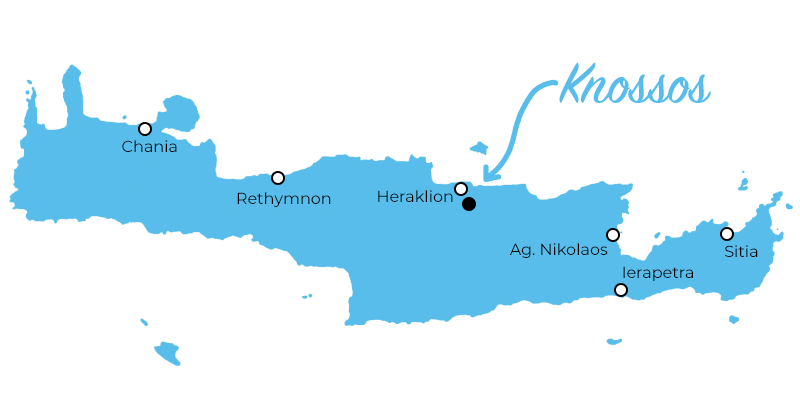
If you are coming from Chania, Rethymno or Agios Nikolaos, you can reach Knossos by car via the E65 motorway (New Road or Crete Highway), which runs along the north coast to Heraklion. Take the “Leoforos Knosou” exit and follow the main road for about 5 minutes until you reach the site.
Distances to Knossos
› Chania – Knossos: 145 km (2 h)
› Rethymno – Knossos: 80 km (1 h)
› Heraklion – Knossos: 5 km (10 min)
› Agios Nikolaos – Knossos: 65 km (1 h)
› Ierapetra – Knossos: 100 km (1.5 h)
› Sitia – Knossos: 130 km (2 h)
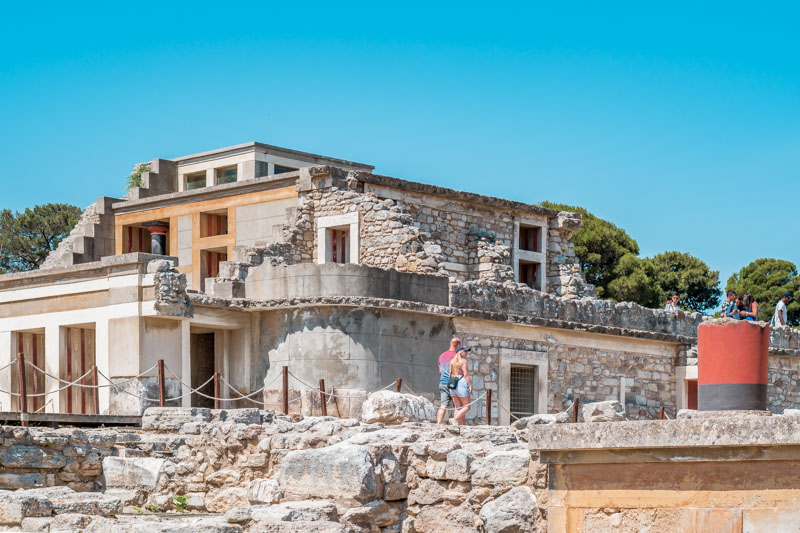
Can you reach Knossos by hire car?
Thanks to its central location, you can reach Knossos by hire car in just under two hours, even from the more remote Crete resorts. Knossos is located just 5 km south of Heraklion, not far from the island’s main motorway. Numerous signs (“Archaeological site” or “Knosos excavations”) point the way. You can find excellent car hire deals via Discover Cars*:
What is the parking situation on site?
Just a few metres from the entrance to Knossos is a large, free car park used by both cars and coaches. There are also a few smaller parking areas directly in front of the entrance. Additionally, some of the surrounding tavernas offer parking for customers who plan to dine with them afterwards.
Is there a public bus to Knossos?
Because of its proximity to the capital, Heraklion, Knossos is very easy to reach by bus. Bus line 2 »Pros Knoso« stops directly outside the historic complex (stop 1216). This city bus runs from the port of Heraklion to Knossos in about 30 minutes, calling at several stops along the way. Depending on where you board, a ticket costs less than €2.
→ Current Crete bus timetables and routes can be found at: KTEL Irakleiou
If you are travelling from Chania or Rethymno (via KTEL Chania-Rethymno), you will need to head to Heraklion Central Station (opposite the Pancreta Bank building) and then transfer to the “KTEL Astiko Irakleiou” city buses at the bus station in front of the GDM Megaron Hotel, right by the port. Alternatively, you can use the yellow Hop-On Hop-Off buses to Knossos. Tickets are available online, for example via GetYourGuide*:
➲ To the Hop-On Hop-Off ticket*
The main bus station in Heraklion is relatively modern, and the buses run quite punctually by Greek standards. Information boards make it easy to find your way around. If you are coming from Hersonissos, Agios Nikolaos or Sitia and wish to visit Knossos, you will need to take the “KTEL Heraklion-Lasithi” intercity buses into the capital.
#2 Guided tours to Knossos
Countless tour operators bring both history buffs and curious holidaymakers to the Minoan palace. It is hardly surprising, as this top highlight of Crete is advertised absolutely everywhere. The ubiquitous marketing lures visitors in with highly stylised pictures and illustrations, meaning many tourists arrive expecting to see a “real, intact palace”.
Consequently, these coach tours are extremely well booked. During the season, the first coaches arrive at the historic site at around 9:30 a.m., and by noon, several dozen are lined up in the car park. A coach tour is a worthwhile option for those who prefer to avoid the sometimes chaotic traffic on the island’s motorway but still absolutely want to see Knossos.
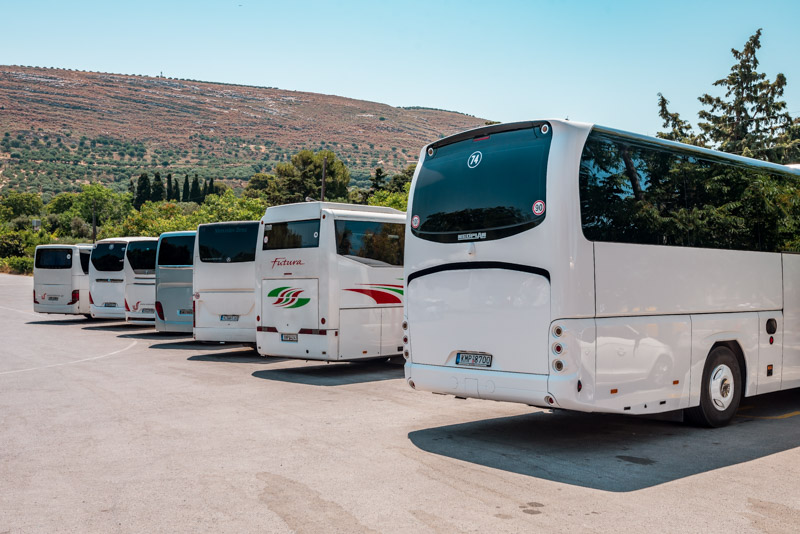
Through the GetYourGuide* portal, you have the opportunity to book guided day tours to Knossos. You can find all the necessary information and reserve your spot directly here:

Most organised Knossos coach tours only provide transport and do not include a guided tour of the site itself, and the entrance fee is often not included either. Inside, there are only a handful of information boards explaining the individual buildings and squares. If you truly want to learn about Knossos and the Minoan people, we highly recommend booking a small-group tour with a multilingual guide.

You can also hire a certified Knossos guide upon arrival. They offer guided tours in several languages and wait directly at the entrance to the site. The cost for a guided walking tour of Knossos ranges from €35 to €70 per person. Taking a guided tour often allows you to skip the long queue at the entrance.
➲ Guided tours with a professional guide*
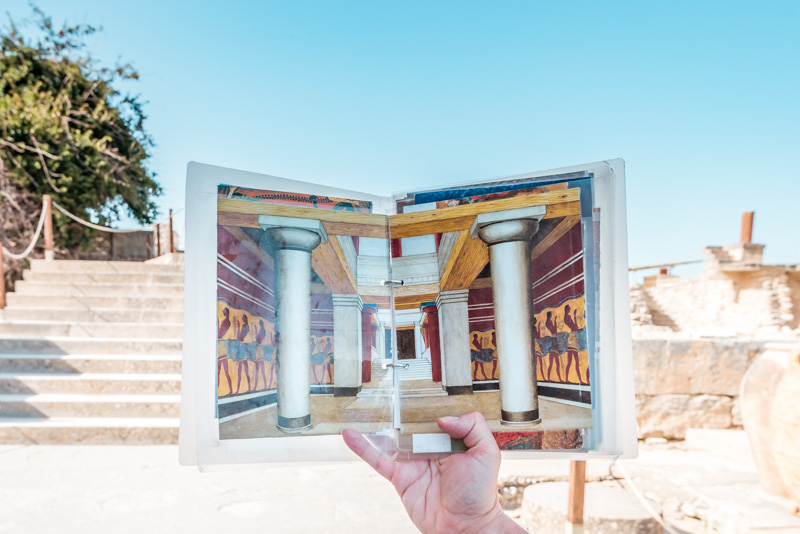
Guide to Knossos
Are you looking for a tour of Knossos in German? If so, we highly recommend the friendly tour guide Vaggelis Alefantinos. Vaggelis is a certified guide and speaks fluent German. We joined him for a highly informative one-hour guided tour in the late afternoon, entirely away from the crowds.

Vaggelis not only shows you every corner of the Knossos Palace but also paints a comprehensive and highly entertaining picture of Minoan culture in Crete. You also have the option to join a Knossos tour with an English-speaking guide. We booked our tour with Vaggelis directly via GetYourGuide*:
#3 Things to know about Knossos Palace
Not only is Knossos one of the top attractions on Crete, but the excavation site surrounding the palace is also one of the most controversial historical sites in Greece. Nowhere else in Hellas has archaeology left such an individual mark on an ancient asset as it has here – much to the dismay of many historians.
The Briton Arthur Evans began extensive excavations at the site in 1900. Today, he is widely regarded as the discoverer of Knossos, although amateur archaeologist Minos Kalokairinos had already unearthed finds here in 1878, and even Heinrich Schliemann, the discoverer of Mycenae on the Peloponnese, inspected the site in 1886.

It is often said today that Arthur Evans redesigned the Palace of Knossos according to his own imagination. He popularised the term “Minoans” – the people of King Minos, the legendary ancient ruler of Crete. Fascinated by this 4,000-year-old advanced civilisation, he successfully put Knossos on the map as the absolute centre of the Minoan world.
Over the decades, Evans transformed what was once an abstract field of ruins into a sculptural palatial complex. In the process, individual elements were moved around, and some older, pre-Minoan wall fragments were removed entirely. Through his extensive use of concrete, he moulded Knossos into what some jokingly call the »Disneyland of Archaeology«.
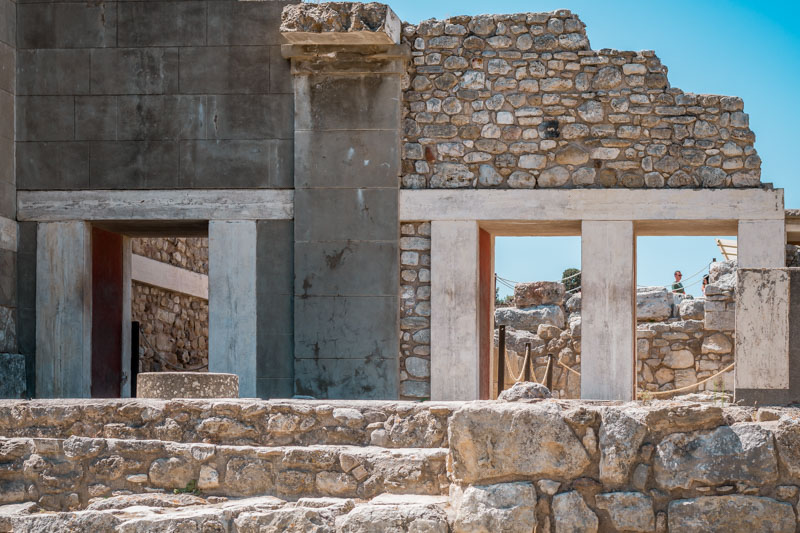
A century after its initial restoration, Knossos remains a true magnet for visitors. Today, between 500,000 and 1 million people visit the archaeological site every year. The striking red columns and elegant murals on the grounds (the originals are kept in the Museum of Heraklion) are incredible eye-catchers.
For many holidaymakers, it is the ultimate highlight of Crete, whereas history purists view it as the commercialisation of an ancient site. The sheer volume of visitors on certain summer days can indeed be off-putting. If you prefer to walk in the footsteps of Minoan culture without the crowds, you would be better off visiting Phaistos, Malia or Zakros.
Walking tour of the archaeological site
Around 4,000 years ago, the Minoans inhabited the area surrounding the Palace of Knossos. However, some traces of settlement actually date back to the 7th millennium BC. For Arthur Evans, these earlier settlement fragments held little importance, and in his reconstruction of Knossos, he focused solely on the Minoan structures.
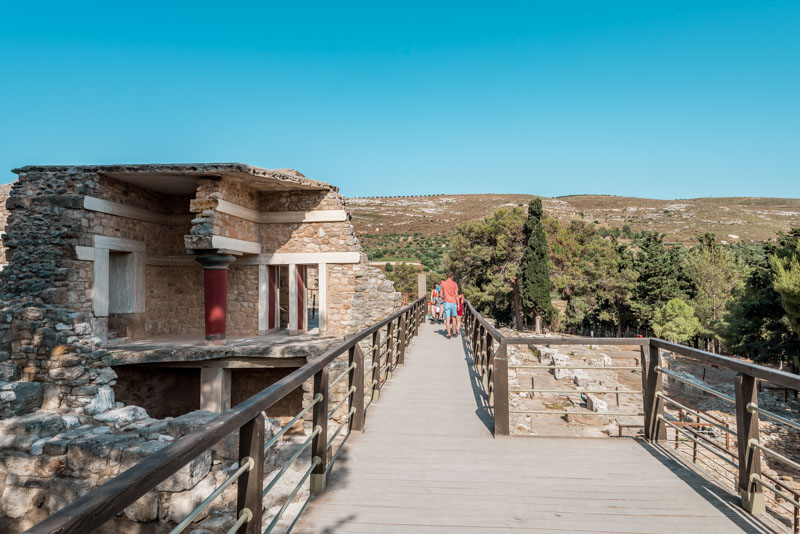
Our walking tour will guide you to the most famous squares and buildings of Knossos. After passing through the entrance, you arrive at the spacious West Court with its cobbled square. Here, you will also find a bronze bust of Arthur Evans. From there, the path continues southwards along wooden walkways, circling the square.

Looking down from the wooden planks, you can already make out some of the numerous rooms and corridors, some of which possess a distinctly labyrinthine structure. In between, there are passageways with stairs and ramps, as well as isolated halls. After the wooden walkway, you reach the Central Court via the former south entrance of the palace.
From this forecourt, you can look out over several buildings, including the Throne Room to the north, the Treasury to the east, and directly in front of you, the South Propylaeum – a restored entrance gate with mighty columns and an impressive wall fresco. Past the Propylaeum, you arrive at the Throne Room, where a long queue usually awaits.
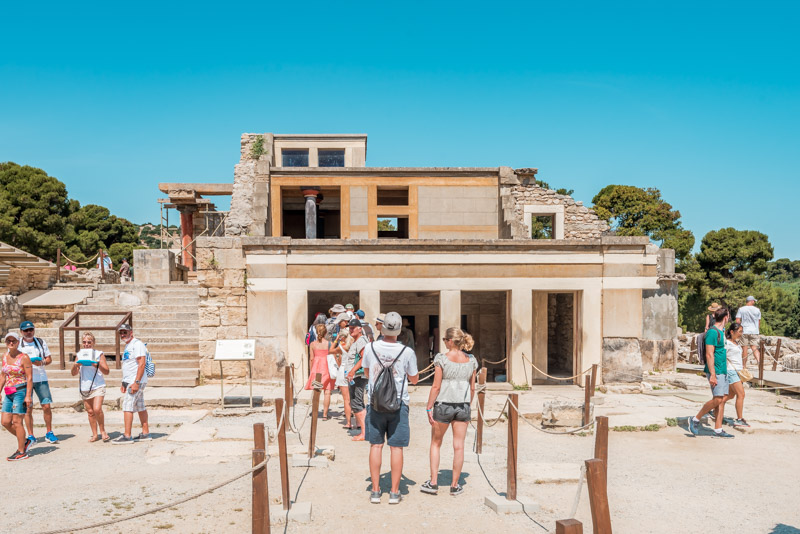
From Minos’ Throne Room to popular selfie spots
One of the main attractions is the Throne Room of Knossos, featuring highly ornate wall designs and the throne of King Minos himself. Interestingly, this rather delicate royal throne, carved from alabaster, is considered to be the oldest in Europe.
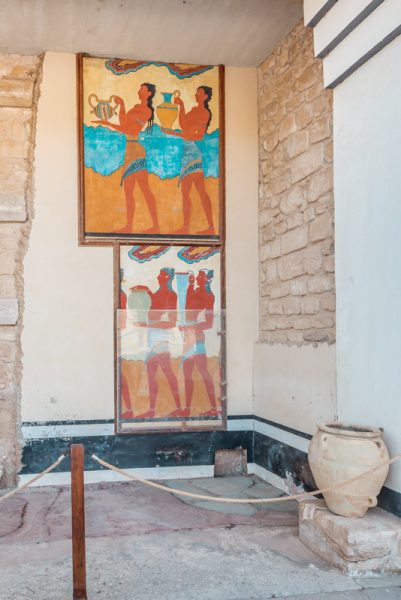
When it came to the design of the hall, the discoverer of Knossos, Arthur Evans, gave his imagination completely free rein. As with many other murals in the restored Knossos Palace, he commissioned the Swiss artist Emile Gilliéron to recreate them.

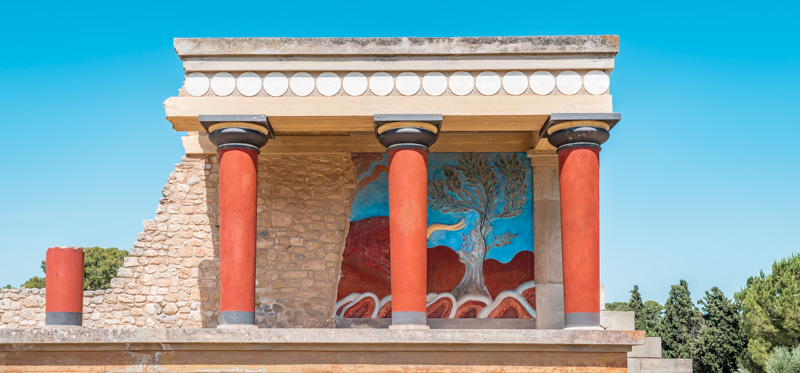
The original frescoes (or the surviving fragments of them) are housed in the Archaeological Museum of Heraklion. Following the paved path, you reach the most famous square in Knossos: the North Portico. This balcony-like corridor with its striking red columns is a quintessential Cretan postcard motif and undoubtedly the most popular selfie spot on the entire site.
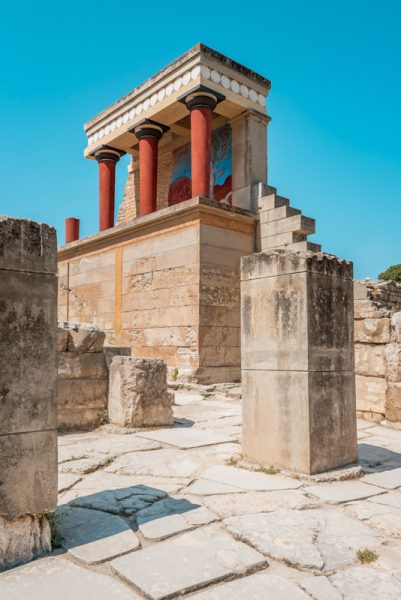
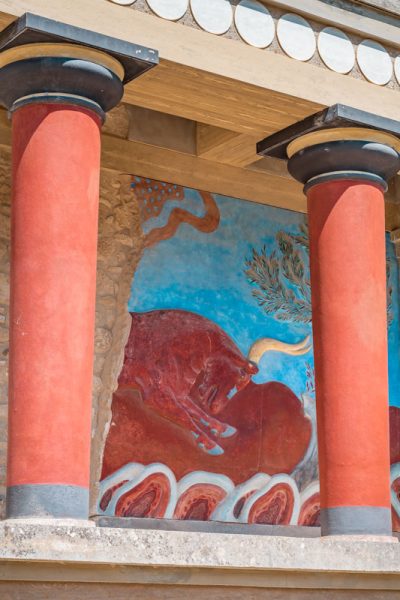
During the Minoan era, these columns were made of wood. Whether they actually tapered downwards as they do now, or whether this is another one of Arthur Evans’ creative liberties, remains unclear. Either way, the square is incredibly eye-catching, and the backdrop is crowned by a stunning wall fresco depicting the red Knossos bull with golden horns.
East of the portico lies a terrace, offering views into further rooms and corridors that are closed off to the public. Positioned in between are the Pithoi of Knossos – richly decorated terracotta vessels, or large amphorae.

Sheltered beneath a canopy sits a multi-storey building featuring a Grand Staircase, which leads down to a room known as the Queen’s Megaron, adorned with imposing murals. (Please note that this particular complex was closed to visitors in 2022). Further north, you exit the site via a cobbled square that Arthur Evans interpreted as an ancient theatre.

Knossos Insider Tip: The House of the High Priest
What many visitors do not realise is that the entire excavation site of Knossos consists of more than just the main palace grounds. Several other ruins are hidden in the surrounding area. One absolute highlight is the House of the High Priest, located about 700 m south of the main entrance to Knossos.
This Minoan house sits just below the main road. Although it is fenced off, it can be viewed from the outside free of charge, and it also impresses with coloured columns. If you continue to follow the road, you will eventually reach a Venetian Aqueduct (the Spilia Aqueduct), which was built to supply Heraklion with water in the 17th century.

#4 Entrance fees and opening hours of Knossos
Crete’s most popular historical site is open all year round. During the summer, you can visit Knossos from 08:00 to 20:00. Please note that since 2024, visitors must hold a Knossos ticket with a specific time slot. You can easily purchase this in advance, for example via GetYourGuide* or tickets.hh.gr.
Knossos opening hours at a glance
- Knossos – Opening hours in summer: Open daily from 1 April to 1 September: 08:00 – 20:00
- Knossos – Opening hours in autumn:
- From 01/09 to 15/09: 08:00 – 19:30
- From 16/09 to 30/09: 08:00 – 19:00
- From 01/10 to 15/10: 08:00 – 18:30
- From 16/10 to 31/10: 08:00 – 18:00
The site remains relatively quiet until around 10 a.m., after which countless coach tourists begin pouring in. The rush usually peaks around 1 p.m. If you are looking for peace and quiet, we highly recommend visiting Knossos after 4 p.m. From 6 p.m. onwards, you will often have large parts of the complex entirely to yourself. Last entry is roughly 30 minutes before closing time.
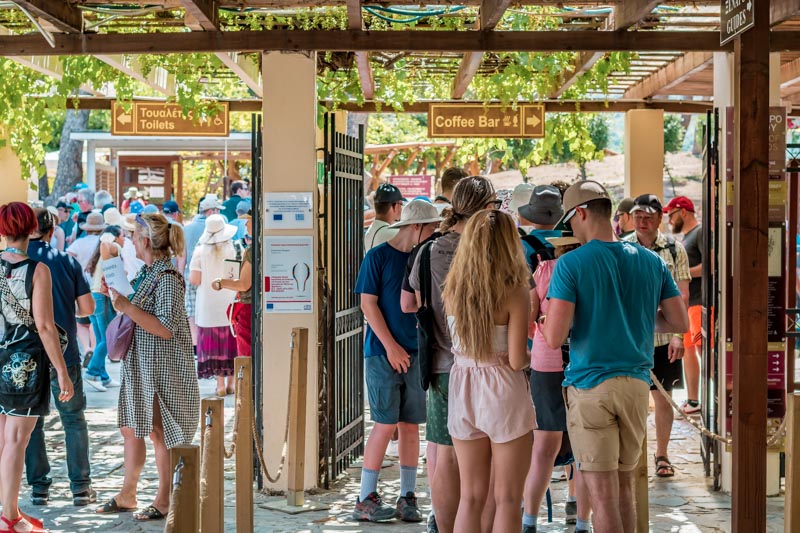
- Knossos – Opening hours in winter: Open daily from 1 November to 31 March: 08:30 – 17:00
Entrance fees to Knossos Palace
The Palace of Knossos is the second most expensive archaeological site in Greece, closely following the Acropolis of Athens. A standard Knossos ticket costs €20 for adults, with a reduced rate of €10. There is also the option to buy a special combination ticket, which allows you to visit both Knossos and the Archaeological Museum of Heraklion within three days.
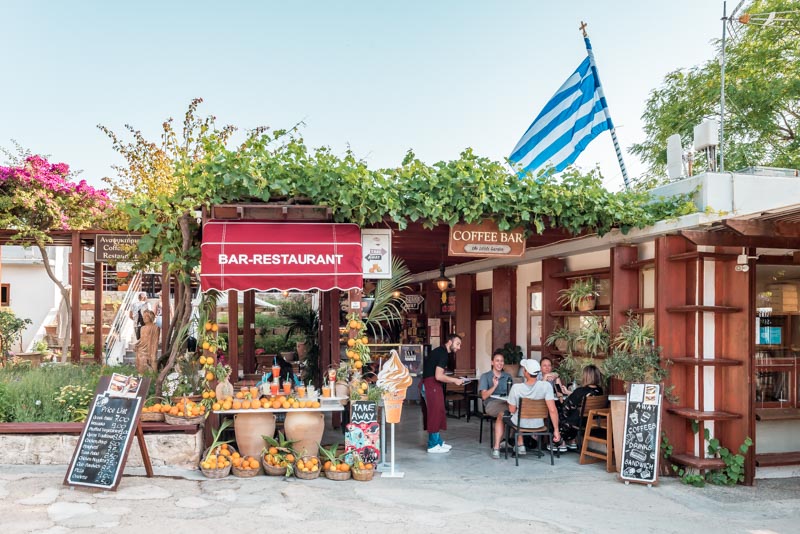
Right by the entrance, there is a small café-bistro called “The Little Garden”, offering a decent selection of food and drinks. However, prices here are quite high, and the atmosphere can be somewhat hectic due to the sheer number of waiting visitors. If you are looking to sit down for a leisurely, high-quality meal, you are better off heading into Heraklion or the nearby village of Archanes (our top tip: Kritamon Restaurant).
When is admission to Knossos free?
Generally, visitors under the age of 26 enjoy free entry! Additionally, all visitors can visit Knossos free of charge on the following dates: 6 March, 18 April, 18 May, the last weekend in September, 28 October, and every first Sunday of the month from November through to March. On certain Greek public holidays, Knossos may operate on reduced hours (such as on Orthodox Easter) or remain closed entirely (e.g. 1 May).
→ More detailed information regarding entrance fees and opening hours for Knossos can be found on the official website of the Greek Ministry of Culture: Ministry of Culture
✓ Full coverage & unlimited mileage included
✓ Free cancellation up to 24h before pick-up
✓ Best price guarantee via Discover Cars
#5 Hotels near Knossos
In the village of Knossos itself, accommodation is fairly limited. Occasionally, locals rent out rooms or small holiday apartments. However, in the surrounding area, you will find incredibly cosy places to stay, including beautiful Cretan villas nestled among olive groves with wonderful sea views. Down in the capital, Heraklion, there are hotels to suit every budget. Click on the links to Booking.com* to find out more:
Ariadni’s House, Knossos
A compact, two-storey holiday chalet located right in the village of Knossos. The historic site is just a 5-minute walk away. Expect a friendly hostess and very cosy decor.
Villa Amelie, Vasilies
Eleni and Dimitri rent out a spacious, 4-bedroom villa complete with a pool and beautifully kept gardens in the village of Vasilies, just 4 km from Knossos.
3 Pines Design Living, Heraklion
A modern aparthotel situated in the northern new town of Heraklion. It features beautifully appointed apartments and suites, a courtyard pool, and fantastic views from the hotel terrace.

#6 What to see in the surroundings of Knossos
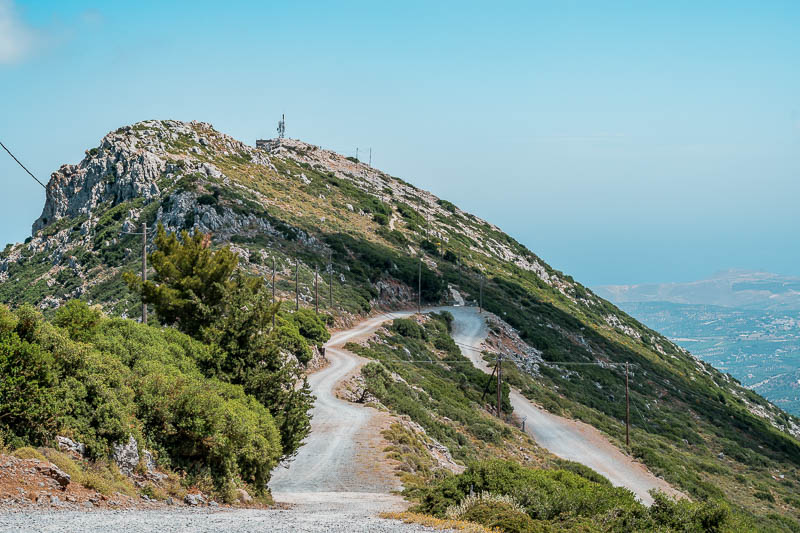
The Palace of Knossos is widely considered the most popular destination in central Crete. If you visit the site early in the morning, you will easily have enough time to explore other highlights in the surrounding area. Do not miss the ascent up Mount Giouchtas, crowned with a small white church offering a spectacular panoramic view of the north coast.
The nearby capital, Heraklion, is also well worth a visit. While it may not possess the immediate charm of Chania or Rethymno, it holds its own with the old Venetian harbour, the restored Koules Fortress, and a compact city centre nestled between the Church of Agios Titos and the Morosini Fountain.

The Archaeological Museum in Heraklion
The Archaeological Museum of Heraklion is the largest museum on Crete. Thanks to its incredibly rich and interesting exhibits, it ranks among the most important museums in Greece, standing shoulder to shoulder with those in Athens. A visit to the museum (admission: €12) can be easily combined with a city tour of Heraklion.
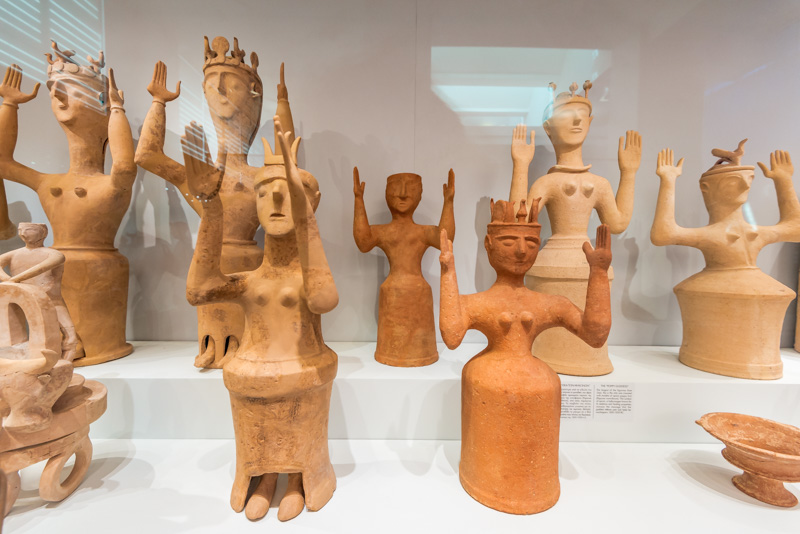
History enthusiasts will be absolutely thrilled by this museum. To properly study all the exhibits and read the information boards, you should set aside at least 2 to 3 hours. The artefacts from the Minoan period (which include original wall frescoes) paint a vivid and understandable picture of the era. You can also purchase a combination ticket that includes entry to Knossos.
➲ To the online ticket for the museum*
A visit to the CRETAquarium Thalassokosmos
The Sea Worlds Museum of Crete, officially known as “CRETAquarium Thalassokosmos”, is located about 20 minutes from Knossos in the village of Gournes. It features several massive tanks housing native marine life. The CRETAquarium is deeply committed to the research, education, culture and preservation of the flora and fauna of the Mediterranean.

The aquarium is open 365 days a year, and during the season, you can visit between 09:30 and 19:00. Admission to the CRETAquarium costs €12 for adults (€6 reduced), while children under the age of 4 enter for free. It makes for an especially worthwhile trip for families with children, though adults will equally be amazed by the sheer variety of marine life on display.
➲ To the online ticket for the CRETAquarium*
Excursion to the wine village of Archanes
Even though Archanes is located just 5 minutes from Knossos, nestled at the foot of Mount Giouchtas, very few tourists ever find their way to this village of almost 3,000 inhabitants. While some other places in Crete can lack a bit of charm, Archanes more than makes up for it with its beautifully preserved traditional architecture.
The marble-paved streets of Archanes are an absolute delight to stroll through. A mix of modern and traditional cafés, alongside rustic tavernas, invite you to sit and linger. Here, you can sit comfortably among the locals, and it is not uncommon to strike up a friendly conversation. Come evening, the large village square almost always takes on a lively, festival-like atmosphere!
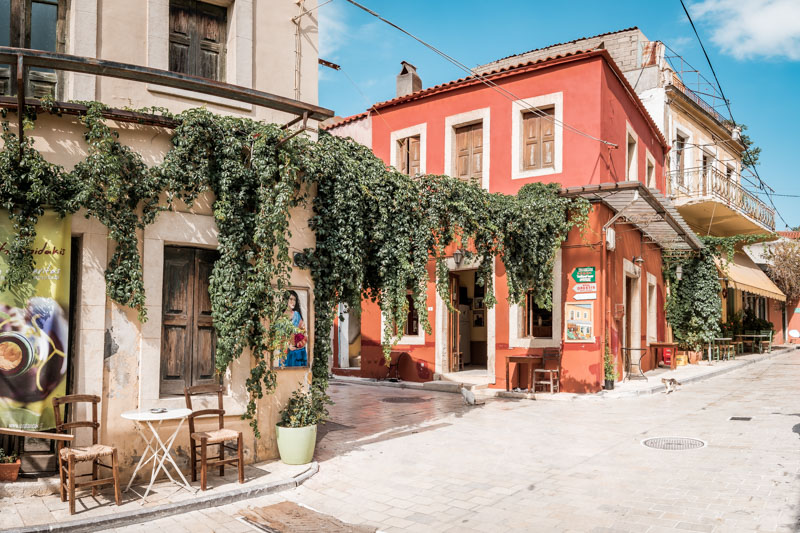
Alongside the Dafnes region, the area surrounding Archanes is one of the largest wine-growing regions in Crete. You can sample delicious local wines at places like the Bakaliko Café right on the village square (the landlord, Georgios, even speaks some German!). East of Archanes, stretching from Kounavi to Alagni, numerous wineries eagerly welcome visitors. (Our top tip: Paterianakis Winery).
→ Further articles and numerous Crete travel tips can be found here:
FAQ about Knossos on Crete
What’s the best way to get to Knossos?
Knossos sits just 5 km south of Heraklion, about a 10-minute drive via the Leoforos Knosou exit. Bus line 2 also gets you there from the port in Heraklion in around 30 minutes.
When’s the best time to visit Knossos?
Aim to arrive before 10am or after 4pm, since bus tours flood the site in between and long lines form. Since 2024 you also need a timed online ticket booked in advance.
What does admission cost and what are the opening hours?
In summer, Knossos is open daily from 8am to 8pm, and in winter from 8:30am to 5pm. Admission costs 20 euros, 10 euros at the reduced rate, and visitors under 26 get in free.
What makes the Palace of Knossos so special?
Knossos was once the center of Minoan civilization, Europe’s first advanced culture, with over 800 documented rooms. It’s famous for its red columns and wall frescoes, though discoverer Arthur Evans rebuilt much of it with concrete and a fair bit of his own imagination.
Should you book a guided tour of Knossos?
Yes, since only a few info panels explain the site, a guided walk for around 35 to 70 euros per person is well worth it. German-speaking guides are also available on site.
What’s worth seeing around Knossos?
Just a few minutes away lies the pretty wine village of Archanes with traditional tavernas and wineries. The Archaeological Museum in Heraklion, home to many of the original frescoes, also pairs well with the visit.
*Support our blog Greece-Moments
In this post, you will find affiliate links marked with an asterisk (*). If you book or buy something through one of these links, we receive a small commission. For you, the price remains exactly the same. In this way, you help us continue to provide high-quality content for free. Did you enjoy this post and would like to say thank you? Then simply buy us a Greek coffee ☕️ To the coffee fund
Bookmark this post on Pinterest!