

Although Crete is the most popular Greek island, few vacationers make their way to the far eastern part of the island. Package tour travelers are often put off by the two-hour transfer from Heraklion Airport to the provincial town of Sitia. Independent travelers and Crete enthusiasts, on the other hand, particularly appreciate this remote part of the island.
In addition to the charming coastal town of Sitia, eastern Crete offers sleepy villages, numerous dream beaches, and archaeological sites to discover.
Tom & Ella
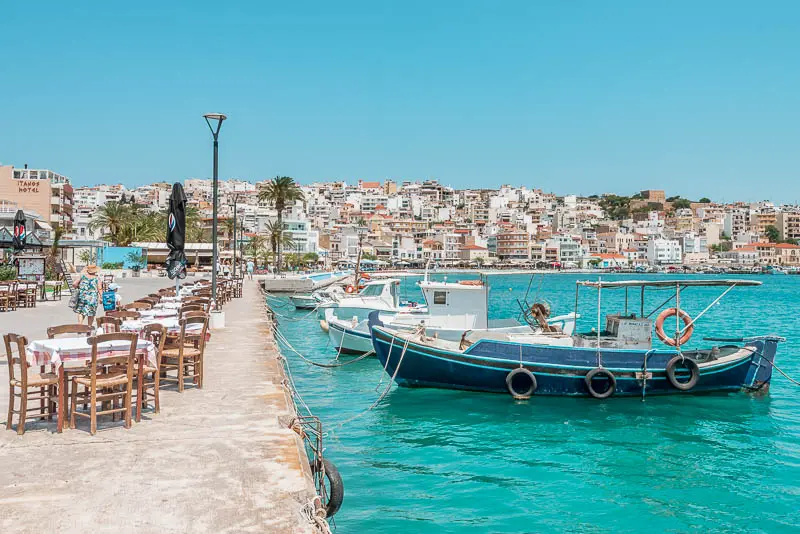
With a national airport, the region around Sitia is also served by regular flights from Athens. Nevertheless, the region has so far been spared from mass tourism. Only the palm-fringed beach of Vai attracts numerous day-trippers who spend a few hours at this picturesque stretch of coastline.
So it’s high time to take a closer look at the still relatively unknown eastern part of Crete. We’ll show you our favorite highlights around Sitia:
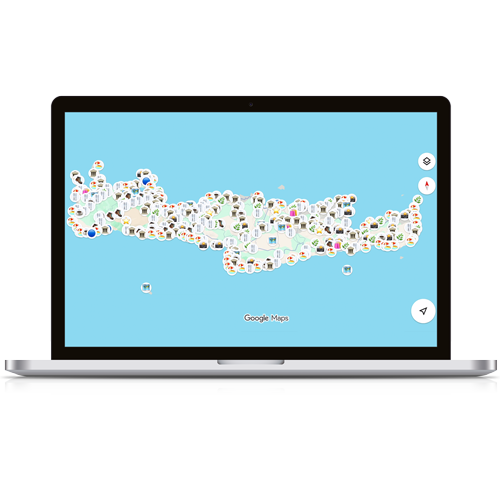
🏖️ Dream beaches & hidden bays
🍽️ Restaurants, tavernas & cafés
🏛️ Must-see highlights & ancient sites
🗺️ Worthwhile spots & insider tips
🚘 Practical info like rentals & parking
♾️ Lifetime access & updates
#1 Tour of Sitia
Sitia is the third-largest city in the Lasithi region of eastern Crete, after Agios Nikolaos and Ierapetra. This port town, with a population of about 9,400, stands out from afar thanks to its modern concrete architecture. However, if we take a stroll through the heart of the city, we’ll quickly discover plenty of photogenic spots.
Behind the Sitia Archaeological Museum, you can park your vehicle for free in a large public parking lot. The museum (Tue–Sun 9 a.m.–4 p.m., €3), featuring artifacts from the sites of Zakros, Petra, and Palekastro, is well worth a visit. The highlight is the Kouros of Palekastro, a bust of a young man crafted from ivory and gold.
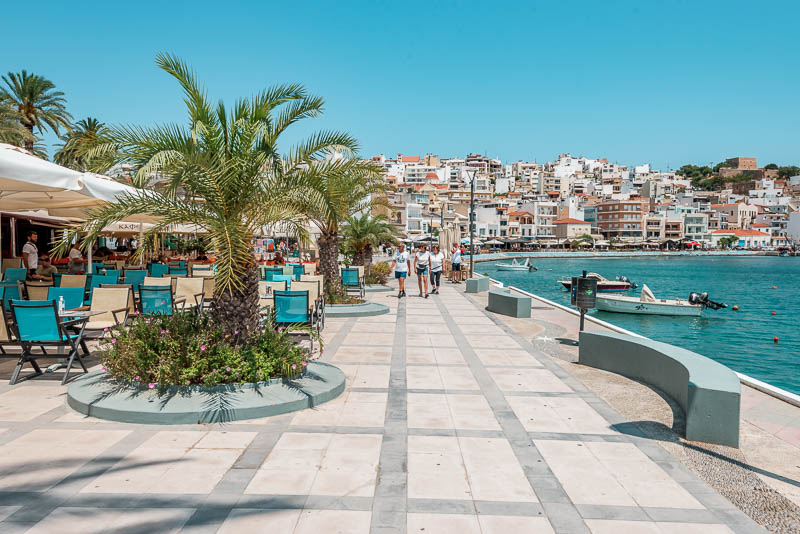
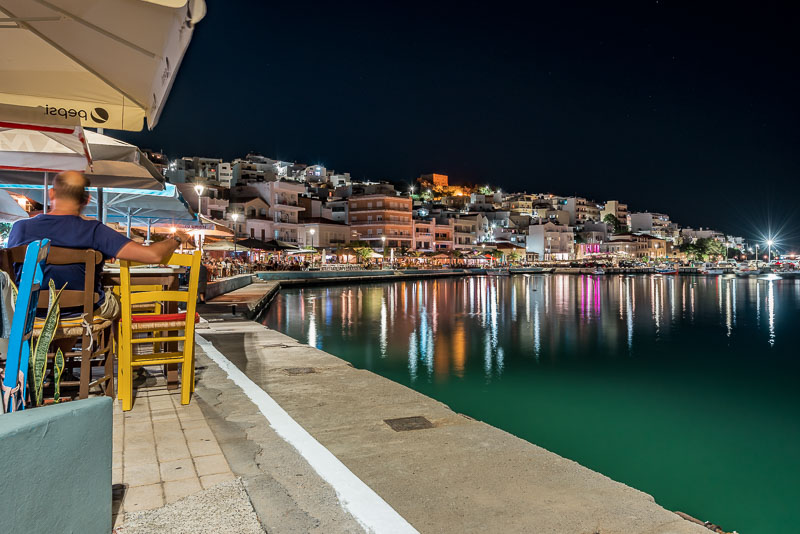
From there, head along Andrea Papandreou Street to the wide pier at Sitia. Ferries depart regularly from here to Rhodes (via Karpathos) and to Piraeus (via Santorini). The palm-lined waterfront promenade in Sitia, with its numerous cafés and taverns, is a wonderful place to linger.
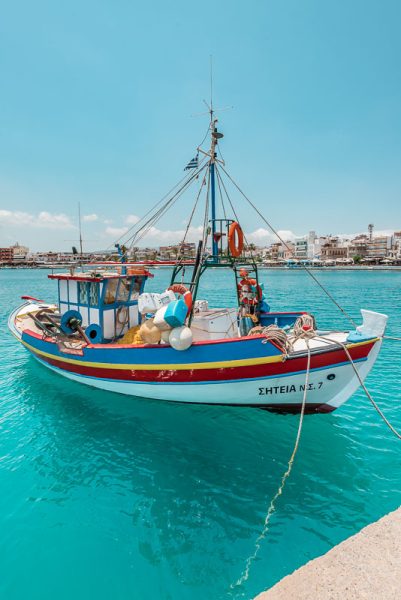

This is also where Sitia’s central square is located. During siesta time, the area is quiet, but in the evening, it comes alive. The entire harbor promenade of Sitia then comes to life, and many restaurants are packed to capacity. After sunset, there is a lively atmosphere here, with a real festival-like vibe.
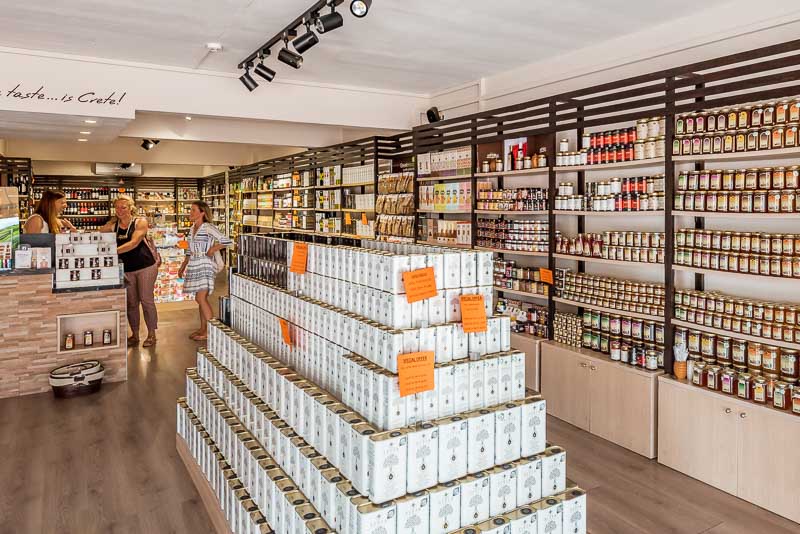
If you’re looking for an original Cretan souvenir, you’ll find it at Kipseli – Cretan Traditional Products. Owner Sofia offers high-quality Cretan products in her shop, such as soaps, wine, raki, olive oil, and honey. The latter are even made by the family themselves. The Savidakis thyme honey is especially recommended.
View from the Kazarma Fortress
The area around Sitia was already settled during the Minoan period around 1500 BC. However, the modern coastal town was not founded until the late Middle Ages by the Venetians. They named it “La Sitia,” from which the name Lasithi—the name of today’s prefecture—was later derived.
Behind the harbor, pastel-colored houses stretch up a hillside like an amphitheater, at the highest point of which the old 13th-century Venetian fortress of Kazarma stands. It was originally built by the Crusaders, destroyed several times by earthquakes and pirate attacks, and rebuilt by various rulers.
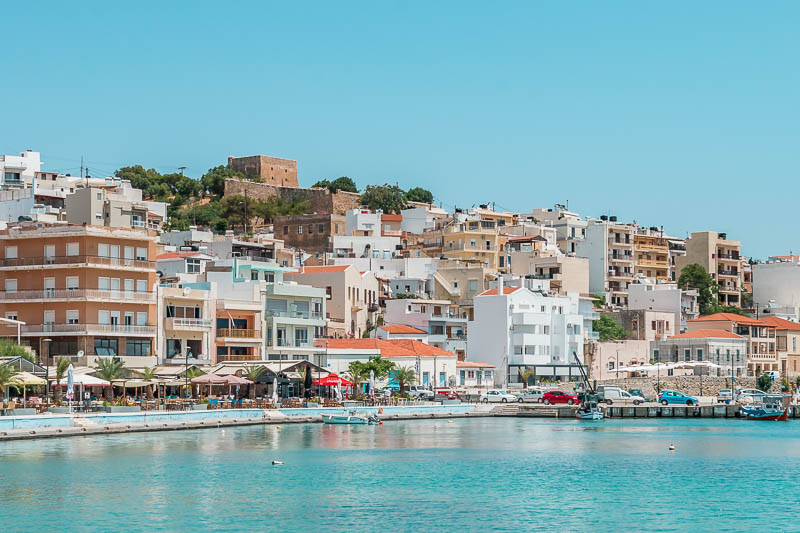
In 1651, however, the Kastro was captured by the Ottomans. During the siege, they destroyed nearly the entire city. Reconstruction began slowly only in the mid-19th century. Thus, with the exception of a few historic houses above the harbor, concrete buildings dominate today’s cityscape.
The massive walls and bastion are still well-preserved, but otherwise there isn’t much to see inside the castle ruins. Today, the Kazarma Fortress is used for various events and concerts. The magnificent view of Sitia makes up for the strenuous climb up countless steps. (Wed–Mon 8:30 a.m.–3:30 p.m., €3)
💡 Book recommendation for Crete: The Crete travel guide from Lonely Planet contains important information and tips for a vacation on the island. You can order the guide here: Order the book here*
#2 Sitia Geopark: Eastern Crete’s Natural Paradise
The Sitia UNESCO Global Geopark was established in 2015 to preserve the region’s flora and fauna and to bring its extraordinary geological history to life. It encompasses a large part of Eastern Crete, stretching from Cape Sidero in the north through the Richtis Gorge and the mountain village of Ziros to Xerokampos in the south.
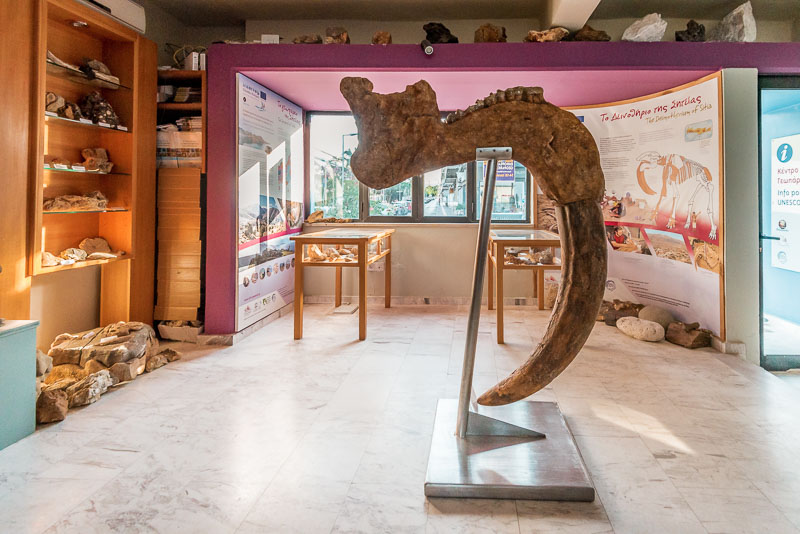
The park encompasses numerous caves and gorges and is home to protected plant and animal species, including Eleonora’s falcons, peregrine falcons, and golden eagles. Significant fossils have also been found in many locations. The Sitia Geopark Information Center is located on the waterfront promenade in the town of Sitia.
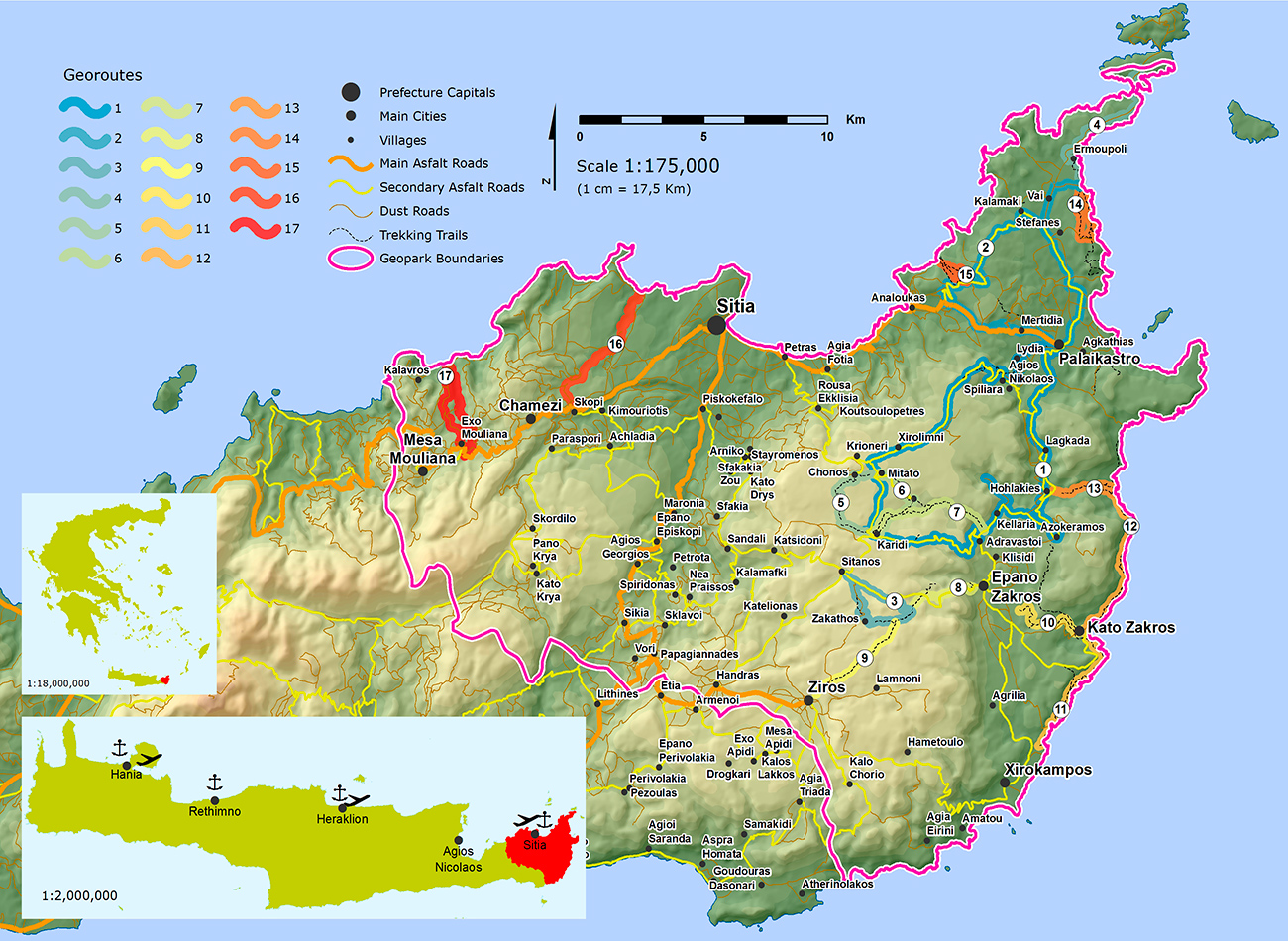
Throughout the geopark, 17 diverse hiking trails—known as geo-routes—have been established, leading past particularly interesting geological formations. The routes range from short hikes to day-long tours. For more information, visit: Geopark Sitia
The charming Route 16 leads outside of Sitia, not far from the national airport, through the Agii Pandes Gorge (Gorge of All Saints). From Platani Beach, you can take a short walk through the lush green gorge to the eponymous Agii Pantes Church. Impressive sandstone formations and caves line the fertile valley, where agriculture is still practiced today.
#3 Richtis Gorge
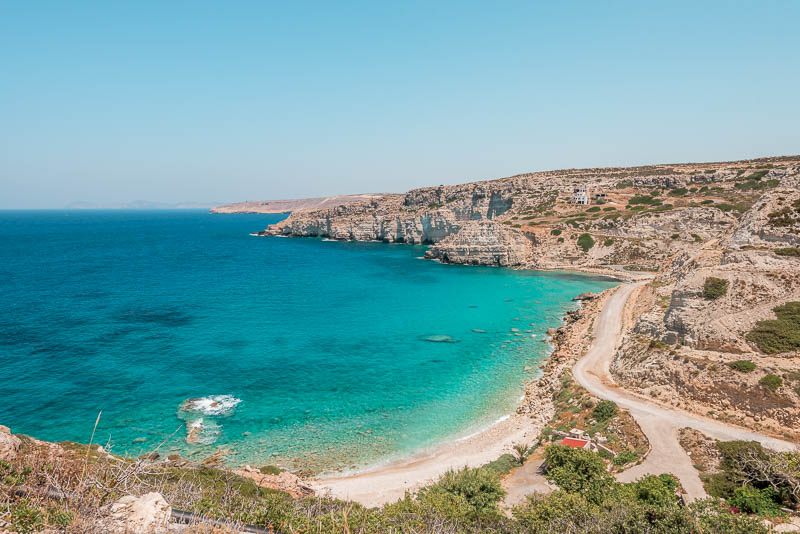
A unique natural gem awaits you just 15 km west of Sitia. Not far from the fishing village of Mochlos (see #4) lies the lush green Richtis Gorge. It stretches for just under 4 km from the mountain village of Exo Mouliana down to the coast at Richtis Beach.
About 1 km below the village, at the 19th-century Lachanas stone bridge, the moderately difficult hike through the Richtis Gorge begins. The trail (Georoute 17) winds through dense vegetation, past the remains of old water mills, and along a stream that must be crossed repeatedly.
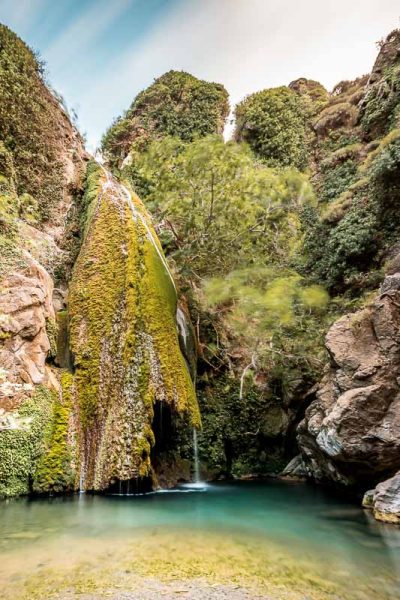
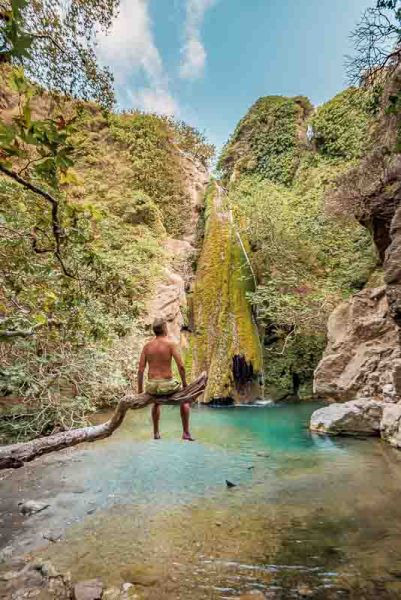
Sturdy footwear is recommended, as there are also some climbing sections. During the season, a gorge entrance fee of €5 is charged. You’ll reach the heart of the gorge after 2 hours. The 20-meter-high Richti Waterfall nestles picturesquely into the unspoiled landscape and still carries water at times, even in midsummer.
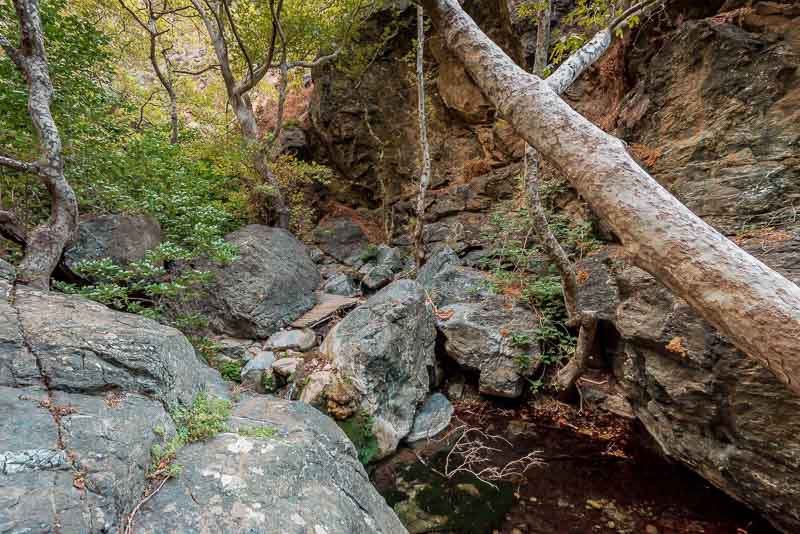
If you want to take a shortcut, follow the signs from Exo Mouliana to Richtis Beach. A dilapidated and very narrow concrete road will take you down to the coast in your rental car to a parking area (Richtis Gorge Parking). From here, it’s just a 30-minute walk to the waterfall.
✓ Full coverage & unlimited mileage included
✓ Free cancellation until 24h before pickup
✓ Best price guarantee via Discover Cars
#4 Fishing Village of Mochlos
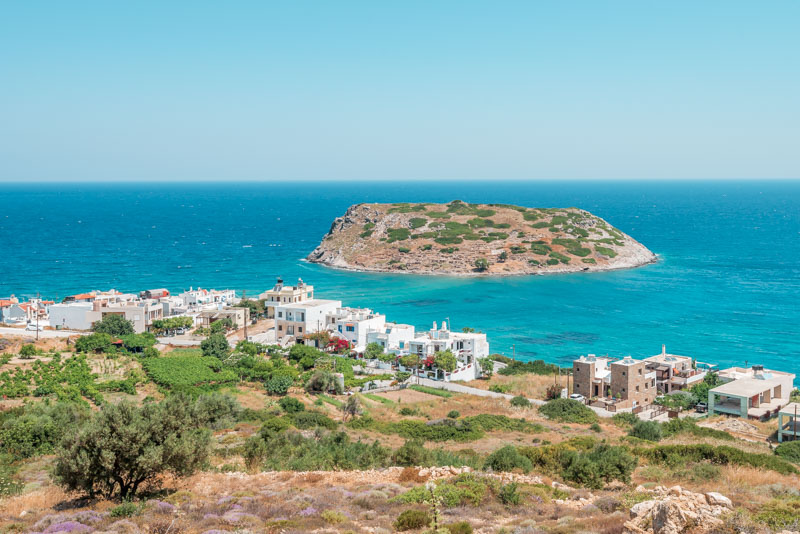
If you ask us about one of the most beautiful villages in Crete, Mochlos is right at the top of our list. This tranquil fishing village lies about halfway between Agios Nikolaos and Sitia. Coming from Sitia, you can make a detour to the quaint mountain village of Tourloti, which offers a great panoramic view of Mochlos.
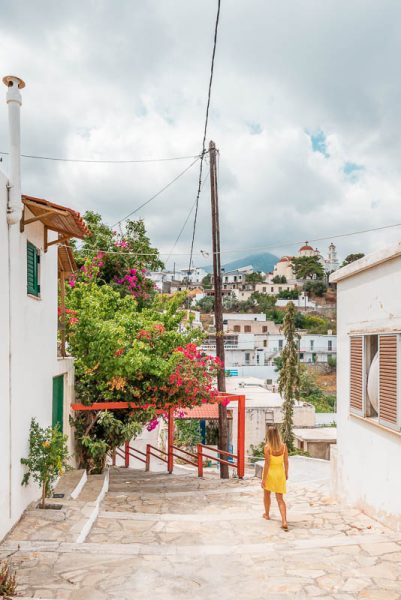
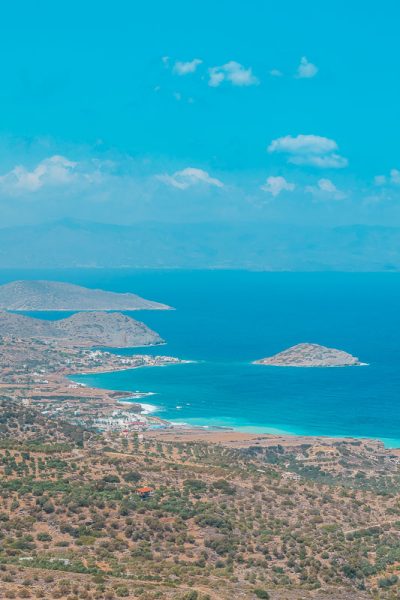
From the Crete Island Highway, a turnoff leads from the neighboring town of Sfaka toward the coast and Mochlos. You can spot the village and the tiny island off its coast from a distance. There is free parking on the western edge of the village. The compact village center is both rustic and charming, with colorful bougainvillea climbing up whitewashed houses.
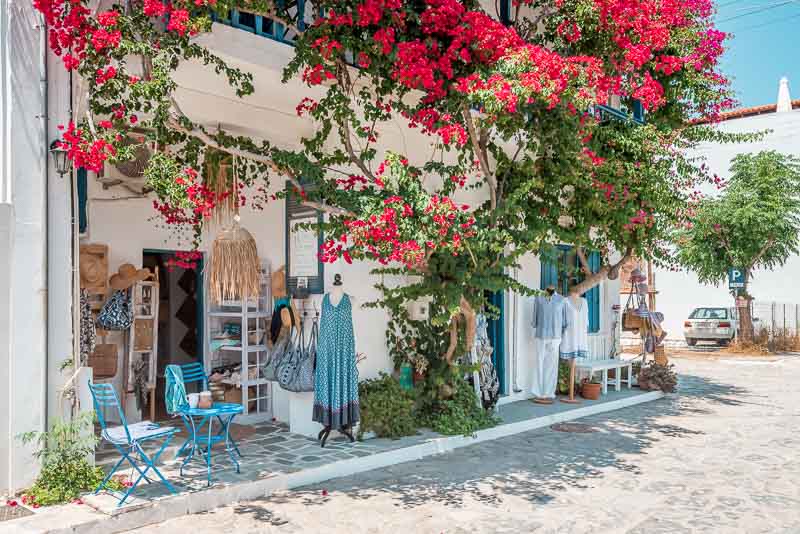
Around the rocky cove with its narrow sandy beach are cozy taverns (Tip! Ta Kochilia) where you can stop for a midday snack. The atmosphere in Mochlos is especially romantic in the evening. You can wind down the day at the laid-back Oktana Cafe Bar, where chairs are set right up against the rocky shore.
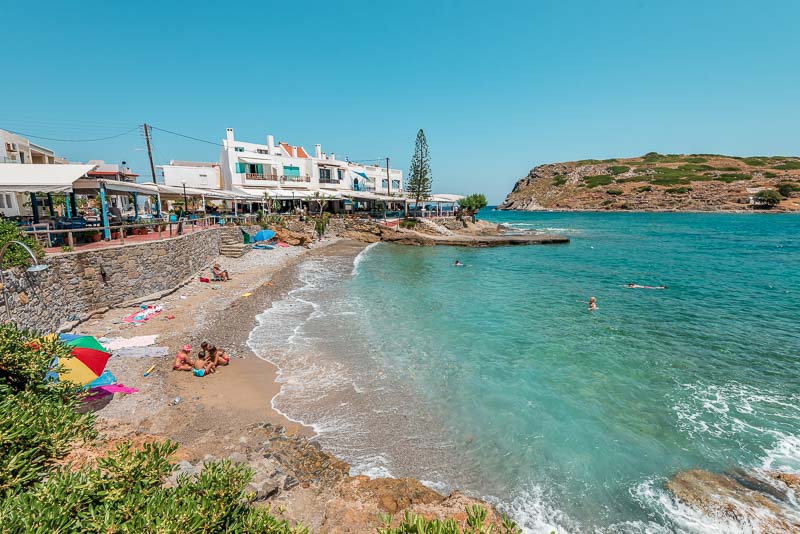
History buffs will find the rocky islet of Mochlos (also known as Agios Nikolaos) across from the village, featuring Minoan traces of a harbor settlement as well as burial chambers that were uncovered by American archaeologists in the 20th century. During the season, boat transfers are offered from Mochlos.
#5 Visiting Toplou Monastery
Just a 20-minute drive east of Sitia, in a largely barren, arid landscape, lies the Moni Toplou Monastery (also known as Moni Akrotiriani), which from the outside resembles a fortress. Only the 33-meter-high bell tower rises above the massive walls. On the way to Vai or Itanos, it’s worth making a quick stop at one of Crete’s most significant monasteries.
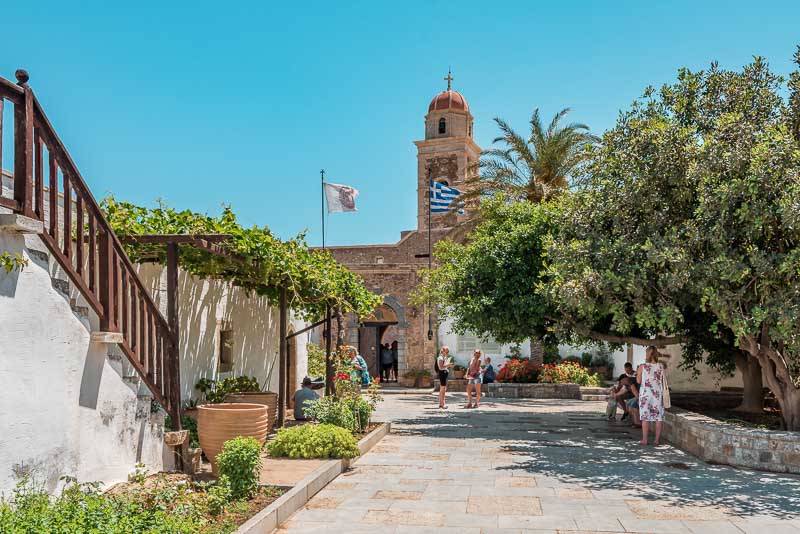
During the Ottoman occupation, the complex was considered a place of peace. Compared to other monasteries in Crete, such as Agia Triada near Chania or the Arkadi Monastery, the interior is rather compact and can be toured quickly. You enter the complex (€4 admission) through the main gate and arrive in a large outer courtyard with monks’ cells on either side.
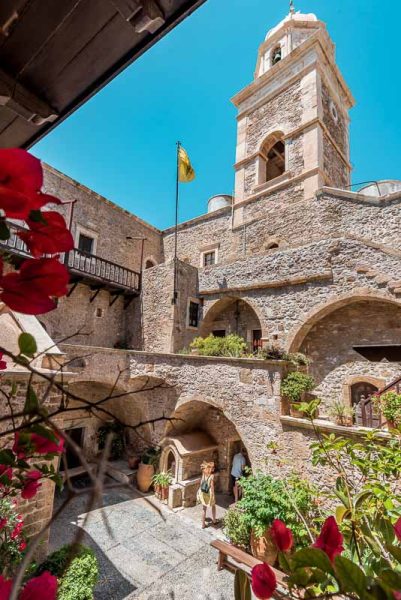
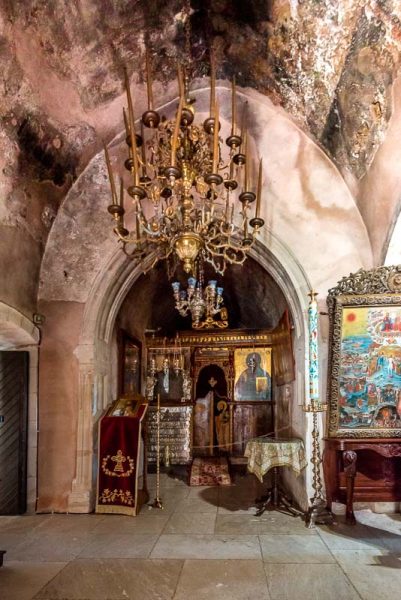
Another gate leads into the picturesque inner courtyard. From here, you enter the small monastery church with its icon of the Virgin Mary, “Megas i Kyrie,” created around 1770 by the icon painter Ioannis Kornaros. On the monastery grounds, there is also an old windmill and a folklore museum, which is also used as a tasting room.
The prosperous monastery, which was likely founded in the 14th century, owns numerous estates in the surrounding area where wine and olives are cultivated. Thanks to an enterprising abbot, the fields are farmed organically.
You can purchase Toplou organic olive oil, as well as the monastery’s honey and wine, in the monastery shop. The monastery is also regularly visited as part of a guided bus tour.

Lost Place in Crete
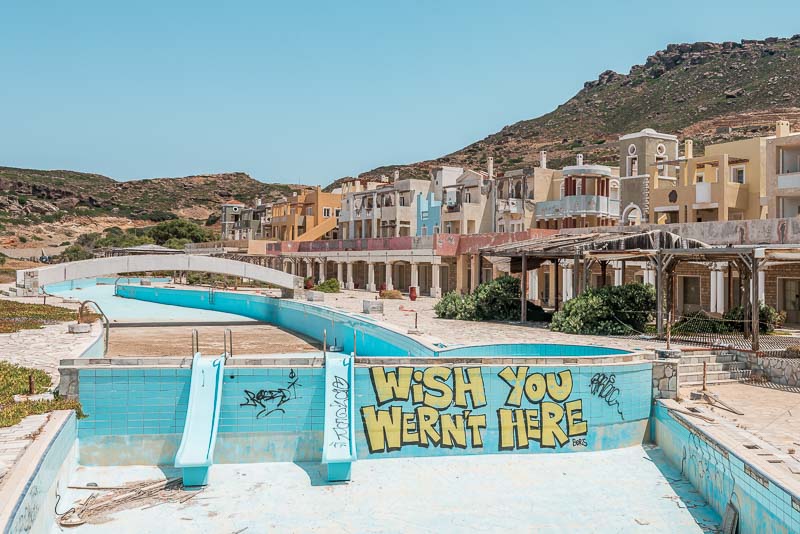
On the coastal road toward Toplou Monastery, you’ll notice the abandoned Dionysos Village hotel complex from a distance. The former vacation resort is now a ghost town; only a few apartments in the upper section are still permanently occupied. An entertaining stroll takes you past empty alleys, dilapidated houses, and run-down pool facilities.
#6 Erimoupoli on the Sideros Peninsula
Behind the Toplou Monastery lies the Sideros Peninsula, one of the driest and hottest regions in Crete. A trip to the northeasternmost point of Crete is well worth it, with one picturesque bay following another. This geologically significant spot is also part of the Sitia Geopark (see section #2) and is a protected nature reserve.
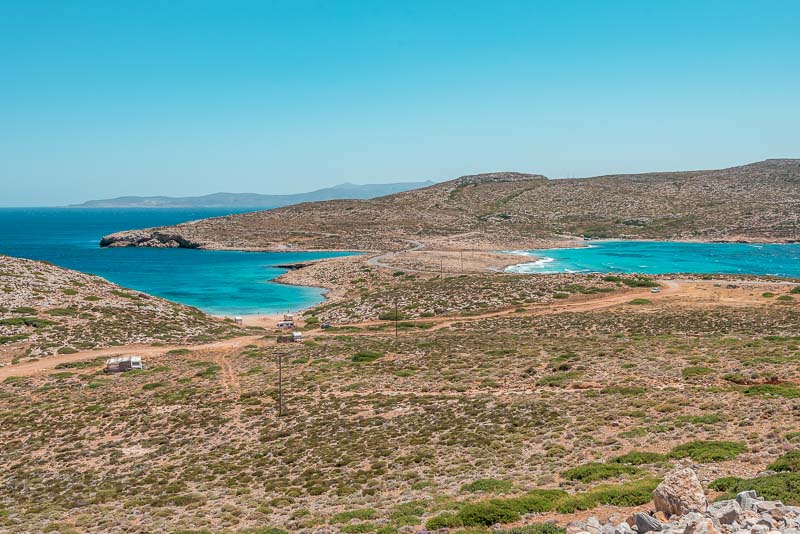
In many places, fascinating sedimentary and rock formations come to the surface, sure to make any geologist’s heart race. However, you won’t be able to reach the very northeastern cape; beyond the rugged Kyriamadi bays with their turquoise waters lies a restricted military zone.
Further south, you can relax wonderfully on the unspoiled beach of Erimoupolis. A handful of palm trees line the path to the sea, and even in summer, a paradisiacal tranquility reigns here. Just a few meters north, a footpath leads you to another beach. To the south lies the idyllic sandy beach of Itanos.
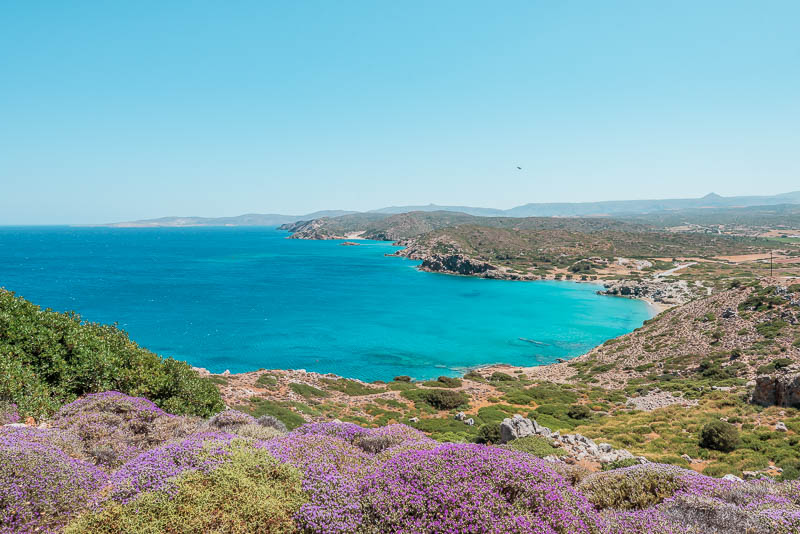
The beaches are still peaceful, but that is likely to change in the foreseeable future. As early as 2016, the Greek government approved the luxurious Itanos Gaia hotel project, featuring 1,936 beds and its own golf course. Cretans and international environmentalists are vehemently opposing it. The land belongs to the Toplou Monastery, which has sold it to wealthy investors.
Archaeological Site of Itanos
Archaeologists have uncovered several historical ruins around Erimoupolis. The most significant is the site of Itanos, located between the beaches of Erimoupolis and Itanos, where traces of settlement date back to prehistoric times. Until the 15th century, a thriving city stood here, controlling large parts of eastern Crete.
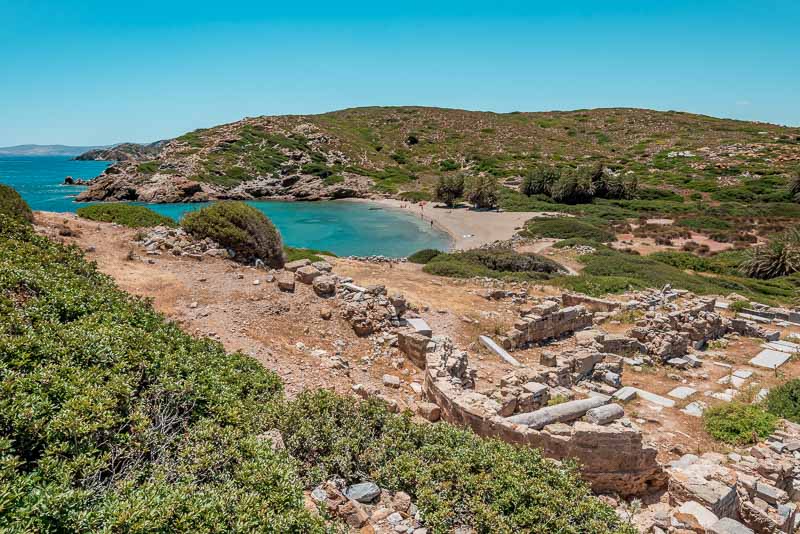
Repeated pirate attacks and severe earthquakes (see article: Greece Earthquakes) left little of Itanos intact. A visit to the ruins is still worthwhile, however, as the view of the surrounding coastal landscape is magnificent. Fragments of an ancient acropolis, an early Christian basilica (6th century), and a few houses from later periods can still be seen.

#7 Palm Beach of Vai
When the first hippies discovered Vai Beach in the 1970s, they were greeted by a truly dreamlike setting. A sea of palm trees stretches through a long valley to a wide sandy beach, where the sea sparkles in the most beautiful shades of blue.
→ This post gives you all the info you need for a trip to Vai Beach: Vai Beach
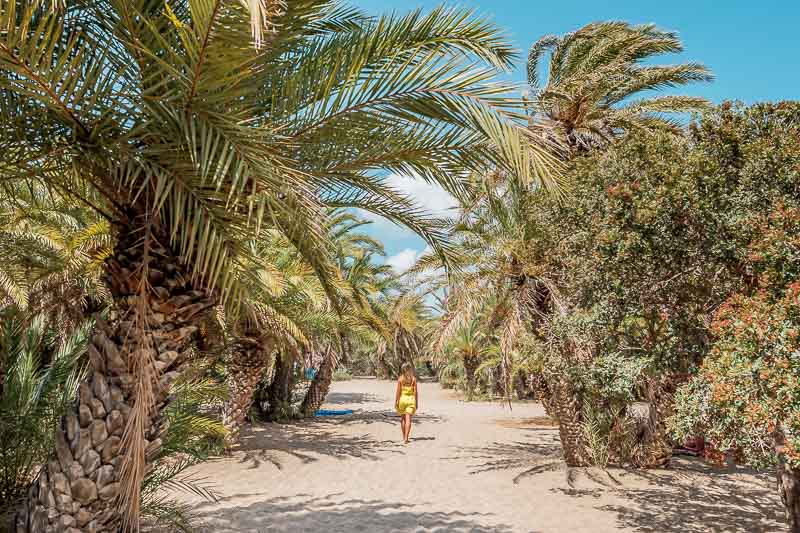
Even today, the Caribbean flair of Vai has lost hardly any of its beauty. Nevertheless, this Crete attraction is completely overcrowded, especially in the height of summer. If you want to enjoy this little slice of paradise undisturbed, you have to get there early or stop by in the late afternoon when the bulk of the day-trippers have left.
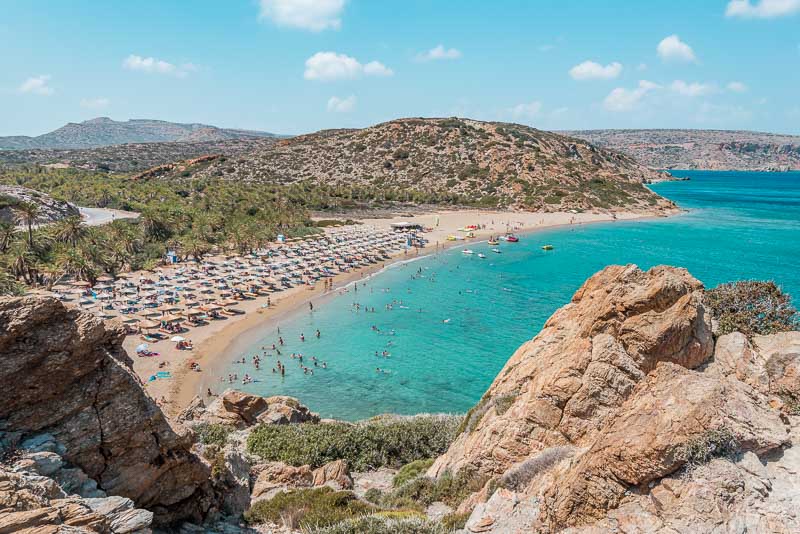
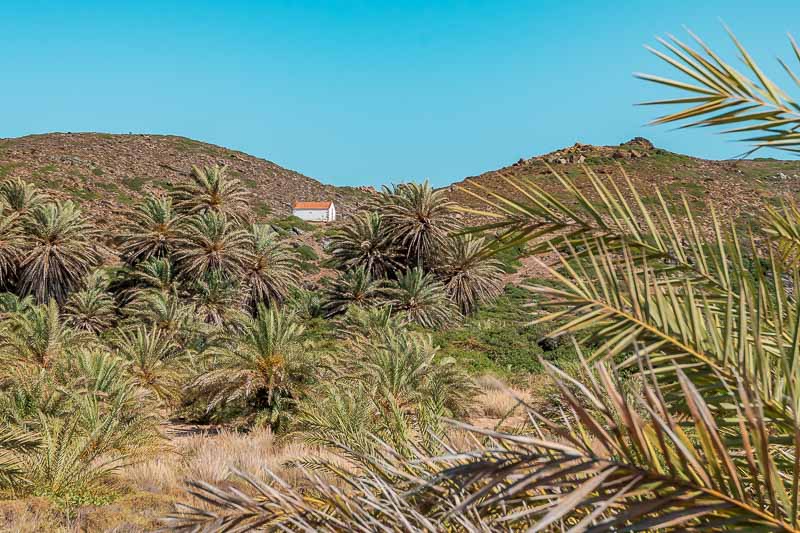
The unique palm grove is home to the endemic palm species Phoenix theophrastii, which can also be found on Crete at Preveli Beach, among other places. The palm forest is now closed to visitors; you can only still lie beneath the shady tropical giants near the beach.
Sun loungers and umbrellas in various price ranges are available on the bright sandy beach. A simple snack bar and a tavern cater to hungry beachgoers. Since there is no parking along the road to the beach, you’ll have to make do with the paid parking lot at Vai Beach (≈ €3,50 per day).
💡 Crete tour to Vai: For those who don’t want to or can’t drive a rental car, there are organized tours from Heraklion to Vai in the summer. Click the link to GetYourGuide* for details such as availability and prices: View guided tours*
#8 Kouremenos and Palekastro
From Vai, our exploration continues southward. Nature lovers can hike along the wild coastline to the fishing village of Kouremenos and explore pristine beaches (including Kedromouri and Kokkinos Kavos) with their sometimes bizarre rock formations. Today, Kouremenos is considered a popular vacation spot for independent travelers in Crete, where you can enjoy peace and seclusion.
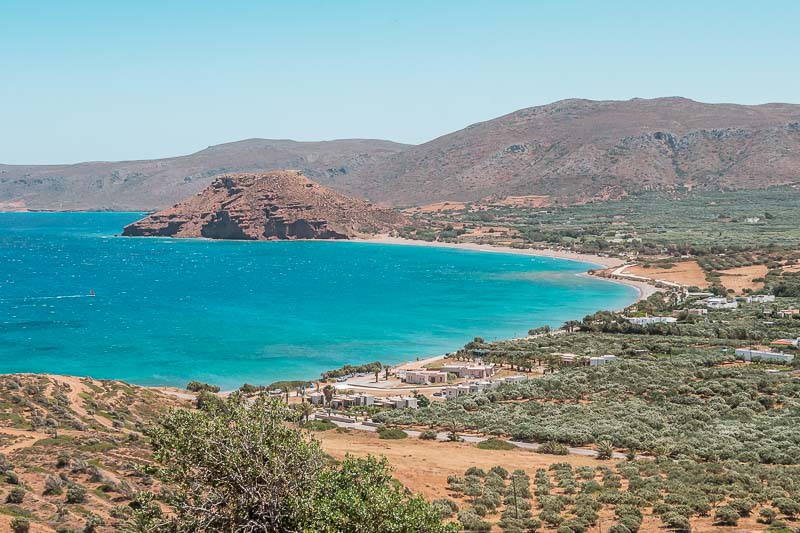
At the end of Kouremenos’ long stretch of beach stands the imposing table-top mountain Kastri, topped by the ruins of a Venetian castle. Those who brave the arduous cross-country climb will be rewarded with an impressive panorama. Below the mountain are several good seafood restaurants (tip: Chiona Taverna).
Just 2 km from the sea lies the farming village of Palekastro (also Palaikastro). Many residents still make their living from agriculture (wine and olives) and fishing; tourism plays only a minor role. During siesta time, the village is deserted; most taverns (tip: Finistrini and Retro) don’t open their doors until the evening.

A short stroll through this village of 900 souls is like a little journey back in time. The Folklore Museum (flexible hours, closed Mon.) on the outskirts of town is run with great dedication by the locals and offers a glimpse into the culture and life of days gone by.
Side Trip to Roussolakos
Not far from Palekastro, archaeologists discovered a large Minoan site right by the sea at the beginning of the 20th century. Interestingly, the extensive field of ruins (free admission) was spared from any looting, leading to the discovery of astonishing finds, including the Kouros of Palekastro, which is on display at the archaeological museum in Sitia.
The large number of artifacts suggests that the site was an important Minoan trading center during the Late Minoan period (1550–1220 BCE). Just like the most significant Minoan site, the Palace of Knossos, traces of settlement in Roussolakos also disappear after 1450 BCE, and the site was no longer inhabited.
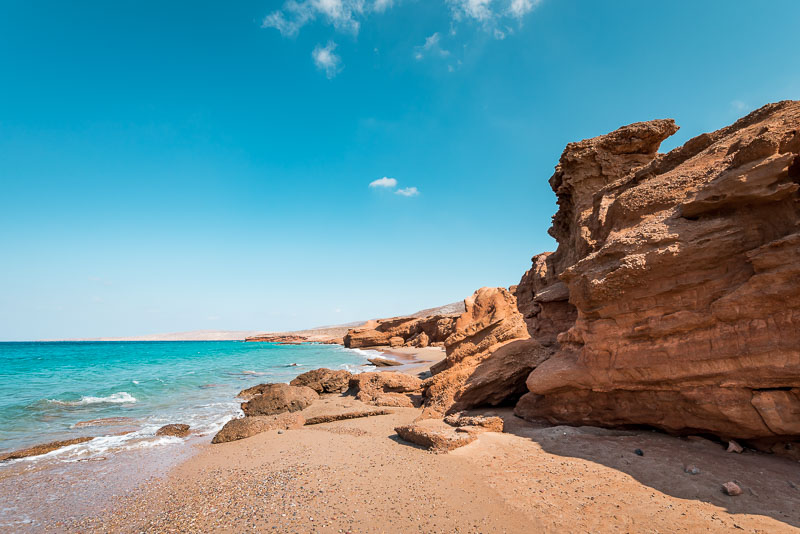
Beaches in Eastern Crete: If you’d rather skip the ruins, take a detour to the coast of Roussolakos and explore the region’s pristine swimming spots. More info here: Crete Beaches
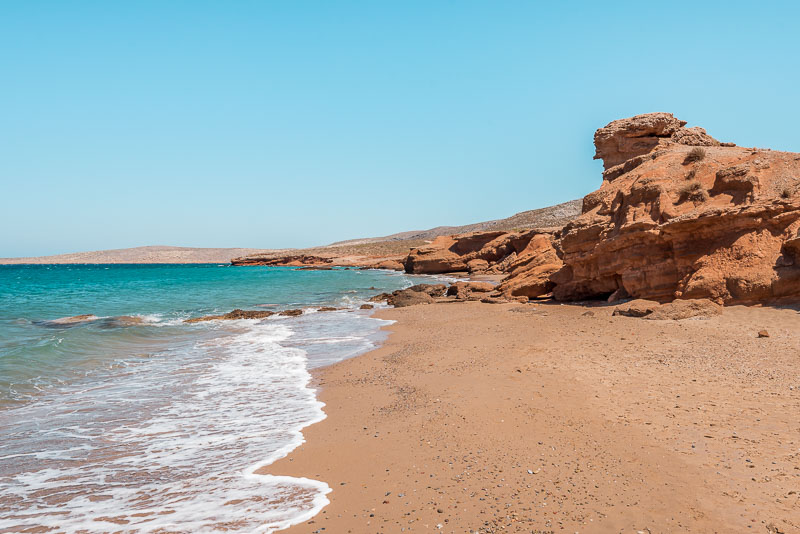
The region’s diverse geological materials have created colorful beaches here. Bontalaki Beach features rust-colored sand and red rocks, while Pilos Beach further east is golden brown.
More Sitia and Eastern Crete tips
Beautiful beaches around Sitia
Sitia Beach A long, organized city beach with brown sand and clear water. Several beach bars provide lounge chairs and umbrellas, some of which are free with a purchase.
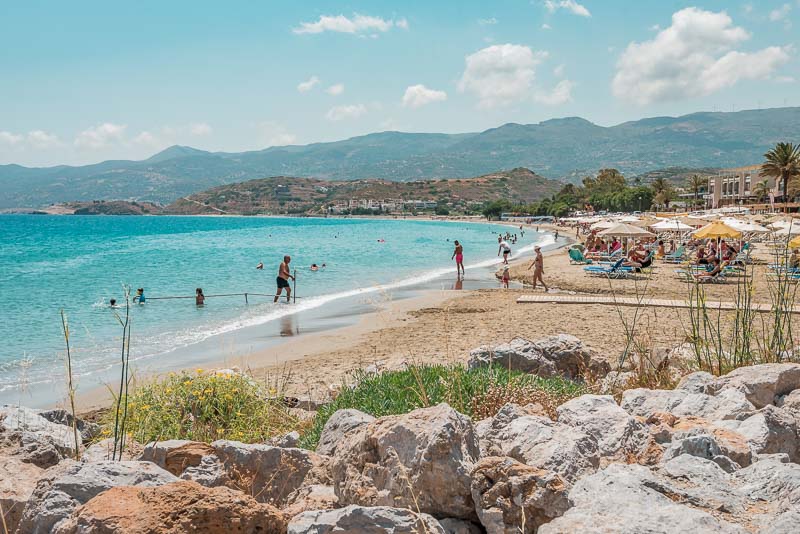
Paralia Erimoupolis A natural sand and pebble beach in the far northeast of Crete. The shoreline drops off steeply into the crystal-clear water. Also an ideal spot for snorkeling. You’ll need to bring your own beach umbrella and food.
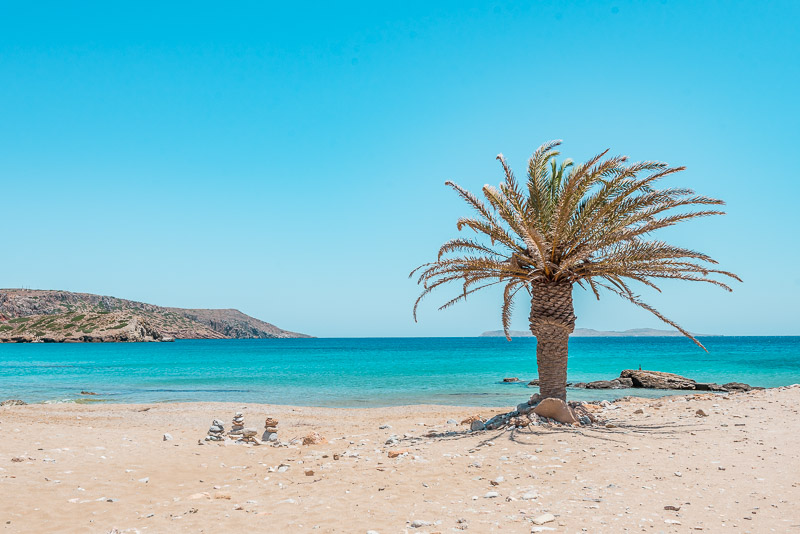
Itanos Beach A paradise-like swimming cove framed by striking cliffs. Access from the parking lot at Erimoupoli Beach via the historic site of Itanos. The sandy-pebble beach features several Cretan date palms. Entering the turquoise-blue sea is somewhat difficult due to stone slabs along the shoreline.
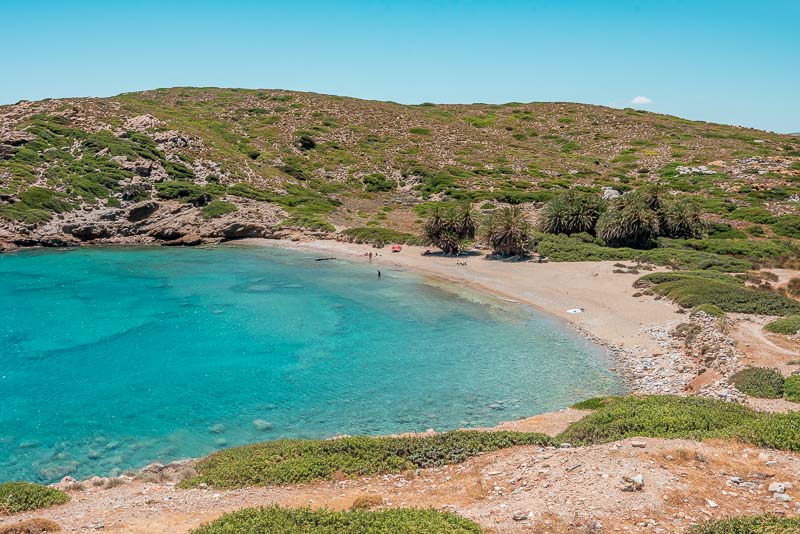
Vai Beach The most visited beach on the east coast, located at the end of a long valley lined with countless palm trees. Very crowded during the season. For details, see section #7 Palm Beach of Vai.
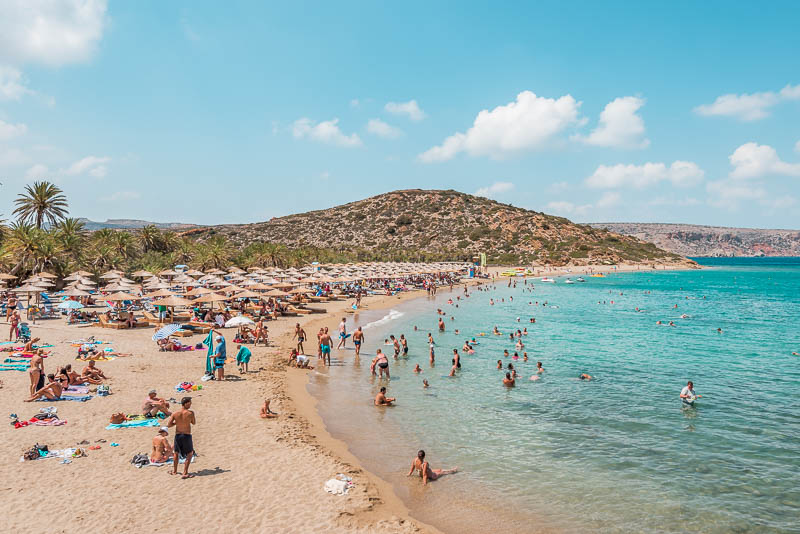
Kouremenos Beach A kilometer-long sandy-pebble beach near Palekastro. Thanks to its vast expanse, it remains uncrowded even in the height of summer. Showers and changing rooms are available, but there are no lounge chairs or umbrellas. Beach bars cater to hungry beachgoers. The shallow shoreline is also ideal for families.
Bontalaki Coves with reddish sandy beaches south of Paralia Chiona. The beach section with its curious rock formations is unspoiled and rarely crowded, even during peak season.
Recommendations for Restaurants & Cafés
In the small town of Sitia, you’ll find a wide selection of restaurants, cafés, and bars within a compact area. Some dining establishments are even open year-round. This makes Sitia an attractive destination even in the early and late seasons. And even in the hinterland, you’ll find at least one tavern in almost every town.
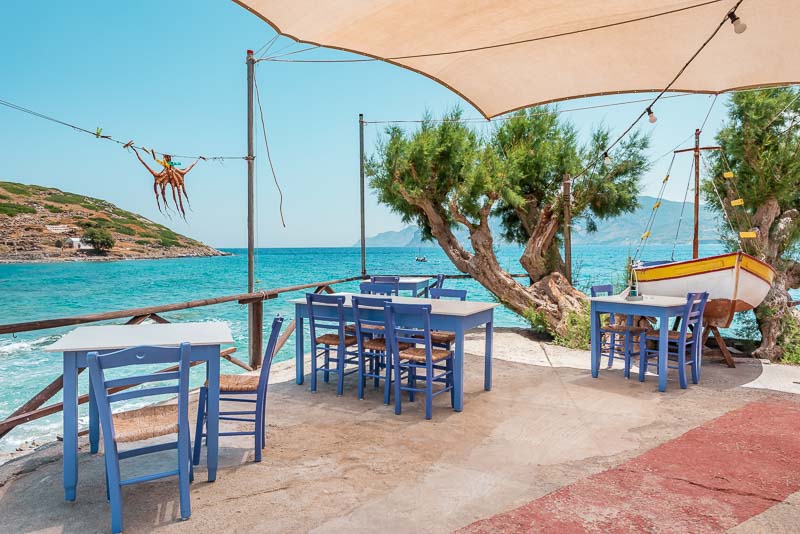
Aeroinon (Piskokefalo) – Family-run tavern on the village square. Cozy atmosphere, friendly hosts, and tasty home-style cooking at fair prices.
Glaros Beach Bar (Kouremenos) – Modern beach restaurant on the Kouremenos waterfront promenade with a view of Mount Kastri. Delicious food, cool drinks, and good coffee at slightly higher prices.
Inodion (Sitia) – Restaurant with a tasteful ambiance. Wide selection of typical Cretan dishes and island wines, as well as helpful staff.
Matsakakis (Sitia) – Cozy café with a large terrace right on Sitia’s waterfront promenade. They’re said to serve the best loukoumades (yeast dough balls) in eastern Crete. We, at least, thought they were delicious!
To Agistri (Agathia) – A rustic tavern in the hamlet of Agathia, not far from Palekastro, offering stunning views of the surrounding countryside. You can expect a warm, welcoming atmosphere, hearty food and friendly hosts.
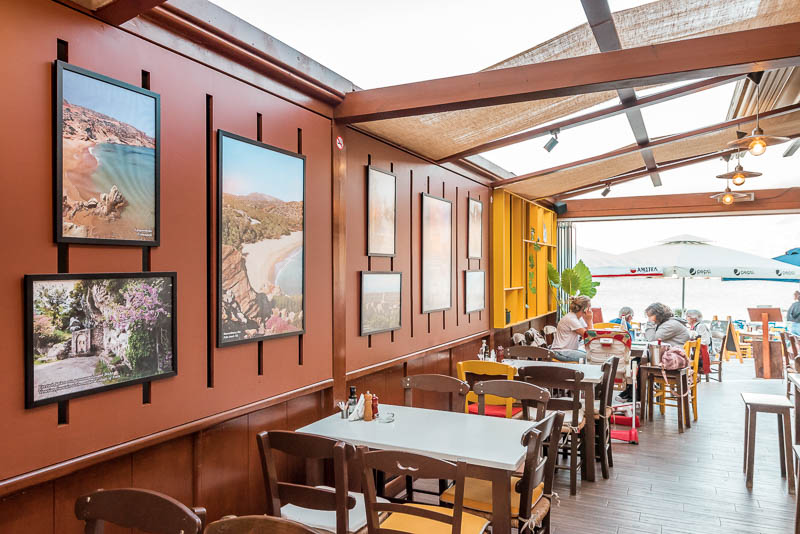
Tzivaeri (Sitia) – Rustic tavern on the waterfront promenade with a gallery of photos of Sitia inside. Greek cuisine at fair prices, very child-friendly staff.
Hotels in the Sitia Region
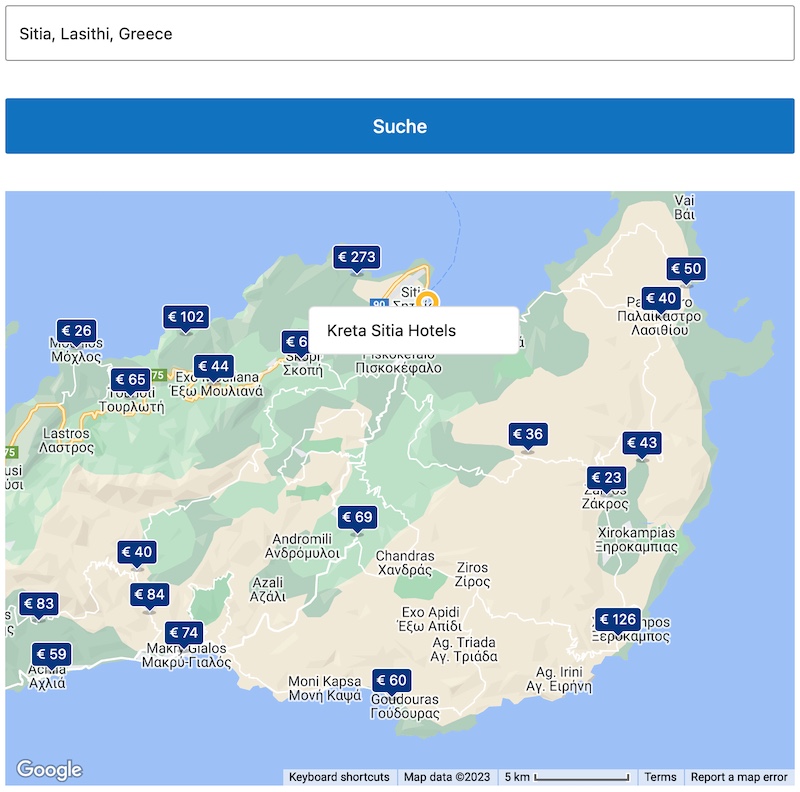
In eastern Crete, there are only a few large hotels, but all the more small family-run hotels, as well as beautiful villas and vacation rentals for a relaxing, personalized getaway. Sitia has something to offer for every budget. On the outskirts of town, there are even 3- and 4-star hotels for your Crete holiday.
→ You can view suitable accommodations and check prices via Booking.com*:
Accommodation Recommendations near Sitia
Acantha Villas, Mochlos
Two villas, each accommodating up to 6 people, located above Mochlos with a stunning view. Stylish furnishings, a beautiful garden area, and the option of a pool or sun terrace.
Bella Mare Sitia, Agia Fotia
Lovingly designed vacation rental with a pool for up to 4 people above the hamlet of Agia Fotia. Magnificent views of the Sitia coastline.
Downtown Sitia Apartment
Maria and Polydoros rent out two modern apartments in the heart of Sitia. Helpful hosts, fully equipped (including a washing machine), and a balcony.
➲ Book Downtown Sitia Apartment*
GM exclusive luxury SUITES & SPA, Sitia
Aparthotel opened in 2022 above the harbor. Modern room furnishings, suites with a whirlpool and ocean views.
➲ Book GM exclusive luxury Suites*
Liostasi Houses, Kouremenos
Well-maintained bungalow complex with a pool between Palekastro and Kouremenos. Friendly hostess, great views, and good amenities.
*Links to Booking.com
Getting to Sitia, Crete
This small town on the east coast of Crete has a national airport (JSH), which is not served by direct flights from Germany, Austria, or Switzerland, meaning a stopover in Athens is always required.
The best way to get there from Germany right now is a direct flight to Heraklion. You can find affordable flights to Crete and suitable flight connections to Sitia on the Skyscanner* portal:
➲ Search for flights with Skyscanner*
→ Traveling to Crete by ferry? This article provides all the necessary information: Ferries in Greece
Getting to Crete by ferry is only recommended for longer stays (over 4 weeks). During the season, the ferry company Anek Lines operates the route between Heraklion and Sitia several times a week. You can book ferries to Crete directly on the Ferryhopper* portal:
➲ Book a ferry with Ferryhopper*
Advertisement*
Rental Cars for the Sitia Region
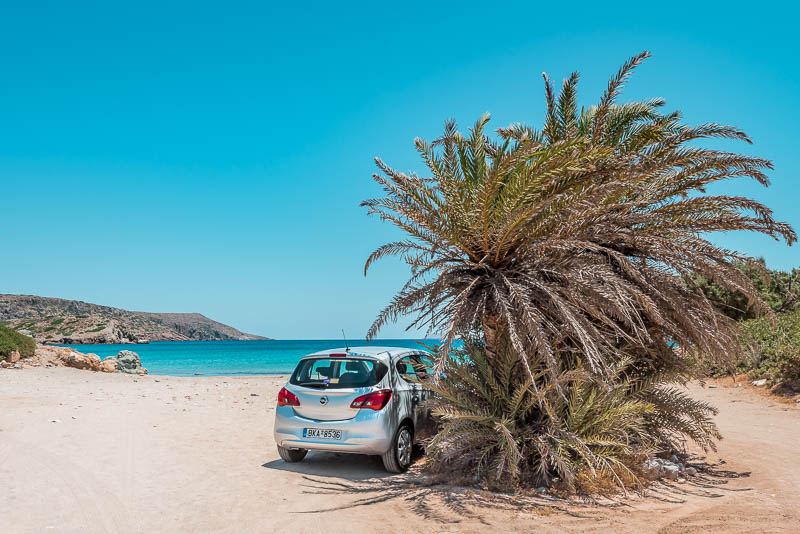
You can rent a car at Heraklion Airport (HER) and reach the coastal town of Sitia in about 2 hours (125 km). A car is essential for this isolated region of Crete. You can search for affordable car rentals for Sitia on Discover Cars*:
→ Find more posts and numerous Crete tips here:
*Support our Greece-Moments blog
This post contains affiliate links marked with an asterisk (*). If you book or purchase something through one of these links, we receive a small commission. The price remains the same for you. This helps us continue to provide high-quality content for free. Did you enjoy this post and want to say thank you? Then simply buy us the next Greek coffee ☕️ Go to the coffee fund
Save this post on Pinterest too!