
For many fans of Greece, western Crete is the most fascinating region of the island, and for us, too, this area is a true treasure trove. It is home to what are arguably the island’s most beautiful beaches, centuries-old monasteries, and wild, romantic gorges. With Chania, western Crete also boasts one of the most beautiful cities in the Mediterranean.
Anyone who has ever strolled through the narrow streets of Chania, paused by the turquoise-blue lagoon of Balos, or enjoyed the heavenly silence of the Akrotiri monasteries immediately understands why so many people return to western Crete time and again.
Tom & Ella

We’ll take you from the Venetian harbor in Chania, over the impressive White Mountains of Lefka Ori, and through the unspoiled, secluded villages of Sfakia, all the way to the famous pink beach of Elafonisi in the far southwest of the island.
Western Crete is worth a visit for every type of traveler, so beach lovers, culture buffs, and outdoor enthusiasts alike will find something to enjoy here. To truly explore everything, you’ll need several weeks. So take your time and plan a few overnight stays in the southwest or northwest of Crete right away.
Listing all the highlights of western Crete would go beyond the scope of this post. That’s why we’re sharing our personal favorite spots and the most beautiful sights of western Crete below:
- #1 Chania Old Town
- #2 Akrotiri Peninsula
- #3 Lefka Ori: Mountain Villages and Gorges
- #4 Lake Kournas
- #5 Rodopou Peninsula
- #6 Komolithi Rocks
- #7 Balos Lagoon
- #8 Falassarna Beach
- #9 Elafonisi Region
- #10 Paleochora and Sougia
- #11 Samaria Gorge
- #12 Sfakia and Loutro
- More tips for western Crete
- FAQs about Western Crete
🏖️ Dream beaches & hidden bays
🍽️ Restaurants, tavernas & cafés
🏛️ Must-see highlights & ancient sites
🗺️ Worthwhile spots & insider tips
🚘 Practical info like rentals & parking
♾️ Lifetime access & updates
#1 Chania Old Town
Hardly any other place in Crete enchants its visitors as much as Chania. The island’s second-largest city, with its picturesque old town, has become a must-see on any Crete vacation. The area around today’s Old Town was already settled 5,000 years ago. The Venetians and Ottomans shaped the Old Town’s current appearance with their distinctive architectural styles, so strolling through the narrow streets feels like stepping back in time.


For a trip to Chania, it’s best to plan a full day. Chania’s traffic-calmed city center may be compact, but it has plenty to offer. You can easily spend one to two hours just at the Venetian harbor with its striking lighthouse. In the maze of alleys, interesting shops and plenty of great photo opportunities await you. In the evening, you can sit in a tavern by the sea and watch the hustle and bustle.
→ All tips and the best highlights of Chania can be found in this post: Chania Crete
#2 Akrotiri Peninsula
Just a few minutes’ drive east of Chania lies one of Crete’s most diverse peninsulas. The Akrotiri Peninsula offers stunning monasteries from the Venetian era, a famous film location, as well as spectacular bays and some of the most beautiful beaches in western Crete. You can easily plan a whole day for this olive-tree-covered peninsula and won’t be disappointed. By the way, Chania Airport is also located here.
Agia Triada Monastery
The first stop on the peninsula is the Moni Agia Triada Tzagaroli Monastery. Built in the 17th century in the Venetian Renaissance style, this fortress-like structure is located north of the airport. You reach the picturesque monastery via a cypress-lined avenue. The terracotta-colored buildings and the lovingly landscaped courtyard make the complex a photogenic gem. Around the monastery, the monks grow organic wine and olives, which are available in the monastery shop.

Gouverneto Monastery and Hike to Katholiko
Just 12 minutes further north lies the equally impressive Gouverneto Monastery. It was built in the 16th century on a mountain plateau because the seaside Katholiko Monastery was constantly exposed to pirate attacks. The complex comprises 50 monks’ cells and a magnificent church dedicated to the Virgin Mary, featuring some of the oldest frescoes in Crete. Even those who aren’t particularly interested in culture shouldn’t turn back here, as one of the most beautiful hikes in western Crete begins right from the monastery grounds.

The hike to Katholiko Bay takes about an hour. The stone path leads past the Arkoudospilio Bear Cave and then steeply down into the valley. Halfway there, you’ll reach what is likely the oldest monastery in Crete, Spilaio Katholiko. The Gothic façade was spectacularly carved into the rock, and the massive arched bridge in the valley remains well-preserved to this day. Upon reaching the emerald-green sea, you might feel a bit disappointed, as swimming is officially prohibited here.

In the Footsteps of Zorba at Gold Coast Beach
For Greece enthusiasts, Stavros in the northwest of the peninsula is a must-see. The deep, circular bay with Mount Vardies in the background was the filming location for the unforgettable final scene of the movie Alexis Zorbas (1964), in which Anthony Quinn dances the sirtaki. The golden sandy beach below the mountain invites you to take a dip, and the natural sections at the end of the bay are a better alternative to the unfortunately increasingly expensive sun loungers at Zorba’s Beach.

Seitan Limania
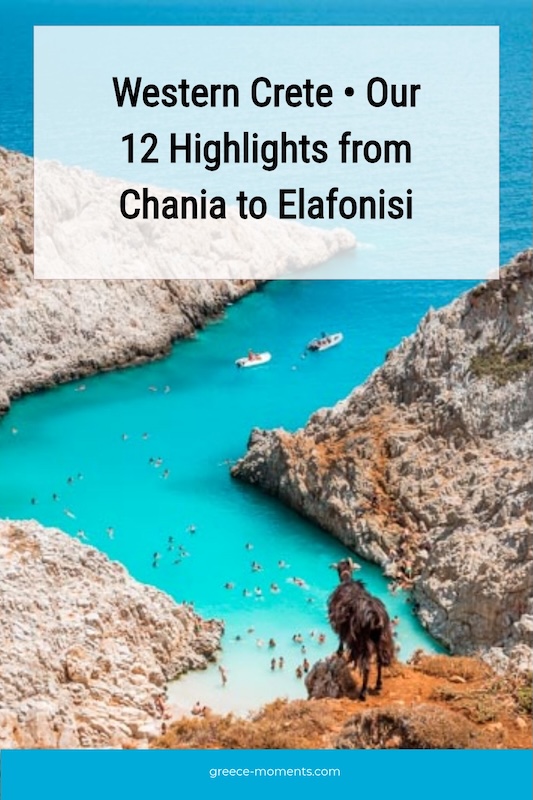
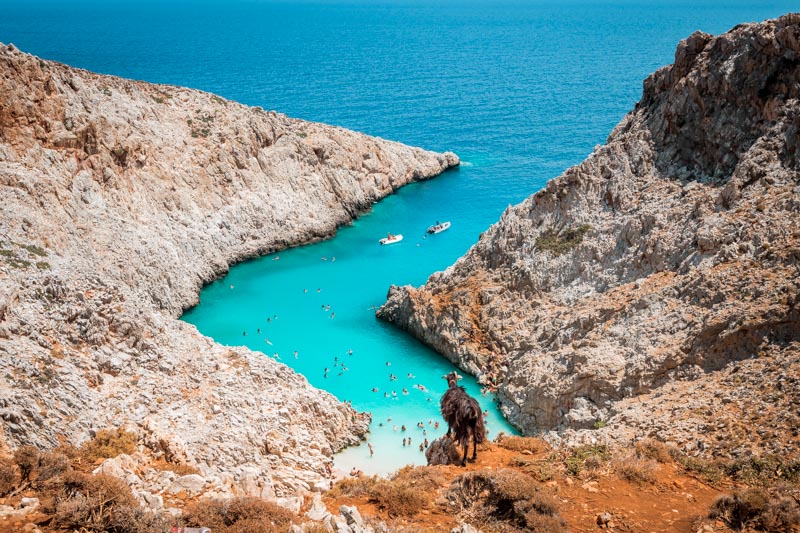
Seitan Limania is located in the northeast of the peninsula and is one of the most photographed bays in western Crete. A visit to the so-called “Devil’s Harbor” is especially worthwhile during the off-season. The strikingly curved bay glows a gorgeous turquoise blue at midday. Save yourself the trip down, take a photo from the viewpoint, and enjoy the view. Since there’s hardly any space on the small beach, the bay is hopelessly overcrowded during the summer months.
#3 Lefka Ori: Mountain Villages and Gorges
If you really want to get to know western Crete, you can’t miss the White Mountains. The Lefka Ori form the backbone of western Crete and offer a landscape that is fundamentally different from the coast, so you inevitably wonder if you’re still on one of the Greek islands. On peaks as high as 2,453 m, such as Pachnes, snow remains well into May. In winter, the mountain villages truly have a cozy, rustic atmosphere!

Lake Agia
Just ten kilometers from Chania, nestled beneath the mighty white mountains, lies Lake Agia. The only reservoir in western Crete is fed by numerous spring-fed rivers. It was constructed in the 1920s for hydroelectric power generation. Today, the lake is no longer used for energy production; instead, it has become an important recreational area for the people of Chania. Right on the lake, the Enasma Cafe with its tropical garden is the perfect place to relax.

With its 45-hectare water surface and lush green shoreline, it is also an important breeding and refuge area for migratory birds. During a walk along the shore, you can also spot turtles, geese, and ducks. A scenic path leads along the former dam wall and further into a fairytale-like plane tree forest. During the week, it is pleasantly quiet here; on Sundays, many locals from the region make their way here.

Botanical Park & Gardens of Crete
If you follow the road from Agia through Fournes into the mountains, you’ll reach the Botanical Garden of Crete. Spanning over 20 hectares, a green oasis awaits you with 150 species of ornamental plants and fruit trees, medicinal herbs, a small lake, and an animal enclosure. You should plan at least two hours for the tour. The park’s on-site restaurant offers excellent quality and a magnificent view of the landscape. More info at botanical-park
✓ Full coverage & unlimited mileage included
✓ Free cancellation until 24h before pickup
✓ Best price guarantee via Discover Cars
Mountain villages and the Theriso Gorge
The route leads from the Botanical Park through the mountain villages of Meskla, Zourva, and Theriso, situated at the foot of the White Mountains. In Zourva, located at 570 meters, two traditional taverns with magnificent panoramic terraces invite you to take a break. Bus tours carrying Greek tourists arrive almost daily, as the tranquil village of Theriso commemorates the resistance fighter and politician Eleftherios Venizelos, who had his headquarters here in 1905. Two museums are dedicated to the Cretan struggle for freedom.
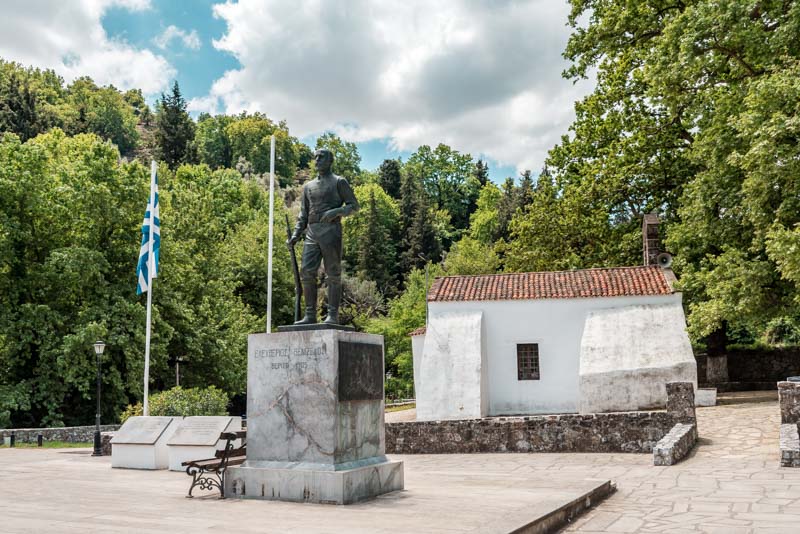
The picturesque Theriso Gorge stretches from Theriso almost to the outskirts of Chania. It is one of the few gorges in Crete that can be driven through for the most part. The lushly vegetated rock walls rise almost vertically along the roadside. For a delicious meal, we recommend stopping at the Tzaneris & Archontissa tavern in Drakona, eight kilometers away. The food is incredibly tasty and the hospitality is unbeatable.

#4 Lake Kournas
Just ten minutes south of the popular resort town of Georgioupoli lies Lake Kournas, Crete’s largest natural freshwater lake, which shimmers in a variety of shades of blue and green. You can explore the approximately one-kilometer-long body of water by pedal boat. The best view of the natural scenery is from one of the taverns above the lake, such as Taverna Café Kavalos or Athitis. A visit on Sundays is not recommended, as many locals from Chania join the tourists.

Visit to Apokoronas
If you combine a visit to Lake Kournas with a tour through the picturesque villages of Apokoronas, you’ll get an authentic glimpse of rural western Crete, far away from the tourist crowds. The most famous village in Apokoronas is Vrises, a village of 800 residents located directly below the E75 highway. Vrises is crisscrossed by three rivers, and on a walk you’ll see small waterfalls and centuries-old plane trees. After strolling around, you can relax at Café To Ntoukiani.

But the small villages of Gavalochori, Vamos, Xirosterni, and Kefalas are also worth a stop. In almost every hamlet, there’s a café or tavern where you can take a break. In Xirosterni, you can sample delicious local cheese and the Cretan raki tsikoudia. Adventure seekers will even find a German bunker from World War II in the north of Apokoronas, near Kokkino Chorio. It served as an observation post, and its floors are connected in a labyrinthine fashion. Enter at your own risk!

#5 Rodopou Peninsula
The wild Rodopou Peninsula stretches far out into the sea north of the popular resort town of Kolymvari. Away from the tourist centers in the south, the region is sparsely populated and accessible only via rough gravel roads. The barren, almost deserted landscape with its imposing cliffs offers a fascinating natural backdrop and secluded dream beaches like Paralia Menies. For hikers and mountain bikers, even the northernmost point of Crete, Cape Spada, is accessible.
Gonia Odigitria Monastery
At the entrance to the peninsula lies the 17th-century Gonia Odigitria Monastery. The typical Venetian building features a large courtyard with floor mosaics, at the center of which stands the main church with its striking bell tower. A terrace behind the church offers a beautiful view of the sea. For religious visitors, the museum within the monastery walls, with its rare icons, is the main attraction. Gonia Odigitria is open daily; admission costs €3.

The village of Afrata marks the end of the section of the Rodopou Peninsula accessible by regular car. Beyond that, only endless gravel roads lead to the northern tip. The taverns on Afrata’s village square offer delicious food and a magnificent view all the way to the coast. If you’d like to go for a swim, head to nearby Afrata Beach. As an alternative to swimming, check out Ravdoucha Beach on the western side of the peninsula, it’s a real hidden gem in western Crete!

Visiting Vouves
In the small hamlet of Ano Vouves stands the legendary olive tree Elia Vouvon, a natural monument with a curved, hollow trunk and over 2,000 years of history. It is considered one of the oldest olive trees in Europe and is worth a stop just for its mighty trunk. A small olive museum with old millstones provides information about the history of this “liquid gold,” and at the Kafenion Vouves, you can soak up the atmosphere over a cup of Greek coffee.

Just a twelve-minute drive from the giant tree, near Zounaki, lies the Cretan Brewery. Since 2007, the Giannakis family has been producing an unfiltered beer here called Charma, which is available exclusively on tap. The covered terrace offers a beer garden atmosphere that is rather atypical for Crete. Hearty Greek snacks are served, and you can choose from lager, pale ale, dark beer, and seasonal varieties. So if you’re in the mood for a cold beer after a dose of culture and nature, this is the perfect spot.

#6 Komolithi Rocks
About 15 minutes inland from Kissamos, near Potamida in the Tyflos River valley, lie the bizarre clay cliffs of Komolithi. They might not be everyone’s cup of tea, but we were there alone at the time, found the 15-meter-high rocks quite impressive, and were able to take some great photos. Formed by erosion, they rise like pyramids from the lush green landscape. The best atmospheric photos are taken in the evening light, when the sun casts a reddish glow over the hills.

The Agia Sofia Cave
If you continue south along the road, you’ll pass through the village of Topolia. There are a few good taverns there, as well as the Ap’to Chorio bakery, which offers delicious snacks. Two kilometers outside the village, above the Topolia Gorge, is Agia Sofia Cave situated. Inside the massive natural vault, you’ll find stalagmites several meters high and a small chapel. The stalactite cave was already used for ritual purposes in the Neolithic era, and even today it remains a place of pilgrimage for Greeks.

Inside the Cave of God’s Wisdom, as it is also known, caution is advised, as the floor can sometimes be very slippery due to dripping water. From a plateau at the cave entrance, you can enjoy a magnificent view of the wild and romantic Topolia Gorge. If the thermals are right, you can easily spot griffon vultures circling in the air from here, the only vulture species found on Crete. A visit is recommended early in the morning, as the climb up countless steps is quite strenuous.

#7 Balos Lagoon
Balos Lagoon is perhaps the most beautiful bay in Crete and ranks among the absolute top attractions in western Crete. The lagoon is located in the far northwest on the Gramvousa Peninsula. The turquoise waters surrounding the offshore island of Tigani, along with the rugged rock formations in the background, create a surreal backdrop. Balos is accessible by boat or by car via a gravel road. You can book boat tours to Balos through GetYourGuide*:

Balos gets extremely crowded during peak season. If you want to enjoy the lagoon in relative peace, you should set out as early as possible and ideally arrive before 10 a.m. We still remember our first visit in May very well. Around 9:30 a.m., it was quiet, and the first view of the bay from above was simply breathtaking. If you’re planning a full day, you can visit Balos in the morning and spend the afternoon on the Falassarna coast.
→ You can find all the details for your trip to Balos in this post: Balos Crete
#8 Falassarna Beach
As a quieter alternative to Balos, Falassarna Beach is a great option, located just about 20 kilometers southwest. This long, dreamy beach is one of the most beautiful beaches in western Crete and offers crystal-clear water and fine golden sand. Thanks to its expansive size, beachgoers are well-spaced out, and you’ll find natural, unspoiled spots among the organized sections with lounge chairs and umbrellas. For families with small children, the northern part is recommended, as it features areas with very shallow water.
→ You can find the best activities for kids, as well as family-friendly beaches and hotels, here: Crete with kids

In the south, there are still a few stone-framed beaches, such as Tiny Pink Sand Beach, which have partially pink sand like in Elafonisi. You’ll get the best view of Falasarna from the hamlet of Kavousi, located above the coast. Don’t let the region’s greenhouses bother you. They in no way detract from Falasarna’s beauty. After all, we want fresh vegetables from Crete on our plates while on vacation. 🙂

Side Trip to Polyrrhenia
In the late afternoon, it’s worth taking a detour to Polyrrhenia (Polirrinia), which is about 40 minutes from Falassarna yet far removed from the tourist crowds. The tranquil alleys of the little village invite you to take a short stroll. The highlight, however, is the spectacular view from the ruins of the ancient Acropolis of Polyrrhenia at an altitude of 320 meters. You can then round off the evening at the Akropolis Restaurant in an idyllic atmosphere.

#9 Elafonisi Region
Elafonisi is located in the far southwest of Crete, forming a paradisiacal lagoon landscape with the island of the same name and the beach. What makes this place special are the tiny pieces of coral and seashells that give the sand at Elafonisi Beach a creamy pink hue. The entire lagoon is designated as a nature reserve. After the Palace of Knossos, Elafonisi is one of the most popular destinations in all of Crete, so you should set out as early as possible, as crowds flock here during the season.
→ You can find all the information you need for a trip to Elafonisi in this post: Elafonisi Crete
Chrysoskalitissa Monastery
On the way to Elafonisi, it’s worth making a stop at Chrysoskalitissa Monastery in the hamlet of Agios Pandeleimon. The picturesque 17th-century monastery complex sits impressively atop a rock, about 35 meters above the sea, and offers a magnificent view from the terrace. During your visit, you can explore the monastery church, a small museum, and a former school. Below the monastery is a small souvenir shop.

The monastery’s name translates to “Golden Step,” and the site is steeped in a small legend. Those who are pure and without sin are said to see a golden step on the staircase leading up to the monastery. We’ve looked very closely during several visits, and Tom is certain that it must be the second-to-last step, which is now covered in natural stone. The monastery is open daily except Tuesdays starting at 9 a.m. An admission fee is charged at the entrance.
🗺️ 10 road trip routes with maps
🏖️ Beautiful beaches & swimming spots
🏛️ All top sights & attractions
🤫 Unpublished insider tips
🍽️ Accommodation, tavernas & cafés
White Lake and Voulolimni
North of Elafonisi, not far from the monastery, lies Aspri Limni (White Lake), a great spot for swimming and relaxing. The very shallow, almost circular basin owes its name to its milky light-blue color. Near the shore, you can even find some of the native date palms, which are otherwise only found in Vai and Preveli. Nearby is also Voulolimni, a circular sinkhole that shimmers in an incredible aquamarine hue and is a little-known photo spot.

#10 Paleochora and Sougia
Paleochora is a charming small town in southern Crete, located about 45 minutes from Elafonisi. Even in summer, the numerous beaches here aren’t overcrowded. For many longtime Crete enthusiasts, Paleochora is one of the last places on the island to have resisted mass tourism. Here, you can still feel the tranquil soul of Crete, free from hustle and bustle or artificiality. You can easily spend a week’s vacation in the town itself, as there’s plenty to discover in the region.
→ Find out here what there is to discover in and around Paleochora: Paleochora Crete
Lissos Gorge and Sougia
If you’re in the far southwest of Crete, it’s also worth stopping in the coastal village of Sougia. Time seems to have stood still there. The village of 140 residents only comes alive in the early morning and late afternoon, when hikers take the ferry to the Samaria Gorge or return from there. The long village beach lined with tamarisk trees and the good taverns (tip: To Tzitziki sto Almiriki) invite you to enjoy a relaxing day at the beach.

From Sougia, hiking enthusiasts can embark on the hike through the Lissos Gorge (2.5 hours round trip). For us personally, this hike was one of the most beautiful in Crete. After about 15 minutes, you reach an impressive overhanging rock face. Shortly thereafter, the trail climbs steeply up to a open high plateau, from which a majestic view of the coastal plain opens up. In the Lissos Valley lie the ruins of the ancient city of Lissos, including a temple of Asclepius and a theater.

#11 Samaria Gorge
The Samaria Gorge is the Mecca for hikers in western Crete. The popular hiking trail stretches over 16 kilometers from the White Mountains to the Libyan Sea and passes through one of the longest gorges in Europe. During peak season, up to 4,000 people make the trek through the gorge at the same time. Those who set out as early as 7 a.m. avoid having to walk in single file with thousands of others. Guided tours of the Samaria Gorge can be booked via GetYourGuide*:
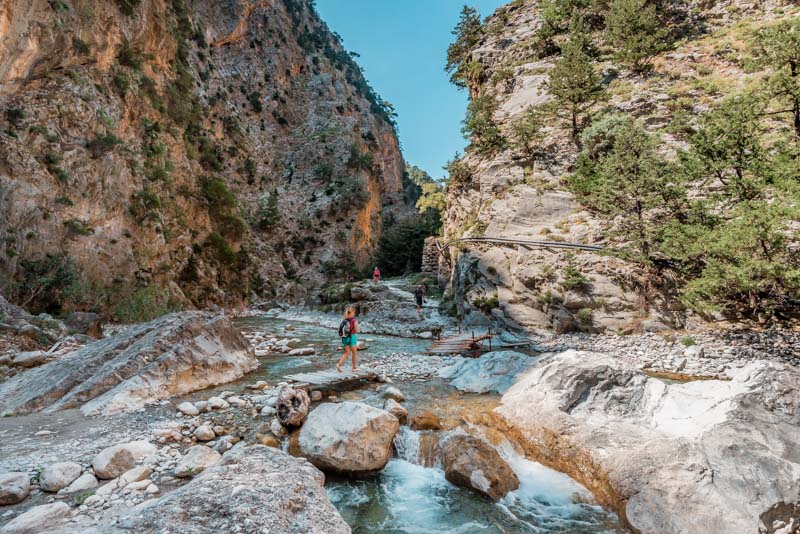
If you don’t want to hike the entire trail, you can take the ferry from Sougia or Chora Sfakion to Agia Roumeli, the end of the gorge. From there, you walk one to two kilometers against the main flow of hikers, then head back to the village for a drink or a light snack. That’s what we did with our then-two-year-old daughter—it was a wonderful experience we always look back on fondly.
→ Check out this post for the best tips for your Samaria hike: Samaria Gorge
#12 Sfakia and Loutro
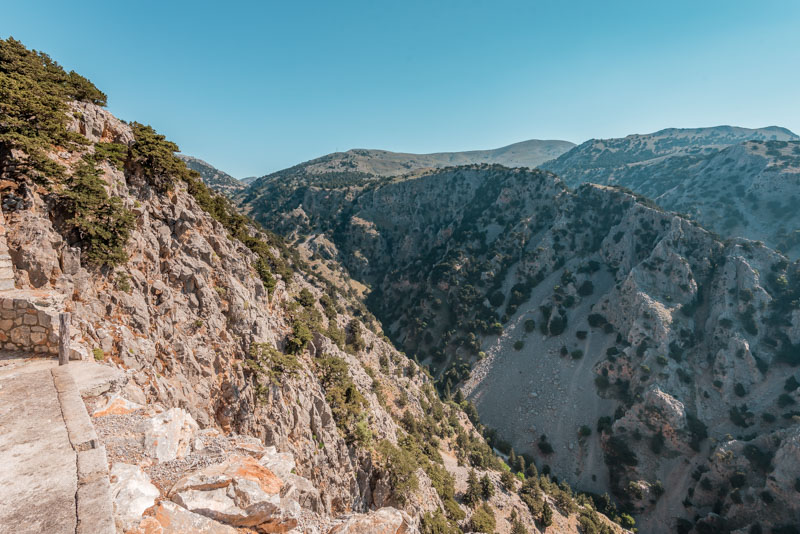
In the wild south of Crete, the foothills of the White Mountains plunge deep into the dark sea, with secluded gorges and valleys opening up in between. The seclusion of the few mountain villages makes time move differently here. Today, Sfakia is a municipality, a region, and a cultural treasure all at once, and it’s one of the most impressive areas of western Crete. For longtime lovers of Crete, Sfakia is the epitome of romantic seclusion.

Many vacationers explore part of Sfakia via the Omalos Plain and the Samaria Gorge. Another option is to drive south from Rethymno, shortly after Georgioupoli, toward Askifou into the heart of Sfakia. A popular destination is the Imbros Gorge, which is about seven kilometers long, moderately difficult, and open year-round. From there, the route continues to the coastal town of Chora Sfakion, the region’s main town. It is picturesquely situated by the sea and surrounded by barren, steep cliffs.
→ East of Chora Sfakion you will find Frangokastello and other highlights. Check out our separate post for all the details: Southern Crete
Visiting Loutro
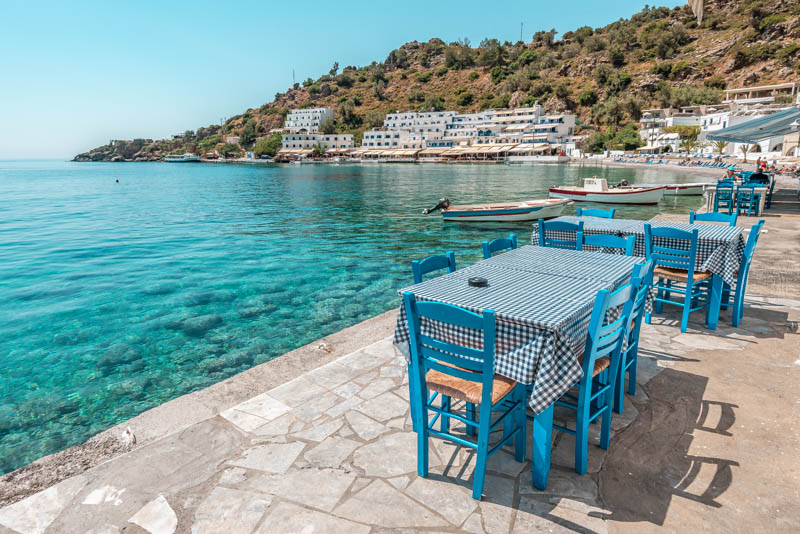
Ferries depart daily from Chora Sfakion to Loutro, one of Crete’s last coastal villages, accessible only on foot or by boat. The village at the foot of the White Mountains, with its sugar-cube houses, has an almost Cycladic feel and is a true postcard scene of western Crete. Only a handful of families live in Loutro during the winter. In summer, however, business booms with day-trippers and hiking vacationers, as Loutro is a popular stopover on the Samaria hikes.

Those who stop by just for lunch might be disappointed, as the quality of many restaurants has declined in recent years and the town has shifted heavily toward fast-paced day tourism. That’s exactly what happened to us; we spent two hours in Loutro, and aside from taking beautiful photos and enjoying a drink on the promenade, nothing really appealed to us. There’s a great view of the bay from Loutro Kastro, located above the village, as well as at the southern edge of town.
More tips for western Crete
The most beautiful spots in western Crete are off the beaten path and hard to explore without a rental car. If you really want to get to know the region, you’ll need to plan for one or two overnight stays. We recommend two to three weeks for a relaxed road trip. Three to four days are enough to see the highlights on a quick tour, though without any hikes. To make sure your vacation in Crete is an unforgettable experience, we’ve put together some helpful links* for you.
→ Find accommodations in Crete here: Booking.com*
→ Book a rental car for Crete here: Check24*
→ Excursions and tours in Crete: GetYourGuide*
→ Find cheap flights to Crete here: Skyscanner*

→ You can find more useful articles and numerous tips for Crete at:
- Crete Attractions – All Must-Sees in Crete
- Crete Travel Tips – From Getting There to Accommodations
- Crete Highlights – Our 20 Most Beautiful Places
- Crete Holiday Resorts – Where is it worth vacationing?
- Best Crete Hotels – The Best Hotels on the Island
- Crete Holiday – Our Experiences in Crete
FAQs about Western Crete
Is a rental car absolutely necessary for Western Crete?
Yes, absolutely. Many of the most beautiful places, such as Balos, Elafonisi, the Komolithi Cliffs, or the remote mountain villages of Sfakia, are either inaccessible by bus or very difficult to reach. A small car is perfectly sufficient; for gravel roads like the one leading to Balos, increased ground clearance is an advantage.
When is the best time to visit Western Crete?
May, June, September, and October are ideal. The temperatures are pleasant, the sea is warm enough for swimming, and Balos and Elafonisi are significantly less crowded than in July and August. In the spring, the entire hilly landscape is in bloom, and migratory birds are active at Lake Kournas.
How crowded is Balos really?
Very crowded in July and August. Ferries from Kissamos bring hundreds of visitors to the lagoon every day, and the hiking trail from above is equally busy. If you want to enjoy the lagoon in peace, set out before 9 a.m. or arrive after 5 p.m., when most day-trippers have already left.
Is it possible to visit Elafonisi and Balos in one day?
It’s possible, but exhausting. The distance between the two beaches is about 100 kilometers by car and takes roughly two hours. We recommend visiting on two separate days to truly enjoy both places—especially since it’s best to set out early for Balos.
Is the hike through the Samaria Gorge worth it?
Yes, definitely—but start early. If you start at 7 a.m., you’ll have the most spectacular sections largely to yourself before the busloads of tourists arrive. If you don’t want to walk the entire 16 kilometers, take the ferry to Agia Roumeli and explore the gorge from there for a bit in the opposite direction of the main trail.
How much time should you plan for western Crete?
At least a week, preferably ten days. If you want to explore Chania, the Akrotiri Peninsula, Balos, Elafonisi, the Samaria Gorge, and Sfakia at a leisurely pace, you’ll need time. Add to that the spontaneous stops at secluded coves and quaint mountain villages that make western Crete so special.
Where is the best place to stay in western Crete?
Chania is the most convenient base with the widest selection. For trips to Sfakia and Loutro, a location in the Chora Sfakion area is recommended. If you want to visit Elafonisi without the morning rush, it’s best to stay in Paleochora—then you’ll be right at home in the most beautiful corner of the southwest.
*Support our Greece-Moments blog
This post contains affiliate links marked with an asterisk (*). If you book or buy something through one of these links, we receive a small commission. The price remains the same for you. This helps us continue to provide high-quality content for free. Did you enjoy this post and want to say thank you? Then simply buy us the next Greek coffee ☕️ Go to the coffee fund
Save this post on Pinterest too!