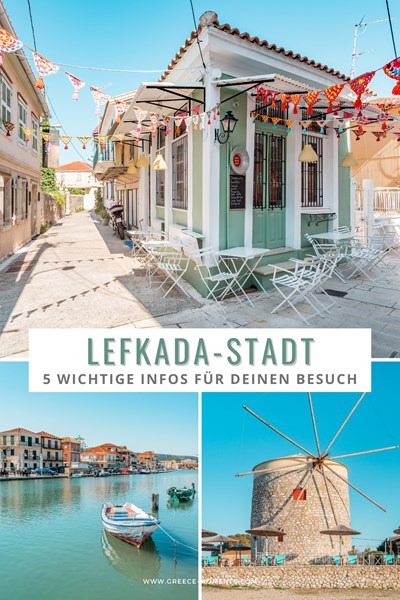

Lefkada in the Ionian Sea has become one of the most popular islands in Greece. The island’s capital in the north, colloquially known as Lefkada Town, invites you to take a stroll and could easily be dubbed the Little Havana of Greece due to its unusual architecture – but more on that later.
Although Lefkada does not have its own international airport, the town is easily accessible via a floating bridge – a rarity among the Greek islands. This ease of access attracts independent travellers from all over Europe, camping enthusiasts and mainland Greeks alike.
In the north of the island, right after crossing the Lefkas Channel, you are immediately greeted by the compact but charming capital of Lefkada, which is well worth a detour even for a day trip. In this article, you will find out what there is to discover in this town of just under 8,000 inhabitants.
🏖️ Dream beaches & hidden bays
🍽️ Restaurants, tavernas & cafés
🏛️ Must-see highlights & ancient sites
🗺️ Worthwhile spots & insider tips
🚘 Practical info like rentals & parking
♾️ Lifetime access & updates
#1 Walking tour of Lefkada Town
The island of Lefkada looks back on a long and eventful history – the Ottoman Empire, the Venetian Republic and even the United Kingdom in the 19th century have all left their mark as occupiers, significantly influencing the appearance of the island’s capital.
Many of the churches and buildings in Lefkada Town date back to the Venetian period and are typical of the Ionian Islands, much like those on Corfu and Zakynthos. However, a severe earthquake hit Lefkada on 22 April 1948 and destroyed large parts of the old town. Reconstruction was long delayed due to a lack of financial resources.
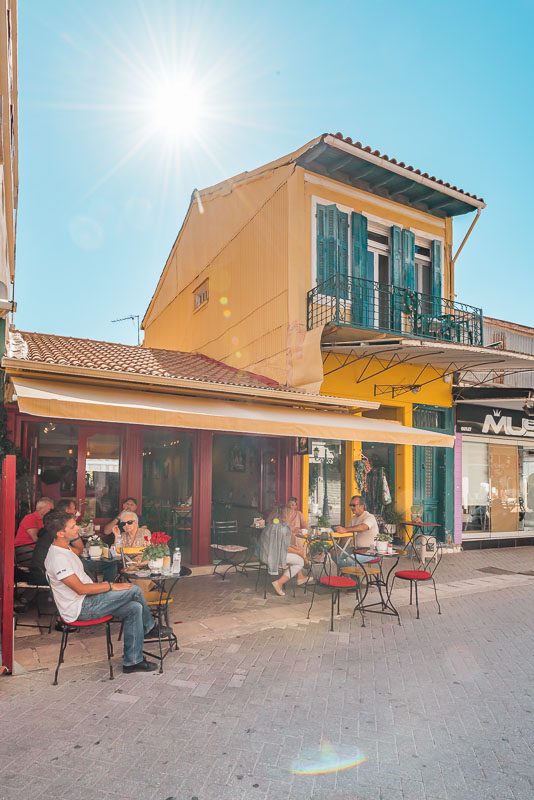
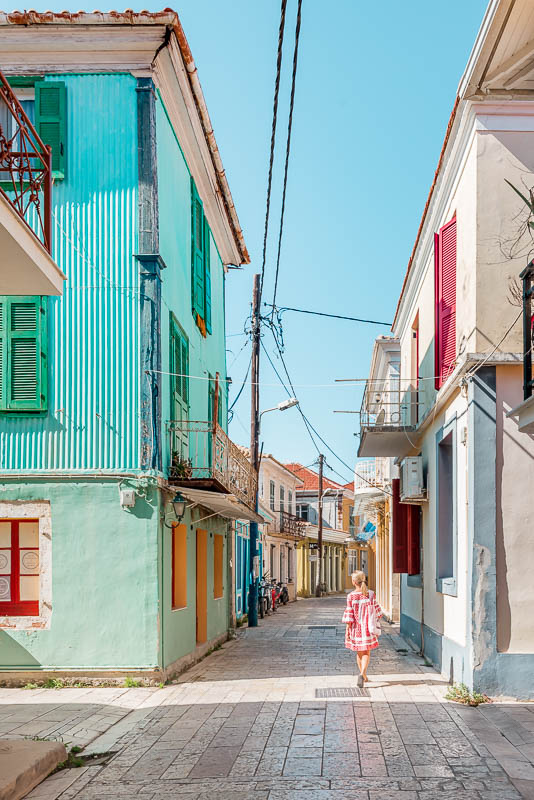
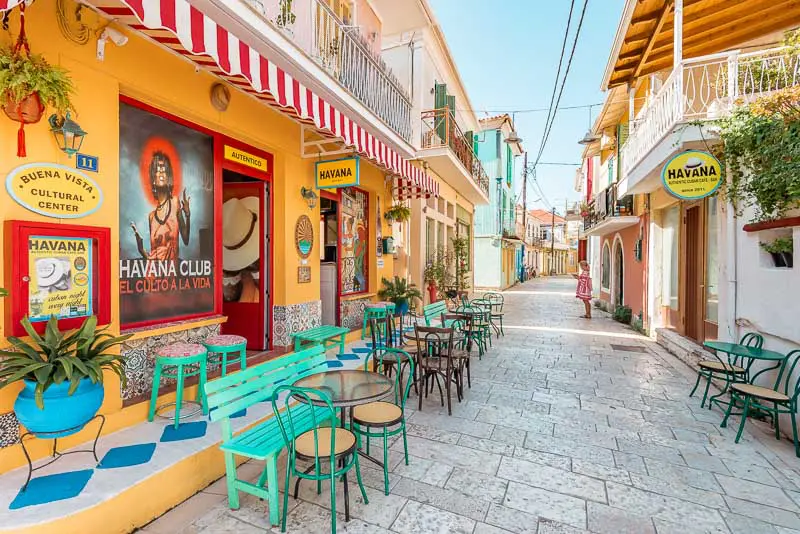
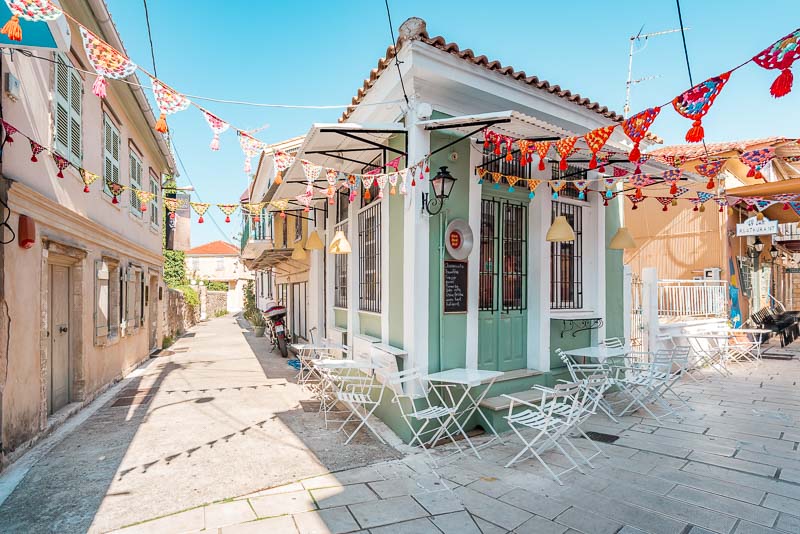
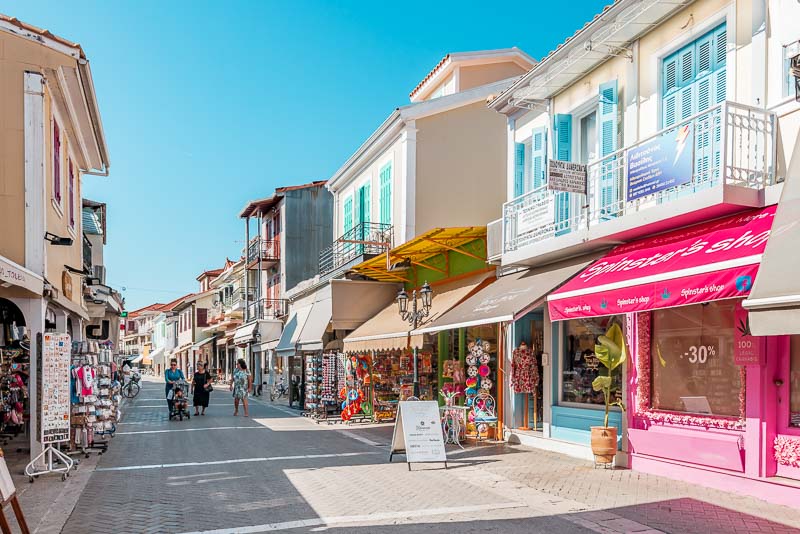
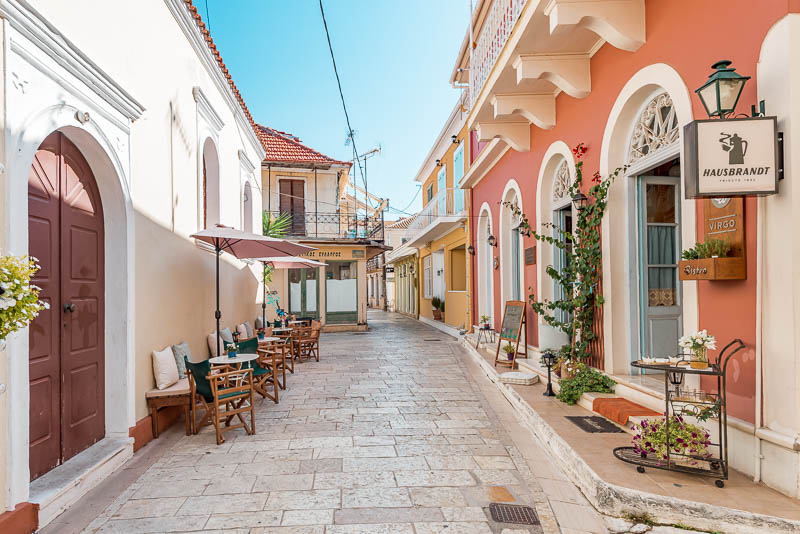
The numerous corrugated iron façades, reminiscent of the Caribbean, and modern metal bell towers standing next to old stone churches are particularly striking. Today, this small town of 8,000 inhabitants presents a colourful picture: façades are painted in bright tones, wide boulevards define the streetscape, and there is somehow a hint of Cuba in the air.
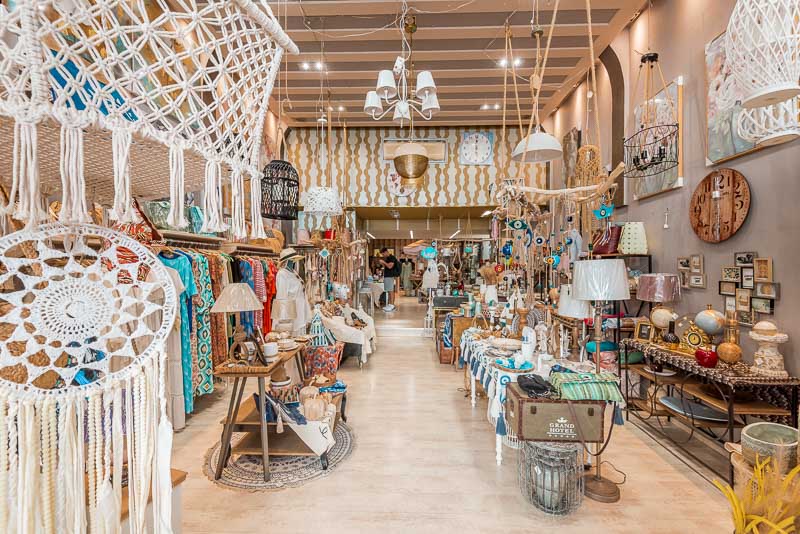
The compact town centre is largely pedestrianised, with quirky shops, boutiques, souvenir outlets and countless grocery stores, tavernas and cafés inviting you to linger. Nevertheless, you never get the feeling that everything revolves around tourists here; Lefkada Town very much remains a place for locals.
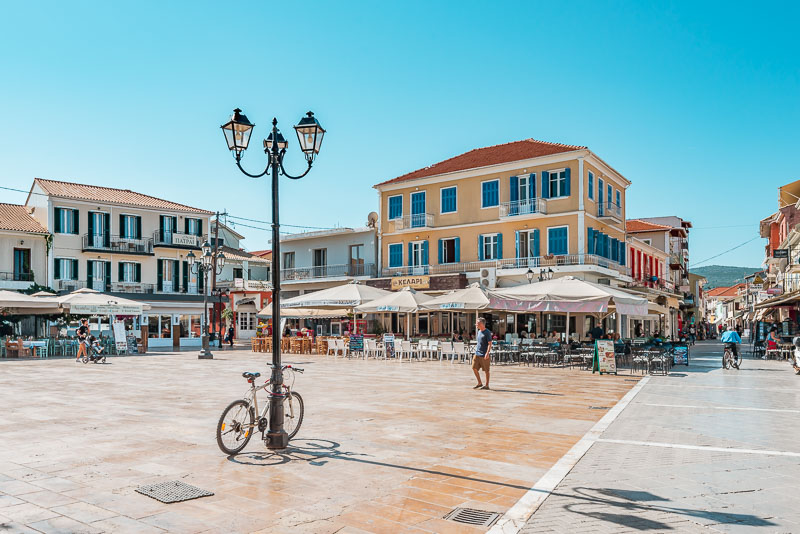
The best way to start your stroll through the town is at the public car park by the marina. From here, follow Tzavala Alley northwards to reach the town’s main shopping street, Ioannou Mela, home to countless shops. For lovers of high-quality ice cream, the Fresco gelato artigianale parlour is an absolute must.
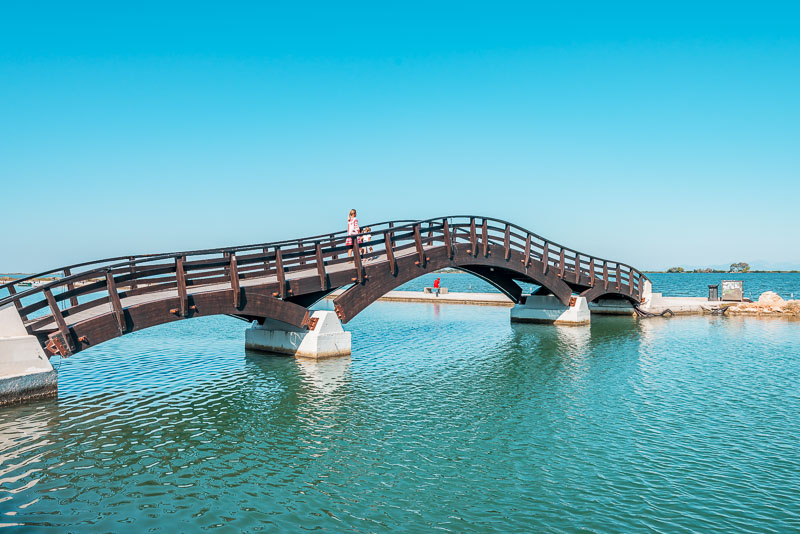
Keeping to the right, you will quickly reach the town’s main square (Kentriki Plateia) with the church of Agios Spyridon, and a few minutes later, the large Sikelianou Square. Situated directly by the sea, this square is used for atmospheric parades, particularly on public holidays. The highlight and a popular photo motif is the triple-arched wooden bridge on the waterfront.
The northern boulevard right by the sea is especially popular in the evening. After watching the sunset over the lagoon, it is just a short stroll to the nearby restaurants and bars (tip: Xartes Cocktail Bar). Small fishing boats bob in the canal itself, and the atmosphere, complemented by the colourful Lefkadian houses, exudes an immense amount of charm.

At the end of the promenade lies the Archaeological Museum (Wed–Mon 08:30–15:30, €3). This compact museum provides an excellent overview of several millennia of island history. Many of the excavations can be traced back to the German archaeologist Wilhelm Dörpfeld, who spent a large part of his life on the island.
You can find our 10 most beautiful highlights of the island and useful travel tips in our article: Lefkada Highlights
#2 Sights and beaches around Lefkada Town
Agia Mavra Kastro
The Castle of Agia Mavra is located at the entrance (or exit) to the Lefkas Canal, right by the floating bridge. Surrounded by the sea on almost all sides, it is one of the most impressive medieval fortresses in all of Greece due to its sheer size.
The origins of the castle date back to 1302, and the fortress has changed hands several times over the centuries. Unfortunately, it is currently closed to the public.
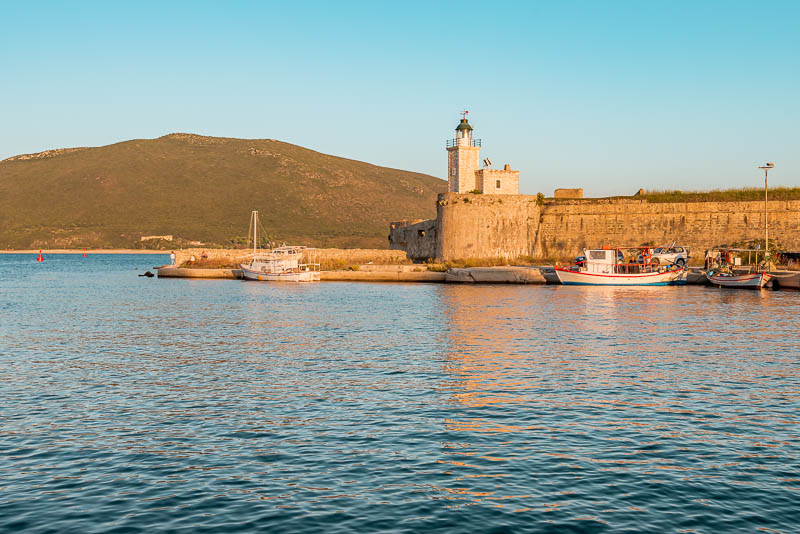
On 3 May, a small patron saint’s festival is celebrated in the Church of Saints Mavra and Timothy within the courtyard – likely the only opportunity to see the castle from the inside. At the northern tip of the complex, marking the entrance to the canal, stands a striking lighthouse made of natural stone, which makes a fantastic photo subject, especially in the evening.
The nearby Kastro Beach is particularly popular with locals. However, the water drops off steeply at this pebble beach, and the waves brought on by a north wind leave little room for relaxed swimming. Also located at the entrance to the Lefkas Canal is the sandy headland of Ammoglossa, which turns into a paradisiacal spot when the wind is calm.
Griva Kastro and Vagia Beach
Just two minutes away, on the Greek mainland, lies another fortress: Griva Kastro. This compact complex was built by the Ottomans in 1806 and remains accessible today. From the top, you can enjoy a magnificent view over the lagoon landscape of Lefkada. Admission is free and there are no barriers.
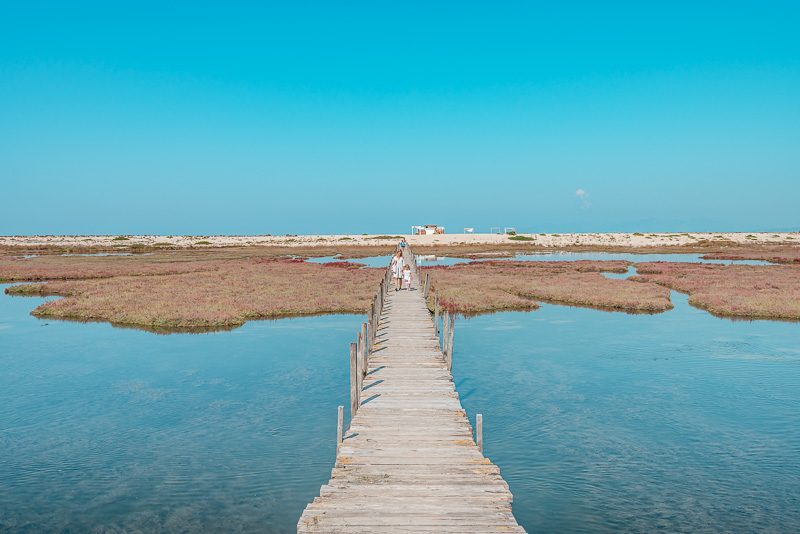
Directly opposite the Griva fortress lie the eastern foothills of the Lefkada lagoon and the offshore Vagia Beach. You cross the lagoon via a rickety, 100-metre-long wooden walkway (Gefira Vagia) and walk through a dune landscape to reach the pebble beach. In summer, a beach bar hires out sun loungers here.
Lagoons of Lefkada
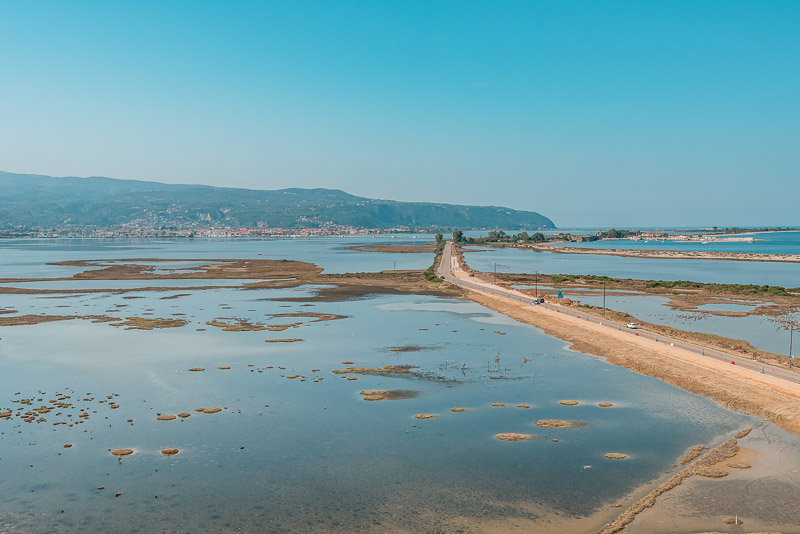
The lagoons of Lefkada in the northern part of the island are protected aquatic biotopes under the Ramsar Convention. Depending on the season, they serve as a habitat and retreat for many migratory birds, including herons, pelicans and flamingos, as well as various species of ducks and swans.

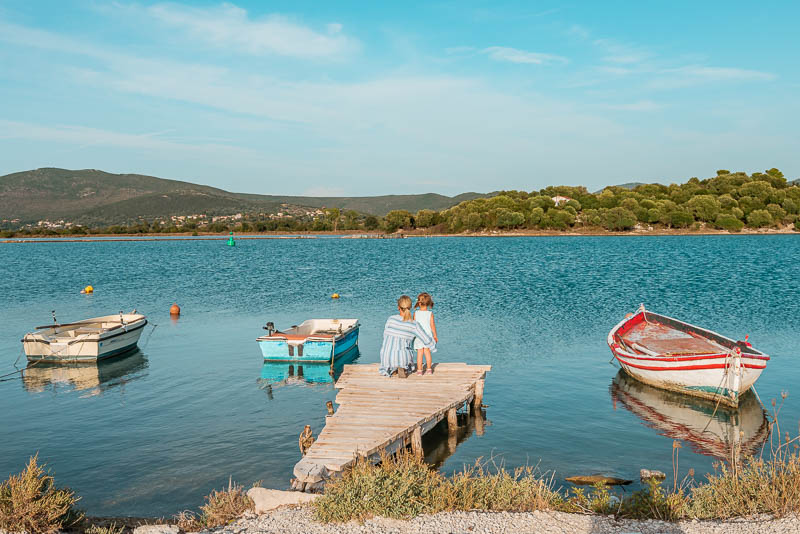
The lagoons also feature small brackish-water islets covered in reeds and heather. The southern section is home to a salt lake known as Alikes Alexandrou, a brackish expanse where salt was once extracted. Today, you can linger on the jetties and watch the sailing boats entering the Lefkas Channel.
Agios Ioannis Beach and windmills
Just 3 km west of Lefkada Town lies one of the island’s longest beaches: Agios Ioannis Beach. The highlight of this golden pebble beach is its five windmills, which are nestled within the dune landscape. Although all but two are in need of renovation, they still make for a fantastic photo opportunity.
We reveal our 10 most beautiful bathing spots on the island in this article: Lefkada Beaches
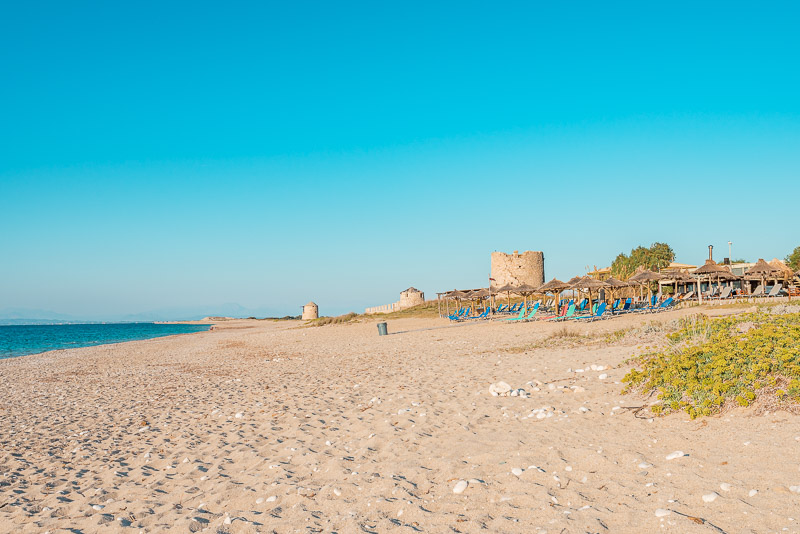
There are a few beach bars right on the shore, which get particularly busy at sunset during the summer months. Due to its northern exposure, Agios Ioannis Beach usually experiences a strong wind, making it highly popular among kitesurfers.
💡 Lefkada Town Book Tip: The Zakynthos travel guide by Marco Polo contains a compact chapter on the island of Lefkada and other Ionian islands, including maps: View on Amazon*

#3 Lefkada Town: Restaurants & Cafés
Despite its relatively small size, Lefkada Town offers a wide range of restaurants, cafés and bars. Interestingly, quite a few of these establishments remain open all year round, making the capital an appealing excursion destination even outside the main tourist season (May to September). Here are our personal favourites:
Kookouvaya – This bar is the place to be in the evening and is located right on the main square of Lefkas Town. You can sit comfortably indoors or outdoors and watch the world go by. The staff are great, the atmosphere is relaxed and the prices are still reasonable.
Thymari Restaurant – Multi-award-winning and always busy, this is one of the best restaurants on Lefkada. The dishes are beautifully presented and very tasty. Fine Greek cuisine with slightly slower service; open all year round from 7:30 pm.
To Paradosiako Kafeneion – A cosy ouzeri tucked away in a hidden alley in the northern part of the old town. Small snacks (meze) are served alongside beer, ouzo or tsipouro. Ideal for a break after a long afternoon or evening walk.
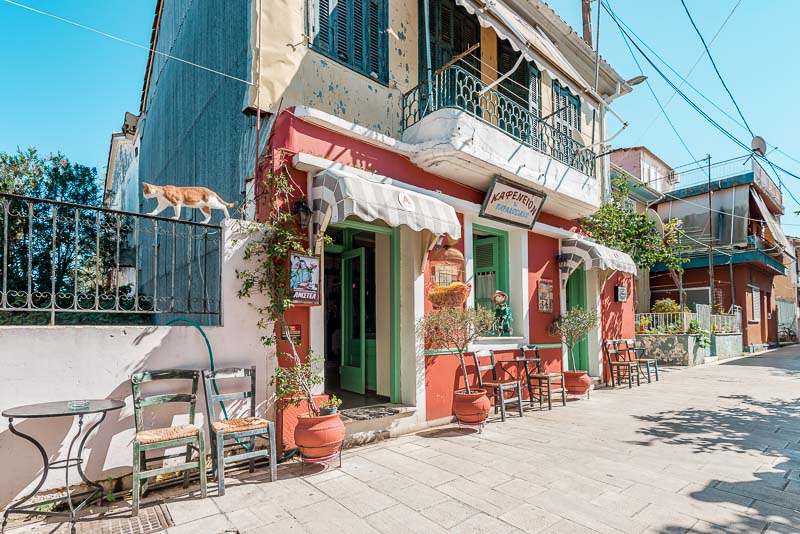
Virgo Bistro – A relaxed breakfast café opposite the beautiful church of Agia Paraskevi, run by two friendly ladies. Delicious coffee is served alongside wonderful Greek pastries. Open all year round.
Xartes Cocktail Bar – A trendy bar in a striking neoclassical building on the waterfront in the north of the town. Relaxed atmosphere, friendly staff and original cocktails at fair prices.
#4 Hotels in Lefkada Town: Our Recommendations
In the town itself and the surrounding area, you will find apartment complexes and small hotels to suit all budgets. The price level is generally slightly below the island average. The old town is largely pedestrianised, though residents and suppliers are permitted to ride through on scooters. We happily recommend the following accommodation (links to Booking.com*):
Allure Central Boutique Hotel – Modern hotel in the town centre. Stylish rooms, comfortable beds, excellent breakfast, and helpful, courteous staff.
Hotel Boschetto – A solid 4-star hotel on the waterfront at the entrance to the town. Tastefully furnished rooms, central location, à la carte breakfast.
Lefkada Historical Charm Balcony Suite – A lovely apartment in the heart of the town. Friendly hosts, modern furnishings and very fair prices. Free parking available nearby.
#5 Getting to Lefkada Town
If you wish to visit Lefkada Town during your stay on the island, we highly recommend doing so on a weekday, as it can get very crowded, especially at weekends. The capital is located in the far north of the island and can be reached by car from Vasiliki in the south in about an hour (38 km).
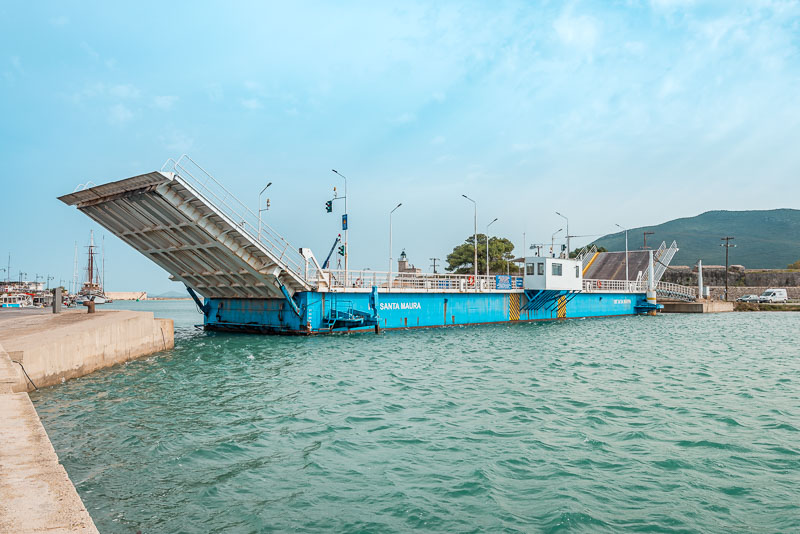
If you are visiting the town as part of a Greek road trip, it takes about 30 minutes to reach Lefkada from Preveza, and roughly 1.5 hours from Parga in the north or Mesolongi in the south. Crossing the floating bridge (Agia Mavra Bridge) is free of charge, with traffic regulated by a set of traffic lights. When boats are passing through the channel, you should expect a waiting time of around 10 minutes.
→ You can find more travel reports and tips about the archipelago in the Ionian Sea on our overview page: Ionian Islands
*Support our blog Greece-Moments
In this post, you will find affiliate links marked with an asterisk (*). If you book or buy something through one of these links, we receive a small commission. For you, the price remains exactly the same. In this way, you help us continue to provide high-quality content for free. Did you enjoy this post and would like to say thank you? Then simply buy us a Greek coffee ☕️ To the coffee fund
Bookmark this post on Pinterest!